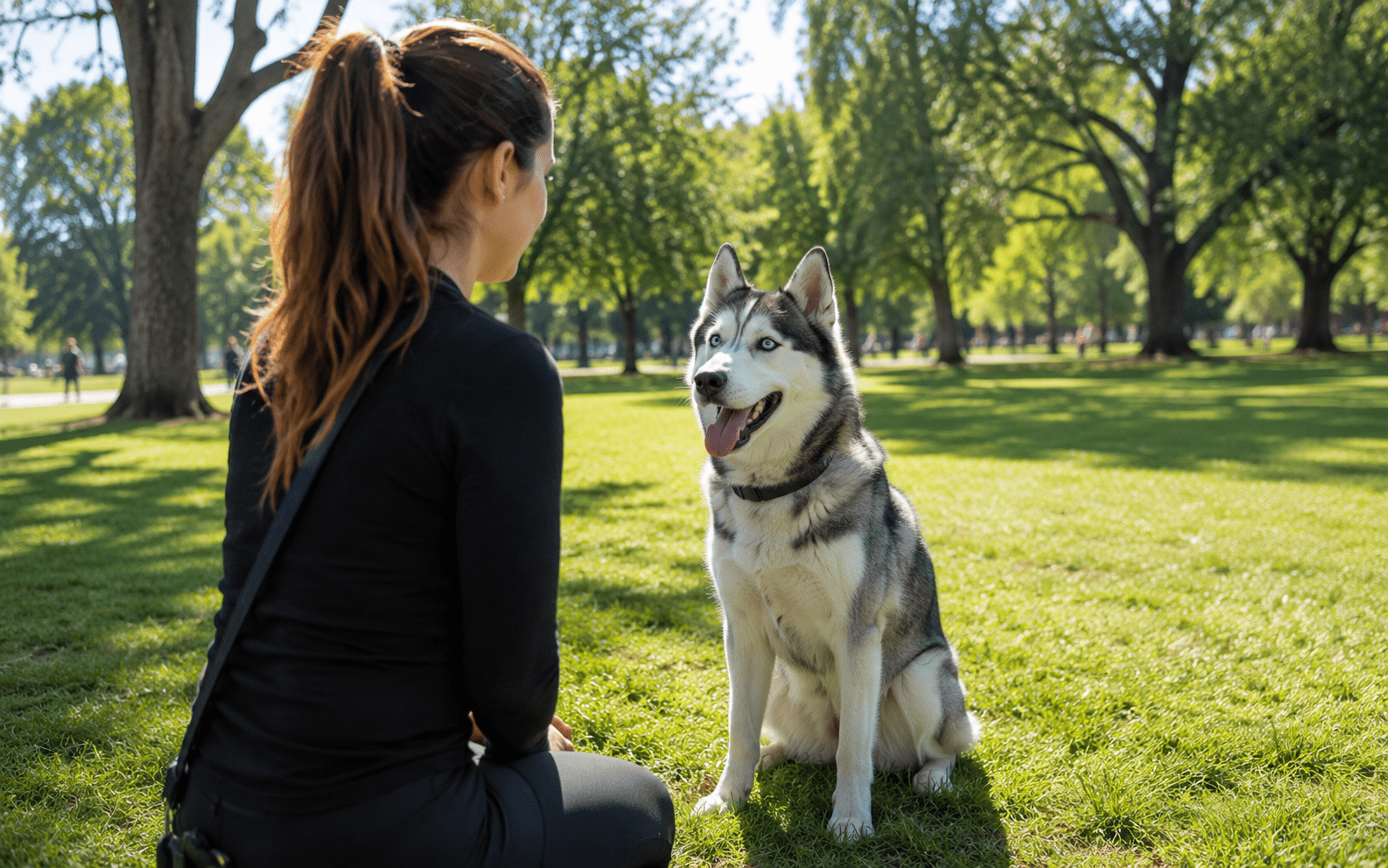
Knowing how to train a Siberian Husky starts with accepting one hard truth: these dogs are brilliant, but they were never bred to please you. They were bred to run, think independently, and survive harsh Arctic conditions, which means every training session requires patience, consistency, and a clear understanding of how Huskies actually process commands.
Key Takeaways
- Huskies are independent thinkers, not disobedient dogs. Understanding their nature changes your whole approach.
- Short, high-energy training sessions (5-10 minutes) outperform long, repetitive drills every time.
- Physical exercise before training dramatically improves focus and reduces frustration for both of you.
- Positive reinforcement works, but you need to stay one step ahead of a dog that gets bored fast.
- Socialization and recall training are non-negotiable priorities with this breed.
- Professional support is a smart option, not a last resort, especially for first-time Husky owners.
Why Huskies Are Different From Other Breeds
Before you compare your Husky’s progress to your neighbor’s Labrador, it helps to understand what you’re actually working with. Huskies rank among the most independent dog breeds alive. They were developed by the Chukchi people of Siberia to haul sleds across hundreds of miles, often making decisions on their own when trail conditions changed. That instinct did not disappear when they moved into American suburbs.
If you’ve read about how to train a labrador retriever or even how to train a golden retriever, you already know those breeds are practically obsessed with earning your approval. Huskies are not. They’ll evaluate whether your request makes sense to them before deciding to comply. That’s not stubbornness for the sake of it — that’s centuries of selective breeding at work.
This also means Huskies are not listed among the most trainable dog breeds, and they’re certainly not the choice for someone looking at best low maintenance dog breeds. They demand active, consistent engagement every single day. If you weren’t sure a Husky was the right fit when you brought one home, it’s worth reading about choosing the best dog breed for my lifestyle before committing to another working breed in the future.
Understanding how dogs think in general gives you a major advantage here. Huskies respond to leadership, not authority. There’s a difference. Leadership means you set clear expectations, follow through every single time, and make training rewarding enough that your dog actually wants to participate.
The Foundation: Exercise, Then Training
One of the most common mistakes Husky owners make is attempting a training session before giving their dog an outlet for physical energy. A Husky with pent-up energy is a Husky that will spin in circles, howl at you, or simply bolt in the opposite direction.
Huskies are among the best dog breeds for running, and that’s not a coincidence. They need serious cardiovascular activity, ideally 45-60 minutes of hard exercise before any focused training work. A brisk run, a long bike ride where they trot alongside you, or a vigorous fetch session in a safely enclosed yard all qualify.
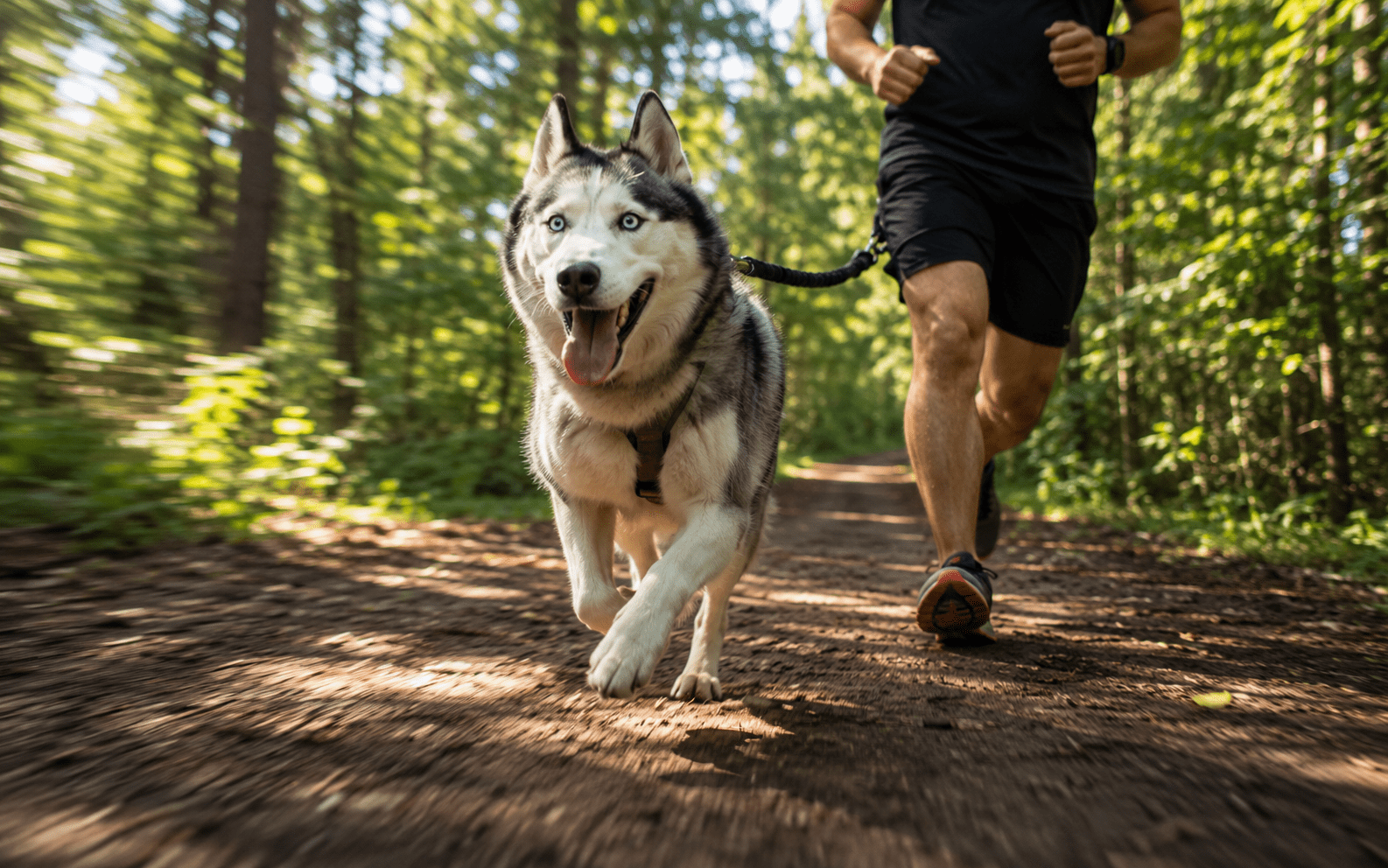
After that outlet, your Husky’s brain is far more available for learning. Keep sessions short, between 5 and 10 minutes, with high-value rewards like small pieces of real chicken or beef. Huskies tend to disengage quickly from repetitive drills, so mix up your commands and keep the energy upbeat.
Core Commands and Training Techniques That Work
Positive Reinforcement Is Your Starting Point
Huskies respond best to reward-based training, but you need to keep them guessing. If your dog figures out the pattern too quickly, they’ll lose interest. Vary your rewards: sometimes it’s a treat, sometimes it’s a short game of tug, sometimes it’s enthusiastic verbal praise. Unpredictability keeps engagement high.
If you’re working with a younger dog, reading up on how to train a husky puppy specifically will give you age-appropriate techniques. The foundational approach for puppies differs from working with an adult dog, particularly around impulse control and duration of focus. You can also find broad puppy training guidance in resources covering best ways to train a puppy that apply across many breeds.
Balanced Training Has a Place Here
Some Husky owners find that pure positive reinforcement isn’t enough to get through to a highly distracted dog. That’s where what is balanced dog training becomes relevant. Balanced training uses both rewards and clear corrections to communicate expectations, without relying on punishment as the primary tool. For a working breed with an independent streak, this approach often produces faster, more reliable results.
The Commands to Prioritize
Not all commands carry equal weight for this breed. Focus on these first:
- Recall (“come”): A Husky off-leash without a reliable recall is a genuine safety risk. They can cover ground at 28 mph and may not stop. Treat recall training as a life skill, not a trick.
- Sit and Stay: These build impulse control, which is something Huskies need to develop actively.
- Leave it: Essential for dogs that are naturally curious and will investigate everything.
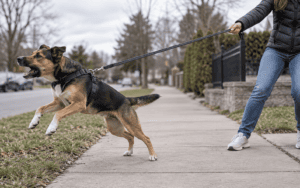
- Loose-leash walking: Huskies are pullers by nature. Without consistent leash training, walks become exhausting. Understanding leash aggression in dogs is helpful if you’re dealing with more than just pulling during walks.
Common Husky Behavior Problems (and What They Mean)
Huskies don’t act out randomly. Every behavior has a root cause, and understanding that cause gets you closer to a solution faster than correction alone.
| Behavior | Likely Cause | Training Response |
| Howling excessively | Boredom, separation anxiety | More exercise, mental enrichment, crate training |
| Escaping the yard | Prey drive, under-stimulation | Secure 6-foot fencing, recall training, more activity |
| Destructive chewing | Insufficient exercise or mental work | Structured play, frozen Kongs, training sessions |
| Ignoring commands | Distraction, insufficient motivation | Higher-value rewards, lower-distraction environment |
| Pulling on leash | Bred instinct | Consistent loose-leash training with front-clip harness |
If your Husky is going through the teenage phase (roughly 6-18 months), adolescent dog behavior is worth reading because this period can feel like all your training disappeared overnight. It didn’t. Stay consistent.
Some owners notice their Husky digging at blankets or bed surfaces, which is actually a common instinct-driven behavior. If you’re wondering why does my dog dig in his bed, it often traces back to nesting instincts, not behavioral problems. Similarly, a velcro Husky that follows you everywhere might have you asking why is my dog so clingy, which can signal under-stimulation or mild anxiety.
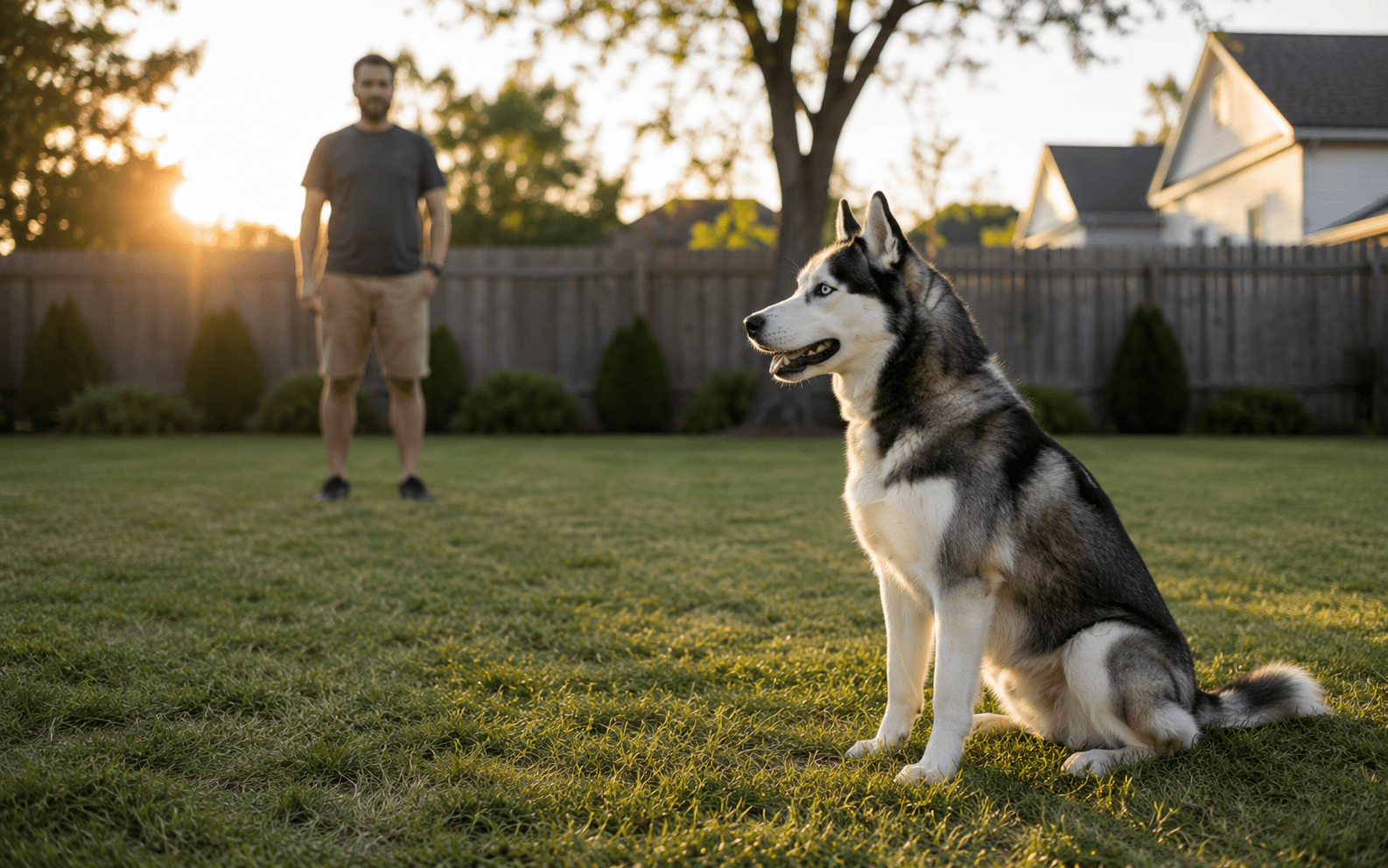
If you’re seeing anything that looks like true aggression rather than rowdy play, act on it early. Learn to recognize warning signs of aggression in dogs before a situation escalates. Huskies are generally not prone to aggression, but any dog can develop issues without proper socialization and structure.
Socialization, Crate Training, and Mental Enrichment
Socialization Starts Early
Huskies are generally social dogs, but proper early exposure makes an enormous difference in how they handle new environments, people, and animals throughout their lives. Missing key puppy fear periods with inadequate socialization can create lasting anxiety or reactivity that’s much harder to address later.
Expose your Husky puppy to different sounds, surfaces, people, and other animals in a positive way. Thunderstorm anxiety is not uncommon in dogs with limited early exposure to sudden loud sounds. If you’re already dealing with this, how to calm a dog during thunderstorms covers practical strategies.
Crate Training Works for Huskies
Many owners resist crate training because it feels unkind, but done correctly, a crate gives your Husky a secure, calm space of their own. Read through the benefits of crate training your dog and how to do it properly for a step-by-step approach. If you adopted an older Husky, how to crate train an adult dog addresses the specific adjustments needed for dogs that have never been crate trained before.
Keep Their Brains Busy
Huskies are highly intelligent and prone to what is compulsive behavior in dogs when under-stimulated. Nose work, puzzle feeders, and scent games are excellent tools. If you want to go further, exploring how to scent train a dog gives you a structured way to channel their natural tracking instincts into productive mental work.
Comparing Husky Training to Other Breed Challenges
If you’ve trained other breeds before, here’s a quick reference for how Husky training stacks up:
Compared to how to train a french bulldog, Huskies are far more energetic but similarly stubborn in their own way. French Bulldogs struggle with physical limitations; Huskies struggle with sustained attention. If you’ve worked with how to train a rottweiler or how to train a cane corso, you’re used to powerful breeds that need firm boundaries, which applies to Huskies too.
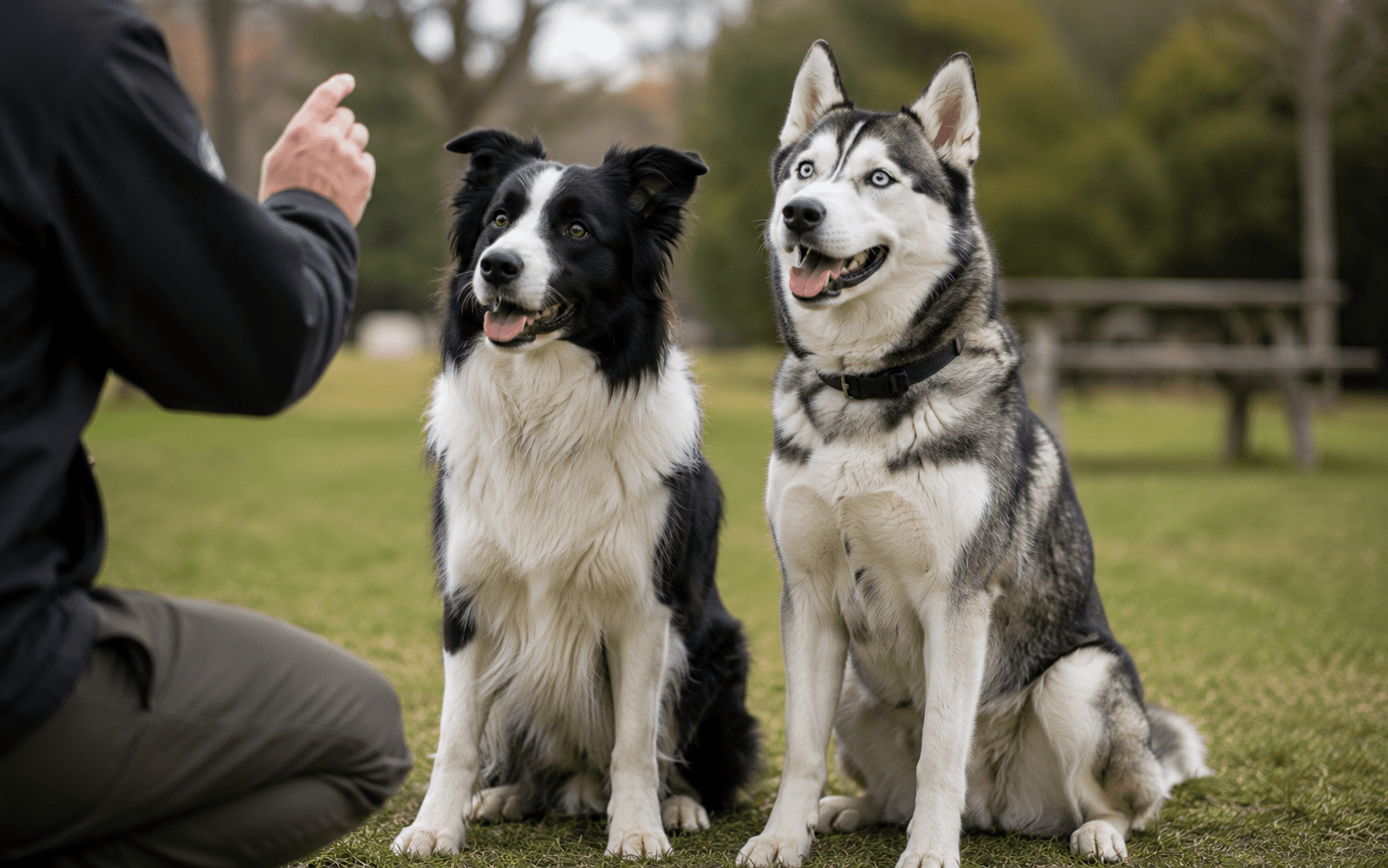
Compared to how to train a border collie dog, Huskies are significantly less driven to complete tasks for your approval. Border Collies are almost obsessively focused; Huskies are not. And compared to how to train doberman or how to train belgian malinois dog, Huskies are less intense but far more likely to simply ignore you if the reward isn’t compelling enough.
Owners who’ve worked with breeds like how to train a beagle puppy will recognize the scent-driven distraction challenge. Husky owners dealing with the added layer of high speed and escape artistry may also find it useful to look at how to train a jack russell dog for strategies around high-energy, independent-minded dogs.
Things to Know
- Huskies are escape artists. A 4-foot fence will not hold them. Expect them to jump, dig under, or squeeze through gaps that seem impossibly small.
- “Zoomies” before training is not defiance. It’s your dog telling you they need more physical output before they can focus.
- Huskies are vocal. Howling is communication, not a problem to eliminate. Channel it, don’t punish it.
- They have a high prey drive. Off-leash parks without secure fencing are a genuine safety risk, especially around small animals.
- Recall training takes longer for this breed than almost any other. Budget months, not weeks, for a truly reliable recall.
- Some behaviors that look like dominance are actually anxiety or boredom. Misreading this leads to the wrong training approach.
Ready to Stop Fighting Your Husky and Start Working With Them?
If you’ve tried the basics and feel like you’re hitting a wall, getting professional eyes on your situation is one of the smartest moves you can make. A certified trainer who knows working breeds can spot patterns in your dog’s behavior in a single session that might take you months to identify on your own.
If you’re in the New York area, exploring board and train long island gives your Husky an immersive training environment where learning happens around the clock. For those who prefer working on their dog’s behavior in familiar surroundings, in home dog training long island brings expert guidance directly to your space. You can also browse the blog for additional training resources, breed-specific articles, and behavior deep-dives. If you’re comparing facility options, finding the best board and train in queens ny for your dog breaks down exactly what to look for when evaluating programs.
Understanding why choose professional dog training goes beyond convenience. For a breed as complex as the Husky, professional guidance shortens the learning curve dramatically and prevents the accidental reinforcement of habits that become very difficult to undo later.
Frequently Asked Questions
At what age should I start training my Siberian Husky?
The earlier, the better! We’re talking 7-8 weeks old—right when you bring your pup home. This is the sweet spot for introducing basic socialization and teaching simple commands like “sit” and “come.” Think of it this way: puppies are like little sponges during those early weeks. They’re naturally curious and eager to learn, so you’ve got a real advantage if you jump in early. Plus, getting them used to different people, sounds, and environments now means you’ll have a much friendlier, more confident adult dog down the road.
Are Siberian Huskies hard to train?
Yes, Siberian Huskies can be hard to train because they are independent, energetic, and easily distracted. They are smart dogs, but they often need consistency, patience, and clear boundaries to follow commands reliably.
What is the best age to start training a Siberian Husky?
The best age to start training a Siberian Husky is as early as 8 weeks old. Early training helps build good habits before stubborn behavior, pulling, jumping, and ignoring commands become harder to manage.
How do I stop my Siberian Husky from pulling on the leash?
To stop a Siberian Husky from pulling on the leash, use consistent leash training, reward calm walking, and stop moving forward when they pull. Huskies were bred to pull, so this behavior often needs structured training and daily practice.
Why does my Siberian Husky ignore commands?
A Siberian Husky may ignore commands because they are distracted, under-exercised, bored, or not properly motivated. They respond best when training is short, fun, consistent, and supported with rewards they actually care about.
Do Siberian Huskies need professional training?
Yes, many Siberian Huskies benefit from professional training, especially if they pull hard, escape, ignore recall, jump on people, or show destructive behavior. Professional dog training can help build structure, obedience, and better control.