You can calm a dog during thunderstorms by moving it to a small, sound-dampened safe space, staying relaxed yourself, and using tools like pressure wraps, white noise, and high-value treats. Most dogs settle faster when they have a den-like spot to hide in and a calm owner sitting nearby.
Storm anxiety is one of the most common fears in dogs, and it can appear at any age. The good news is that you don’t have to feel helpless every time the sky starts rumbling.
In this guide, you’ll learn why storms terrify some dogs, how to soothe yours in the moment, and which calming option actually works best for your situation.
Key Takeaways
- Dogs fear storms because of loud thunder, static electricity, and pressure changes they sense before you do.
- A safe space, sound masking, and calm body language are the fastest ways to settle a frightened dog.
- Pressure wraps and supplements help mild cases, while severe storm phobia needs professional training or vet support.
Not sure if your dog’s behavior is storm fear or something deeper? Read our guide, Why Is My Dog Acting Scared?, to learn what’s really behind sudden fearful behavior.
Why Dogs Get Scared of Thunderstorms
Before you can help your dog, it helps to understand what’s actually frightening it. A thunderstorm is not just noise to a dog. It’s a full sensory event.
Dogs hear frequencies far beyond human range, so a thunderclap that sounds loud to you can feel physically painful to them. Add flashing lightning, wind, rain pounding the roof, and a sudden drop in barometric pressure, and the whole world feels unstable.
Many dogs also build up static electricity in their coats during storms. Veterinary behaviorists believe this is why so many dogs squeeze into bathtubs or press against tile floors. Grounded surfaces reduce the small static shocks they feel through their fur.
What Storm Anxiety Looks Like
You can usually spot storm fear by watching for changes in your dog’s normal behavior. Some signs are obvious, while others are easy to miss.
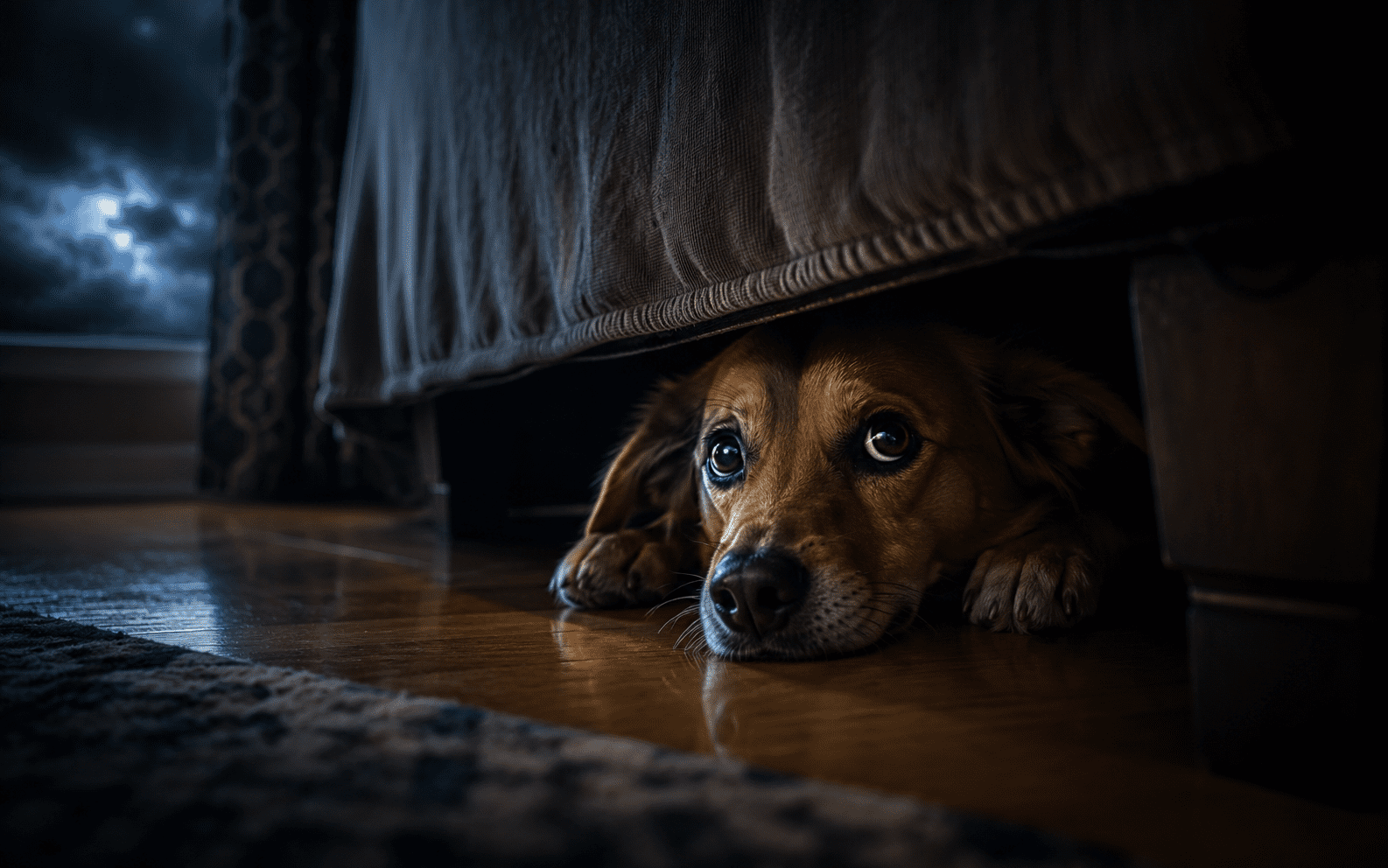
Common symptoms include:
- Pacing, panting, or drooling even in a cool room
- Hiding under beds, in closets, or in the bathroom
- Trembling or shaking that starts before the storm even arrives
- Clinginess, following you from room to room
- Destructive behavior like scratching doors or chewing window frames
If your dog tries to escape through doors or windows during storms, treat it as a serious case. Escape attempts are how many dogs get lost or injured every storm season.
Why Some Dogs React More Than Others
Storm fear isn’t random. Herding breeds like Border Collies, German Shepherds, and Australian Shepherds are more prone to noise phobia, likely because they were bred for sound sensitivity.
Age matters too. Storm anxiety often appears or worsens between ages two and four, and it tends to escalate each season if nothing is done about it. A dog that only trembled last summer may be panicking this summer.
Past experiences play a role as well. A dog that was once caught outside during a violent storm may connect the first rumble of thunder with that bad memory for years.
Heavy panting is often the first sign of storm stress. Check out our article, How to Calm a Panting Dog, for quick ways to help your dog breathe easier.
How to Calm a Dog During Thunderstorms: Step by Step
When the storm is already overhead, you need actions that work right now. These steps focus on what you can do in the moment, in the order that gives you the fastest results.
Step 1: Create a Safe Space
Set up a den-like spot before storm season starts, so your dog already trusts it. The best location is an interior room with no windows, like a closet, bathroom, or finished basement corner.
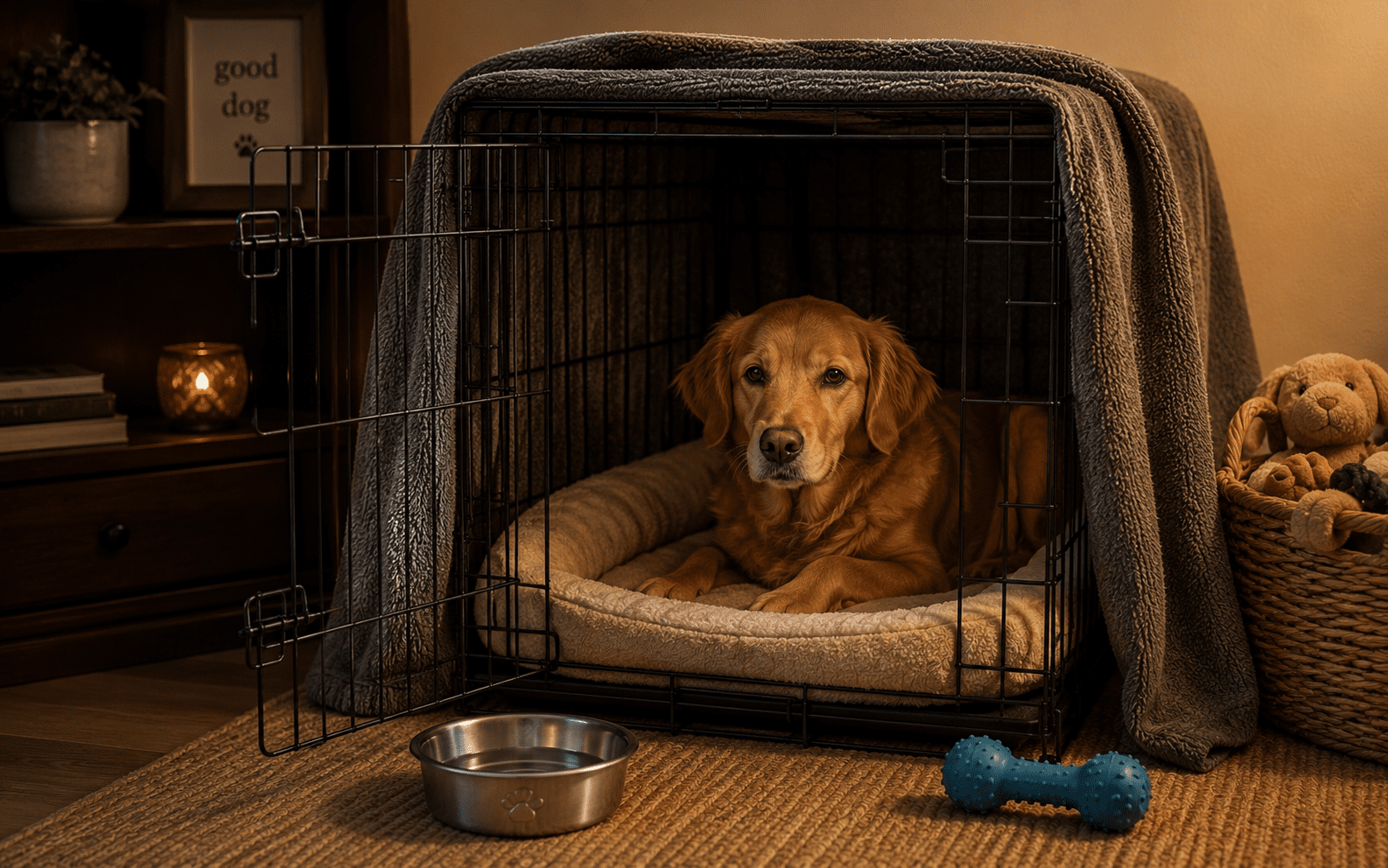
Make it comfortable:
- Add a crate with the door left open, covered with a heavy blanket
- Include your dog’s bed and a worn t-shirt that smells like you
- Keep water and a long-lasting chew within reach
Never lock your dog inside a crate during a storm. A panicking dog can break teeth and nails trying to get out. The safe space should feel like a choice, not a trap. Dogs that already love their crate have a big head start here, which is one of the many benefits of crate training done the right way.
A practical tip from trainers: feed your dog its meals in this spot for two weeks before storm season. The positive association builds fast, and your dog will head there on its own when thunder starts.
Step 2: Stay Calm and Reward Calm
Your dog reads your body language constantly. If you tense up, hover, or speak in a worried baby voice, you confirm that something is wrong.
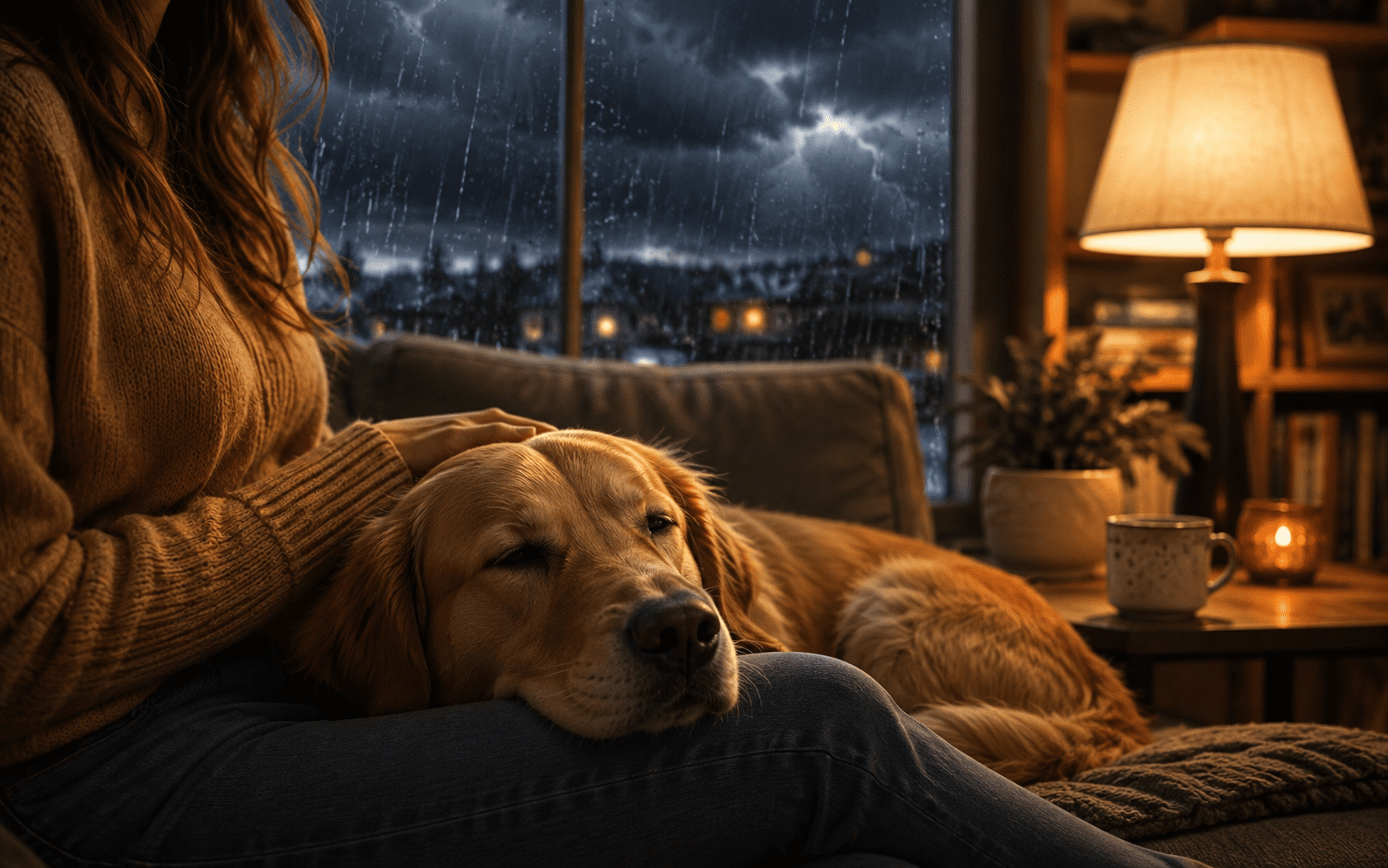
Instead, act bored by the storm. Sit down, breathe normally, and use your everyday tone. And yes, you can comfort your dog. The old myth that petting a scared dog “rewards fear” has been debunked by behaviorists. Fear is an emotion, not a behavior, so affection won’t reinforce it.
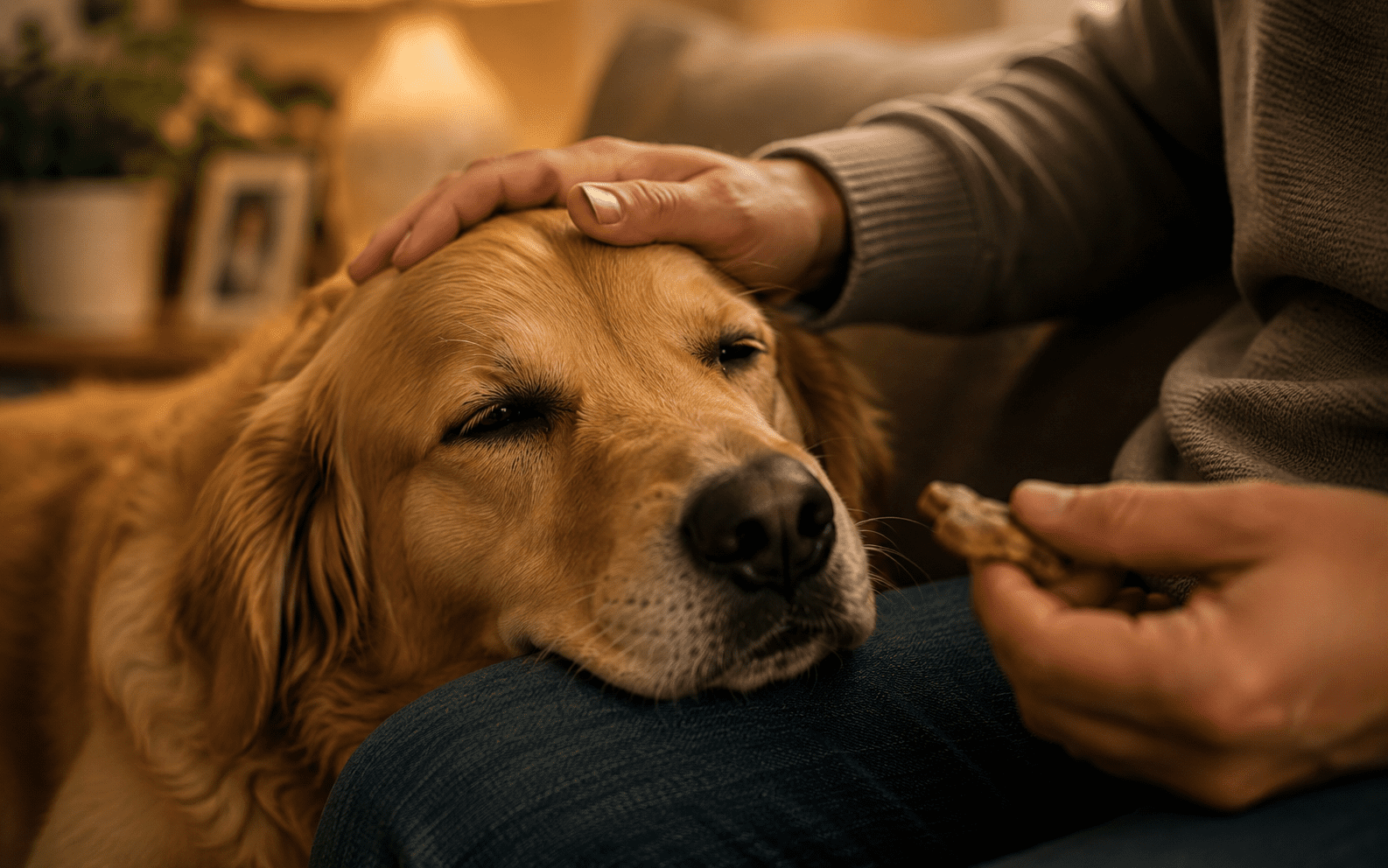
What you can reinforce is calm behavior. Each time your dog settles, even for ten seconds, mark it with a treat. Many owners keep a “storm jar” of high-value treats like freeze-dried chicken that only comes out when it rains. Over time, the dog starts connecting thunder with good things instead of danger.
Step 3: Mask the Sound and Light
Thunder and lightning are the main triggers, so block as much of both as you can. Close the curtains, then add steady background noise.
White noise machines, fans, or the TV all work. Research from the Scottish SPCA found that classical music and even reggae measurably lowered stress levels in kenneled dogs. The goal is a constant sound layer that flattens out the sudden booms.
If your dog hides in the bathroom, let it. Running the exhaust fan in there doubles as sound masking.
Step 4: Distract with Easy Wins
A dog that’s mildly nervous can often be pulled out of its fear loop with simple jobs. Scatter kibble on the floor for a sniffing game, stuff a Kong with peanut butter, or run through easy commands like sit and touch with rewards.
If your dog refuses food entirely, that’s your signal the fear is too intense for distraction. Move to comfort and containment instead.
Here’s a quick reference for what to use in the moment:
| Method | How It Helps | Best For |
| Safe space or covered crate | Gives a den-like hiding spot | All dogs, especially hiders |
| White noise or music | Masks thunder claps | Mild to moderate fear |
| Pressure wrap (ThunderShirt) | Constant gentle hug effect | Trembling, pacing dogs |
| Licking and sniffing games | Lowers heart rate naturally | Dogs still willing to eat |
| Calm petting and presence | Reassures without panic | Clingy, velcro dogs |
Why Training Is the Best Long-Term Option
Wraps, sounds, and supplements manage the symptom. Training fixes the cause. Desensitization works by playing thunder recordings at a volume so low your dog barely notices, pairing it with treats, then raising the volume gradually over weeks.

Done correctly, the dog learns that thunder predicts chicken, not danger. Done incorrectly, you can accidentally make the fear worse, which is why many owners work with a professional. A structured program like private dog training in Long Island gives you a step-by-step plan built around your specific dog instead of guesswork.
When to Involve Your Vet
Some dogs are past the point where home methods are enough. Call your vet if your dog injures itself, destroys property, refuses food for hours, or shakes uncontrollably through entire storms.
Severe storm phobia is a medical-level anxiety condition, and modern vet medications are safe, fast-acting, and nothing like the heavy sedatives of the past. Often the best results come from combining short-term medication with behavior training, so the dog is calm enough to actually learn.
Storm fear often spills into everyday nervousness. Don’t miss our guide on How to Help a Fearful Dog Gain Confidence for building a braver dog all year round.
Things To Know Before the Next Storm
A little preparation makes every storm easier. Keep these facts and tips in mind:
- Dogs sense storms 15 to 30 minutes early. Falling barometric pressure and distant thunder tip them off, so start your calming routine the moment your dog gets restless, not when the storm hits.
- Update ID tags and microchips now. Animal shelters report intake spikes after big storms because panicked dogs bolt through doors and fences.
- Exercise your dog before bad weather arrives. A long sniffy walk in the morning burns off the energy that would otherwise feed anxiety later.
- Rub your dog with a dryer sheet alternative. Wiping the coat with a slightly damp cloth reduces static buildup, which eases that crawling-skin feeling during storms.
- Never punish storm behavior. Yelling at a dog for whining or hiding adds fear on top of fear and damages trust.
- Don’t leave a storm-phobic dog home alone during forecasted severe weather if you can avoid it. Panic escalates fastest in isolation. If your schedule makes that impossible, in-home dog training in Long Island can build coping skills right where the fear happens.
Help Your Dog Feel Calm, Safe, and Confident
Knowing how to calm a dog during thunderstorms comes down to preparation, patience, and the right help. If your dog’s storm fear feels bigger than you can handle alone, K9 Mania Dog Training is here for you. As the leading board and train in Long Island, our team includes the best animal behaviorists for dogs, trusted by families across New York to solve fear, anxiety, reactivity, and every behavior issue in between. Whatever your dog is struggling with, we can help. Visit K9 Mania Dog Training today and give your dog the calm, confident life it deserves.
You May Also Want to Read
What Is Compulsive Behavior in Dogs
Frequently Asked Questions
Can I sedate my dog during a thunderstorm?
Only with medication prescribed by your veterinarian. Never give human sedatives or leftover pet meds, as dosing mistakes can be dangerous. Vets today prefer fast-acting anti-anxiety medications over heavy sedation, since a sedated dog can still feel fear even while its body is slowed down.
What medication is used for storm anxiety in dogs?
Vets commonly prescribe Sileo, trazodone, or gabapentin for storm anxiety. Sileo is the only FDA-approved medication specifically for noise aversion in dogs. For dogs with year-round anxiety, daily medications like fluoxetine may be added. Your vet will choose based on your dog’s health and severity.
How do I calm down a dog that is very stressed of thunder?
Move it to a small interior room, turn on white noise, and sit calmly nearby. Offer high-value treats, gentle petting, and a covered crate with the door open. If your dog refuses food and shakes for hours, talk to your vet about medication and a training plan.
How to stop a dog from freaking out during thunderstorms?
Desensitization training is the only proven way to stop the panic long term. Play thunder sounds at a very low volume, reward calm behavior, and slowly increase the volume over weeks. Pair it with a safe space and a pressure wrap while the training takes effect.
What dog breeds are scared of thunder?
Herding breeds top the list, including Border Collies, German Shepherds, and Australian Shepherds. Studies also show higher noise sensitivity in Lagotto Romagnolos, Norwegian Buhunds, and many mixed breeds. That said, any dog of any breed can develop storm fear, especially after a bad experience.
Should I cuddle my dog during a thunderstorm?
Yes, comforting your dog is perfectly fine. Fear is an emotion, not a behavior, so affection cannot reinforce it. Calm, slow petting and a relaxed voice help your dog feel secure. Just avoid frantic fussing or anxious energy, since dogs mirror the mood you project.