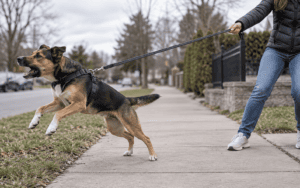

Compulsive behavior in dogs is a pattern of repetitive, exaggerated actions, such as tail chasing, spinning, or constant licking, that a dog performs out of context and cannot easily stop. It is the canine version of obsessive-compulsive disorder, and it usually points to stress, genetics, or unmet physical and mental needs rather than simple stubbornness.
Most dog owners first notice it as a habit that seems harmless. Your dog circles a few times before settling, or licks one paw a little too often. Over weeks, the habit grows. The spinning gets longer, the licking creates a raw patch, and the dog seems unable to relax without doing it.
At K9 Mania Dog Training, we see this pattern across Long Island homes: a behavior that started small turns into a daily struggle for both the dog and the family. The good news is that with the right understanding and structured help, most dogs improve significantly.
This article explains what these behaviors are, why they happen, which breeds are most at risk, and how to stop compulsive behavior in dogs safely. If the habit is already affecting your dog’s health or your daily life, our in home dog training Long Island team can assess the behavior in the exact environment where it happens.
What Is Compulsive Behavior in Dogs
What is compulsive behavior in dogs in clinical terms? Veterinary behaviorists call it Canine Compulsive Disorder (CCD), the closest animal model we have to human OCD. It involves normal dog actions, like grooming, chasing, or chewing, that escalate until they interfere with the dog’s ability to function.
The behaviors themselves are not unusual. A healthy dog licks, scratches, and chases. The difference with a compulsion is intensity and control. The dog repeats the action far past any useful purpose, often when nothing in the environment calls for it.
How Veterinarians Define a True Compulsion
Professionals use three simple checks to separate a quirk from a real compulsion. A behavior is usually considered compulsive when it meets all three:
- The behavior happens out of context, with no clear trigger in the moment
- The behavior is hard or impossible to interrupt once it starts
- The behavior interferes with normal life, including eating, resting, or playing
If your dog chases its tail once and then moves on, that is normal. If your dog spins in circles to the point of exhaustion and ignores food or play to keep going, that crosses into compulsive territory.
How It Differs From Normal Dog Behavior
Many compulsions look like ordinary habits taken to an extreme. Knowing the line helps you decide when to act. A bored dog that occasionally licks its paw is normal. A dog that licks the same spot until the fur is gone and the skin is raw is showing a warning sign.
This is also where compulsions overlap with other issues, so accurate identification matters. You can read more in our overview of common dog behavior issues to see how compulsions fit alongside anxiety, reactivity, and other challenges.
Common Signs and Examples of Compulsive Behavior
Compulsive behaviors usually fall into a handful of categories based on the normal action they are built from. Watching which one your dog repeats can help a trainer or vet narrow down the cause.

The most common examples include:
- Tail chasing and spinning, circling in tight loops, sometimes for minutes at a time
- Excessive licking or chewing, often on the paws or legs, which can lead to a sore called acral lick dermatitis
- Flank sucking, where a dog holds a patch of its own skin in its mouth to self-soothe
- Fly snapping, biting at the air as if catching insects that are not there
- Shadow or light chasing, fixating on moving lights, reflections, or shadows
- Pacing, walking the same path back and forth without settling
- Blanket or toy sucking, sometimes called nooking, common in young dogs
Tail chasing is one of the most recognizable forms, and it is not always compulsive. Our article on why dogs chase their tails breaks down the playful versus problematic versions so you know which one you are seeing.
Why Do Dogs Develop Compulsive Behaviors
Understanding the why is the key to fixing the behavior, because the habit is almost always a symptom of something deeper. Compulsions rarely appear for no reason. They tend to grow from a mix of genetics, stress, and lifestyle.

The main drivers include:
- Genetics, since researchers have linked compulsive tendencies to specific genes, including a region on canine chromosome 7
- Stress and anxiety, including separation from family, conflict in the home, or fear of loud noises
- Lack of exercise, which leaves high-energy dogs with no outlet for their drive
- Lack of mental enrichment, which is one of the most common causes seen in everyday practice
- Learned coping, where the dog repeats a behavior because it briefly lowered stress in the past
That last point matters most for treatment. When a dog discovers that spinning or licking calms it down, the brain wires the action in as a coping tool. The longer this continues, the harder the pattern is to break, which is why early help produces better results.
It is also worth knowing that some of these actions begin as a stress release rather than a full compulsion. That early stage is often displacement behavior in dogs, and catching it there can stop a true compulsion from forming.
Normal, Displacement, and Compulsive Behavior Compared
It helps to see how these three stages line up, because the response for each is different. The table below shows how a behavior can progress and what it usually means.
| Stage | What It Looks Like | What Triggers It | What It Usually Needs |
| Normal Behavior | Brief, fits the situation, easy to interrupt | A clear reason, like an itch or a game | No action, this is healthy |
| Displacement Behavior | Out-of-place action during stress or conflict | A specific stressful moment | Reduce the stressor, add reassurance |
| Compulsive Behavior | Repetitive, out of context, hard to stop | Often no clear trigger, self-driven | Vet check, behavior plan, sometimes medication |
The takeaway is simple. A normal habit needs nothing, a displacement habit needs you to ease the stress, and a true compulsion needs a structured plan and often professional support.
Which Breeds Are Most Prone to Compulsive Disorders
Any dog can develop a compulsion, but genetics clearly tip the odds, and certain breeds show up far more often. This is the which question, and it can guide both prevention and early watchfulness.
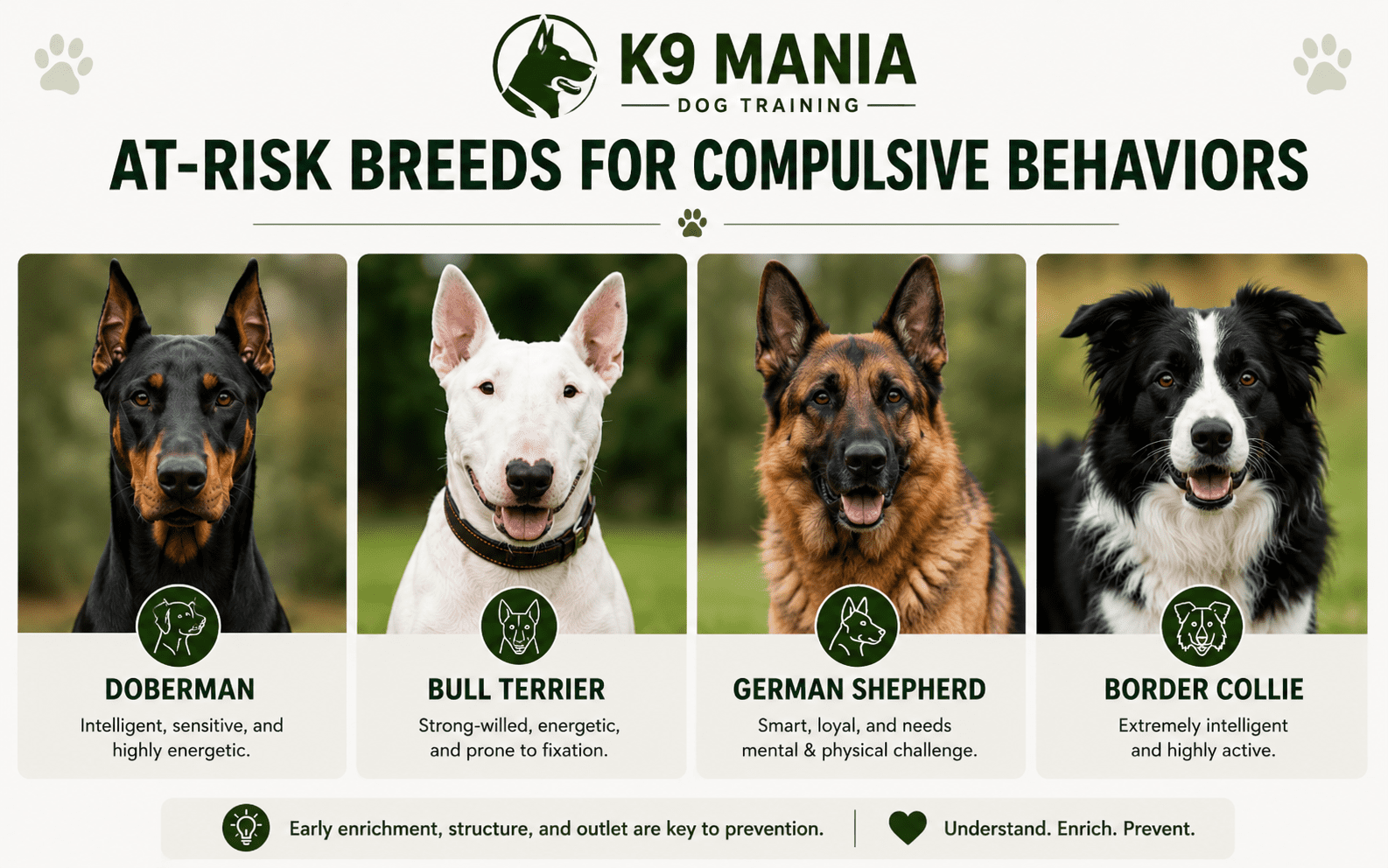
High-energy working and herding breeds top the list, and many compulsions are breed-specific:
- Doberman Pinschers, strongly linked to flank sucking and lick dermatitis
- Bull Terriers, prone to spinning and tail chasing
- German Shepherds, often tail chasing and spinning
- Border Collies, prone to shadow and light chasing tied to their herding drive
- Jack Russell Terriers, high-drive dogs prone to repetitive habits
- Miniature Schnauzers, associated with fly snapping
- Large retrievers and similar breeds, more likely to develop lick-based sores
If you own one of these breeds, this is not a reason to worry, but it is a reason to prioritize exercise and enrichment early. Most compulsions surface before two years of age, so the first two years are the best window for prevention.
How to Stop Compulsive Behavior in Dogs
Stopping a compulsion is rarely about willpower or punishment. It is about removing the cause, redirecting the behavior, and giving the brain a healthier pattern. Here is how the process usually works, in order.
Start with a vet visit. Many compulsions mimic medical problems. Paw licking can come from allergies or pain, and fly snapping can have neurological causes. A vet rules these out first, which is essential before treating the behavior as purely behavioral.
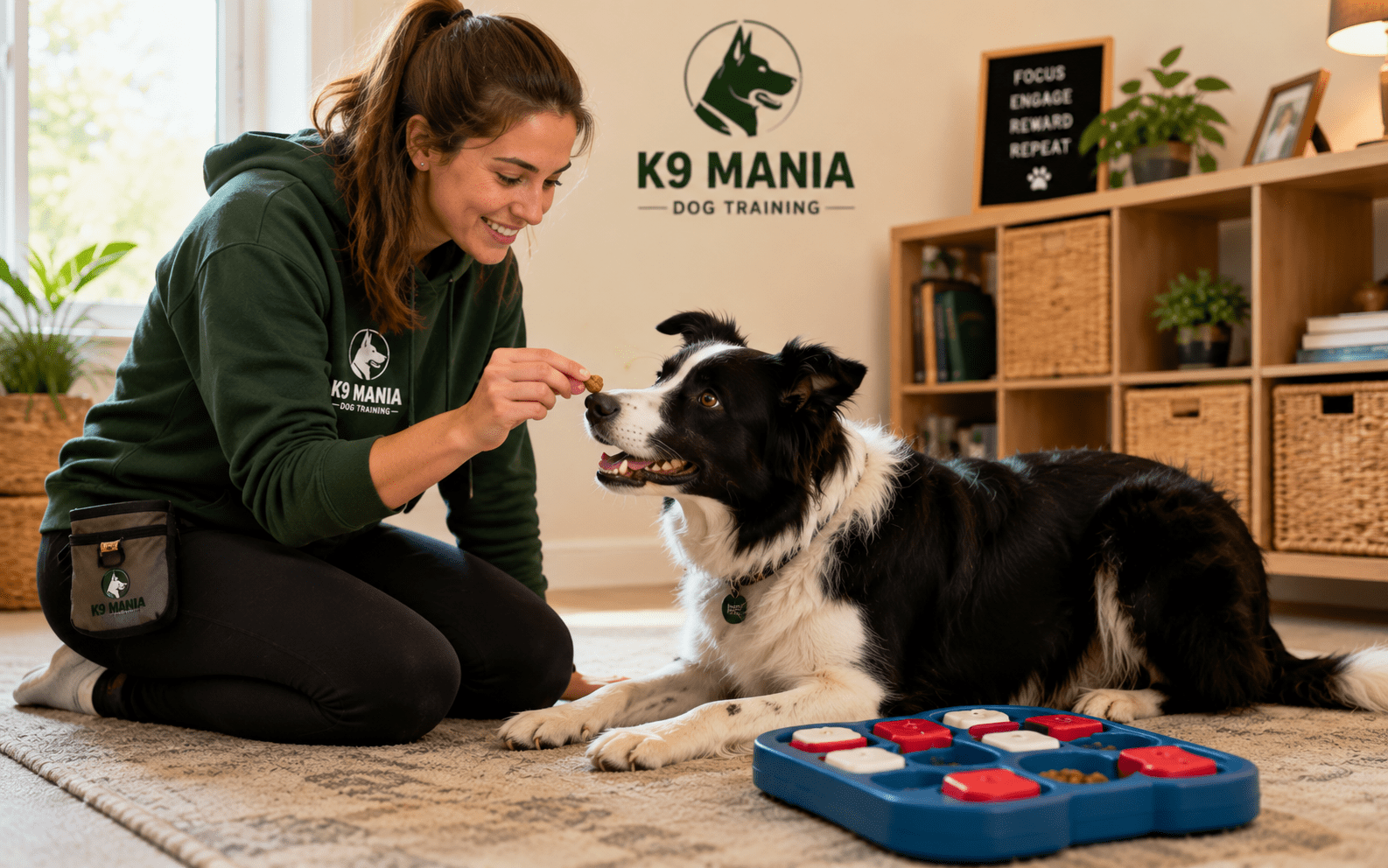
Increase exercise and enrichment. A tired, mentally satisfied dog has far less drive to spin or lick. Daily structured exercise, puzzle feeders, scent games, and training sessions give that energy somewhere to go. This single change resolves many mild cases on its own.
Avoid reinforcing the habit. Reacting to the behavior with attention, even scolding, can accidentally reward it. Instead of stopping the dog mid-spin, the better approach is to redirect to a calm, rewarded alternative before the cycle starts.
Use structured behavior modification. This is where a professional makes the biggest difference. A trainer builds a plan that reduces triggers, teaches the dog new coping skills, and rewards calm behavior consistently. For dogs with deeply set patterns, our board and train Long Island program offers full-time, structured work that is hard to replicate at home. For owners who want to stay closely involved, private dog training Long Island sessions teach you to run the plan yourself.
Consider medication for severe cases. When a compulsion is intense or self-harming, a vet may prescribe medication alongside training. About half of dogs respond well to these drugs, and they work best when paired with behavior modification rather than used alone.
Things to Know Before You Start
A few realities help you set the right expectations and avoid common mistakes along the way.
- Compulsions are usually managed, not cured. Most dogs improve a great deal, but a genetic predisposition does not disappear. The goal is a calm, functional dog, not perfection.
- Punishment makes it worse. Compulsions are stress-driven, so adding stress through scolding tends to intensify the behavior. Calm redirection works far better.
- Early action matters most. The longer a compulsion runs, the more wired it becomes. Habits caught in the first weeks are much easier to reverse.
- Medication is a tool, not a shortcut. Drugs can lower the urge enough for training to work, but they rarely fix the behavior on their own.
- Consistency across the home is essential. Everyone in the household must follow the same plan, or the dog gets mixed signals and progress stalls.
You May Also Want to Read
Frequently Asked Questions
What Are Compulsive Behaviors in Dogs?
Compulsive behaviors are repetitive, exaggerated actions a dog performs out of context and struggles to stop, such as spinning, licking, or pacing. They are the canine equivalent of obsessive-compulsive disorder and usually signal stress, genetics, or a lack of physical and mental stimulation.
What Are Examples of Compulsive Behaviour?
Common examples include tail chasing, spinning, excessive paw licking or chewing, flank sucking, fly snapping at invisible insects, shadow or light chasing, pacing, and sucking on blankets or toys. The action itself is often normal, but it becomes compulsive when it is repeated past any purpose and is hard to interrupt.
How to Stop Compulsive Behavior in Dogs?
Start with a vet visit to rule out medical causes, then increase exercise and mental enrichment, avoid accidentally rewarding the habit, and use structured behavior modification with a professional trainer. For severe or self-harming cases, a vet may add medication alongside the training plan.
What Dog Breeds Are Prone to OCD?
Breeds most often affected include Doberman Pinschers, Bull Terriers, German Shepherds, Border Collies, Jack Russell Terriers, and Miniature Schnauzers, along with large retrievers prone to lick sores. High-energy working and herding breeds carry the highest risk, and many show breed-specific patterns like flank sucking or spinning.
What Medication Is Used for Dog Compulsive Disorder?
The two most common options are clomipramine (a tricyclic antidepressant sold as Clomicalm) and fluoxetine (an SSRI). Both adjust serotonin levels to reduce the urge, and both work best when combined with behavior modification. These are prescription medications, so they should only be used under veterinary supervision.
What Is “I Love You” in Dog Language?
Dogs express affection through soft eye contact and slow blinking, leaning into you, relaxed body language, gentle tail wags, and wanting to stay near you. A calm dog that seeks closeness and checks in with you is showing trust and attachment, which is the canine version of saying it cares.
Bringing Your Dog Back to Calm
Recognizing what is compulsive behavior in dogs early gives you the best chance to reverse it before it takes over your dog’s life. With a vet check, more enrichment, and a consistent behavior plan, most dogs can settle back into calm, healthy routines.
If your dog is struggling, K9 Mania Dog Training can help. We are the leading board and train Long Island provider, and our team includes one of the area’s best animal behaviorists for dogs. Whatever behavior issue you are facing, from compulsions to anxiety to reactivity, we have the experience to turn it around. Visit K9 Mania Dog Training to book an assessment, and trust us to give your dog the structure, calm, and confidence it needs to thrive.