What is displacement behavior in dogs? It’s when your dog performs a normal activity at an inappropriate time as a way to cope with stress, anxiety, or internal conflict. Common examples include sudden scratching, yawning, sniffing the ground, or licking when faced with uncomfortable situations.
Understanding these behaviors helps you recognize when your dog feels overwhelmed and needs support. Unlike aggression or obvious fear responses, displacement behaviors are subtle signals that many owners miss. Learning to spot them gives you a window into your dog’s emotional state and helps you address problems before they escalate.
In this guide, we’ll explain what displacement behavior looks like, why dogs do it, and how to help your dog manage stress in healthier ways.
Struggling with stress-related behaviors? Our board and train Long Island program addresses underlying anxiety and builds confidence in dogs of all temperaments.
What Is Displacement Behavior in Dogs
Displacement behavior happens when your dog faces a situation that creates internal conflict or stress. Instead of directly addressing the stressor, your dog redirects that nervous energy into a completely unrelated action. Think of it as a coping mechanism, similar to how humans might fidget, tap their feet, or bite their nails when anxious.
These behaviors are normal actions performed out of context. Your dog isn’t being disobedient or trying to annoy you. They’re essentially hitting a mental pause button while their brain processes conflicting emotions or confusing situations.
The Science Behind Displacement Responses
When dogs experience conflict between two opposing drives, their brain needs a release valve. For example, a dog might want to approach something interesting but also feels wary of it. This creates tension between curiosity and caution.
The displacement behavior gives the dog’s nervous system a momentary break from that mental conflict. It’s an automatic response, not a conscious choice. Research shows these behaviors help animals self-soothe and regulate emotional arousal.
From an evolutionary standpoint, displacement behaviors may have served as social signals too. A wolf showing displacement behaviors during pack interactions communicated “I’m not a threat” without direct submission or confrontation.
How It Differs From Other Stress Behaviors
Not every anxious behavior is displacement behavior. Stress can show up in several ways, and understanding the differences helps you respond appropriately.
Displacement behaviors are brief, normal activities done at odd times. Your dog scratches when nothing itches, yawns when not tired, or sniffs when nothing interesting is present.
Direct fear responses look different. A scared dog might freeze, hide, tremble, or try to escape. These reactions directly address the perceived threat.
Stereotypic behaviors are repetitive, compulsive actions that serve no purpose. Examples include tail chasing, excessive licking of one spot, or pacing the same path repeatedly. These often indicate deeper behavioral issues that need professional intervention.
Common Types of Displacement Behaviors in Dogs
Dogs show displacement behaviors in predictable patterns. Recognizing these helps you identify when your dog feels stressed before more serious problems develop.
| Displacement Behavior | What It Looks Like | Common Triggers |
| Scratching | Quick scratching without fleas or itching | Meeting new dogs, training frustration, doorbell ringing |
| Yawning | Wide yawn when not sleepy or tired | Vet visits, grooming, tense family moments |
| Sniffing | Sudden intense ground sniffing | Being called when playing, approaching strange dogs |
| Lip Licking | Rapid tongue flicks over nose and lips | Direct eye contact, being hugged, crowded spaces |
| Shaking Off | Full body shake like after a bath | End of training session, after greeting, stressful encounter |
| Play Bow | Bowing when play isn’t happening | Uncomfortable social situation, nervous around new dog |
Body Language Signals
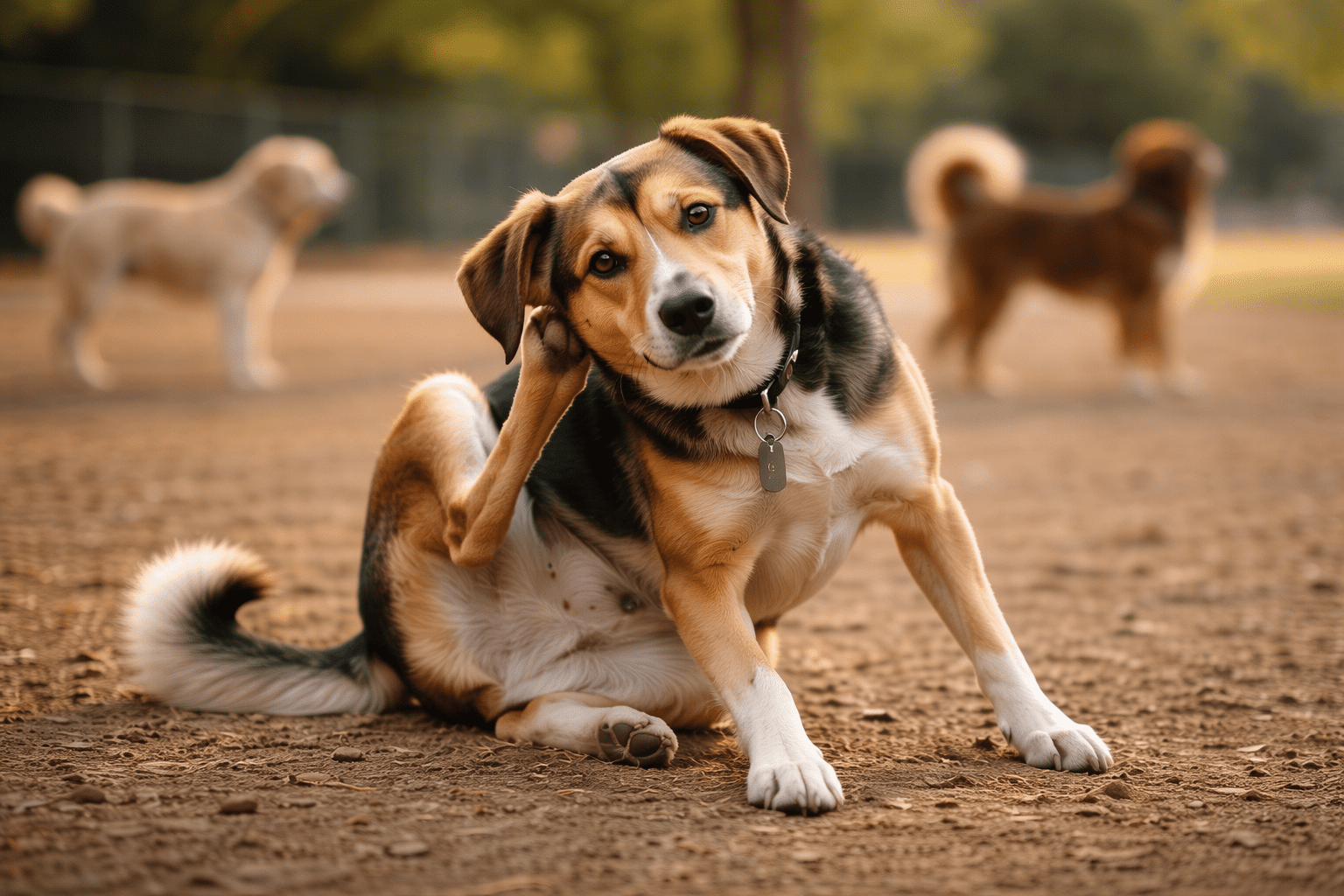
Scratching appears suddenly during situations that don’t involve itching. Your dog might scratch during introductions to new people, when two dogs meet, or when you’re giving them conflicting signals during training.
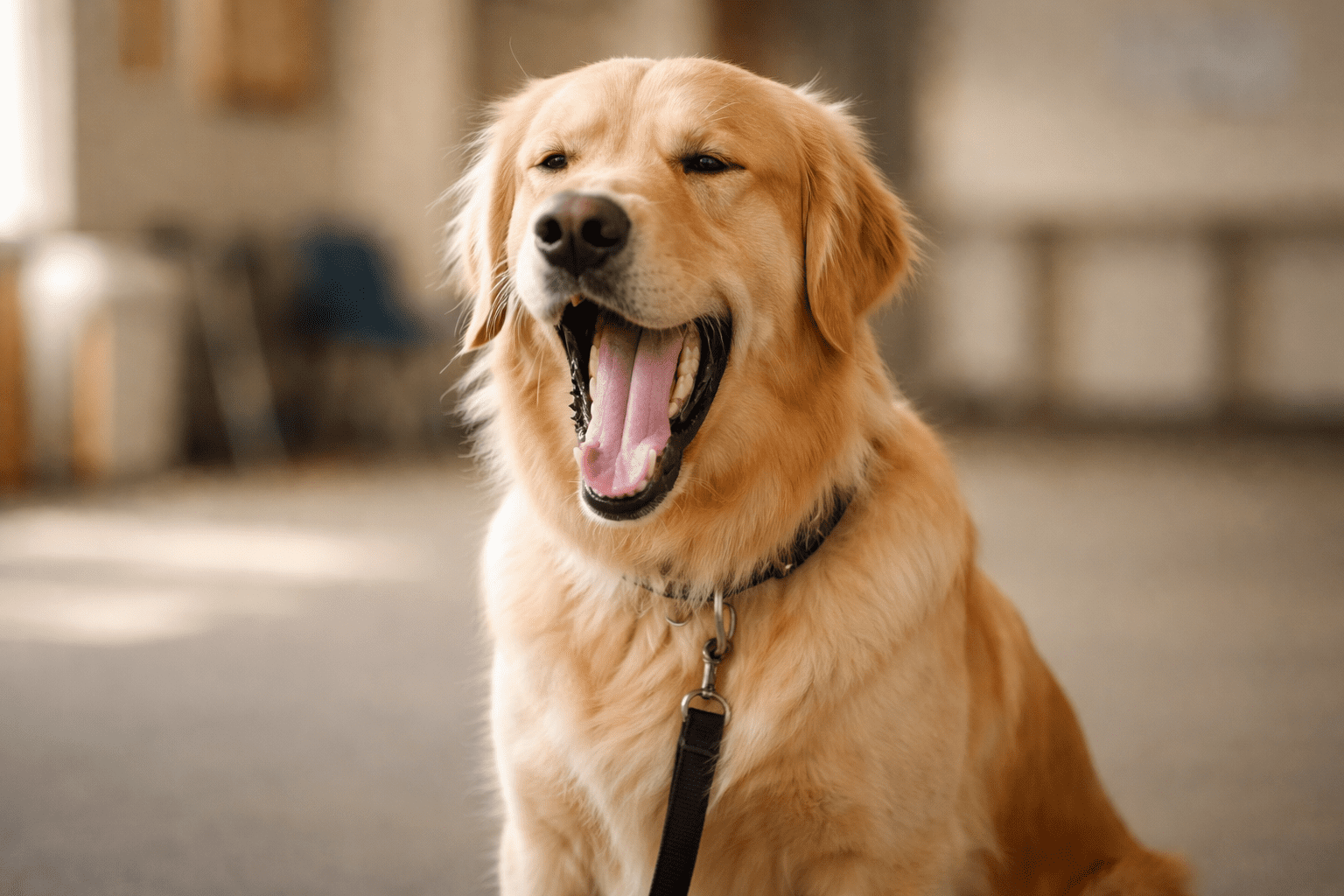
Yawning happens frequently in stressful environments. Watch for repeated yawns at the vet’s office, during nail trims, or when family members argue. These aren’t signs of tiredness but signals of discomfort.
Sniffing the ground intensely during walks often means your dog needs a break from social pressure. If you call them away from something interesting or if another dog approaches too quickly, they might suddenly become “fascinated” with a spot on the ground.
Behavioral Actions
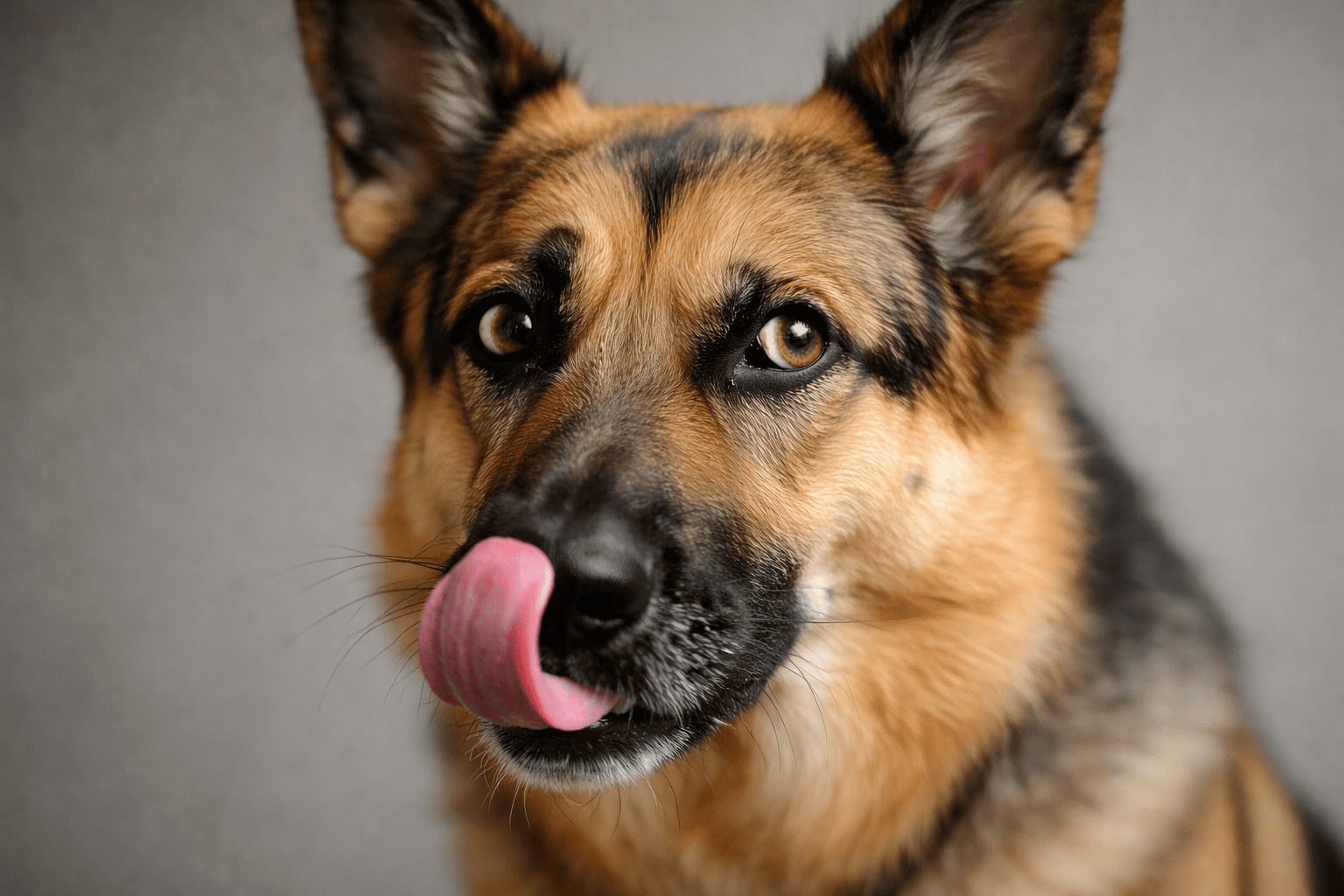
Lip licking shows up in countless stress situations. Dogs lick their lips when strangers lean over them, during uncomfortable petting, or when they sense tension in their household. It’s one of the most common displacement behaviors you’ll see.
Shaking off looks exactly like your dog drying themselves after getting wet. You’ll often see this after stressful events end, like immediately after the mailman leaves or right after a training session that pushed their limits.
Inappropriate play bows can signal discomfort. If your dog bows but doesn’t actually engage in play, or bows toward something that isn’t playing, they might be using it as a displacement behavior to diffuse tension.
Why Dogs Display Displacement Behavior
Understanding the “why” behind these behaviors helps you address the root cause instead of just the symptoms.
Conflict and Confusion
Dogs show displacement behaviors most often when they receive mixed signals or face situations with no clear “right” answer. During dog obedience training, your dog might scratch or yawn when they don’t understand what you want or feel pressured by your expectations.
Meeting unfamiliar dogs creates natural conflict. Your dog wants to investigate but also feels uncertain about the stranger’s intentions. This internal tug-of-war often triggers sudden sniffing, lip licking, or scratching.
Punishment-based training creates enormous conflict for dogs. They want to please you but fear the consequences of getting it wrong. This environment breeds displacement behaviors as dogs struggle with the stress of unpredictability.
Anxiety and Stress Management
Displacement behaviors serve as emotional release valves. When stress hormones surge, these behaviors help your dog regulate those feelings. The physical act of scratching, shaking, or yawning provides a brief distraction that helps lower arousal levels.
Think of it like when you take a deep breath during a stressful moment. Your dog can’t consciously choose to breathe deeply and calm down, but they can engage in these automatic behaviors that serve a similar purpose.
Chronic stress leads to more frequent displacement behaviors. If your dog shows these signals constantly, it indicates an ongoing problem that needs attention before it develops into more serious behavioral issues.
Social Communication
Displacement behaviors often communicate “I’m not a threat” to other dogs. A dog approaching another dog might yawn, sniff the ground, or look away. These are calming signals that help prevent conflict.
Your dog might show displacement behaviors around people too. Lip licking when someone new approaches tells both you and the stranger “I’m nervous about this interaction.” Unfortunately, many people miss these subtle warnings and continue approaching, which can escalate the situation.
Dogs also use these behaviors to request space. If your dog suddenly becomes very interested in sniffing during a walk when another dog approaches, they’re communicating they need distance or time to assess the situation.
Recognizing Displacement Behavior in Different Contexts
Context is everything when identifying displacement behaviors. The same action means different things depending on the situation.
| Context | Displacement Behavior | Normal Behavior | Problem Behavior |
| Meeting new dogs | Brief sniffing, looking away, yawning | Relaxed body, play invitation, mutual sniffing | Stiff body, hard stare, raised hackles |
| Training sessions | Scratching, shaking off after each rep | Focused attention, eager responses | Refusal, hiding, cowering |
| Vet visits | Lip licking, yawning, turning away | Calm acceptance, tail wags | Aggressive displays, panic, freezing |
| Home alone | Brief displacement before settling | Relaxed sleeping, playing with toys | Destructive behavior, constant barking |
| Greeting people | Ground sniffing, scratching, yawning | Excited tail wags, approaching freely | Jumping, nipping, excessive excitement |
During Training and Learning
Watch for displacement behaviors when teaching new skills. If your dog suddenly scratches mid-training session, they’re likely feeling frustrated or confused. This is your signal to simplify the task, take a break, or end on an easier note.
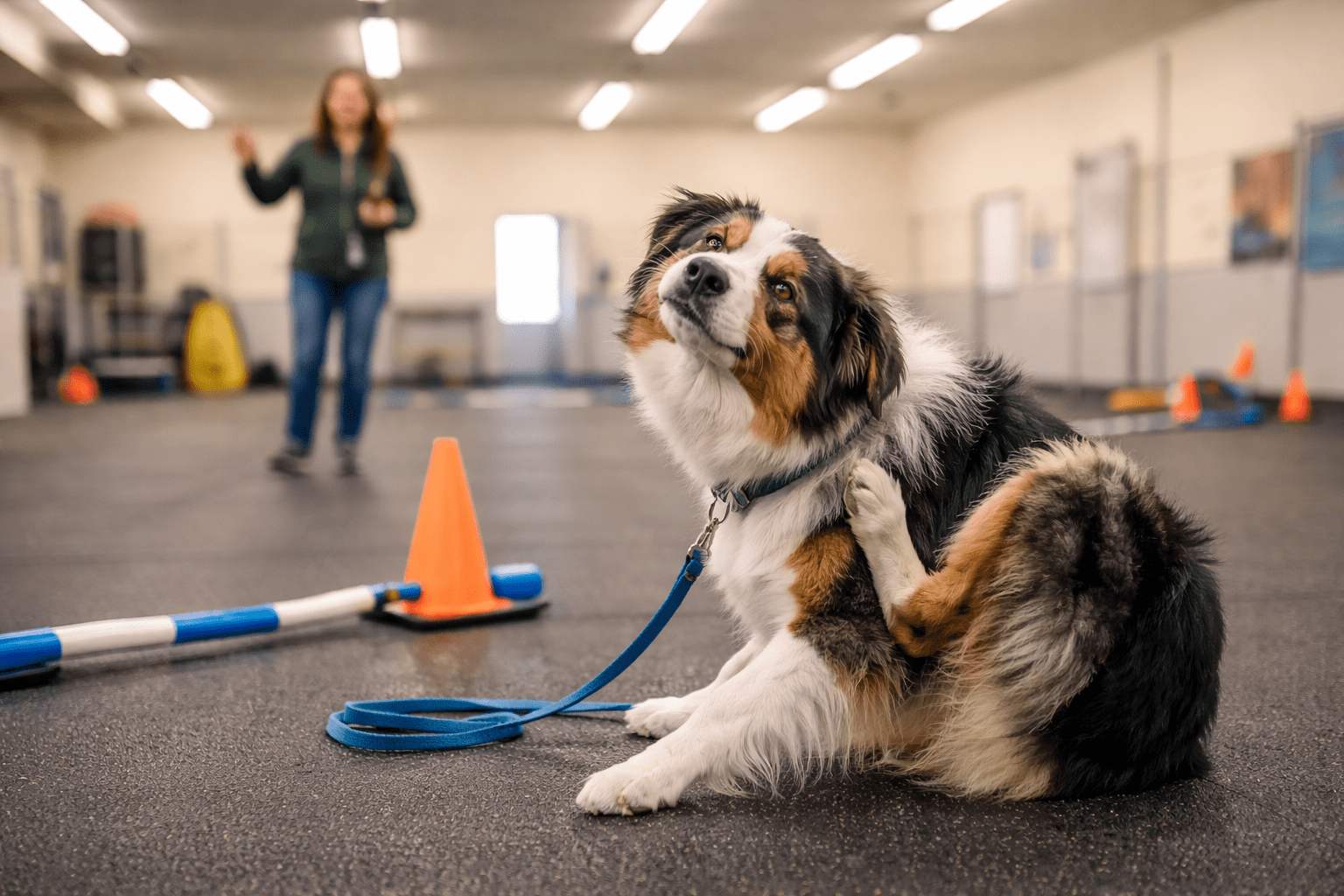
Displacement behaviors during training aren’t defiance. They tell you the difficulty level exceeds your dog’s current ability or emotional state. Pushing through these signals creates more stress and slows learning.
Frequent yawning during private dog training sessions means your dog needs more frequent breaks or shorter sessions. Some dogs have lower stress thresholds and need training adjusted to their individual needs.
In Social Situations
Dog parks and group settings produce lots of displacement behaviors. A dog who repeatedly sniffs the ground during play might be overwhelmed by the activity level and needs a break from other dogs.
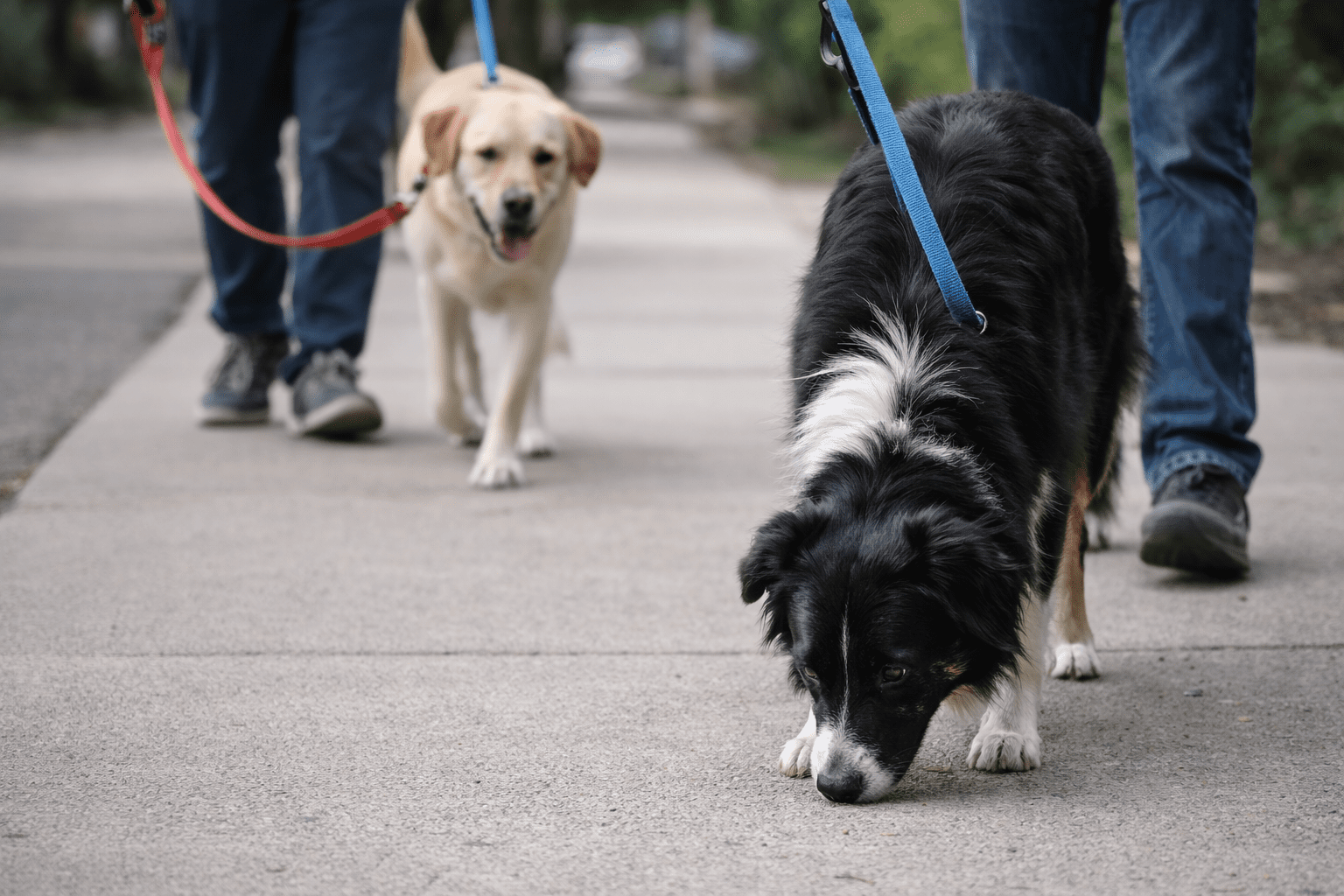
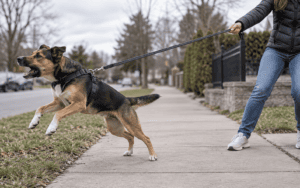
Meeting new dogs on leash creates significant conflict. Your leash restricts your dog’s natural greeting behaviors, creating frustration. Displacement behaviors like sniffing, scratching, or looking away are extremely common during leash greetings.
Watch for displacement behaviors during interactions with children. Dogs who aren’t comfortable with kids often show lots of lip licking, yawning, and looking away. These are warnings that the dog needs space, not punishment for “not liking kids.”
The Connection Between Displacement Behavior and Aggression
Displacement behaviors often appear in the early stages of stress before aggression develops. Understanding this progression helps you intervene early and prevent serious behavioral problems.
Warning Signs and Escalation Patterns
Dogs rarely go from calm to aggressive instantly. There’s usually a predictable ladder of stress signals. Displacement behaviors sit in the middle of that ladder, between early calming signals and more serious warnings.
The typical escalation looks like this: tension in body → displacement behaviors (yawning, lip licking, looking away) → stronger avoidance signals → growling → snapping → biting. Each step is an attempt to communicate discomfort and request space.
When dogs repeatedly use displacement behaviors but their signals are ignored, they learn these subtle communications don’t work. They may skip straight to growling or snapping because that’s what finally makes the stressor go away.
Dogs with fear aggression in dogs often show extensive displacement behaviors before reactive episodes. Learning to read these early signs gives you time to create distance or remove your dog from the triggering situation.
Redirected Behavior and Frustration
Sometimes displacement behaviors are confused with redirected aggression, but they’re different. Redirected aggression happens when a dog can’t access the target of their frustration and instead directs that energy toward something else, often snapping at whoever is nearest.
Displacement behaviors are coping mechanisms, not aggressive acts. However, chronic displacement can indicate building frustration that might eventually lead to redirected aggression if the underlying stress isn’t addressed.
For dogs working through issues at a board and train for aggressive dogs, recognizing displacement behaviors helps trainers identify triggers and adjust the training plan before the dog feels pushed to react aggressively.
How to Help Your Dog With Displacement Behaviors
Seeing frequent displacement behaviors means your dog needs help managing stress. Here’s how to address it effectively.
Reducing Stress and Triggers
Identify what situations trigger displacement behaviors in your dog. Keep a simple log for a week noting when and where you see these behaviors. Patterns will emerge showing specific triggers.

Once you identify triggers, work on reducing exposure while building your dog’s confidence. If your dog shows displacement behaviors around other dogs, start training at greater distances where they can see dogs but feel safe enough to focus on you.
Environmental management makes a huge difference. Baby gates, crates as safe spaces, and predictable routines all help reduce overall stress levels. A less stressed dog shows fewer displacement behaviors.
Training and Behavior Modification
Teach your dog alternative coping strategies. Train a strong “look at me” or “touch” cue that gives your dog something productive to do when feeling uncertain. Rewarding these behaviors helps your dog learn better ways to handle stress.
Counter-conditioning changes your dog’s emotional response to triggers. If your dog shows displacement behaviors around new people, work on building positive associations with strangers through careful, gradual exposure paired with high-value rewards.
Avoid corrections or punishment for displacement behaviors. Your dog isn’t misbehaving; they’re communicating distress. Punishing these signals teaches your dog to hide their stress, which often leads to aggression appearing “out of nowhere” because the warning signs were suppressed.
When to Seek Professional Help
If displacement behaviors happen constantly or in most situations, your dog’s baseline stress level is too high. Professional intervention can help you develop a comprehensive behavior modification plan.
Displacement behaviors that escalate to aggression need immediate professional attention. Dogs showing this pattern require careful assessment and structured training to address both the stress and the aggressive responses.
Problems like barrier aggression in dogs often come with lots of displacement behaviors during training. Working with an experienced trainer helps you read these signals and adjust training appropriately.
Final Insights on What Is Displacement Behavior in Dogs
Displacement behaviors are your dog’s way of saying “I’m stressed and need help managing this situation.” These normal actions performed at inappropriate times serve as emotional pressure valves and communication signals. By learning to recognize scratching, yawning, lip licking, and ground sniffing in context, you gain insight into your dog’s emotional state.
The key is responding appropriately when you see these behaviors. Don’t ignore them, but don’t punish them either. Instead, assess what’s causing the stress and work to either remove the trigger or build your dog’s confidence through gradual, positive training.
Understanding displacement behavior helps you become a better advocate for your dog. You’ll recognize when situations are too stressful, when training needs adjustment, and when your dog needs professional help developing better coping strategies.
K9 Mania Dog Training is the leading board and train on Long Island, specializing in stress-related behaviors, reactivity, and aggression. Our expert trainers understand canine stress signals and create customized plans addressing displacement behaviors at their root. Trust us to help you build a stronger, confident relationship with your dog.
You May Also Want to Read
- Rescue Dog Adjusting to New Home
- Do Dogs Hold Grudges
- How to Stop Resource Guarding in Dogs
- Redirected Aggression in Dogs
Frequently Asked Questions
What does displacement in a dog look like?
Displacement behavior in dogs looks like normal activities performed at unusual times or in inappropriate contexts. Common examples include sudden scratching when nothing itches, yawning when not tired, intense ground sniffing during social interactions, rapid lip licking when not eating, or shaking off as if wet when completely dry. These behaviors appear briefly and seem out of place for the situation. The key identifier is that the behavior doesn’t match the context or serve an obvious practical purpose in that moment.
How to help a dog with displacement behavior?
Help your dog by first identifying what triggers the displacement behaviors, then work to reduce stress in those situations. Create more distance from triggers, use positive reinforcement training to build confidence, and teach alternative coping behaviors like “look at me” or “touch” commands. Ensure your dog has a predictable routine, safe spaces to retreat to, and adequate mental and physical exercise. Avoid punishment or corrections for these behaviors since they’re communication signals, not misbehavior. Consider working with a professional trainer if displacement behaviors are frequent or escalating.
How to fix displaced aggression in dogs?
Address displaced aggression by managing the environment to prevent situations where your dog becomes so frustrated they redirect onto available targets. Identify the primary triggers causing the frustration and work on desensitization and counter-conditioning to those specific stimuli. Teach your dog calming behaviors and impulse control through structured training sessions. Ensure adequate exercise and mental stimulation to reduce overall arousal levels. Remove your dog from triggering situations before frustration builds to the point of redirection. Professional behavior modification is strongly recommended for displaced aggression cases.
Why do dogs do displacement behaviors?
Dogs perform displacement behaviors as an automatic coping mechanism when experiencing internal conflict, stress, or uncertainty. These behaviors help regulate emotional arousal and provide a momentary mental break from confusing or stressful situations. They occur when dogs face conflicting motivations, such as wanting to approach something but also feeling wary of it. Displacement behaviors also serve as social communication signals, conveying non-threatening intentions to other dogs or requesting space from people. They’re a normal part of canine stress response and emotional regulation.
Is barking a displacement behavior in dogs?
Barking is not typically considered a displacement behavior. Barking is usually a direct communication tool that serves specific purposes like alerting, warning, requesting attention, or expressing excitement. Displacement behaviors are normal activities performed out of context, like scratching when nothing itches or yawning when not tired. However, some barking might occur alongside displacement behaviors during stressful situations. If your dog barks excessively in certain contexts, it’s more likely a direct response to the situation rather than a displacement activity.
Is displacement behaviour in dogs bad?
Displacement behavior itself isn’t bad or harmful. It’s a normal coping mechanism that helps dogs manage stress and communicate their emotional state. These behaviors serve important functions in emotional regulation and social communication. However, frequent displacement behaviors indicate your dog is experiencing significant stress or conflict that needs to be addressed. While the behaviors themselves aren’t problematic, they’re signals that something in your dog’s environment or routine is creating discomfort. Use them as information to help your dog feel more comfortable rather than viewing the behaviors as problems to eliminate.