Teaching your dog to ride calmly in a car starts with gradual exposure, positive reinforcement, and the right setup inside the vehicle. Most dogs can learn to associate car rides with comfort and good experiences within a few weeks of consistent practice.
Key Takeaways
- Start slow: introduce your dog to the car before expecting them to ride in it.
- Use high-value treats and praise to build a positive association with the vehicle.
- Motion sickness and fear are the two most common barriers, and both are manageable.
- The right restraint system keeps your dog safe and reduces anxious movement.
- Puppies are easier to condition early, but older dogs can absolutely learn too.
- Consistency across sessions matters more than session length.
Why So Many Dogs Struggle With Car Rides
If your dog whines, shakes, drools, or tries to bolt the moment you open the car door, you are not alone. A large portion of dog owners in the U.S. report that their dog shows some form of anxiety or discomfort during car travel. Understanding why this happens is the first step toward fixing it.
There are two primary reasons dogs struggle with car rides:
- Motion sickness. Dogs, especially puppies, have inner ear structures that are still developing. The movement of a vehicle can trigger nausea the same way it does in young children. Signs include excessive drooling, yawning, lethargy, or vomiting during or right after a ride.
- Anxiety and negative associations. Many dogs only ride in cars to go to the vet or the groomer. When every car trip ends with something stressful, your dog quickly learns to associate the car with that stress. The car itself becomes a cue for something bad.
If your dog has deep-rooted fear responses, it can help to read up on how to help a fearful dog gain confidence before starting car training, since the same confidence-building principles apply here.
Once you understand the root cause, you can address it directly rather than trying to force the behavior.
Things to Know
- Dogs who only ride to the vet will need a deliberate re-conditioning process before car rides feel neutral.
- Motion sickness often resolves as puppies mature, but anxiety does not resolve on its own.
- Never feed your dog a large meal right before a car ride during training; a light stomach reduces nausea risk.
- Cracking windows slightly during travel helps reduce the pressure change inside the car that some dogs find disorienting.
- A dog who is well-exercised before a car session will naturally be calmer.
- Some dogs do best riding in the rear cargo area, while others prefer a back-seat crate. Let the dog show you what feels safer.
Step-by-Step: How to Train a Dog to Ride in a Car
This is the core process. Move at your dog’s pace. If they show stress at any stage, back up a step rather than pushing forward.
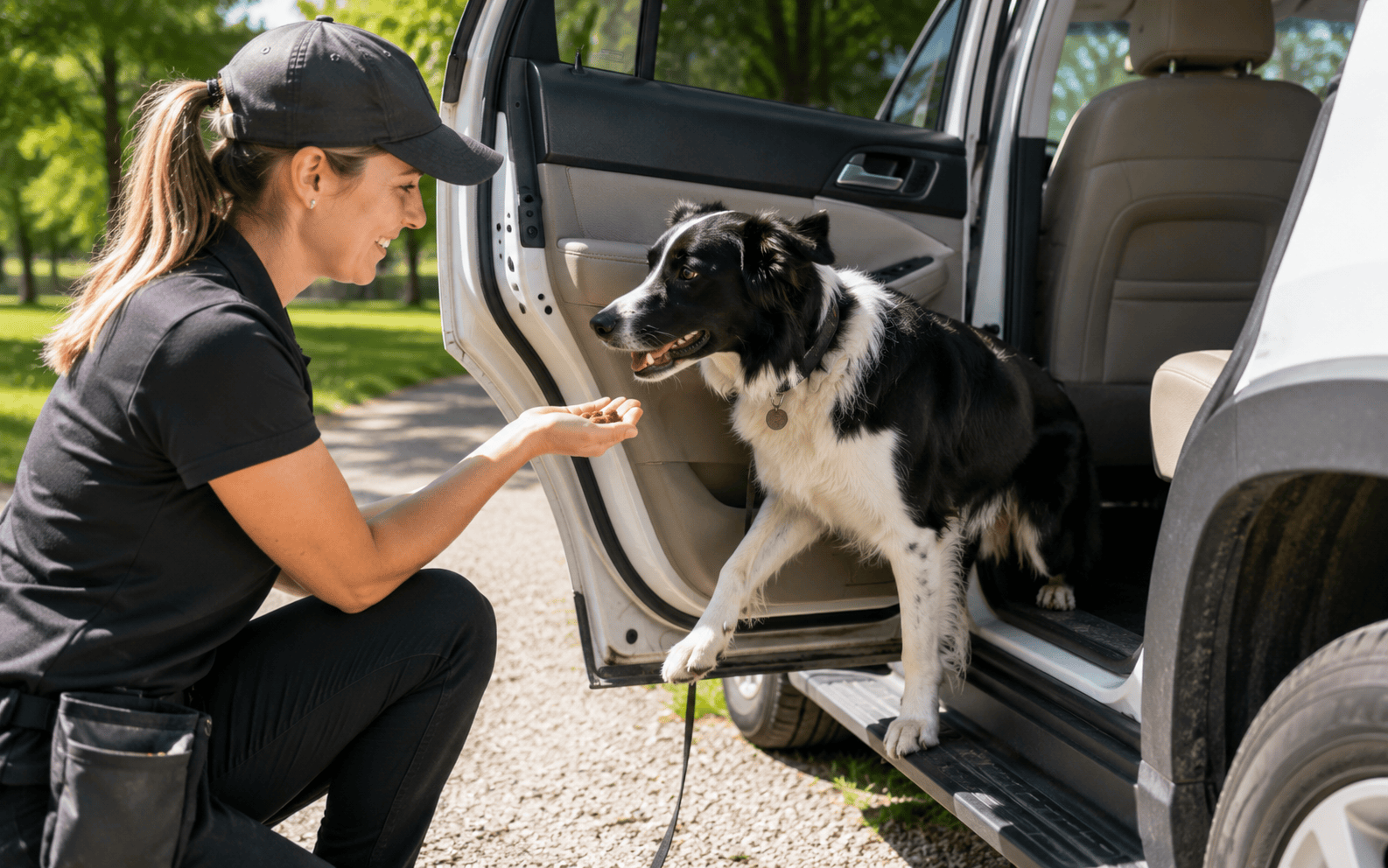
Step 1: Introduce the Car Without Going Anywhere
Open the car doors and let your dog sniff around the exterior. Toss treats near the car, then beside the open door, then inside the door frame. Do not push your dog in. The goal here is simple: the car starts to predict good things.
Do this for several sessions across a few days before asking your dog to actually get inside.
Step 2: Build Value for Getting Into the Vehicle
Once your dog is comfortable near the car, start rewarding them for putting one paw in, then two paws, then fully entering. Use an obedience dog training cue like “load up” or “get in” so the dog learns a consistent command for entering the vehicle.
Feed treats, play with a favorite toy, and then let your dog hop back out. Do not close the doors yet. The goal is voluntary entry and a positive feeling about being inside.
Step 3: Add Duration Inside the Car
Once your dog gets in willingly, start building duration. Ask your dog to sit or lie down inside the car. Reward calm behavior. Close the doors for 30 seconds, then open them. Gradually extend the time the doors stay closed.
At this stage, you are not turning the engine on yet.
Step 4: Start the Engine Without Moving
Turn on the ignition and let the engine run while the car stays parked. Feed treats continuously for the first few seconds, then reward calm behavior. The engine noise and vibration are new stimuli, and some dogs react to them. Stay patient and keep the session short.
If your dog stays calm, great. If not, go back to the previous step and spend more time there.
Step 5: Short Trips Around the Block
Your first actual drive should last no more than 2 to 3 minutes. Drive around the block and come straight home. No vet visit, no groomer. Just a boring, uneventful drive that ends at home with a jackpot reward.
Build up trip length gradually over the following week: 5 minutes, then 10, then 20. Start taking your dog to fun destinations like a park or a pet supply store so the car begins to predict good outcomes more often.
Choosing the Right Restraint and Setup
Safety matters as much as comfort. An unrestrained dog in a moving vehicle is a projectile in the event of sudden braking or a crash. The American Automobile Association (AAA) recommends that all dogs be secured during travel.
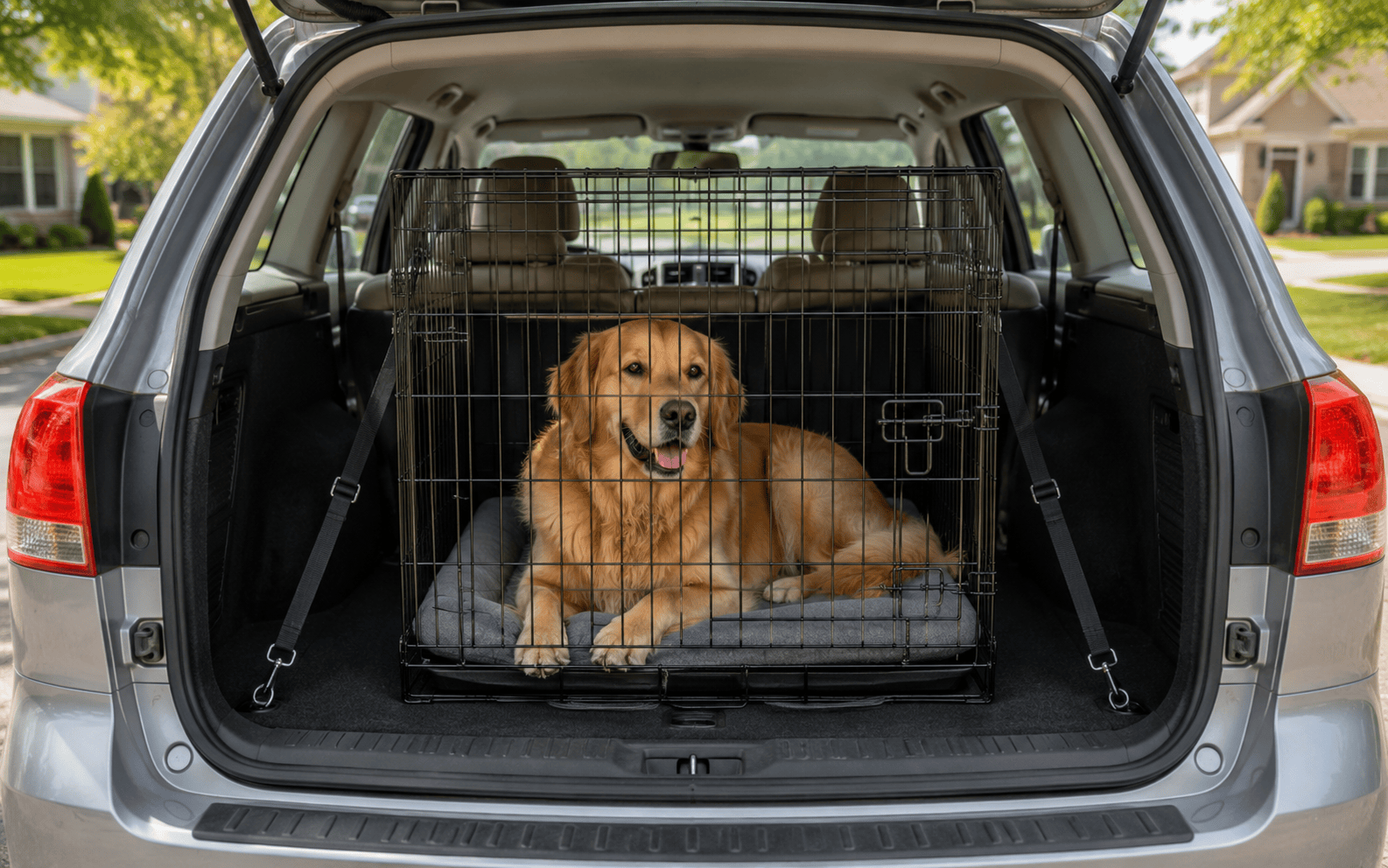
Here are the main options:
| Option | Best For | Approximate Cost | Key Benefit |
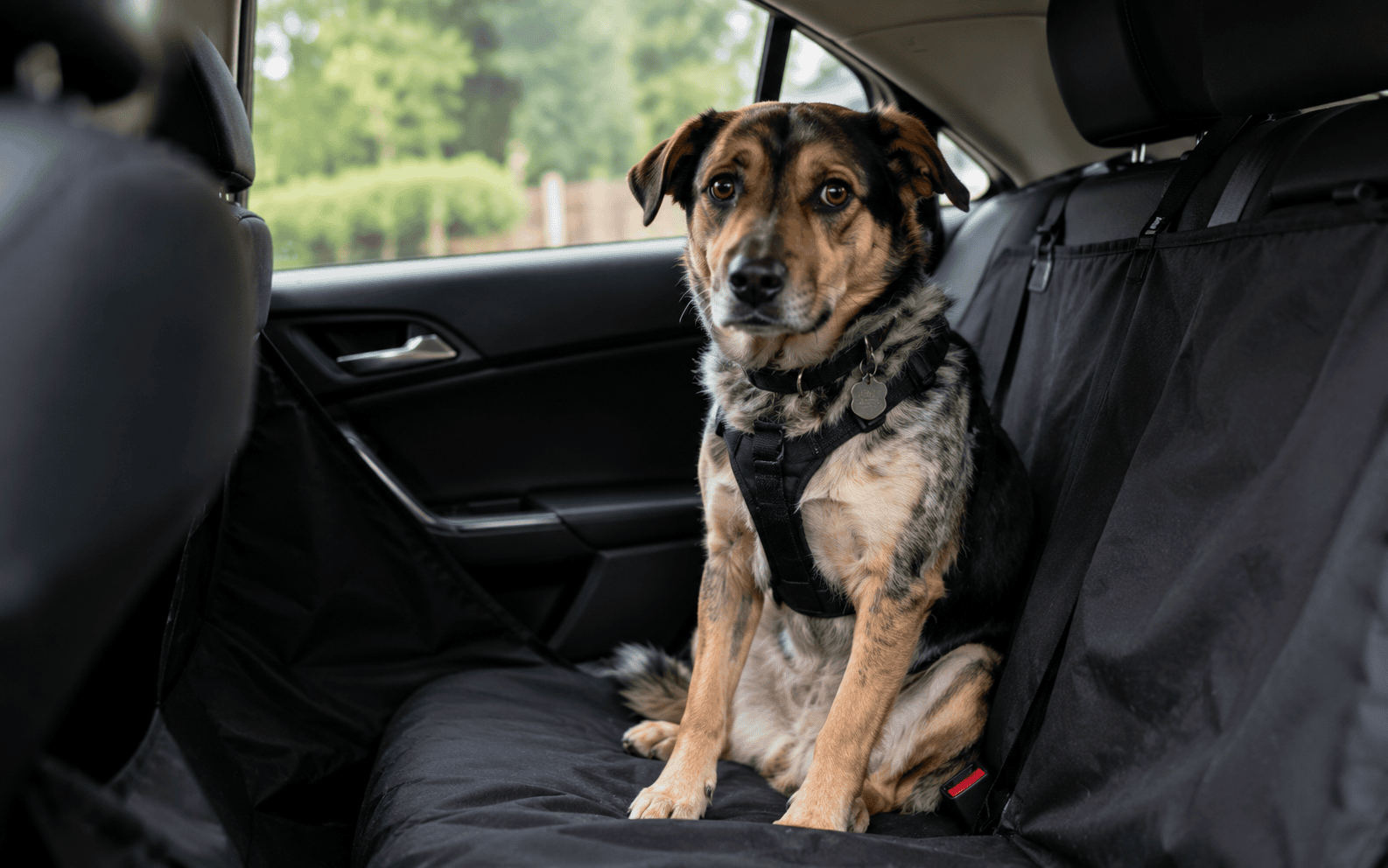
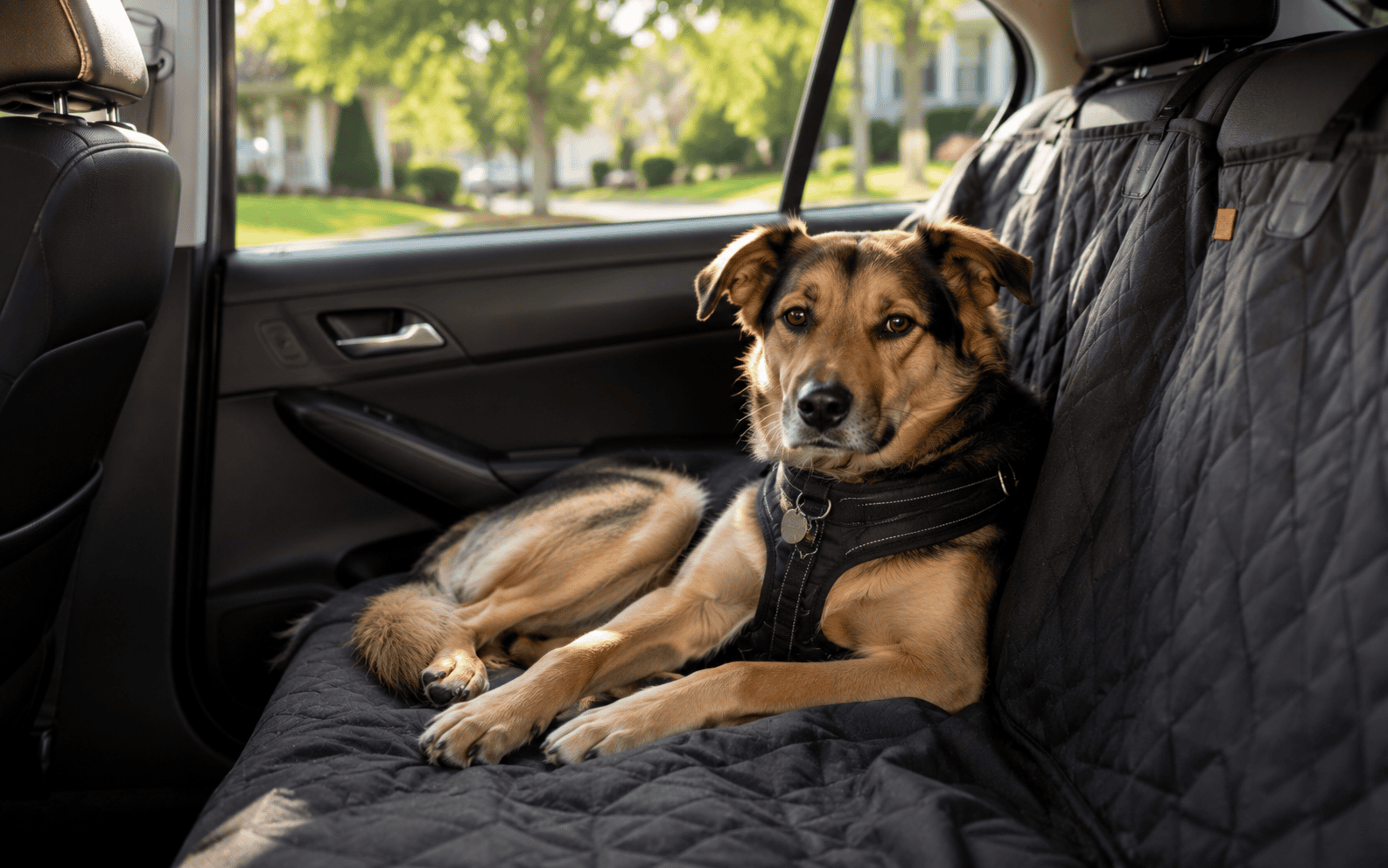
| Crash-tested harness + seat belt | Medium to large dogs | $30-$90 | Keeps dog in seat, allows some movement |
| Travel crate (secured) | Dogs of all sizes | $50-$200 | Full containment, familiar space |
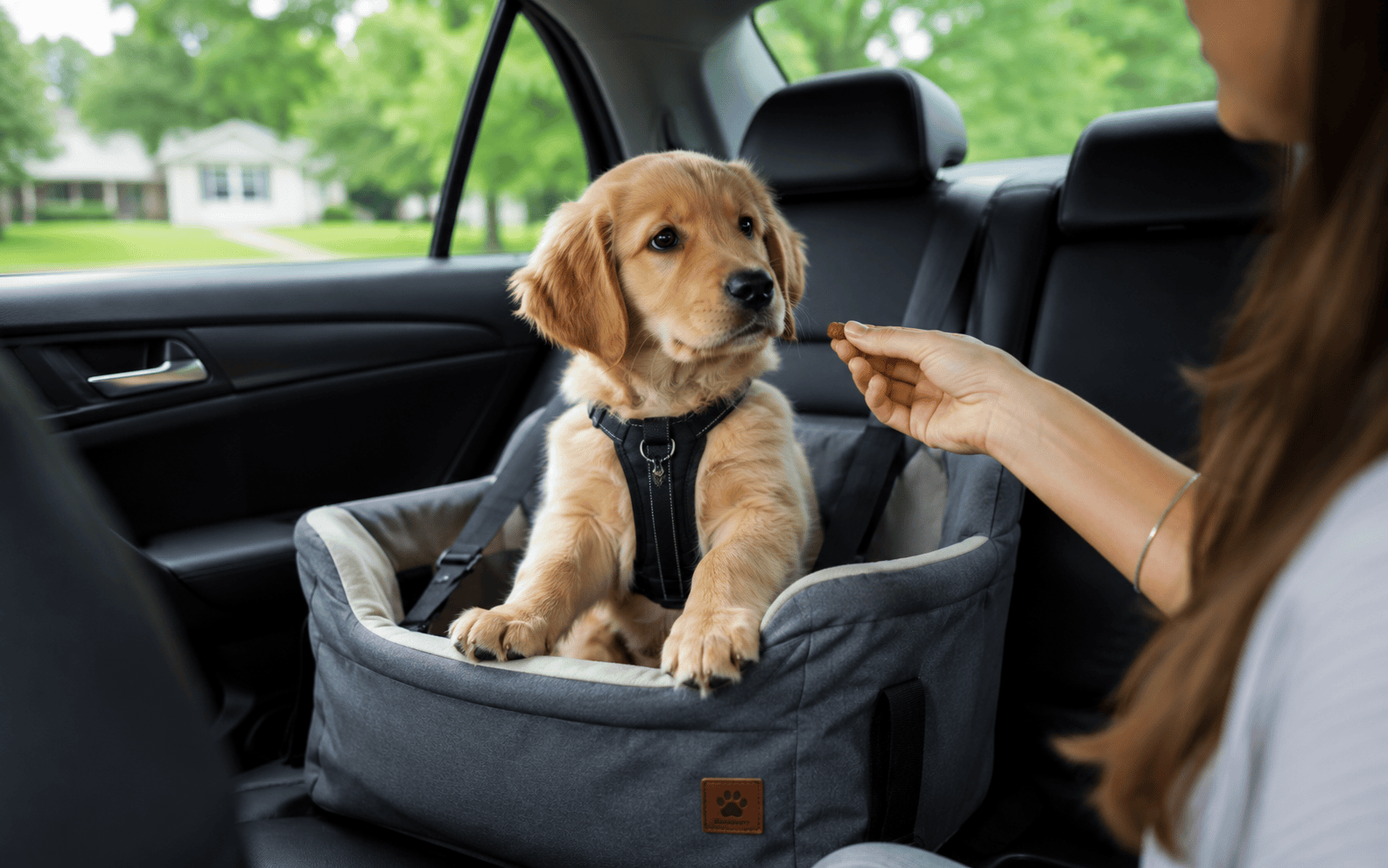
| Dog car seat (booster) | Small dogs under 20 lbs | $30-$80 | Elevated view, reduces anxiety |
| Cargo barrier | Large dogs in SUVs | $40-$120 | Keeps dog out of front seat |
| Carrier bag | Dogs under 15 lbs | $25-$70 | Compact, easy to secure with belt |
Whatever option you choose, introduce it at home first. Let your dog sleep in the crate, wear the harness around the house, and get familiar with it before combining it with the car.
Handling Specific Challenges
Motion Sickness
If your dog vomits or drools heavily on rides, talk to your vet about options. There are prescription anti-nausea medications specifically approved for dogs, and over-the-counter options like ginger treats that many owners find helpful. Keeping your dog facing forward (rather than sideways) and driving on smoother roads during training sessions can also reduce the severity.
Hyperactive Dogs in the Car
Some dogs do not show fear; they go the opposite direction and become wildly overstimulated. Barking, jumping between seats, and pawing at windows are common. For these dogs, a secured crate or a crash-tested harness that limits movement is essential. Pairing that with a private dog training long island program can help address the underlying impulse control issues that drive this behavior.
Puppies
Starting early is the biggest advantage you have. If you are working with a puppy, a dedicated puppy training long island program typically includes exposure to novel environments and situations, which makes car conditioning much easier to layer in.
Dogs Rescued From Shelters
Rescue dogs often come with unknown histories. They may have never been in a car, or they may associate cars with the shelter intake process. Be prepared to spend extra time on the foundational steps and move more slowly. Professional in home dog training long island services can be especially useful here because the trainer can observe your dog in the actual environment where training needs to happen.
Consistency, Routine, and Common Mistakes
The biggest mistake owners make when figuring out how to train a dog to ride in a car is going too fast. Moving from “won’t get near the car” to “first road trip” in a single weekend will almost always backfire. You will end up confirming your dog’s anxiety rather than reducing it.
Other common mistakes include:
- Skipping the stationary practice phases and jumping straight to driving.
- Only taking the dog in the car for necessary errands, so every trip feels high-stakes.
- Comforting an anxious dog by hugging or holding them, which can unintentionally reinforce the anxious state.
- Inconsistent restraint: letting the dog roam free sometimes and then crating other times, which creates unpredictability.
If your dog has been working through a structured program like board and train long island, you may find that the foundational obedience and calm behavior skills transfer well into car training, since the dog already knows how to settle on cue.
Routine is your best tool. Make short car trips part of your weekly schedule, not just special occasions. The more your dog rides in the car under neutral, pleasant conditions, the faster the positive association builds.
Get Your Dog Riding Calmly With the Right Training Support
Struggling with a dog who panics at the sight of the car, or one who turns every ride into chaos? You do not have to figure it out on your own. K9 Mania Dog Training works with dogs across Long Island and surrounding areas to address the exact behavior issues that make car travel stressful.
Whether your dog needs impulse control work, confidence building, or basic obedience as a foundation for calm behavior, K9 Mania offers programs designed around your dog’s specific needs. Services include Board and Train Programs, Private Dog Training, Puppy Training, Obedience Training, and Behavior Modification.
If you are not sure which program is the right fit, the K9 Mania team can help you identify the best path forward based on your dog’s age, history, and current behavior. Contact K9 Mania Dog Training today to schedule a consultation and start building the calm, confident dog you want in the car and everywhere else.
You May Also want to Read
Puppy Potty Training Regression
Frequently Asked Questions
How long does it take to train a dog to be comfortable in a car?
Most dogs show meaningful improvement within 2 to 4 weeks of consistent desensitization work.
Some dogs with mild anxiety may adjust within a week of daily short sessions, while dogs with severe fear responses can take 6 to 8 weeks or longer. The key variable is how consistently you work through each step without rushing.
Should I crate my dog in the car or use a harness?
Both are safe options, and the right choice depends on your dog’s size, temperament, and what they find most comfortable.
Crates offer full containment and can feel den-like for dogs who are already crate trained. Harnesses with seat belt attachments allow more freedom while still preventing the dog from becoming a projectile. If your dog is already crate trained at home, starting with a crate in the car is often the smoother transition.
My dog drools and vomits on car rides. Is that anxiety or motion sickness?
It can be both, and the two conditions often overlap, especially in younger dogs.
True motion sickness typically causes drooling, lip-licking, and vomiting even on very short trips. Anxiety tends to present with panting, trembling, and whining in addition to the physical symptoms. Your vet can help you determine which is the primary driver and whether medication is appropriate.
Can I train an older dog to stop being afraid of the car?
Yes, older dogs can absolutely learn to tolerate and enjoy car travel with the right approach.
The desensitization process is the same as with younger dogs, but older dogs may need more repetitions before new associations take hold. Patience and short, positive sessions are especially important for senior dogs who have had years of negative car experiences.
Is it safe to let my dog ride with their head out the window?
It is not recommended as a routine practice, even though many dogs enjoy it.
Road debris, insects, and sudden stops all pose real risks when a dog’s head is outside the window at highway speeds. If your dog loves the fresh air, cracking the window a few inches gives them the sensory benefit without the same level of risk.
The Bottom Line on How to Train a Dog to Ride in a Car
How to train a dog to ride in a car comes down to three things: going slow, making the car predict good outcomes, and keeping every session short enough that your dog ends on a positive note. Skip the shortcuts, stay consistent, and most dogs will come around faster than you expect.
If you have been at this for a while without progress, or if your dog’s anxiety feels bigger than basic desensitization can address, reach out to a professional trainer. The right support makes a real difference, both in the car and beyond it.