Teaching a dog to drop it means training your dog to release any object from its mouth on command, reliably and without a struggle. This skill is one of the most practical and potentially life-saving behaviors you can build into your dog’s daily routine.
Key Takeaways
- “Drop it” is a safety command, not just a training exercise, and should be practiced regularly in low-stakes situations before you need it in an emergency.
- The exchange method (trading for a high-value treat) is the most effective starting point for most dogs.
- Consistency in your cue word and reward timing is more important than the specific training method you choose.
- Resource guarding and possessive behavior can complicate “drop it” training and may require a behavior specialist.
- You should practice the command with a wide variety of objects, not just toys, so your dog generalizes the behavior.
- Skipping the proofing stage is the most common reason “drop it” fails in real-world situations.
Why “Drop It” Is One of the Most Important Commands You Can Teach
Most dog owners think of “drop it” as a polite request during a game of fetch. In reality, it is a safety cue. Dogs explore the world with their mouths, and that curiosity does not stop at harmless objects. Socks, chicken bones, medications, sharp debris, and toxic plants are all fair game to a curious nose.
Without a reliable release cue, you are left with two bad options: prying the object out of your dog’s mouth (which risks a bite and rewards the guarding behavior) or chasing your dog around the yard while they swallow whatever they picked up.
This command also sits alongside other foundational behaviors. If you have been working through the top 10 essential dog commands every owner must know, you already understand why impulse control cues like “drop it” and “leave it” need to be rock solid before you move on to more advanced training.
The Core Methods: How to Teach a Dog to Drop It From Scratch
There is no single path to a reliable “drop it,” but two methods work consistently across most dogs and temperaments.
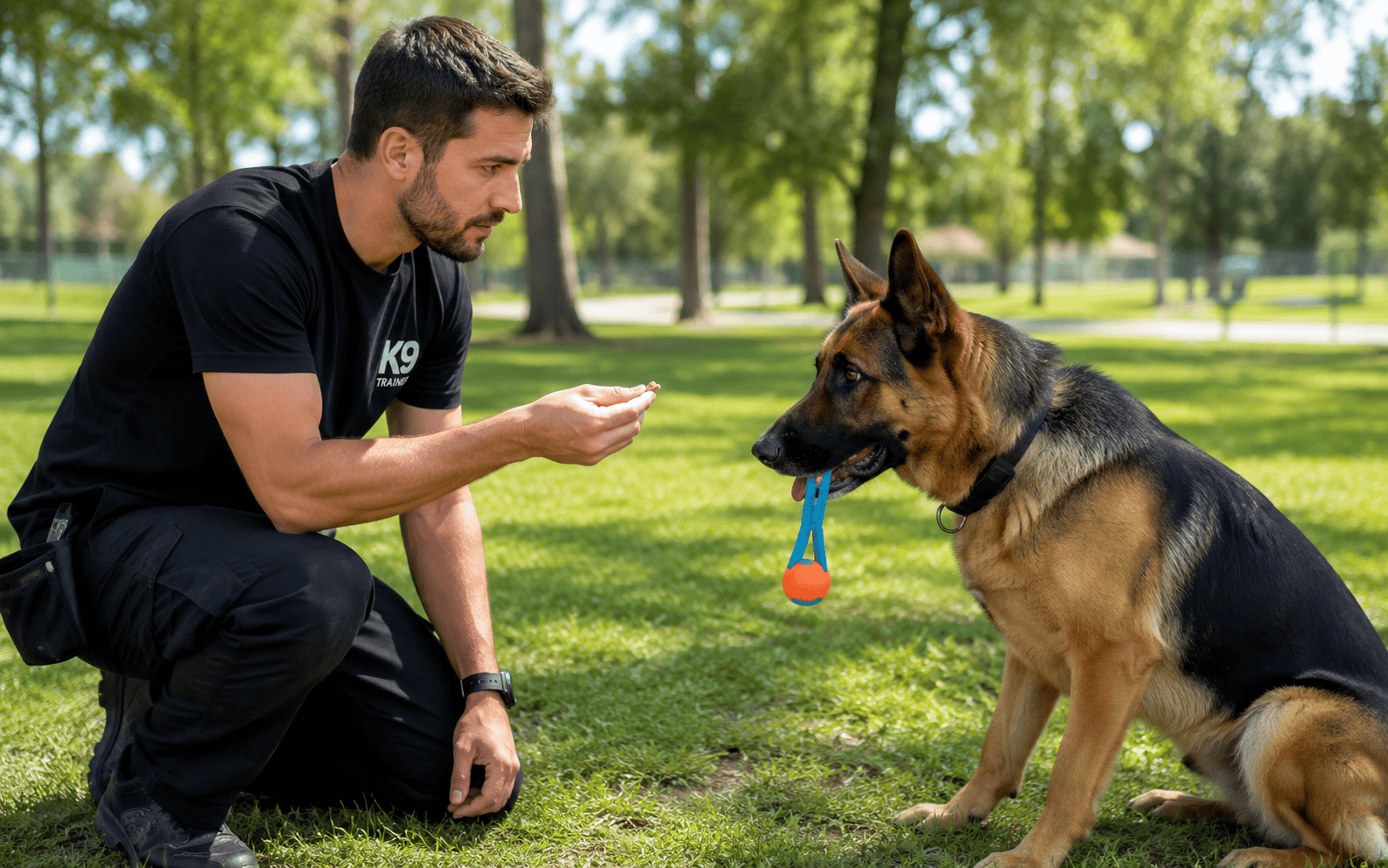
The Trade Method (Best Starting Point)
The trade method is built on a simple principle: your dog gives up something it values because you offer something even better. This builds positive associations with the command rather than teaching your dog that “drop it” means losing something they enjoy.
Here is how to run it:
- Start with a low-value item. Use a toy your dog likes but is not obsessed with. Avoid their favorite chew or high-prize object for the first few sessions.
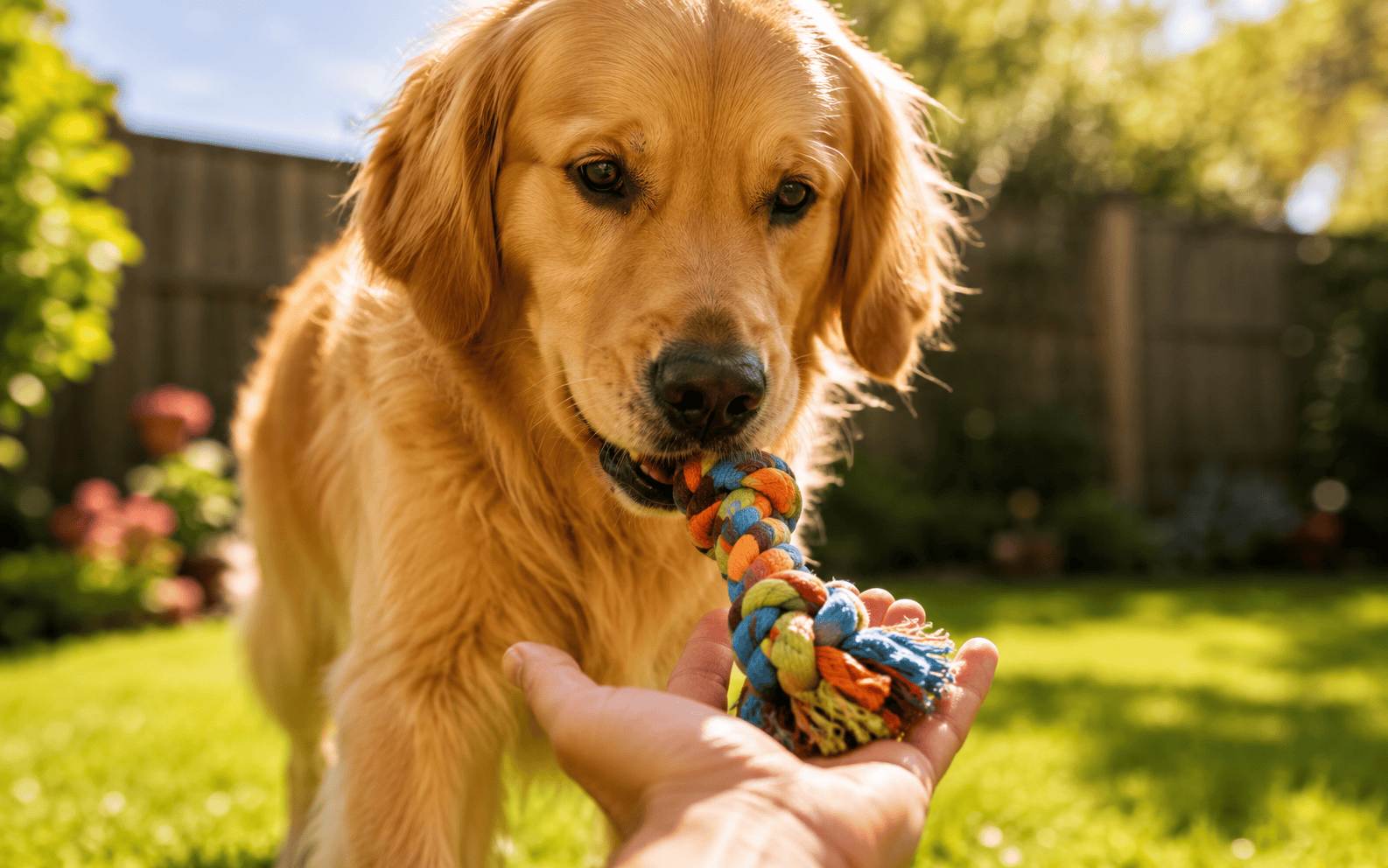
- Let your dog take the toy and allow them to hold it for a few seconds so they settle into possession.
- Show a high-value treat (small pieces of chicken, cheese, or hot dog work well) near their nose without giving it yet.
- Say “drop it” once, clearly and calmly. Do not repeat the cue.
- The moment they release the toy, immediately deliver the treat and use a marker word (“yes” or a clicker).
- Give the toy back. This step is critical. If your dog learns that dropping the toy always ends the game, they will become reluctant to release. Returning the toy communicates that “drop it” is not a punishment.
Repeat this in short sessions of 3-5 minutes, two to three times per day. Within a week, most dogs begin releasing on the verbal cue alone before the treat is even visible.
The Two-Toy Method
This approach works especially well for dogs that are highly toy-motivated and less food-driven. Instead of a treat, you use a second identical or comparable toy as the reward.
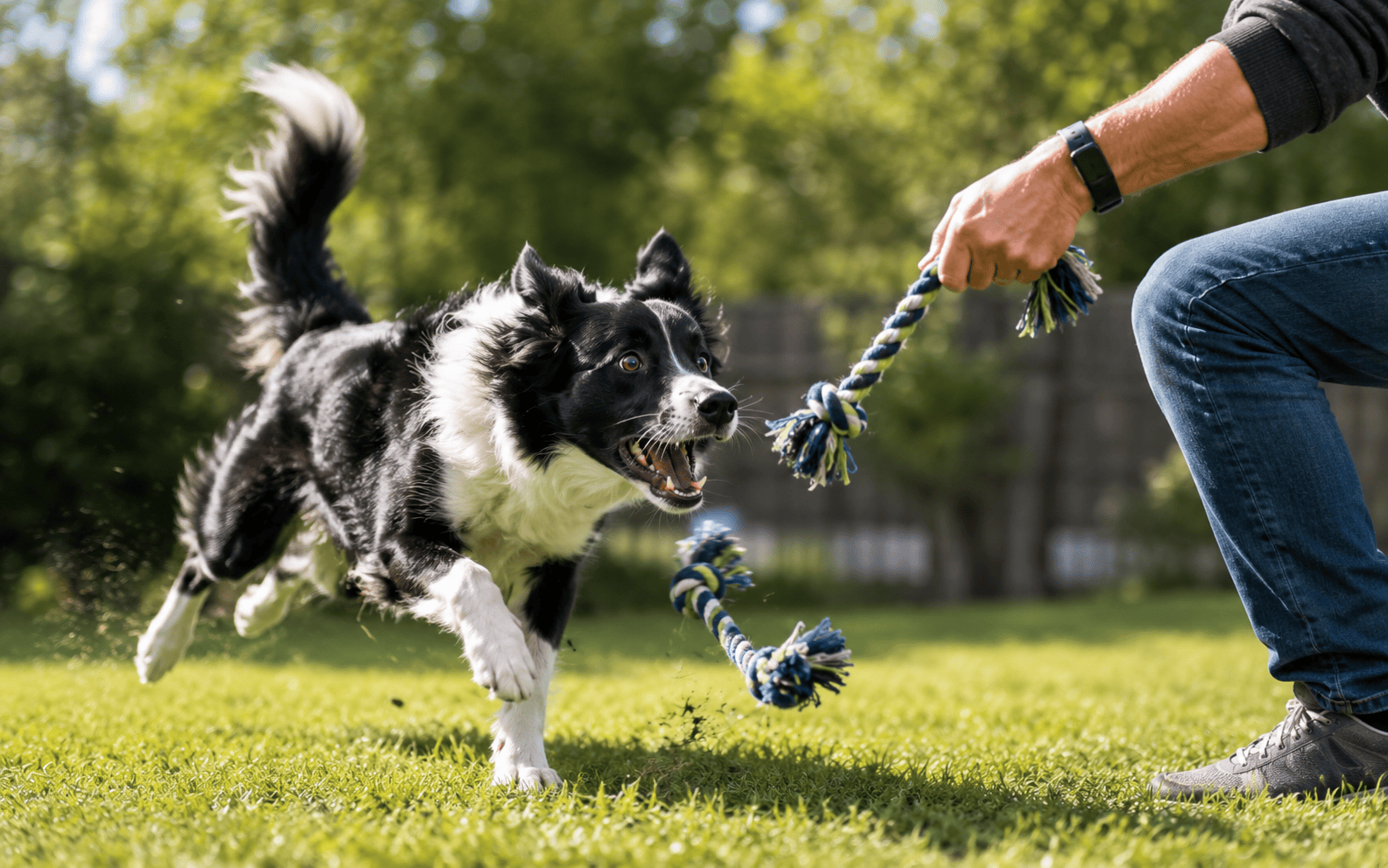
Show your dog the second toy enthusiastically while saying “drop it.” The moment they drop the first toy, immediately start playing with the second one. The swap happens naturally, and the dog learns that releasing one toy gets them access to something just as fun.
This method is also excellent for dogs that tend to effective strategies to stop your dog from destructive chewing because it redirects possession energy into a structured game rather than a confrontation.
Comparing the Two Main Training Methods
| Factor | Trade Method | Two-Toy Method |
| Best for | Most dogs, especially beginners | High-drive, toy-motivated dogs |
| Primary reward | High-value food treat | Second toy or play |
| Speed of results | Fast (3-7 days) | Moderate (1-2 weeks) |
| Works off-leash | Yes, with proofing | Yes, with proofing |
| Risk of object guarding | Low | Low to moderate |
| Equipment needed | Treats, one toy | Two identical toys |
Common Mistakes That Slow Down “Drop It” Training
Even with the right method, owners consistently run into the same roadblocks. Knowing them in advance saves weeks of frustration.
Repeating the cue multiple times. Say “drop it” once. Repeating it trains your dog to wait for the third or fourth repetition before responding. One cue, one expectation.
Only practicing with one object. If you only practice with a tennis ball, your dog learns to drop the tennis ball. They do not automatically generalize to a sock, a stick, or a stolen sandwich. Practice with a rotating variety of objects across different environments.
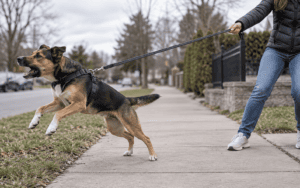
Using “drop it” during conflict. If your dog has already gone stiff, is growling, or is showing hard eyes over an object, a verbal cue is unlikely to work. This is a different issue entirely. Combining “drop it” training with understanding how to stop resource guarding in dogs gives you a much more complete approach when possessiveness is part of the picture.
Chasing the dog after they take something. Chasing is a reward. It makes the game more exciting and teaches your dog that grabbing objects leads to fun engagement. Stay calm, go get your treats, and practice your trade.
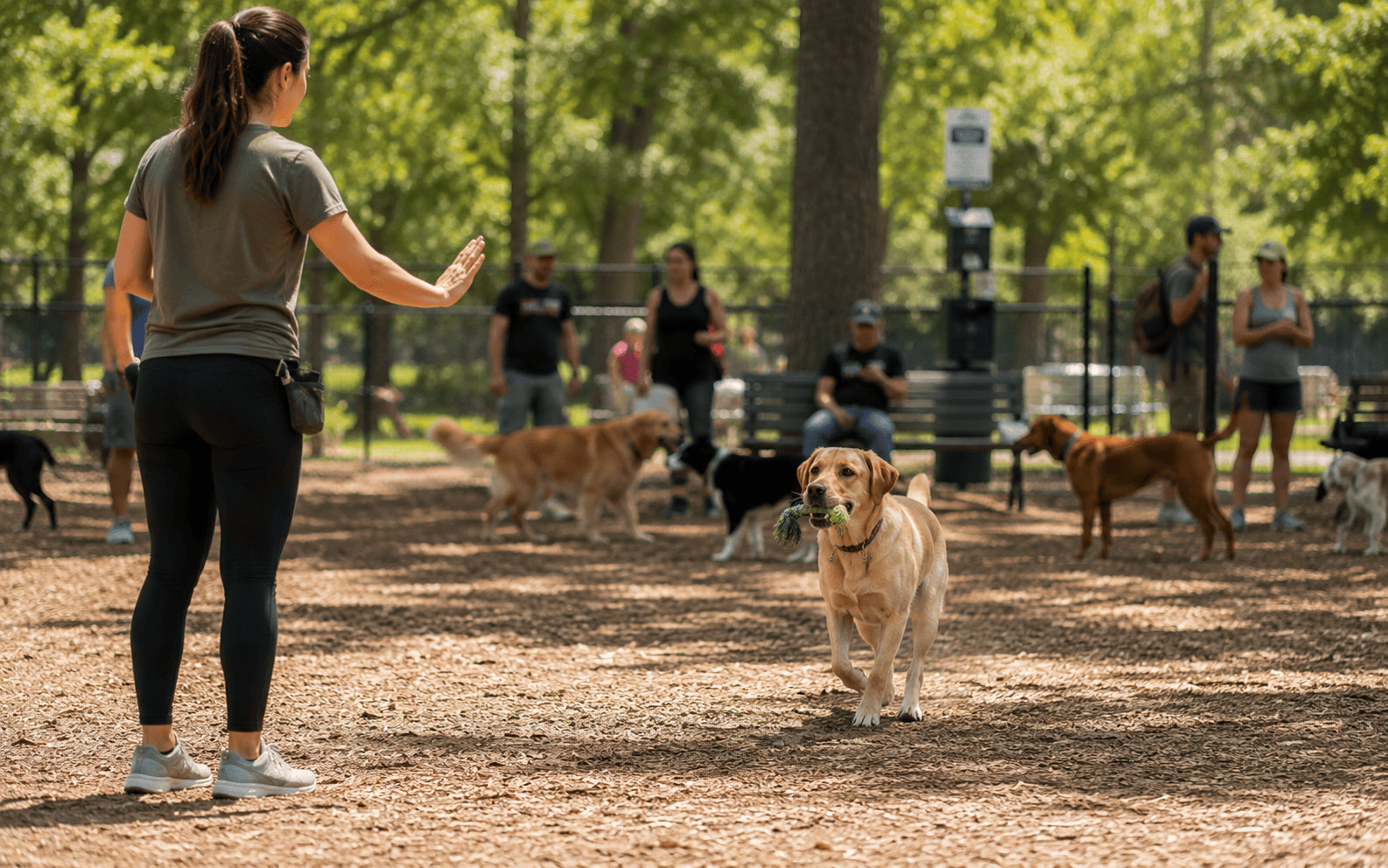
Skipping the proofing stage. Just because your dog drops a toy in the living room on a quiet Saturday morning does not mean they will do it at the dog park with six other dogs nearby. Proofing means slowly increasing difficulty: new locations, more distractions, higher-value objects.
Building Reliability: Proofing the “Drop It” Command
Once your dog understands the basic command in a controlled setting, the real work begins. Proofing is the process of teaching your dog that “drop it” means the same thing everywhere, with everything, at any level of distraction.
Work through this progression gradually:
- New locations: your backyard, the front yard, a quiet park, then a busier park.
- New objects: different toys, household items (given safely), sticks from outside, items with strong smells.
- Higher-value items: work up slowly to items your dog finds more exciting or edible.
- With distractions: other people nearby, other dogs in the area, during active play.
- With distance: practice asking for the drop while you are a few feet away rather than right in front of your dog.
Each time you increase the difficulty in one area, expect a temporary dip in performance. That is normal. Back up a step, rebuild success, then try again.
When “Drop It” Training Gets Complicated
Some dogs come with histories or temperaments that make this command harder to establish. Dogs that were strays, dogs with trauma histories, or dogs from certain working breeds with high prey drive may struggle significantly with releasing objects.
Resource guarding is one of the most common complications. A dog that freezes, growls, or snaps when approached with an object is not being defiant. They are communicating discomfort, and pushing through it without a proper behavior modification plan can escalate things quickly.
If you are dealing with guarding behavior alongside teaching this command, in home dog training long island is one of the most effective formats for addressing it because a trainer can observe the behavior in the exact environment where it happens and design a plan specific to your dog and your household.
Things to Know
- “Drop it” and “leave it” are two different commands. “Drop it” asks your dog to release something already in their mouth. “Leave it” asks them not to pick something up at all.
- Dogs do not generalize naturally. A cue learned in one context needs to be deliberately taught in others.
- Avoid punishing your dog for not dropping something. It increases anxiety around the command and can worsen guarding behavior.
- Puppies as young as 8 weeks old can begin learning this command in short, positive sessions.
- The treat value matters. If your dog is not dropping, the treat you are using is probably not exciting enough. Try freshly cooked chicken or freeze-dried liver.
- Some dogs need management strategies (baby gates, crates, leashes) alongside training while the command is being built, especially in homes with children.

Ready to Build a Reliable “Drop It” Command With Professional Support?
Teaching how to teach a dog to drop it sounds simple until your dog has swallowed a chicken wing before you even finish the sentence. If you have been working through the steps and not seeing the results you need, or if your dog’s possessiveness is escalating, professional training is the most efficient path forward.
At K9 Mania Dog Training, experienced trainers work with dogs of all breeds, ages, and backgrounds throughout Long Island and surrounding areas. Whether your dog needs help with basic obedience commands or a more structured behavior modification plan, there is a board and train long island program that fits.
Services available include:
- Board and Train Programs
- Private Dog Training
- Puppy Training
- Obedience Training
- Behavior Modification
For dogs where hands-on, intensive training makes the most sense, comprehensive residential training puts your dog in a structured learning environment every day. If you prefer working alongside your dog from the start, private dog training long island sessions put a trainer in your corner for personalized guidance.
Contact K9 Mania Dog Training today to find the right program for your dog.
You May Also Read
Agility Dog Training: What It Is, How It Works
Frequently Asked Questions
At what age should I start teaching my dog to drop it?
You can start as early as 8 weeks old using short, positive sessions with soft toys and small treats.
Puppies have short attention spans, so keep early sessions to 2-3 minutes. The trade method works especially well at this age because it builds positive associations before any guarding habits have a chance to develop. Early training sets a foundation that makes everything else easier as your dog matures.
My dog drops the item but then immediately tries to grab it back. What should I do?
This is common and means your dog understands the drop but has not yet learned to wait after releasing.
After your dog drops the item, ask for a brief “sit” or “stay” before returning the toy or delivering the treat. This adds a small pause between the drop and the reward, which teaches your dog that the behavior is complete once the item hits the ground. With repetition, the re-grab reflex fades.
Can I teach an older rescue dog to drop it?
Yes, older dogs learn new commands well, though it may take slightly longer than with a puppy.
Rescue dogs sometimes have unpredictable histories with objects and handling, so start with especially low-value items and very high-value treats. Build slowly, keep sessions short and positive, and watch for any signs of discomfort or guarding. If you see stiffening, freezing, or growling, consult a professional before continuing.
Should I use a clicker for “drop it” training?
A clicker can improve the precision of your timing, which speeds up learning significantly.
The clicker marks the exact moment the dog releases the object, which makes it clear what behavior is earning the reward. If you do not have a clicker, a sharp verbal marker like “yes” works nearly as well. The key is consistency, using the same marker every time, immediately at the moment of the drop.
What if my dog refuses to drop anything, no matter what I offer?
If your dog refuses consistently, the treat value may be too low, or you may be dealing with a guarding issue that needs professional assessment.
Try upgrading to a higher-value food reward and practice with lower-value objects first. If the refusal is accompanied by stiffening, growling, or snapping, do not push through on your own. Contact a certified trainer who specializes in behavior modification to assess what is happening and build a safe plan.
The Bottom Line on How to Teach a Dog to Drop It
How to teach a dog to drop it comes down to building value around the release, practicing consistently with a variety of objects and settings, and proofing the behavior before you rely on it in a real situation. The trade method gives most dogs a solid foundation within days, and the proofing process transforms that foundation into a reliable behavior you can count on.
Start with a toy your dog likes, load up on high-value treats, and run short daily sessions. As your dog gets more consistent, gradually increase the difficulty. If you hit a wall, reach out to a professional trainer rather than pushing through and risking a setback. A single session with a knowledgeable trainer can often resolve in minutes what months of independent practice could not.