
The types of dog training fall into three groups: the method (how your dog is taught), the goal (what your dog is learning), and the format (who does the training and where). Most owners mix these up. They end up comparing “positive reinforcement” with “board and train” as if they were the same kind of choice, when one is a teaching style and the other is a program structure.
Once you separate the three, picking the right training gets much simpler. Below, I break down each category the way we explain it to owners during their first consultation.
TL;DR: Key Takeaways
- Every training plan combines a method, a goal, and a format. Choose each one on purpose.
- Common methods include positive reinforcement, balanced training, and marker (clicker) training.
- Goals range from puppy basics and obedience to behavior modification and specialty work.
- Formats include group classes, private or in-home lessons, board and train, and online courses.
- The right mix depends on your dog’s behavior, your schedule, and how much hands-on work you can commit to.
What Are the Types of Dog Training?
Dog training is the structured process of teaching a dog which behaviors earn good outcomes and which don’t. Every program is built from three layers.
- Method: The teaching philosophy, such as reward-based, balanced, or marker-based.
- Goal: The skill or problem being addressed, such as house manners, leash walking, reactivity, or agility.
- Format: The delivery, such as a group class, a private session at your home, or a board and train program where the dog lives with the trainer.
A reactive adult rescue and an eight-week-old Golden Retriever might both work on “sit.” They would still need very different combinations of the three layers to make real progress.
Why the Right Dog Training Choice Matters Now
Behavior problems compound. A puppy who nips at 10 weeks often becomes an adolescent who mouths guests at 8 months. A dog who pulls on leash at 20 pounds becomes a real safety problem at 70 pounds.
Timing also matters biologically. The socialization window runs roughly from 3 to 14 weeks of age, and dogs hit a second rough patch during adolescence, usually between 6 and 18 months depending on breed. Choosing the wrong training type during these stages costs months you can’t get back.
The most common situation we see is an owner who spent a season in a general group class and then called us because the actual problem, often leash reactivity or anxiety, was never addressed. The class wasn’t bad. It just wasn’t the right type for that dog.
Training Methods: How Dogs Are Taught
The method is the “how.” It shapes every repetition your dog does, so it’s worth understanding before you sign up for anything.
Positive Reinforcement Training
Positive reinforcement means adding something the dog wants, like food, a toy, or praise, right after the behavior you want. Behaviors that pay off get repeated. It’s the foundation of nearly every modern program, and it’s the approach recommended by the American Veterinary Society of Animal Behavior (AVSAB) in its position statement on humane training.
It works especially well for puppies, sensitive dogs, and teaching new skills from scratch. The weakness shows up around high distraction. A dog who has only learned “come” for a treat may ignore you when a squirrel is worth more than a biscuit.
Balanced Training
Balanced dog training uses rewards as the main teaching tool, then adds fair, clearly communicated consequences once the dog understands the behavior. That might mean leash pressure, a verbal marker, or tools like a prong or e-collar used at low levels by a qualified trainer.
This is the approach we use, and we’re upfront that it’s debated. Groups like AVSAB caution against aversive tools, while balanced trainers argue that for issues like dangerous recall failures or severe leash pulling, clear boundaries speed up reliability. For a full breakdown, read our guide on what is balanced dog training.
Marker and Clicker Training
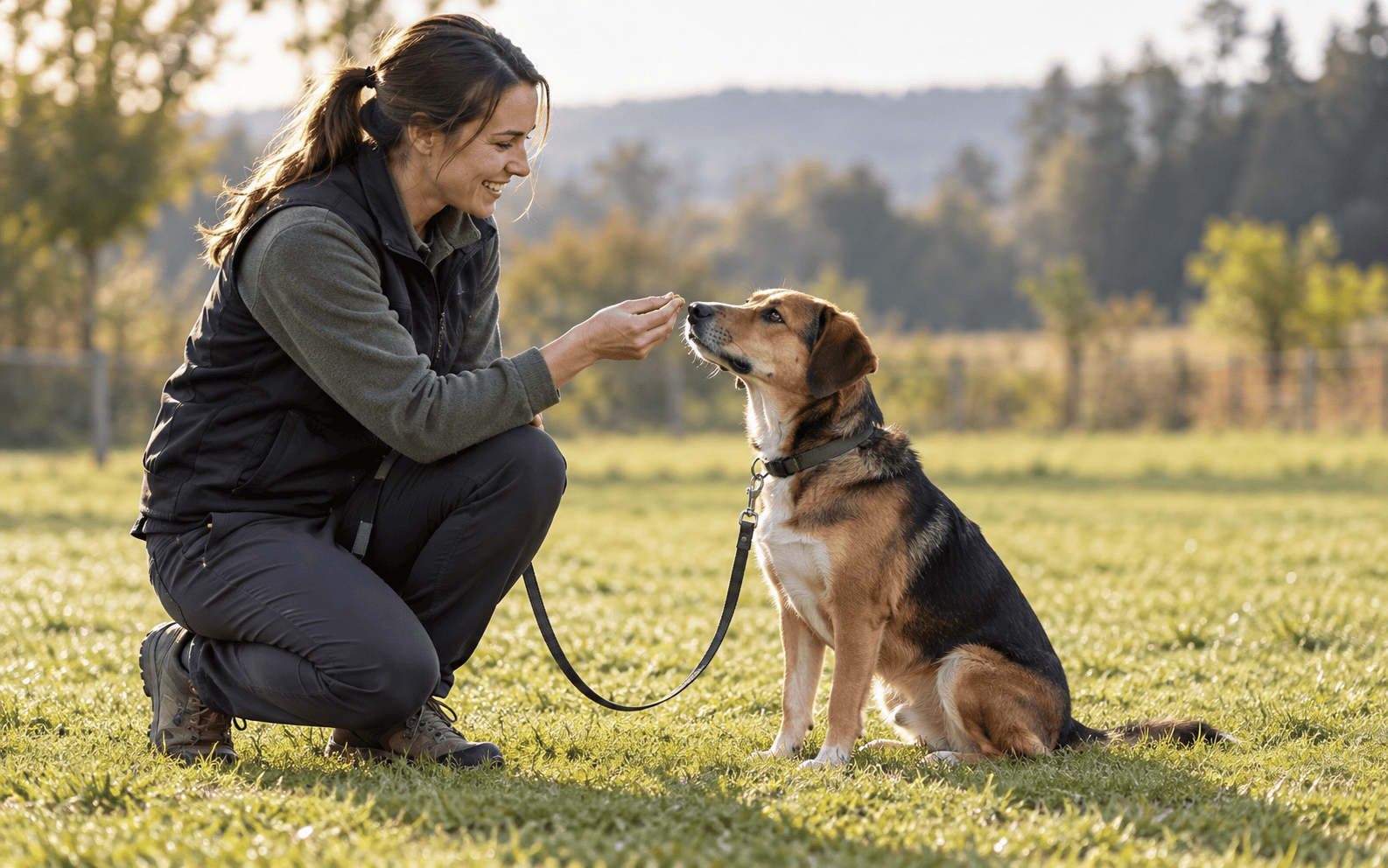
Marker training uses a distinct signal, like a clicker or a word such as “yes,” to tell the dog the exact moment they got it right. The marker is then followed by a reward. It’s rooted in operant conditioning research and was popularized for dogs by trainer Karen Pryor.
Precision is the big advantage. Markers are excellent for shaping complex behaviors, tricks, and sport work where timing matters down to the half-second.
Dominance-Based Training (Outdated)
Dominance or “alpha” training assumes dogs misbehave because they’re trying to outrank you. Much of this idea came from early studies of unrelated captive wolves. Wolf researcher L. David Mech, whose early work helped spread the “alpha” concept, has since publicly said it doesn’t reflect how wild wolf packs actually behave.
Methods built on intimidation, like “alpha rolls,” can increase fear and defensive aggression. If a trainer talks mostly about “showing the dog who’s boss,” keep looking.
Training Goals: What Your Dog Is Learning
The goal is the “what.” Most dogs need more than one over their lifetime, usually in this order.
Puppy Training and Socialization
Puppy training covers name recognition, potty and crate training, bite inhibition, handling, and calm exposure to new people, sounds, and surfaces. Short sessions of 5 to 10 minutes work best because puppy attention spans are short.
If you’re local, our puppy training Long Island program is built around these early developmental windows.

Basic Obedience
Obedience training is the core skill set: sit, down, stay, come, place, leave it, and loose-leash walking. These commands act like a shared language between you and your dog. A structured obedience training course moves these skills from the living room to real-world distractions.
Behavior Modification
Behavior modification addresses problems with an emotional root, such as leash reactivity, fear, aggression, resource guarding, and separation anxiety. This isn’t about commands. It’s about changing how the dog feels about a trigger, and it’s the category where professional help matters most.
Reactivity in particular gets worse with repeated rehearsal. Every lunge at another dog on a walk makes the next one more likely. Our dog reactivity training in Long Island focuses on lowering that emotional response before adding obedience on top.
Advanced and Off-Leash Training
Advanced training builds reliability at a distance, around heavy distractions, and without a leash. It’s for dogs with solid foundations whose owners want hiking freedom or a dog that holds a long “place” while guests come and go.
Specialty Training
Specialty training covers work beyond everyday manners.
- Agility: Obstacle courses that build confidence, fitness, and focus. Learn more in what is agility dog training.
- Scent work: Teaching dogs to find specific odors. It’s mentally tiring in the best way.
- Service dog training: Dogs trained to perform specific tasks for a person with a disability. Under the ADA, emotional support animals are not considered service dogs.
- Therapy dog training: Dogs prepared to visit hospitals, schools, and care facilities.
- Protection training: Controlled guarding work. It should only be done by experienced specialists, with dogs who have stable temperaments.
Training Formats: Who Trains and Where
The format is the delivery. The same method and goal can produce very different results depending on how much expert time your dog gets.
| Format | Best For | Owner Time Commitment | Watch Out For |
| Group classes | Social, low-issue dogs; basic obedience | Weekly class plus daily practice | Too distracting for reactive or fearful dogs |
| Private / in-home | Specific household problems; reactive dogs | Moderate, with a trainer guiding you | Progress depends on your follow-through |
| Board and train | Busy owners; serious or stubborn issues | Lower during the program, essential after | Skills fade without owner transfer sessions |
| Online courses | Self-motivated owners; foundation skills | High, since you’re doing all the work | No real-time correction of your timing |
Group Classes
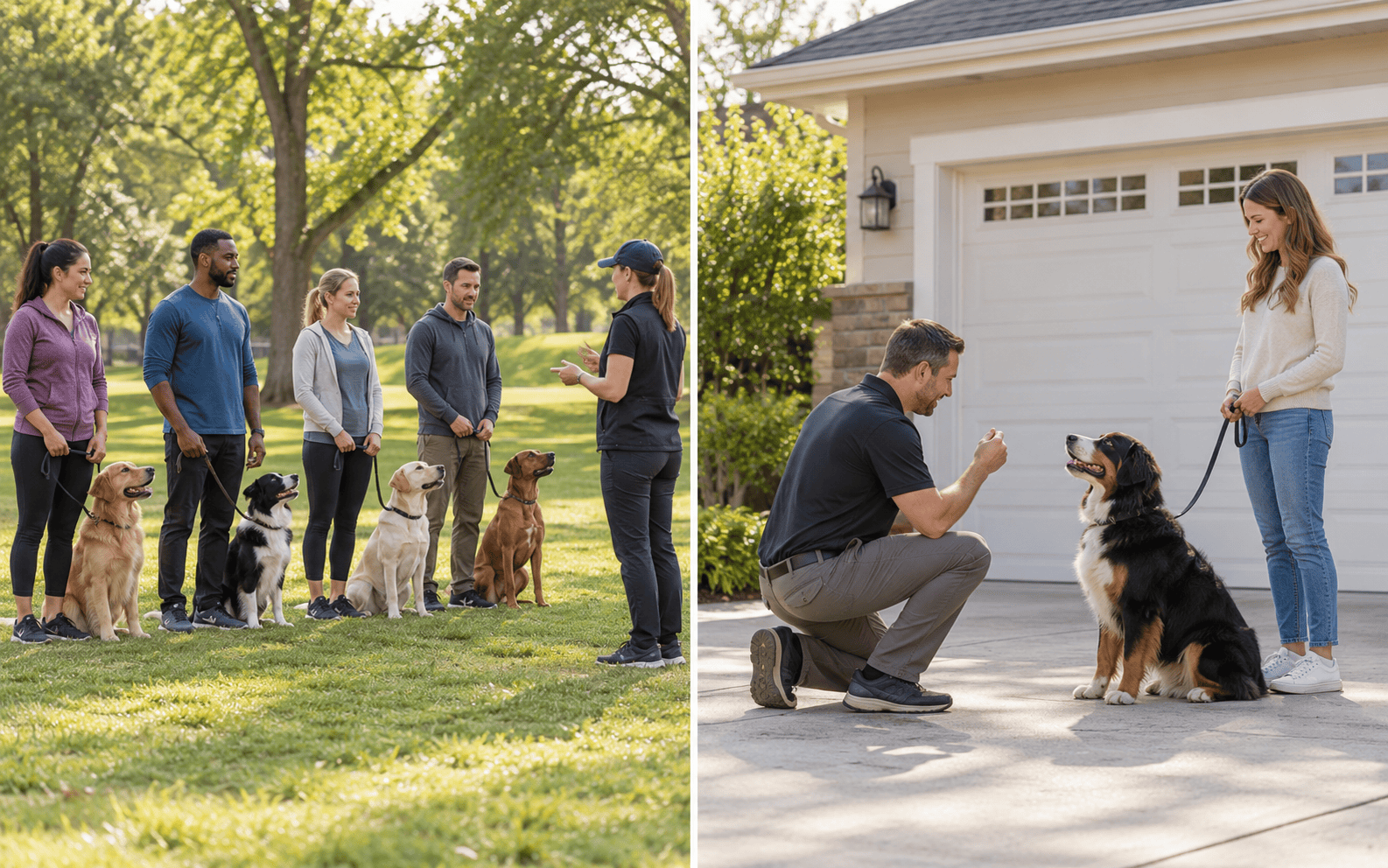
Group classes are a social, structured way to learn basics. They work well for confident puppies and easygoing adults. They don’t suit dogs who struggle around other dogs, because the room itself becomes the trigger.
Private and In-Home Training
Private training gives you a trainer’s full attention, and in-home training solves problems where they actually happen: at your front door, on your couch, on your street. If you’re weighing options, our post on in home vs group dog training lays out the trade-offs. Local owners can also explore in-home dog training Long Island.
Board and Train
Board and train means your dog lives with a professional trainer for a set period, usually a few weeks, and gets multiple sessions every day. The repetition volume is something most owners can’t match at home. The non-negotiable part is the handoff: you need transfer lessons, or the dog will behave perfectly for the trainer and not for you.
We cover this honestly in is board and train worth it. If you’re nearby, you can see how our board and train Long Island program is structured.
Online Training
Online courses and virtual sessions are flexible and good for foundation skills. They fall short for behavior problems, because nobody is watching your timing in person.
Common Mistakes and Misconceptions
- “One type of training fixes everything.” A group obedience class won’t resolve fear aggression. Match the type to the actual problem.
- “My dog is too old to train.” Adult and senior dogs learn well. They may just need more repetitions to replace old habits.
- “Board and train is a magic reset.” Without owner follow-through, results fade within weeks.
- “Treats mean bribery.” Rewards are payment for work, and they get faded out systematically as behaviors become reliable.
- “Training ends when the program ends.” Skills need maintenance. Our guide on how to maintain dog training covers what that looks like week to week.
- Choosing by price or convenience alone. The cheapest option that doesn’t solve the problem ends up costing more in time and stress.
How to Choose the Right Type of Dog Training: Step by Step
- Name the real problem. Write down the exact behaviors, when they happen, and how often. “Pulls on leash every walk and lunges at dogs” is far more useful than “bad on walks.”
- Separate skill gaps from emotional issues. If your dog doesn’t know a command, that’s obedience. If your dog panics, guards, or reacts, that’s behavior modification.
- Be honest about your time. If you can only commit 10 minutes a day, a format with more trainer involvement will usually get you further.
- Pick the method you’re comfortable with. Ask any trainer to explain their approach in plain language, including what happens when the dog gets it wrong.
- Match the format to the dog. Social and easygoing dogs suit group classes. Reactive or fearful dogs usually need private or in-home work, and serious or long-standing problems are often a good fit for board and train.
- Ask for a plan, not a promise. A good trainer gives you milestones and a maintenance plan. Be wary of anyone who guarantees results on a fixed timeline.
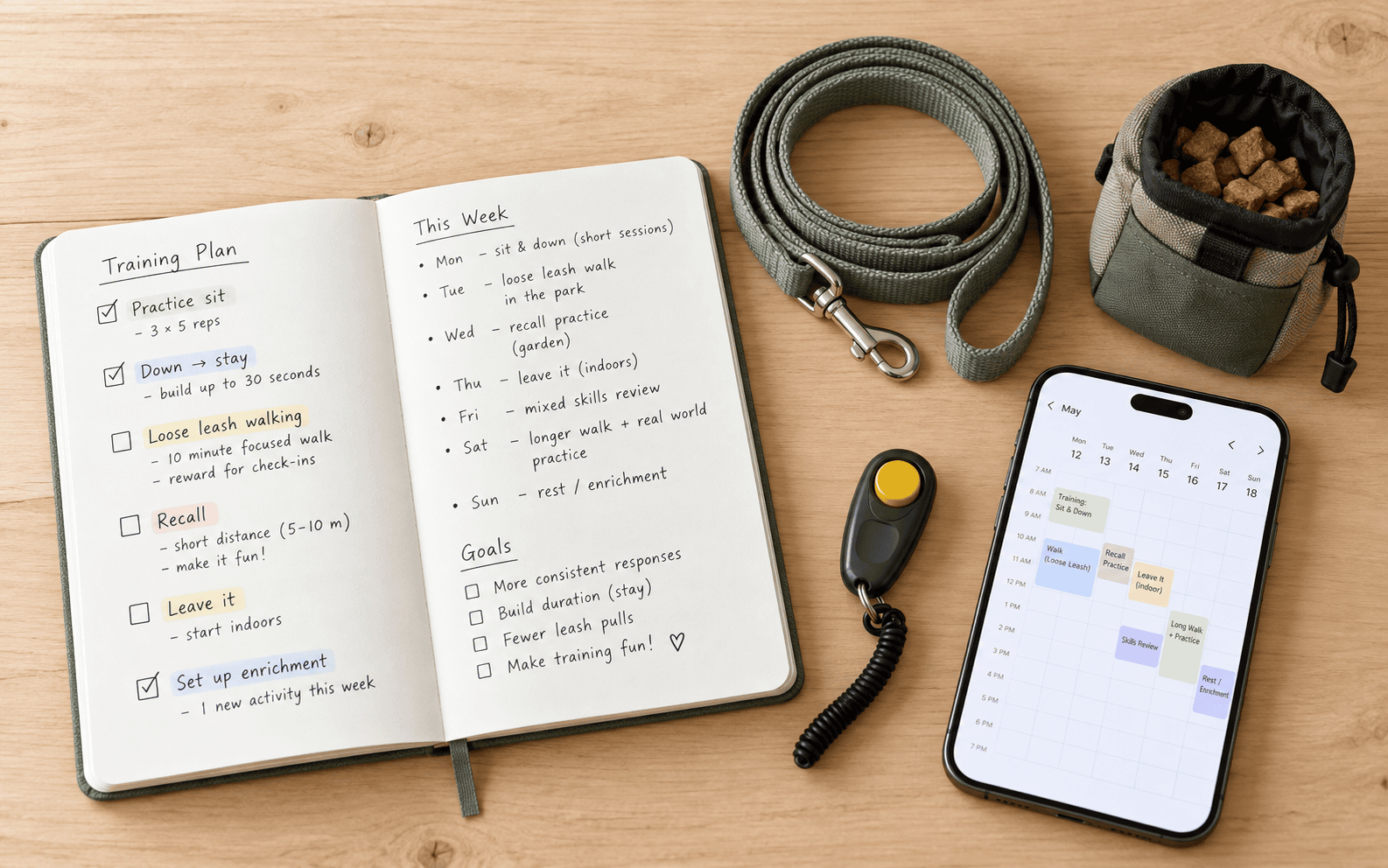
- Plan the follow-through. Schedule your practice sessions before training starts, not after.
Frequently Asked Questions
What is the most effective type of dog training?
No single type wins for every dog. Reward-based methods are the strongest starting point for teaching new skills. Problems like reactivity or anxiety usually need a behavior modification plan delivered privately or through board and train. The most effective training is the one that matches your dog’s specific issue.
Which kind of training should a new puppy start with?
Start with socialization, potty training, crate training, and bite inhibition, using short reward-based sessions. Many vets are comfortable with puppy classes once the first round of vaccines is done. Formal obedience can build gradually from there.
Is private training better than group classes?
It depends on the dog. Group classes are great value for social dogs learning basics. Private training is the better pick when the problem is specific to your home or when your dog can’t focus around other dogs.
How long does it take to see results from training?
Simple commands often show progress within a week or two of daily practice. Behavior modification for issues like reactivity or fear usually takes months, with gradual improvement rather than an overnight change. Consistency matters more than the calendar.
Can I combine different types of training?
Yes, and most well-trained dogs have. A common path is puppy classes, then private sessions for a specific issue, then advanced or sport training later. Combining types works best when all your trainers use compatible methods, so your dog isn’t getting mixed signals.
Conclusion: Choosing Between the Types of Dog Training
Understanding the types of dog training comes down to three choices: how your dog is taught, what they’re learning, and who is doing the teaching. Get those three right and training stops feeling like trial and error.
If you’re not sure where your dog fits, start with an honest look at the behavior you want to change, then talk to a trainer who will explain their method plainly.
Ready to find the right fit for your dog? Book a consultation with K9 Mania Dog Training. We’ll assess your dog’s behavior, walk you through which training type makes sense, and build a plan you can actually stick to.
This article is reviewed and updated regularly to reflect the latest information.