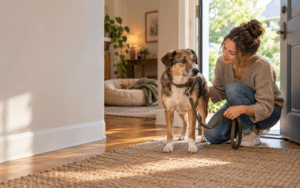
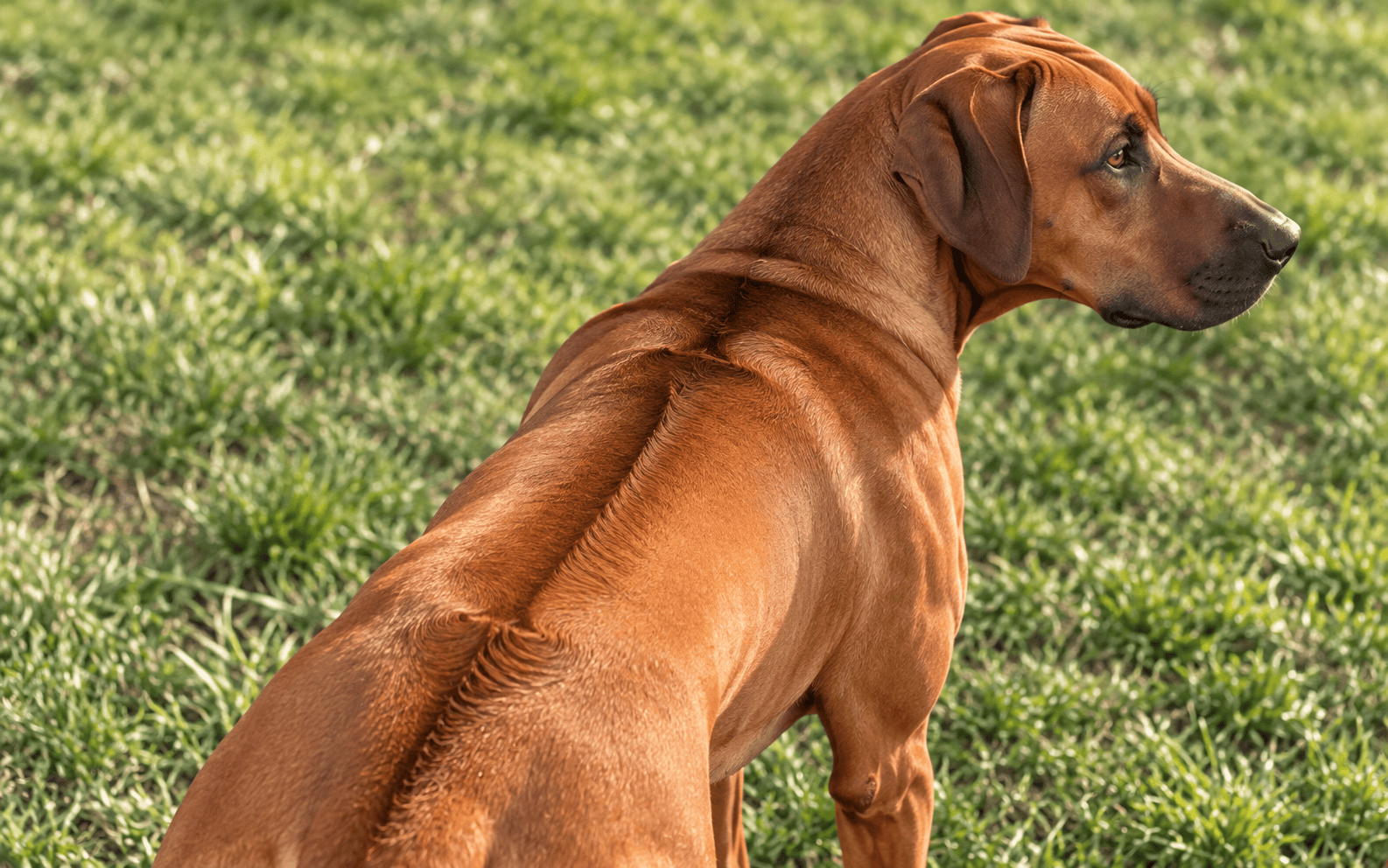
The Rhodesian Ridgeback is a large, athletic, independent hound. It was bred in southern Africa to track big game and hold it at bay. That makes it loyal, calm at home, and fiercely devoted. It also means the dog thinks for itself, chases what moves, and will not obey just because you raised your voice.
If you want a dog that follows commands on the first try with little training, this breed will frustrate you. If you want a dignified, athletic companion and you’re willing to put in structured training, few breeds are more rewarding.
TL;DR: Key Takeaways
- Rhodesian Ridgebacks are large hounds (roughly 70–85 lbs), bred to track lions and hold them at bay, not to kill them.
- They are independent thinkers with strong prey drive. Off-leash reliability takes serious, ongoing recall training.
- They mature slowly, often not settling mentally until age 2–3.
- Harsh corrections usually backfire with this breed. Clear structure, consistency, and motivation work far better.
- Known health concerns include dermoid sinus, hip and elbow dysplasia, and hypothyroidism, so choose a breeder who health-tests.
What Is a Rhodesian Ridgeback?
A Rhodesian Ridgeback is a sighthound/scenthound-type breed developed in southern Africa, in what is now Zimbabwe (formerly Rhodesia). Its defining feature is the ridge, a strip of hair along the spine that grows in the opposite direction from the rest of the coat.
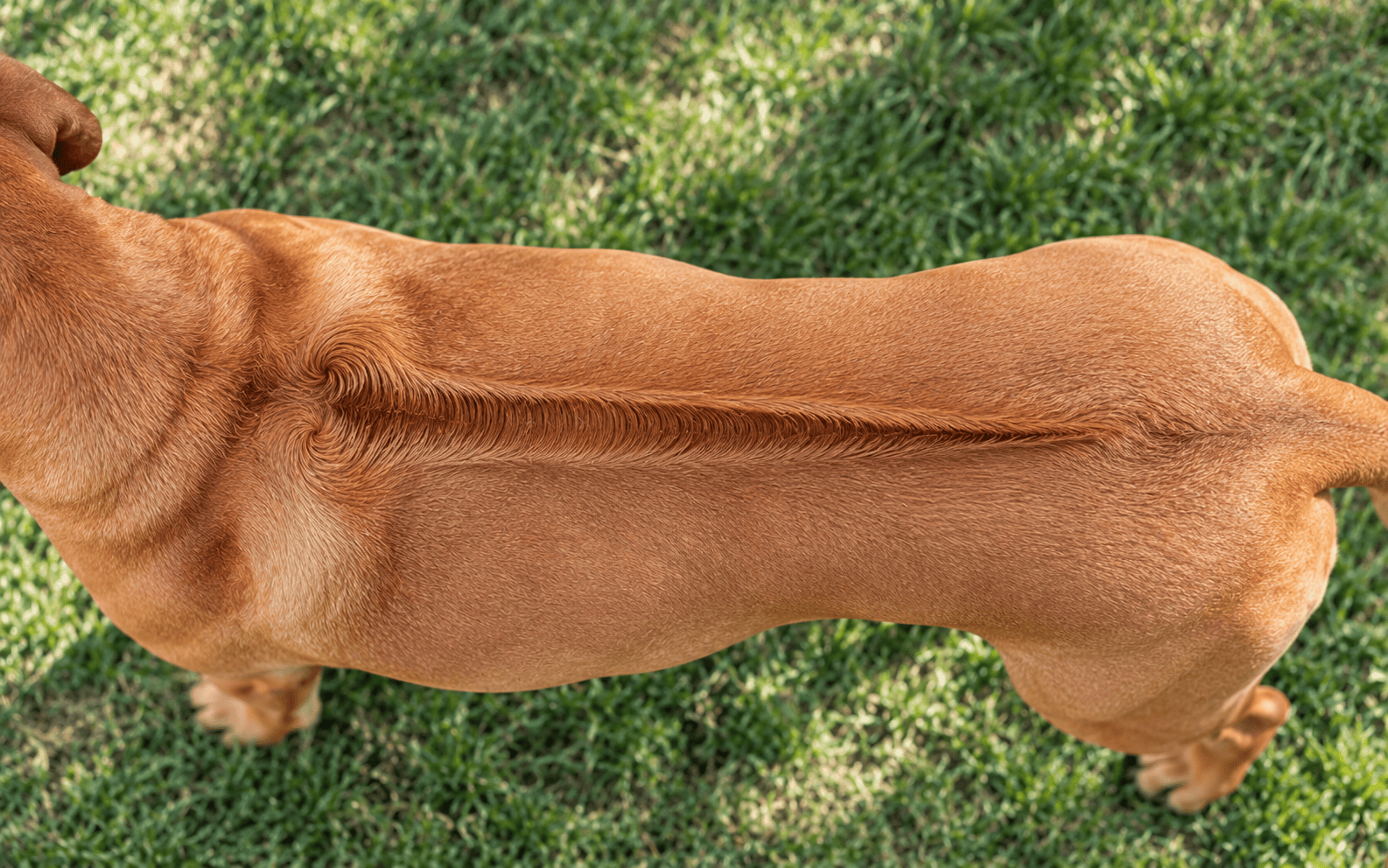
A correct ridge begins just behind the shoulders with two identical crowns (swirls), and tapers toward the hips. The ridge came from the half-wild dogs kept by the Khoikhoi people. Early European settlers crossed those dogs with mastiffs, greyhounds, terriers, and other breeds they brought with them.
The “African Lion Hound” Name
The breed is often called the African Lion Hound, and the name is a bit misleading. Ridgebacks didn’t bring down lions. Hunters used small packs to track a lion, then keep it at bay with agility and noise until the hunter arrived.
That job explains most of what owners see today:
- Endurance: the dogs covered long distances in heat
- Courage without recklessness: harassing a lion takes nerve and good judgment
- Independence: the dogs made decisions far from the handler
The first breed standard was written in Bulawayo in 1922. The American Kennel Club recognized the breed in 1955.
Rhodesian Ridgeback Size and Appearance
| Trait | Males | Females |
| Height (at shoulder) | 25–27 inches | 24–26 inches |
| Typical weight | ~85 lbs | ~70 lbs |
| Coat | Short, dense, sleek | Short, dense, sleek |
| Color | Light wheaten to red wheaten | Light wheaten to red wheaten |
| Life expectancy | About 10–12 years | About 10–12 years |
Some puppies are born ridgeless. They’re just as much a Ridgeback in temperament and make excellent pets, but they can’t be shown in conformation.
Why Knowing the Breed Matters Before You Commit
Ridgebacks tend to land in rescue or training at a predictable point. It’s usually between 8 and 18 months, when a cute 20-lb puppy turns into a 75-lb adolescent that can clear a kitchen counter without jumping.
In our training work, the calls about this breed follow a pattern. The owner says the dog “knows” sit and come at home but ignores both outside. The dog pulls hard on the leash. The dog has started ignoring the family’s attempts to correct it. None of that is a bad dog. It’s a hunting breed in adolescence with no clear structure yet.
Research up front helps you:
- Decide whether your lifestyle suits a high-exercise, independent breed
- Choose a responsible breeder who health-tests
- Start the right training before bad habits settle in
Rhodesian Ridgeback Temperament: What Living With One Is Really Like
Owners describe the Ridgeback temperament in two ways. Indoors, it’s calm, affectionate, and a bit of a couch hog. Outdoors, it’s alert, driven, and quick to decide things on its own.

Loyal but Reserved With Strangers
Ridgebacks tend to bond deeply with their family and stay aloof with people they don’t know. Aloof isn’t aggressive. A well-socialized Ridgeback will usually watch a visitor, then settle once it decides the person is fine.
Poorly socialized Ridgebacks can become suspicious or territorial. A large, muscular dog that barks at the door feels very different to guests than a small one does.
Strong Prey Drive
This is the trait owners underestimate most. Squirrels, cats, rabbits, and deer can switch off a Ridgeback’s hearing completely. Many will chase first and think later, and they’re fast.
Plan on a leash or a securely fenced area until you’ve done extensive recall work. Even then, some Ridgebacks should never be off-leash near roads.
Independent, Not “Stubborn”
People often call Ridgebacks stubborn. It’s more accurate to say they ask, “What’s in it for me?” They were bred to work away from their handler, so obeying without a reason isn’t built in.
That’s why rewards, clear routines, and consistency matter so much. Repetitive drilling bores them. Short, varied sessions keep them engaged.
Sensitive to Harsh Handling
Despite their size and toughness, many Ridgebacks are emotionally sensitive. Yelling, heavy-handed corrections, or inconsistent rules can make them shut down, avoid you, or dig in harder.
Fair structure works. Intimidation doesn’t.
Rhodesian Ridgeback Training: Where to Focus First
A Ridgeback’s training plan should aim at the problems the breed is known for, not just a generic list of commands. These are the areas we prioritize.
1. Recall Under Distraction
A dog that comes when called in your living room hasn’t learned recall. It has learned to come when nothing better is going on. For a sighthound-type dog, recall has to be built step by step: first at home, then in the yard, then on a long line with controlled distractions.
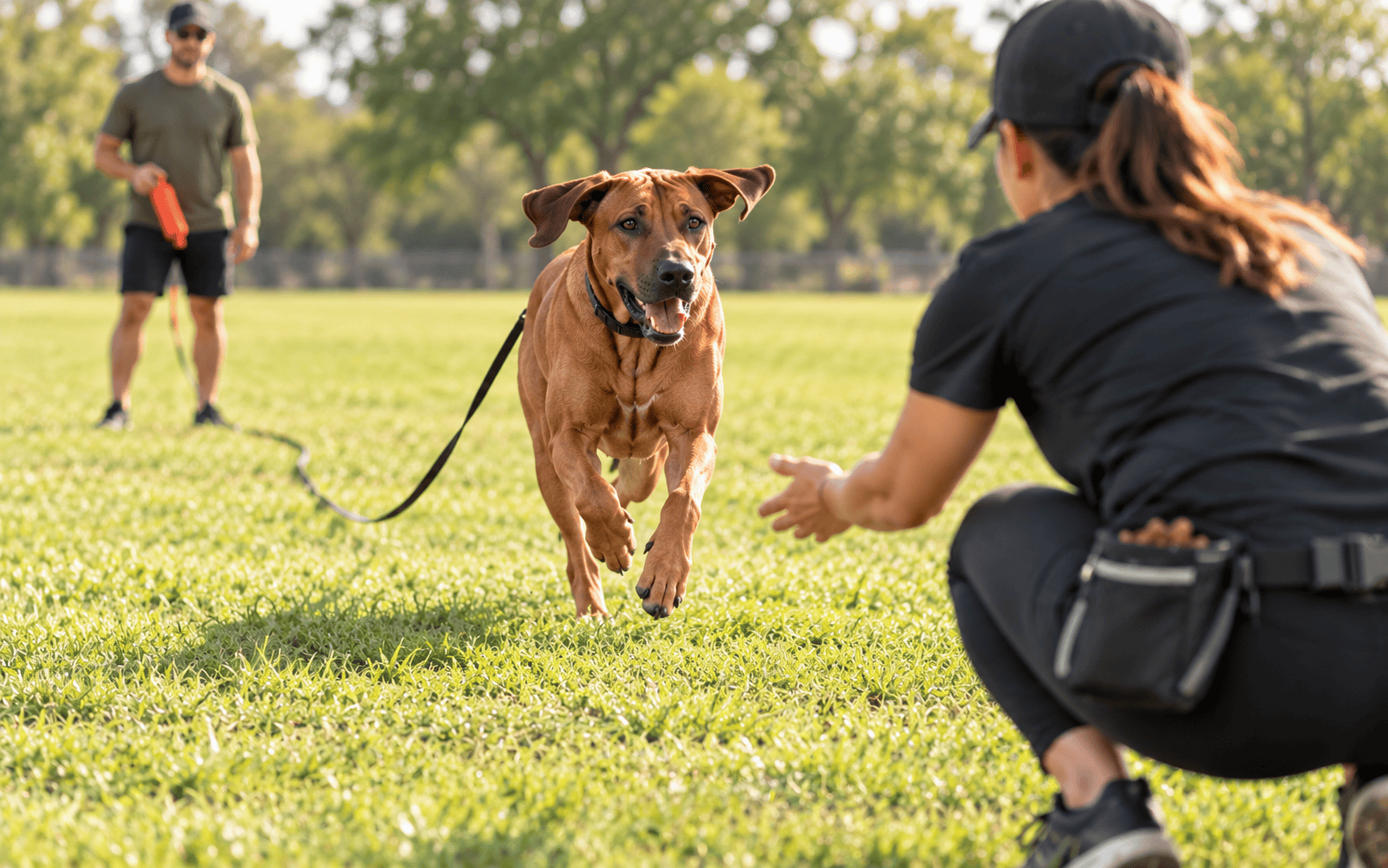
If your Ridgeback ignores you the second something moves, structured dog recall training in Long Island can close that gap safely before you ever unclip the leash.
2. Loose-Leash Walking
An 85-lb dog that pulls is a safety problem, not just an annoyance. Ridgebacks pull because walking forward gets them to the interesting stuff faster, and every step of pulling rewards the habit.
Start early and stay consistent. Adult dogs that already pull usually need a clear plan and the right equipment. Our dog training for leash pulling in Long Island program covers exactly that.
3. Impulse Control
Counter-surfing is practically a Ridgeback hobby. So are bolting through doors and grabbing food. All of these are impulse-control problems.

Teach waiting at doors, waiting for the food bowl, and “leave it” as daily routines, not occasional tricks. A foundation like Impulse Control 101 gives a young Ridgeback the self-control it doesn’t have naturally.
4. A Reliable “Place” Command
A solid place command (going to a bed or cot and staying there until released) is extremely useful for a big dog. It handles doorbell chaos, dinner time, and guests arriving, with no physical management needed.
5. Socialization From Puppyhood
Aloofness plus poor socialization can lead to reactivity toward strangers or other dogs. Controlled exposure to people, dogs, sounds, surfaces, and places during puppyhood makes a big difference later.
If you’re bringing home a Ridgeback puppy, starting with puppy training on Long Island builds socialization and manners before adolescence hits.
Exercise, Grooming, and Daily Care
Exercise Needs
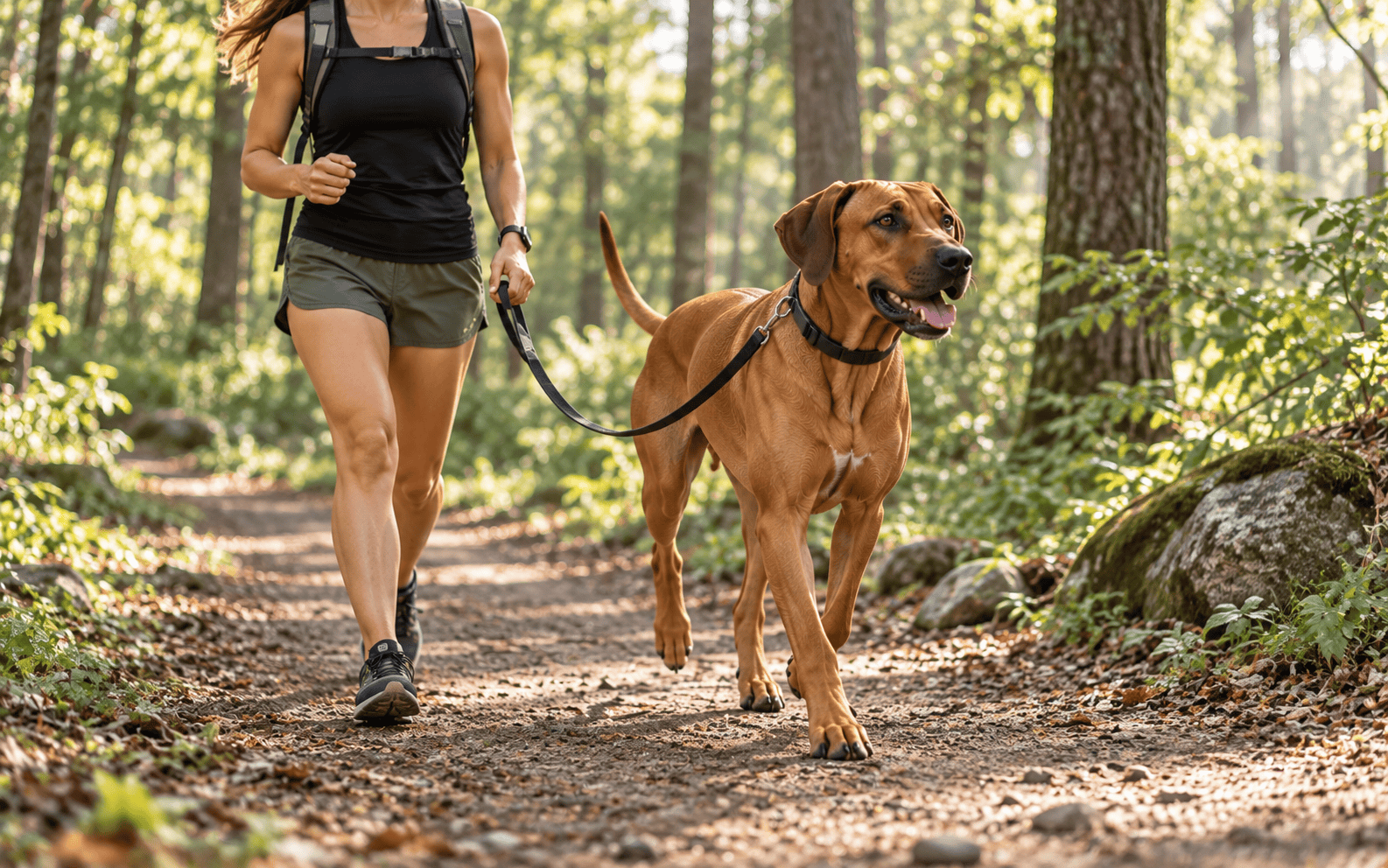
Ridgebacks are endurance athletes. Most adults need at least an hour of real exercise a day, and many do better with more. Good options include:
- Long structured walks or hikes
- Running (once growth plates have closed, usually after 12–18 months; confirm with your vet)
- Fenced-area sprints and play
- Lure coursing, a sport made for sighthound-type breeds
- Mental work: scent games, puzzle feeders, and training sessions
A bored Ridgeback finds its own work, and that often means chewing furniture, digging, or raiding the trash.
Grooming
The short coat is easy to maintain. A weekly brush with a rubber curry or hound glove keeps shedding down. Trim nails regularly, since long nails on a heavy, active dog can cause foot and posture problems.
Feeding and Counter-Surfing
Ridgebacks are notorious food thieves. Keep counters clear, secure the trash, and feed measured meals. Excess weight puts extra strain on joints in a large breed.
Rhodesian Ridgeback Health Concerns
Ridgebacks are generally a sturdy breed, but they carry some known health risks. A responsible breeder will screen for these and show you the results.
- Dermoid sinus: a congenital, tube-like defect under the skin along the spine, linked to the ridge gene. Breeders should check every puppy at birth. It can become infected and usually needs surgery.
- Hip and elbow dysplasia: common in large breeds. Ask for OFA or equivalent screening on both parents.
- Hypothyroidism: can cause weight gain, lethargy, and coat changes. It’s manageable with medication once diagnosed.
- Juvenile myoclonic epilepsy (JME): a seizure disorder seen in young Ridgebacks. A genetic test exists, so ask whether the parents were tested.
- Degenerative myelopathy: a progressive spinal cord disease. A DNA test is available for this too.
Ask your breeder for documentation, not verbal reassurance. Health-tested parents don’t guarantee a healthy puppy, but they tip the odds a lot in your favor.
Common Mistakes and Misconceptions
“They’re Guard Dogs”
Ridgebacks are watchful and protective of their family, but they weren’t bred for protection work. Encouraging suspicion or territorial behavior “because they’re supposed to guard” often leads to a reactive dog that’s hard to manage.
“A Big Yard Means Enough Exercise”
A yard doesn’t exercise a dog. Most Ridgebacks alone in a yard will patrol the fence, dig, or nap. They need engagement with you.
“He’s Stubborn, So I Need to Be Tougher”
Increasing pressure on a sensitive, independent dog usually damages the relationship without fixing the behavior. Clarity and consistency beat force.
“He’ll Grow Out of It”
Adolescent Ridgebacks don’t outgrow pulling, counter-surfing, or ignoring recall. Those habits get stronger with every rehearsal. The breed also matures slowly, so “waiting it out” can mean two or more years of an unruly 80-lb dog.
“Off-Leash Is the Goal for Every Dog”
For some Ridgebacks, reliable off-leash control in open areas is realistic. For others, prey drive is too strong. Knowing your individual dog is part of responsible ownership.
A Step-by-Step Framework for New Ridgeback Owners
If you just brought home a Ridgeback, puppy or adult, this is the order we recommend:
- Week 1–2: Set house rules. Decide on crate, feeding, furniture, and door routines, and make sure the whole household follows the same rules.
- Week 1 onward: Start impulse control. Wait at doors, wait for food, and “leave it” become part of every day.
- Weeks 2–6: Build a foundation. Name recognition, sit, down, place, and loose-leash walking indoors and in low-distraction areas.
- Ongoing: Socialize with purpose. Calm exposure to people, dogs, traffic, and new places, without overwhelming the dog.
- Months 2–6: Proof recall on a long line. Add distance and distraction gradually. Don’t test recall off-leash before it’s ready.
- Months 6–24: Stay consistent through adolescence. Expect regression and testing. Keep rules the same and exercise high.
- Get professional help early. If pulling, reactivity, or ignoring commands is getting worse, bring in a trainer before the habit sets.
For owners who work long hours or have an adolescent Ridgeback that’s already out of control, a structured board and train on Long Island can build the foundation fast. The owner then learns to keep it going at home.
You May Also Want to Read
What Is the 7-7-7 Rule for Dogs
What Are Good Guard Dog Breeds and How to Know If One’s Right for You
What Is Prey Drive in Dogs: Understanding Your Dog’s Hunting Instinct
Early Dog Socialization Benefits: Your Key to Well-Behaved Dogs
Frequently Asked Questions About Rhodesian Ridgebacks
Are Rhodesian Ridgebacks good with children?
Many are gentle and patient with the kids in their own family. Their size and energy can knock over toddlers, though, especially during adolescence. Supervise all interactions, teach children to respect the dog’s space, and train calm household manners early.
Is a Rhodesian Ridgeback a good choice for a first-time dog owner?
It can work, but it’s not the easiest start. A first-time owner who commits to training, exercise, and consistency, ideally with guidance from a professional trainer, can do well. Someone expecting an easygoing, eager-to-please dog will likely struggle.
Can a Rhodesian Ridgeback ever be trusted off-leash?
Some can, in safe, enclosed spaces, after extensive recall work under distraction. Because of their strong prey drive, many trainers advise keeping Ridgebacks leashed near roads or wildlife, even when they’re well trained. Judge your own dog honestly, not the breed average.
How long does it take a Rhodesian Ridgeback to calm down?
Ridgebacks mature slowly. Many stay energetic and pushy until around 2 years old, and some don’t fully settle until 3. Consistent training and enough exercise make that stretch much easier to live with.
Do Rhodesian Ridgebacks shed a lot?
They shed moderately. The coat is short and low-maintenance, but you’ll still find hair around the house. Weekly brushing with a rubber grooming mitt keeps it manageable.
Conclusion: Is the Rhodesian Ridgeback Right for You?
The Rhodesian Ridgeback suits active owners who value loyalty and independence and who are ready to train with patience and consistency. In return you get a calm, devoted housemate and a capable, athletic partner outdoors.
What makes the difference is the structure you build early, before adolescence turns small habits into big problems.
Ready to raise a well-mannered Ridgeback? Whether you’re starting with a new puppy or working through pulling, recall, or reactivity with an adolescent, K9 Mania Dog Training can build a plan around your dog. Contact our team today to schedule an evaluation.
This article is reviewed and updated regularly to reflect the latest information.