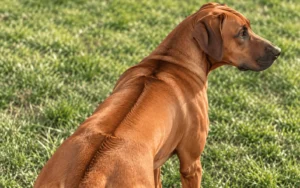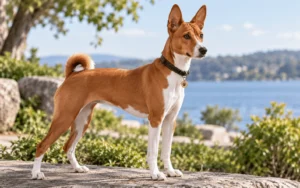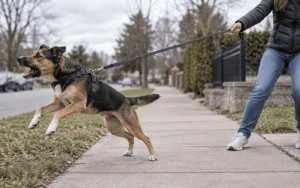
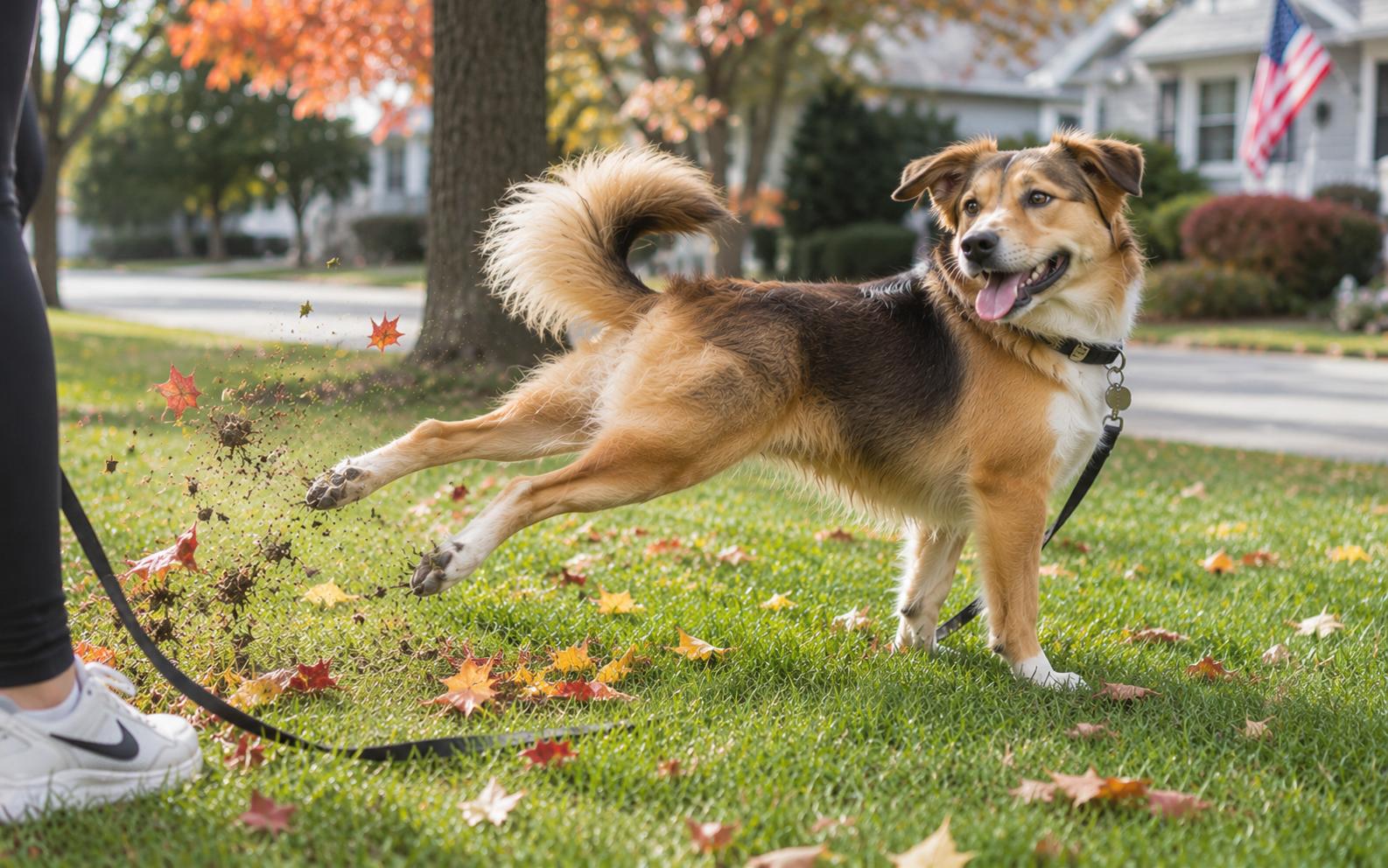
Dogs kick after they poop to leave their scent behind. Glands in their paw pads release scent, and the scratching adds a visible mark on the ground, so the kick tells other dogs “I was here.” It is normal, healthy behavior called ground scratching. It is not your dog trying to bury its poop.
Key Takeaways
- It’s communication. Dogs have scent glands in their paws, and kicking leaves both a smell and a visible scratch mark for other dogs.
- It isn’t burying. Cats cover their waste. Dogs do the opposite: they advertise it.
- It’s normal. Male and female dogs, neutered or not, can do it. Some dogs do it more when other dogs are nearby.
- You only need to step in if your dog tears up the lawn, kicks dirt onto people, hurts its paws, or the kicking looks frantic.
- Don’t punish it. Manage it with a calm “let’s go” cue and a reward instead.
Why Do Dogs Kick After They Poop? The Short Answer
Your dog’s kick is a message for other dogs. Poop already carries a strong scent. The kick adds two more signals on top:
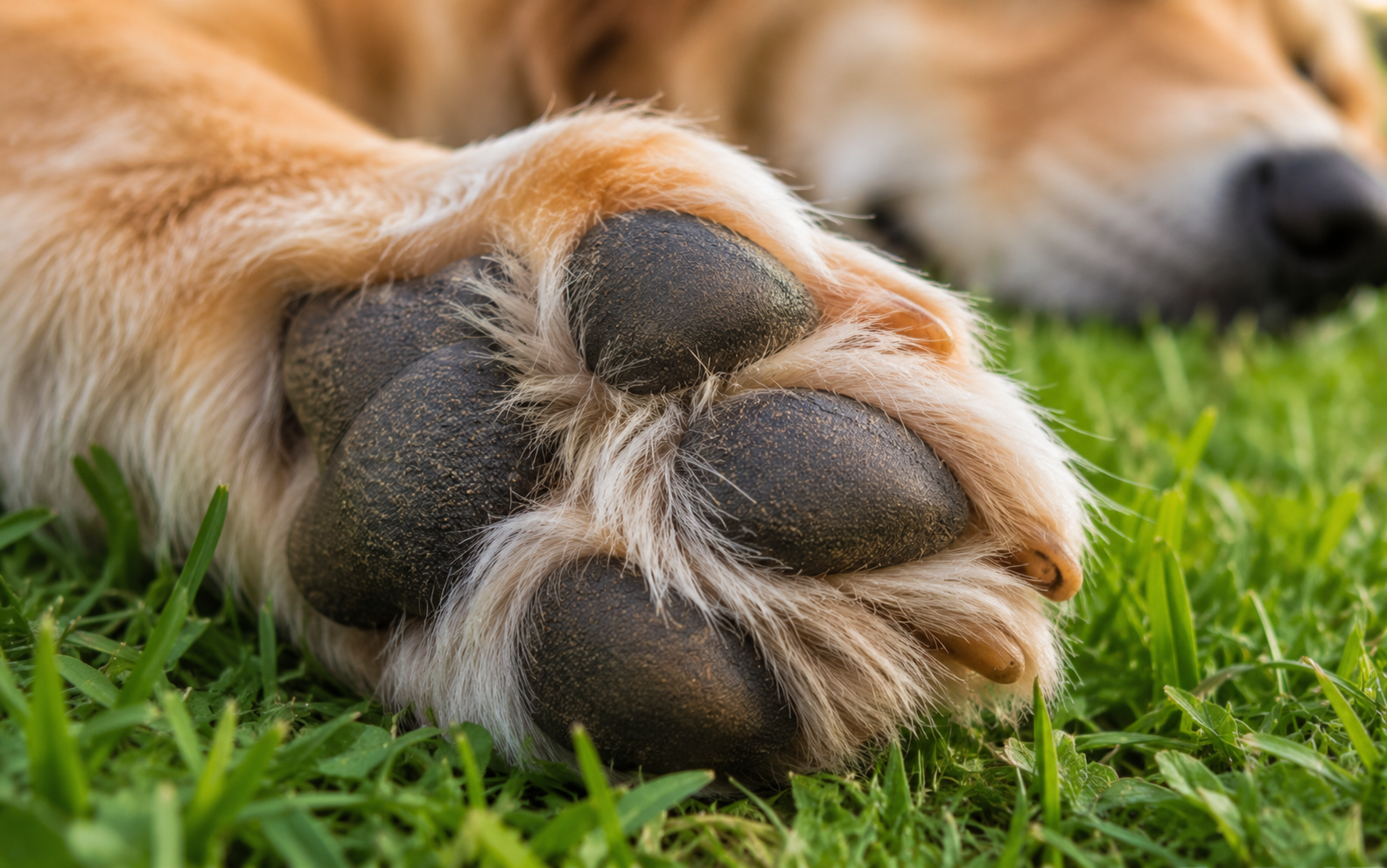
- Paw scent. Dogs have sweat glands in their paw pads. When they scrape the ground, the scent from those glands rubs into the grass or dirt.
- A visual mark. Torn grass and kicked-up dirt act like a signpost that other dogs can see from a distance.
Put together, the poop, the paw scent and the scrape marks make a much louder “message” than poop alone. Behavior researchers call this ground scratching or scraping. Wolves, coyotes and foxes do it too, so it’s an old instinct and not something your dog learned from you.
In our training sessions at our Deer Park facility, owners ask about this almost every week. It usually comes up as “Is something wrong with my dog?” Almost always, the answer is no.
What Your Dog Is Actually Saying With the Kick
Dogs read scent the way we read text messages. A single spot of grass can tell another dog a lot about who passed by.
Paw glands carry a personal signature
Dogs don’t sweat through their skin the way people do. Their main sweat glands are in their paw pads. That’s why a dog’s paws can leave damp prints on a hot day or at the vet. Scratching the ground spreads that personal scent around the spot where they just went.
The scratch marks work as a signpost
A strip of torn-up grass is easy to spot. Another dog walking by sees the disturbed ground, comes over to sniff, and then picks up the scent. In other words, the kick helps make sure the message actually gets read.
Some dogs kick more when other dogs are around
Studies of free-ranging dogs have found that ground scratching happens more often when other dogs are present. We see the same thing in training. A dog that barely kicks in its own backyard may put on a big show at a busy park or on a popular walking route, where lots of other dogs leave their scent.
This connects to other scent behaviors you may already know. Leg-lifting on posts is one how to stop a dog from marking in the house. Rolling in smelly things is another why dogs roll in the grass. All of them are ways dogs collect or spread scent.
Is It Normal for Dogs to Kick After Pooping?
Yes. Kicking after pooping is one of the most common, harmless dog behaviors there is. Here’s what’s normal and what’s worth a closer look:
| What you see | Normal? | What it usually means |
|---|---|---|
| 2–5 strong back-leg kicks, then walks off | ✅ Yes | Ordinary scent marking |
| Kicks after peeing too, not just pooping | ✅ Yes | Same instinct; very common in males |
| Kicks harder at parks than at home | ✅ Yes | More dogs around = more reason to “sign” the spot |
| Female dog kicks | ✅ Yes | Both sexes do it |
| Neutered or spayed dog kicks | ✅ Yes | Spaying or neutering often doesn’t stop it |
| Kicks until paws are scraped or bleeding | ⚠️ Check | Rough surface, or the behavior has become obsessive |
| Kicks, then drags its rear on the ground | ⚠️ Check | Scooting is a different issue (often anal glands); see your vet |
| Kicks at people, dogs or the leash | ⚠️ Train | Overexcitement or frustration; work on impulse control |
Do male and female dogs both kick?
Both do. In our experience, intact males tend to kick the most and the hardest, but plenty of spayed females are enthusiastic kickers too. Personality and setting matter more than sex.
Do puppies kick after pooping?
Some do, but many dogs don’t start until they’re older, often as they reach adolescence. If your puppy suddenly starts kicking at around 6–12 months, that’s a normal sign of growing up. It isn’t something you caused.
Why Dogs Kick and Cats Bury: A Common Mix-Up
Many people assume a dog is “trying to bury” its poop like a cat. Watch closely and you’ll see that’s not what’s happening:
- Cats face their waste, rake loose material over it and try to hide the smell.
- Dogs usually walk a step or two away, kick backward, and often miss the poop completely. The scent and the scrape marks are the point, not covering.
That’s why your dog doesn’t care whether any dirt actually lands on the pile. Hiding the poop was never the goal.
When Should You Step In?
Most dogs never need any correction for this. Here are the four situations where we do help owners manage it.
1. Your lawn is getting destroyed
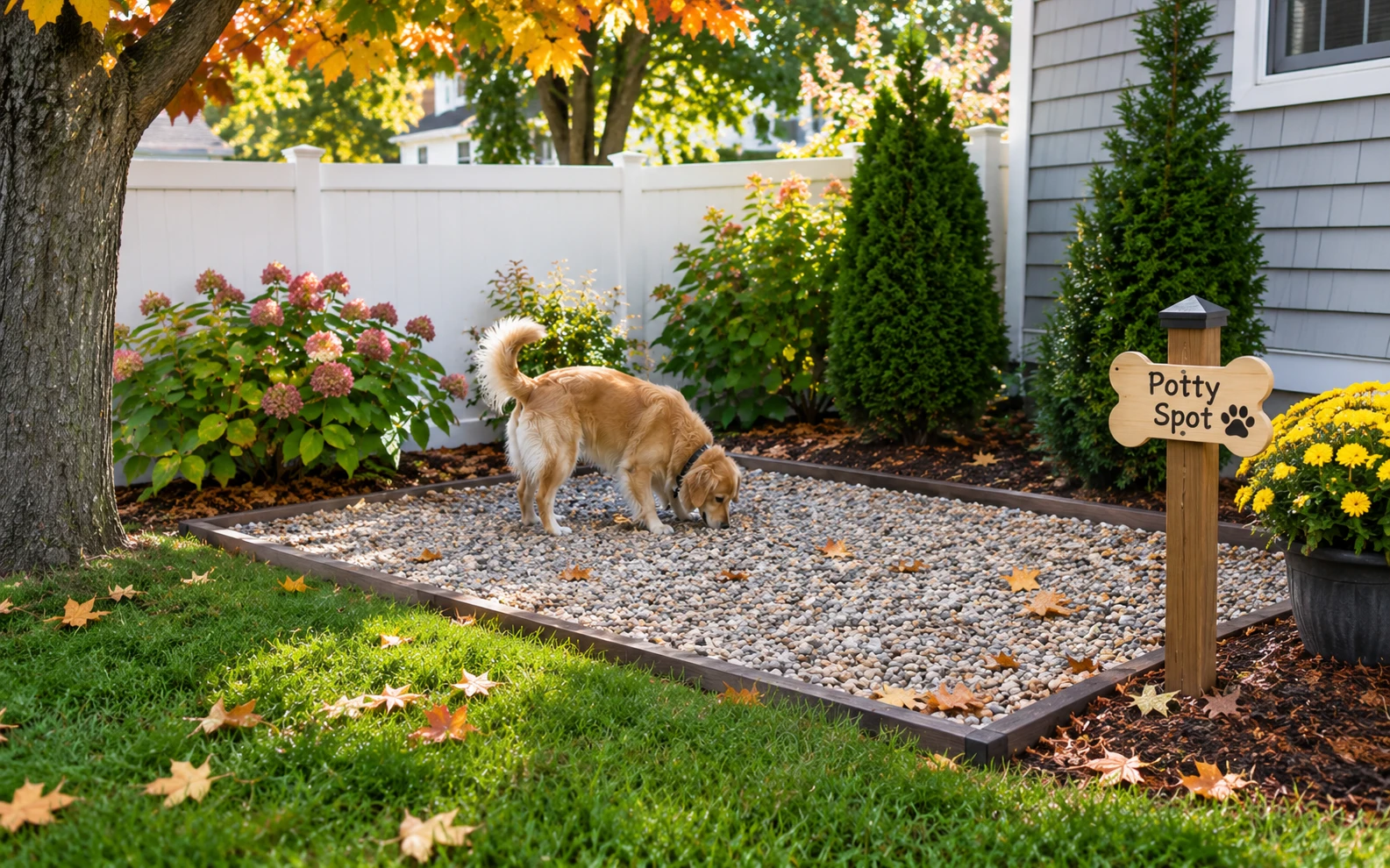
Large, powerful dogs can rip up sod in the same few spots every day. Instead of fighting the instinct, give your dog a spot where kicking doesn’t matter. A mulched or pea-gravel potty area in one corner of the yard works well on Long Island lots.
2. Dirt and grass are hitting people
On a city sidewalk strip or at a crowded park, a hard kick can spray dirt on people walking by. That’s a leash-handling and impulse-control job, not a punishment job.
3. Your dog is hurting its paws
Concrete, gravel or icy ground in winter can scrape paw pads. Check the pads after walks. If you see cracks or bleeding, steer the potty breaks to grass or soil and talk to your vet.
4. The kicking looks frantic or never stops
If your dog kicks for a long time, kicks without having gone to the bathroom, or seems unable to stop, that can point to stress or a compulsive behavior. That deserves a closer look from a trainer, and from your vet to rule out pain. Reading the rest of your dog’s posture helps dog body language guide.
Common Mistakes Owners Make
These are the mistakes we see most often with dogs in our programs:
- Scolding the kick. Yelling “No!” mid-kick teaches your dog that going to the bathroom near you is risky. Some dogs then start sneaking off to potty out of sight, or holding it on walks. That causes a much bigger problem than a few grass divots.
- Yanking the leash during the kick. A sharp leash pop while your dog is finishing up builds tension around potty time. Calmly walk forward instead (step-by-step below).
- Assuming it means your dog is “dominant.” Ground scratching is communication, not a bid to control you. Treating it as a power struggle leads to harsh handling that doesn’t help.
- Confusing kicking with scooting. Dragging the rear end on the ground isn’t scent marking. It often means irritated anal glands or another medical issue, so call your vet.
- Waiting until spaying or neutering “fixes” it. It often won’t, especially if the habit is already strong. If the kicking is a problem, teach a cue now.
How to Manage a Dog That Kicks After Pooping: Step-by-Step
You don’t need to stop the instinct. You only need control when it matters. Here’s the routine we teach in our private sessions:
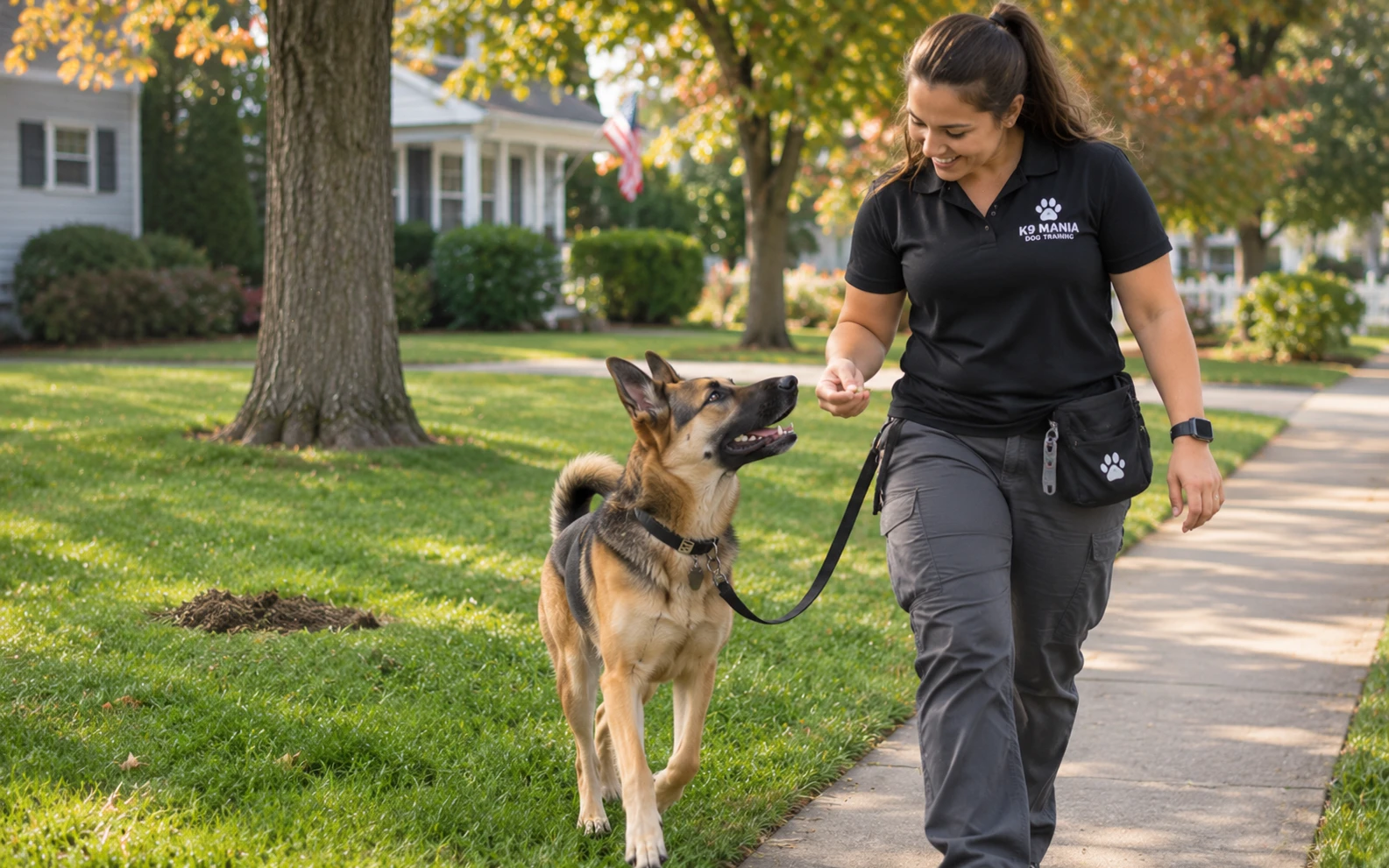
- Choose a cue for “we’re done.” Use a simple phrase like “let’s go.” Say it in a cheerful voice, never a scolding one.
- Charge the cue at home first. Say “let’s go,” take a few steps, and reward your dog the moment it follows you. Repeat 10–15 times over a few days, with no potty involved yet.
- Use it right after your dog finishes. As soon as your dog is done pooping and before the first big kick, say “let’s go” and walk forward on a loose leash.
- Reward the follow, not the freeze. When your dog turns and comes with you, mark it (“yes!”) and give a treat. You’re paying for the choice to move on.
- Allow kicking where it’s fine. In your own yard’s potty spot, let your dog kick freely. Use the cue only where kicking causes trouble (sidewalks, crowded parks, a neighbor’s lawn).
- Keep a short leash in tight spaces. A shorter (not tight) leash in busy areas keeps your dog’s back legs pointed away from people while you build the habit.
- Get help if the kicking comes with lunging or frustration. If your dog kicks hard, then lunges at dogs or people, that’s an impulse-control problem. It’s worth working on with a trainer.
Most dogs learn the “let’s go” routine within two to three weeks of consistent practice. It also improves leash manners in general, which is a bonus. If you’re still building potty habits with a younger dog, start with our puppy potty training guide.
Frequently Asked Questions
Why do dogs kick their back legs after they poop?
Dogs kick their back legs after pooping to spread scent from sweat glands in their paw pads and to leave visible scratch marks. This marks the spot for other dogs. It’s a normal instinct also seen in wolves and coyotes.
Is it bad if my dog kicks grass after pooping?
No. Kicking grass after pooping is normal and healthy. Only step in if your dog is damaging the lawn, kicking dirt onto people, hurting its paw pads, or kicking in a frantic, nonstop way.
Are dogs trying to bury their poop when they kick?
No. Unlike cats, dogs aren’t trying to cover their waste. They usually step away and kick backward, often missing the poop entirely. The goal is to add scent and a visible mark, not to hide anything.
Why does my dog kick after peeing too?
It’s the same scent-marking instinct. Many dogs, especially males, scratch the ground after urinating to add paw scent and a visual mark next to the urine. It’s just as normal as kicking after pooping.
How do I stop my dog from kicking after pooping?
You usually don’t need to stop it. Manage it instead: teach a cheerful “let’s go” cue, use it right after your dog finishes, and reward your dog for walking on with you. Don’t scold the kick, because that can make dogs nervous about going potty near you.
The Bottom Line
So, why do dogs kick after they poop? They’re signing their name. The scent from their paws and the scratch marks on the ground turn an ordinary bathroom break into a message for every dog that walks by. Leave it alone in most cases, and use a calm “let’s go” cue when you need control.
If the kicking comes with leash lunging, frustration or other habits you can’t get under control, our trainers can help. We work with dogs at our Deer Park facility and in homes across Nassau and Suffolk County.