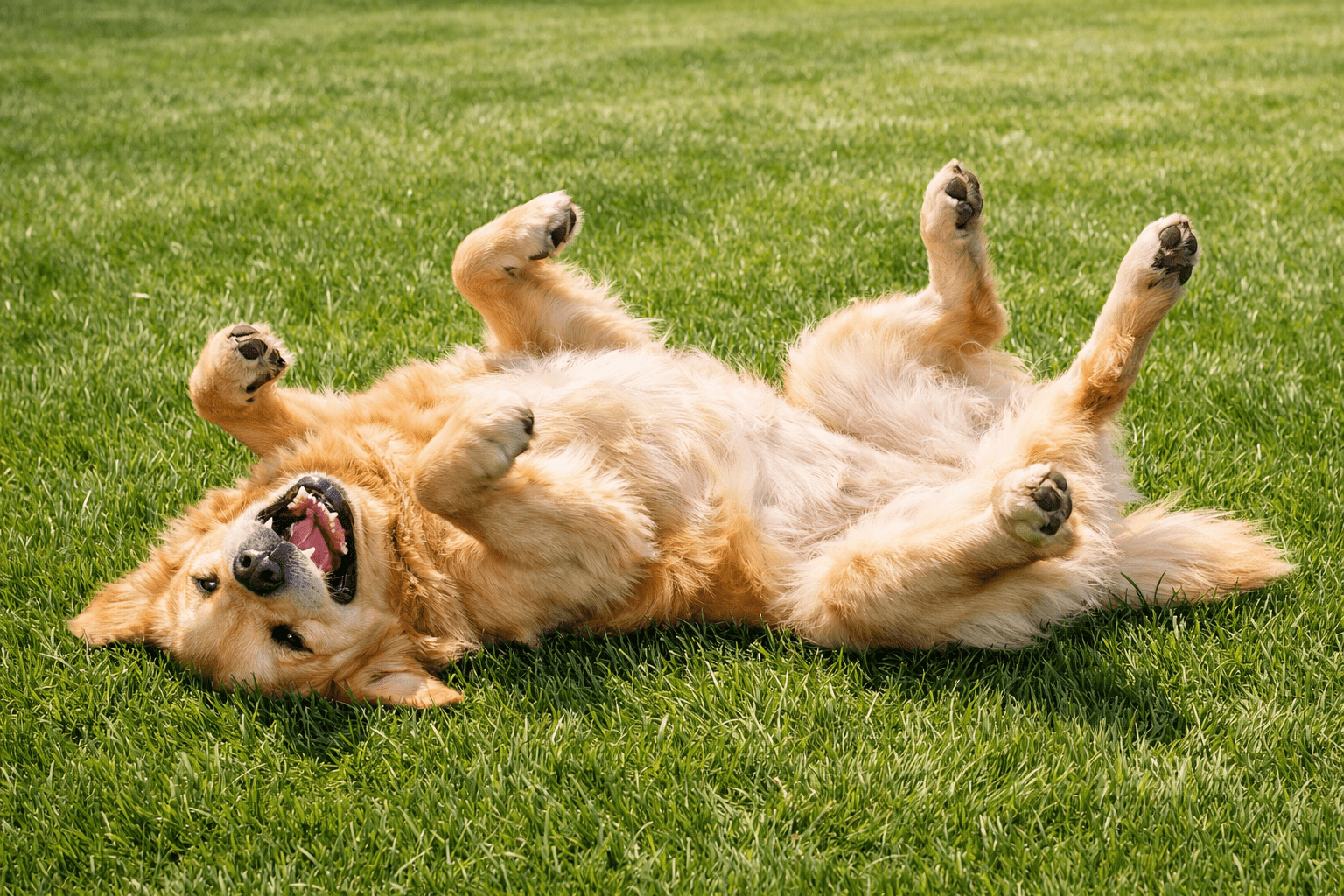
Why do dogs roll in the grass? Dogs roll in grass primarily to mask their scent with natural odors, scratch itches, mark their territory, and express pure joy through instinctive behavior.
If you’ve ever watched your dog flop onto their back and wiggle around in the grass with obvious delight, you’re not alone. This common behavior puzzles many dog owners, but it’s actually rooted in natural instincts that go back thousands of years.
Understanding why your dog does this helps you decide when it’s harmless fun and when you might need to step in. Let’s explore the fascinating reasons behind this behavior and what it means for your furry friend.
Understanding the Natural Instincts Behind Grass Rolling
Dogs inherited many behaviors from their wild ancestors, and rolling in grass is one of them. This action served important survival purposes for wolves and wild dogs, and those instincts still drive your pet’s behavior today.
Scent Masking and Hunting Instincts
Wild dogs and wolves rolled in strong-smelling things to disguise their own scent before hunting. By covering themselves with grass, dirt, or other natural odors, they could get closer to prey without being detected.
Your domesticated dog doesn’t need to hunt for dinner, but the instinct remains strong. When your dog rolls in freshly cut grass or areas with interesting smells, they’re following an ancient drive to camouflage their scent.
This behavior is completely normal and shows your dog’s connection to their wild heritage. Even though your pet gets meals from a bowl, their brain still responds to these primal urges.
Territory Marking and Communication
Dogs communicate through scent in ways we can’t fully understand. Rolling in grass serves as a way to leave their own smell on the ground while picking up local scents to carry back.
When your dog rolls, they’re depositing oils from their skin onto the grass. At the same time, they’re collecting information about other animals that have been in the area.
This scent exchange helps dogs understand their environment and communicate with other dogs who pass through later. If you notice your dog rolling in the same spots repeatedly, they might be reinforcing their territorial markers or gathering updates about neighborhood activity.
Common Reasons Your Dog Rolls in Grass
Beyond instinct, several practical reasons explain this behavior. Some are perfectly harmless, while others might need your attention.
| Reason | What It Means | When to Worry |
| Scent masking | Natural instinct to hide their smell | Never, unless rolling in harmful substances |
| Itching/irritation | Trying to scratch hard-to-reach spots | If rolling becomes excessive or obsessive |
| Joy and play | Pure happiness and enjoyment | Never, it’s healthy expression |
| Cooling down | Seeking relief from heat on cool grass | Watch for signs of overheating first |
| Anxiety relief | Self-soothing behavior | If combined with other stress signals |
| Attention seeking | Learned behavior that gets your reaction | If it disrupts walks or becomes demanding |
Relieving Itches and Skin Irritation
Your dog can’t scratch every part of their back easily with their paws. Rolling provides a full-body scratch that hits all those hard-to-reach spots along their spine and shoulders.
Fresh grass feels good against their skin and can provide temporary relief from minor itching. The slightly rough texture works like a natural back scratcher.
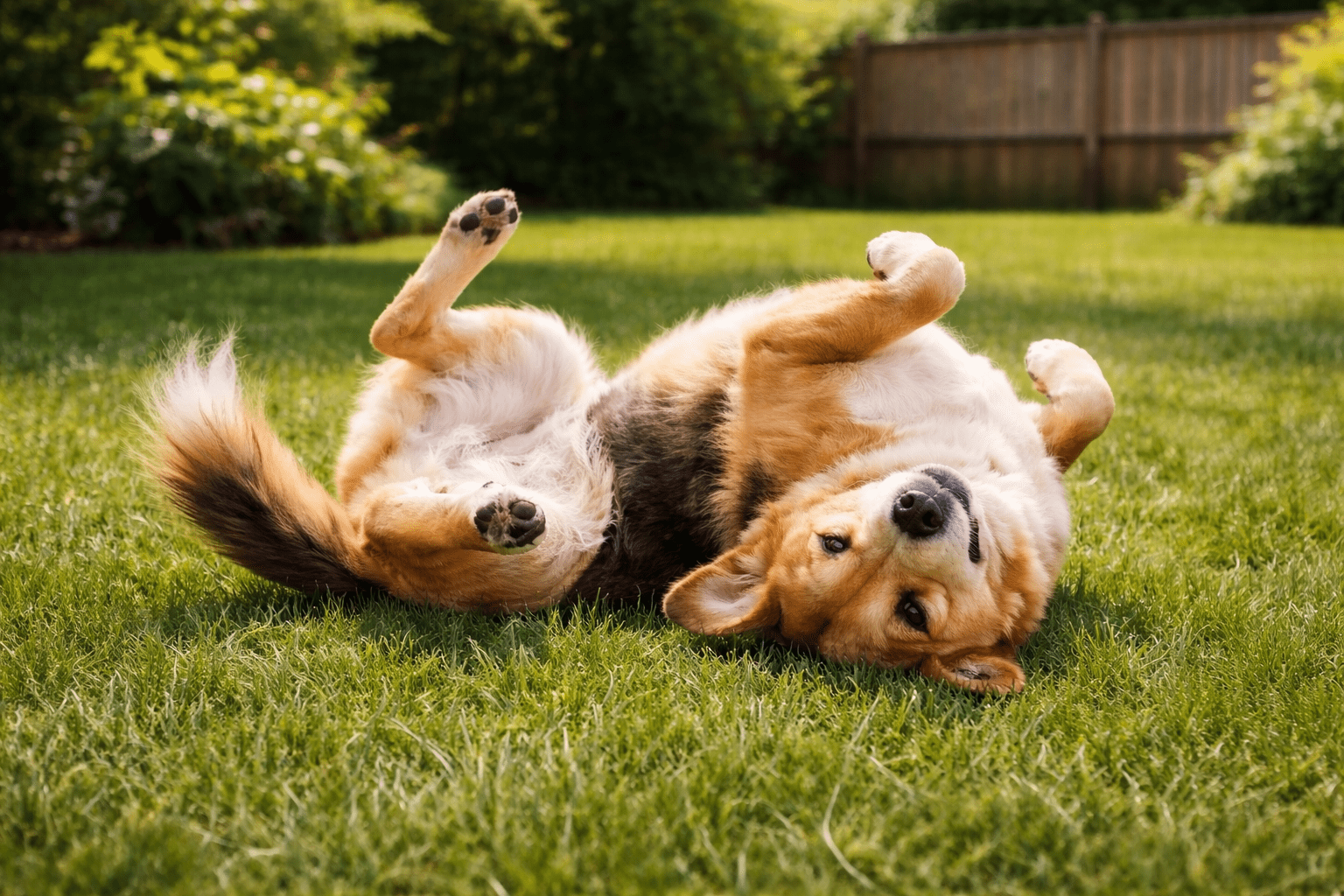
However, if your dog rolls excessively or seems desperate to scratch, they might have fleas, allergies, or skin conditions that need attention. Check their coat for signs of parasites, redness, or unusual bumps.
Professional dog behavior training can help if scratching becomes compulsive or interferes with daily activities.
Pure Joy and Playful Expression
Sometimes the simplest answer is the right one. Many dogs roll in grass because it feels amazing and makes them happy.
You’ll often see this behavior after a bath, during playtime, or when they’re in a particularly good mood. The wiggling, leg-kicking, and obvious pleasure on their face shows they’re having a great time.
This type of rolling usually happens in short bursts and includes other playful behaviors like running, jumping, or play bows. It’s a healthy way for your dog to express happiness and release energy.
If you want to encourage more positive behaviors like this, learning the top things to teach dogs helps create a well-rounded training approach.
Temperature Regulation
On hot days, cool grass provides relief from the heat. Rolling exposes your dog’s belly, where fur is thinner, to the refreshing ground.
Dogs don’t sweat like humans do, so they need alternative ways to cool down. Grass, especially in shaded areas, stays cooler than pavement or dirt and offers a comfortable spot to lower body temperature.
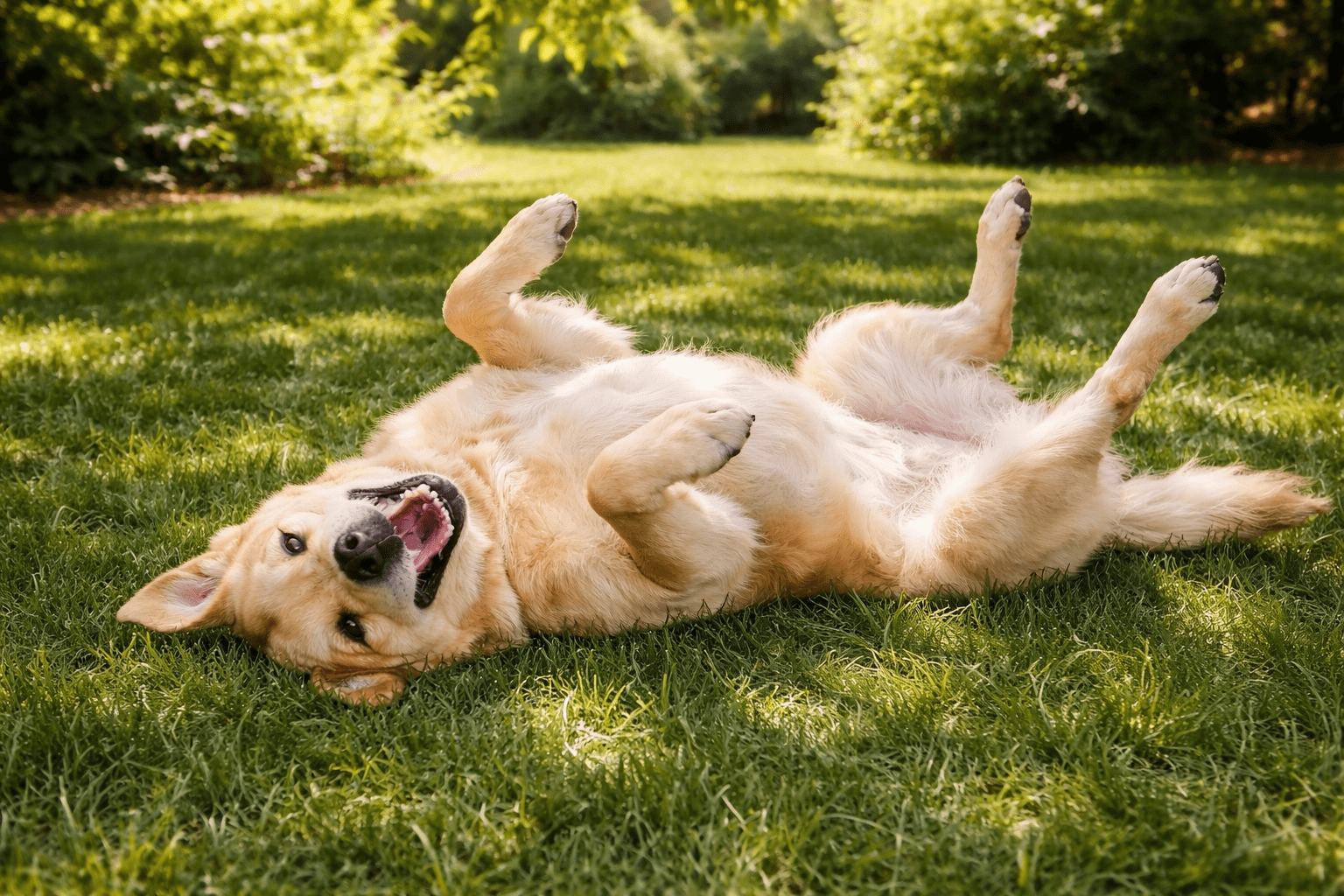
Watch for other cooling behaviors like seeking shade, panting heavily, or lying on cool surfaces. These are normal responses to warm weather, but excessive heat stress requires immediate attention.
Picking Up Interesting Scents
Dogs experience the world primarily through smell, and grass holds countless fascinating odors. Your dog might roll to collect these scents and carry them around like a scent souvenir.
This is especially common in areas where other animals have been. The smells of other dogs, cats, wildlife, or even fertilizer can be irresistible to your pet.
While this behavior is normal, be cautious about what your dog rolls in. Some substances can be harmful or just extremely unpleasant to clean off later.
When Grass Rolling Might Signal a Problem
Most grass rolling is harmless, but certain patterns can indicate health or behavioral issues that need professional attention.
Excessive or Compulsive Rolling
If your dog rolls constantly throughout the day or seems unable to stop, this might indicate an underlying problem. Compulsive behaviors can develop from anxiety, boredom, or medical conditions.
Dogs who roll obsessively might be trying to relieve persistent discomfort that scratching alone can’t fix. Skin allergies, parasites, or even neurological issues could be the cause.
Track how often your dog rolls and what triggers the behavior. If it happens multiple times per hour or interferes with eating, sleeping, or playing, consult your veterinarian.
Skin Conditions and Allergies
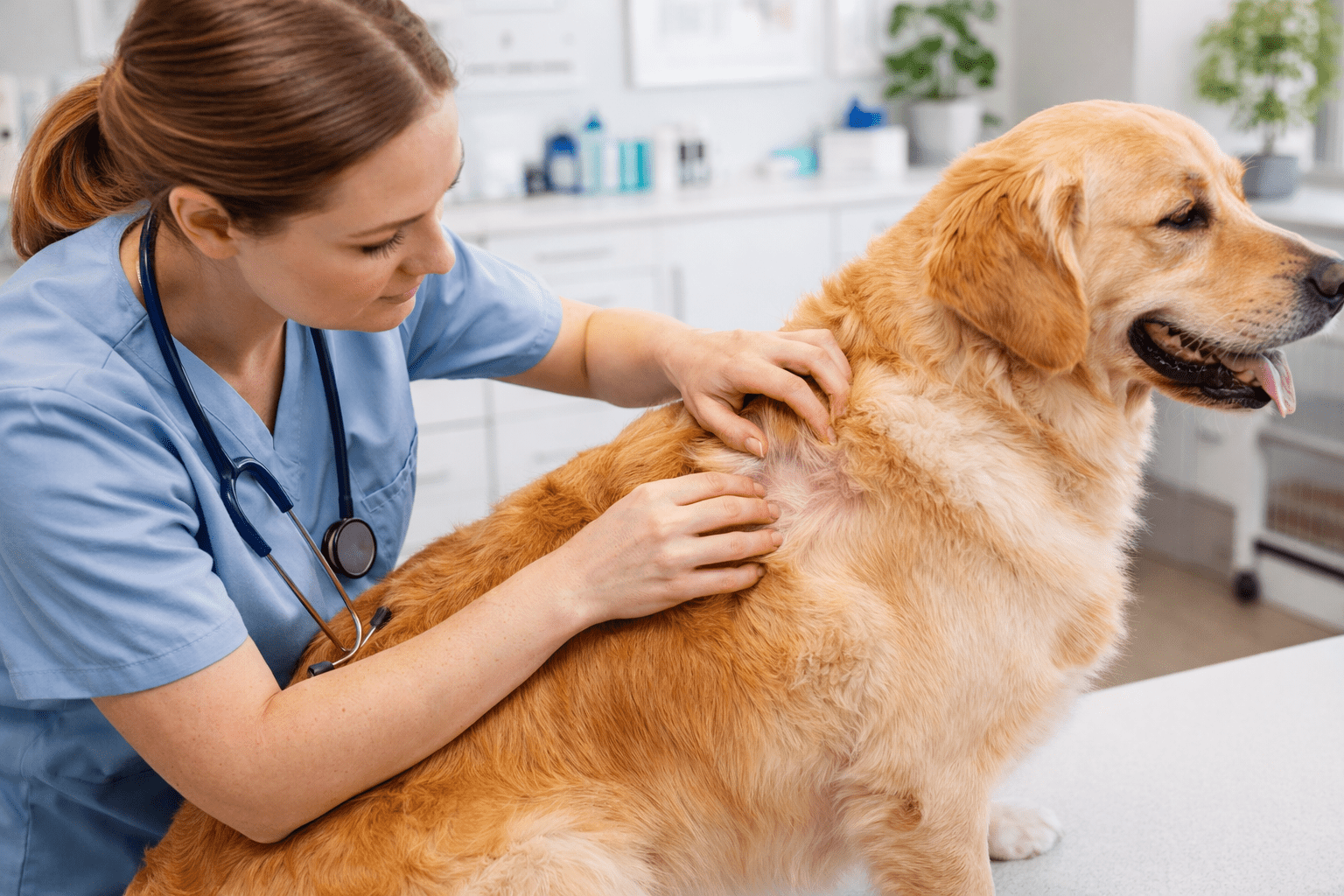
Persistent itching that drives constant rolling often comes from allergies or skin conditions. Environmental allergens, food sensitivities, or contact reactions can make your dog’s skin uncomfortable.
Look for these warning signs alongside excessive rolling:
- Red, inflamed skin
- Hair loss or bald patches
- Scabs, bumps, or hot spots
- Constant licking or chewing at paws or body
- Unpleasant odor from skin or ears
Your vet can diagnose the specific issue and recommend treatments like special shampoos, dietary changes, or medications to relieve the itching.
Behavioral Issues and Stress
Some dogs roll in grass as a coping mechanism for anxiety or stress. This self-soothing behavior can become problematic if your dog relies on it too heavily.
Stress-related rolling often appears alongside other anxiety signals like pacing, whining, destructive behavior, or reluctance to be alone. If your dog seems anxious or unsettled, the rolling might be a symptom rather than the main issue.
Professional obedience dog training addresses behavioral concerns and helps your dog develop healthier coping strategies.
| Behavior Type | Normal Pattern | Concerning Pattern |
| Frequency | Occasional, usually during play or walks | Multiple times per hour, seems compulsive |
| Duration | Brief episodes (30 seconds to 2 minutes) | Extended sessions, difficulty stopping |
| Triggers | Specific pleasant scents, post-bath, excitement | No clear trigger, happens constantly |
| Associated behaviors | Playfulness, tail wagging, relaxed body | Anxiety signs, aggression, distress |
| Response to redirection | Easily distracted, responds to commands | Ignores commands, returns immediately to rolling |
| Physical condition | Healthy coat, no skin issues | Visible skin problems, hair loss, irritation |
How to Manage Your Dog’s Grass Rolling Behavior
You don’t need to stop all grass rolling, but you can guide when and where it happens to keep your dog safe and clean.
Setting Boundaries During Walks
Teach your dog the “leave it” command to prevent rolling in unpleasant or dangerous substances. This gives you control when you spot something questionable ahead.
Let your dog enjoy harmless rolling in clean grass, but redirect them away from areas with chemicals, animal waste, or unknown substances. Consistent training helps them understand the difference between acceptable and off-limits rolling spots.
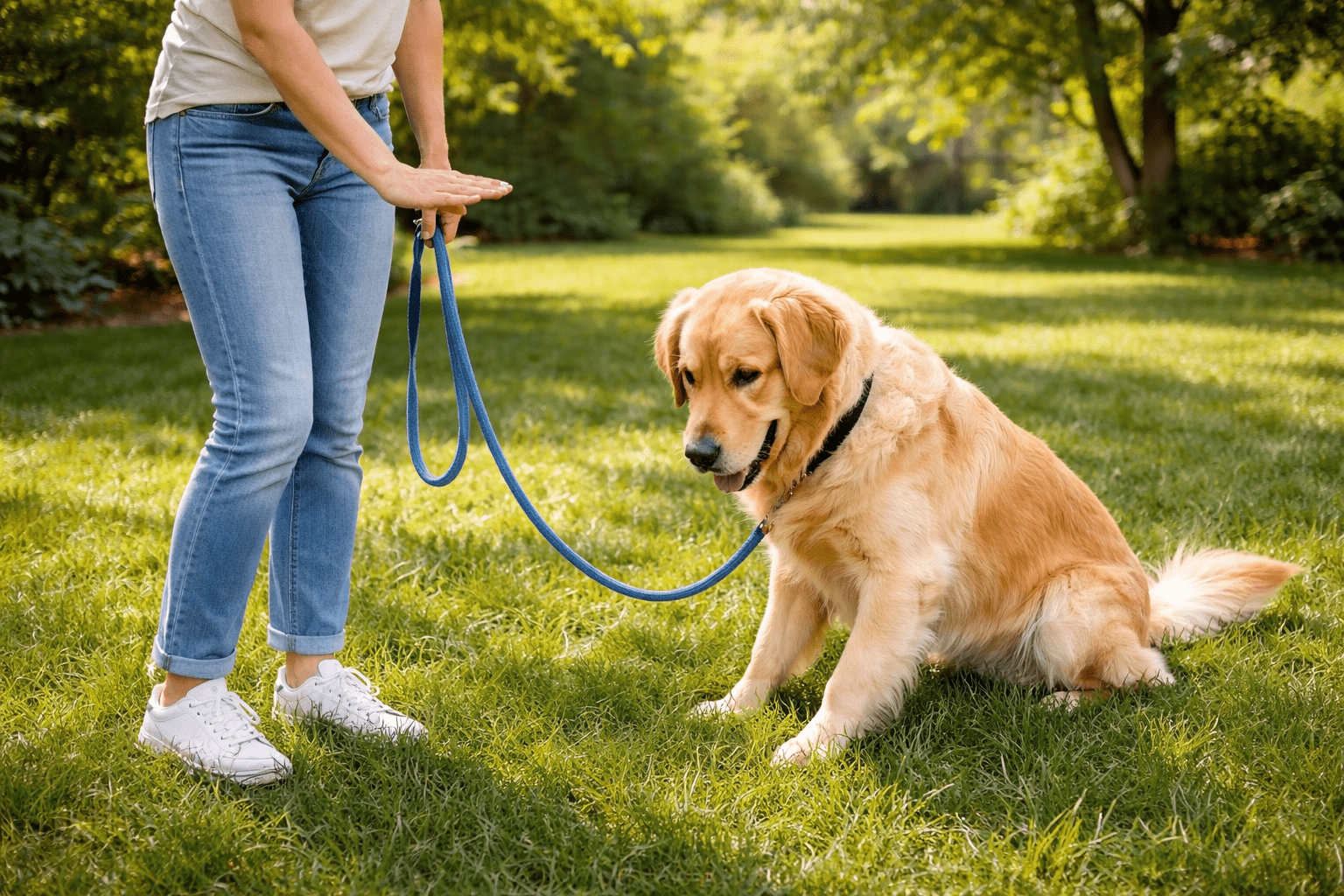
Reward your dog for choosing appropriate times to roll and for responding to your cues to stop. Positive reinforcement builds cooperation without eliminating their natural enjoyment.
If you struggle with impulse control during walks, a structured board and train Long Island program can establish solid foundational skills.
Creating Safe Rolling Opportunities
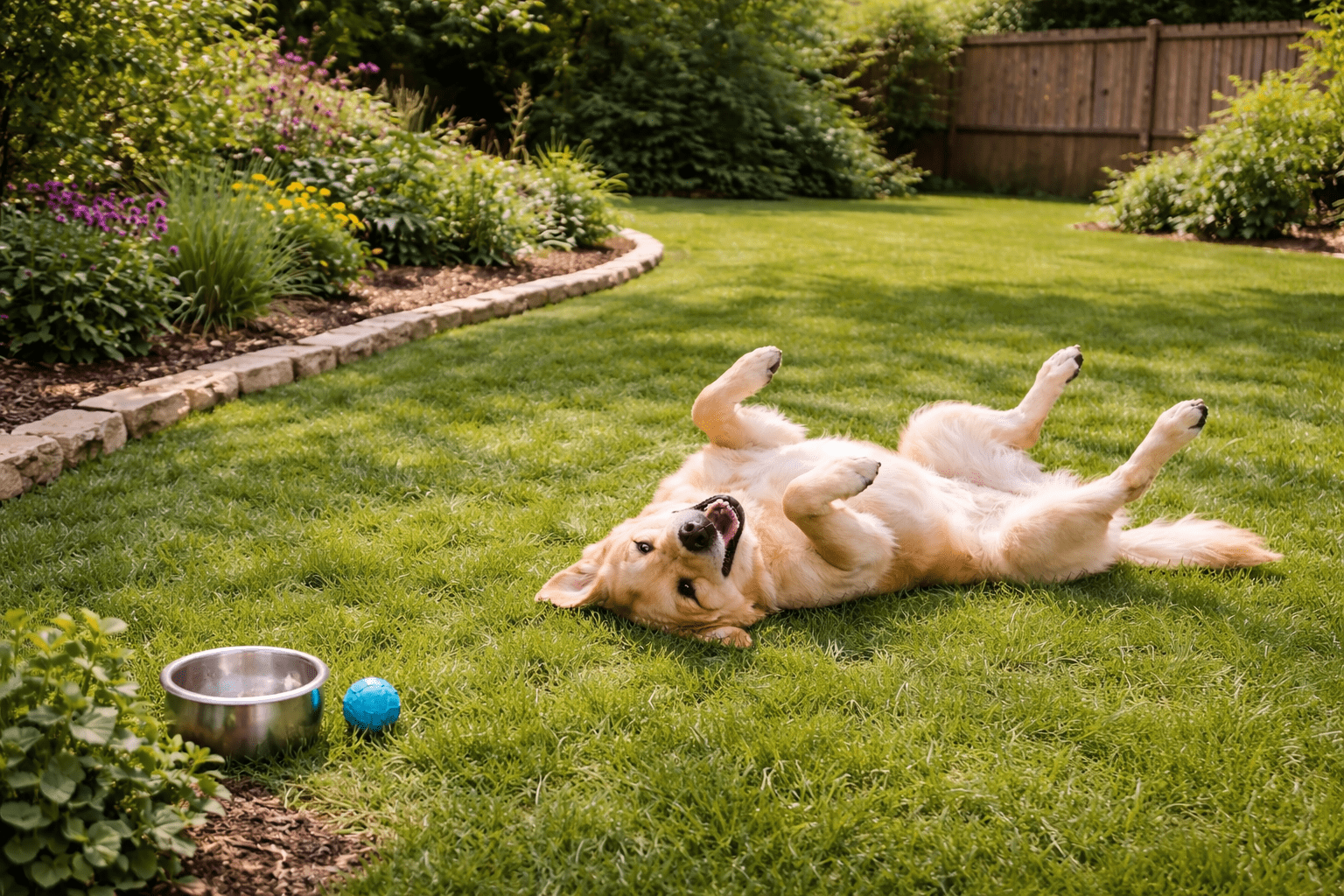
Designate specific areas in your yard where rolling is always allowed. This gives your dog an appropriate outlet for the behavior while protecting other parts of your lawn or garden.
Keep these areas free from pesticides, fertilizers, and other chemicals that could harm your pet. Regularly check for sharp objects, insect nests, or toxic plants that might pose risks.
If your dog loves rolling after baths, expect it and plan accordingly. Either let them roll in a safe indoor area with towels or take them outside to a designated spot before they’re completely dry.
Addressing Health Concerns
Schedule a vet visit if rolling becomes excessive or you notice skin problems. Many underlying issues respond well to treatment once properly diagnosed.
Keep your dog’s flea and tick prevention up to date, as parasites are a common cause of the itching that drives constant rolling. Regular grooming also helps you spot skin issues early.
Some dogs benefit from omega-3 supplements or special diets that support skin health and reduce allergy-related itching. Always consult your vet before making dietary changes.
Understanding Related Behaviors
Grass rolling sometimes appears alongside other grass-related behaviors. For example, if you’ve noticed your dog eating grass too, check out our guide on why dogs eat grass to understand that behavior better.
Both rolling and eating grass can be normal, but understanding the full picture of your dog’s outdoor habits helps you provide better care.
Making Sense of Your Dog’s Grass Rolling Habit
Understanding why dogs roll in the grass takes the mystery out of this common behavior. In most cases, your dog is simply following natural instincts, expressing joy, or finding relief from minor itches.
Pay attention to patterns and frequency rather than the behavior itself. Occasional rolling during walks or playtime is perfectly normal and even healthy. It’s when the behavior becomes excessive, compulsive, or is accompanied by other symptoms that you should seek professional help.
By knowing what’s normal for your individual dog, you can appreciate their quirky behaviors while staying alert to signs that something might be wrong. Most of the time, that wiggling, grass-loving pup is just being a happy, healthy dog doing what comes naturally.
If you’re dealing with challenging behaviors or want to establish better control during outdoor activities, K9 Mania Dog Training can help. As the leading board and train Long Island provider, we specialize in addressing all types of dog training issues, from basic obedience to complex behavioral challenges. Whether you need help with impulse control, anxiety, or just want a better-trained companion, our expert trainers are here to guide you and your dog toward success.
You May Also Want to Read
- 20 Common Dog Behavior Issues
- Why Is My Dog Whining?
- How to Help a Fearful Dog Gain Confidence
- Why Do Dogs Growl
Frequently Asked Questions
Are dogs happy when they roll in the grass?
Yes, dogs are usually very happy when rolling in grass. You can tell by their wiggling body language, relaxed facial expression, and the energetic way they throw themselves into it. This behavior often releases endorphins and brings genuine joy to your dog. However, if the rolling seems frantic or desperate rather than playful, it might indicate discomfort from itching or skin irritation instead of happiness.
Is it Normal for Dogs to Roll in Grass?
Rolling in grass is completely normal dog behavior rooted in natural instincts. Most dogs do this at some point, whether to mask their scent, scratch their back, or simply because it feels good. The behavior becomes concerning only when it’s excessive, obsessive, or accompanied by signs of skin problems or distress. Occasional grass rolling during walks or outdoor play is a healthy, natural part of being a dog.
What does it mean when a dog rolls around in grass?
When a dog rolls in grass, it can mean several things depending on the context. They might be following hunting instincts to mask their scent, scratching an itch on their back, marking territory with their scent, cooling down on a hot day, or expressing pure joy and playfulness. The specific meaning often depends on your dog’s body language, the frequency of the behavior, and what else is happening around them at the time.
Should I stop my dog from rolling in grass?
You don’t need to stop your dog from rolling in clean, safe grass. This natural behavior is usually harmless and enjoyable for them. However, you should intervene if they’re rolling in harmful substances like chemicals, fertilizers, animal waste, or anything that could cause skin irritation or toxicity. Teaching the “leave it” command helps you redirect your dog away from dangerous rolling spots while still allowing them to enjoy the behavior in appropriate areas.
Why do dogs smell the ground?
Dogs smell the ground to gather information about their environment through their incredibly powerful sense of smell. The ground holds scent trails from other animals, food sources, and territorial markers that tell your dog who’s been in the area and when. This sniffing behavior is how dogs “read the news” of their neighborhood. It’s completely normal and important for their mental stimulation, though you can limit it during training sessions using commands like “let’s go” to keep walks moving.
Do dogs roll in grass to get my attention?
Some dogs do learn that rolling in grass gets your attention, especially if you react strongly to the behavior. If your dog only rolls when you’re watching and stops when ignored, attention-seeking might be the motivation. However, most dogs roll in grass for instinctual reasons regardless of whether you’re present. If you suspect attention-seeking, avoid making a big fuss over the behavior and instead reward your dog when they engage in activities you prefer during outdoor time.