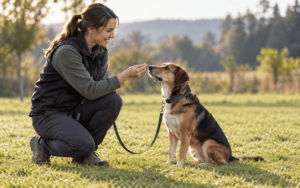

Common dog behavior issues are unwanted actions like excessive barking, destructive chewing, aggression, jumping, and separation anxiety that disrupt your household and your dog’s quality of life. These problems stem from lack of training, insufficient exercise, anxiety, boredom, or sometimes underlying medical conditions that need veterinary attention.
Whether you’re dealing with a puppy nipping at your heels or an adult dog showing signs of aggression toward strangers, understanding the root cause of each behavior helps you choose the right solution. The good news is that most issues can be corrected with consistent training, environmental management, and proper exercise.
In this guide, we’ll walk through 20 of the most common behavior problems dogs face, what triggers them, and the most effective ways to address each one for lasting results.
Struggling with challenging behaviors? Our board and train Long Island program provides intensive training for serious issues.
Understanding Canine Behavior Issues
Not every quirky dog habit qualifies as a true behavior issue. The difference lies in frequency, intensity, and impact on your daily life.
What Makes a Behavior a “Problem”
A behavior becomes a problem when it’s excessive, dangerous, destructive, or causes significant stress. Occasional barking at the doorbell is normal dog communication. Barking nonstop for 30 minutes after every delivery is a behavior issue that needs addressing.
Problem behaviors also include actions that put your dog or others at risk. Aggressive lunging at other dogs during walks creates dangerous situations. Running out of open doors can lead to injury or your dog getting lost.
The key is recognizing when normal dog instincts cross into problematic territory. Digging is natural for many breeds, but destroying your entire yard signals an issue with boredom or anxiety.
Why Dogs Develop Behavior Problems
Most behavior issues develop for specific, addressable reasons:
Lack of training and inconsistent rules top the list. Dogs that never learned what’s expected will make their own choices, which rarely match what you want.
Insufficient exercise and mental stimulation create pent-up energy that comes out as destructive or annoying behaviors. A Border Collie that doesn’t get enough activity will find outlets you won’t like.
Fear, anxiety, and stress drive many problem behaviors. Dogs that weren’t properly socialized often develop fear-based reactions to new people, places, or situations.
Medical issues sometimes masquerade as behavior problems. Sudden house training failures might signal a urinary tract infection. Aggression can stem from pain, especially in older dogs with arthritis.
Reinforced bad habits happen when dogs learn that certain behaviors get them what they want. If jumping on visitors gets attention, even negative attention, your dog will keep doing it.
The 20 Most Common Dog Behavior Issues
Let’s break down the specific problems most dog owners face, starting with the issues that affect the most households.
1. Excessive Barking
Dogs bark to communicate, but constant barking disrupts your home and annoys neighbors. Some dogs bark at every passing car, delivery person, or leaf that moves. Others bark when left alone, signaling separation anxiety.
Causes: Boredom, attention-seeking, territorial alerts, fear, separation anxiety, or excitement
Solutions: Identify what triggers the barking and address the root cause. Teach a “quiet” command using positive reinforcement. Provide adequate exercise and mental stimulation. For territorial barking, manage the environment by closing curtains or using white noise. Never yell at a barking dog, as this often reinforces the behavior.
2. Destructive Chewing
Chewing is natural for puppies during teething, but adult dogs destroying furniture, shoes, or walls signals a problem. The damage can be expensive and sometimes dangerous if dogs swallow inappropriate items.

Causes: Teething in puppies, boredom, anxiety, insufficient exercise, or exploratory behavior
Solutions: Provide appropriate chew toys and rotate them to keep things interesting. Exercise your dog thoroughly before leaving them alone. Use bitter apple spray on furniture edges. Crate train to prevent access to valuable items when unsupervised. Catch your dog chewing appropriate items and reward them heavily.
3. Jumping on People
Dogs jump to greet faces and get attention. While cute in puppies, a 70-pound dog launching at visitors creates problems, especially around children or elderly people.
Causes: Excitement, greeting behavior, attention-seeking, lack of impulse control
Solutions: Completely ignore your dog when they jump. Turn away, cross your arms, and don’t make eye contact. Only give attention when all four paws are on the ground. Train an alternative behavior like sitting for greetings. Consistency from all family members and visitors is critical for success.
4. Aggression
Aggression includes growling, snapping, lunging, or biting directed at people or other animals. This is the most serious behavior issue because it poses genuine safety risks.
Causes: Fear, resource guarding, territorial behavior, poor socialization, pain, past trauma, or predatory instincts
Solutions: Never punish aggression, as this often makes it worse. Work with a professional trainer experienced in aggression cases. Manage the environment to prevent aggressive incidents while training. Use muzzle training for safety during the rehabilitation process. Consider dog boarding camp Long Island programs for intensive behavior modification.
- Learn about top aggressive dog breeds, the traits behind these behaviors, and how proper training and socialization can shape a dog’s temperament.
5. Separation Anxiety
Dogs with separation anxiety panic when left alone. They might destroy doors trying to escape, bark continuously, or have accidents despite being house trained.
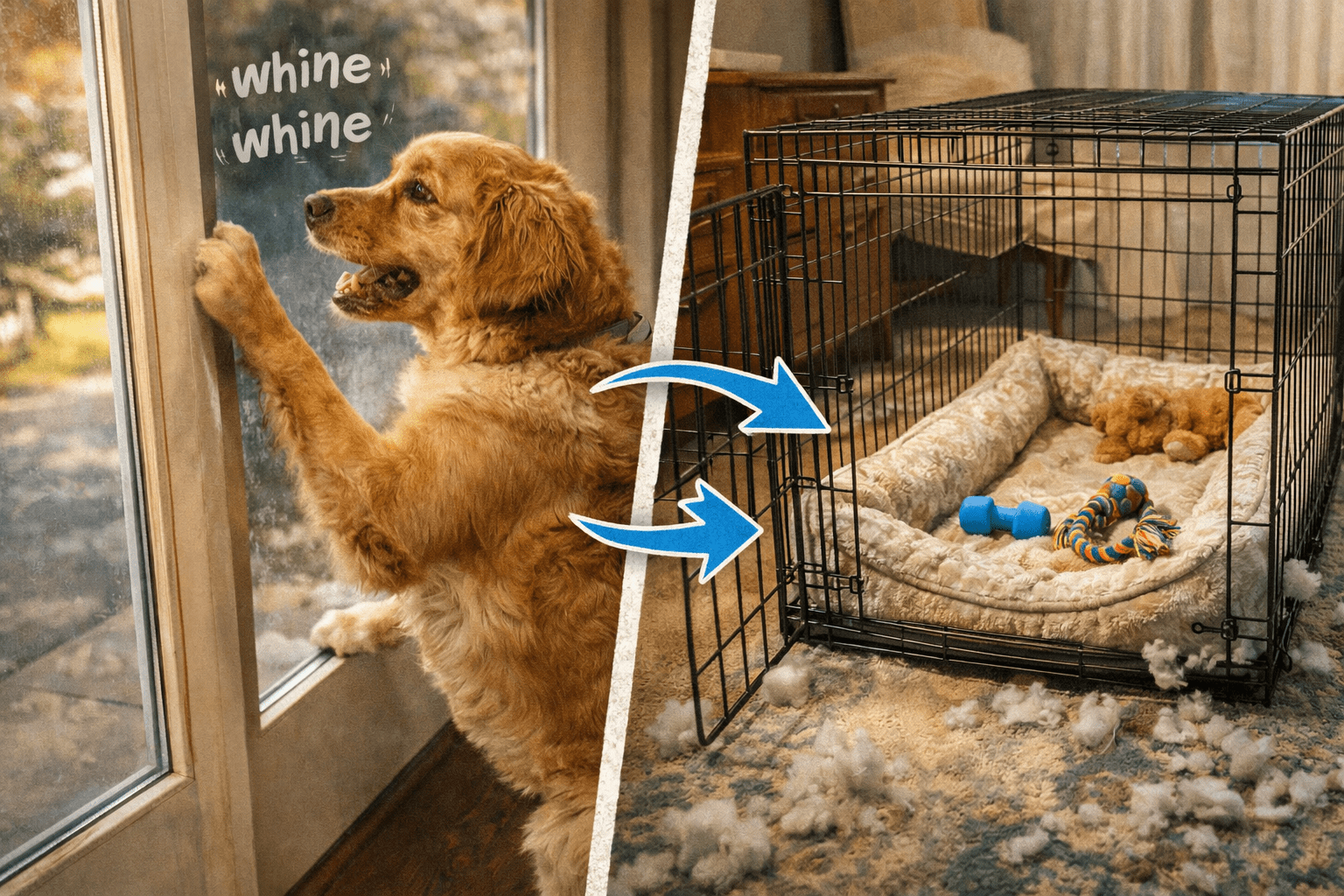
Causes: Over-attachment to owners, past trauma, changes in routine, or lack of independence training
Solutions: Build independence gradually through desensitization training. Start with very short absences and slowly increase duration. Create positive associations with your departure by giving special treats only when you leave. Exercise your dog before departing. Consider calming supplements or medication prescribed by your vet for severe cases.
- Learn the common warning signs of separation anxiety in dogs, including destructive behavior, excessive barking, pacing, and stress when left alone.
6. Inappropriate Elimination
House training failures include urinating or defecating indoors despite knowing better, or marking territory inside the home.
Causes: Incomplete house training, medical issues, territory marking, anxiety, or age-related cognitive decline
Solutions: Rule out medical problems with a vet visit first. Return to basic house training protocols with frequent bathroom breaks and rewards. Clean accidents thoroughly with enzymatic cleaners to remove odor. Supervise closely and interrupt accidents in progress. For marking behavior, neuter or spay if not already done.
7. Begging
Dogs begging at the table or while you’re eating creates annoying mealtime disruptions and can lead to obesity if you give in.
Causes: Being fed from the table, attention-seeking, learned behavior that gets reinforced
Solutions: Never feed your dog from your plate or while you’re eating. Train a “place” command where your dog goes to their bed during mealtimes. Reward them for staying there. Feed your dog their meal at the same time you eat so they’re occupied. Consistency from all family members prevents reinforcing the behavior.
8. Chasing
Dogs chasing cars, bikes, joggers, or other animals can lead to dangerous situations, injuries, or your dog getting lost.
Causes: Prey drive, boredom, lack of exercise, or breed-specific instincts
Solutions: Keep your dog on leash in areas with traffic or joggers. Teach a strong recall command. Provide appropriate outlets for chase instincts through fetch or lure coursing. Interrupt chasing behavior early with a “leave it” command. High-energy breeds need more structured activity to satisfy their chase drive.
9. Digging
Dogs that dig up your yard create unsightly holes and can damage landscaping or underground utilities.
Causes: Boredom, excess energy, hunting instincts, trying to escape, or creating a cool spot in hot weather
Solutions: Provide adequate exercise and mental stimulation. Create a designated digging area with loose soil or sand and bury toys there. Redirect digging to the appropriate spot and reward your dog for using it. For dogs trying to escape, secure fences and address separation anxiety if present.
- Learn practical training strategies to prevent destructive digging, including exercise, supervision, and redirecting your dog’s behavior to healthier outlets.
10. Biting and Nipping
Puppy mouthing is normal play behavior, but it must be corrected before becoming a habit. Adult dog biting is a serious issue requiring immediate attention.
Causes: Teething in puppies, play behavior, fear, pain, or aggression
Solutions: For puppies, yelp loudly when bitten and immediately stop play. Redirect to appropriate chew toys. For adult dogs, identify whether biting stems from fear, pain, or aggression and address accordingly. Never use physical punishment, which often increases biting. Seek professional help for any adult dog that bites.
Here’s a comparison of mild versus severe behavior issues:
| Behavior Issue | Mild Form | Severe Form | Urgency Level |
| Barking | Alerts to visitors, stops when asked | Constant barking at nothing, won’t stop | Moderate |
| Chewing | Chews own toys occasionally | Destroys furniture, walls, dangerous items | High if dangerous items |
| Jumping | Occasional excited jumps | Knocks people down, won’t stop | Moderate |
| Aggression | Rare growl in specific situations | Frequent lunging, snapping, or biting | Critical – immediate help |
| Separation Anxiety | Mild whining when you leave | Destruction, escape attempts, injury | High |
| Elimination | Rare accident in new environment | Frequent indoor elimination despite training | Moderate |
11. Whining
Constant whining creates stress for owners and can signal various underlying issues from anxiety to medical problems.
Causes: Attention-seeking, anxiety, stress, pain, or communication needs
Solutions: First rule out medical issues. Don’t reward whining with attention. Wait for quiet moments to give praise and interaction. Teach your dog alternative ways to communicate needs. Address underlying anxiety if present. Ensure your dog’s basic needs for exercise, food, and bathroom breaks are met.
12. Leash Pulling
Dogs that constantly pull on the leash make walks exhausting and unpleasant. Severe pulling can cause injuries to both dog and handler.
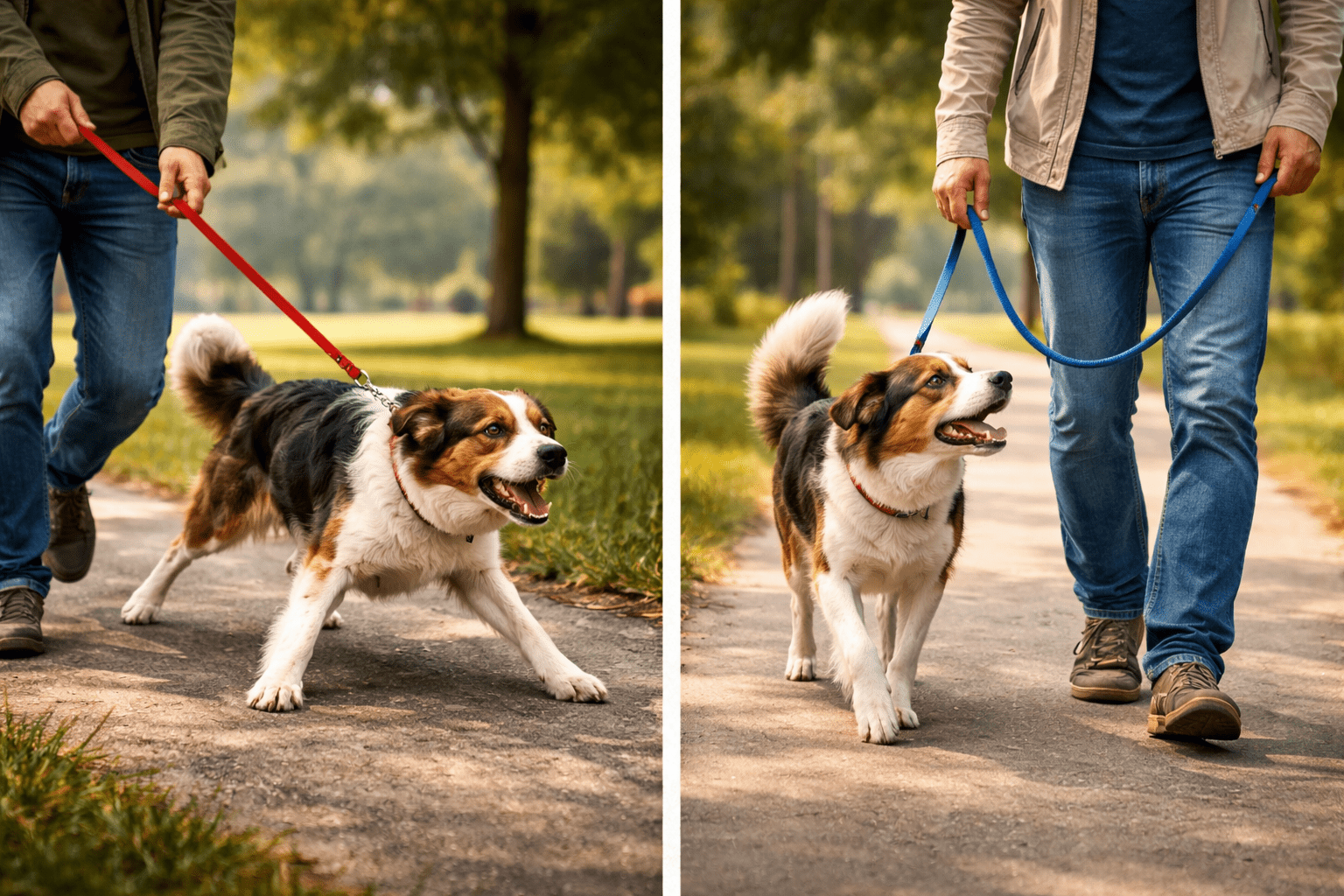
Causes: Excitement, high energy, lack of leash training, or learned behavior
Solutions: Use positive reinforcement to reward walking beside you. Stop moving whenever your dog pulls and only resume when the leash loosens. Consider using a front-clip harness for better control. Practice in low-distraction environments first. Make walks mentally engaging with varied routes and sniffing opportunities. Learn more essential dog training commands including loose-leash walking.
13. Resource Guarding
Dogs that growl, stiffen, or bite when approached near food, toys, or sleeping spots are displaying resource guarding behavior.
Causes: Insecurity, competition for resources, past scarcity experiences, or genetic predisposition
Solutions: Never punish resource guarding as this increases aggression. Practice trading games where you give something better in exchange for the guarded item. Feed in separate areas if multiple dogs are present. Teach “drop it” and “leave it” commands using high-value treats. Work with a professional for severe cases.
14. Excessive Energy and Hyperactivity
Dogs that can’t calm down, constantly jump around, or seem frantic need help learning impulse control.
Causes: Breed characteristics, insufficient exercise, lack of mental stimulation, or anxiety
Solutions: Provide adequate physical exercise matched to your dog’s breed and age. Add mental enrichment through puzzle toys, training sessions, and nose work games. Teach a “settle” or “place” command for calm behavior. Consider doggy daycare or hiring a dog walker for additional activity. Some high-energy breeds need 2+ hours of activity daily.
15. Fearful Behavior
Dogs showing excessive fear of people, places, sounds, or objects have a reduced quality of life and may develop aggression from fear.
Causes: Poor socialization, past trauma, genetic temperament, or negative experiences
Solutions: Never force a fearful dog into scary situations. Use gradual desensitization and counter-conditioning protocols. Pair scary things with high-value treats at a distance your dog can handle. Slowly decrease distance as your dog builds confidence. Create safe spaces where your dog can retreat. Consider anxiety medication for severe cases while working on behavior modification.
16. Running Away or Escaping
Dogs that bolt out doors, jump fences, or run away when off-leash put themselves in serious danger.
Causes: Prey drive, boredom, desire to explore, intact dogs seeking mates, or insufficient training
Solutions: Train a solid recall command in stages with increasing distractions. Never punish your dog when they come back, even if they ran away. Secure your yard with proper fencing. Use baby gates to prevent door dashing. Practice “wait” at doorways before allowing your dog outside. Keep your dog leashed in unfenced areas until recall is reliable.
17. Counter Surfing and Stealing Food
Dogs that steal food from counters or tables not only create annoyance but risk their health by eating dangerous foods.
Causes: Opportunity, reinforcement from past success, hunger, or scavenging instinct
Solutions: Manage the environment by keeping counters clear of food. Teach “leave it” and “off” commands. Catch your dog in the act and redirect to appropriate behavior. Never leave tempting food where your dog can reach it. Booby-trap counters with aluminum foil or cookie sheets that fall when touched to create an unpleasant association.
18. Excessive Licking
Dogs that lick people, objects, or themselves constantly might have medical issues, anxiety, or compulsive behavior.
Causes: Affection, attention-seeking, anxiety, boredom, skin issues, pain, or obsessive-compulsive disorder
Solutions: Visit your vet to rule out medical causes like allergies or skin infections. Redirect licking to appropriate activities. Don’t give attention for excessive licking, even negative attention. Provide adequate mental and physical stimulation. For compulsive licking, work with a veterinary behaviorist who may recommend behavior modification combined with medication.
19. Coprophagia (Eating Feces)
Dogs eating their own or other animals’ feces is disgusting and potentially dangerous due to parasites.
Causes: Nutritional deficiencies, enzyme deficiencies, attention-seeking, boredom, or learned behavior
Solutions: Have your vet check for underlying health issues. Ensure your dog’s diet is nutritionally complete. Clean up feces immediately so there’s no opportunity. Teach a strong “leave it” command. Add supplements like pineapple or meat tenderizer to food, which can make feces less appealing. Supervise closely during bathroom breaks.
20. Mounting and Humping
Dogs humping and mounting people, other dogs, or objects can be embarrassing and sometimes indicates dominance or arousal issues.
Causes: Sexual behavior, play, excitement, stress, or dominance display
Solutions: Interrupt mounting immediately and redirect to another activity. Remove your dog from the situation if they won’t stop. Spay or neuter if not already done, which often reduces the behavior. Ensure adequate exercise and mental stimulation. Teach impulse control through obedience training. Don’t allow mounting during play as it can escalate into fights.
Here’s a quick reference guide for addressing these issues:
| Issue | Training Focus | Management Strategy | Timeline |
| Barking | “Quiet” command, addressing triggers | Close curtains, white noise | 2-6 weeks |
| Chewing | Appropriate outlets, “leave it” | Crate training, remove access | 1-3 months |
| Jumping | Ignore jumping, reward four paws down | Turn away, consistent visitors | 2-4 weeks |
| Aggression | Professional help required | Muzzle, avoid triggers | 3-6+ months |
| Separation Anxiety | Gradual desensitization | Exercise before leaving, crate | 2-6 months |
| House Training | Frequent breaks, reward outside | Supervision, enzymatic cleaner | 2-8 weeks |
| Begging | “Place” command during meals | Never feed from table | 2-4 weeks |
| Pulling | Loose leash walking, stop when pulling | Front-clip harness | 4-8 weeks |
When to Seek Professional Help
Some behavior issues require expert intervention beyond what you can accomplish alone.
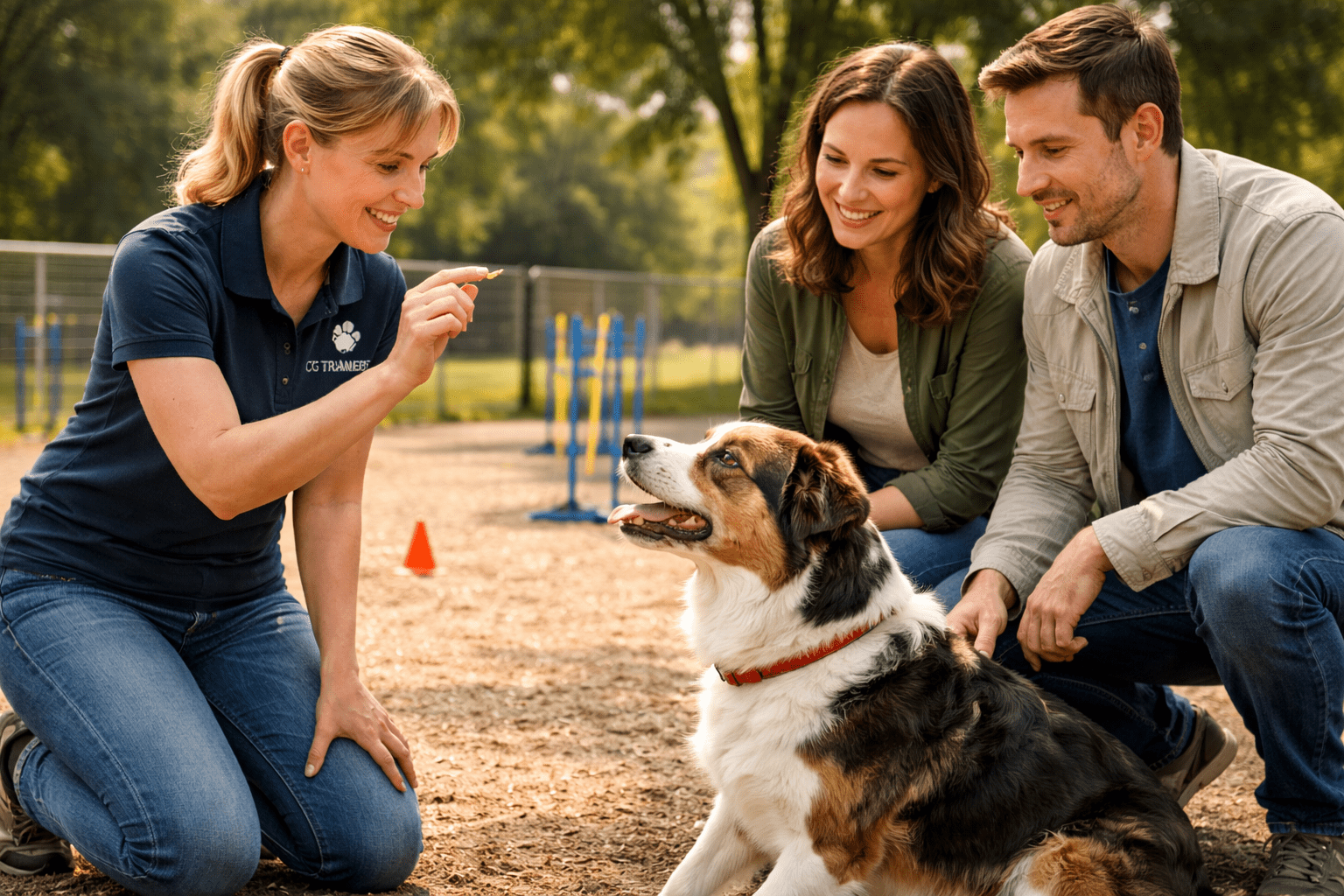
Red Flags That Need Professional Training
Seek professional help immediately if your dog shows:
- Any form of aggression toward people or animals
- Severe separation anxiety causing injuries or extreme destruction
- Extreme fear that doesn’t improve with gentle exposure
- Compulsive behaviors like constant tail chasing or shadow chasing
- Multiple behavior issues happening simultaneously
Professional trainers see patterns you might miss and have experience with hundreds of cases. They can create customized plans based on your specific dog’s triggers and temperament.
Benefits of Structured Training Programs
Intensive training programs like obedience dog training provide structure and consistency that’s hard to maintain at home. Your dog learns faster in an environment designed for training without the distractions of home.
Board and train programs are especially effective for serious issues. Your dog receives professional training multiple times daily, building new habits quickly. The key is following through when your dog comes home by maintaining the same commands and rules.
Many behavior problems that seem impossible to fix respond well to professional intervention. Don’t wait until issues become dangerous or unbearable.
Prevention: Building Good Behavior From the Start
Preventing behavior issues is far easier than fixing them after they develop.

Early Socialization
Proper socialization during puppyhood (3-14 weeks) prevents many future problems. Expose your puppy to different people, dogs, places, sounds, and experiences in positive, controlled ways.
Adult dogs benefit from continued socialization too. Regular positive interactions keep social skills sharp and prevent fear-based reactions to new situations.
Consistent Training and Clear Rules
Start training early and remain consistent. Basic obedience commands give you tools to manage your dog in any situation. Decide on household rules and ensure everyone enforces them identically.
If you allow your dog on the couch sometimes but not others, you’re creating confusion. Dogs thrive with clear, consistent expectations.
Meeting Your Dog’s Needs
Dogs need adequate physical exercise, mental stimulation, and emotional security. A bored, under-exercised dog will create their own entertainment through destructive behaviors.
Match activity levels to your dog’s breed, age, and individual energy. A Labrador Retriever needs significantly more exercise than a Bulldog. High-energy breeds often require 90+ minutes of activity daily.
Mental stimulation through training, puzzle toys, and nose work games tires your dog’s brain as effectively as physical exercise. Even 10 minutes of training can exhaust a dog mentally.
For detailed information on specific issues, check out our comprehensive guide on common dog behavior issues.
Transforming Canine Behavior Issues Into Better Habits
Dog behavior issues might feel overwhelming, but every problem has a solution. Understanding what triggers each behavior gives you the knowledge to address it effectively. Whether you’re dealing with excessive barking, destructive chewing, aggression, or any of the other common issues we covered, the right approach combines training, management, and consistency.
The key to success is taking action early, staying patient through the process, and being realistic about timelines. Some issues resolve in weeks while others require months of dedicated work. What matters is making steady progress and celebrating small wins along the way.
Remember that professional help is available when you need it. There’s no shame in calling an expert, especially for serious issues like aggression or severe anxiety.
If you’re struggling with dog behavior issues, K9 Mania Dog Training is here to help. As the leading board and train provider on Long Island, we specialize in transforming challenging dogs into well-mannered companions. Our proven programs address everything from basic obedience to serious behavioral problems. Don’t let these issues control your household any longer. Visit our website to learn how we can help you and your dog build the relationship you both deserve.
Learn more about how professional programs work by reading about the effectiveness of board and train approaches.
Explore Related Articles
How to Stop a Dog from Chewing Furniture
How to Stop Dogs from Digging
How to Stop Territorial Barking
Frequently Asked Questions
What is the most common behavioral issue in dogs?
Excessive barking is the most frequently reported behavior issue, affecting dogs of all breeds and ages. It stems from various causes including boredom, attention-seeking, territorial alerts, separation anxiety, or learned behavior patterns. The second most common issue is jumping on people, which dogs do as a natural greeting behavior that becomes problematic when not corrected early. These issues often appear together and respond well to consistent training.
How do I help my dog with behavior problems?
Start by identifying the specific triggers and patterns behind the behavior. Provide adequate daily exercise and mental stimulation to prevent boredom-related issues. Use positive reinforcement training to reward desired behaviors rather than only punishing unwanted ones. Maintain consistent rules across all family members and create a predictable routine. If problems persist or involve aggression, consult a professional trainer who can assess your situation and create a customized plan.
How do you discipline a dog that won’t listen?
Effective discipline focuses on preventing unwanted behavior and rewarding good choices rather than punishment after the fact. First, ensure your dog understands what you’re asking by reviewing basic obedience commands in distraction-free environments. Use high-value rewards that truly motivate your dog. If your dog ignores commands, they might be over-threshold from excitement or stress. Manage the environment to reduce distractions, practice in easier situations first, and gradually increase difficulty as your dog succeeds.
What are the five most common behavioral issues?
The five most common dog behavior problems are excessive barking or vocalization, jumping on people during greetings, destructive chewing of furniture or belongings, separation anxiety when left alone, and aggression toward people or other dogs. These issues affect dogs across all breeds though some are more prevalent in certain types. For example, herding breeds often develop excessive barking while high-energy breeds show more destructive behavior when under-exercised. All five respond to training when addressed properly.
What is a red flag dog’s behavior?
Red flag behaviors that require immediate professional attention include any form of aggression like growling, snapping, or biting directed at people or animals. Other serious warning signs are intense resource guarding over food or toys, extreme fear that doesn’t improve with gentle exposure, compulsive behaviors like constant tail chasing or shadow chasing, and sudden personality changes in previously well-behaved dogs. These issues can escalate quickly and pose safety risks if not addressed by experienced trainers or veterinary behaviorists.
How to tell if a dog has mental issues?
Signs of potential mental or emotional issues include compulsive repetitive behaviors that serve no purpose, extreme reactions to normal stimuli that other dogs handle easily, inability to settle or relax even in calm environments, persistent fear or anxiety despite positive experiences, and cognitive decline in senior dogs showing as confusion or disorientation. Changes in sleep patterns, appetite, or house training can also signal problems. If you notice these patterns, consult your veterinarian first to rule out medical causes before pursuing behavioral treatment.