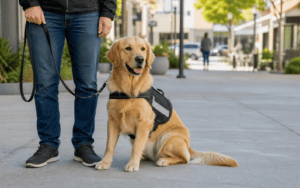
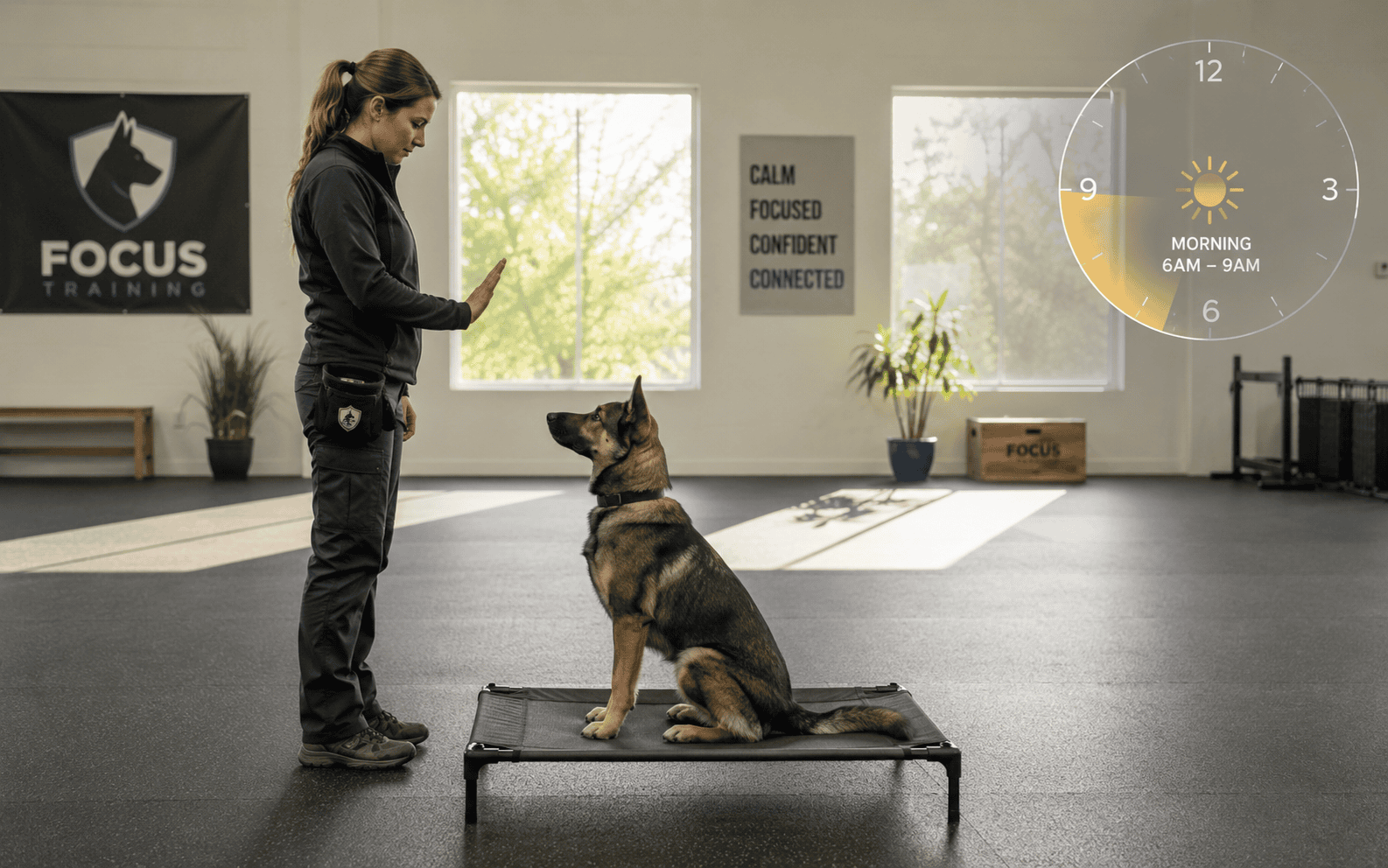
A board and train daily schedule is a structured, repeating routine that guides a dog through training sessions, rest, play, and socialization during a residential stay. Most programs run 4 to 6 hours of intentional activity per day, broken into short, focused blocks to match a dog’s natural attention span and energy cycles.
Key Takeaways
- Board and train programs use repetition and consistent structure, not marathon sessions, to build lasting behavior.
- Training blocks are typically 10 to 20 minutes long, repeated 3 to 5 times throughout the day.
- Rest, crate time, and feeding are built into the schedule on purpose, not as downtime.
- The final days of a program should shift focus toward handler transition and owner education.
- Not all programs run the same schedule, so asking for a daily breakdown before enrolling is essential.
- Results transfer best when owners replicate the same routine at home after pickup.
Why the Daily Routine Matters More Than the Program Length
When most people think about residential dog training, they focus on how many weeks it lasts. Two weeks? Three? But duration is only part of the equation. What happens inside each of those days is what actually shapes behavior.
Dogs learn through repetition, timing, and consistency. A dog that receives one solid 45-minute training session and then sits in a kennel for the rest of the day is not getting the same value as a dog working through five structured mini-sessions spaced throughout the day. The brain consolidates learning during rest, which is why the alternating pattern of work and downtime is intentional in well-designed programs.
If you are evaluating a program before enrolling, reading about the effectiveness of board and train programs can help you understand what separates programs that get lasting results from those that produce short-term compliance.
The schedule also matters for your dog’s stress levels. A new environment is already a lot to process. Overtraining early in the stay can cause dogs to shut down, become avoidant, or show fear-based behaviors that trainers then have to work around rather than through.
A Typical Board and Train Daily Schedule, Broken Down
While every facility structures things slightly differently, high-quality programs tend to follow a consistent framework. Here is what a typical day looks like when the program is well-run.
Morning Block (6:00 AM to 10:00 AM)
The day usually starts with a potty break and a short walk to let the dog settle and release energy. Feeding happens after this initial outing, not before, to avoid digestive issues during active work.
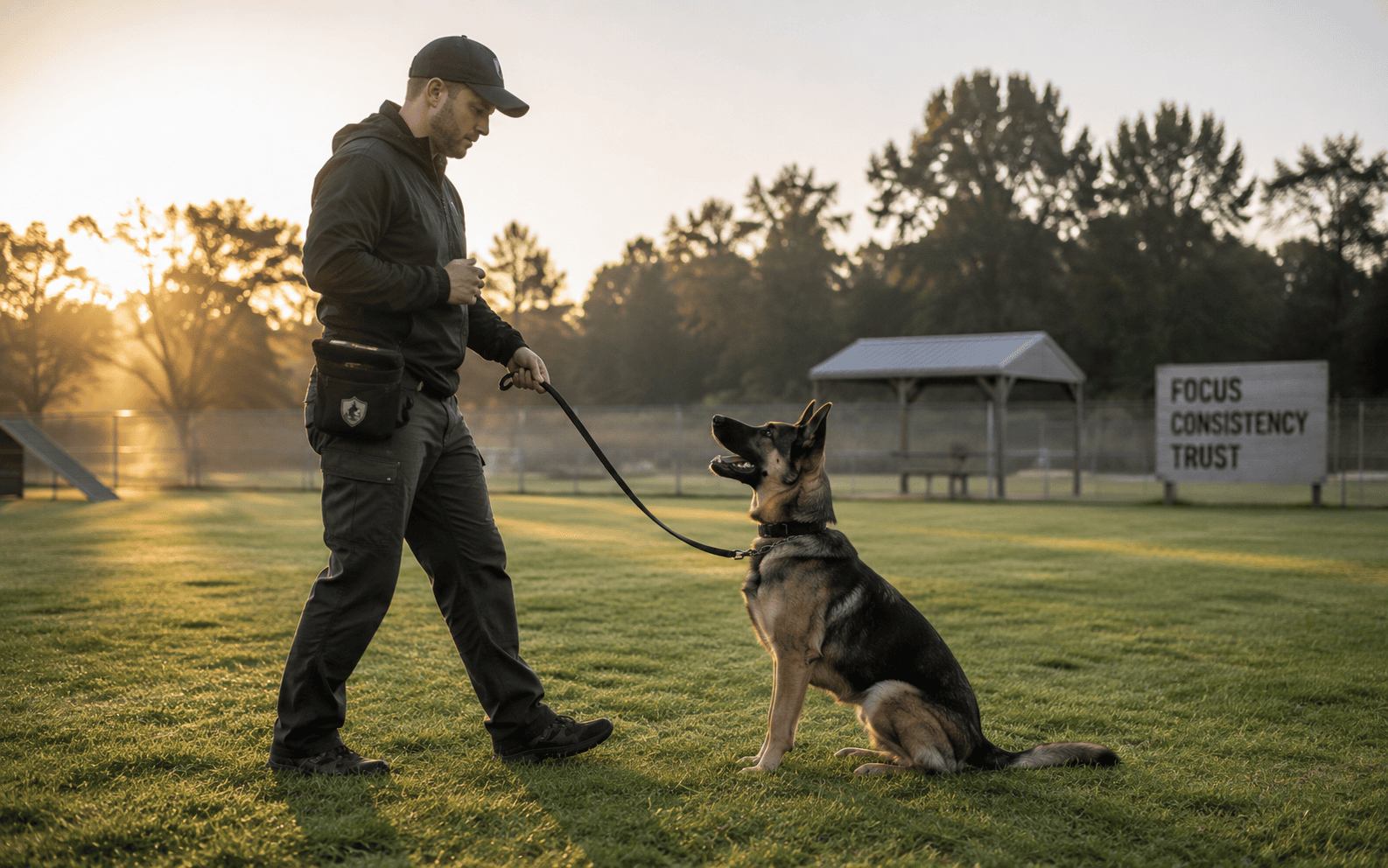
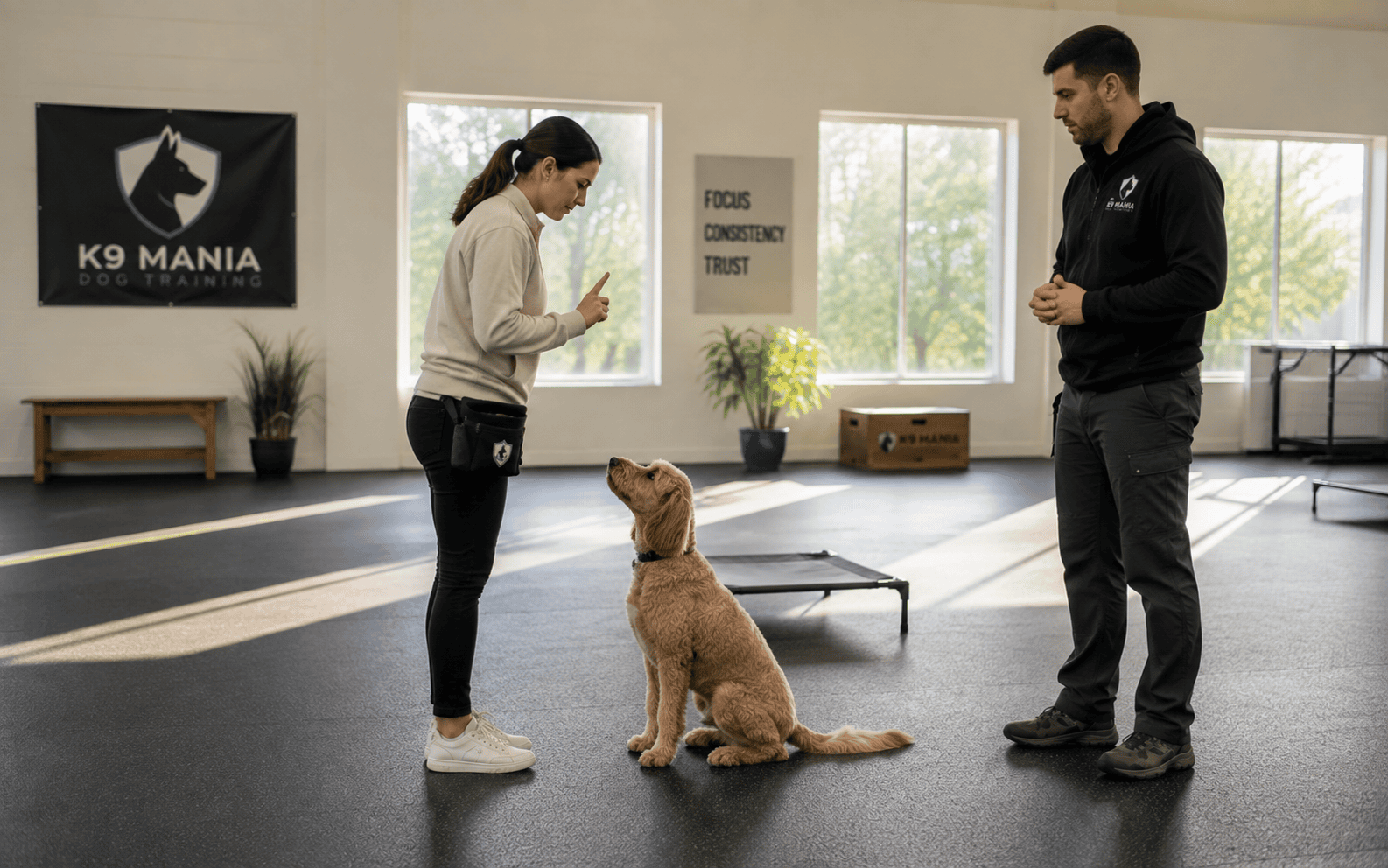
The first training session begins around 7:30 to 8:00 AM, once the dog has eaten, settled, and is alert but not hyper. This session typically focuses on foundation behaviors like sit, down, stay, or leash pressure, depending on where the dog is in the program, and these foundational skills are best developed through obedience dog training. Sessions run 10 to 20 minutes.
After the morning session, the dog returns to its crate or kennel for rest. This is not wasted time. The brain is consolidating what it just practiced, and the dog is recharging for the next session.
Midday Block (10:30 AM to 2:00 PM)
A second training session runs mid-morning, often building on the morning’s work or introducing the next skill layer. If the dog is mid-program, this might be where distraction work or off-leash reliability gets practiced.
Socialization time or group play may happen here, depending on the dog’s temperament and the facility’s setup. Not every dog benefits from group interaction, especially early in a stay, so good trainers assess this individually.
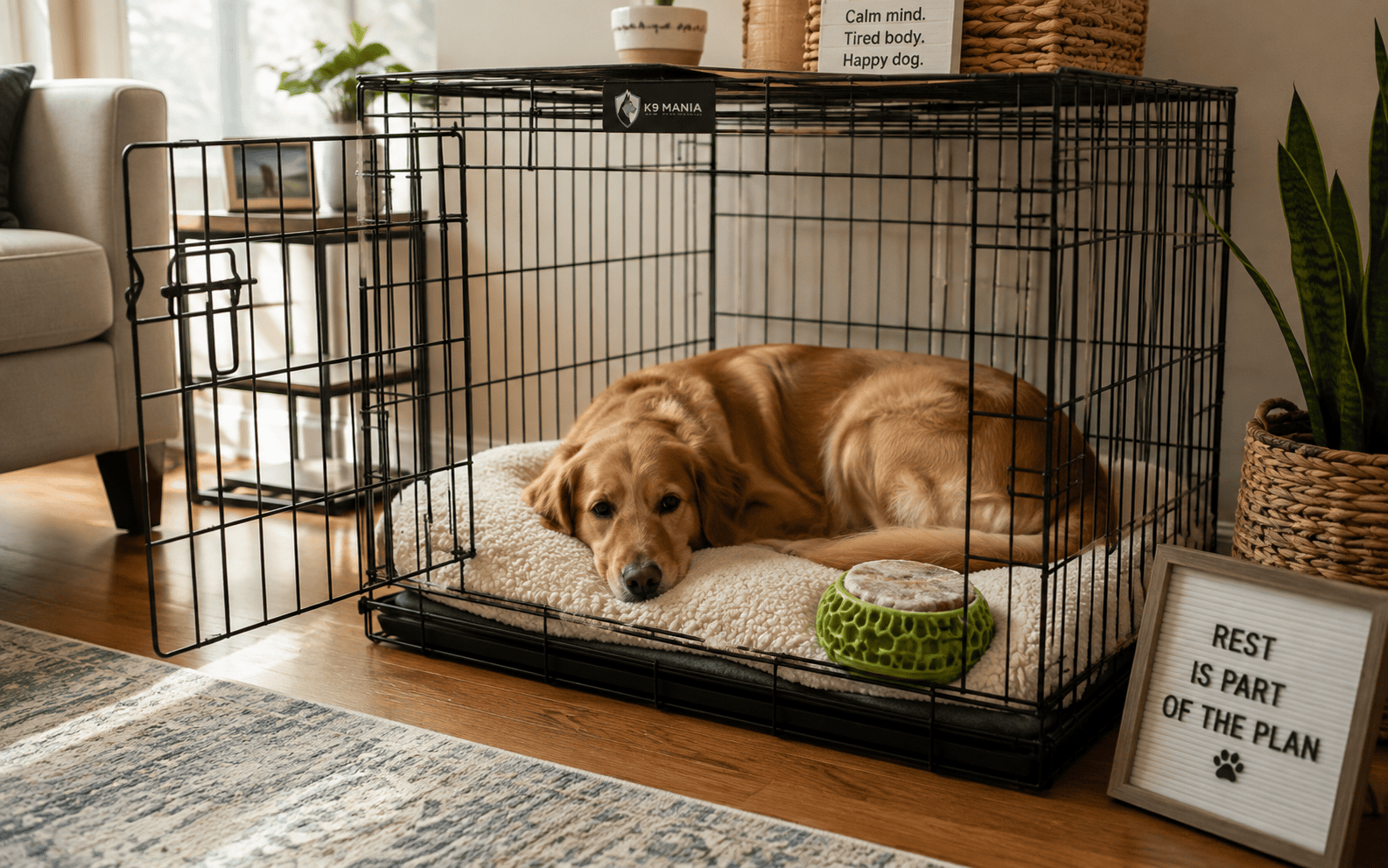
Another crate rest period follows, typically 90 minutes to two hours. Some facilities use this time for enrichment like frozen food puzzles or chew items to keep the dog mentally stimulated without requiring trainer presence.
Afternoon Block (2:00 PM to 6:00 PM)
The third training session of the day tends to focus on proofing and real-world application. This might mean practicing commands near distractions, working on threshold behavior for dogs with reactivity issues, or doing place and recall work in more challenging environments.
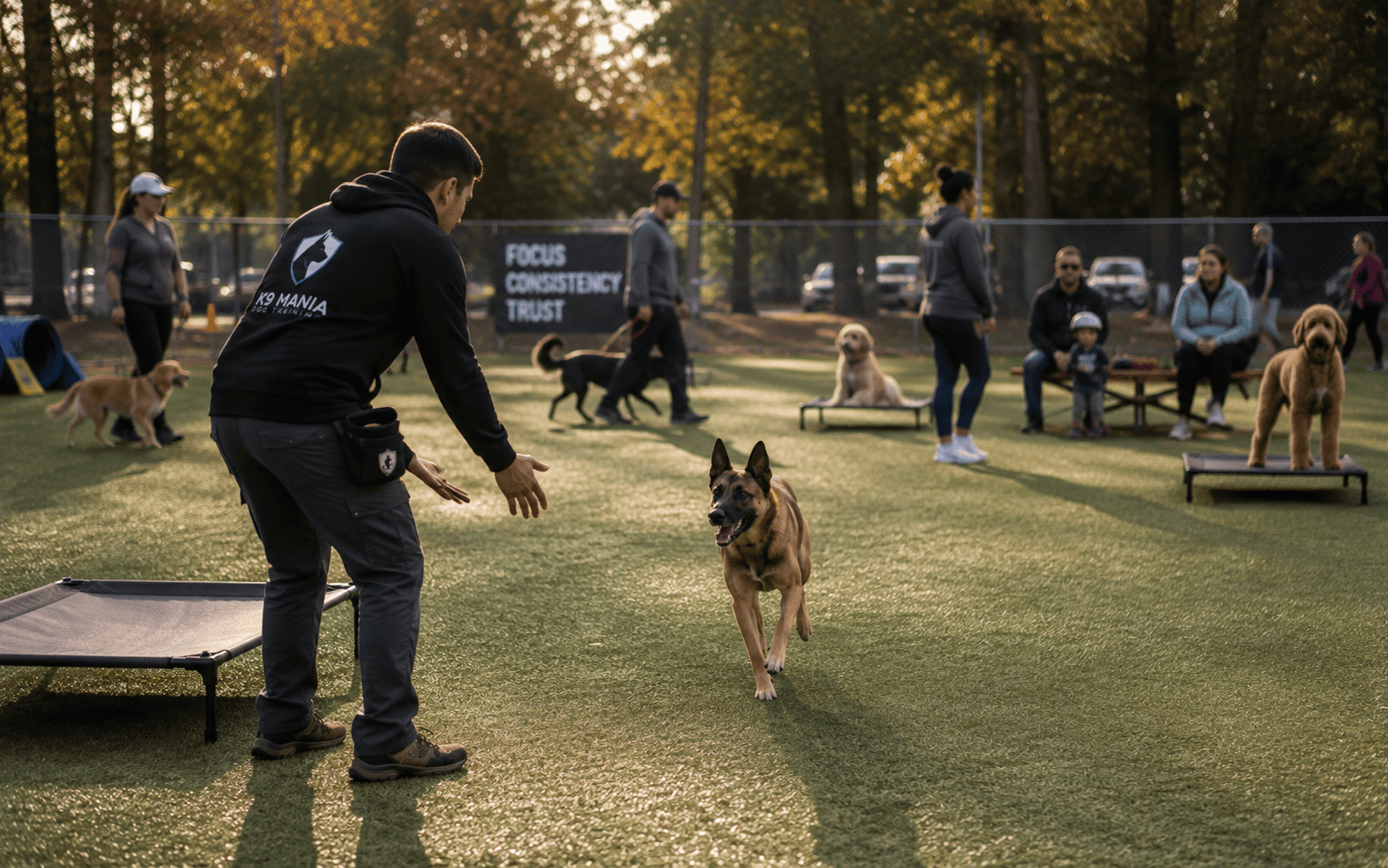
A second walk or outdoor play session gives the dog a physical outlet before the evening wind-down. For programs that offer facilities like those found at a dog boarding camp in long island, this part of the day might include structured field work, agility introductions, or social time with other dogs.
Evening Block (6:00 PM to 9:00 PM)
Evening is typically the quietest part of the day. A final short session, often 10 to 15 minutes, focuses on calm, confident behavior. This is a good time for relaxation commands, mat work, or down-stay practice.
Final potty break, a bit of calm interaction with the trainer, and then the dog settles in for the night. Dogs that are mentally and physically worked appropriately during the day sleep well, which also supports learning consolidation overnight.
How the Schedule Evolves Week by Week
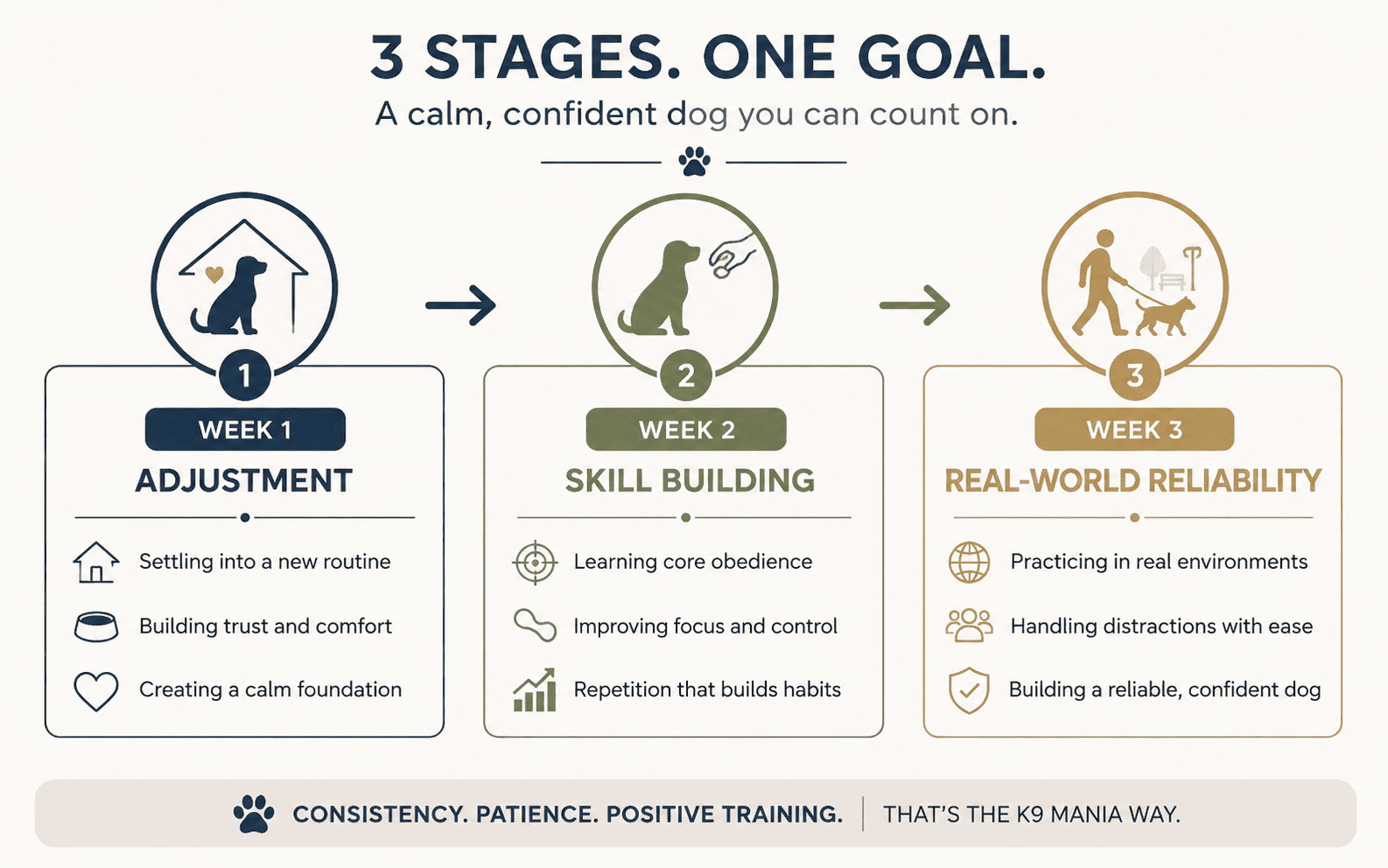
A board and train daily schedule is not static. It should shift as the dog progresses through the program. Here is a general week-by-week framework for a standard two-to-three week residential program.
| Week | Primary Focus | Key Activities |
| Week 1 | Adjustment and foundation | Potty routine, basic commands, crate comfort, trust-building |
| Week 2 | Skill building and proofing | Adding distance, duration, distraction to commands |
| Week 3 | Real-world reliability | Off-leash work, handler transfer sessions, public exposure |
The transition in the final few days is critical and often overlooked by dog owners. This is when the trainer begins practicing the same commands with you present, so your dog learns that the behavior applies to you, not just the trainer. Programs that skip this step often result in dogs that perform beautifully for the trainer and ignore the owner completely.
Before you ever drop your dog off, it is worth going through a resource like all about board and train and how to prepare for it so you understand what questions to ask and what the schedule should realistically include.
What to Ask Any Facility Before You Commit
Not every program runs this kind of structured, transparent schedule. Some board and train operations are closer to supervised boarding than genuine training. Here is what to ask before you sign anything.
- How many training sessions does my dog receive per day, and how long is each session?
- What is the training methodology, and is it force-free, balanced, or e-collar based?
- How is socialization managed, and is it assessed individually or done in blanket group settings?
- How much crate time does my dog receive per day?
- What does the handler transfer process look like at the end of the program?
- Will I receive video updates showing my dog’s progress?
- Is there a follow-up session included, or is that a separate cost?
If a facility cannot answer these questions clearly, that is a red flag. Programs like board and train long island that are transparent about methodology and scheduling are far more likely to deliver the results you are paying for.
For owners who are undecided about whether residential training or one-on-one sessions better fit their dog’s needs, comparing options like private dog training long island alongside residential programs can help you make a more informed decision.
Things to Know
- Short training sessions repeated throughout the day outperform single long sessions for most dogs, especially puppies and high-anxiety breeds.
- Crate time is not punishment in a board and train setting. It is a deliberate part of the schedule that supports rest, learning consolidation, and crate training goals.
- Some dogs take three to five days just to adjust to the new environment before real training gains start to show. This is normal and should be built into the program timeline.
- Board and train does not replace your role as the owner. If you do not maintain the routine at home after pickup, behavior will regress within weeks.
- A dog that returns home “perfect” but was never trained with real-world distractions may fall apart the moment it hits its usual triggers.
- Programs that claim to fix severe aggression or deep-rooted fear in two weeks through a board and train alone should be approached with caution. These cases require ongoing support.
How Board and Train Complements Ongoing Obedience Work
Residential training is a powerful jump-start, but it works best as part of a longer relationship between you, your dog, and a qualified trainer. The skills your dog builds during a board and train stay need to be maintained and expanded through regular practice.
Many owners who complete a residential program follow it up with structured sessions in obedience dog training to reinforce what was learned and tackle new challenges as they arise. This kind of continuity produces the most reliable, long-term behavior.
The daily routine you bring home from pickup should mirror the program’s structure as closely as possible. Feed at consistent times. Practice commands at the same points in the day. Use the same cues and the same reward system the trainer used. Dogs thrive on predictability, and your consistency at home is the single biggest factor in whether the training holds.
Start Your Dog’s Residential Training With a Clear Plan
If you are ready to enroll your dog in a residential program, do not wait until the drop-off day to ask how the days are structured. Request a written schedule, ask for video updates, and schedule a pre-enrollment consultation to walk through the methodology in detail.
A well-designed board and train daily schedule is the foundation that makes everything else possible. The right facility will be proud to show you exactly how they spend each hour with your dog, and they will have a clear plan for getting you up to speed before pickup.
You May Also want to Read
What Are Group Dog Training Classes
What Is Trick Training in Dogs?
Dog Boarding vs Board and Train
Frequently Asked Questions
How many training sessions does a dog get per day in a board and train program?
Most quality programs run 3 to 5 training sessions per day, each lasting 10 to 20 minutes.
This structure matches a dog’s natural attention span and allows for rest between sessions. Programs that run only one long session per day tend to produce slower progress and more fatigue-related resistance.
What happens during the downtime between sessions in a board and train?
Dogs typically rest in their crate, engage with enrichment items, or have supervised social time during breaks.
Rest is not wasted time. The brain actively consolidates learning during quiet periods, which is why alternating work and rest throughout the day is a core part of effective programs.
How do I know if the daily schedule at a board and train facility is actually good?
Ask for a written or verbal breakdown of a typical day before you commit, and look for a mix of training, rest, socialization, and handler transition work.
Red flags include vague answers, no mention of handler transfer sessions, or programs that cannot tell you how many training sessions your dog receives daily. Transparency is a sign of a well-run operation.
Will my dog remember the training after coming home from board and train?
Yes, but only if you maintain the same routine and commands at home consistently.
Dogs generalize behavior over time, but they need repetition in their own environment with their own owner. Expect to practice daily for at least the first month after pickup to solidify what was learned.
Is a two-week board and train enough for serious behavior problems?
Two weeks is enough to build solid foundations, but serious issues like aggression or severe anxiety typically require a longer program and ongoing follow-up support.
A responsible trainer will set realistic expectations during your consultation. Be cautious of any program that guarantees a complete fix for complex behavior issues in a short stay.
The Bottom Line on Board and Train Daily Schedule
A board and train daily schedule is not a mystery. It is a repeating structure of short training sessions, rest, enrichment, and socialization, built around your dog’s natural rhythms and learning capacity. When a program runs this kind of intentional routine, and transitions it back to you properly at pickup, the results can be genuinely life-changing for both dog and owner.
Your next step is to contact a reputable facility, ask for a full breakdown of their daily schedule, and schedule a consultation before you commit. The right program will answer every question with confidence.