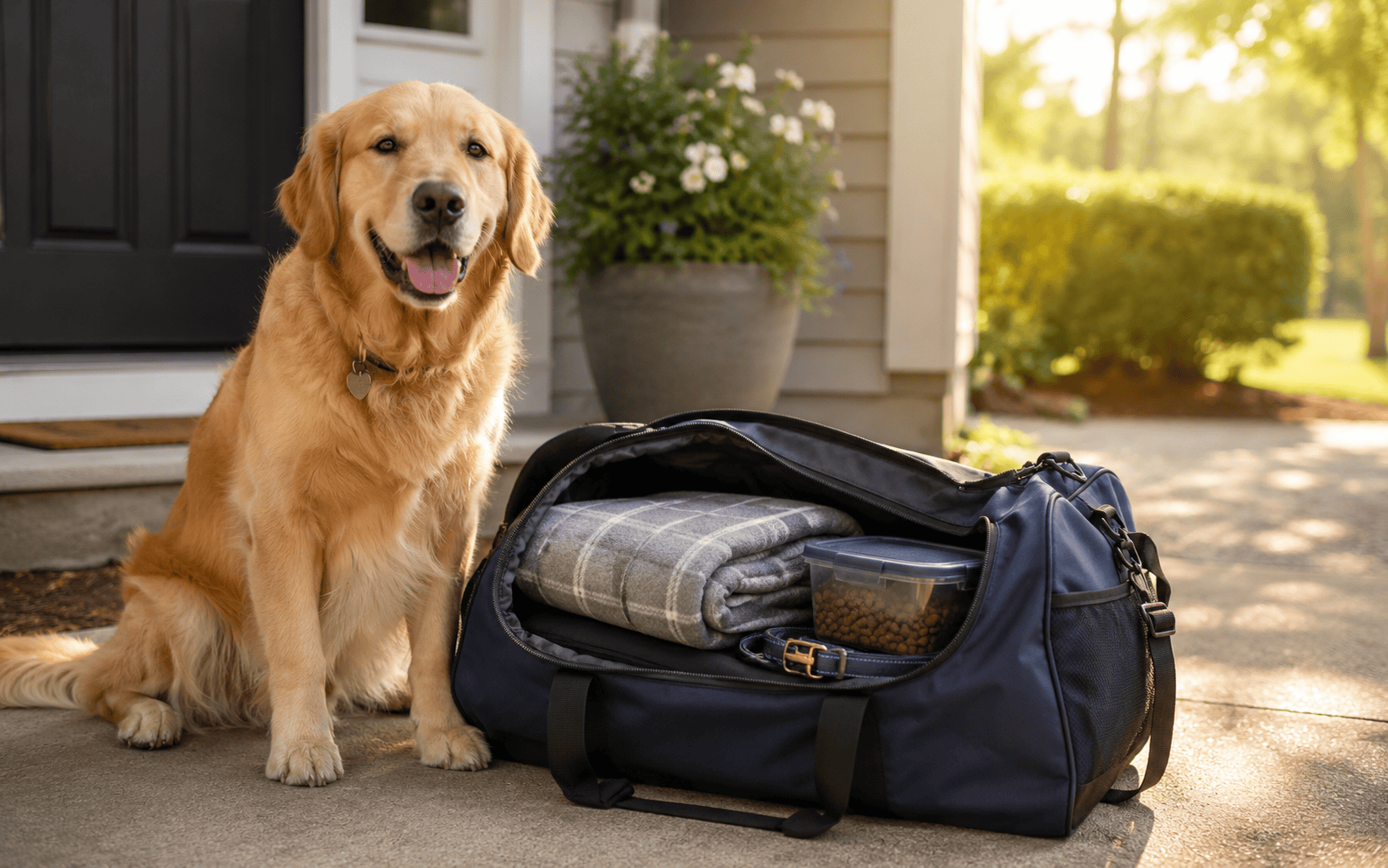
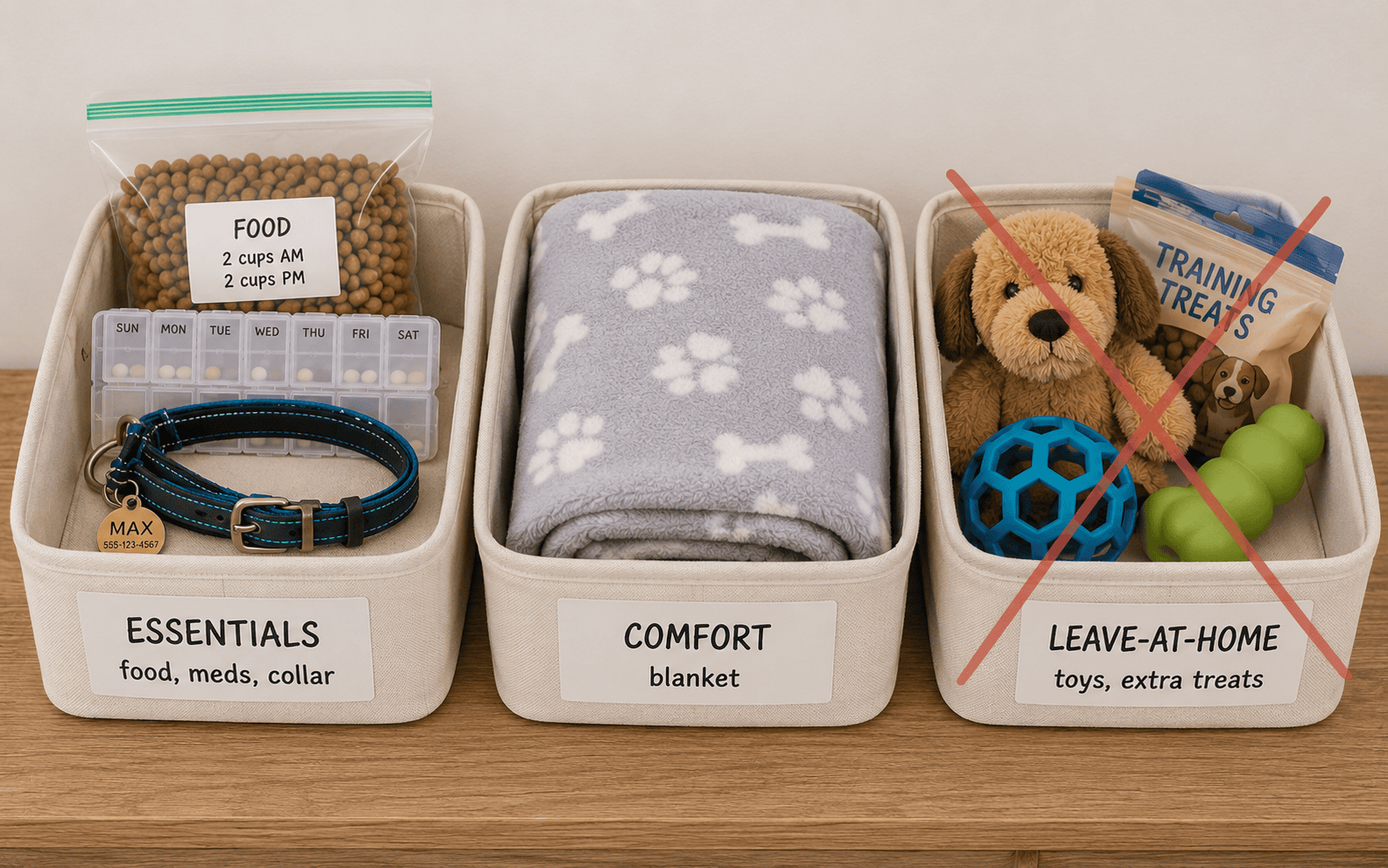
Pack your dog’s regular food, current medications, vaccination records, and a familiar blanket or bed. Leave the toys, extra treats, and bulky gear at home. Trainers at structured programs like board and train in Long Island already have enrichment plans that work better than home comforts.
If you are wondering what to pack for board and train, the answer is simpler than the pet store aisle suggests. Trainers see owners arrive with overstuffed duffels, half of which gets sorted into a storage closet while the dog stares confused at a new environment. The programs that get the best results start with clarity: the dog knows what to expect because you packed with intention, not anxiety. Owners who treat drop-off like a military operation rather than a sentimental farewell set the tone for the entire stay.
That is the standard this checklist is built around.
Key Takeaways
- The core list is short: food, medications, vaccination records, a familiar scent item, and a properly fitted collar with ID.
- Trainers at board and train in Long Island provide structured enrichment, so toys and extra treats from home usually create more problems than they solve.
- A blanket or bed that smells like home reduces transition stress more effectively than any new item you could buy for the trip.
- Organizing everything in labeled, sealed bags speeds up intake and shows the training team you have prepared seriously.
- The dog boarding in Long Island program includes daily schedules that make familiar items more valuable than novelty; check their board and train daily schedule to time your packing with their routine.
Why the Right Packing List Affects Training Results
Owners who overpack often do so out of guilt. They worry the dog will feel abandoned, so they load the car with every comfort object from the living room. The problem is that board and train programs run on structure. When a dog arrives surrounded by reminders of home, the transition takes longer. The trainer spends the first day managing attachment instead of building new habits.
Dogs that arrive with a clean, minimal setup adapt faster. They learn the new routine because there are fewer competing cues pulling them back to old behaviors. This is especially true for dogs entering programs at private dog training in Long Island where individual attention depends on the dog being present and responsive rather than distracted by a pile of familiar objects.
The packing list is not about deprivation. It is about sending the right signals. When you hand over a lean, organized bag, you are telling the trainer that you trust the process. That trust transfers to the dog faster than any scented toy ever could.
The Packing Floor: What Every Dog Needs
Table
| Item | Minimum | Ideal | Why It Matters |
| Food | 3 extra days’ worth | Full program length plus 5 days | Sudden diet changes cause digestive issues mid-training |
| Medications | Exact dosage for stay | Plus 3-day buffer | Missed doses reset behavioral medication timelines |
| Vaccination records | Current rabies, DHPP, bordetella | Full veterinary history | Required for intake; protects all dogs in the facility |
| Collar with ID | Flat buckle or martingale | Quick-release with tags | Safety during group activities and transport |
| Familiar scent item | Small blanket or t-shirt | Dog’s actual bed | Reduces cortisol spikes the first 48 hours |
| Emergency contact | One phone number | Two, plus vet contact | Trainers need immediate access if health issues arise |
The item most people skip: a written feeding guide. Even if your dog eats a common brand, the exact portion size, feeding times, and whether they get water with meals matters. Trainers at board and train in Long Island have seen dogs gain or lose unhealthy amounts of weight because owners assumed “two cups” was specific enough. Write down the brand, the flavor, the exact measurement, and any allergies or sensitivities.
The Three Categories Trainers Sort Into
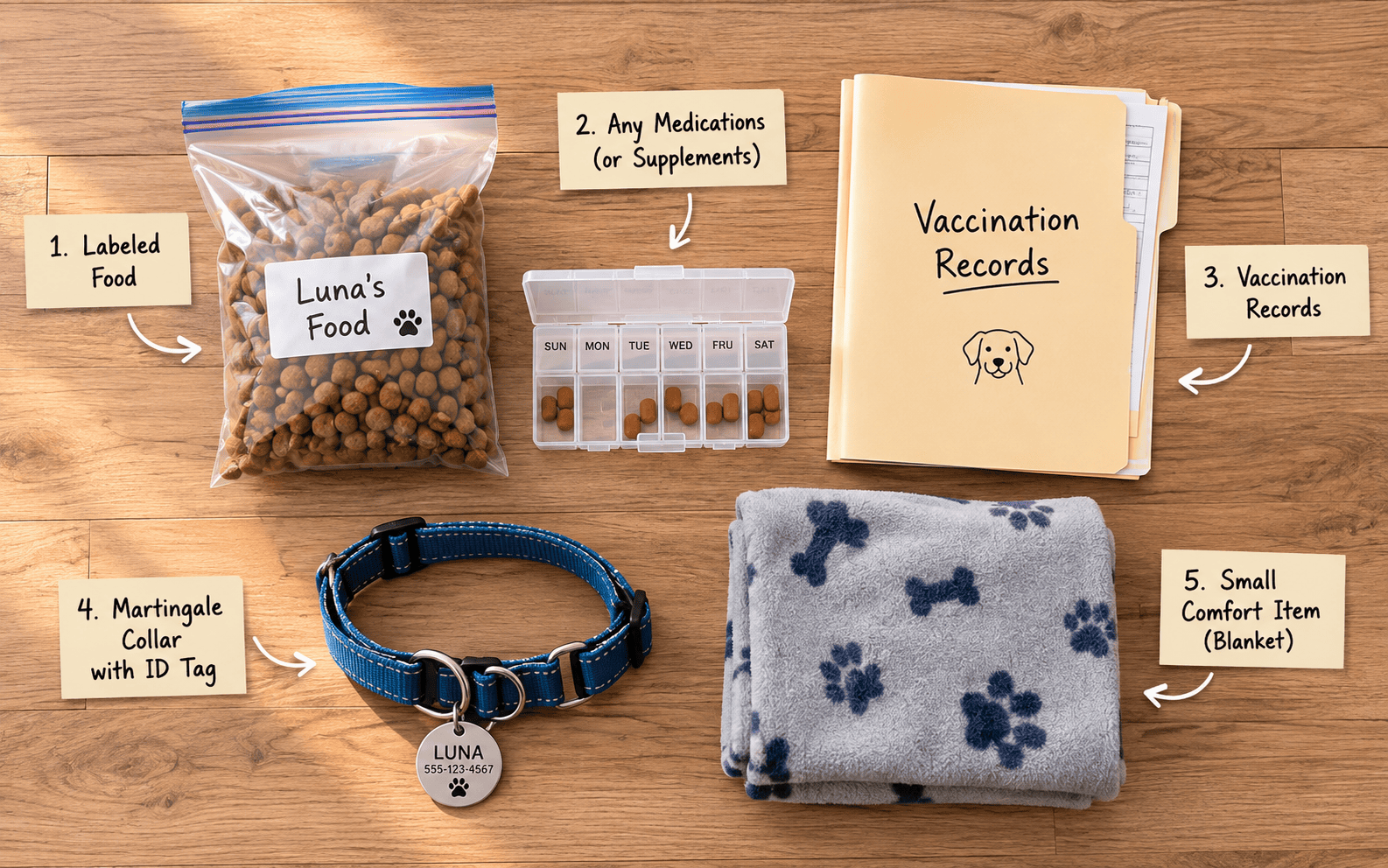
- Essentials: food, meds, records, collar. These go straight into the daily rotation and are non-negotiable. Without them, the program cannot start safely.
- Comfort items: one blanket or bed, maybe a worn t-shirt. These stay in the kennel and are used during rest periods only. They are not training tools; they are sleep aids.
- Leave-at-home items: toys, rawhides, extra treats, new beds, clothing. These either create resource guarding in group settings, disrupt the training diet, or take up space the trainer does not have.
Beyond the basics, the most useful thing an owner can bring is information. A single page noting your dog’s triggers, known commands, and household routine saves hours of guesswork. At how to prepare for board and train the team explains how this prep sheet becomes the foundation for your dog’s custom training plan. The more context you provide, the faster the trainer can move past baseline assessment and into actual behavior change.
What to Skip: The Overpacking Trap
Best for: Owners who want to feel better about leaving
Reality: Most of it sits in a storage bin
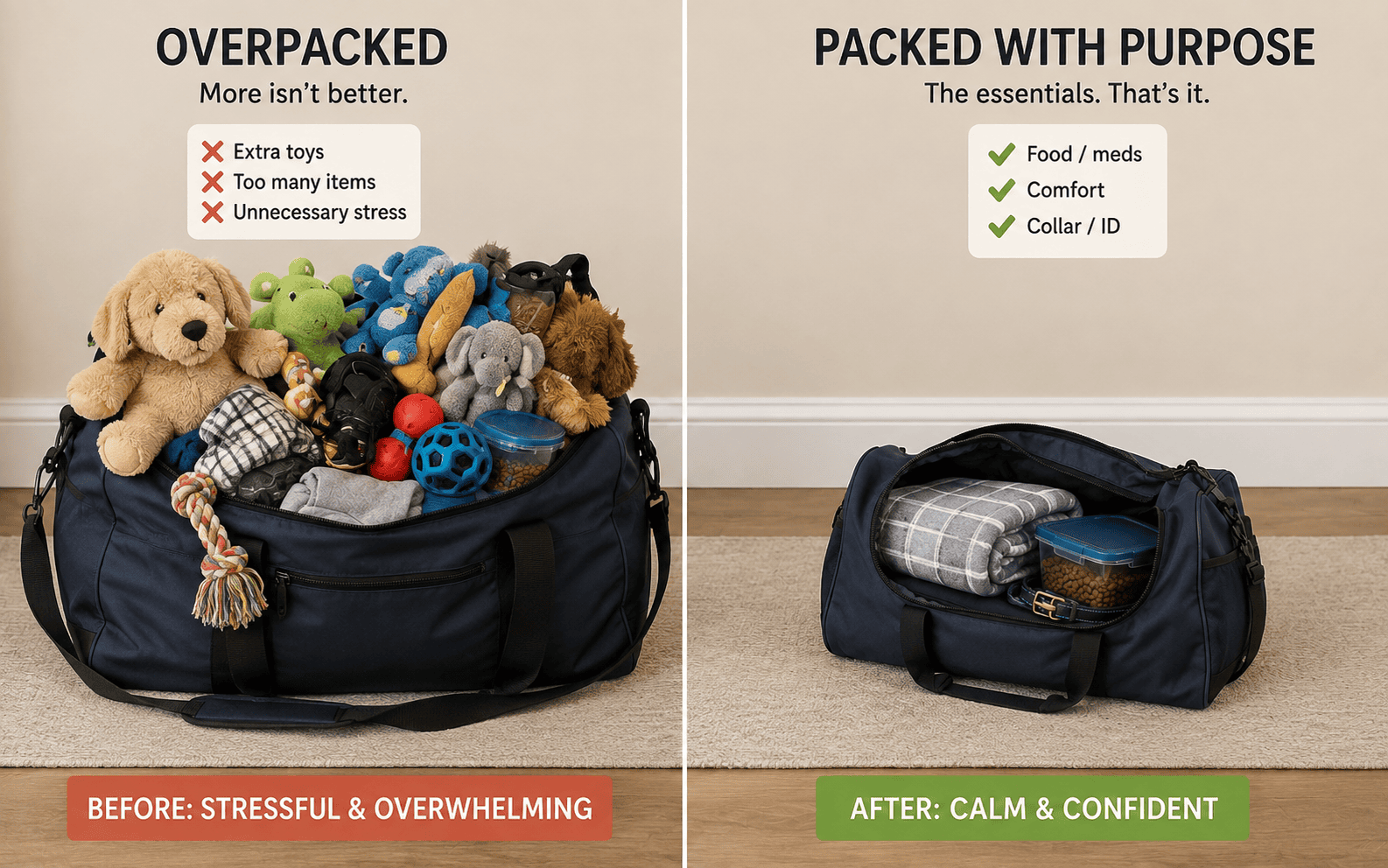
If your instinct is to pack every stuffed animal and chew toy, you are not alone. Trainers report that roughly half of owners overpack by double. The issue is not space. It is that home toys carry scent markers that can trigger resource guarding when other dogs are nearby, and extra treats undermine the precise reward schedules that make board and train effective.
You also do not need to bring bowls, leashes, or training equipment. Quality programs supply their own to maintain consistency across all dogs. Every dog uses the same leash, the same bowl, the same reward system. That uniformity is part of what makes the training transfer back to your home later. What you do not get is any benefit from loading your dog down with reminders of home. The faster they accept the new environment as their current reality, the faster the training sticks.
That is a real limitation for anxious owners, but a non-issue for dogs. They adapt to structure faster than most people expect. The dogs that struggle are usually the ones whose owners telegraphed anxiety during drop-off, not the ones who arrived with fewer belongings.
How to Organize Your Drop-Off Bag
Table
| Category | Container | Label | Goal |
| Food | Sealed plastic bin | Dog’s name, brand, portions | Prevents spills and diet mix-ups |
| Medications | Zip bag with instructions | Dosage, timing, vet phone | Eliminates confusion during morning rounds |
| Records | Manila folder or clear sleeve | “Vaccines + vet info” | Speeds intake paperwork |
| Comfort item | Drawstring bag | Dog’s name only | Keeps scent concentrated, easy to find |
| Contact sheet | Printed, laminated if possible | “Emergency contacts” | Survives kennel humidity and daily handling |
The order matters. Food and medications go on top because trainers access them first. Records stay in an outer pocket for immediate handoff. The comfort item goes in last, so it is the first thing pulled out when the dog reaches their assigned space.
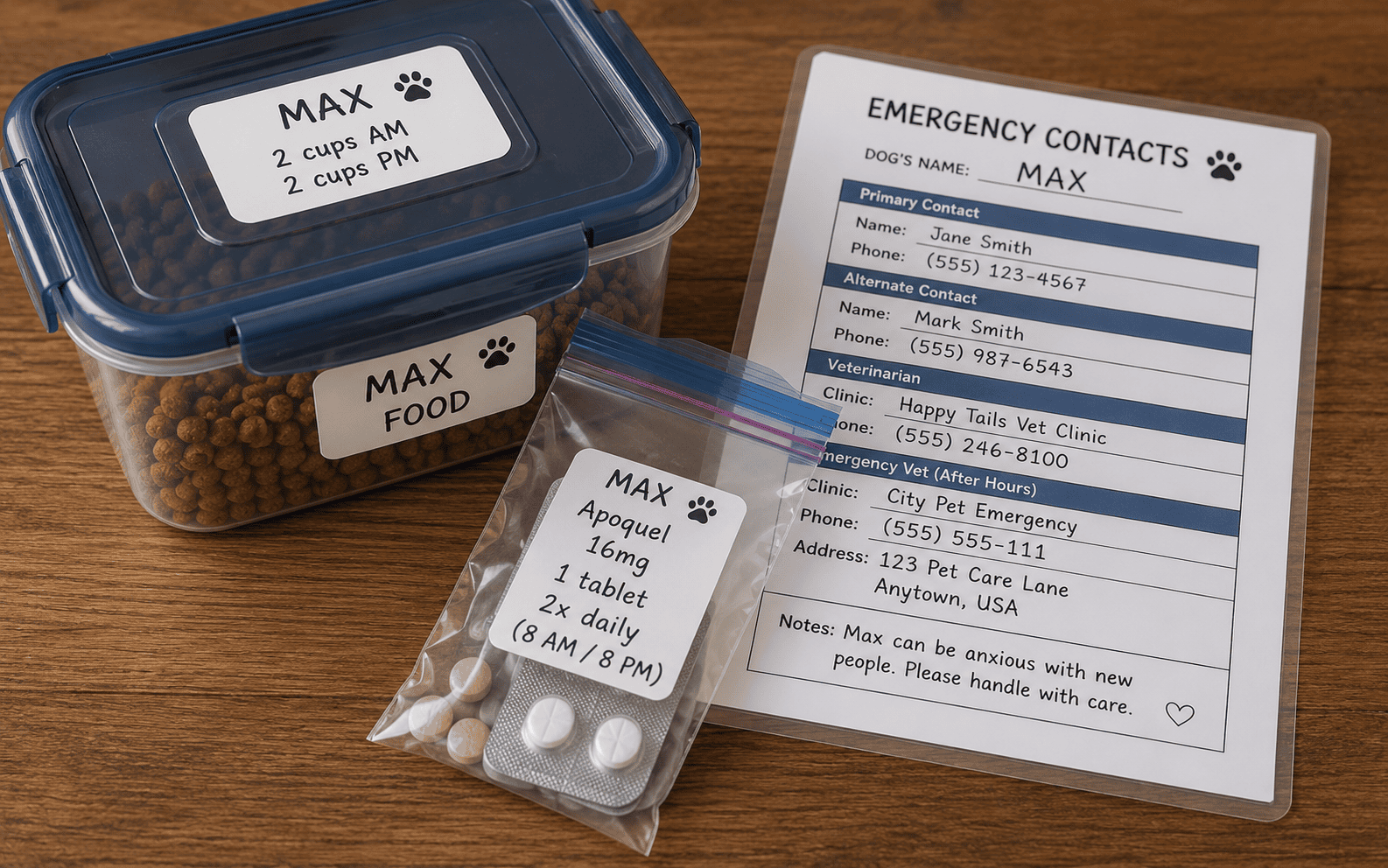
Do not skip the contact sheet: it is the first thing that gets forgotten when owners pack in a rush, and it is the only document specifically designed to keep your dog safe if something goes wrong. Ten minutes of writing beats an hour of phone tag during an emergency. Include your name, two phone numbers, your veterinarian’s contact, and an alternate person who can make medical decisions if you are unreachable.
What a Full Bag Still Won’t Fix
- Separation anxiety. No amount of home-scented items will replace the work a trainer does to build confidence in a new environment. If your dog struggles with being alone, that needs to be the training focus, not the packing focus. Programs like board and train in Long Island address this directly in their curriculum.
- Inconsistent pre-training. Dogs that arrive with no prior obedience struggle more regardless of what is in the bag. The how to prepare your dog for boarding guide covers pre-arrival exercises that matter more than any physical item. A dog that has never been crated will not magically accept confinement because you packed a nice blanket.
- Unrealistic expectations. A two-week program will not undo years of reinforcement. Packing perfectly does not accelerate biology. Behavior change takes repetition, and board and train is the start of that process, not the end.
- Owner follow-through. The best board and train in the world fails if you revert to old habits the day your dog comes home. Programs like in-home dog training in Long Island exist specifically to bridge that gap. The bag you pack is less important than the commitment you make after pick-up. Ask your trainer for a written handoff plan so you know exactly which commands to reinforce and which rules to keep consistent. If you are still unsure whether the format is right for your situation, read is board and train bad for dogs for an honest look at when these programs work and when they do not.
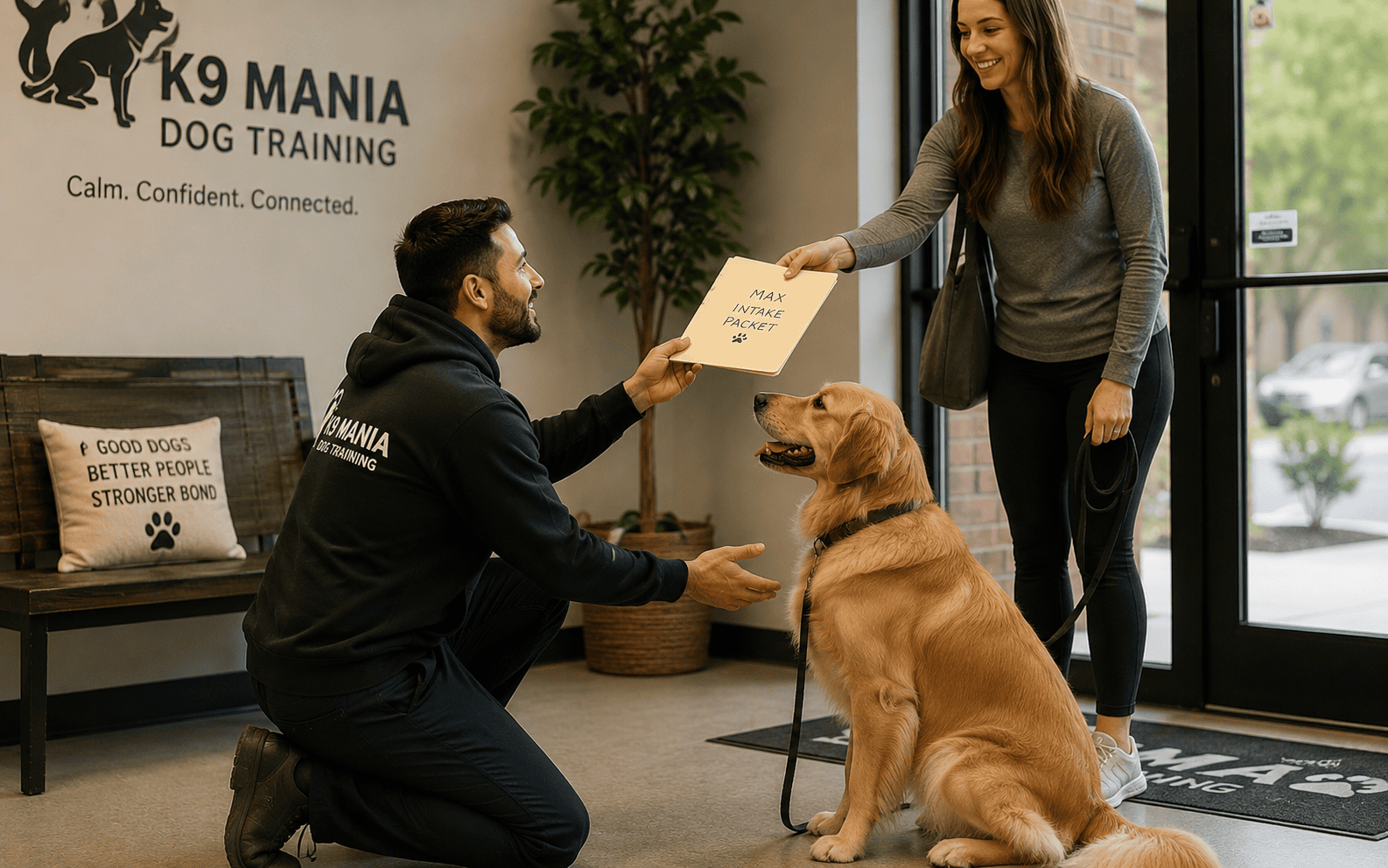
The honest framing: proper packing sets your dog up for a smooth transition. It does not replace the work you will need to do when they return. Dogs that succeed long-term have owners who treat pick-up day as the start of maintenance, not the finish line.
You May Also want to Read
How to Train Your Dog Not to Bark
Frequently Asked Questions
What should I pack for my dog’s board and train program?
Pack your dog’s regular food with clear portion instructions, any current medications, up-to-date vaccination records, a familiar blanket or bed, and a collar with ID tags. Keep everything organized in labeled containers. Skip toys, extra treats, and bulky gear unless the trainer specifically requests them.
Should I bring my dog’s own food to board and train?
Yes. Sudden diet changes are one of the fastest ways to create digestive distress during a training program. Bring enough for the full stay plus a few extra days, and write down the exact brand, flavor, and portion size. If your dog is on a prescription diet, include the veterinary authorization.
Should I pack my dog’s bed or blanket for board and train?
One familiar scent item helps, but leave the expensive bed at home. A blanket or worn t-shirt that smells like your household is enough to ease the first 48 hours. Trainers typically provide their own bedding for hygiene and safety reasons, so your item stays in the kennel during active training blocks.
Can I bring my dog’s favorite toys to board and train?
Generally, no. Home toys can trigger resource guarding in group environments and often conflict with the trainer’s reward system. Quality programs have their own enrichment schedules. If your dog has a specific comfort object they cannot sleep without, mention it during intake and let the trainer decide.
What documents does my dog need for board and train?
Current rabies, DHPP, and bordetella certificates are standard requirements. Some programs also ask for a recent fecal test or heartworm prevention record. Bring a printed copy plus your veterinarian’s contact information. Digital copies are useful backups but should not replace physical paperwork at drop-off.
What should I not pack for board and train?
Leave toys, rawhides, extra treats, new beds, clothing, and expensive items at home. Do not bring your own leash or training tools unless the program specifically asks. The goal is to send your dog with what they need to stay healthy and comfortable, not to recreate your living room in a kennel.
The Final Word
What to pack for board and train is less complicated than most owners think. The list is short because the program is designed to handle the rest. Food, medications, records, one comfort item, and clear information about your dog’s routine. That is the full inventory.
The dogs that adjust fastest are the ones whose owners trusted the process enough to pack lightly. If you are still unsure whether your specific situation calls for something extra, the team at board and train in Long Island reviews packing lists during intake and will tell you exactly what your dog needs for their stay.