Potty training a puppy comes down to two things: consistency and timing. When you set a predictable schedule, reward the right behavior immediately, and manage your puppy’s environment between outings, most dogs make steady progress within a few weeks.
Key Takeaways
- Puppies younger than 12 weeks have limited bladder control, so accidents are normal and expected.
- The moment your puppy finishes eliminating outside is the exact moment to reward, not 30 seconds later.
- Crate training accelerates housebreaking because dogs naturally avoid soiling their sleeping area.
- Cleaning accidents with an enzymatic cleaner removes odor cues that otherwise invite repeat accidents in the same spot.
- Regression is common around 4-6 months and does not mean you are starting over.
- Most puppies are reliably housetrained between 4 and 6 months of age, depending on breed, consistency, and individual temperament.
Before setting a single schedule or buying a single training tool, it helps to understand how a puppy’s body and brain actually work. A young puppy does not have full voluntary control over its bladder and bowel until around 12 weeks of age, and even then, control develops gradually. That biological fact shapes every decision you make during this process, from how often you take your puppy outside to how you respond when an accident happens indoors, as outlined in your complete guide to the developmental stages of puppy behavior.
The Schedule Is the Strategy
The single most effective thing you can do when learning how to potty train a puppy is build a tight, repeatable schedule. Puppies thrive on routine, and their digestive systems are predictable once you track the patterns.
Take your puppy outside at these moments, without exception:
- Immediately after waking up (naps included)
- Within 5-10 minutes of finishing a meal
- After a play session or any burst of activity
- Before being placed in a crate
- First thing in the morning and last thing at night
A general rule for daytime intervals: a puppy can hold its bladder for roughly one hour per month of age. A two-month-old puppy needs an outing every two hours at minimum. A four-month-old can manage closer to four hours, though you should not push that limit during the early training phase.
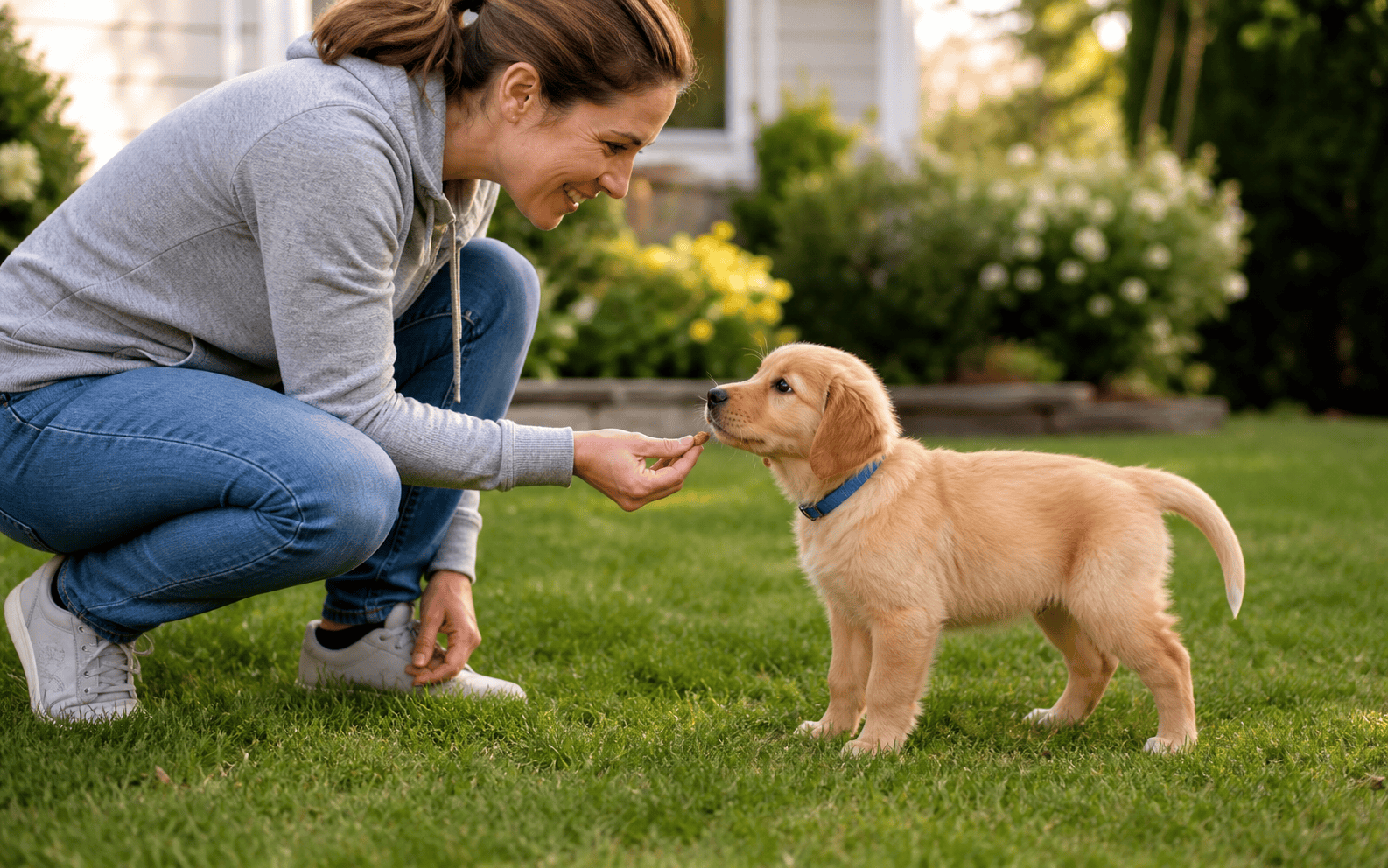
When you take your puppy outside, go to the same spot every time. The residual scent from previous eliminations acts as a cue, prompting your puppy to go again. Choose a low-distraction area, stand still, and give your puppy 3-5 minutes to sniff and settle. The moment elimination is complete, mark the behavior with a clear verbal cue like “yes” or a clicker, and follow with a high-value treat immediately. That timing is everything. A reward delivered 10 seconds late teaches nothing useful.
Using a Crate to Speed Up the Process
A crate is one of the most practical tools in housebreaking because it works with your puppy’s natural instinct to keep its den clean. When sized correctly, meaning just large enough for your puppy to stand, turn around, and lie down, the crate discourages elimination because the puppy does not want to soil its sleeping space.
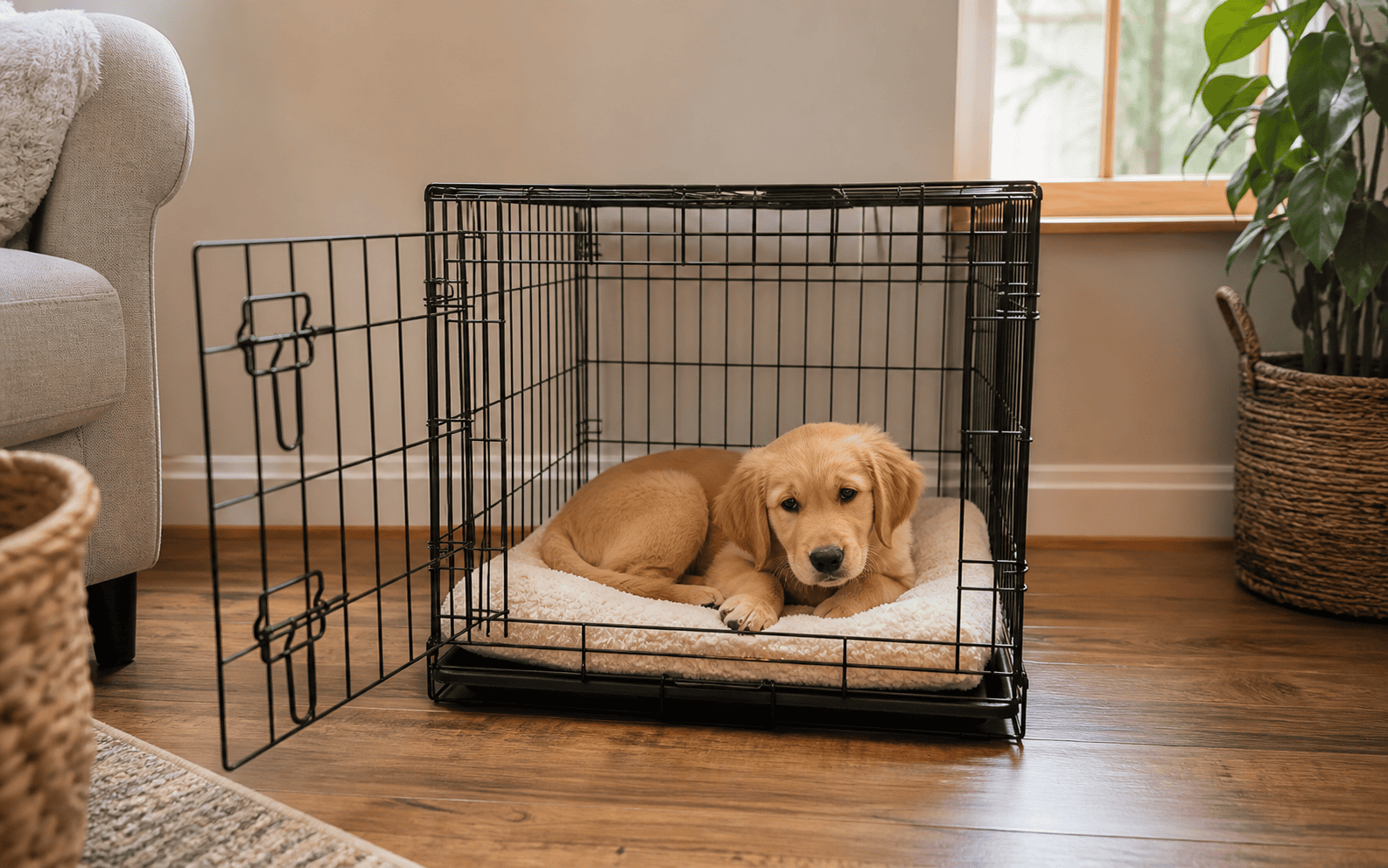
Crate training your puppy is not about punishment or confinement as a consequence. It is a management tool. When you cannot supervise your puppy directly, the crate prevents unsupervised accidents from setting back your training. Every accident that happens indoors without consequence essentially gives your puppy a repetition of the wrong behavior.
Keep these crate guidelines in mind:
- Never leave a puppy in a crate longer than its age in months allows in hours.
- Cover the crate with a blanket to create a den-like feel if your puppy seems restless.
- Never use the crate as a punishment, or your puppy will resist entering it.
- Build positive associations by feeding meals inside the crate and offering treats for voluntary entry.
If your puppy is consistently eliminating inside the crate, one of two things is happening: the crate is too large, or you are leaving your puppy in it too long. Troubleshoot those two factors before assuming a behavioral issue.
Reading the Signs Before an Accident Happens
Catching your puppy in the act of eliminating indoors is useful only if you interrupt the behavior calmly and redirect outside. Punishing a puppy after the fact, even seconds later, is ineffective because the puppy cannot connect the punishment to the earlier behavior. What it does is teach your puppy to eliminate in hidden spots where you are less likely to see it.
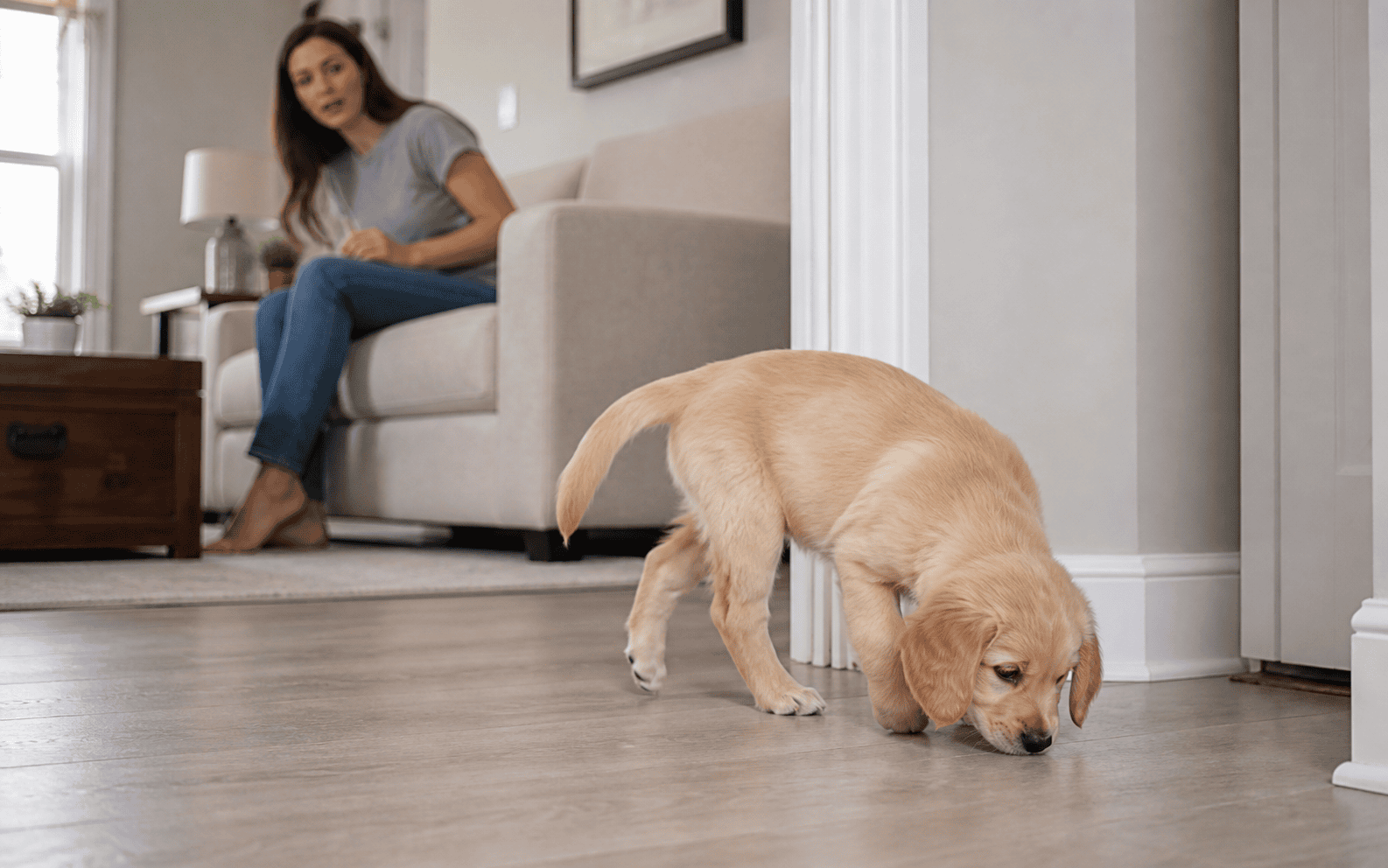
Instead, focus on learning your puppy’s pre-elimination signals. Common ones include:
- Sniffing the ground in a focused, circular pattern
- Squatting or shifting weight toward the hindquarters
- Suddenly pausing play and moving toward a corner or wall
- Whining or pacing near the door
Once you recognize these signals, you have a few seconds to scoop your puppy up calmly and get outside. Over time, you can pair a door signal with the behavior, and many owners find that how to bell train a dog gives their puppy an independent way to communicate the need to go out, which significantly reduces accidents during the later stages of training.
Understanding your puppy’s developmental window also matters here. For a deeper look at the behavioral milestones that run alongside housebreaking, your puppy’s progress will be smoother when you understand your complete guide to the developmental stages of puppy behavior at each age and how those stages affect learning.
Handling Accidents Without Losing Progress
Accidents are not failures. They are data. When an accident happens indoors, ask yourself what you missed. Was your puppy unsupervised? Did too much time pass between outings? Did you miss a pre-elimination signal?
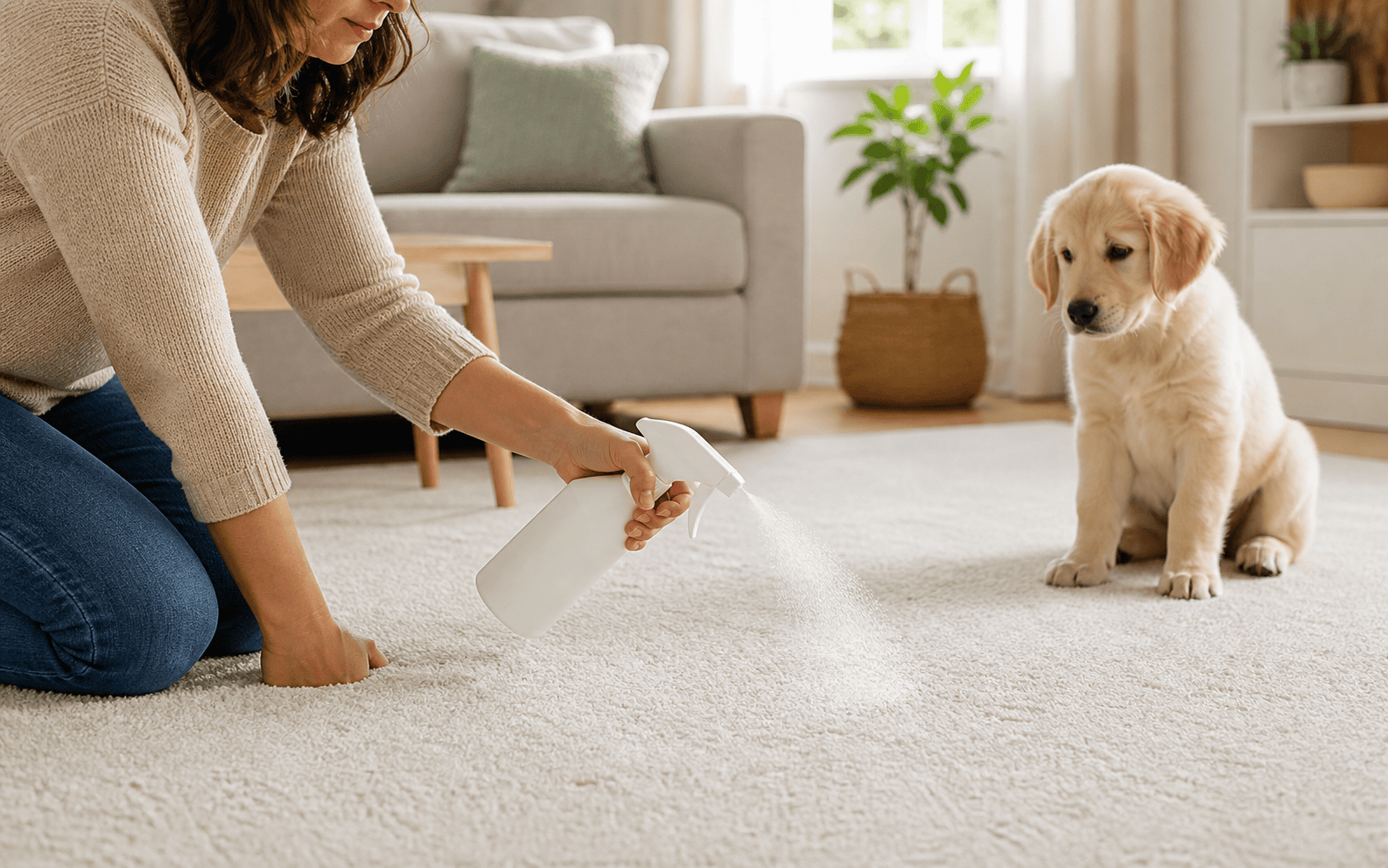
Clean accidents thoroughly using an enzymatic cleaner rather than a standard household spray. Enzymatic cleaners break down the proteins in urine and feces that produce the odor markers your puppy detects. If those markers remain, your puppy is likely to return to the same spot. Products like Nature’s Miracle or Rocco and Roxie are widely available at U.S. pet stores and are designed specifically for this purpose.
What you should never do:
- Rub your puppy’s nose in the accident
- Scold or physically correct your puppy after the fact
- Use ammonia-based cleaners, which smell similar to urine to a dog
- Give your puppy unsupervised access to the whole house before housebreaking is solid
If you notice a sudden increase in accidents after a period of progress, you may be experiencing puppy potty training regression, which is a recognized and common phase. Regression often appears around 4-6 months as adolescent hormones kick in. It requires you to temporarily tighten the schedule rather than assuming the training has failed.
When to Adjust Your Approach
Most puppies show reliable improvement within 4-8 weeks of consistent training. If you are weeks into a routine and still seeing daily accidents, consider these adjustments:
Reduce freedom too fast: Many owners extend their puppy’s access to the house before housebreaking is truly solid. Keep your puppy in a restricted, easy-to-supervise area until they have gone at least 4 weeks without an indoor accident.
Inconsistent rewards: If different household members respond to outdoor elimination differently, or sometimes forget to reward at all, your puppy receives mixed signals. Everyone in the home needs to follow the same protocol.
Medical factors: A puppy that urinates frequently in very small amounts, or strains without producing anything, may have a urinary tract infection. This warrants a vet visit rather than a training adjustment.
Breed considerations: Some breeds take longer than others. Smaller breeds have smaller bladders and faster metabolisms, which means more frequent outings for a longer period. Hounds and independent-minded breeds may require extra repetition before the behavior becomes truly automatic.
Professional Support on Long Island
If you have put in consistent effort and your puppy is still struggling, working with a professional trainer can reset your approach quickly. For dog owners across Long Island, puppy training long island programs provide structured, expert-led sessions designed around your puppy’s age, temperament, and your household’s specific situation.
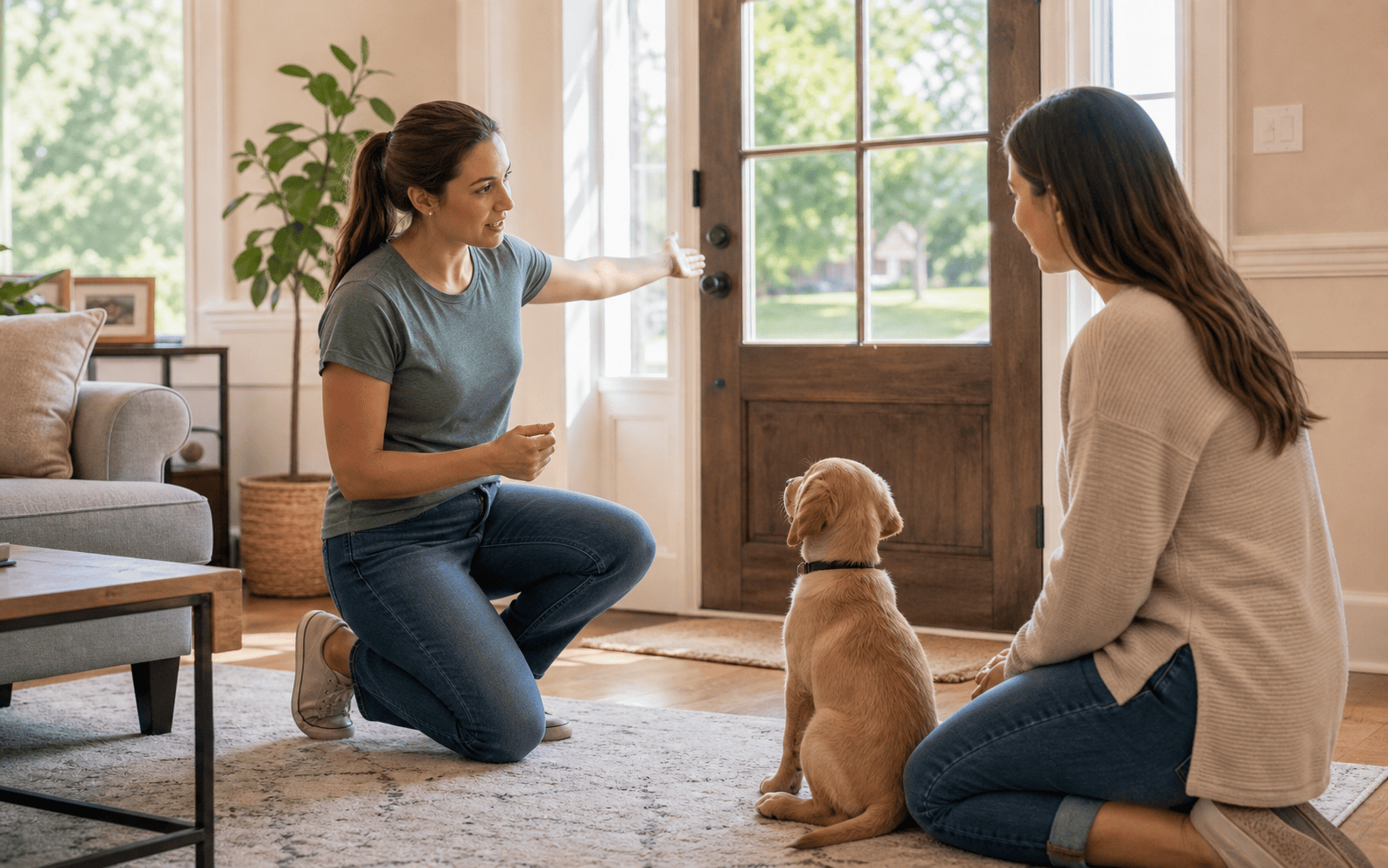
For owners who want training support within the home environment, where most accidents happen, in home dog training long island brings a trainer directly to your space. This is particularly valuable because a trainer can observe your puppy’s actual environment, identify where supervision gaps exist, and give you corrected techniques in real time rather than in a neutral facility setting.
A Quick Comparison: Training Methods at a Glance
| Method | Best For | Key Advantage | Main Challenge |
| Schedule-based outdoor trips | All puppies | Builds reliable routine fast | Requires consistent human availability |
| Crate management | Unsupervised periods | Prevents indoor accidents | Must be sized and timed correctly |
| Bell training | Later-stage communication | Gives puppy independent signal | Requires separate conditioning |
| Puppy pads | Apartment living or extreme weather | Convenient short-term option | Can confuse outdoor-only expectations |
| Professional training | Persistent problems or busy owners | Expert diagnosis and correction | Cost and scheduling commitment |
What Consistent Potty Training Actually Looks Like Day to Day
The reality of how to potty train a puppy is less about any single technique and more about the cumulative effect of doing the same things correctly, over and over, for several weeks. You will take your puppy outside 8-12 times a day in the early weeks. You will stand in the yard at 6 a.m. in January. You will carry enzymatic cleaner in your pocket. You will watch your puppy more closely than feels necessary.
That level of consistency is what produces results. Puppies learn through repetition and clear consequences, not through explanations or emotional reactions. The more predictable your behavior is, the faster your puppy learns what is expected.
Track outings in a simple log for the first two weeks: time out, whether elimination happened, and whether you rewarded it. Patterns will become visible quickly, and you can adjust your schedule accordingly. Most owners who track carefully discover their puppy is ready to go out 10-15 minutes earlier than they assumed, which eliminates several accidents per week immediately.
Things to Know
- Puppies do not develop full bladder control until around 16 weeks of age, so expecting accident-free behavior before that point sets unrealistic expectations for both you and your dog.
- The spot where you reward matters as much as the reward itself. Praising your puppy while it is still sniffing around outside, before elimination happens, can interrupt the process and delay learning.
- Puppy pads can be a helpful short-term solution in apartments or during severe weather, but they teach your puppy that eliminating indoors is acceptable, which creates an extra step to undo later.
- A puppy that was kept in an unsanitary environment before you brought it home, such as a pet store or overcrowded kennel, may take longer to housetrain because it never learned to keep its living space clean.
- Feeding your puppy on a fixed schedule rather than free-feeding makes elimination timing far more predictable and gives you a real advantage in preventing accidents.
- Nighttime accidents are normal for puppies under 12 weeks. Setting an alarm to take your puppy out once during the night is more effective than assuming it can hold through until morning.
Start Your Puppy Off Right With Expert Support
Potty training a puppy on your own is absolutely doable, but it becomes significantly easier with the right guidance from the start. If you are spending weeks on cleanup and still not seeing consistent progress, a professional trainer can identify exactly where the process is breaking down and give you a corrected plan within a single session.
K9 Mania Dog Training works with puppy owners across Long Island, meeting you where you are, whether that means in-home sessions, structured puppy programs, or ongoing support as your puppy grows. Do not wait until bad habits are deeply ingrained before reaching out for help.
Contact K9 Mania Dog Training today to book a consultation and get a training plan built specifically for your puppy’s age, breed, and your home environment.
Frequently Asked Questions
At what age will a puppy be potty trained?
Most puppies reach reliable housetraining between 4 and 6 months of age, though some take up to a year depending on breed and consistency.
Smaller breeds tend to take longer due to their smaller bladders and faster metabolisms, which require more frequent outings for an extended period. The quality and consistency of your training routine plays as large a role as age in determining how quickly your puppy becomes reliably housetrained.
What is the quickest way to potty train a puppy?
The fastest approach combines a strict outdoor schedule, immediate reward after elimination, and crate management during unsupervised periods.
Taking your puppy out at every predictable trigger, after meals, naps, play, and waking, removes the opportunity for indoor accidents to become a habit. Rewarding the correct behavior within seconds of it happening reinforces the association far more powerfully than any correction for accidents indoors.
How to stop dog peeing and pooping in house?
Tightening supervision, reducing indoor freedom, and cleaning all previous accident spots with an enzymatic cleaner will stop most indoor elimination patterns.
If your dog has established a habit of eliminating in a specific area of the house, the residual scent from prior accidents is likely drawing them back. Remove the odor marker completely, temporarily restrict access to that area, and return to a structured outdoor schedule to rebuild the correct habit from scratch.
What not to do when potty training a puppy?
Never punish your puppy after the fact, use ammonia-based cleaners on accidents, or give unsupervised access to the full house before housebreaking is fully established.
Scolding or physically correcting a puppy for an accident it completed even a few seconds ago is ineffective because puppies cannot connect a delayed consequence to an earlier behavior. What punishment after the fact does teach is that your presence sometimes predicts something unpleasant, which can make your puppy hide to eliminate rather than signal it needs to go outside.
Which puppy breed is the most difficult to potty train?
Breeds commonly reported as the most challenging to housetrain include Afghan Hounds, Basset Hounds, Dachshunds, Bichon Frises, and Jack Russell Terriers.
These breeds tend to be either highly independent, making them less motivated by human-directed rewards, or physically small, giving them less bladder capacity and requiring more frequent outings over a longer period. Difficulty with any breed is relative, however, since a consistent training approach done correctly will produce results regardless of breed reputation.
The Bottom Line on How to Potty Train a Puppy
How to potty train a puppy is ultimately a question of structure, patience, and environmental management applied consistently over several weeks. No single trick or shortcut replaces a tight schedule, well-timed rewards, and smart use of a crate during unsupervised moments. When those three elements are in place, most puppies make steady, visible progress within the first month.
If you are putting in the effort and still struggling, that is a signal to get professional eyes on your specific situation rather than a reason to push through alone. Reach out to a qualified dog trainer in your area, review your schedule and reward timing honestly, and remember that every day of consistent training builds toward a dog that gives you a lifetime of clean floors and clear communication.