Bell training gives your dog a clear, reliable way to tell you they need to go outside, which cuts down on accidents and removes the guesswork from your potty routine. Knowing how to bell train a dog correctly means pairing the bell with outdoor trips from day one and responding consistently until the behavior becomes second nature.
By the end of this post, you will know exactly what bell training is and why it works better than scratching or whining ever will. You will learn what to grab before your first session, how to walk through each training stage without rushing, and which mistakes trip most owners up before they even get to the good part. You will also find out what to do when the process stalls and how to keep the behavior solid long after the training phase ends.
Why Bell Training Is Worth the Effort
Dogs do not naturally know how to ask to go out. Without a clear system in place, most resort to scratching, barking, pacing, or going somewhere that is convenient for them but messy for you.
Bell training solves that by giving your dog one specific behavior to perform. It is a communication bridge, not just a trick. Once the connection is made, your dog has a way to signal you, and you have a sound you can hear from the next room.
This method pairs naturally with foundational obedience work. If you are already exploring effective ways to train dogs, bell training fits right in as a practical, real-world application of the same principles.
What You Need Before You Start
You do not need much to make bell training work. The simpler the setup, the fewer things can go wrong.
What to grab:
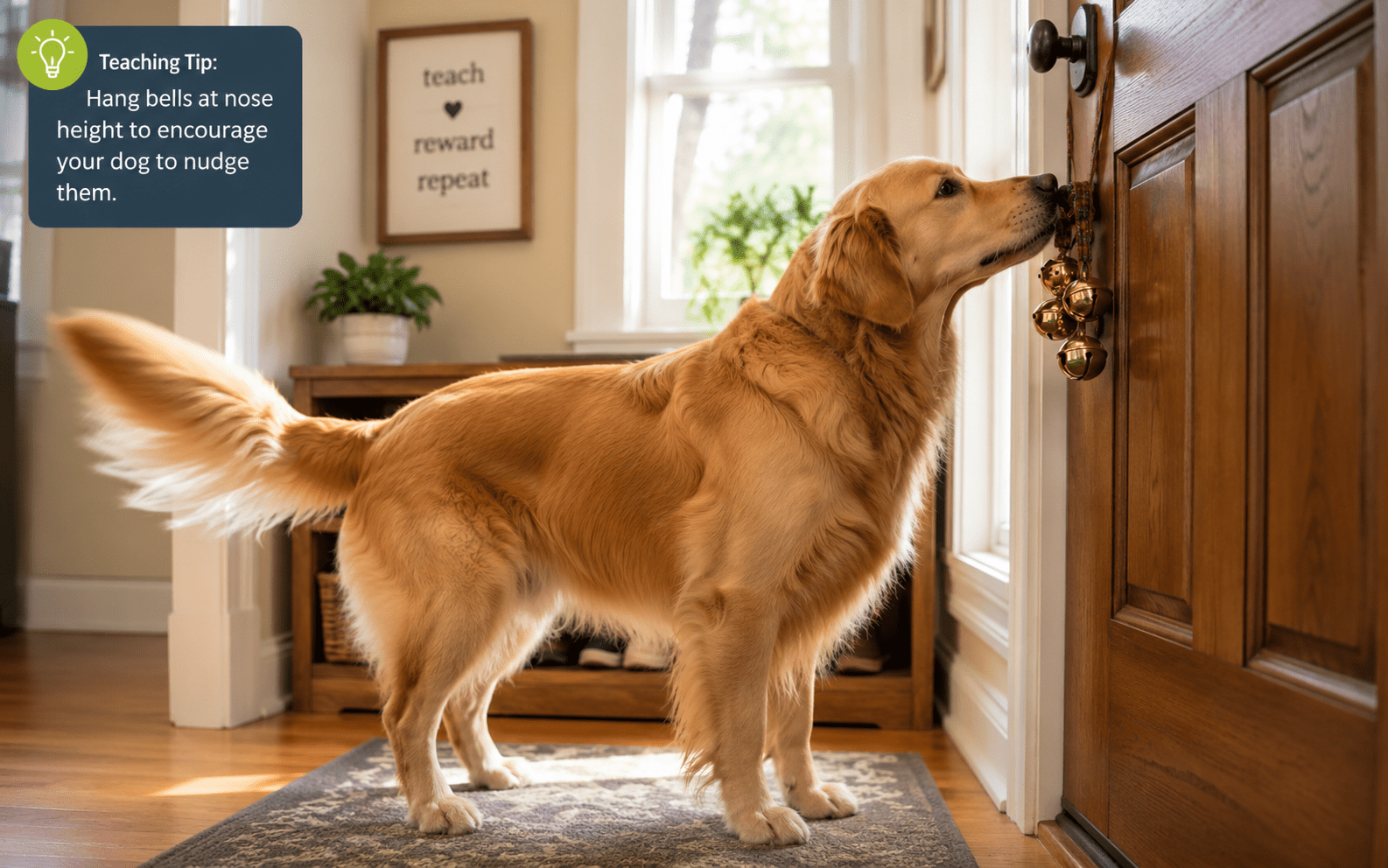
- A jingle bell set or hanging bell (positioned at your dog’s nose height on the door handle)
- High-value treats your dog responds well to
- One specific door used consistently for every potty trip
- A short verbal cue like “outside” or “potty”
One setup note worth getting right: the bell needs to hang at a height your dog reaches without jumping. For smaller breeds, that may be lower than you expect. For larger breeds, a mounted button bell at nose level works just as well. Small adjustments here prevent a lot of frustration later.
The Step-by-Step Bell Training Process
Here is how to bell train a dog in four stages. Do not rush through them. Each step builds on the last, and skipping ahead is the most common reason owners have to start over.
Step 1: Introduce the Bell
Start with the bell in your hand, away from the door. Hold it near your dog and wait. Most dogs will sniff or paw at it out of curiosity. The second they make contact, mark it with a “yes” or a clicker and give a treat.
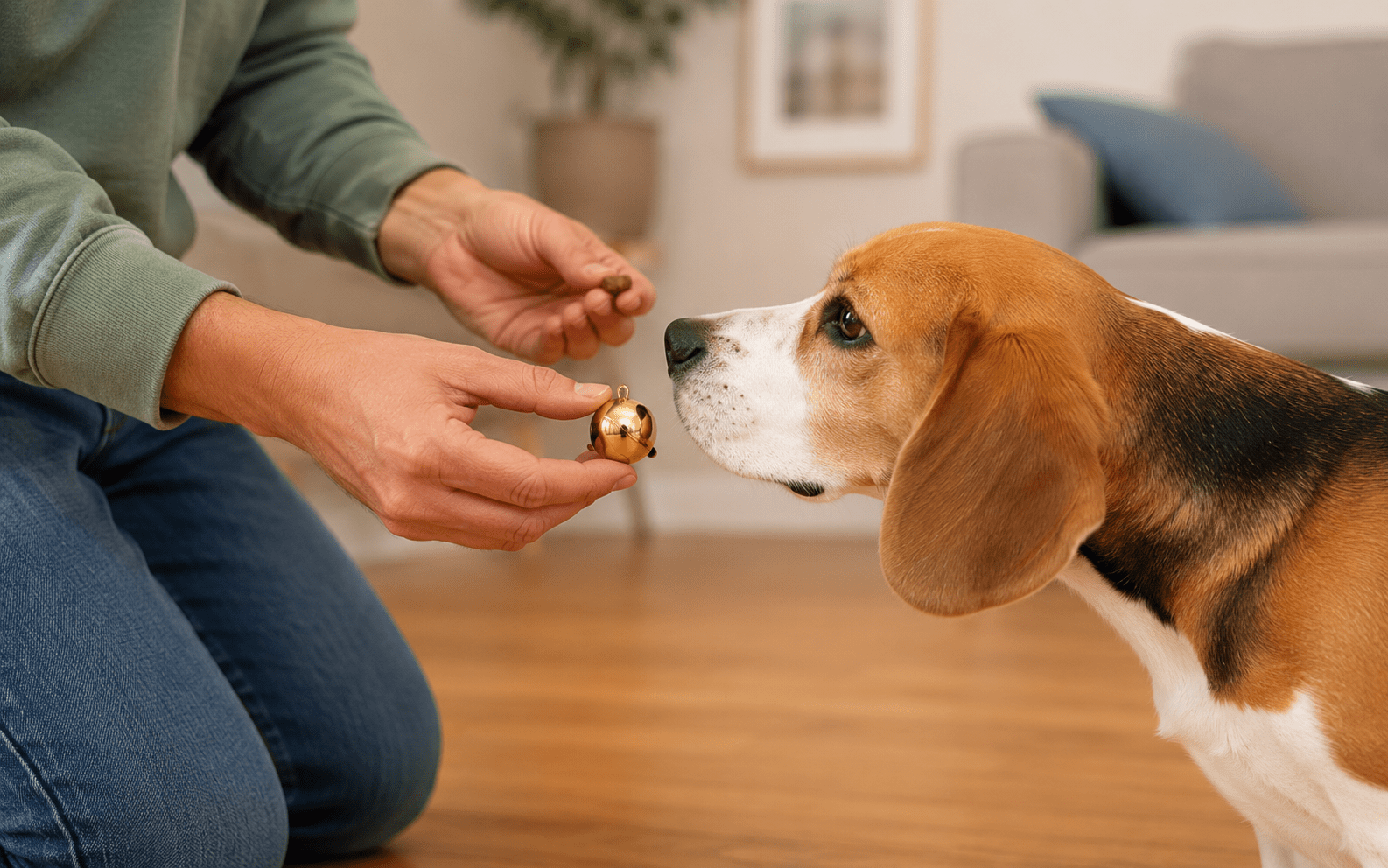
Repeat this five to ten times per session across two to three sessions a day. After a day or two, most dogs start touching the bell on purpose because they have figured out that touching it equals a reward.
Step 2: Move the Bell to the Door
Once your dog reliably touches the bell when it is presented, hang it on the door. Now, before every single potty trip, guide your dog to ring it first. They touch it, the door opens immediately, and you head outside together.
The speed of your response matters. If there is a delay between the ring and the door opening, the connection weakens. Make it immediate every time.
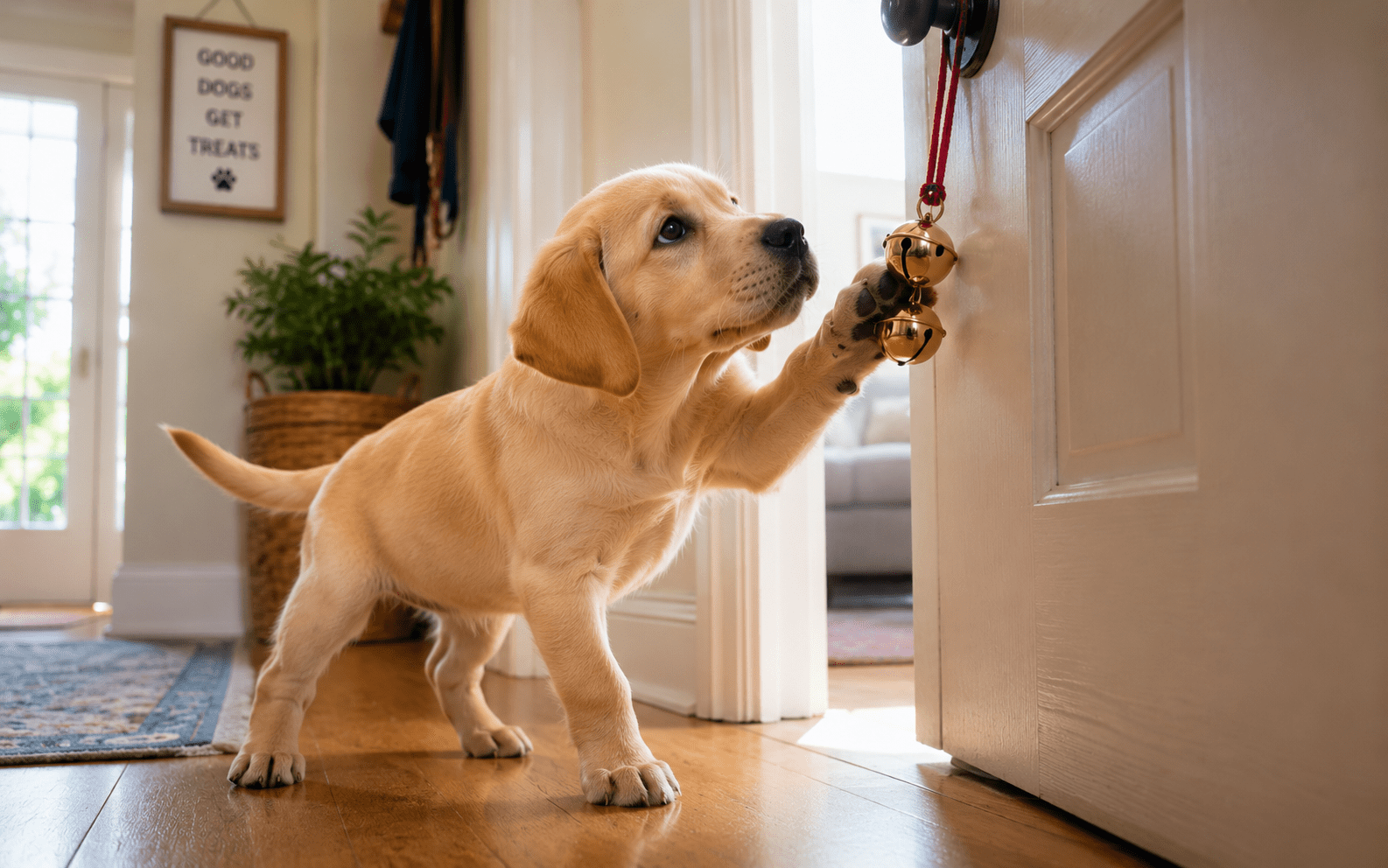
This is also a good phase to layer in some obedience dog training habits like “sit” and “wait” at the threshold so exits stay calm and controlled from the start.
Step 3: Add the Cue Word
While your dog touches the bell, say your chosen cue word every time. Do this consistently over several days and your dog starts connecting the word to the whole sequence: ring the bell, hear the word, go outside.
The verbal cue becomes useful for redirecting later. If your dog forgets the bell and goes back to scratching the door, you can say “outside” and point to the bell to get them back on track without making it a battle.
Step 4: Wait for the Spontaneous Ring
This is where it all comes together. Stop guiding your dog to the bell and just wait near the door. When they walk over and ring it on their own, open the door immediately and take them out. No delays, no detours.
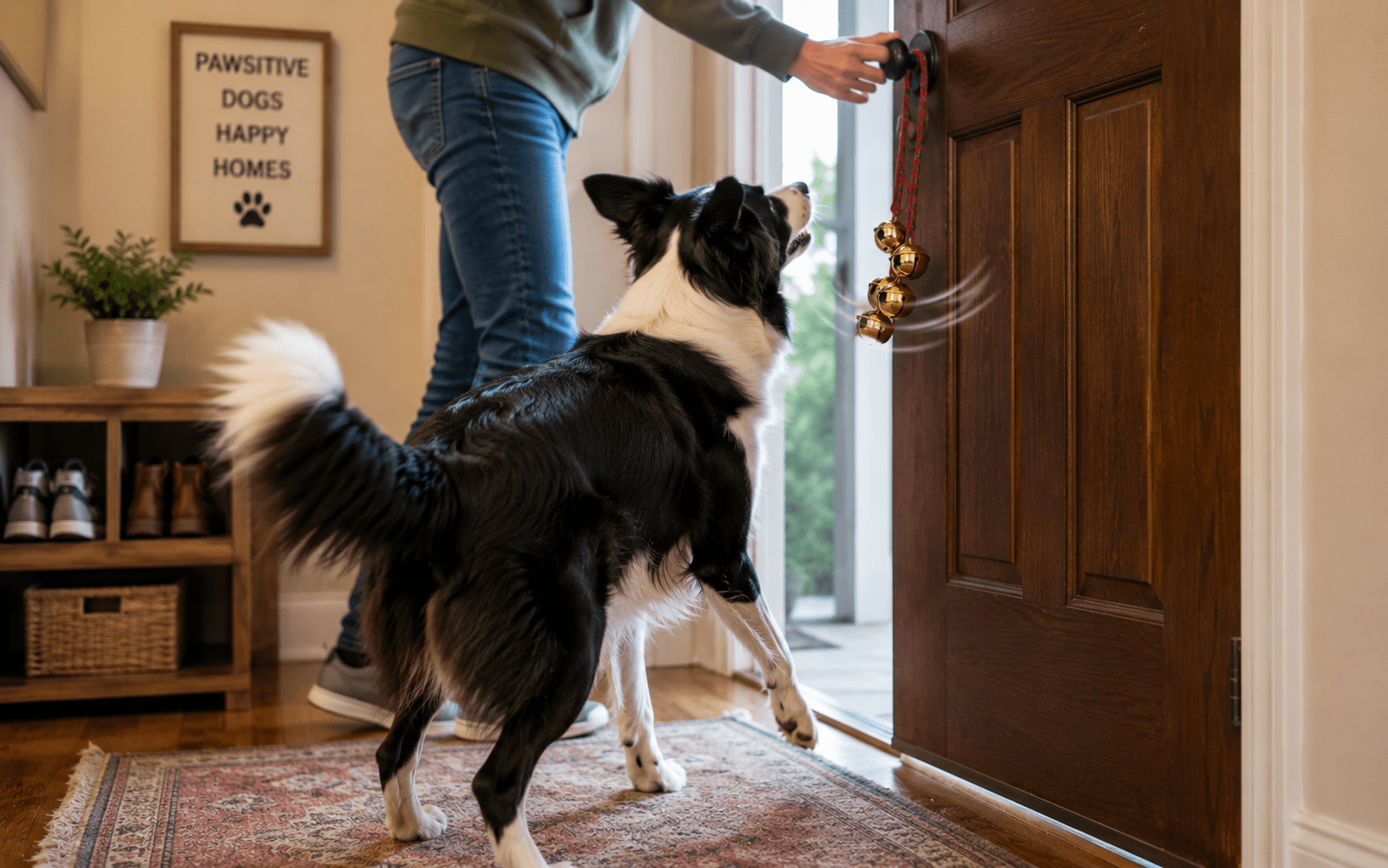
If you are working through this alongside a broader potty plan, how to potty train your dog walks through how timing and reward placement work together to make both methods faster.
Common Mistakes That Slow Bell Training Down
Most problems in bell training come from the same handful of errors. Knowing them ahead of time helps you avoid them entirely.
| Mistake | Why It Hurts Progress | What to Do Instead |
| Ignoring the bell | Breaks the cause-and-effect connection fast | Open the door immediately every time during early training |
| Letting them ring for attention | Turns the bell into a manipulation tool | Only respond by taking them outside, nothing else |
| Using multiple doors | Creates confusion about where the bell lives | Pick one door and stick with it |
| Rewarding inside the house | Delays the outdoor connection | Only treat after stepping outside the door |
| Rushing through steps | Dog skips understanding, behavior collapses | Go back one step if progress stalls |
The attention-ringing issue is real and worth watching for. If your dog starts ringing constantly without needing to go out, scale back your response and only take them during scheduled potty times until the behavior resets.
Bell Training vs. Other Potty Communication Methods
Bell training is not the only approach, but it holds up well compared to the alternatives.
| Method | Pros | Cons | Best For |
| Bell training | Audible signal, teachable, consistent | Can drift into attention-seeking | Most dogs and households |
| Sitting at the door | No equipment needed | Easy to miss when you are occupied | Calm, patient breeds |
| Barking or whining | Natural instinct, no training required | Gets louder and harder to manage over time | Not recommended |
| Scratching the door | Requires no effort to develop | Damages surfaces, difficult to stop later | Not recommended |
Bell training works best for most households because you can hear it from another room and it does not get louder or more destructive as time goes on.
When Bell Training Gets Complicated
Some dogs pick this up in a week. Others take longer, especially if they have anxiety around the door or have not had much structure before.
If your dog is still not connecting after two to three weeks of consistent practice, it is worth looking at the bigger picture. In-home dog training Long Island puts a trainer directly in the environment where the issue is happening, which is often the most effective way to troubleshoot behavior that is stalled.
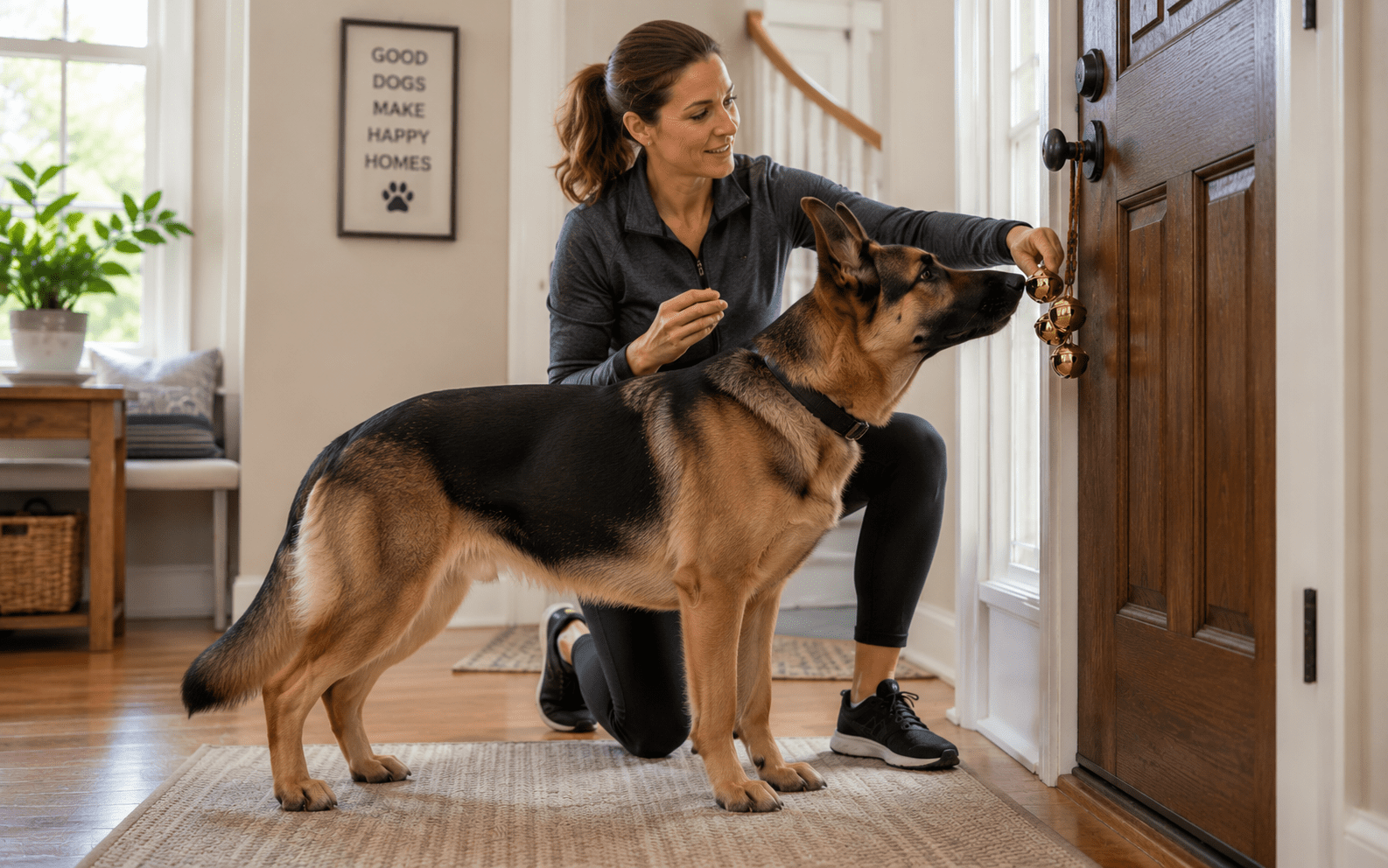
For dogs with larger behavioral patterns alongside the potty communication problem, a structured program like board and train Long Island gives them intensive daily practice with a qualified trainer before coming back home with the habit already in place.
Understanding the full process of how to bell train a dog, including where it tends to break down and why, is what separates pet owners who get results from those who try it for a week and give up.
Keeping the Habit Strong Over Time
Once your dog is ringing consistently, maintenance is straightforward. A few things to stay on top of:
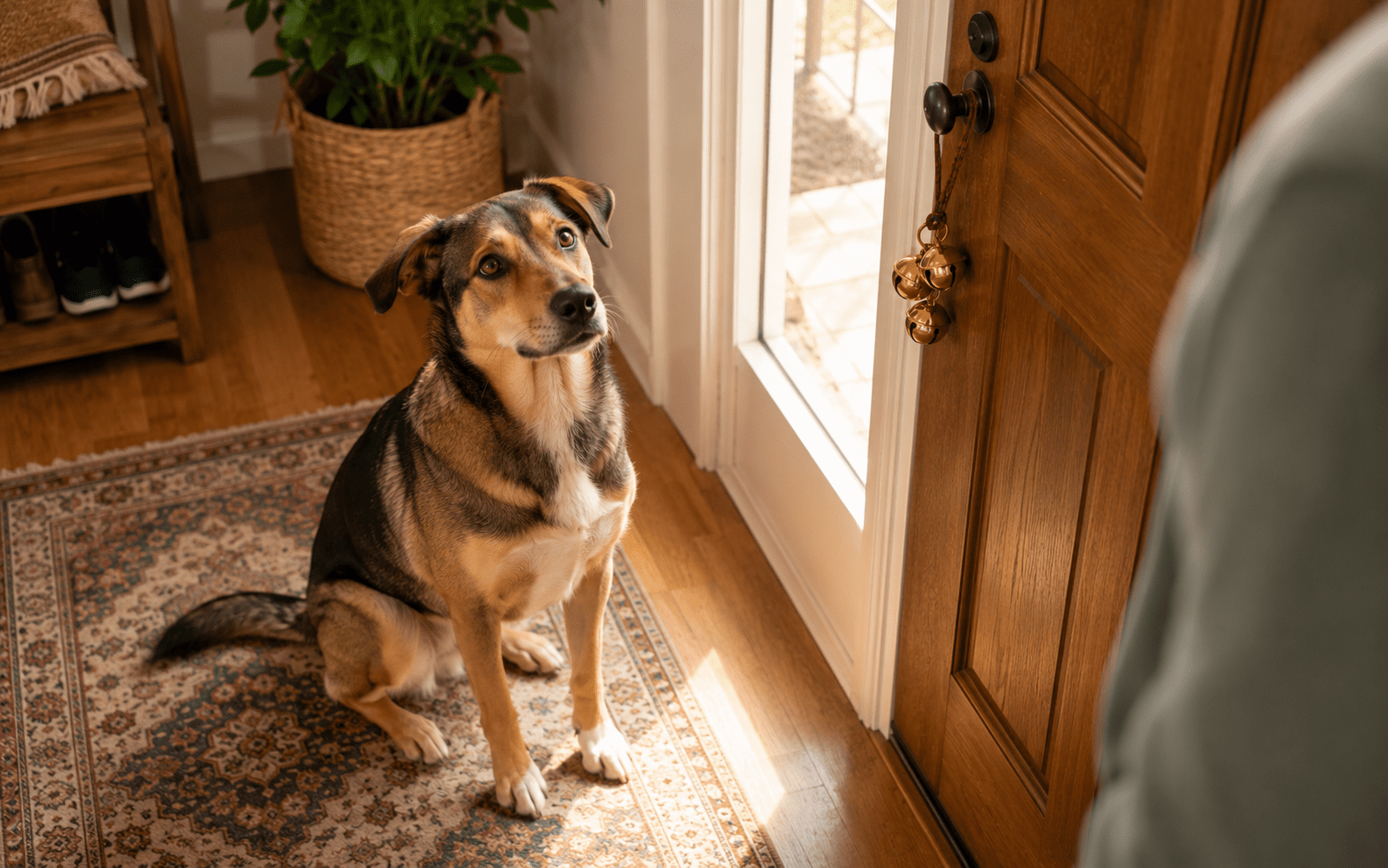
- Keep reinforcing occasionally. You do not need to treat every ring forever, but occasional rewards keep the behavior sharp.
- Watch for drift. If attention-ringing starts creeping back in, tighten your response and only go out during genuine potty moments.
- Do not move the bell. Some dogs are surprisingly location-specific. If the bell shifts, they may stop ringing entirely.
The dogs that hold onto this behavior long-term are almost always in homes where the household stayed consistent from the beginning. That reliability is what defines how to bell train a dog that keeps the habit up for years, not just weeks.
If you are building on this skill with your puppy early, best ways to train puppies walks through how habits formed in those early months shape long-term communication and cooperation.
Ring In Results: How to Bell Train a Dog That Actually Stays Consistent
If you want to bell train your dog the right way, K9 Mania Dog Training is the leading board and train provider on Long Island with some of the best animal behaviorists for dogs in the region. Whether your dog needs help with potty communication, reactivity, or foundational obedience, our team knows how to get real results. We build personalized programs around your dog’s specific needs and temperament, so nothing is one-size-fits-all. Whatever behavior challenge you are facing, we can help you work through it. Trust K9 Mania Dog Training and let us show you what experienced, hands-on training can do.
You May Also Want to Read
How to Stop Dogs From Fighting
How to Teach Loose Leash Walking
Frequently Asked Questions
How long does it take to train a dog with a bell?
Most dogs learn the bell-to-door connection within one to three weeks with consistent daily practice. The timeline depends on your dog’s age, temperament, and how reliably your household responds to each ring. Puppies often catch on quickly, while adult dogs with existing habits may take a little longer to make the shift.
What is the hardest thing to teach a puppy?
Impulse control is generally the most difficult skill for puppies to develop. Teaching a young dog to wait, hold back from reacting, or leave something alone goes against their natural energy and curiosity. It requires repetition and gradually increasing difficulty before it becomes a reliable, consistent behavior.
How do you train your dog to hit a bell?
Start by holding the bell near your dog’s nose and rewarding any contact they make with it. Once they understand that touching the bell produces a treat, move it to the door and guide them to ring it before every potty trip. With enough repetition, they will start ringing it on their own when they need to go out.
What’s the hardest breed of dog to train?
Afghan Hounds, Chow Chows, and Basenjis are consistently ranked among the most difficult breeds to train. These breeds were developed for independence rather than cooperation, which makes them less motivated by approval. That does not make them untrainable, but it does require more patience and a different approach than most owners expect.
What is a red flag puppy behavior?
Growling at people, extreme fearfulness, or unprovoked biting before twelve weeks are considered red flag behaviors. While some puppy mouthiness is normal, early aggression or severe anxiety can point to socialization problems or deeper temperament issues. These behaviors are worth addressing right away rather than waiting to see if the puppy grows out of them.
What age is a puppy hardest to train?
The six to eighteen month adolescent phase is generally the most challenging period for training. Hormones kick in, attention spans drop, and previously reliable behaviors can fall apart seemingly overnight. This is a normal developmental stage, but it requires owners to stay consistent rather than backing off on training when things get frustrating.