Key Takeaways
- Start training the day your puppy comes home — the 3 to 14-week window is when habits form fastest.
- Potty training, crate training, and basic commands should run in parallel, not one after another.
- Positive reinforcement (treats, praise, play) trains faster and produces fewer behavior problems than punishment.
- Biting, whining, and chewing are normal puppy development stages, not signs of a “bad dog” — they respond to consistent redirection.
- Most puppies have a reliable handle on the basics by 4 to 6 months with daily, short training sessions.
Learning how to train a puppy comes down to five things done consistently: potty training, crate training, basic obedience commands, socialization, and managing normal puppy behaviors like biting and whining. None of it requires hours a day — most professional trainers recommend three to five short sessions of five to ten minutes, spread across the day, rather than one long session that wears the puppy out.
How to Train a Puppy
Puppies go through a critical socialization window between roughly 3 and 14 weeks of age. Whatever they experience as normal during this window — other dogs, strangers, noises, handling, new environments — tends to stay normal for life. Miss it, and many of those same things can turn into fear or reactivity later on.
This is also when habits set fastest, for better or worse. A puppy that’s never corrected for jumping on guests at 10 weeks will assume that’s allowed at 10 months too. The training itself doesn’t need to be advanced this early — it needs to be early, period.
Potty Training: Where Every Puppy Owner Should Start
Potty training timelines vary by breed, age, and environment, but the process itself doesn’t change. Positive reinforcement consistently outperforms punishment here — a puppy scolded for an accident learns to fear the owner, not to use the bathroom outside.
Do:
- Feed on a consistent schedule (2–3 meals a day) so bathroom breaks become predictable.
- Take the puppy out shortly after meals, naps, and play sessions — these are the three moments accidents are most likely.
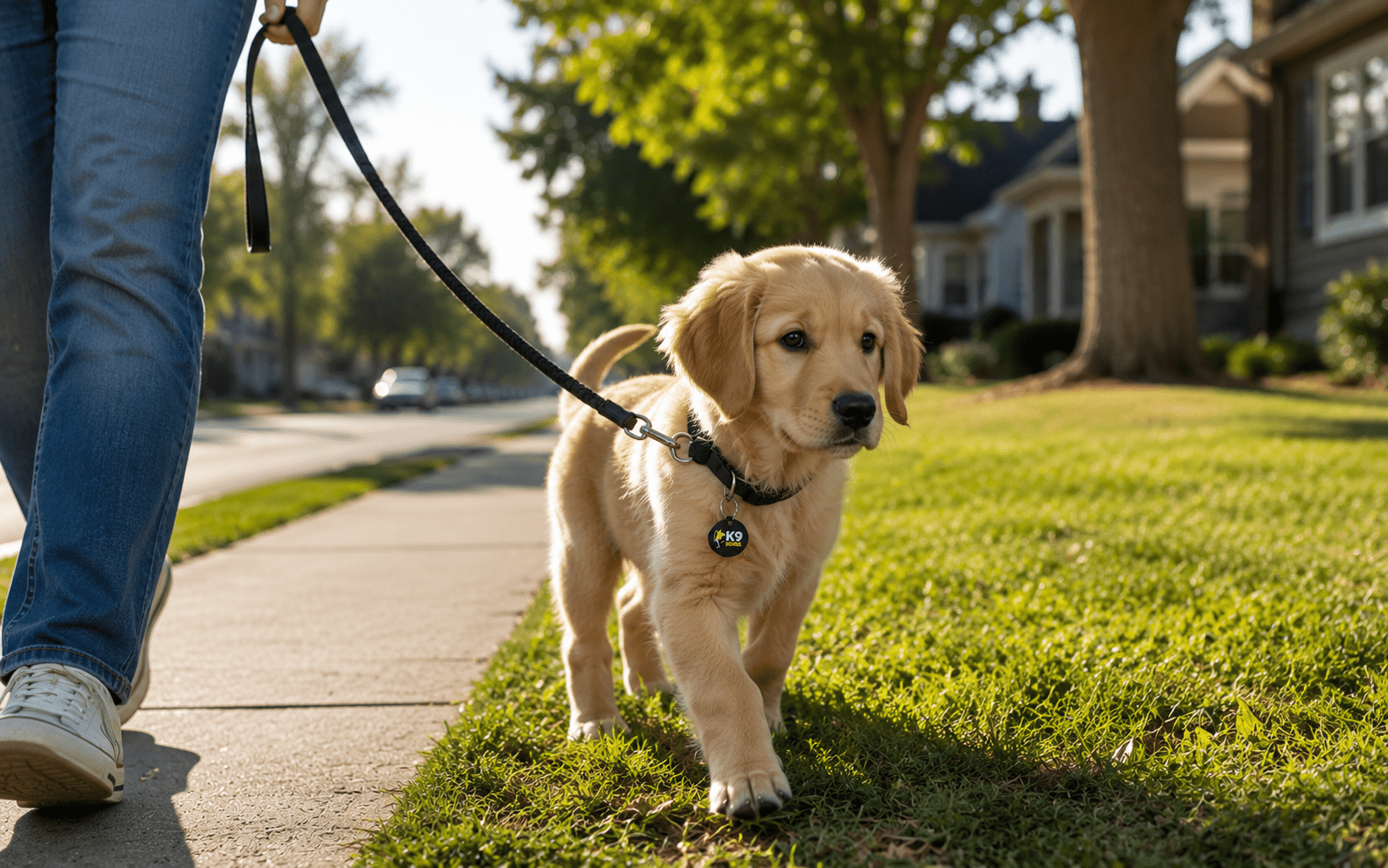
- Use a leash for potty breaks instead of free roaming in the yard, so the puppy learns this is bathroom time, not playtime.
Don’t:
- Punish accidents. It doesn’t speed up training and often creates a fearful, secretive puppy who hides accidents instead of stopping them.
- Free-feed water and food right before bed — a full bladder means a 2 a.m. accident or a crate the puppy is forced to soil.
- Leave a puppy crated for more than 4–6 hours. Puppies this young don’t have full bladder control; let them out 1–2 times overnight until they’re physically able to hold it longer.
Crate Training: The Tool Most Owners Underuse
A crate isn’t punishment — done right, it’s the single most useful tool in potty training, separation anxiety prevention, and giving a puppy a space that’s actually theirs. Puppies are naturally den animals; a properly introduced crate becomes a place they choose to settle, not just a box they’re locked into.
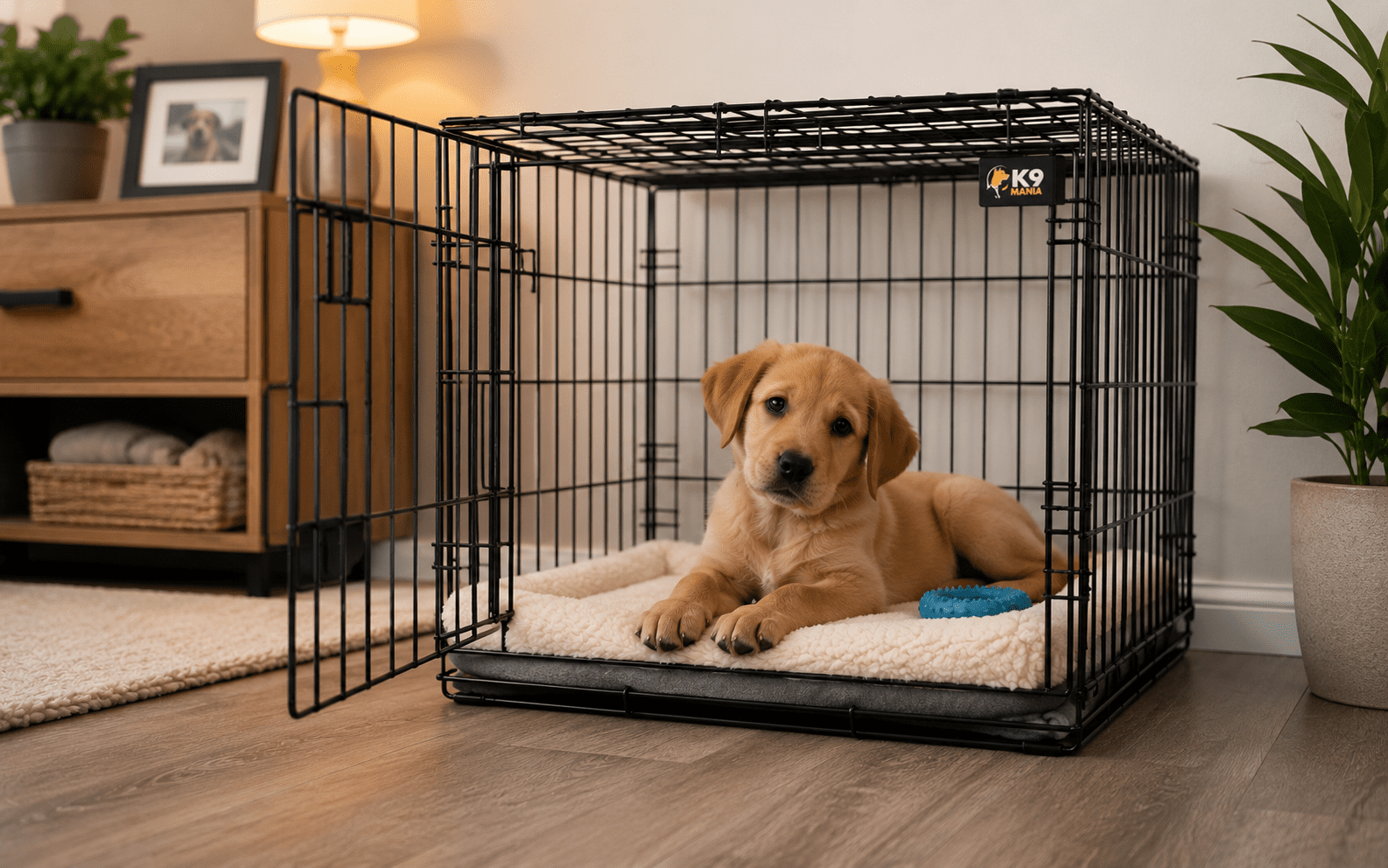
Introduce it gradually: feed meals near the crate first, then inside it with the door open, then start closing the door for short stretches while you’re still in the room. Never use the crate as a timeout for bad behavior — that turns it into something to dread instead of a safe space.
For a full walkthrough, see our guide to crate training your puppy.
Teaching Basic Commands
Sit, stay, come, and loose-leash walking form the foundation everything else builds on — recall alone can be the difference between a scary moment and a dangerous one if a puppy ever slips a leash near traffic.
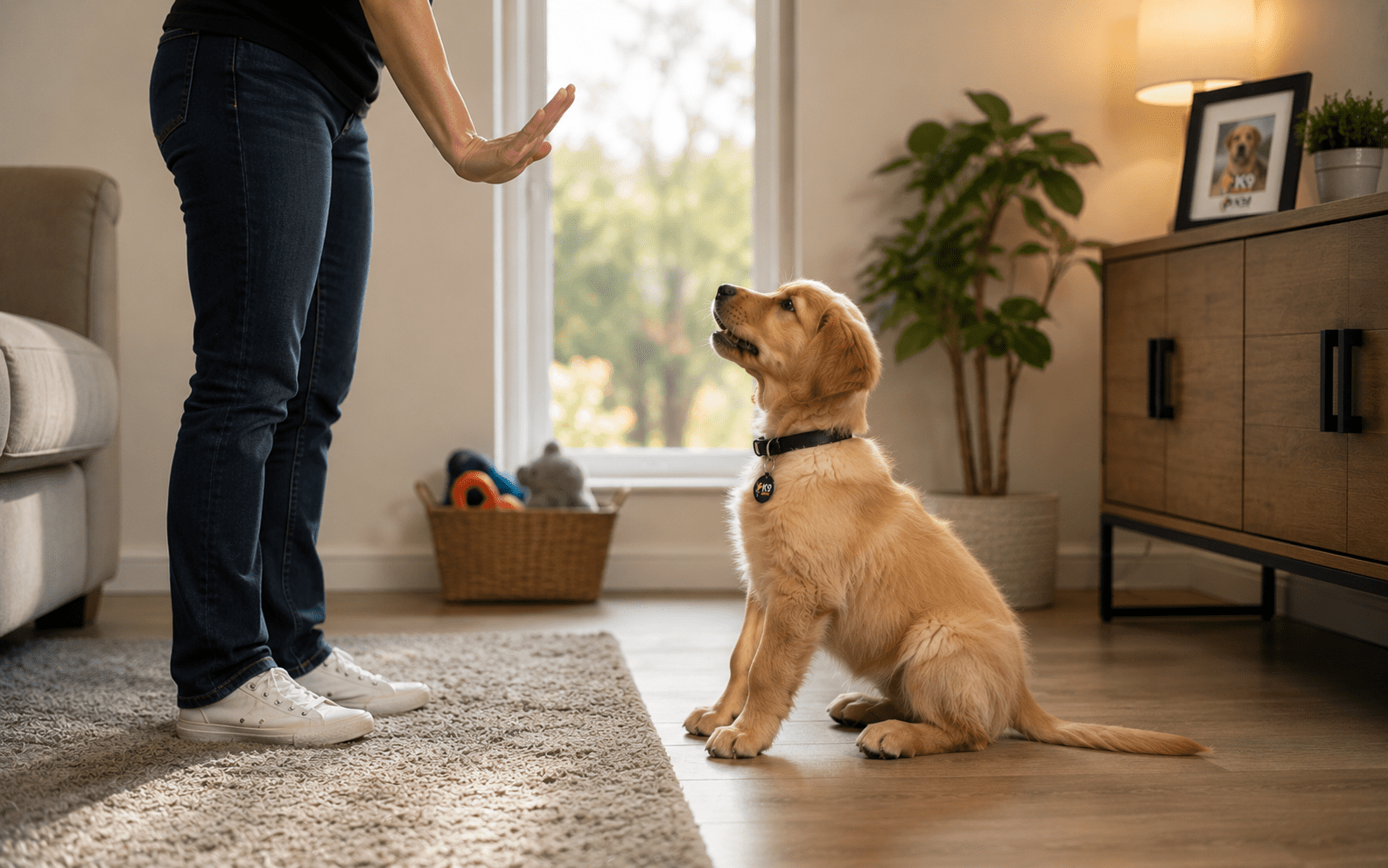
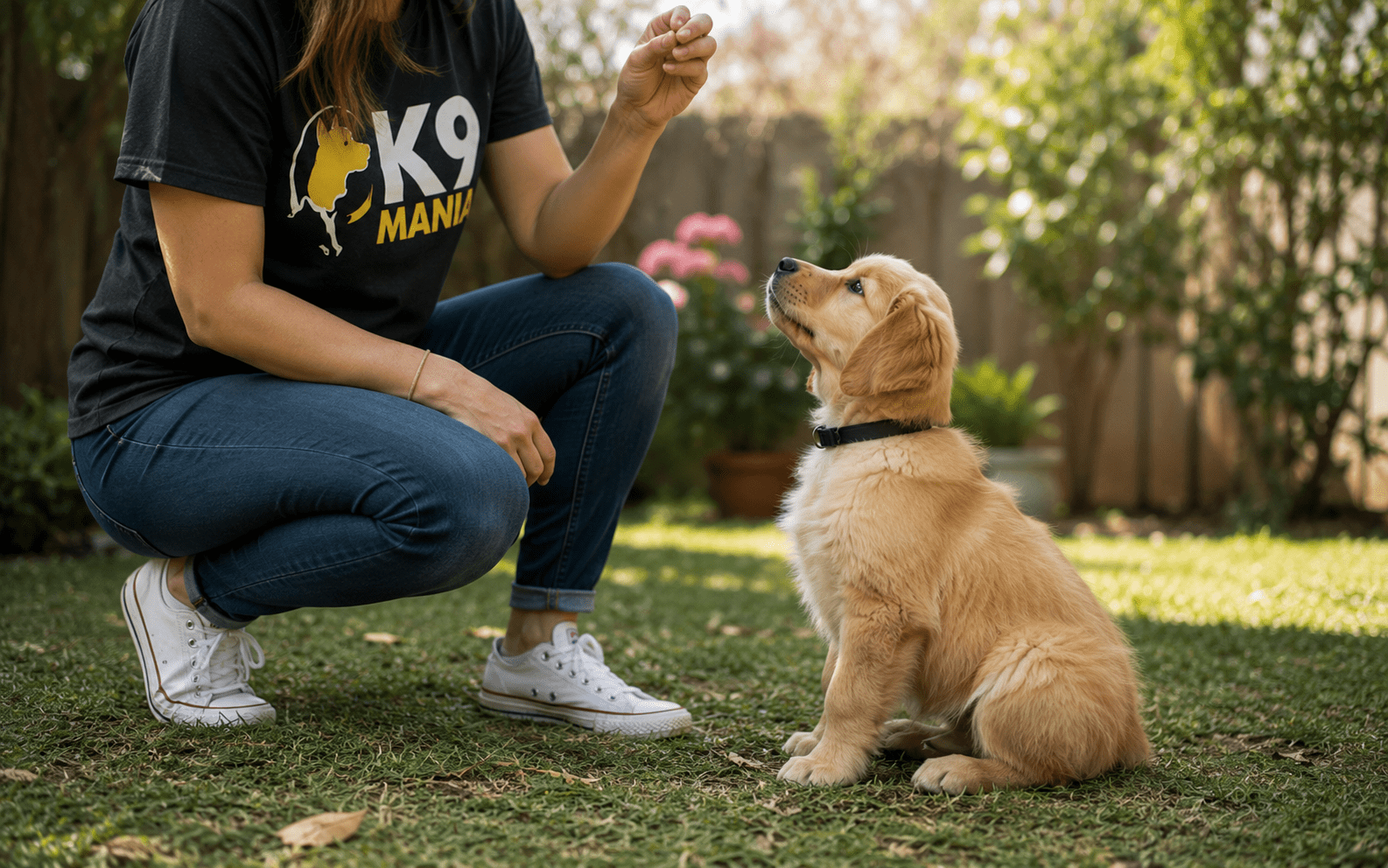
- Sit: Hold a treat near the nose, raise it slowly above the head — most puppies sit naturally to follow it. Mark the moment with “sit” and reward immediately.
- Stay: Only add once sit is reliable. Ask for a sit, take one step back, reward for staying put, then gradually increase distance and duration.
- Come: Practice in a low-distraction space first. Use an excited tone, never call a puppy over to scold it — that teaches them coming to you is the bad outcome.
- Loose-leash walking: Stop moving the instant the leash goes tight. Most puppies learn within a few sessions that pulling gets them nowhere, and a loose leash gets them where they want to go.
For the full list of foundational commands, see 10 essential dog commands every owner must know, and for leash-specific work, how to teach loose leash walking.
Socialization and Bite Inhibition
Puppies explore the world mouth-first, and biting during play is normal — it’s how they learn bite inhibition, or how to control the force of their jaw. Littermates teach this naturally: bite too hard during play, and the other puppy yelps and stops playing. Owners can mimic this by letting out a sharp “ow!” the instant teeth touch skin, then redirecting to an appropriate chew toy.
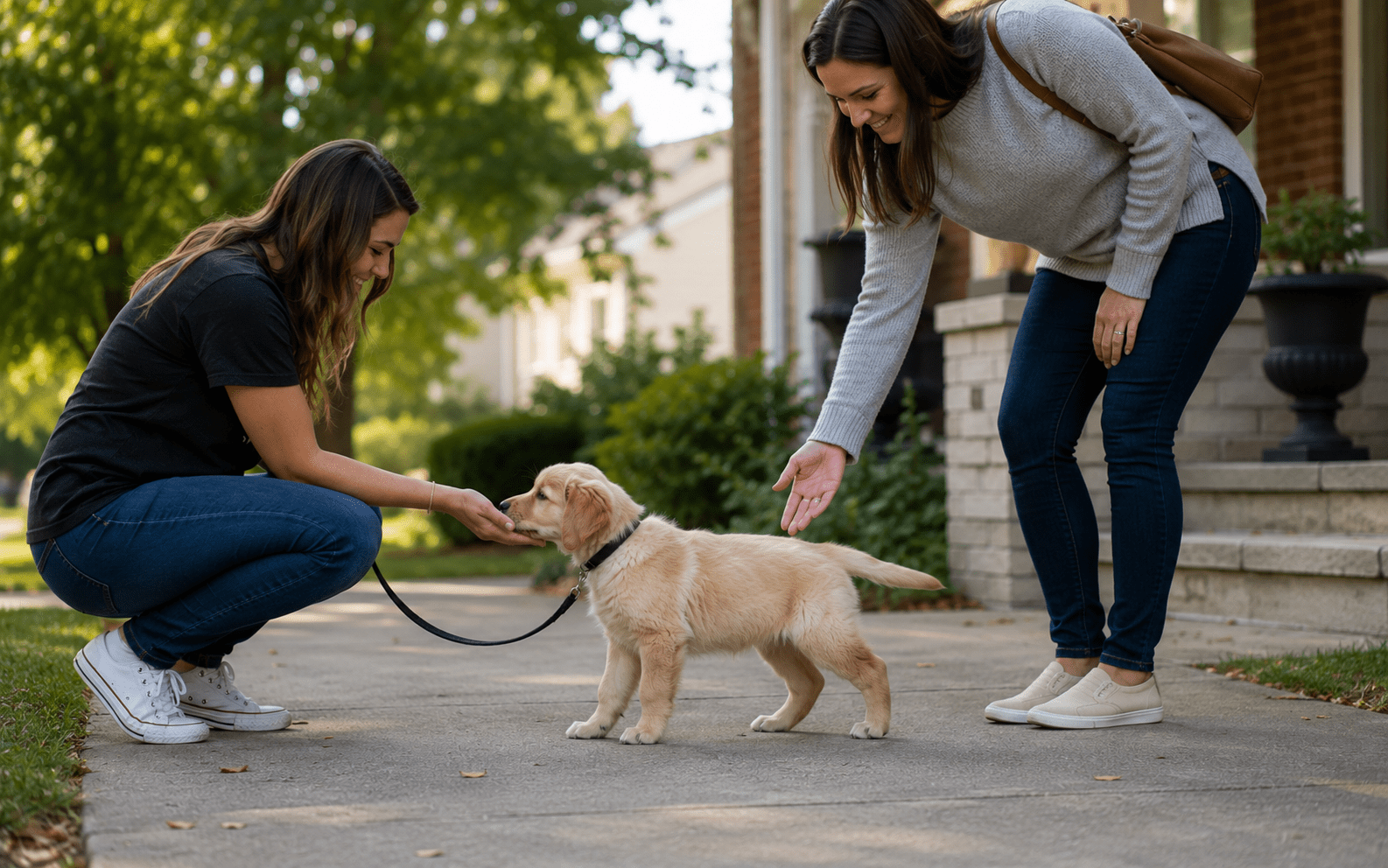
Biting tends to spike during teething and in puppies that aren’t getting enough structured play or mental stimulation. Crate training, scheduled play, and consistent redirection — paired with positive reinforcement, not punishment — resolve most cases without it becoming a long-term habit. Harsh corrections tend to backfire here, producing more fear-based aggression rather than less biting.
Socialization should run alongside this: short, positive exposures to new people, dogs, sounds, and environments during the critical window described above build a confident adult dog instead of a reactive one.
Related reading: why is my puppy biting me and puppy fear periods.
Managing Whining and Other Normal Puppy Behaviors
Unless a puppy is in pain, whining is communication — hunger, boredom, stress, or excitement, often all in the same week. It’s especially common during the first few weeks of crate training.
- Rule out pain first. If whining is sudden, intense, or paired with other symptoms, a vet check comes before any training response.
- Don’t reward the whining. Letting a puppy out of the crate specifically because it whined teaches that whining works.
- Tire them out appropriately. A puppy that’s mentally and physically worn out by bedtime has a lot less energy left to whine about.
- Keep feeding and potty schedules consistent. Predictable routines remove a lot of the uncertainty that drives whining in the first place.
Common Mistakes New Puppy Owners Make
- Training in one long session instead of several short ones. Puppies have short attention spans — five to ten focused minutes beats a frustrated thirty-minute session every time.
- Punishing behavior instead of redirecting it. Punishment can suppress a behavior temporarily while teaching nothing about what to do instead, and often creates fear or aggression down the line.
- Inconsistent rules between household members. If one person allows jumping on the couch and another doesn’t, the puppy has no way to learn a consistent standard.
- Skipping socialization because the puppy “seems fine.” The critical window closes around 14 weeks whether or not an owner used it.
- Using the crate as punishment. This is the fastest way to turn a useful training tool into a place the puppy associates with stress.
How to Train a Puppy: A Stage-by-Stage Timeline
8–10 weeks: Focus on potty training basics, crate introduction, and gentle socialization. No formal obedience yet — this stage is about routine and exposure.
10–16 weeks: Begin sit, stay, and name recognition. Continue active socialization through the critical window. Bite inhibition work becomes a daily habit, not an occasional correction.
4–6 months: Add come and loose-leash walking. Most puppies can handle slightly longer training sessions and start generalizing commands to new environments, not just the living room.
6+ months: Reinforce everything learned so far in increasingly distracting environments — other dogs, new people, outdoor settings. This is also when many owners notice an adolescent regression; it’s normal, not a sign training failed.
Frequently Asked Questions
How long does it take to train a puppy?
Basic obedience (sit, stay, come, loose-leash walking) is usually reliable by 4 to 6 months with consistent daily practice. Full house training and reliable manners around distractions can take through the first year, especially for larger or more independent breeds.
What is the best age to start training a puppy?
As soon as the puppy comes home, typically around 8 weeks. Waiting until a puppy is “old enough” means missing the 3-to-14-week socialization window that’s hardest to make up for later.
Should I use treats to train my puppy?
Yes — positive reinforcement with treats, praise, or play consistently produces faster, more reliable results than punishment-based methods, with far fewer side effects like fear or aggression.
How do I stop my puppy from biting?
Redirect to a chew toy immediately, use a sharp “ow” to mimic littermate feedback, and stay consistent. Biting that continues past the teething stage or escalates in intensity is worth addressing with a professional trainer.
Can I train a puppy myself, or do I need a professional?
Many basics can be taught at home with consistency and patience. A professional trainer is worth bringing in for specific behavior issues, breed-specific challenges, or if progress stalls — it’s often faster and prevents bad habits from setting in.
Good Puppy Training Makes an Even Better Dog
There’s no single “best way” to train a puppy — but potty training, crate training, basic commands, socialization, and patience with normal behaviors like biting and whining cover nearly everything a new owner needs in those first few months. Get the routine right early, and the rest tends to follow.
Not sure where to start, or feeling stuck with a specific behavior? Book a free evaluation with K9 Mania’s puppy training program on Long Island.