How to teach each:
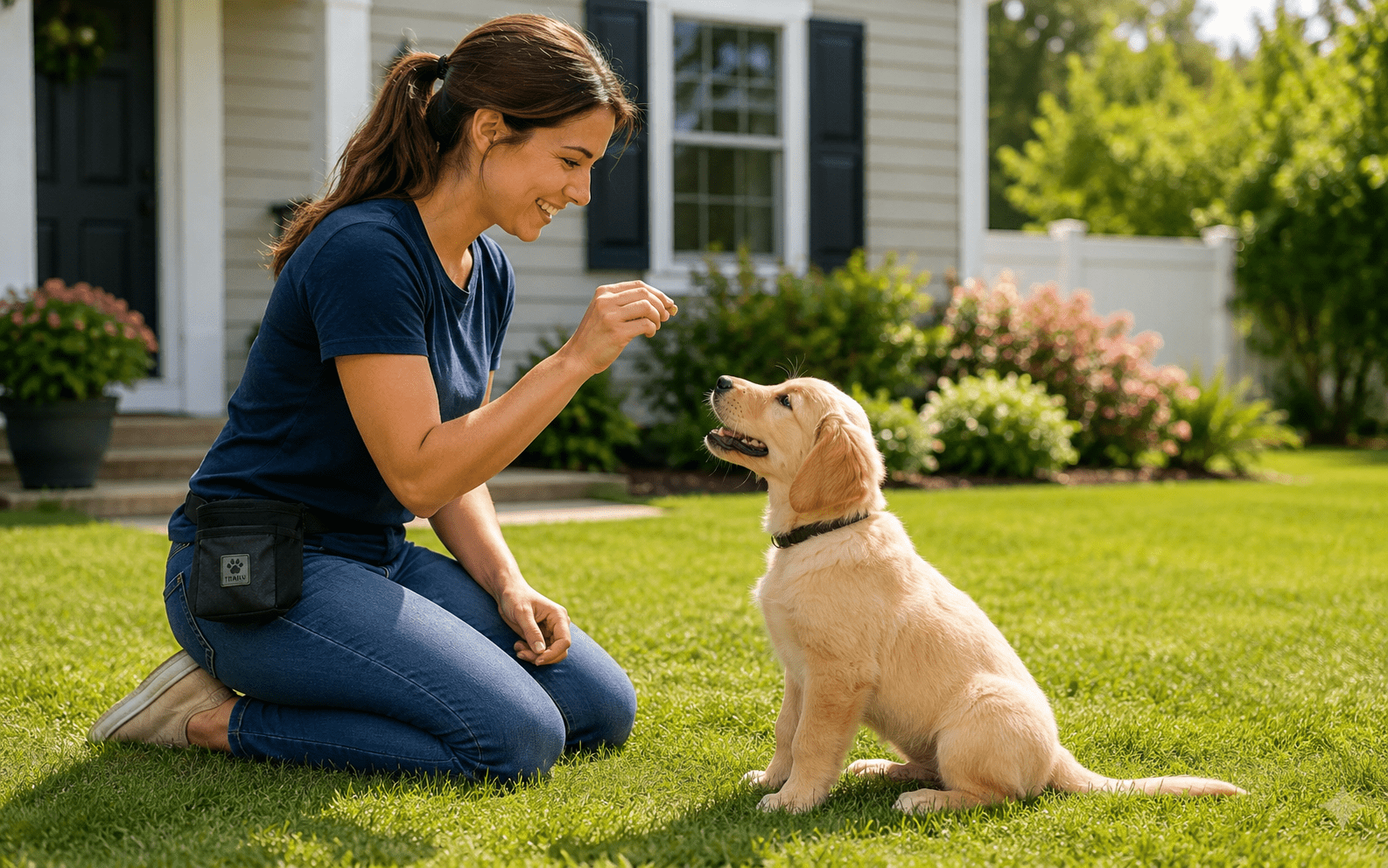
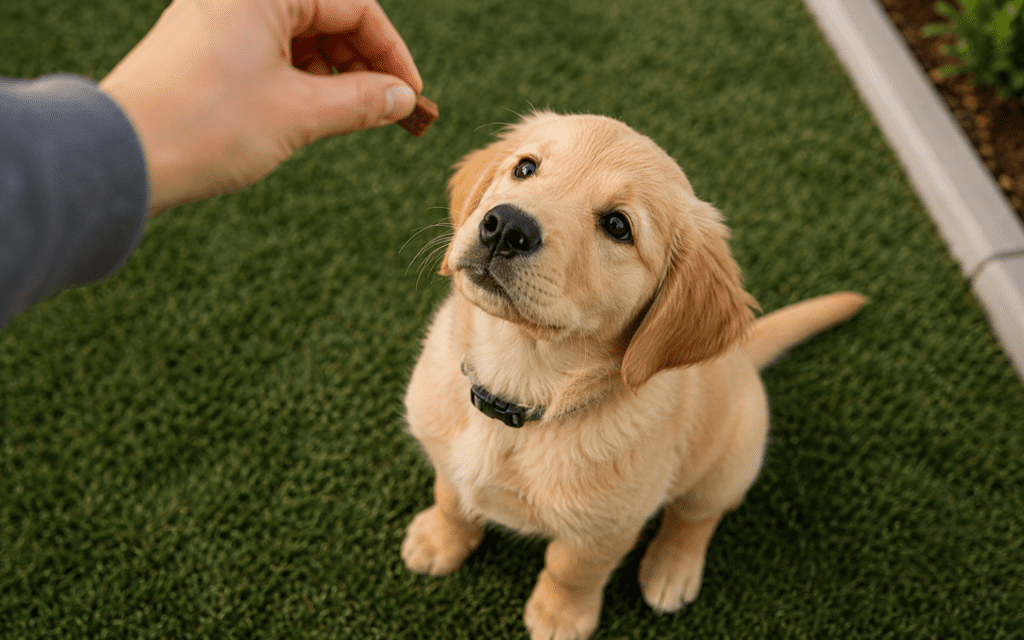
Sit: Hold a treat above your puppy’s nose and slowly move it back over their head. As their bottom lowers, say “sit” and reward.
Stay: Ask for a sit, then take one step back. Pause, return, and reward. Gradually increase distance and duration.
Come: Crouch down, open your arms, and say “come” in an upbeat tone. Always reward generously when your puppy reaches you.
Down: From a sit, lower a treat from their nose toward the floor. As they follow, say “down” and reward when their elbows hit the ground.
Leave it: Place a treat in your closed fist. Let your puppy sniff and paw. When they stop and pull back, open your hand and reward with a different treat.
Keep sessions to 3 to 5 minutes maximum. Puppies lose focus quickly, and short bursts beat long exhausting sessions every time.
Step 2: Use Positive Reinforcement, Not Punishment
Punishment-based training creates fear and confusion in puppies. Positive reinforcement, meaning rewarding what you want and redirecting what you do not, is both faster and longer-lasting.

What works:
Treat rewards immediately after the correct behavior (within 2 seconds)
Verbal praise in a warm, upbeat tone
Play as a reward for high-energy puppies who are less food-motivated
Clicker training to mark the exact moment of correct behavior
What to avoid:
Yelling or harsh corrections
Rubbing a puppy’s nose in accidents
Repeating commands more than twice without a reset
Punishing a behavior minutes after it happened (your puppy cannot connect past actions to a correction)
Step 3: Establish a Consistent Daily Routine
Puppies thrive on predictability. A set schedule for meals, potty breaks, naps, play, and training sessions gives your puppy a framework they can trust. When they know what is coming next, anxiety drops and learning accelerates.

A sample daily structure for an 8 to 12 week old puppy:
Wake up: Immediate outdoor potty break
Morning: Meal, short training session (5 minutes), play
Mid-morning: Nap (puppies this age sleep 16 to 18 hours a day)
Midday: Potty break, brief socialization activity
Afternoon: Meal, training, nap
Evening: Play, training, potty, wind down
Bedtime: Crate with a chew or comfort item
Crate training your puppy is a foundational part of this routine. A crate is not a punishment. It becomes a safe space where your puppy learns to settle, which directly supports potty training and reduces destructive behavior overnight.
Step 4: Socialize Early and Intentionally
Socialization is not just letting your puppy meet other dogs. It means exposing them, in a positive and controlled way, to a wide range of people, sounds, surfaces, environments, and situations before 16 weeks.
Read more about the benefits of early dog socialization and why skipping this step is one of the most common reasons adult dogs develop fear-based reactivity.
Socialization checklist for the first 16 weeks:
Children, men, women, elderly individuals
Other vaccinated, calm dogs
Car rides, stairs, different floor textures
Loud sounds (traffic, vacuum cleaners, thunder recordings)
Hats, umbrellas, bicycles, skateboards
Veterinary office visits for positive experiences only
Always pair new exposures with treats and calm praise. If your puppy shows fear, do not push forward. Back up, create distance, and try again more slowly.
Step 5: Address Problem Behaviors Early
Nipping, jumping, barking, and resource guarding are all normal puppy behaviors that become serious problems if left unaddressed. The time to handle them is now, not after they are fully ingrained.
Common behaviors and what to do:
Nipping: Redirect to a chew toy immediately. If nipping continues, calmly end the play session. Never use your hands as toys.
Jumping: Turn your back and cross your arms. Only give attention when all four paws are on the floor.
Excessive barking: Identify the trigger. Reward quiet behavior. Do not yell back, as this reinforces that barking gets attention.
Resource guarding: Practice trading games early. Offer a high-value treat in exchange for the item your puppy is guarding.
Want hands-on help? Our dog trainers offer in home dog training Long Island sessions where we work with your puppy in the environment where behavior problems actually happen. Book a Free Consult
Puppy Training Milestones by Age
Different ages call for different training priorities. Here is what to focus on and what to expect:
Puppy Training on Long Island: What Is Different Here?
Training a puppy on Long Island comes with its own set of environmental factors that local owners should plan around.
Long Island’s suburban and semi-urban layout means your puppy will regularly encounter crowded sidewalks, heavy traffic sounds, beach environments, and proximity to other dogs during walks. These are not obstacles. They are socialization opportunities, but only if your puppy is introduced to them correctly.

What Long Island puppy owners should know:
High-density neighborhoods: Early leash manners matter more here than in rural areas. Your puppy will encounter strangers, cyclists, and other dogs on nearly every walk.
Dog parks and beaches: Long Island has popular dog-friendly spaces. Puppies are not ready for off-leash dog parks until they have solid recall and some social skills. Rushing this step causes reactivity.
Indoor apartment settings: Many Long Island homes have small yards or no yard at all. In-home training is especially valuable for teaching calm household behavior in tighter living spaces.
Seasonal considerations: Cold winters limit outdoor training time, so building strong indoor skills early gives you more options year-round.
Our board and train Long Island program is specifically designed for Long Island puppies and the real-world environments they will grow up in. Your puppy learns with our trainers in structured settings before returning home with the skills already installed.
Common Puppy Training Mistakes at a Glance
For a deeper breakdown of this topic, visit our full puppy training guide with additional expert tips and real case examples from our Long Island trainers.

How to Train a Puppy: Final Thoughts From K9 Mania Dog Training
How to train a puppy is not about perfection. It is about showing up consistently, keeping sessions short and positive, and building trust one repetition at a time. The work you put in during the first few months pays off in a calm, confident, well-behaved adult dog.
At K9 Mania Dog Training, we are Long Island’s leading board and train program and home to the best animal behaviorist for dogs in the region. Whether your puppy needs basic obedience, behavior modification, or hands-on guidance in your home, we are here to help. Trust us to build the foundation your dog deserves from day one. Reach out today and let’s get started.
Frequently Asked Questions
What is the first thing you should train a puppy on?
The first thing to teach a puppy is their name, followed immediately by the recall command “come.” Name recognition creates attention, and a reliable recall is the most important safety behavior your dog will ever learn. Once those are in place, move to sit, down, and stay as foundational commands.
What is the 7 7 7 rule for puppies?
The 7 7 7 rule suggests that by 7 weeks of age, a puppy should have been held by 7 different people and experienced 7 different surfaces. It is a socialization guideline used by responsible breeders to give puppies the best possible start before they go to their new homes.
Where should a puppy sleep the first night?
A puppy should sleep in a crate placed in or near your bedroom on the first night. The proximity helps them feel less alone and makes it easier for you to hear when they need a nighttime potty break. Avoid letting a new puppy sleep in your bed immediately, as this creates a habit that is difficult to change later.
What is the 3 3 3 rule for puppies?
The 3 3 3 rule describes a common adjustment timeline for newly adopted dogs. During the first 3 days, the puppy is overwhelmed and may shut down or act out. By 3 weeks, they begin to feel comfortable and show their true personality. By 3 months, they feel settled and trust their routine. This framework helps owners set realistic expectations and avoid reacting to early behavior as permanent.
What are common puppy training mistakes?
The most common mistakes include starting training too late, being inconsistent with rules, repeating commands without follow-through, skipping socialization, and using punishment instead of redirection. Another frequent error is giving too much freedom too soon before the puppy has earned it through demonstrated behavior.
What should you avoid when training a puppy?
Avoid yelling, physical corrections, or rubbing a puppy’s nose in accidents. These methods damage trust and create fear without teaching the behavior you actually want. Also avoid marathon training sessions, as puppies lose focus after just a few minutes. Keep everything short, clear, and positive to get the best results.