Knowing how to stop dogs from fighting means acting fast, staying calm, and using a safe method to separate them without putting yourself in harm’s way. The real fix, though, happens before and after the fight, not just in the heat of the moment.
Dog fights are scary. They escalate quickly, they’re loud, and most owners freeze or panic when it happens. That reaction can actually make things worse. Whether you have two dogs at home or one that reacts to other dogs outside, understanding why fights start, how to handle them correctly, and what prevents them from repeating changes the outcome every time.
This post covers what triggers dog fights, how to break them up safely, and what actually stops them from coming back.
📌 Things to Know
- Dog fights most often stem from resource guarding, fear, or overstimulation
- Most fights end in seconds; human injury during intervention is the biggest risk
- Never grab a fighting dog by the collar
- Tension almost always builds before a fight breaks out
- Redirecting behavior before escalation is more effective than stopping an active fight
- Professional training addresses the root cause, not just the moment it happens
Why Dogs Fight in the First Place
Figuring out how to stop dogs from fighting starts with knowing what’s setting them off. Dogs don’t fight without reason. There’s almost always a trigger, and it’s usually something that’s been building quietly in the background before anything visible happens.
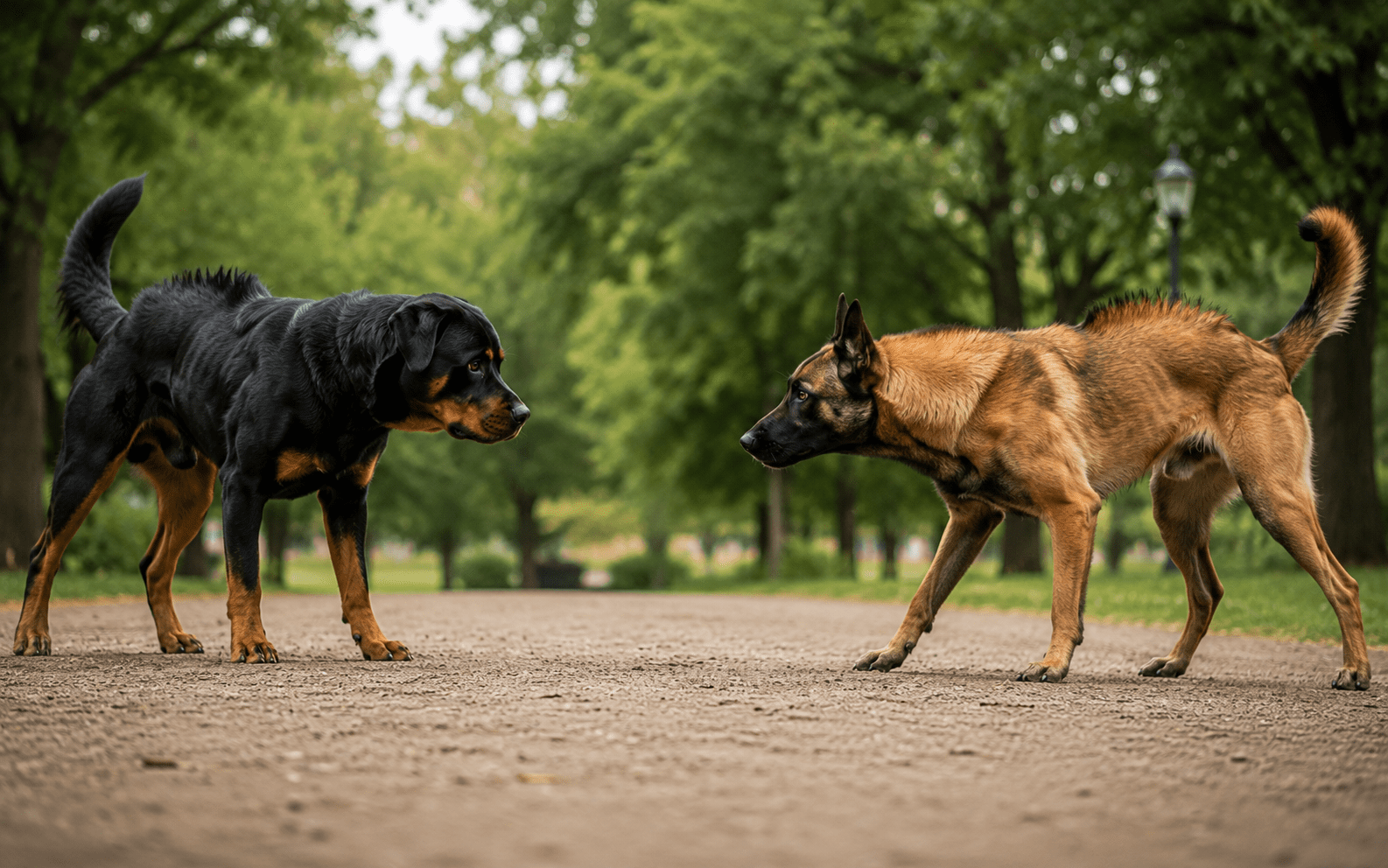
Common Triggers Behind Dog Fights
- Resource guarding: Food, toys, a resting spot, or your attention can start a fight in a multi-dog home
- Fear or anxiety: A dog that feels trapped or threatened will often go on the offensive before the other dog makes a move
- Overstimulation: High-energy play can tip into a real fight when one dog hits its threshold and the other doesn’t back off
- Redirected aggression: A dog frustrated by a stimulus it can’t reach (like a dog behind a fence) may lash out at the nearest dog instead
- Lack of socialization: Dogs not exposed to other dogs early often misread or overreact to normal dog communication
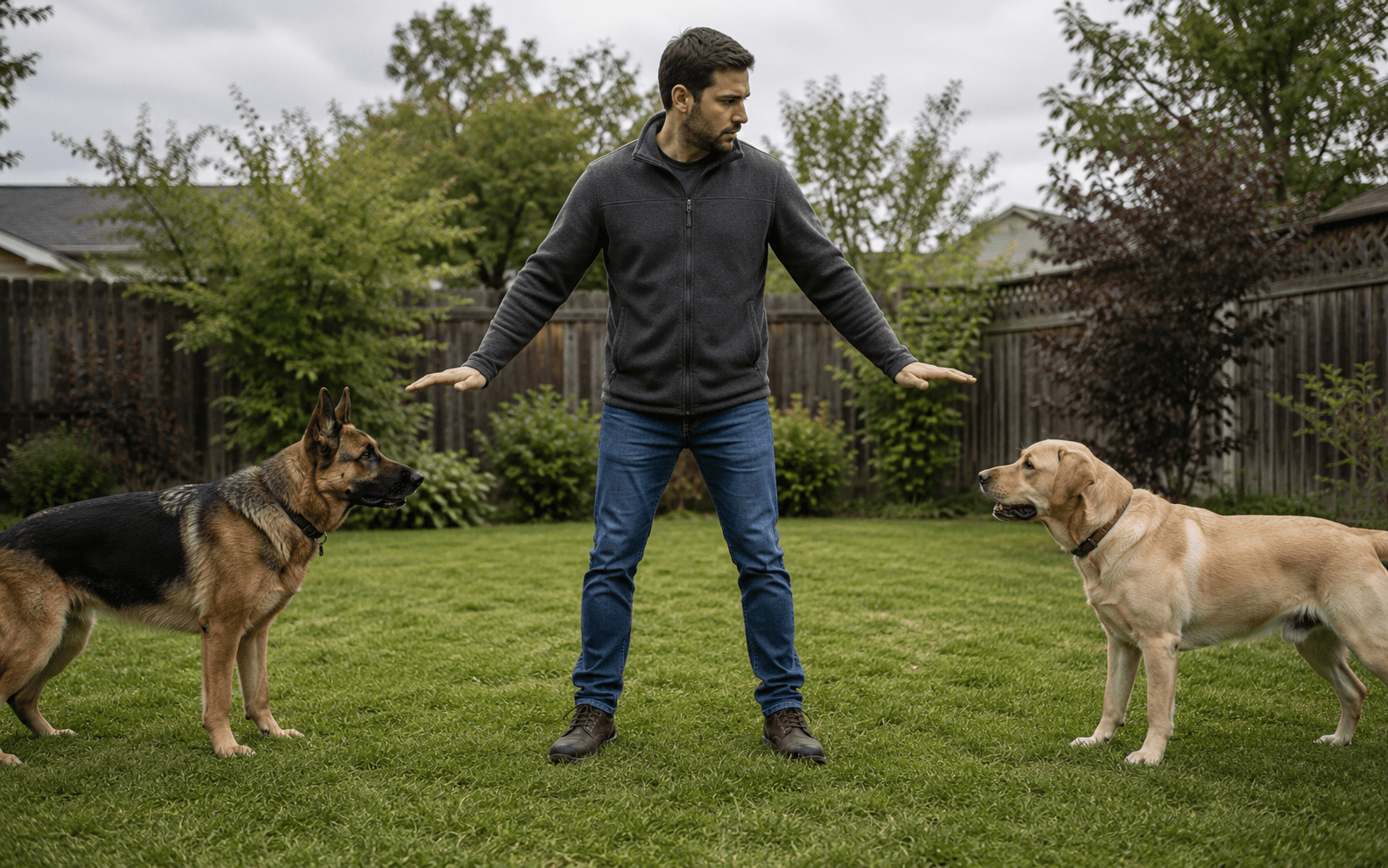
Spotting tension before it explodes is one of the most practical skills you can build as an owner. Learning to read dog body language signals like a hard stare, stiff body posture, or raised hackles gives you a window to step in before teeth ever come out.
How to Stop Dogs From Fighting in the Moment
When a fight breaks out, the instinct is to jump in and pull them apart with your hands. That’s actually one of the fastest ways to get seriously hurt. Dogs in an active fight often redirect bites to whatever they feel next, and that includes your fingers and wrists.
Safe Techniques to Break Up a Fight
These methods work without putting your hands near the action:
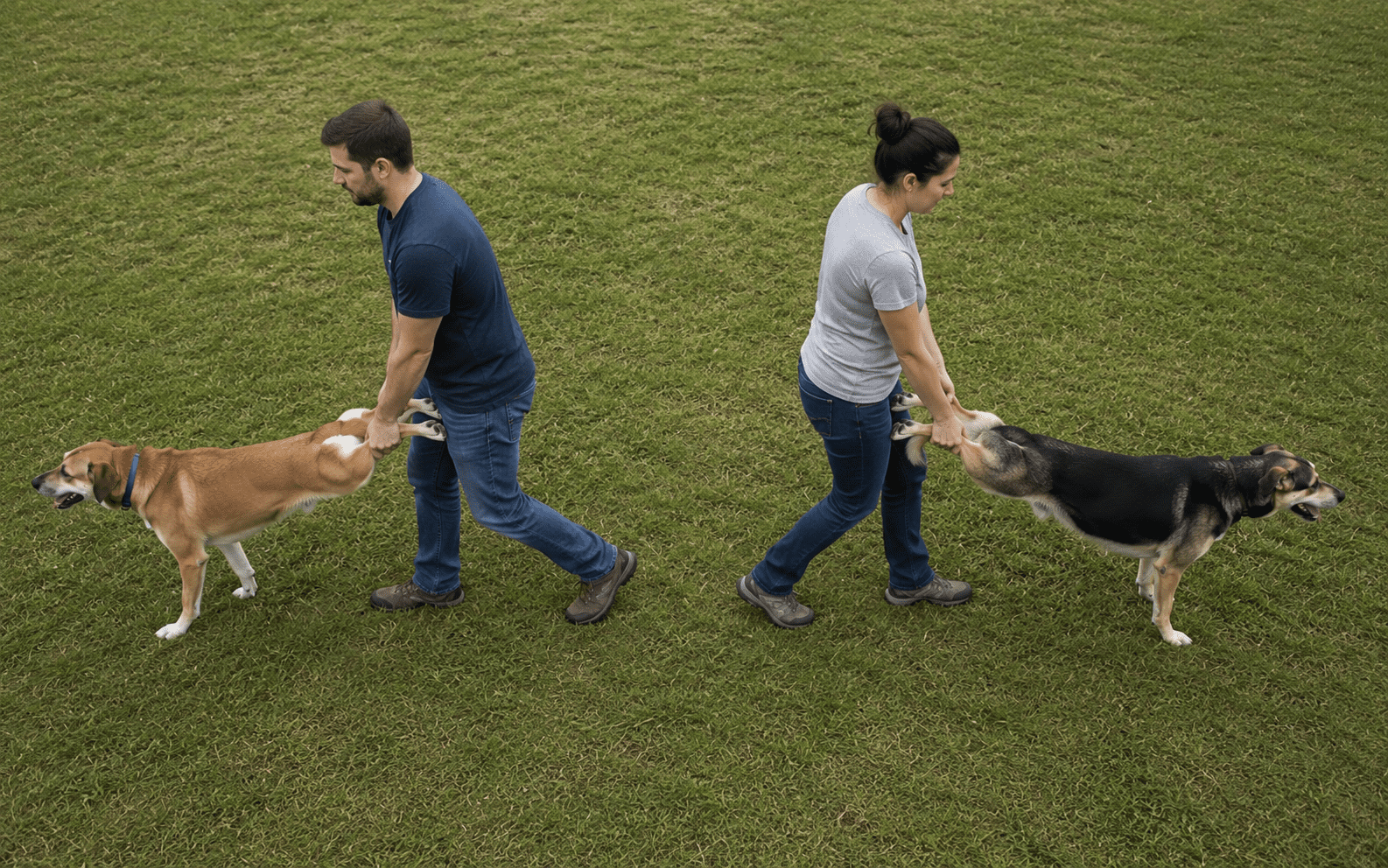
- The wheelbarrow method: With two people present, each grabs the hind legs of one dog and walks backward in a circular arc, preventing the dog from spinning and biting the person holding them
- Use a physical barrier: A chair, trash can lid, or piece of cardboard placed between the dogs interrupts the fight visually and breaks contact
- Water: Spraying water directly at the dogs’ faces can break their focus quickly without any physical contact on your end
- Loud noise: A sharp air horn or loud clap can interrupt a fight that hasn’t fully locked in yet
- Citronella spray: Directing spray near the dogs (not in the eyes) disrupts the behavior and can give you enough of a pause to separate them
Staying calm during all of this matters more than most people realize. Yelling raises the energy in the room, which keeps both dogs more aroused and harder to pull apart.
| Intervention Method | Best Used When | Risk to Owner |
| Wheelbarrow method | Full fight, two people present | Low if done correctly |
| Physical barrier (chair, board) | Either dog is redirecting toward a person | Very low |
| Water spray | Early scuffle or freeze behavior | None |
| Loud noise (air horn) | Pre-fight tension or first contact | None |
| Citronella spray | Dogs locked in with no clear release | Low |
Knowing how to introduce dogs to each other properly from the start reduces how often you land in these moments in the first place.
What to Do Right After a Fight
Separating the dogs is step one. What you do in the next hour matters just as much.
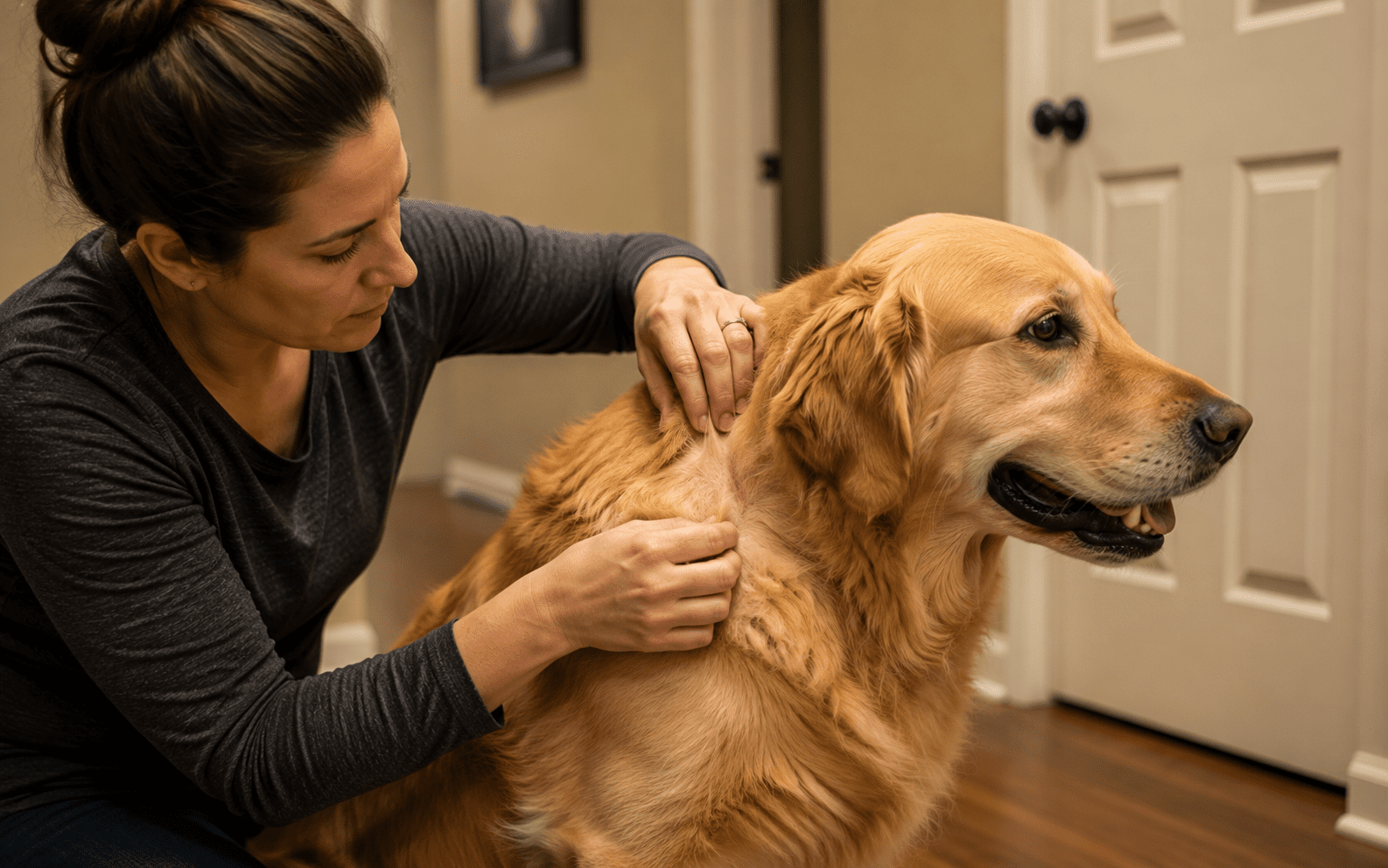
Check for Injuries Before Anything Else
Once separated, put each dog in a different room and close the door. Don’t reintroduce them right away, even if both look calm. Arousal doesn’t drop instantly, and dogs can re-engage fast when reunited too soon. Check each dog carefully for puncture wounds, especially in areas with thick fur. Bite wounds look small on the surface but can go deep and get infected quickly. If you find any, a vet visit is worth it.
Managing the Space Between Dogs
For the next 24 to 48 hours, keep the dogs separated and reintroduce gradually in a neutral space, ideally outdoors. Feed them separately. Remove shared items that could spark another dispute.
If guarding behavior over food, toys, or resting spots contributed to the fight, that’s a pattern worth addressing directly. Learning how to stop resource guarding in dogs is often the most direct way to reduce tension between dogs sharing a home long-term.
How to Prevent Future Fights
The right approach to how to stop dogs from fighting long-term isn’t any single technique. It’s a combination of management, training, and structure built into your daily routine.
Training Approaches That Create Lasting Change
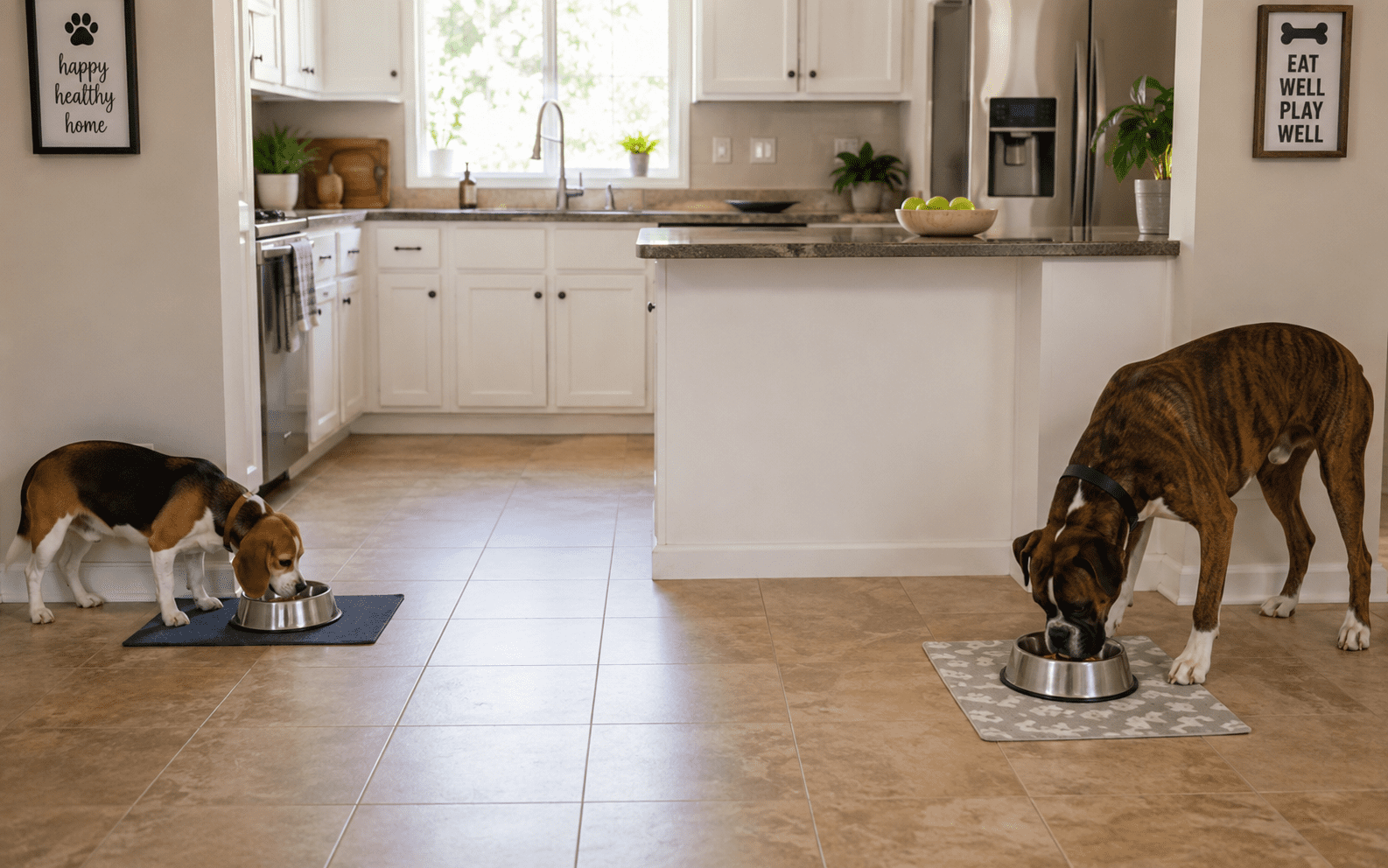
Management means setting up the environment so conflict is less likely. Separate feeding stations, designated resting areas, and supervision during play all reduce the chances for tension to build into something serious.
Training means teaching your dogs reliable responses that hold even when they’re excited or stressed. A dog that responds to “sit,” “leave it,” or “stay” during a tense moment gives you control before escalation happens. Obedience dog training builds exactly this kind of foundation, not just command responses, but the impulse control and clarity dogs need to share space without constant conflict.
Structure means your dogs understand what’s expected of them when they’re together. Clear rules around food, doorways, and attention-seeking reduce the ambiguity that often leads to disputes.
| Prevention Strategy | What It Targets | Difficulty Level |
| Separate feeding stations | Food-based resource guarding | Easy |
| Obedience training (leave it, stay) | Impulse control and redirection | Moderate |
| Structured reintroduction after fights | Post-fight tension and arousal | Moderate |
| Daily exercise and mental stimulation | Frustration and overstimulation | Easy |
| Removing high-value items during shared time | Object guarding | Easy |
| Professional behavior modification | Deep-rooted or escalating aggression | Requires trainer |
When the Problem Keeps Coming Back
Some fights are isolated incidents tied to a specific moment. Others are part of a repeating pattern that won’t resolve no matter what you try at home. Knowing how to stop dogs from fighting in the moment is essential, but if the incidents keep happening or the severity keeps climbing, you’re dealing with something that needs professional eyes on it.
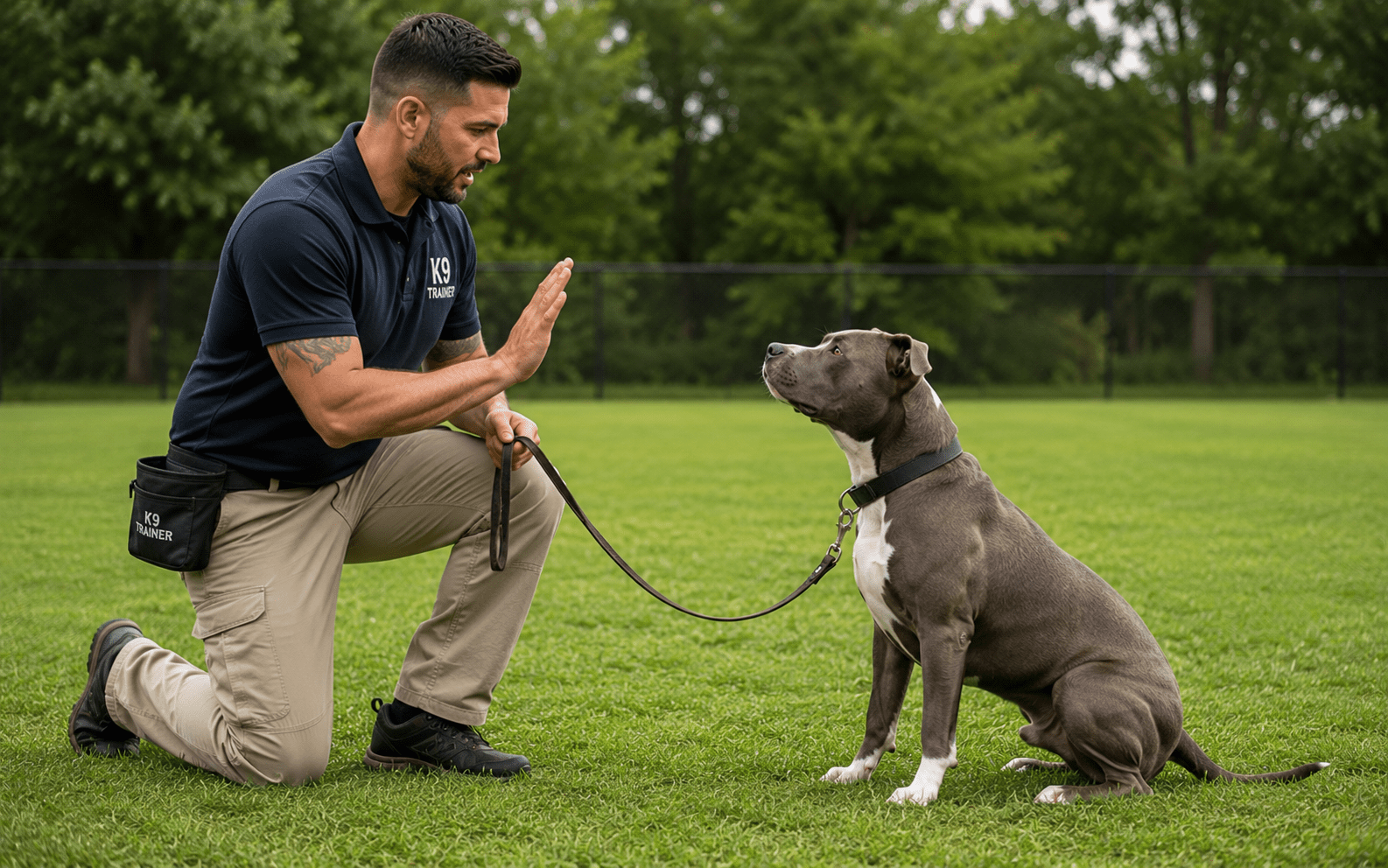
Signs You Need a Trainer Involved
- Fights happen with no obvious trigger
- One dog spends most of its time avoiding the other
- The intensity of the fights is increasing
- You have children in the home and feel unsafe
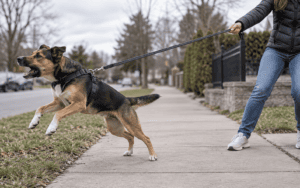
- Your dog is also reactive toward strangers or dogs on leash
Board and train Long Island removes the dog from the environment where the triggers live, allowing intensive behavior work to happen without constant exposure to the situation driving the problem. It’s one of the fastest routes to meaningful, lasting change when aggression has become a pattern rather than a one-time incident.
For owners who want to address the behavior where it actually happens, private dog training Long Island puts you in direct one-on-one work with a trainer who can assess both dogs, identify what’s behind the conflict, and build a plan specific to your household setup.
Ready to Stop Dogs From Fighting for Good?
If you’re serious about how to stop dogs from fighting, the most effective step you can take is working with a professional who understands aggression at its root. K9 Mania Dog Training is the leading board and train Long Island program with experienced animal behaviorists who specialize in dog aggression and behavior modification. We’ve helped hundreds of dog owners work through dog-to-dog conflict, from one-time incidents to long-standing patterns that felt impossible to break.
Whatever your dog is going through, we have the experience to assess it, address it, and fix it the right way. Don’t wait until someone gets hurt. Trust K9 Mania Dog Training to help you build a home where your dogs can coexist safely and confidently.
You May Also Want to Read
Dog Collar Color Meaning: What Each Color Signals to Strangers
Why Do Dogs Nibble on You? What It Really Means
How to Calm a Reactive Dog: What Actually Works
Frequently Asked Questions
Can dogs still live together after fighting?
Yes, many dogs can continue living together after a fight, but it depends on how severe the fight was and what caused it.
A single low-level incident tied to a specific trigger is very different from repeated, escalating fights. After any fight, give both dogs time to decompress separately, then reintroduce them gradually on neutral ground. Address the root cause through management and consistent training. With the right structure in place, most dogs can return to a stable, peaceful relationship in the same home.
How to discipline dogs when they fight?
You should not punish dogs after a fight. Corrections applied after the fact don’t connect to the behavior and can make anxiety and aggression worse over time.
Instead of discipline, focus on interrupting behavior before it escalates through obedience cues, redirection, and environmental management. Punishment during or after an active fight also risks redirected bites toward the person stepping in. Addressing the trigger and the environment produces far better results than any correction after the fact.
What are two things you should never do to break up a dog fight?
Never grab a fighting dog by the collar, and never put your bare hands near the mouths of dogs actively fighting.
Both put your hands directly in bite range at the moment the dog is most aroused. Bite redirections toward humans happen regularly during active fights, even from dogs that are otherwise gentle. Stay behind the dog’s hind end, use a barrier or the wheelbarrow method, and keep your hands away from the head and neck area entirely.
Do dogs forgive after a fight?
Dogs don’t process conflict the way humans do, but they can absolutely move past a fight and return to a stable relationship.
What matters more than forgiveness is how you manage the reintroduction. Give both dogs time to decompress, keep the reunion calm and low-key, and reintroduce on neutral ground outside the home if possible. Dogs are largely present-moment animals. With the right structure, most can coexist peacefully again without carrying the incident forward.
What age does rage syndrome start in dogs?
Rage syndrome typically first appears in dogs between one and three years old, which coincides with social maturity.
It’s a rare neurological condition most often associated with breeds like Cocker Spaniels and Springer Spaniels. It’s frequently confused with other aggression types because it appears suddenly and without typical warning signals. True rage syndrome requires veterinary diagnosis and is distinct from learned aggression or resource guarding. If your dog’s aggression appears completely unpredictable with no readable triggers, consult both a veterinarian and a certified behaviorist.
Should you break up two dogs fighting?
Yes, you should break up a dog fight, but the method matters just as much as the decision to intervene.
Letting a fight continue increases injury risk for both dogs and reinforces the behavior over time. At the same time, jumping in without a plan puts you at real risk of being bitten. Use safe methods like the wheelbarrow technique, a physical barrier, or a water spray. Never use your bare hands near the heads or collars of dogs actively locked in a fight.