
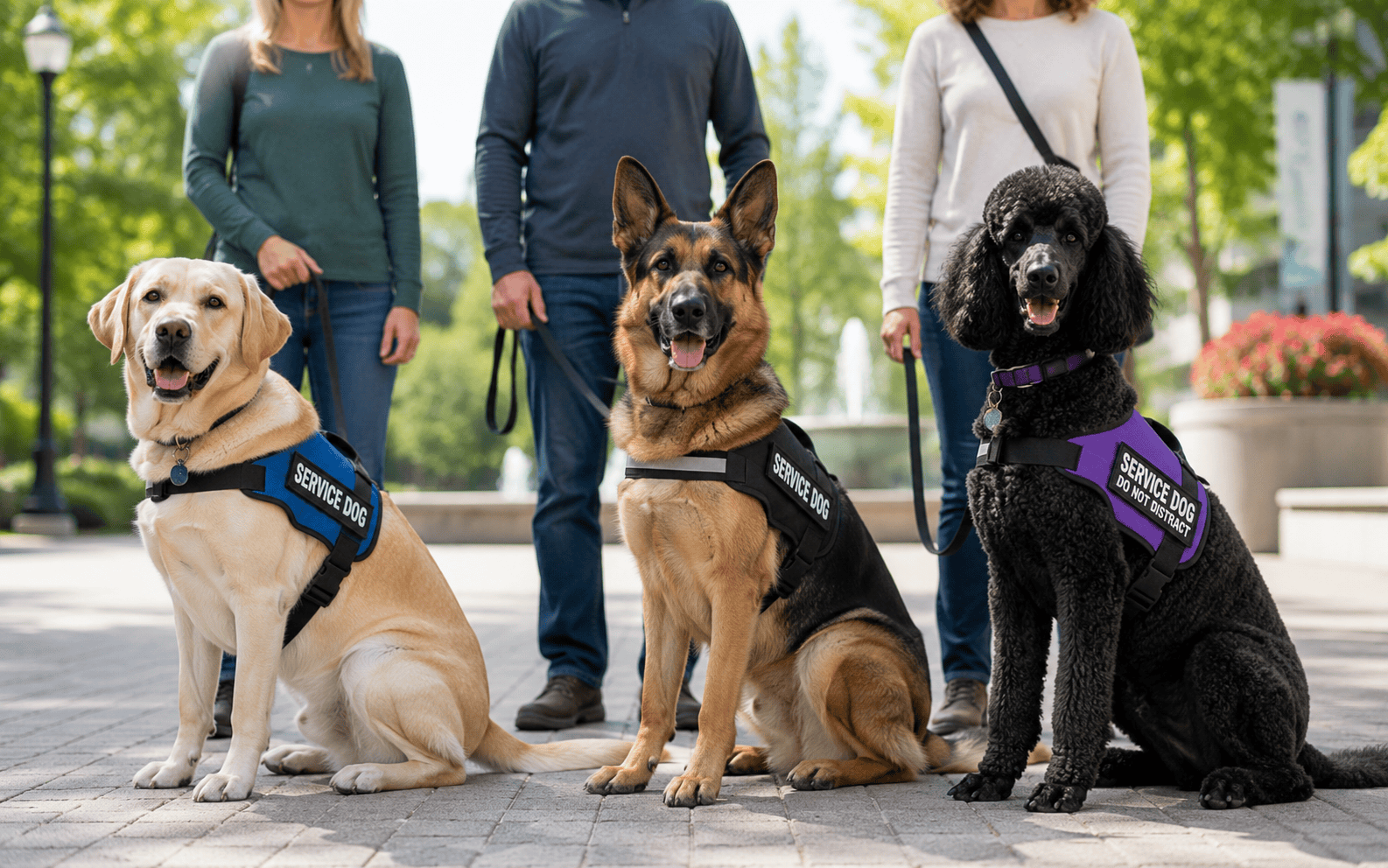
Service dogs change lives. The right breed can mean the difference between a person with a disability gaining independence or continuing to struggle with daily tasks that others take for granted. Not every dog is cut out for this demanding work, and choosing the wrong breed wastes years of training time and thousands of dollars. The best service dog breeds share a specific cluster of traits: calm temperament under pressure, strong work drive, high intelligence, and a willingness to stay focused in unpredictable environments.
Key Takeaways
- The best service dog breeds consistently score high in three areas: trainability, temperament stability, and physical capability for the specific task required.
- Labrador Retrievers, Golden Retrievers, and German Shepherds account for the majority of certified service dogs in the United States.
- Task type matters significantly — a psychiatric service dog requires different traits than a mobility assistance or medical alert dog.
- Formal training programs, whether board and train long island or private sessions, dramatically improve success rates compared to self-training alone.
- Breed is just the starting point; individual temperament testing of each dog is essential before committing to a service training path.
- Service dog training in the U.S. is not regulated by a single federal body, but dogs must meet the ADA’s behavioral standards to be recognized in public spaces.
Why Service Dog Breed Selection Matters
Choosing a service dog is not the same as choosing a family pet. Service dogs work an average of 8 to 10 years, often in high-stress public environments including hospitals, airports, grocery stores, and schools. A dog that can’t handle loud noises, unpredictable crowds, or long hours of focused attention will wash out of a program, sometimes after two or more years of expensive training.
According to Canine Companions, one of the largest service dog organizations in the United States, roughly 50% of dogs that begin formal service training don’t graduate. That statistic alone underscores how critical early breed and temperament selection really is.
The K9 Mania Dog Training classifies service dogs under a broad umbrella, but the tasks they perform vary widely. Mobility assistance dogs help people with physical disabilities with balance, retrieving dropped objects, and opening doors. Medical alert dogs detect seizures, diabetic episodes, or allergen exposure. Psychiatric service dogs support veterans with PTSD, individuals with severe anxiety disorders, and people living with autism, and each of these tasks demands a slightly different physical and behavioral profile in the dog.
The Top Breeds for Service Dog Work
Labrador Retriever
The Labrador Retriever is the most widely used service dog breed in the United States, and for good reason. Labs combine exceptional trainability, a gentle mouth, low aggression, and an almost-unshakeable desire to please. They perform well across nearly every category of service work, from guide dogs for the visually impaired to diabetic alert dogs and mobility assistance roles.
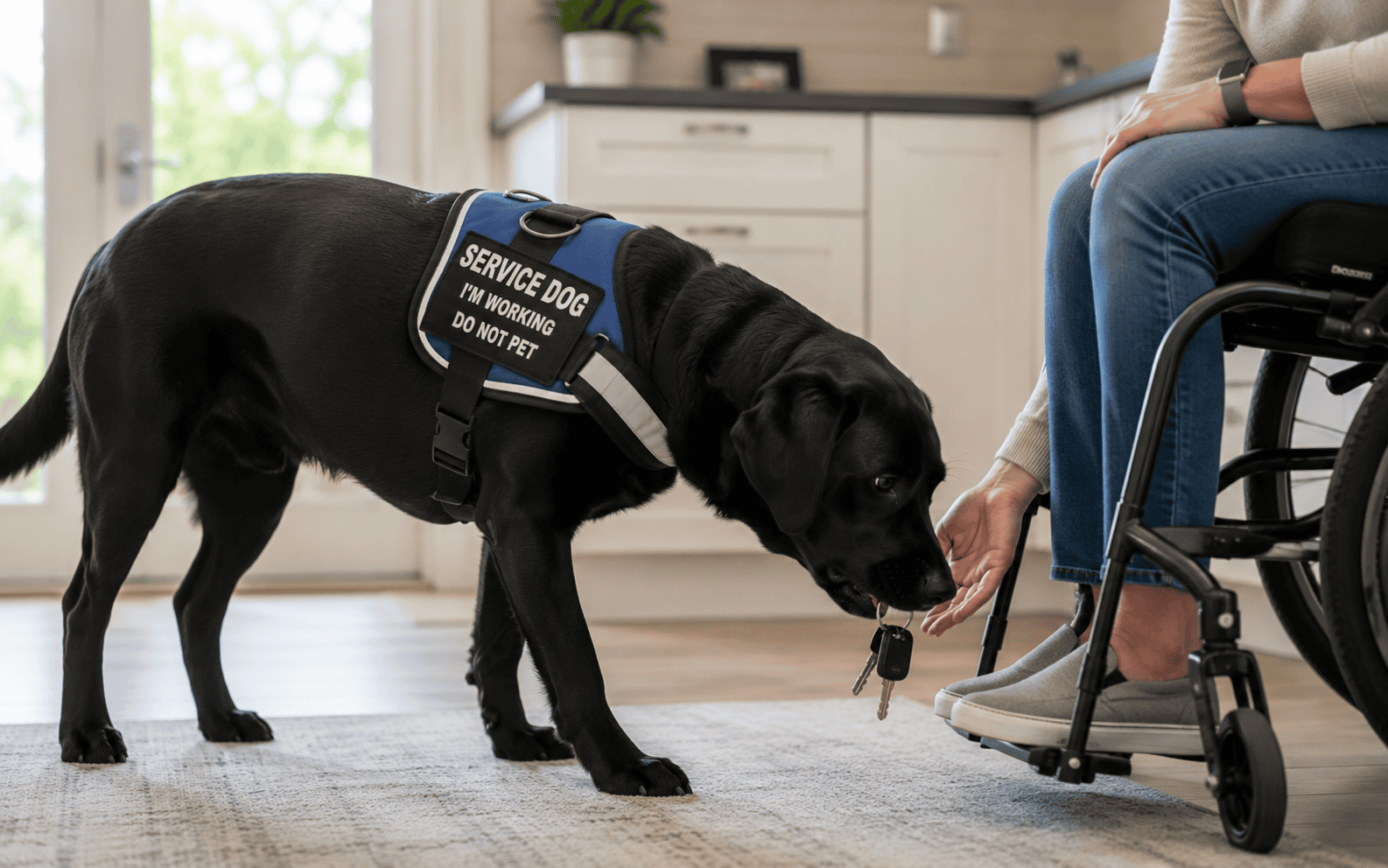
Labs typically weigh between 55 and 80 lbs, making them large enough to provide physical support without being too large for apartment living or travel. If you want a deeper look at getting the most from this breed’s natural abilities, reviewing guidance on how to train a labrador retriever is a smart first step before committing to a full service training program.
Golden Retriever
Golden Retrievers run a close second to Labs across most service categories. Their patient, affectionate nature makes them particularly effective as psychiatric service dogs and autism support dogs. They tend to be highly attuned to human emotional states, which is a critical quality for dogs working with individuals who experience emotional dysregulation.
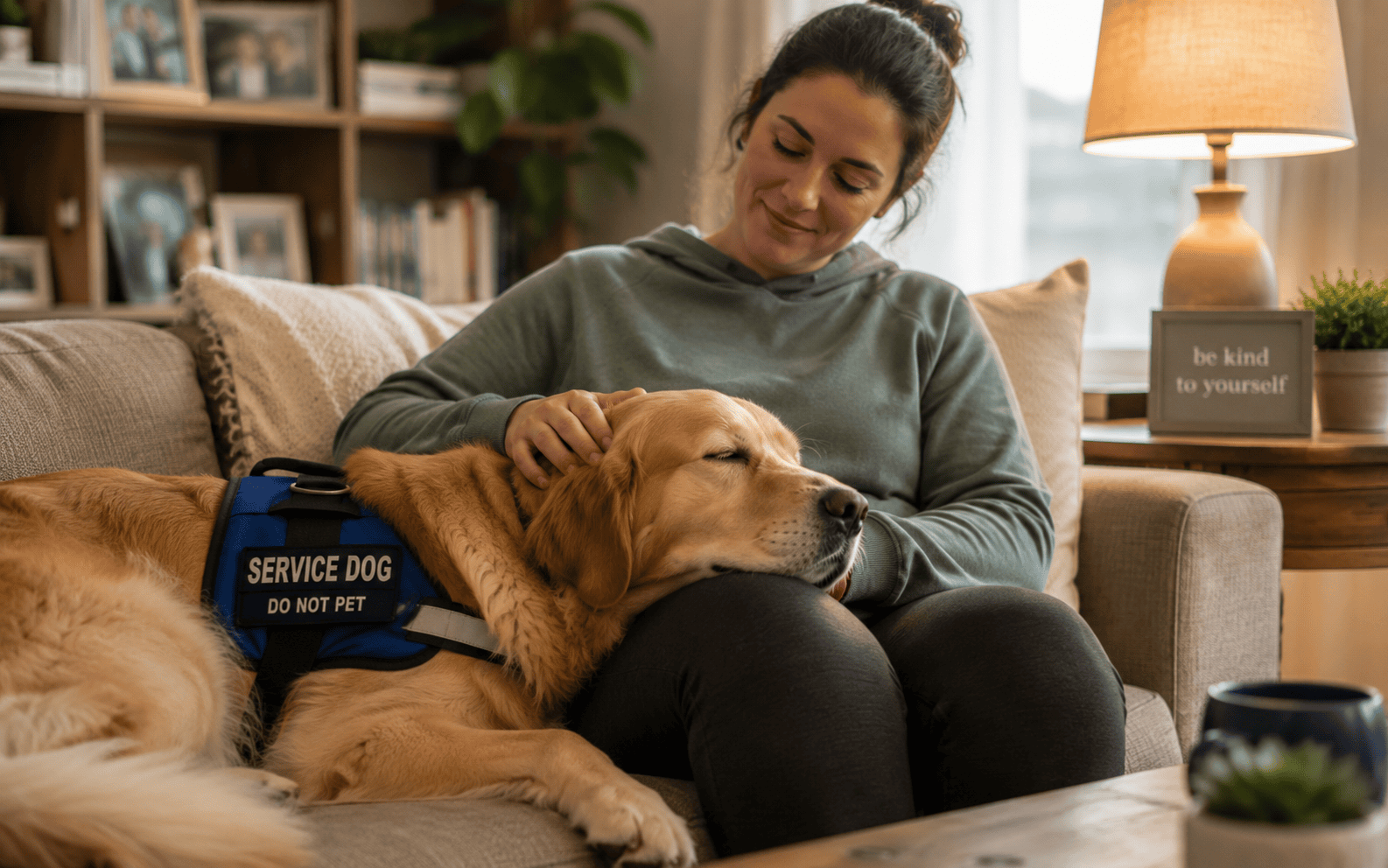
Goldens weigh between 55 and 75 lbs and have a natural retrieving instinct that makes task training faster. The main drawback is grooming: their long coats require regular maintenance, which is a practical consideration for handlers who may have limited mobility.
German Shepherd
German Shepherds are the breed of choice for psychiatric service dog work, PTSD support for veterans, and personal protection service roles. They are highly intelligent, physically strong, and extremely loyal to a single handler, which makes them ideal for one-person service roles.
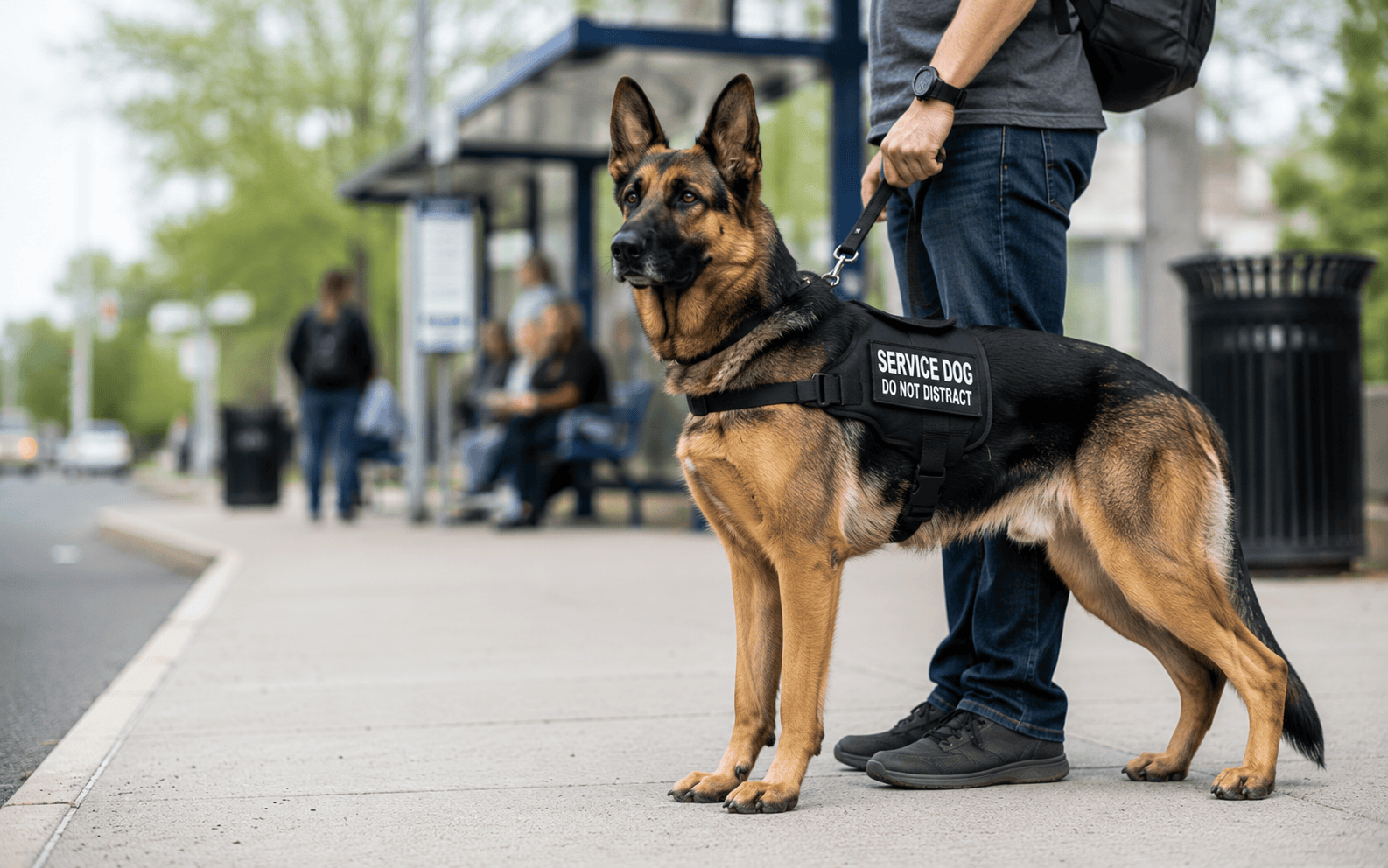
The key challenge with German Shepherds is that their intelligence cuts both ways. Without structured, consistent training, they can develop problematic behaviors. They are not the best choice for handlers who are new to dog ownership or who cannot commit to rigorous ongoing training.
Standard Poodle
The Standard Poodle is an underrated option that deserves serious consideration, particularly for handlers with allergies. Their low-shedding, hypoallergenic coat is a major practical advantage. Poodles rank among the most trainable dog breeds in the world and consistently score near the top in obedience trials.
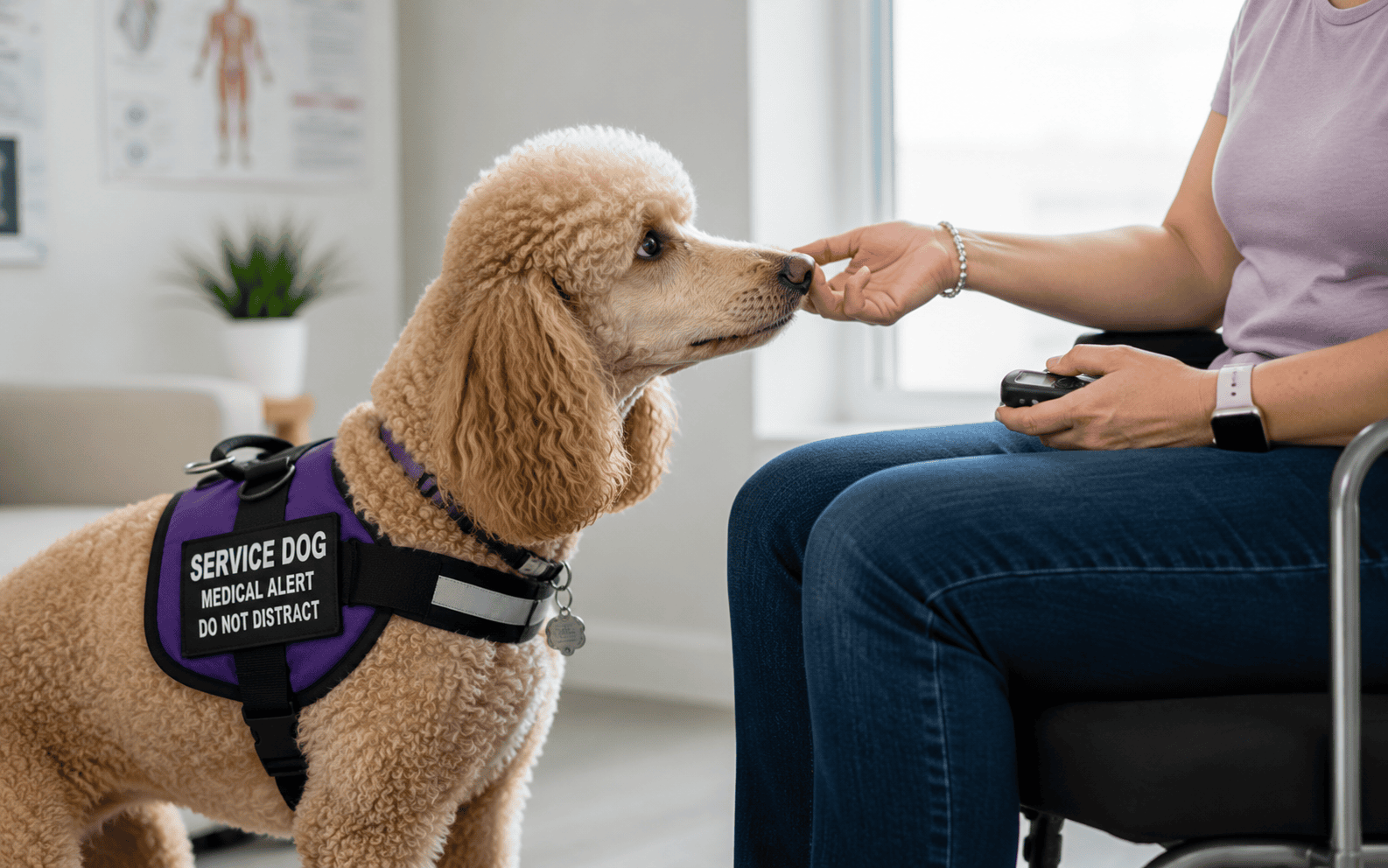
Standard Poodles are used extensively as diabetic alert dogs and psychiatric service dogs. They are also well-suited to medical alert tasks because of their sensitivity to scent changes and their calm, focused behavior in clinical settings.
Border Collie
Border Collies bring extraordinary intelligence and focus to service work, but they come with a significant caveat: they need a job. A Border Collie without enough mental stimulation becomes destructive and anxious. For the right handler, particularly someone who can provide constant engagement and activity, a Border Collie can be an outstanding service dog for tasks requiring precision and advanced command chains.
Boxer and Doberman Pinscher
These breeds are less common but increasingly used for psychiatric service dog work, specifically for individuals with PTSD or severe anxiety. Both breeds form deep bonds with their handlers and are naturally alert without being reactive, a balance that makes them effective for personal safety roles. Their size and physical presence also provides a deterrent effect that some handlers find therapeutically valuable.
Matching Breed to Task: A Practical Comparison
| Breed | Best For | Weight | Trainability | Allergy-Friendly |
| Labrador Retriever | Mobility, guide, medical alert | 55-80 lbs | Very High | No |
| Golden Retriever | Psychiatric, autism support | 55-75 lbs | Very High | No |
| German Shepherd | PTSD, psychiatric, personal protection | 65-90 lbs | Very High | No |
| Standard Poodle | Medical alert, psychiatric, allergy-friendly | 45-70 lbs | Exceptional | Yes |
| Border Collie | Advanced task work, precision commands | 30-55 lbs | Exceptional | No |
| Boxer | Psychiatric, PTSD, personal safety | 60-80 lbs | High | No |
What Makes a Dog Actually Ready for Service Work
Breed gives you a statistical head start, but it doesn’t guarantee anything. Individual temperament testing matters as much as bloodline. Organizations like K9 Mania Dog Training put candidate dogs through extensive behavioral assessments before committing to training, evaluating reactions to sudden sounds, crowded spaces, and stressful handling scenarios.
For dogs entering private training pipelines rather than large nonprofit programs, structured obedience is the essential foundation. Before any specialized task training begins, a dog must have rock-solid responses to basic commands: sit, stay, down, heel, and recall in distracting environments. If you’re building that foundation, working through a structured obedience dog training program gives you measurable benchmarks to hit before advancing to task-specific work.
The socialization window between 8 and 16 weeks is critical. Dogs that are exposed to diverse environments, people, sounds, and surfaces during this period develop the neurological flexibility to handle the demands of public access work later in life. Missing this window creates gaps that are difficult and sometimes impossible to close through training alone.
These foundational commands are especially important for dogs progressing toward public-access work. Learn what is involved in training a dog for service work and how temperament affects long-term success.
Training Pathways That Actually Work
Once you’ve identified the right breed and confirmed a strong individual temperament, the training pathway you choose determines the outcome more than almost anything else. There are three main routes most handlers in the United States take.
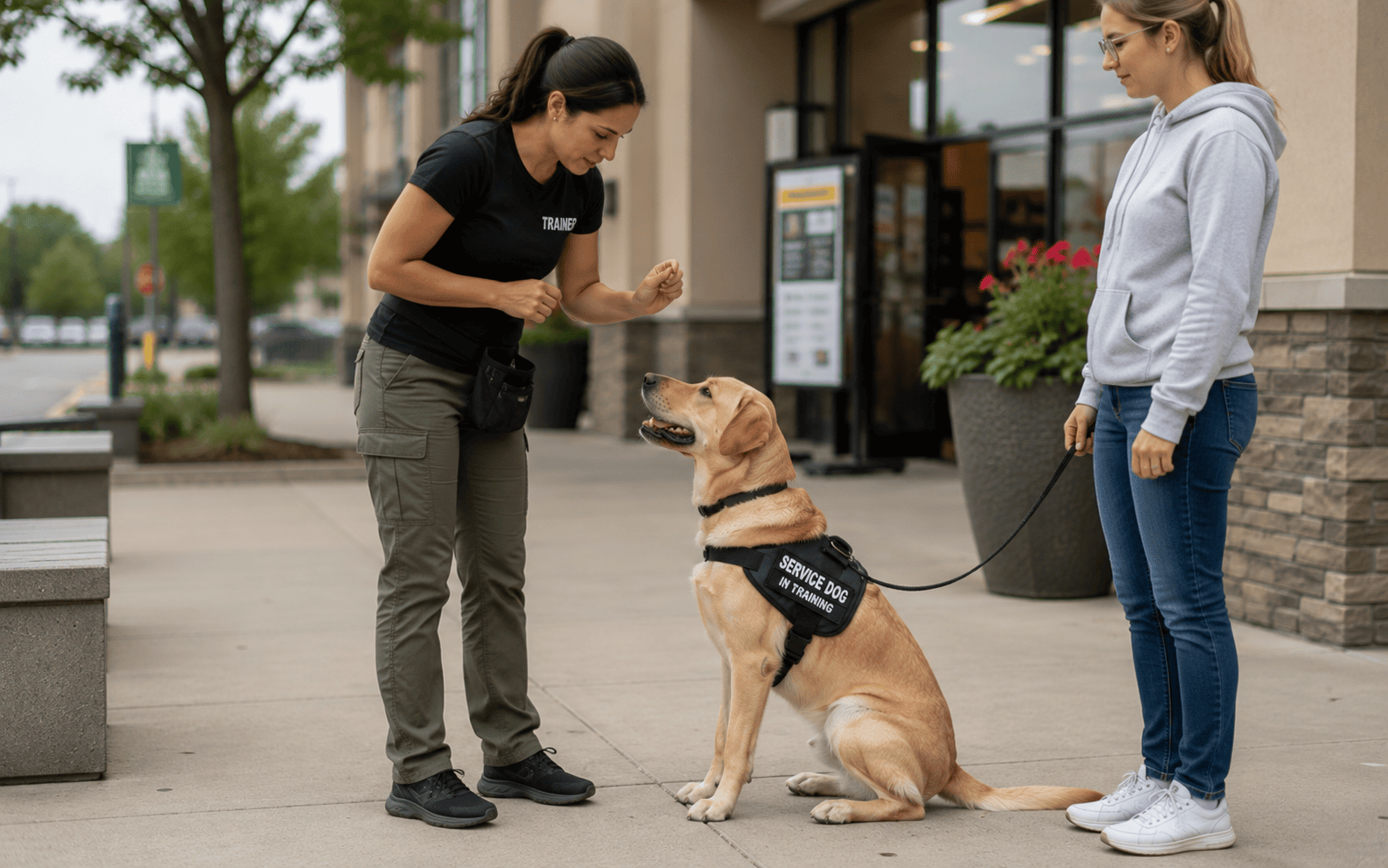
Nonprofit organization programs: Organizations handle everything from puppy raising to public access certification. Wait times can run 2 to 3 years, and the dogs are typically provided at no cost to the recipient. The trade-off is less control over breed, dog selection, and timeline.
Owner-trained with professional support: This path gives you more control but requires serious commitment. Working with a qualified trainer who understands service dog standards is non-negotiable here. For handlers on Long Island, options like in home dog training long island allow a trainer to work with your dog in the real environment where it will actually be working, which is a significant advantage over controlled training facilities.
Board and train programs: For handlers who want intensive, accelerated training under professional supervision, board and train programs immerse the dog in structured learning full-time. This approach works well for building the foundation skills and early task behaviors that service work requires.
Regardless of the pathway, ongoing training is not optional. Service dogs need regular reinforcement sessions throughout their working lives. Partnering with a private dog training long island professional ensures you have access to expert guidance as your dog’s training advances and as new challenges arise. Selecting a suitable breed is only the beginning. Our guide to how to train a service dog explains the complete progression from foundation obedience to public-access and task-specific training.
Things to Know
- The ADA does not require service dogs to be professionally trained or certified, but the dog must be trained to perform a specific task related to a disability.
- Self-training a service dog is legal in the U.S., but success rates are significantly lower without professional guidance.
- Emotional support animals (ESAs) are not the same as service dogs and do not have the same public access rights under federal law.
- Task training typically begins around 6 months of age, after the foundation of obedience is firmly established.
- The average total cost of training a service dog in the United States ranges from $15,000 to $50,000 depending on task complexity and training method.
- Some homeowners insurance policies in the U.S. restrict certain breeds even when they are certified service animals, which is worth verifying before selecting a breed.
Start Your Service Dog Training Journey With K9 Mania
Choosing the right breed is only the first decision. If your dog is showing the right temperament and you’re serious about developing real service-level skills, having an experienced professional in your corner changes everything.
K9 Mania Dog Training works with handlers across Long Island and surrounding areas who are building capable, reliable dogs for service, support, and everyday life. Whether your dog needs a foundation in obedience, specialized task training, or behavioral work to address reactivity or anxiety, K9 Mania has a program designed to fit where you are right now.
Available programs include Board and Train, Private Dog Training, Puppy Training, Obedience Training, and Behavior Modification. Each is tailored to the individual dog and handler, not a one-size-fits-all approach. Services are available throughout Long Island and surrounding areas.
Contact K9 Mania Dog Training today to talk through your dog’s background, your goals, and which program will put you on the fastest path to a trained, reliable service dog.
You May Also want to Read
How to Train a Dog to Ride in a Car
What Is Trigger Stacking in Dogs
Frequently Asked Questions
What is the most common breed used as a service dog in the United States?
The Labrador Retriever is the most commonly used service dog breed in the U.S.
Labs are used by major organizations including Guide Dogs of America and Canine Companions because of their trainability, stable temperament, and physical versatility. Their cooperative nature makes them effective across nearly every service category.
Can any dog become a service dog regardless of breed?
Technically yes, but most mixed breeds and smaller dogs wash out before completing certification.
The ADA does not restrict service dog work to specific breeds. However, the physical and behavioral demands of service work mean that certain breeds succeed at dramatically higher rates. Small dogs rarely meet the physical requirements for mobility assistance work.
How long does it take to fully train a service dog?
Most service dogs require 1.5 to 2 years of training before they are ready for full public access certification.
The timeline depends on task complexity, the dog’s individual learning pace, and the consistency of training. Foundation obedience typically takes 6 to 9 months before task-specific training begins.
Is a psychiatric service dog different from an emotional support animal?
Yes, they are legally and functionally different categories under U.S. law.
A psychiatric service dog is trained to perform specific tasks that mitigate a handler’s disability, such as interrupting panic attacks or creating physical space in crowds. An emotional support animal provides comfort through presence alone and does not have the same ADA public access rights.
What should I look for when temperament testing a puppy for service dog work?
Look for calm curiosity, recovery from startling stimuli, and willingness to engage with unfamiliar people.
A puppy that freezes, cowers, or becomes aggressive when exposed to new sounds or handling is not a good candidate for service work. Breeders who conduct early neurological stimulation (ENS) protocols typically produce puppies with the resilience needed for service training success.
The Bottom Line on Best Service Dog Breeds
The best service dog breeds share a predictable set of qualities: intelligence, trainability, stable temperament, and physical suitability for the task at hand. Labrador Retrievers, Golden Retrievers, German Shepherds, and Standard Poodles dominate the field because they consistently deliver on all of those measures. But breed alone does not make a service dog. Individual temperament, early socialization, and structured professional training are what actually produce a dog capable of changing someone’s life.
If you are ready to move forward, start by identifying the task your dog will perform, confirm your dog’s temperament through formal assessment, and connect with a qualified trainer who can map out a realistic timeline and program. The investment is significant, but the outcome, a dog that gives its handler genuine independence and safety, is worth every hour of work.