Training a German Shepherd starts with establishing clear leadership through consistency, positive reinforcement, and early socialization. These intelligent, loyal dogs respond best to structured training sessions that combine mental stimulation with physical exercise, making them highly trainable when you use the right approach.
German Shepherds are among the most trainable dog breeds, but their intelligence and energy require dedicated training from day one. Whether you’re raising a puppy or working with an adult dog, understanding how to train a German Shepherd properly will help you build a strong partnership and prevent behavior issues down the road.
In this guide, we’ll walk you through the essential training methods, common mistakes to avoid, and proven techniques that get real results with this remarkable breed.
Understanding the German Shepherd Temperament
Before you can successfully train your German Shepherd, you need to understand what makes this breed tick. Their temperament drives their training needs and shapes how they respond to different methods.
Why German Shepherds Need Strong Leadership
German Shepherds were bred to work alongside handlers, which means they naturally look for someone to follow. Without clear leadership, they’ll try to make decisions on their own, and that’s when behavior problems start.
These dogs are incredibly smart and can sense hesitation or inconsistency in a heartbeat. Strong leadership doesn’t mean being harsh or aggressive. It means being calm, consistent, and fair. You set the rules, enforce them every time, and reward good behavior immediately.
When your German Shepherd sees you as a confident leader, training becomes much easier. They’ll naturally want to please you and follow your guidance.
Intelligence and Energy Levels
German Shepherds rank among the most intelligent dog breeds, which makes them fast learners. They can pick up new commands in just a few repetitions when you use effective dog training methods.
But that intelligence comes with high energy and a need for mental stimulation. A bored German Shepherd will find ways to entertain themselves, usually by chewing furniture, digging holes, or barking excessively.
You’ll need to provide both physical exercise and mental challenges every single day. Their energy level means short, focused training sessions work better than long, repetitive drills. Keep sessions to 10-15 minutes, multiple times per day, to maintain their attention and enthusiasm.
Essential Training Foundations
Building a solid training foundation sets you up for long-term success with your German Shepherd. These basics apply whether you’re starting with a puppy or an adult dog.
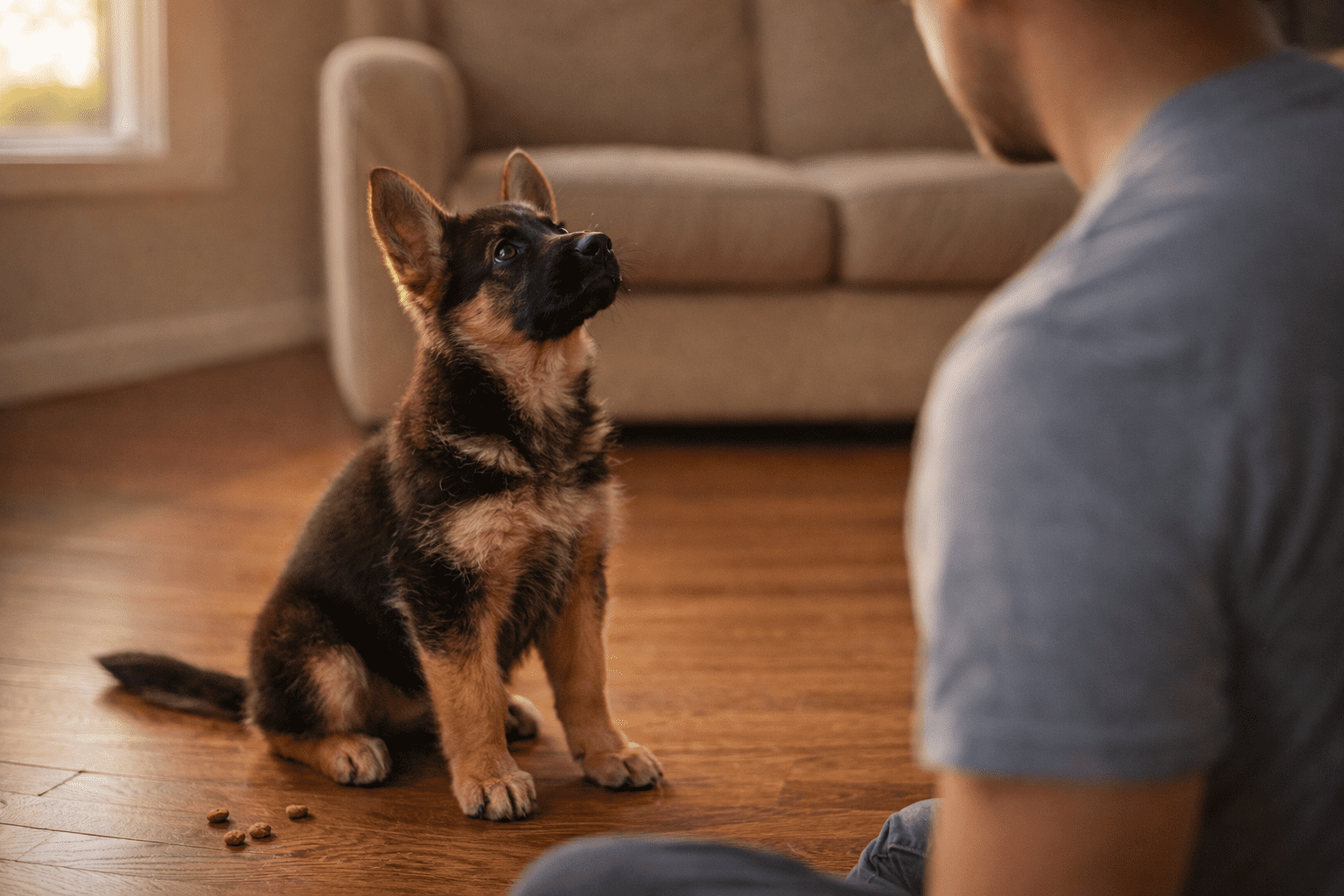
Starting Early: Puppy Training Timeline
The best time to start training your German Shepherd is the day you bring them home. Even at 8 weeks old, puppies can begin learning basic commands and house rules.
8-12 weeks: Focus on socialization, potty training, and simple commands like “sit” and “come.” This is the critical socialization window when puppies should meet different people, animals, and environments.
3-6 months: Add more commands like “down,” “stay,” and leash walking. Start working on impulse control and basic manners. You can learn more about teaching specific commands like how to train a dog to lay down.
6-12 months: Continue reinforcing all commands while your puppy goes through adolescence. This phase can be challenging as they test boundaries, so consistency matters more than ever.
Starting early makes everything easier, but it’s never too late to begin training an older German Shepherd. Adult dogs can absolutely learn new behaviors with patience and the right approach.
Creating a Consistent Training Schedule
Consistency is the secret ingredient in how to train a German Shepherd effectively. Your dog needs to know what to expect and when to expect it.
Set specific times for training sessions throughout the day. Morning, midday, and evening sessions work well for most schedules. Even 5-10 minutes three times daily beats one long session once a week.
Everyone in your household needs to use the same commands and rules. If one person lets the dog jump on them while another person corrects it, you’re sending mixed signals that confuse your dog.
Keep your routine predictable. Feed at the same times, walk at similar times, and maintain consistent house rules. German Shepherds feel more secure when they know the daily structure.
Core Training Methods That Work
Different training approaches work for different dogs and owners. Here’s what actually gets results with German Shepherds.
Positive Reinforcement Techniques
Positive reinforcement means rewarding behaviors you want to see more of. This method works incredibly well with German Shepherds because they’re eager to please and motivated by praise.
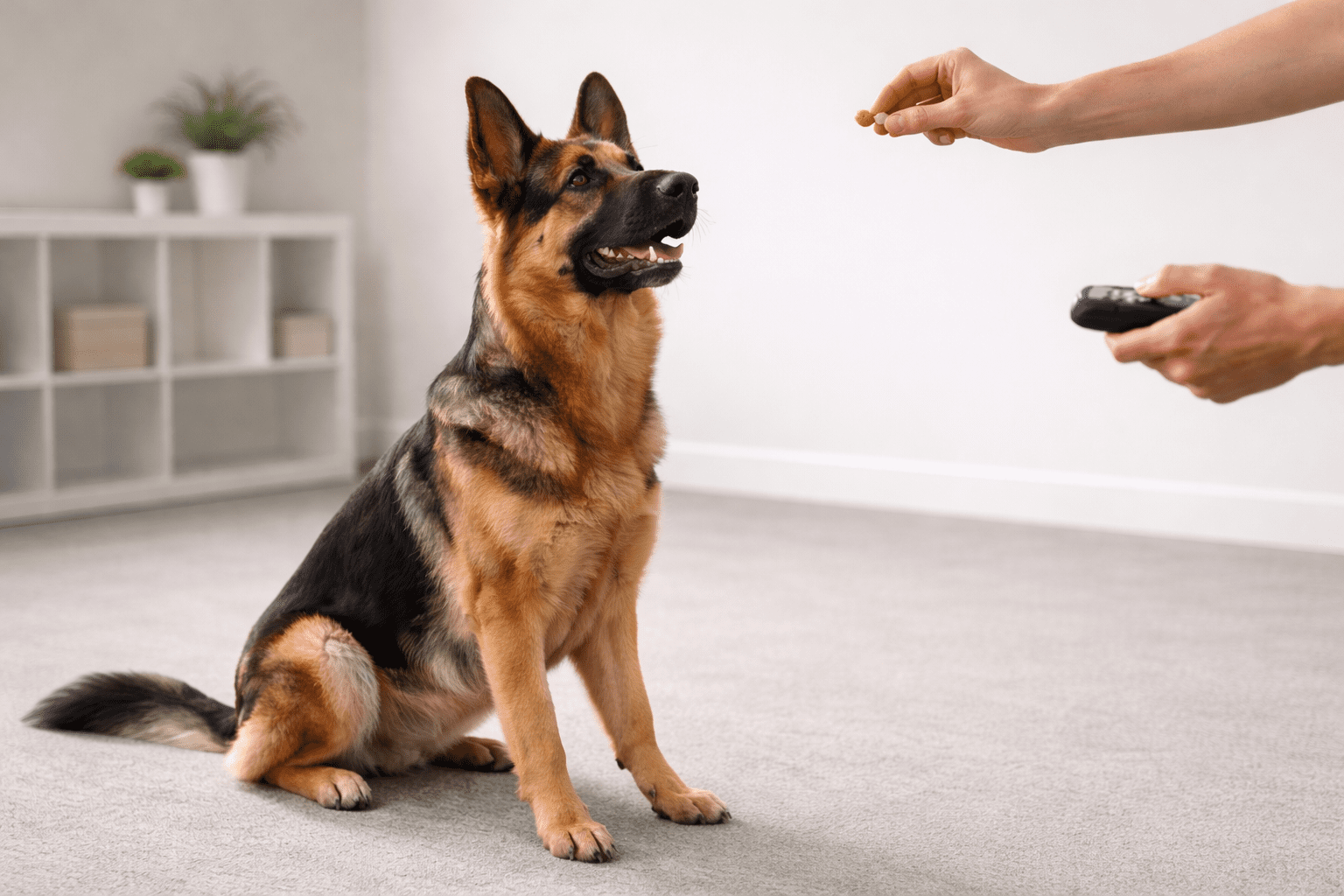
When your dog does something right, immediately reward them with treats, praise, or play. The timing matters. Rewards need to happen within 1-2 seconds of the behavior for your dog to make the connection.
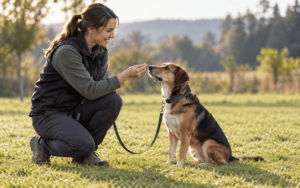
Start with high-value treats that your dog absolutely loves. Small, soft treats work best because your dog can eat them quickly and get back to training.
As your dog masters a command, gradually reduce treat frequency while maintaining verbal praise. Eventually, they’ll respond reliably to just your approval.
Marker Training and Clicker Methods
Marker training uses a specific sound (like a clicker) to mark the exact moment your dog does something right. This precise communication helps dogs learn faster.
Click the instant your dog performs the desired behavior, then immediately follow with a treat. The click tells your dog “yes, that’s exactly what I want,” and the treat reinforces it.
You can use a clicker device or a verbal marker like “yes” or “good.” The key is consistency. Always use the same sound, and always follow it with a reward at first.
This method is especially useful for teaching complex behaviors because you can mark small steps toward the final goal. If you’re considering private dog training, ask if they incorporate marker methods.
Teaching Basic Commands
Every German Shepherd needs to master these fundamental commands. They form the building blocks for all future training and help keep your dog safe.
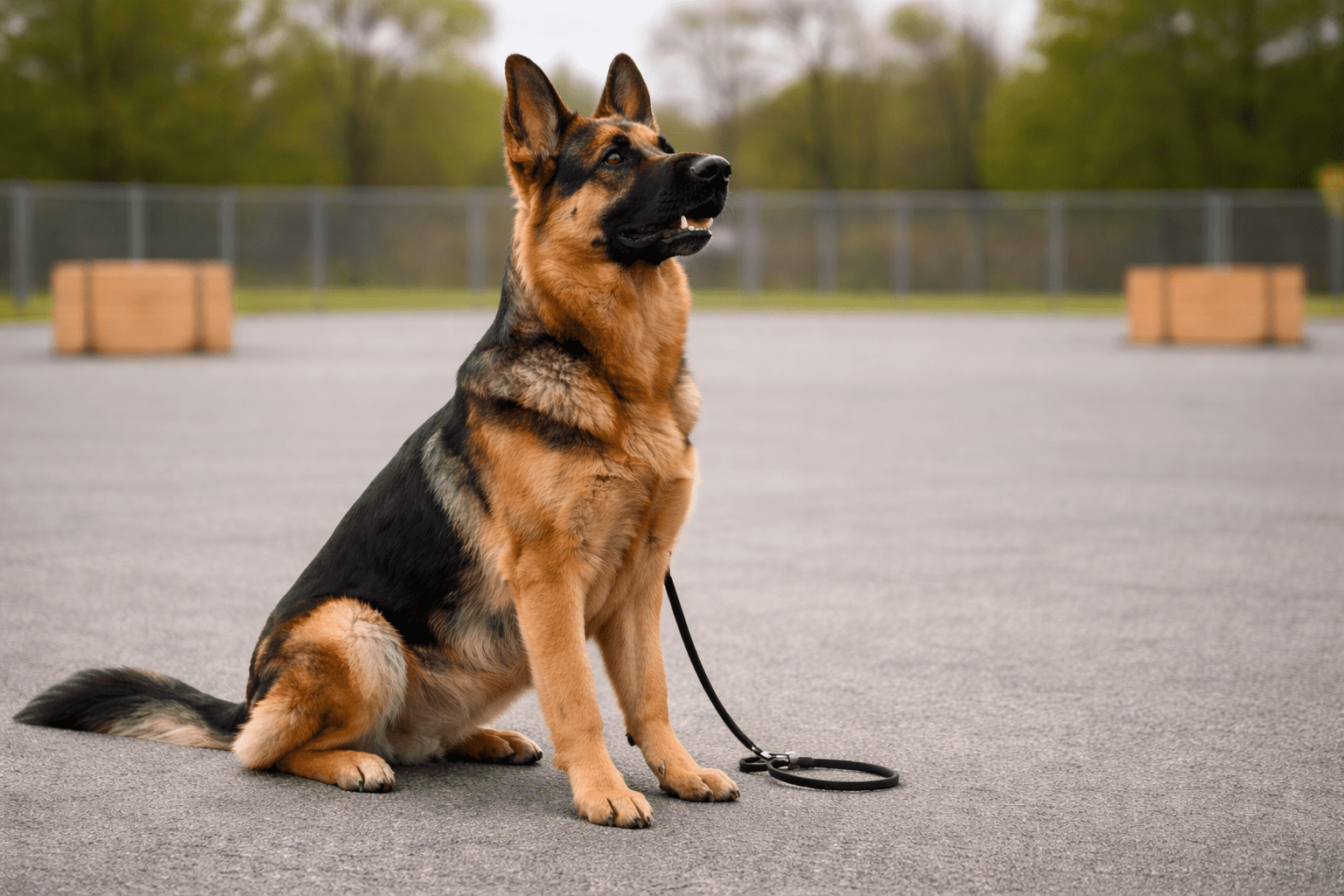
Sit, Stay, Down, and Come
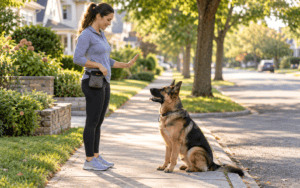
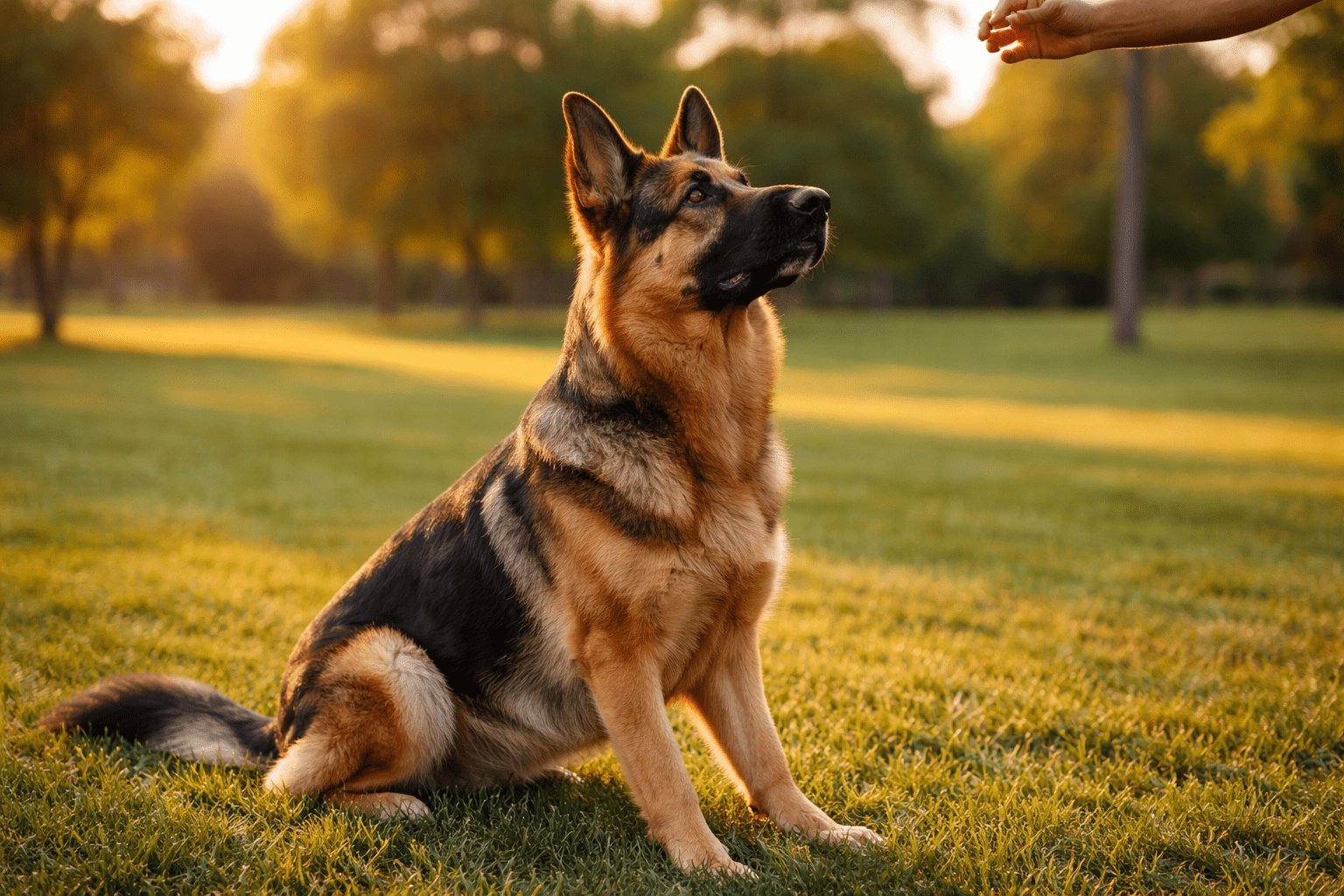
Sit: Hold a treat above your dog’s nose and slowly move it back over their head. As they look up, their bottom naturally drops. Mark and reward the instant they sit.
Stay: Start with your dog in a sit position. Hold your hand up like a stop sign and say “stay.” Take one step back. If they stay, mark and reward. Gradually increase distance and duration.
Down: From a sit position, lower a treat to the ground between their front paws. As they follow the treat down, their elbows should touch the floor. Mark and reward.
Come: Start in a distraction-free area. Say your dog’s name followed by “come” in an excited voice. When they move toward you, mark and reward enthusiastically.
Practice these commands in different locations with varying levels of distraction. A dog who sits perfectly at home might struggle at the park without enough practice.
Leash Training and Walking Manners
German Shepherds are strong dogs, so teaching proper leash manners early prevents years of being pulled around.
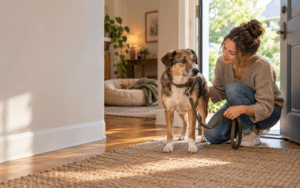
Start in your home or yard with minimal distractions. Hold the leash loosely and walk forward. The second your dog pulls, stop moving. Don’t yank or pull back, just become a tree.
Wait for your dog to look at you or create slack in the leash. The moment they do, mark, reward, and start walking again. Repeat this every single time they pull.
Use a verbal cue like “let’s go” or “with me” when you want your dog to walk nicely beside you. Reward frequently when they’re in the correct position.
If pulling becomes a habit, consider working with a professional through dog obedience training to address it before it gets worse.
Socialization and Behavior Management
Proper socialization creates a confident, well-adjusted German Shepherd who can handle various situations without fear or aggression.
Introducing Your German Shepherd to New Experiences
Expose your German Shepherd to different people, animals, sounds, and environments during their critical socialization period (8-16 weeks). The experiences they have now shape their personality for life.
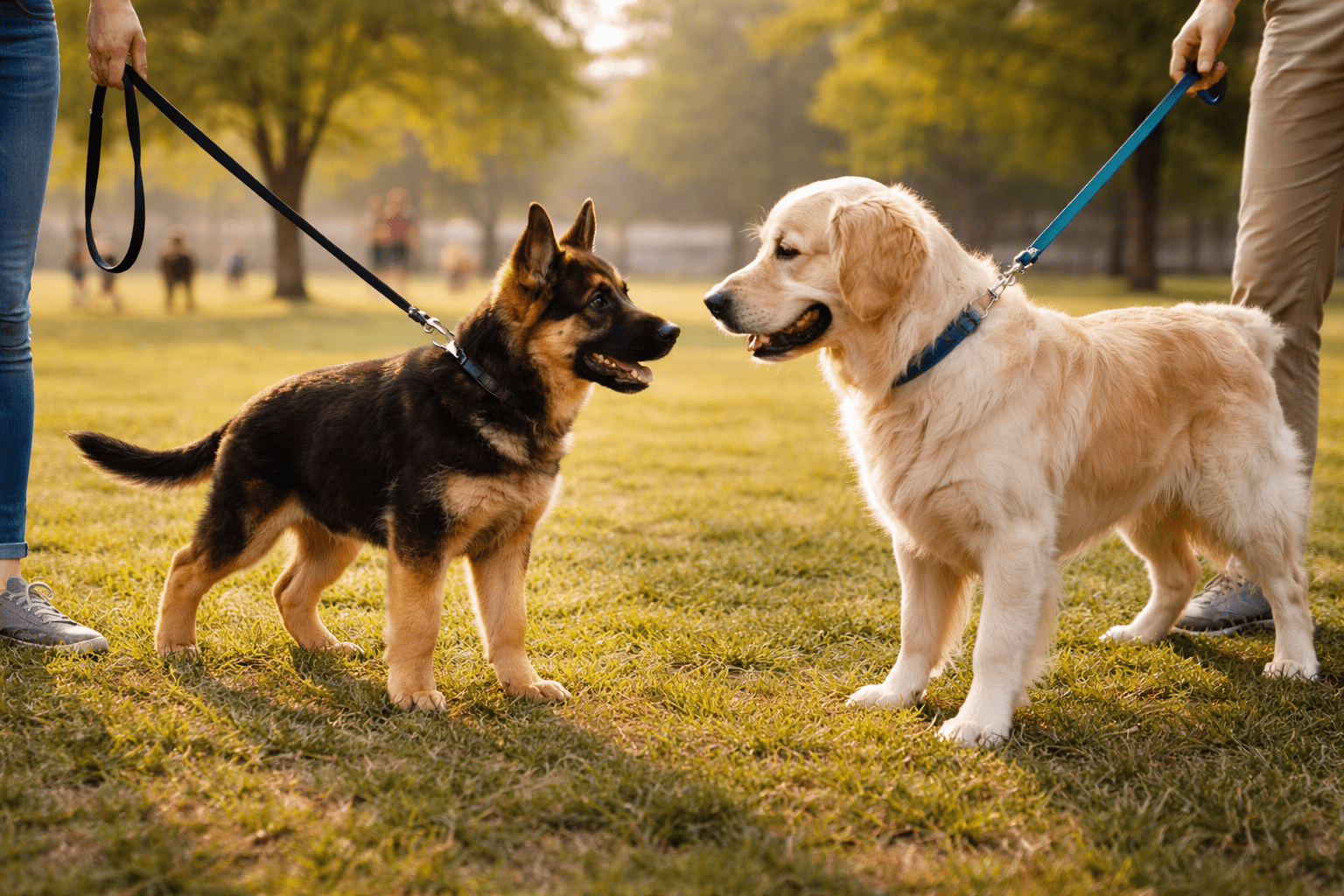
Make every new experience positive. Bring treats and keep interactions brief and upbeat. If your dog seems nervous, don’t force it. Let them observe from a distance until they’re ready to approach.
Key things to expose your German Shepherd to:
- Different types of people (kids, elderly, people in uniforms)
- Other dogs and animals
- Various surfaces (grass, concrete, gravel, stairs)
- Common sounds (vacuum, doorbell, car horns)
- Different environments (vet office, pet store, outdoor spaces)
Continue socialization throughout your dog’s first year and beyond. Adult German Shepherds still benefit from positive experiences in new situations.
Managing Territorial and Protective Instincts
German Shepherds naturally want to protect their family and territory. This instinct makes them excellent guard dogs but needs proper guidance to prevent excessive barking or aggression.
Teach your dog the difference between real threats and normal daily activity. When someone approaches your property, acknowledge it calmly (“I see them”) instead of getting excited. This teaches your dog that you’re aware and in control.
Don’t encourage aggressive behavior, even as a puppy. That cute puppy growl can become a serious problem in an 80-pound adult dog.
Set clear boundaries about when barking is acceptable. Allow a few alert barks, then use a command like “enough” or “quiet” to stop the behavior. Reward silence immediately.
Training Comparison: Methods and Approaches
Different training situations call for different approaches. Here’s how various methods compare for German Shepherd training:
| Training Method | Best For | Time Commitment | Difficulty Level | Cost |
| Self-Training at Home | Basic obedience, bonding | Daily 15-30 min sessions | Moderate | Low (supplies only) |
| Private Training Sessions | Specific behavior issues, personalized attention | Weekly 1-hour sessions | Easier with guidance | Medium to High |
| Group Classes | Socialization, basic commands | Weekly 1-hour class + practice | Moderate | Low to Medium |
| Board and Train Programs | Intensive training, serious behavior issues | 2-6 weeks full-time | Easiest for owner | High |
Common Training Challenges and Solutions
Even with the best approach, you’ll face challenges when training a German Shepherd. Here’s how to handle the most common issues.
Addressing Jumping, Nipping, and Excessive Barking
Jumping: German Shepherds jump to greet people because it gets attention. Remove the reward by turning away and ignoring your dog when they jump. Only give attention when all four paws are on the ground.
Nipping: Puppies explore the world with their mouths, but nipping needs to stop early. When your puppy nips, say “ouch” in a high-pitched voice and stop playing immediately. This mimics how littermates teach bite inhibition.
Excessive barking: Identify why your dog is barking. Boredom, fear, and alerting all require different solutions. Make sure your German Shepherd gets enough exercise and mental stimulation. A tired dog is a quiet dog.
For persistent issues, check out our board and train preparation guide to see if intensive training might help.
Dealing with Stubbornness and Teenage Phase
Around 6-18 months, German Shepherds go through adolescence. Just like human teenagers, they’ll test boundaries and “forget” commands they knew perfectly before.
Stay consistent during this phase. Don’t let behaviors slide just because your dog is being difficult. Keep training sessions fun and varied. Boredom leads to stubbornness, so switch up your routine and add new challenges.
If your dog refuses a command they know well, go back to basics. Review easier versions of the command and rebuild from there.
Training Timeline and Expectations
Understanding realistic timelines helps you stay patient and consistent through the training process.
| Training Goal | Puppy (8-16 weeks) | Adolescent (4-12 months) | Adult (1+ years) |
| Basic commands (sit, stay, come) | 2-4 weeks | 1-3 weeks | 2-6 weeks |
| Leash manners | 4-8 weeks | 2-6 weeks | 4-12 weeks |
| House training | 4-6 months | Usually complete | 2-8 weeks if retraining |
| Impulse control | Ongoing | 3-6 months | 2-4 months |
| Advanced commands | Not recommended | 2-4 months | 1-3 months |
These timelines assume consistent daily training. Progress varies based on your dog’s temperament, your experience level, and how much time you dedicate to training.
Why Professional Training Matters
While you can teach basic commands at home, professional training provides benefits you can’t replicate on your own.
When to Consider Board and Train Programs
Board and train programs work best for serious behavior issues like aggression, severe anxiety, or dogs who’ve developed dangerous habits. These intensive programs provide consistent training from experienced professionals who work with your dog multiple times daily.
Board and train isn’t just for problem dogs. It’s also ideal for busy owners who want their German Shepherd professionally trained while they’re at work or traveling.
The key is finding a reputable program that uses positive methods and includes owner education. You’ll need to maintain the training when your dog comes home.
Benefits of Professional Guidance
Professional trainers see patterns you might miss. They can identify why your dog isn’t responding to a particular command and adjust the approach accordingly.
Working with a trainer prevents you from accidentally reinforcing bad behaviors. Small mistakes in timing or technique can undo weeks of progress.
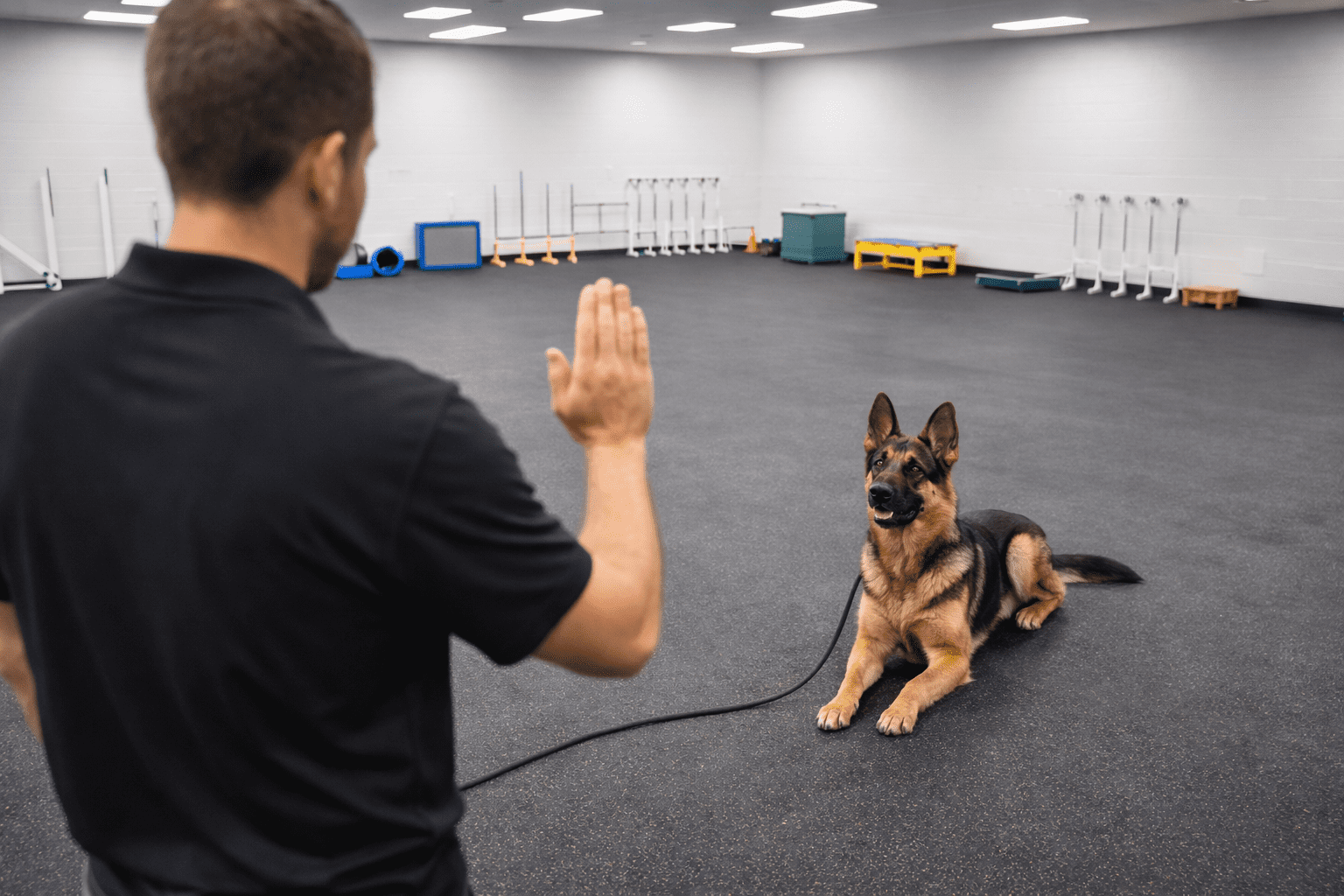
Group classes provide controlled socialization opportunities where your German Shepherd learns to focus on you despite distractions. Private sessions give you one-on-one attention for specific challenges.
Your German Shepherd’s Training Partner on Long Island
Training a German Shepherd takes dedication, but the results are absolutely worth it. When you invest time in proper training, you’ll have a loyal, obedient companion who’s a joy to live with.
If you’re feeling overwhelmed or dealing with challenging behaviors, you don’t have to go it alone. K9 Mania Dog Training is Long Island’s leading board and train Long Island program, specializing in transforming German Shepherds into well-mannered family members. Whether you’re struggling with basic obedience, leash pulling, or more serious behavior issues, our experienced trainers provide the expertise and support you need.
Trust K9 Mania Dog Training to help you build the relationship you’ve always wanted with your German Shepherd.
You May Also Want to Read
- Redirected Aggression in Dogs
- What Is Displacement Behavior in Dogs?
- Why Do Dogs Circle Before Lying Down?
- 10 Most Trainable Dog Breeds That Learn Fast
Frequently Asked Questions
How hard are German Shepherds to train?
German Shepherds are easier to train than most breeds due to their high intelligence and eagerness to please. They learn new commands quickly with consistent leadership, positive reinforcement, and mental stimulation. Without proper guidance, their intelligence can lead to problem behaviors.
What not to do to a German Shepherd?
Never use harsh corrections, yelling, or intimidation with German Shepherds. Avoid isolating them for long periods or using inconsistent rules. Don’t skip socialization or adequate exercise. Never reinforce nervous or aggressive behavior by coddling your dog when they’re acting fearful or protective.
What are common German Shepherd training mistakes?
The biggest mistake is inconsistency in commands and rules across family members. Other errors include starting training too late, insufficient mental stimulation, using wrong motivations, accidentally rewarding bad behaviors with attention, expecting too much too soon, and stopping training after basic commands.
Are girl or boy German Shepherds easier to train?
Training differences between male and female German Shepherds are minimal compared to individual personality. Females mature faster mentally and focus better early on. Males test boundaries more during adolescence. Individual temperament, your consistency, and early socialization matter most when training either gender.
What are the downsides of owning a German Shepherd?
German Shepherds need significant time and energy commitment, requiring one to two hours of daily exercise plus mental stimulation. They shed heavily, can develop separation anxiety, need careful management of protective instincts, and are prone to hip dysplasia and other expensive health issues.
What age is too late to train a German Shepherd?
It’s never too late to train a German Shepherd. Adult dogs learn new behaviors with patience and consistency, though modifying established habits takes longer than teaching puppies. Five-year-old adoptees can learn obedience and manners. Senior dogs benefit from gentle, mentally stimulating training despite physical limitations.