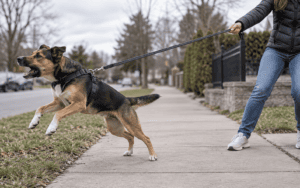

Redirected aggression in dogs occurs when a dog becomes frustrated or aroused by something they can’t reach and redirects that energy onto the nearest target, whether it’s another dog, a person, or even an object. This misdirected response happens in seconds and often catches owners completely off guard.
If you’ve ever seen your normally friendly dog suddenly snap at you or another pet during an exciting or tense moment, you’ve likely witnessed this behavior firsthand. Understanding why it happens and how to prevent it can protect everyone in your household while helping your dog learn better emotional control.
In this guide, we’ll break down what triggers redirected aggression in dogs, how to spot the warning signs, and what steps you can take to manage and prevent these episodes from happening again.
Struggling with aggressive outbursts? Our board and train Long Island program gives dogs the structure and training they need to handle frustration safely.
What Is Redirected Aggression in Dogs
Redirected aggression is a type of impulsive reaction where a dog directs their aggressive response at someone or something other than the original source of their frustration or arousal. The dog gets worked up about one thing but takes it out on whatever’s closest.
This behavior is different from planned or territorial aggression. It’s reactive and happens fast, usually within seconds of the triggering event. The dog doesn’t have time to think through their response.
Why Dogs Redirect Their Aggression
Dogs experience redirected aggression when they’re in a heightened emotional state and can’t access the thing causing that state. Imagine your dog sees a squirrel outside the window but can’t chase it. The frustration builds, and when you reach down to pet them, they snap at your hand instead.
The behavior stems from an overflow of adrenaline and arousal. The dog’s brain is flooded with stress hormones, and they need an outlet. Since they can’t reach the actual trigger, they redirect onto the nearest available target.
Common emotional states that lead to redirection include:
- High excitement or overstimulation
- Fear or anxiety
- Frustration from being blocked or restrained
- Pain or discomfort
The dog isn’t being malicious. They’re simply reacting to an overwhelming internal state without the self-control to manage it appropriately.
Common Scenarios Where Redirected Aggression Happens
You’ll often see this behavior in specific, predictable situations:
During Dog Fights or Near-Misses When two dogs are in a scuffle or about to fight, anyone who steps in to separate them risks getting bitten. The dogs are highly aroused and may redirect onto the person breaking things up, even if that person is their beloved owner.
Window Reactivity A dog barks frantically at a person or dog walking past the window. When you try to pull them away or another pet walks by, they bite whoever’s within reach.
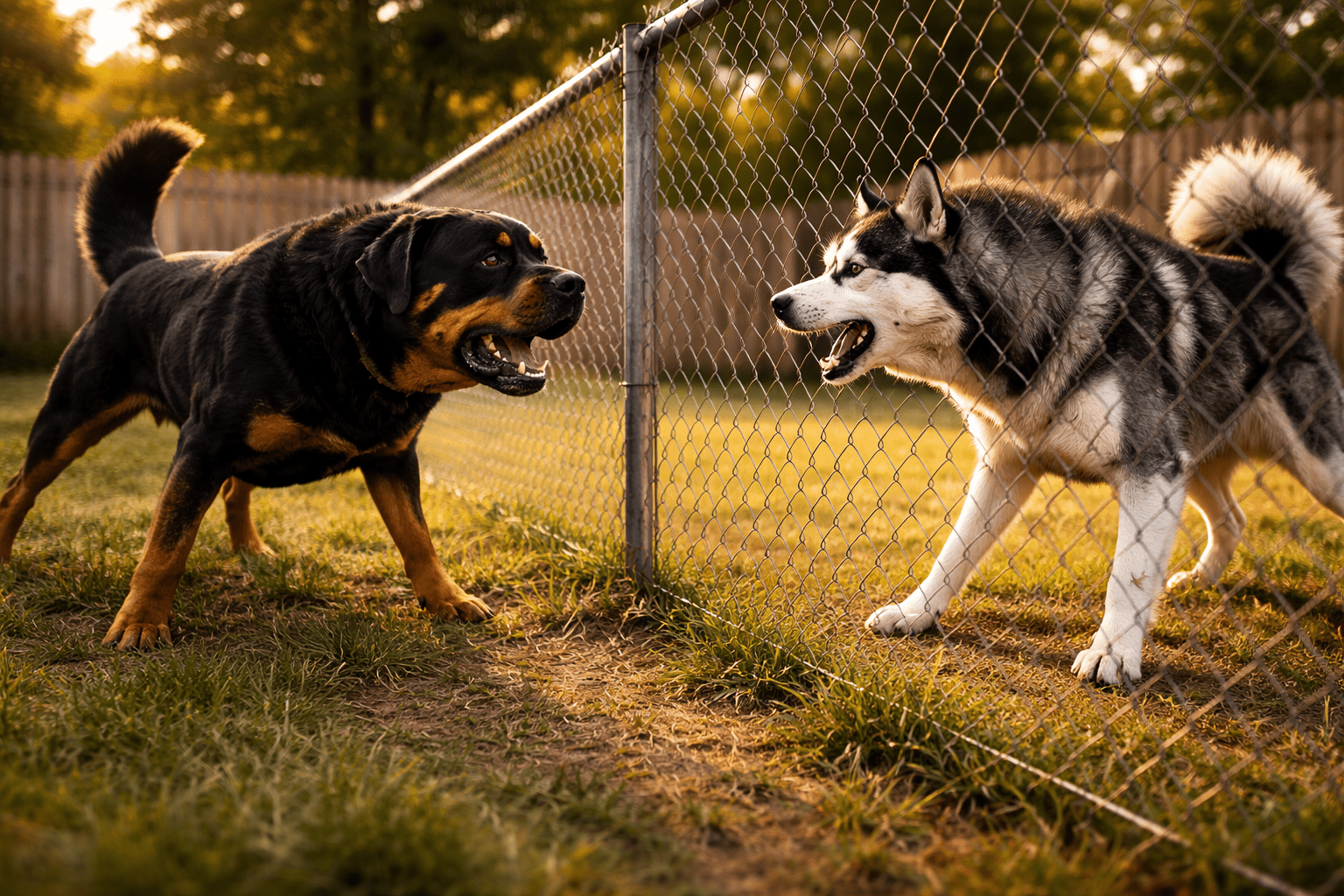
Barrier Frustration Dogs on opposite sides of a fence or gate get worked up barking at each other. When one owner reaches for their leash, the dog redirects and bites them instead. This overlaps with barrier aggression in dogs, where the physical barrier itself increases frustration.
Leash Reactivity Your dog lunges and barks at another dog across the street. You tighten the leash or step closer, and they whip around and bite you. The leash prevents them from reaching their target, so you become the outlet.
Rough Play Escalation Two dogs playing get too rough, and their arousal spikes. When a third dog or person approaches to calm things down, one dog redirects and snaps at them.
Understanding when and why these incidents occur helps you anticipate and prevent them before anyone gets hurt.
Signs Your Dog May Redirect Aggression
Recognizing the warning signs gives you precious seconds to prevent an incident. Dogs usually show physical cues before they redirect, though these signals can happen very quickly.

Body Language and Behavioral Cues
Watch for these telltale signs when your dog is in a heightened state:
| Warning Sign | What It Looks Like | What It Means |
| Stiff Body | Rigid posture, muscles tensed, weight forward | Dog is highly aroused and ready to react |
| Fixed Stare | Hard, unblinking gaze at trigger or potential target | Intense focus, ignoring everything else |
| Raised Hackles | Hair standing up along spine and shoulders | Heightened arousal or agitation |
| Whale Eye | Showing whites of eyes, head turned but eyes tracking | Stress and potential to redirect |
| Rapid Panting | Fast, shallow breathing despite not being hot | Anxiety or adrenaline surge |
| Low Growl or Rumble | Deep sound from chest, may be continuous | Serious warning, very close to action |
These signs often appear together. A dog showing multiple cues simultaneously is at high risk of redirecting if approached or touched.
Differences Between Redirected Aggression and Other Types
Redirected aggression in dogs differs from other forms of aggression in timing, target, and context. Understanding these differences helps you identify what you’re dealing with.
| Aggression Type | Target | Trigger | Timing | Prevention Focus |
| Redirected Aggression | Whoever’s closest, not the actual trigger | Frustration from inaccessible target | Immediate, impulsive response | Manage arousal levels, avoid interference during heightened states |
| Fear Aggression | Perceived threat to the dog | Scary person, object, or situation | Defensive response when cornered | Build confidence, create escape routes, desensitization work |
| Territorial Aggression | Intruders to dog’s space | People or animals entering property | Predictable when boundaries crossed | Establish boundaries, controlled introductions, threshold training |
| Possessive Aggression | Anyone approaching valued item | Someone near food, toy, or sleeping spot | Occurs when resource is threatened | Resource management, trade games, teaching “drop it” |
The key difference with redirected aggression is that the dog isn’t actually upset with the person or animal they bite. They’re upset about something else entirely. This makes it particularly confusing for owners who think, “But he’s never aggressive with me!”
Unlike fear aggression in dogs, where the dog is defending themselves from a perceived threat, redirected aggression happens because the dog can’t reach what they actually want to engage with.
How to Prevent Redirected Aggression in Dogs
Prevention starts with understanding your dog’s triggers and managing their environment to avoid overwhelming situations. You can’t eliminate all frustration from your dog’s life, but you can reduce the intensity and frequency of these episodes.
Environmental Management
Control your dog’s exposure to known triggers whenever possible:
Window Management Block visual access to windows where your dog typically barks at passersby. Use frosted film, curtains, or move furniture away from trigger zones. If your dog can’t see the stimulus, they can’t get worked up about it.
Separate During High Arousal If your dogs play rough or get overly excited together, separate them before things escalate. Don’t wait until they’re already amped up to intervene.
Create Safe Spaces Give your dog a designated area where they can decompress away from triggers. This might be a crate, a quiet room, or a specific bed where they know they can relax without disturbance.
Avoid Trigger Stacking Don’t expose your dog to multiple stressors in quick succession. If they’ve already had a rough morning at the vet, skip the dog park that afternoon. Each trigger adds to their stress bucket until it overflows.
Training and Behavior Modification
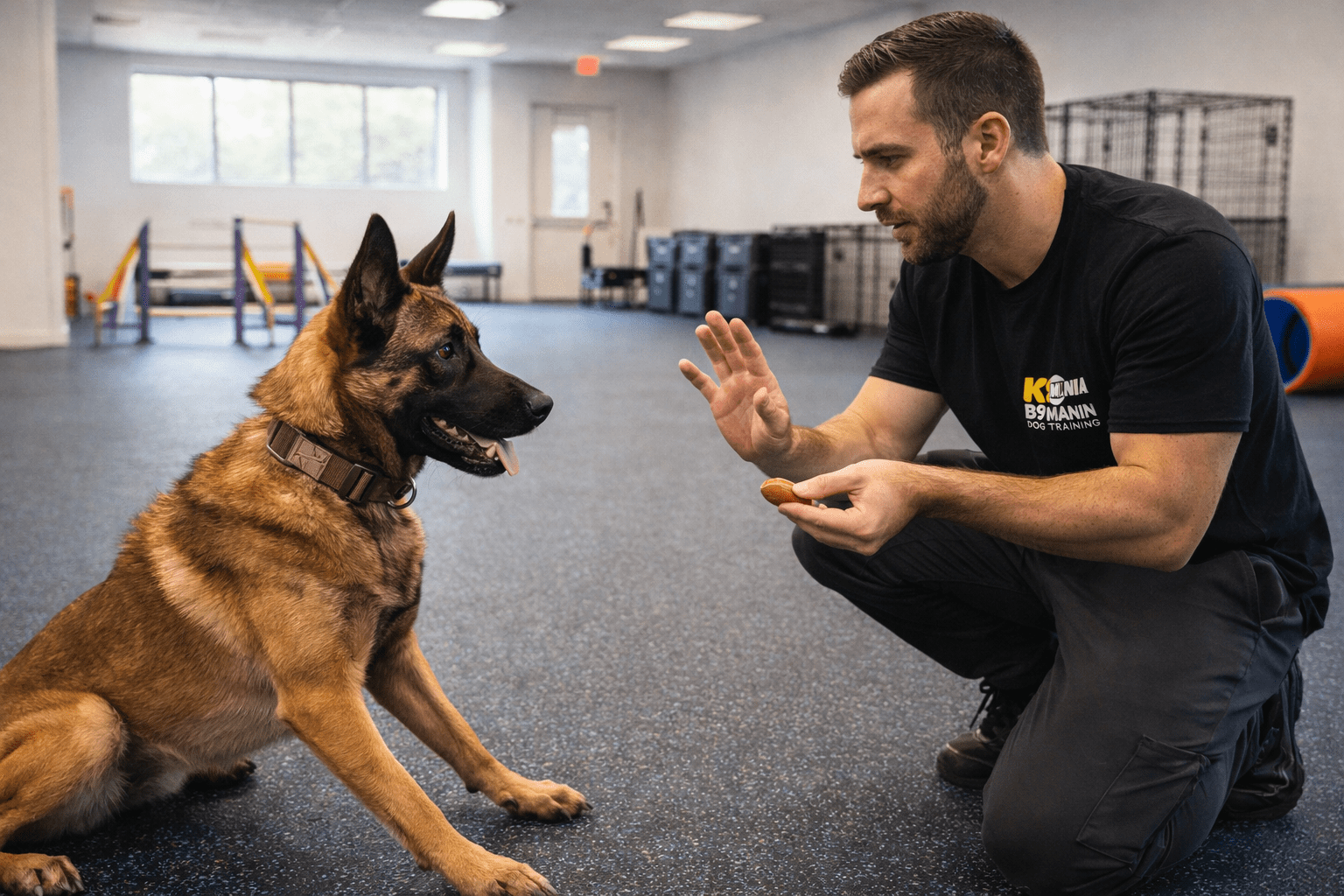
Long-term solutions require teaching your dog better emotional regulation and impulse control. Professional dog obedience training builds the foundation your dog needs to handle frustration without redirecting.
Impulse Control Exercises Practice “wait” at doors, before meals, and during play. These exercises teach your dog to pause and think even when they’re excited. Start easy and gradually increase difficulty as your dog improves.
Desensitization to Triggers Expose your dog to their triggers at a low intensity where they can stay calm. Gradually increase the challenge over weeks or months. For example, if other dogs trigger your dog, start by watching calm dogs from far away and slowly decrease distance as your dog stays relaxed.
“Leave It” and “Look at Me” Commands These cues interrupt fixation on triggers before arousal peaks. When your dog locks onto something, redirect their attention back to you before they hit that critical threshold.
Emergency U-Turn Teach your dog to immediately turn and move away from triggers on cue. This prevents close encounters that could lead to redirection.
Working with a professional through private dog training ensures you’re using the right techniques for your specific situation.
What to Do During a Redirected Aggression Episode
When your dog is already in a heightened state, your priority is preventing injury while avoiding making things worse. Quick thinking and the right response can mean the difference between a close call and a serious bite.
Immediate Safety Steps
Don’t Reach for Your Dog This is the most important rule. When your dog is fixated on something or actively reactive, don’t grab their collar, pet them, or pull them away. This is the exact moment when redirection happens most often.
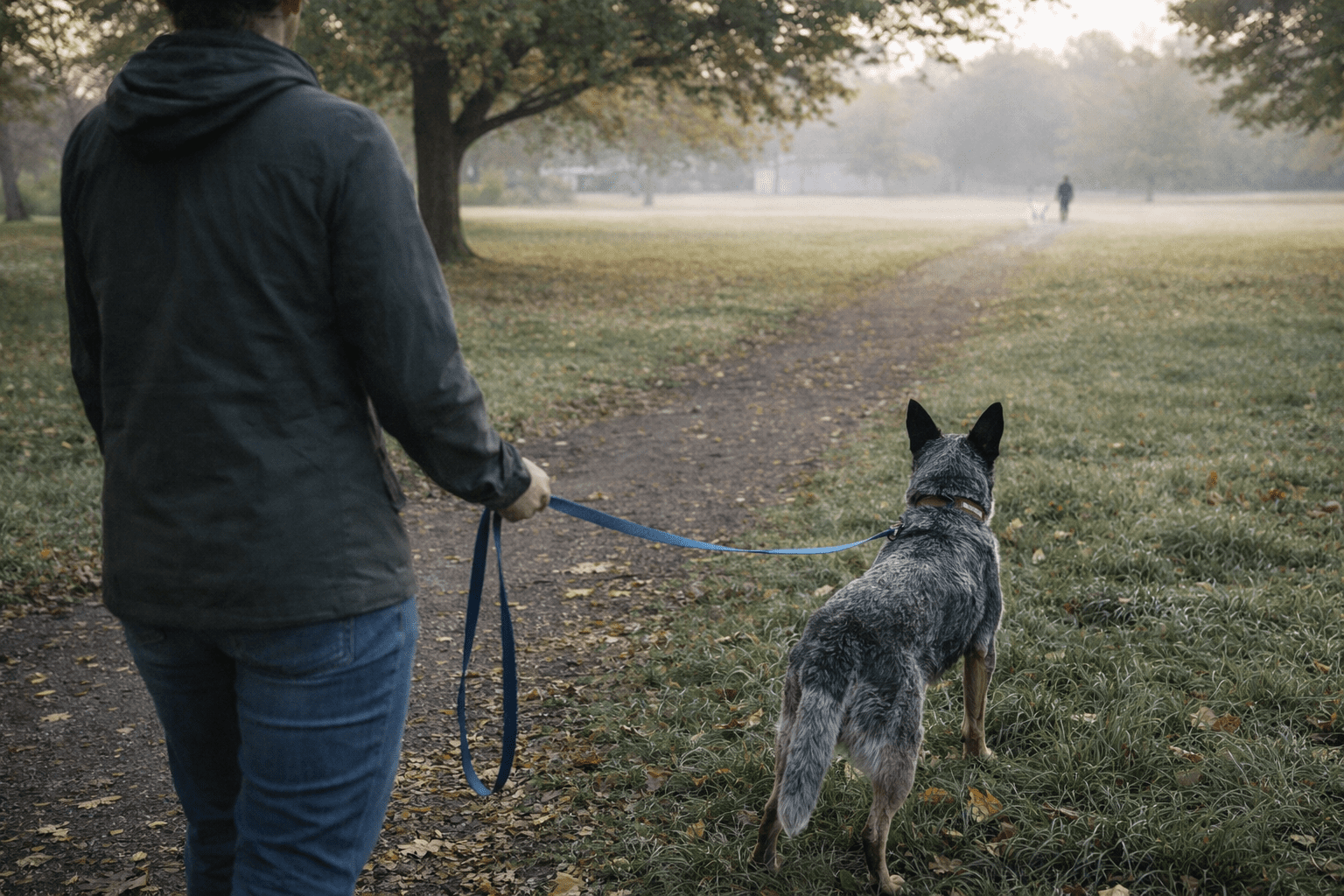
Create Distance Use your voice, treats, or toys to lure your dog away from the trigger without touching them. Toss treats in the opposite direction or use a long line (never grab it while they’re aroused) to guide them away.
Block Visual Access Step between your dog and the trigger if you can do so safely, or use a jacket, towel, or anything handy to block their line of sight. Breaking visual contact often helps reduce arousal.
Stay Calm Yelling or acting panicked will increase your dog’s arousal level. Speak in a calm, neutral tone even if you’re stressed inside. Your energy affects your dog’s state.
What Not to Do
These common responses make things worse:
- Don’t physically punish your dog after redirection. They won’t connect the punishment to the behavior, and you’ll damage trust.
- Don’t stick your hands in the middle of dogs who are fighting or about to fight. Use water, loud noises, or barriers instead.
- Don’t corner your dog when they’re worked up. Always leave them an escape route.
- Don’t assume it won’t happen again. One episode means your dog is capable of redirection, and you need to take prevention seriously.
If redirected aggression is part of a larger pattern of reactivity or aggression, programs like board and train for aggressive dogs provide intensive, structured help that addresses the root causes.
When to Seek Professional Help
Some cases of redirected aggression in dogs require expert intervention. If your dog’s episodes are frequent, severe, or unpredictable, professional help isn’t optional, it’s necessary for everyone’s safety.

Red Flags That Require Professional Training
Contact a professional if you notice:
- Multiple incidents within a short time frame
- Bites that break skin or cause injury
- Unpredictable triggers that you can’t identify or avoid
- Aggression escalating in intensity or frequency
- Multiple dogs in the household showing aggression toward each other
- Fear for safety of family members, especially children
Professional trainers can assess your dog’s behavior, identify patterns you might miss, and create a customized plan. They’ll teach you proper management techniques and help you rebuild your dog’s emotional control.
A qualified trainer will also rule out medical issues that could contribute to irritability or aggression, such as pain, thyroid problems, or neurological conditions.
Keeping Everyone Safe: Your Next Steps with Redirected Aggression
Managing redirected aggression in dogs takes awareness, patience, and often professional guidance. The good news is that with proper training and management, most dogs can learn better impulse control and emotional regulation.
Start by identifying your dog’s specific triggers and warning signs. Modify their environment to reduce exposure to situations that overwhelm them. Build their skills through consistent training that teaches them to handle frustration appropriately.
Most importantly, don’t wait until someone gets hurt to take action. Redirected aggression can happen to any dog under the right circumstances, but dogs who show this behavior repeatedly need structured help to change their response patterns.
At K9 Mania Dog Training, we’re the leading board and train provider on Long Island with extensive experience helping dogs overcome aggressive behaviors. Whether your dog struggles with redirected aggression, reactivity, or other behavioral challenges, our proven training programs give them the skills they need to succeed. Visit our website to learn how we can help your dog become calmer, more confident, and safer for everyone.
You May Also Want to Read
- Barrier Aggression in Dogs
- Rescue Dog Adjusting to New Home
- Do Dogs Hold Grudges
- How to Stop Resource Guarding in Dogs
Frequently Asked Questions
What is redirected aggression in dogs?
Redirected aggression in dogs is when a dog becomes aroused or frustrated by something they cannot reach and instead directs their aggressive response at whoever or whatever is nearest to them. This might be another pet, a family member, or even an object. The dog is not actually angry at the target they bite or snap at, they are reacting to an entirely different trigger they cannot access. This behavior happens quickly and impulsively during moments of high arousal or frustration.
What are the 4 types of redirecting behaviors?
The four main types of redirecting behaviors in dogs include displacement activities like sniffing the ground during stress, redirected aggression where frustration targets the nearest being, attention-seeking redirection such as mouthing or pawing when ignored, and self-soothing redirection like excessive licking or chewing when anxious. Each type represents how dogs channel overwhelming emotions into different outlets. Displacement behaviors are usually harmless stress relief, while redirected aggression poses safety risks and requires immediate attention and management.
What causes redirected aggression?
Redirected aggression is caused by a combination of high arousal and blocked access to the original trigger. When a dog experiences intense frustration, excitement, fear, or anger but cannot reach the source of those feelings, the emotional energy needs an outlet. The dog’s brain is flooded with stress hormones like adrenaline and cortisol, reducing their impulse control and decision-making ability. Common causes include barrier frustration from fences or leashes, interruption during fights, window reactivity to passersby, and being restrained when trying to reach something exciting or threatening.
How to fix dog redirected aggression?
Fixing redirected aggression requires managing your dog’s environment to avoid overwhelming triggers, teaching impulse control through obedience training, and building emotional regulation skills through desensitization work. Start by identifying what triggers your dog’s episodes and reducing exposure to those situations. Train strong foundation commands like leave it, wait, and emergency recalls. Work with a professional trainer to create a behavior modification plan that addresses your dog’s specific triggers. Consistency and patience are essential, as changing emotional responses takes time and repetition.
How to deal with redirected aggression?
Deal with redirected aggression by preventing high-arousal situations when possible and never touching your dog when they are fixated or reactive. During an episode, create distance between your dog and the trigger without grabbing or restraining them. Use verbal cues, treats tossed away from the trigger, or barriers to block visual access. After the incident, give your dog time to decompress in a quiet space before attempting any interaction. Keep detailed notes on triggers, warning signs, and circumstances to identify patterns and prevent future incidents.
Is redirected aggression common in dogs?
Redirected aggression is relatively common in dogs, especially those with reactive tendencies, high prey drive, or difficulty managing frustration. Any dog can display this behavior under the right circumstances, particularly during fights, barrier frustration, or intense arousal. Some breeds with strong guarding instincts or high energy levels may be more prone to redirected responses. However, frequency varies widely between individual dogs based on their temperament, training history, socialization, and stress management skills. Dogs with existing aggression issues are more likely to redirect than well-balanced dogs with strong impulse control.