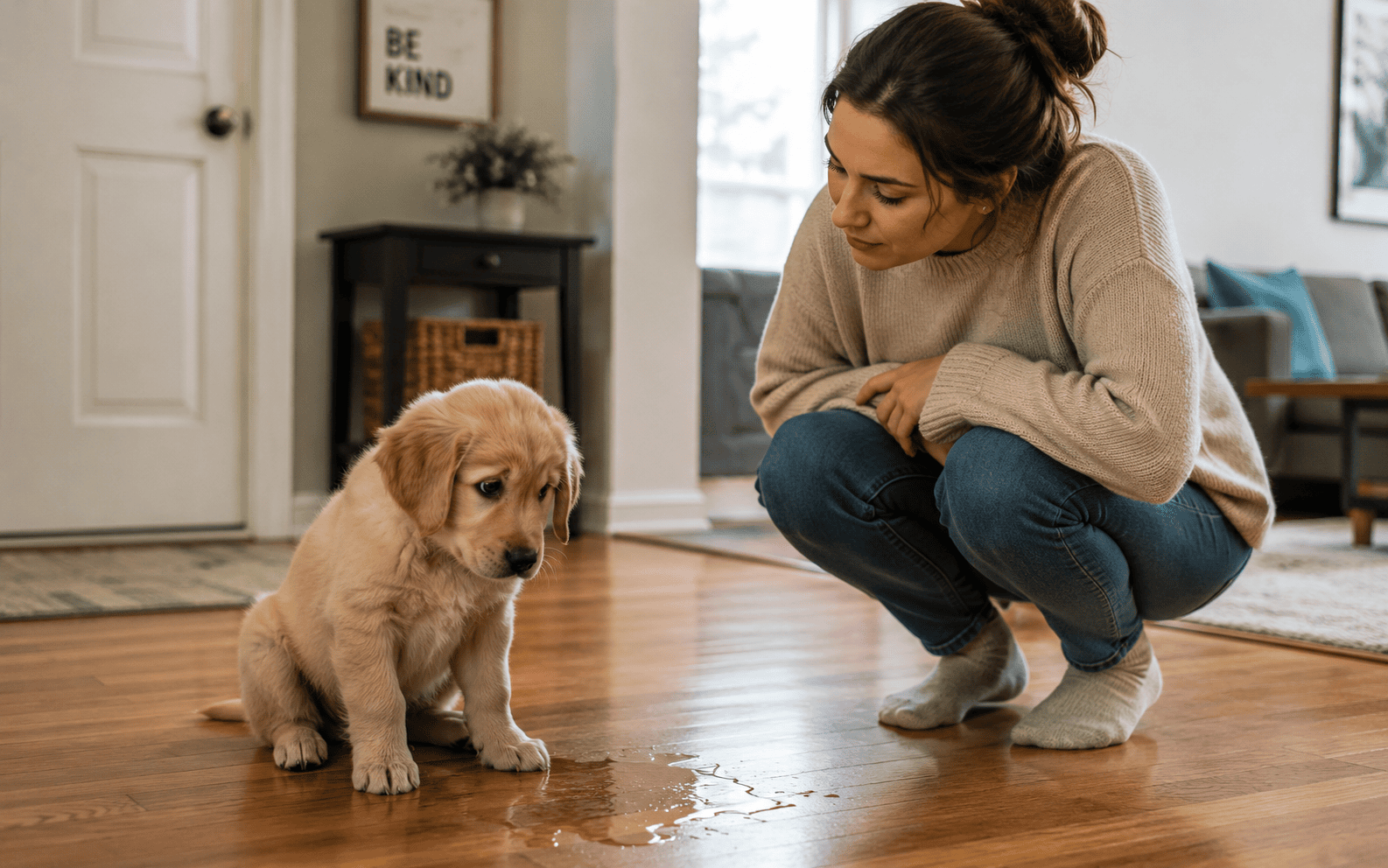
Puppy potty training regression is when a previously house-trained puppy starts having accidents again after weeks or months of success. It is one of the most frustrating setbacks new dog owners face, but it is also completely normal and, in most cases, fully reversible with the right approach.
Key Takeaways
- Regression is common between 4 and 8 months of age and is often triggered by hormonal changes, new environments, or routine disruptions.
- Going back to basics, including tighter supervision and a strict schedule, is the fastest way to reset your puppy’s potty habits.
- Medical issues like UTIs can mimic behavioral regression, so a vet visit is always worth considering if accidents appear suddenly.
- Punishment does not work and typically makes regression worse by creating anxiety around elimination.
- Most puppies fully recover from regression within two to four weeks when owners stay consistent.
- If regression is severe or tied to deeper behavioral issues, professional training support can make a significant difference.
Why Puppies Suddenly Start Having Accidents Again
Understanding the “why” behind regression is the first step toward fixing it. Accidents don’t just happen randomly. There is almost always an identifiable cause, and pinpointing it will shape the approach you take to correct the problem.
Developmental Changes and Adolescence
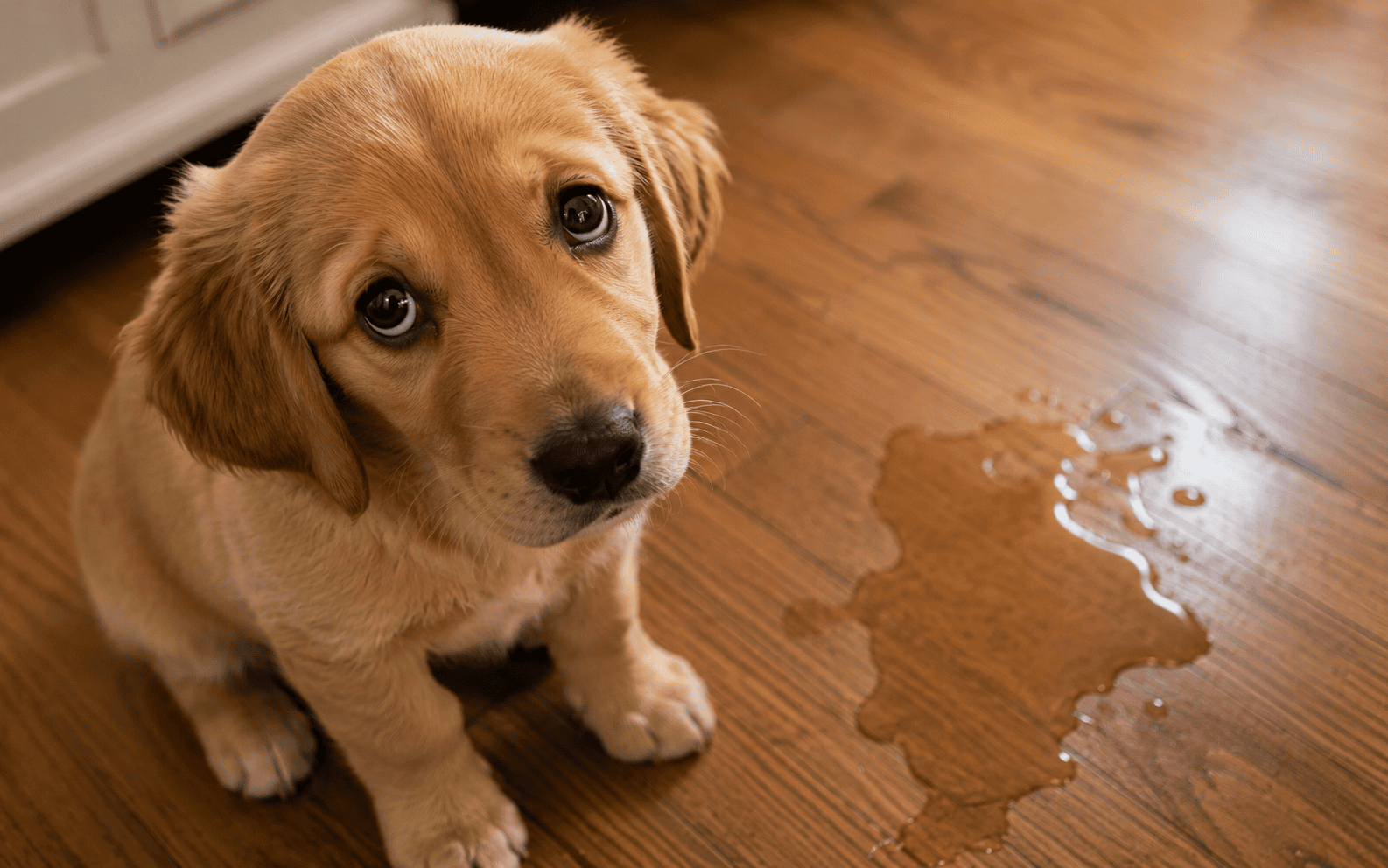
Between the ages of 4 and 8 months, most puppies enter adolescence. This phase brings a flood of hormones that can disrupt almost everything your puppy has learned up to that point, including where to go to the bathroom. The brain is literally rewiring itself during this window, and impulse control, which is the exact skill needed to “hold it,” takes a significant hit.
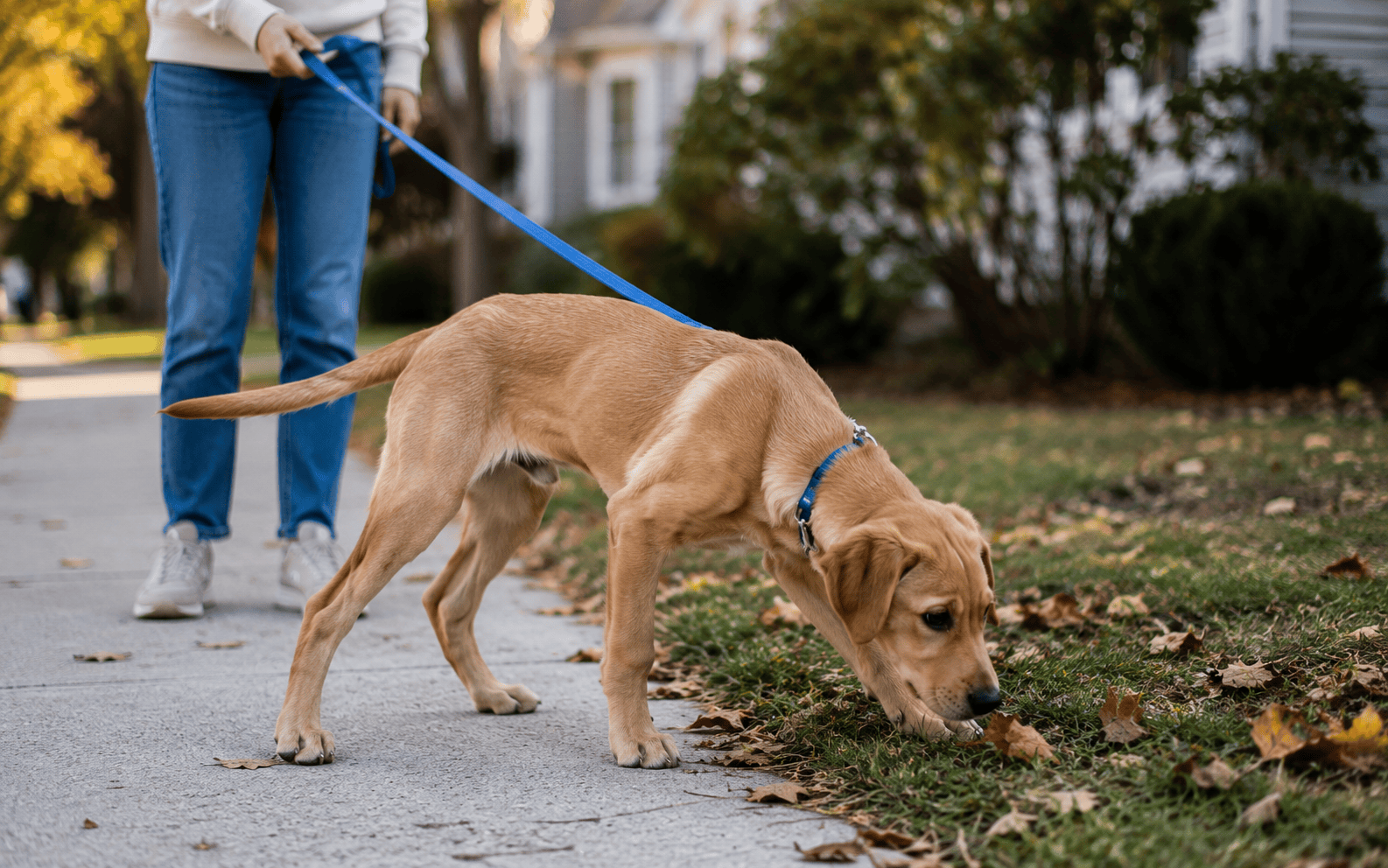
This is the most common cause of puppy potty training regression in otherwise healthy puppies. It does not mean your puppy has forgotten their training. It means their brain is temporarily less capable of applying it under pressure.
New Environments and Major Life Changes
Moving to a new home, bringing home a new baby, adding another pet to the household, or even rearranging furniture can throw a puppy’s routine completely off. Dogs are highly sensitive to environmental cues. When the environment changes, the familiar signals that told your puppy “this is the place to go outside” may no longer register the same way.
Even a vacation or an extended visit from relatives can be enough to disrupt a puppy’s schedule and trigger accidents. The in home dog training long island approach specifically accounts for this by training the puppy inside the actual environment where they live, which dramatically reduces confusion caused by environmental changes.
Medical Issues You Should Not Overlook
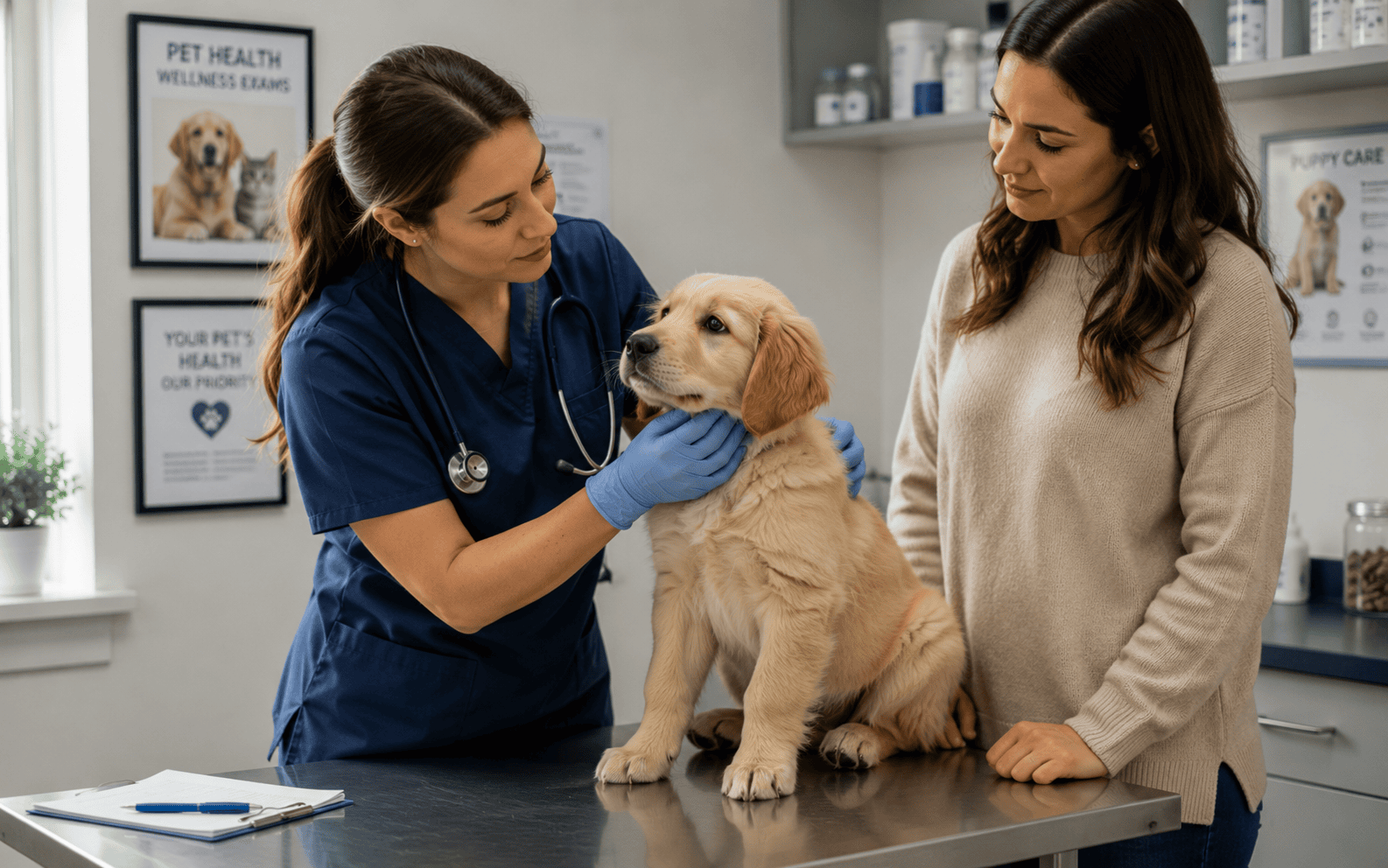
Sudden regression with no obvious behavioral cause is a red flag for a medical problem. Urinary tract infections (UTIs) are especially common in young female dogs and can make it physically impossible for your puppy to hold their bladder long enough to get outside. Other conditions worth ruling out include:
- Bladder stones or crystals
- Intestinal parasites
- Diabetes (which increases urination frequency)
- Kidney issues
If your puppy was reliably trained and accidents begin appearing out of nowhere, schedule a vet visit before assuming it is behavioral. Treating a UTI, for example, often resolves the accidents within days.
Gaps in the Original Training
Sometimes what looks like regression is actually incomplete training. If a puppy was only accident-free because someone was home all day managing their schedule, and that situation changes, accidents will follow. True house training means the puppy understands the rule, not just that they have been prevented from breaking it.
The resource how to potty train your dog covers how to build genuine understanding rather than just accident prevention through management, which is a critical distinction every owner needs to grasp.
The Things Owners Do That Make Regression Worse
Most well-meaning owners accidentally extend regression by responding to accidents in counterproductive ways. Here are the most common mistakes:
Punishing after the fact. If you find a puddle ten minutes after it happened, your puppy has no idea why you are upset. Dogs do not connect the punishment to an action that already occurred. This creates confusion and anxiety, both of which can worsen accidents.
Giving too much freedom too fast. Owners often expand a puppy’s access to the house as a reward for good potty behavior. When regression hits, that expanded freedom becomes a liability. A puppy that has the run of three floors will find a spot to go long before they make it to the door.
Inconsistent reinforcement. Praising your puppy enthusiastically one day and barely acknowledging them the next sends a mixed signal. Consistency in reward timing and energy is what makes the behavior stick.
Skipping nighttime crating. Even puppies that sleep through the night without accidents can regress once adolescence hits. Removing the crate too soon is one of the most common reasons regression drags on longer than necessary.
A Practical Reset Plan That Actually Works
Getting a puppy back on track requires treating them almost like a brand-new trainee. That can feel discouraging, but the reset is usually much faster the second time because the neural pathways from the original training are still there.
Step 1: Tighten Supervision Immediately
For the first week of your reset, your puppy should be within arm’s reach at all times when they are not crated. Use a leash attached to your belt loop if needed. This is not punishment; it is information gathering and accident prevention happening simultaneously.
Step 2: Go Back to a Rigid Schedule
Take your puppy outside every 90 minutes during waking hours. Also take them out:
- Immediately after waking up
- Within 15 minutes of eating or drinking
- After any active play session
- Right before bedtime
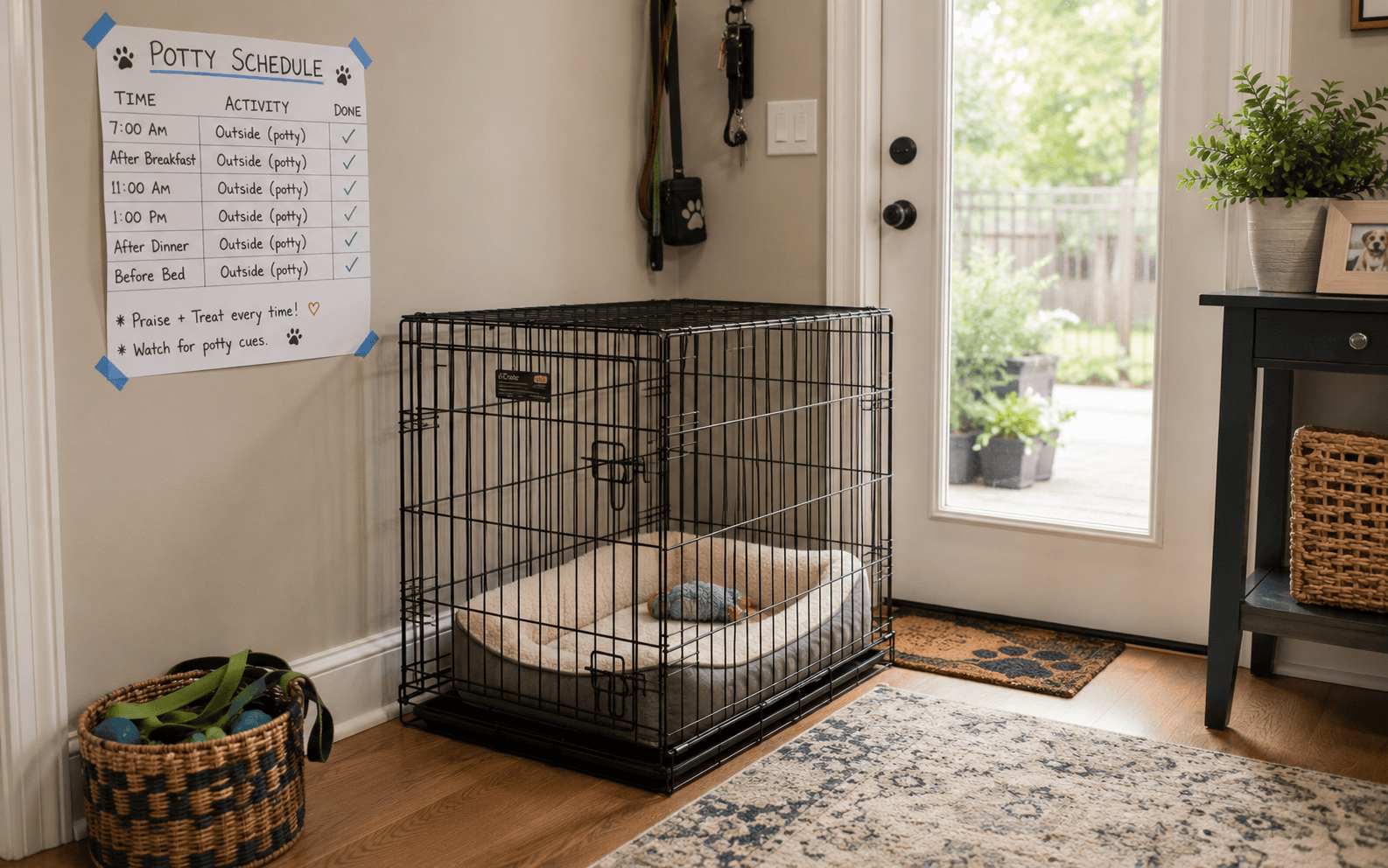
Track the times your puppy goes successfully and look for a pattern. Most puppies have a biological rhythm you can start predicting within a week.
Step 3: Reintroduce Crate Time
If you had phased out the crate, bring it back. A crate that is sized correctly (just large enough for your puppy to stand, turn around, and lie down) uses their instinct not to soil their sleeping area. Keep crate sessions under two hours for puppies under six months, and under four hours for puppies closer to a year.
Step 4: Rebuild the Reward Habit
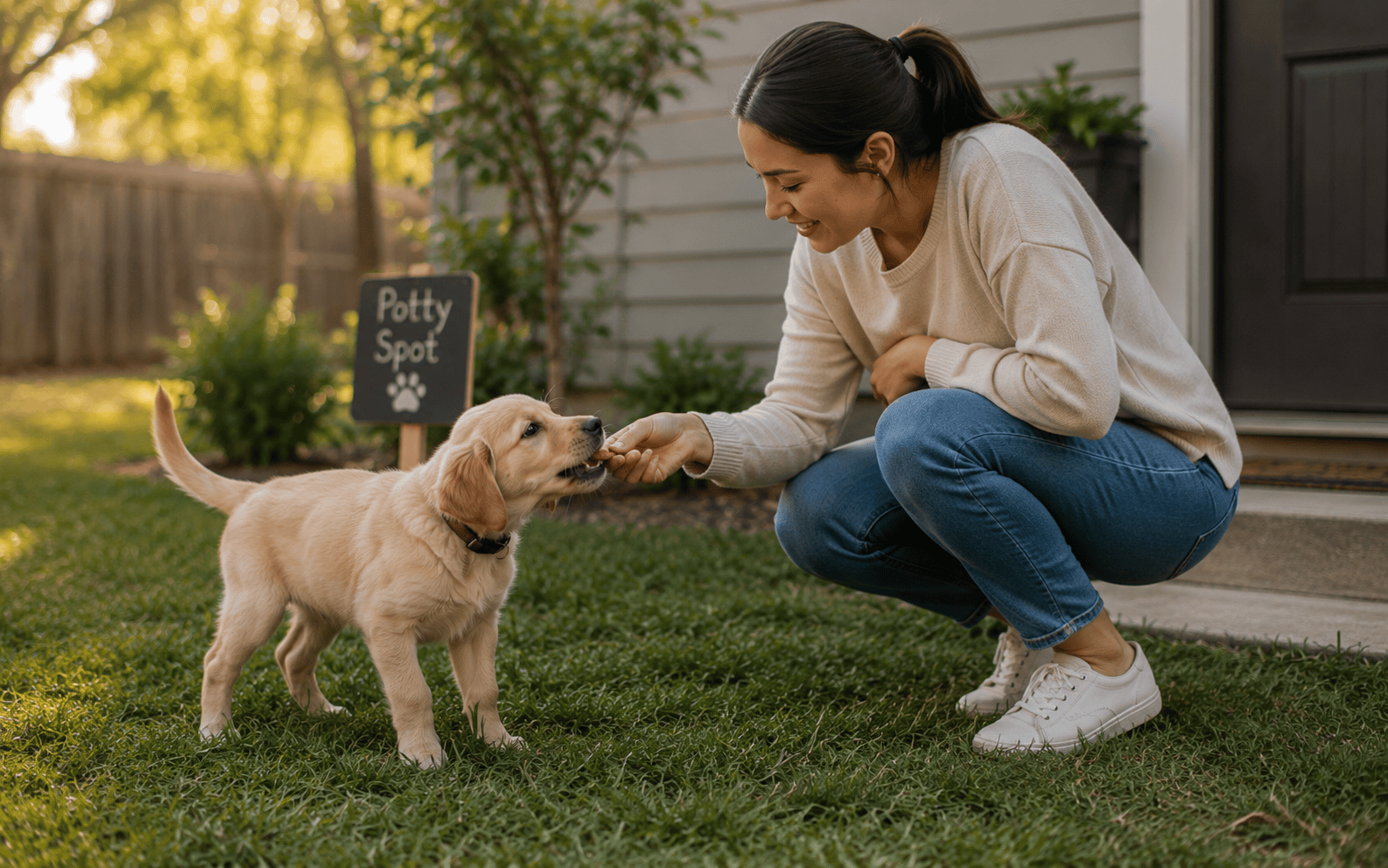
Use high-value treats, not just kibble, to reward outdoor elimination. The treat should be delivered within three seconds of your puppy finishing, not once you are back inside. Speed of reinforcement is everything at this stage.
Things to Know
- Regression can happen even after six months of clean behavior, especially around adolescence or major household changes.
- Female puppies are more prone to UTI-related regression than males, so keep this in mind if your dog is a young female.
- The smell of previous accidents, even cleaned spots, can draw puppies back to the same location. Use an enzymatic cleaner like Nature’s Miracle to fully eliminate odors.
- Dogs that were potty trained in summer can temporarily regress in winter when they dislike stepping onto cold or wet surfaces.
- Overexcitement and submissive urination are different from true regression and require different solutions.
- Regression tied to separation anxiety often requires behavioral intervention beyond standard potty training resets.
When to Bring in Professional Help
Some cases of regression are stubborn because they are rooted in deeper behavioral issues, anxiety, or fear. If your reset plan has not produced visible improvement within three to four weeks, it is time to consider working with a professional trainer.
For owners on Long Island, puppy training long island offers structured programs designed specifically for young dogs going through developmental challenges. A professional trainer can assess whether the regression is purely behavioral or tied to something like separation anxiety, fear of outdoor surfaces, or inadequate initial training.
If your schedule makes daily training sessions difficult, a board and train long island program allows your puppy to work intensively with a trainer in a structured environment. This is particularly effective for puppies where regression has gone on long enough to become a deeply ingrained habit.
For owners who want ongoing, personalized support, private dog training long island offers one-on-one sessions tailored to your specific home environment and puppy’s temperament. Pairing potty work with obedience dog training can also strengthen your puppy’s overall impulse control, which directly supports their ability to hold their bladder and signal correctly.
Comparing Common Approaches to Fixing Regression
| Approach | Best For | Time Commitment | Success Rate Without Pro Help |
| Supervised reset at home | Mild regression, adolescent phase | High (2-4 weeks) | High if consistent |
| Vet visit + treatment | Medical-cause regression | Low once diagnosed | Very high |
| Board and train program | Persistent or habit-based regression | None for the owner | Very high |
| Private training sessions | Anxiety-related or complex regression | Moderate | High with trainer guidance |
| Crate reintroduction only | Early regression, night accidents | Low | Moderate |
Stop Letting Regression Drain Your Patience. Take Action Now.
If your puppy’s accidents have you second-guessing everything you thought you knew about house training, you are not alone, and you do not have to figure it out by yourself.
K9 Mania Dog Training works with dog owners throughout Long Island and surrounding areas to solve exactly these kinds of training setbacks. Whether you are dealing with a classic adolescent regression, a puppy with anxiety-driven accidents, or a situation where the original training just did not stick, K9 Mania has a program that fits.
Services available include:
- Board and Train Programs
- Private Dog Training
- Puppy Training
- Obedience Training
- Behavior Modification
Contact K9 Mania Dog Training to find the right program for your puppy and your schedule. Help is available across Long Island and the surrounding areas.
You May Also Read
Agility Dog Training: What It Is, How It Works
Frequently Asked Questions
At what age is puppy potty training regression most common?
Regression most commonly occurs between 4 and 8 months of age, during the adolescent phase.
This is when hormonal changes temporarily reduce impulse control, making it harder for puppies to hold their bladder or signal that they need to go out. Most puppies move through this phase within four to eight weeks if owners stay consistent with their training.
How long does puppy potty training regression typically last?
With a consistent reset plan, most cases of regression resolve within two to four weeks.
If accidents are still happening regularly after a month of consistent retraining, the issue may be medical or rooted in anxiety, and professional evaluation is worth pursuing. The earlier you respond to regression with structure, the shorter the regression window tends to be.
Should I punish my puppy for having accidents during regression?
No. Punishment after the fact does not work and typically makes regression worse.
Puppies do not connect delayed consequences to specific behaviors. Punishment creates fear and anxiety around elimination, which can lead to your puppy hiding their accidents rather than improving. Positive reinforcement and supervision are far more effective.
Can stress cause my puppy to regress in potty training?
Yes. Stress from changes like moving, new pets, or disrupted schedules is one of the most common triggers for regression.
Dogs are highly routine-dependent, and even minor disruptions can temporarily override trained behaviors. Restoring a predictable schedule and reducing environmental stressors usually helps resolve stress-induced regression relatively quickly.
Is my puppy’s regression a sign that they were never fully trained?
Not necessarily. Even well-trained puppies can regress due to age, stress, or medical issues.
That said, if your puppy’s original training relied heavily on management rather than consistent reinforcement, the foundation may need strengthening. A professional assessment can help distinguish between true regression and gaps in the original training process.
The Bottom Line on Puppy Potty Training Regression
Puppy potty training regression is discouraging, but it is not a sign that your puppy is untrainable or that you have failed as an owner. Most cases have a clear cause, whether that is adolescence, a life change, a medical issue, or an incomplete training foundation, and each cause has a clear solution.
Start by tightening supervision, rebuilding your schedule, and reintroducing the crate. If you suspect a medical issue, call your vet before anything else. And if you have been working at this for a month without improvement, reach out to a qualified trainer who can assess what is really going on and get your puppy back on track quickly.