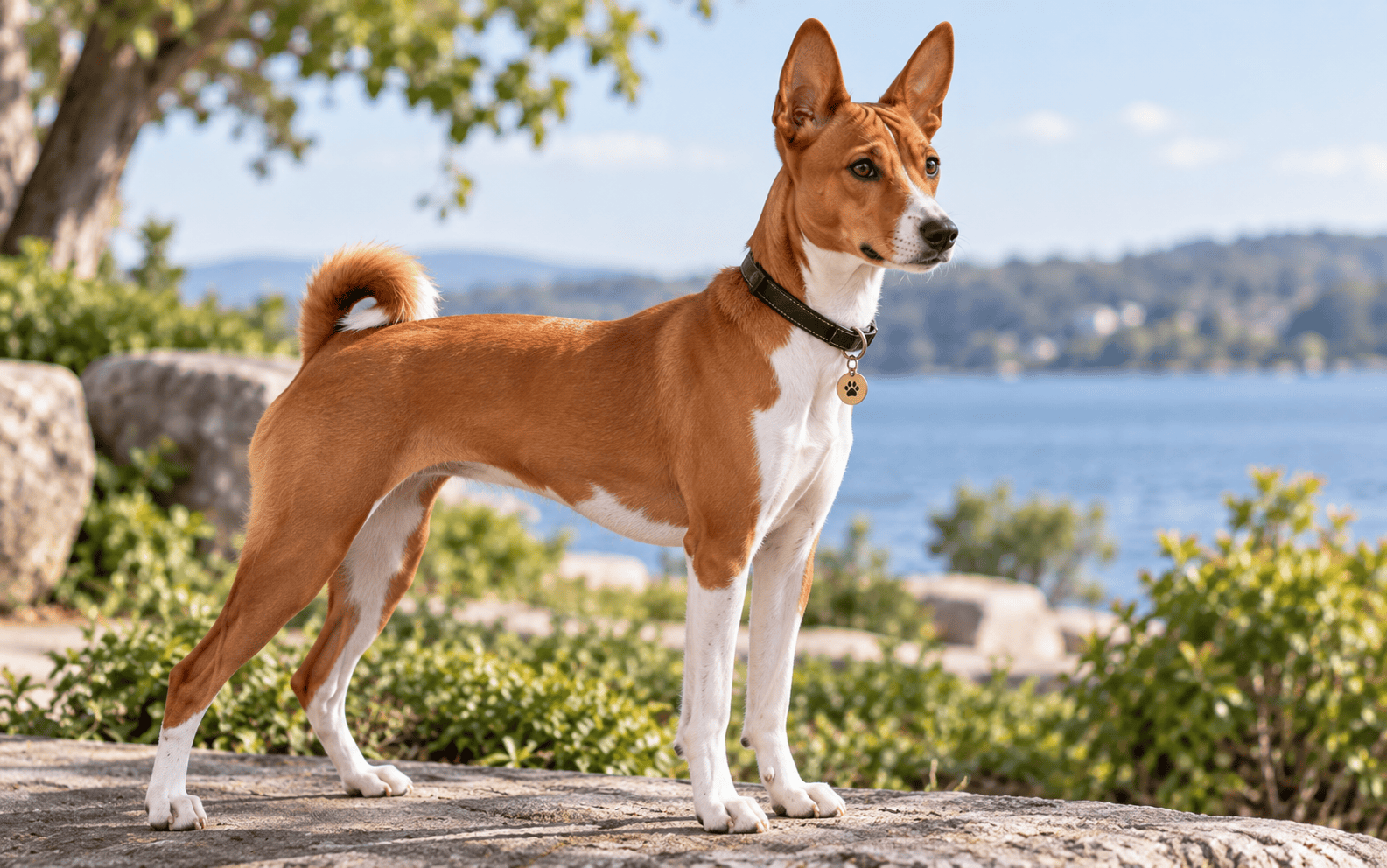
The basenji is an ancient hunting dog from Central Africa, known for being one of the few breeds that does not produce a conventional bark. Instead of barking, basenjis make a distinctive yodel-like sound called a “barroo,” which sets them apart from nearly every other domestic breed.
Key Takeaways
- Basenjis are one of the oldest known dog breeds, with roots in Central Africa and a history of use as hunting dogs.
- Rather than barking, they produce a unique yodel sound, making them popular with owners in apartments or noise-sensitive settings.
- They are intelligent but highly independent, which means standard obedience training requires more patience and consistency than it does with eager-to-please breeds.
- Basenjis have a strong prey drive and a natural instinct to chase, so off-leash safety and secure fencing are essential.
- They are energetic, athletic, and need both physical exercise and mental stimulation every day.
- Despite their quirks, basenjis can thrive in the right household with proper structure and training support.
Origins of the Basenji: A Breed With Ancient Roots
To understand what is a basenji dog fully, you have to look back thousands of years. Archaeological evidence and DNA studies place the basenji among the most primitive of all domestic dog breeds, with lineage tracing back to dogs depicted in ancient Egyptian artwork. The breed as most people recognize it today, however, comes from Central Africa, specifically from regions now part of the Democratic Republic of Congo.
Local tribes used basenjis as hunting dogs. Their job was to drive small game into nets, a role that required speed, agility, silence, and sharp senses. The silence component is critical: a dog that barked during a hunt could ruin everything. Over thousands of generations, the barroo-and-silence trait was reinforced, leaving the modern basenji with a larynx shaped differently from most other dogs. This anatomical difference is the reason they cannot produce a sustained bark.
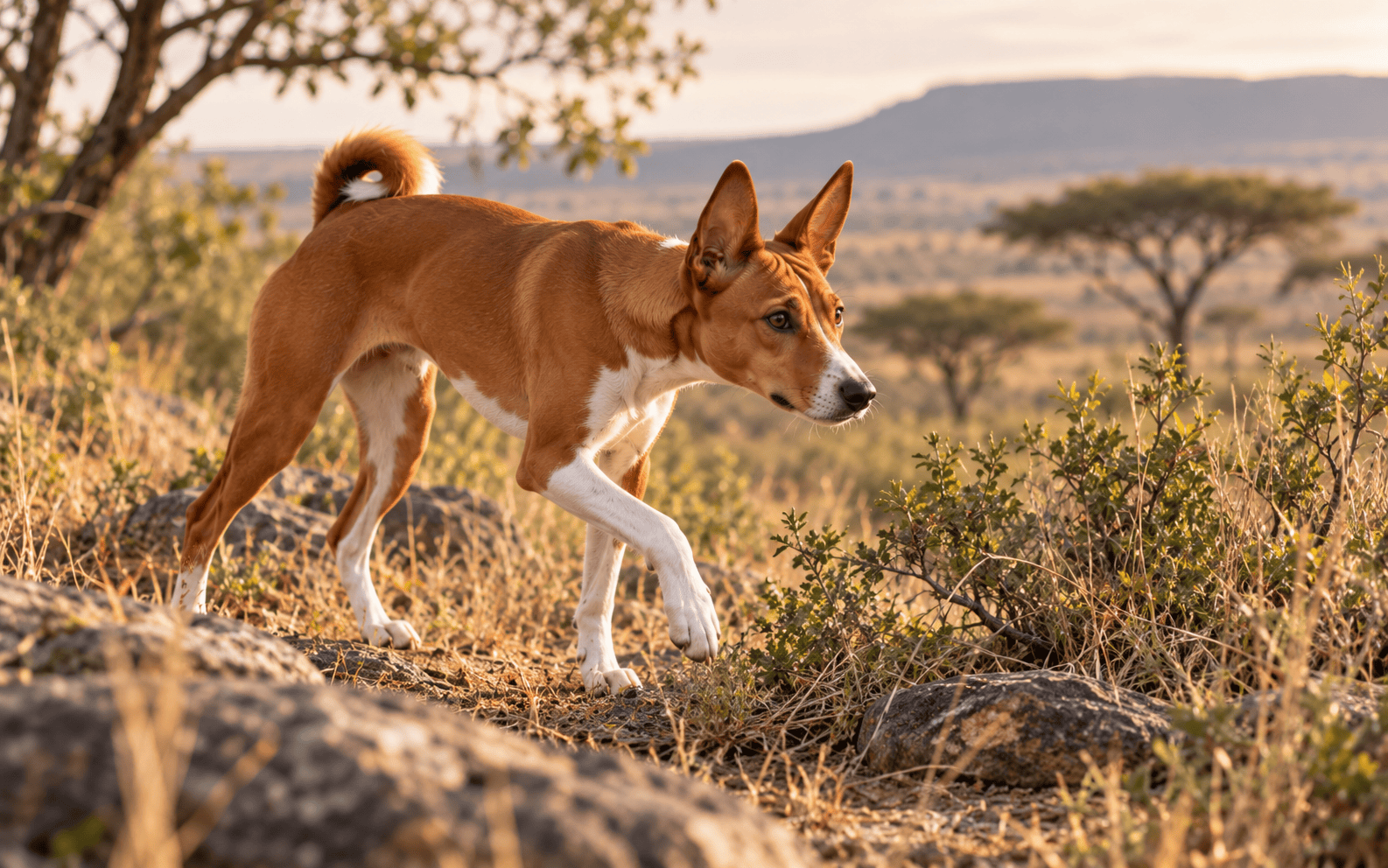
Basenjis were first introduced to Western Europe in the 1930s and arrived in the United States around the same time. The American Kennel Club (AKC) officially recognized the breed in 1943. Since then, the basenji has developed a dedicated fanbase among owners who appreciate its cat-like cleanliness, compact athletic build, and genuinely unique personality.
The breed stands roughly 16-17 inches tall at the shoulder and typically weighs between 22 and 24 lbs. Its short, fine coat comes in red and white, black and white, brindle, and tricolor combinations. One of its most recognizable features is the deeply wrinkled forehead, which gives the dog a perpetually thoughtful expression.
Basenji Temperament: What Living With One Actually Looks Like
If you have spent time around dog breeds that dont bark, you may already have some sense of how differently these dogs communicate. Basenjis fit squarely into that category, and their communication style goes beyond just the absence of barking.
Basenjis are described by owners and breeders alike as aloof, curious, and intensely observant. They form strong bonds with their primary caregivers but tend to be reserved with strangers, which can read as aloofness or even unfriendliness. This is not aggression. It is a deeply ingrained self-reliance that goes back to their working roots. These dogs had to think for themselves in the field.
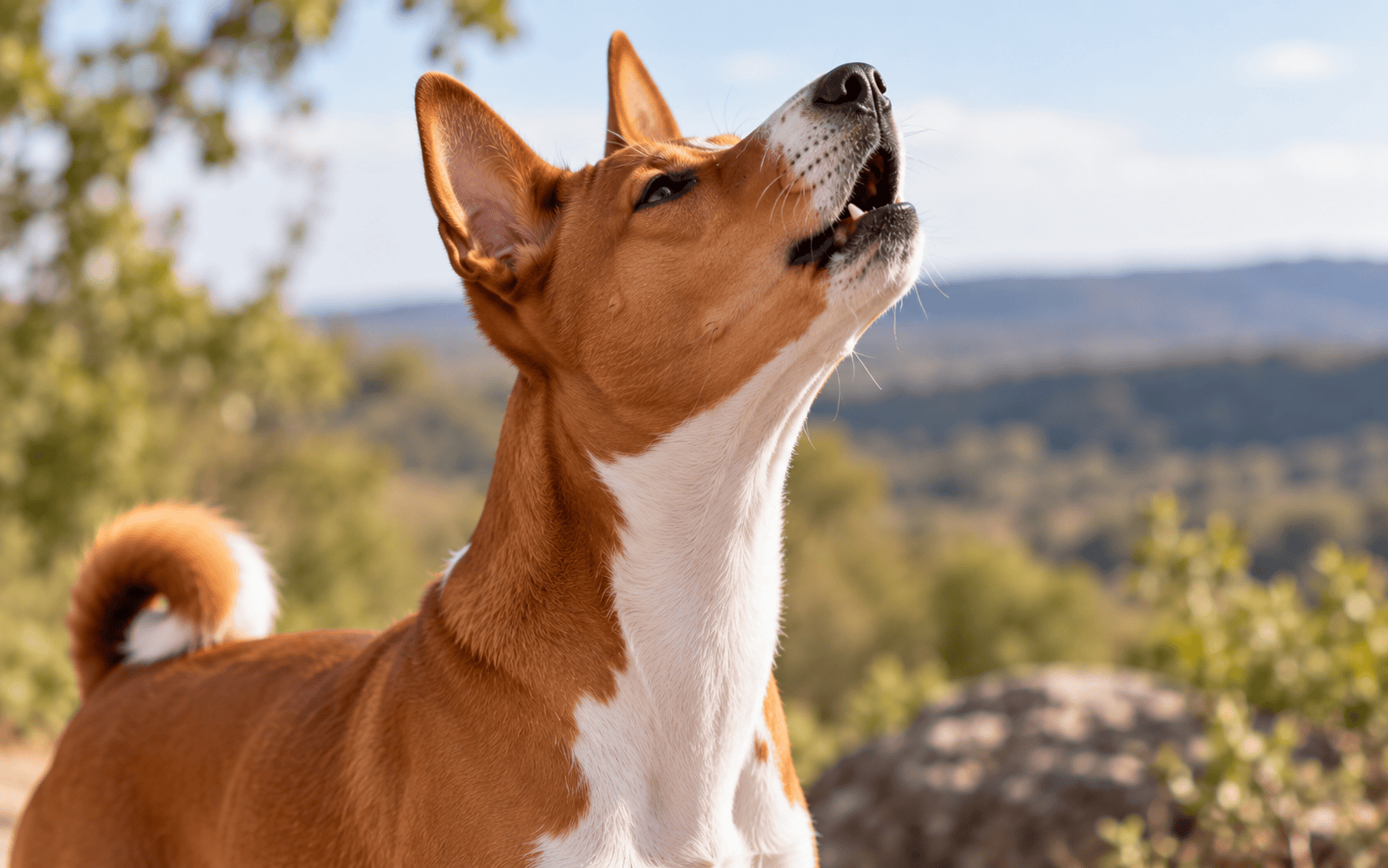
That independence has a direct effect on how they respond to training, unlike breeds on the list of most trainable dog breeds that are driven by the desire to please their handler. Basenjis respond much better to positive reinforcement paired with genuine consistency. If a reward does not feel worth the effort to a basenji, it will simply disengage. Treats need to be high-value, sessions need to be short, and the training environment needs to be varied enough to hold their attention.
Basenjis are also known for being mischievous. They are problem-solvers, which sounds charming until it means your dog has figured out how to open the refrigerator or unlatch the gate. Owners who underestimate their intelligence tend to end up with a dog that runs the household rather than coexisting peacefully with it.
With children, the basenji can do well, particularly when socialized young and raised in an active family. However, they are not a patient, laid-back breed by nature. Rough handling or chaotic environments can push a basenji to become snappy or avoidant. Supervision and clear household rules matter enormously.
Understanding the Basenji’s Prey Drive and Exercise Needs
One of the most important things to understand about the basenji is its prey drive, and if you want to understand what is prey drive in dogs in a breed where it runs particularly high, the basenji is an excellent case study. This is not a casual instinct. Basenjis were purpose-bred for thousands of years to chase and pursue, and that drive is very much present in the modern dog.
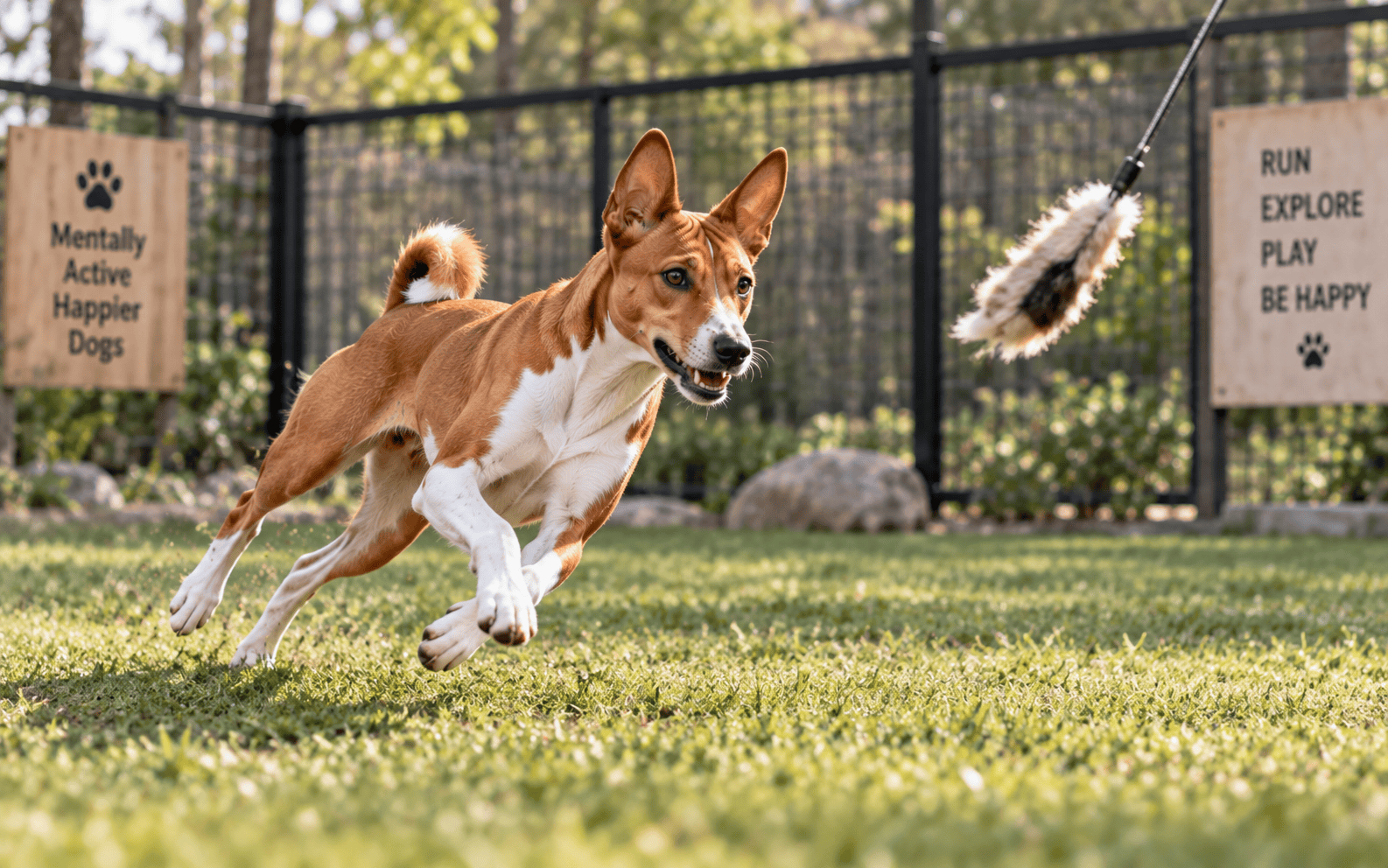
In practical terms, this means a basenji should almost never be trusted off-leash in an unfenced area. The moment it spots a squirrel, a rabbit, or even a blowing leaf at the wrong angle, the chase instinct can override every command it has ever learned. Many basenji owners invest in 6-foot privacy fencing because chain-link fences are something this athletic breed can simply climb.
Daily exercise for a basenji should be substantial. A short walk around the block is not enough. These dogs thrive with at least 45 to 60 minutes of vigorous activity per day, broken into multiple sessions if possible. Lure coursing, a sport where dogs chase a mechanically operated lure around a field, is a natural fit for the breed and something many basenji owners pursue competitively.
Mental stimulation is equally important. A physically tired basenji that has had no mental engagement will still find ways to entertain itself, usually in ways you will not appreciate. Puzzle feeders, scent games, and structured training sessions all help channel the breed’s intelligence constructively.
Exercise needs at a glance:
- Minimum 45-60 minutes of vigorous daily activity
- Secure, high-fenced yard essential for off-leash play
- Lure coursing recommended as a breed-appropriate sport
- Puzzle feeders and nose work for mental engagement
- Multiple shorter sessions preferred over one long walk
Basenji Health Considerations and Lifespan
The basenji is generally a hardy breed with a lifespan of 13 to 14 years. However, there are a few breed-specific health concerns prospective owners should research before committing.
Fanconi syndrome is the most significant inherited condition associated with the breed. It is a kidney disorder that affects the renal tubules and can cause serious systemic problems if not caught early. Responsible basenji breeders test for this condition, and the Basenji Club of America maintains guidelines on Fanconi syndrome screening. If you are purchasing a puppy, always ask for documentation confirming that both parents have been tested.

Progressive retinal atrophy (PRA) is another condition seen in the breed, causing gradual vision loss over time. Hip dysplasia is less common in basenjis than in many other breeds, but it is not unheard of.
Basenjis are also unique among domestic dogs in that they cycle into heat only once per year, rather than twice. This single annual estrus cycle is another trait that connects them to their ancient, pre-domesticated origins and distinguishes them from virtually every other modern breed.
In terms of grooming, the basenji is low-maintenance. Their short coat requires minimal brushing, and the breed is known for self-grooming behavior similar to cats. They are also generally odor-free compared to many other dogs, which owners consistently cite as a major lifestyle benefit.
Training a Basenji: What You Need to Know Before You Start
Training a basenji is genuinely rewarding, but it requires a different mindset than training a golden retriever or a Labrador. The breed’s independence means that traditional repetitive obedience drills often produce diminishing returns quickly. You need to make training feel worth the dog’s time, every single session.
Positive reinforcement works well, particularly when the reward is meaningful. High-value food treats, short play sessions as rewards, and a calm but confident handler presence all help. Harsh corrections or punishment-based methods tend to backfire badly with basenjis. A dog that feels pressured or confused will simply disengage and find something more interesting to do.
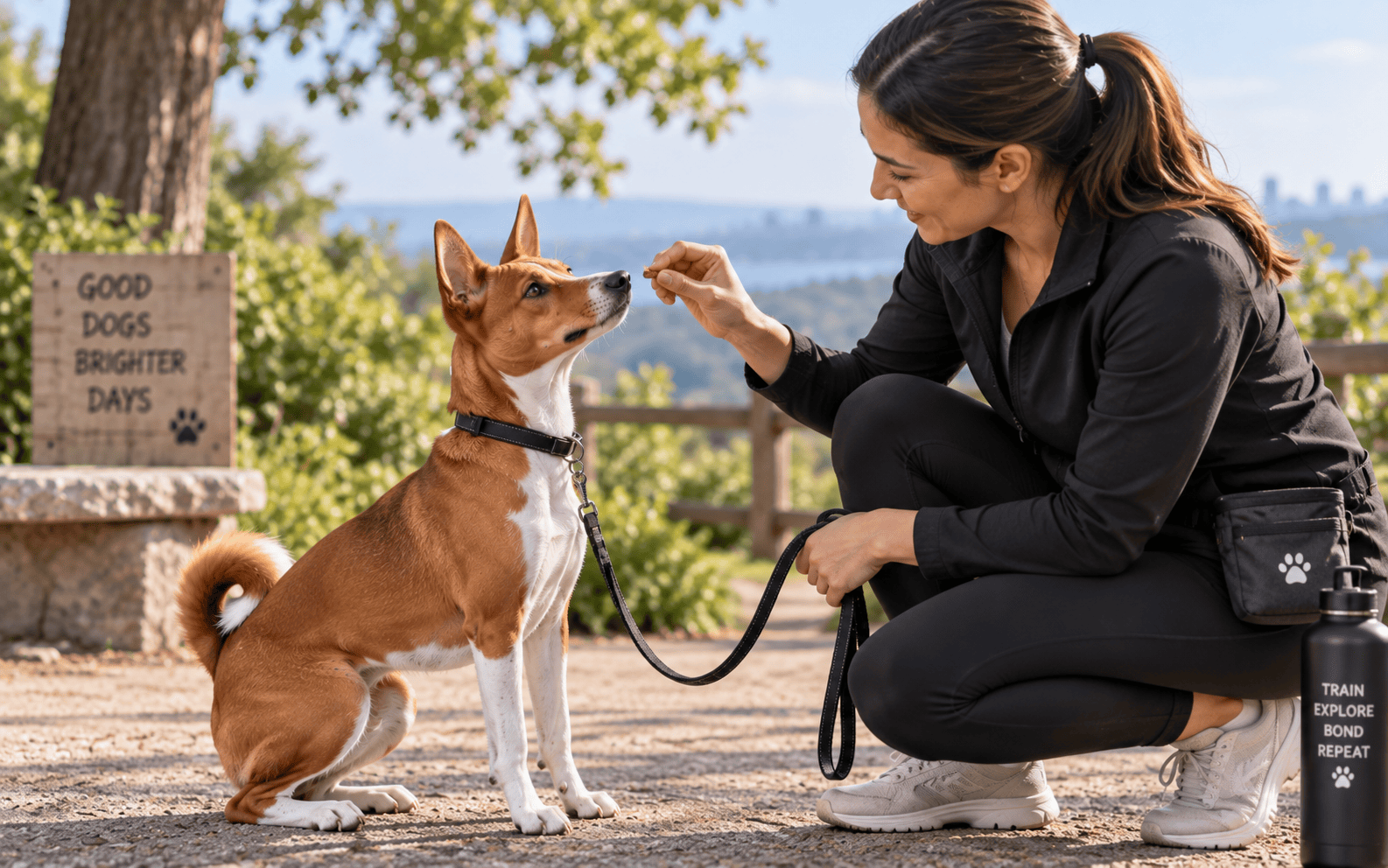
Early socialization is not optional. Basenjis that are not exposed to a wide variety of people, animals, and environments before 16 weeks old can develop fearful or reactive behaviors that are significantly harder to address later. This is especially true regarding other small animals. Because of the prey drive discussed earlier, basenjis and households with cats or small pets require extremely careful management and introduction protocols.
If you are a Long Island resident considering structured training support for a basenji or another complex breed, private dog training long island offers one-on-one work tailored to your dog’s specific behavioral profile. For owners who want a more intensive solution, board and train long island programs allow your dog to work with professional trainers in a consistent, structured environment over an extended period, which can be especially effective for independent-minded breeds. For basenji owners who prefer working in the comfort of their own space, in home dog training long island brings professional guidance directly to your environment, which is particularly valuable for addressing household-specific behavioral challenges like escape behavior, resource guarding, or inter-pet tension.
Is a Basenji the Right Dog for You?
Knowing what is a basenji dog means accepting that it is not the right breed for every household. It is not a beginner dog. It is not a dog that thrives on passive ownership or minimal structure. But for the right owner, it is an extraordinary companion.
The ideal basenji owner is active, patient, and genuinely interested in working with a dog that has its own strong opinions. You need to be willing to invest in training, secure your environment thoroughly, and accept that your dog may never come when called the way a border collie would.
Basenji ownership is a good fit if you:
- Live an active lifestyle and can provide daily vigorous exercise
- Have experience with independent or primitive breeds
- Do not have very young children or small pets in the home
- Are prepared to invest in professional training support
- Have or can install secure, high fencing in your yard
- Appreciate a low-shedding, low-odor, quiet dog
Basenji ownership may be challenging if you:
- Are a first-time dog owner with no prior breed experience
- Work long hours with no arrangement for daytime enrichment
- Have cats, rabbits, or other small animals in the home
- Prefer a dog that is naturally eager to please and quick to obey
The basenji’s combination of ancient instincts, high intelligence, and genuine independence makes it one of the most fascinating breeds available to American dog owners today. When matched with the right person, these dogs form deep, loyal bonds and bring a level of personality and character that few other breeds can match.
Train Your Basenji the Right Way With Professional Help
Basenjis are brilliant, driven, and deeply independent, which means the wrong training approach can set you back months. Partnering with a professional who understands primitive breeds gives your dog the structured foundation it needs to become a safe, well-adjusted companion in your home.
Whether you are dealing with escape behavior, prey drive, or basic obedience gaps, professional support makes the difference between frustration and real progress. Reach out to a certified dog trainer today and get a program built specifically for your basenji’s temperament and your household’s needs.
You May Also Want to Read
Leash Aggression in Dogs
Trigger Stacking in Dogs
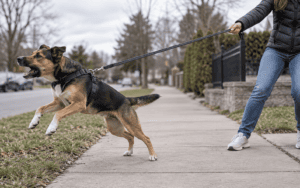
Why Does My Dog Lunge on a Leash?
Frequently Asked Questions
Do basenjis make good pets for first-time dog owners?
Basenjis are generally not recommended for first-time dog owners due to their strong independence and high prey drive.
They require an owner who understands how to read a dog’s body language, set consistent boundaries, and maintain training routines without relying on the dog’s desire to please. First-time owners who are committed to professional training support from the start can succeed, but going in without a plan typically leads to behavioral problems that are difficult to reverse.
Why do basenjis not bark, and is it actually true?
Basenjis cannot produce a sustained bark because their larynx is shaped differently from most other dog breeds.
Instead of barking, they make a range of vocalizations including whines, growls, and a distinctive yodel-like sound called a “barroo.” They are not completely silent dogs. They can still be vocal in their own way, particularly when excited or frustrated, but they will never produce the repetitive barking associated with most other breeds.
How much exercise does a basenji need each day?
A basenji needs a minimum of 45 to 60 minutes of vigorous exercise daily, ideally split across multiple sessions.
A casual leash walk is rarely sufficient for this breed. Basenjis thrive with activities that engage both their body and their mind, such as lure coursing, structured play in a securely fenced yard, or scent-based games. A basenji that does not get adequate exercise will direct its energy into destructive or escape-oriented behaviors.
Can basenjis live with cats or other small animals?
Living with cats or small animals is risky with a basenji and requires careful, long-term management rather than a simple introduction.
Because the breed was developed over thousands of years to chase and pursue small game, the prey drive toward small animals can be extremely strong. Some basenjis can coexist with cats they were raised alongside from puppyhood, but the risk never fully disappears. Homes with rabbits, guinea pigs, or birds should generally consider a different breed.
What is the best training method for a basenji?
Positive reinforcement using high-value food rewards and short, varied training sessions is the most effective approach for basenjis.
Punishment-based or repetitive drill-style training tends to cause a basenji to disengage entirely, making progress much harder. Sessions should be kept under ten minutes, rewards should be genuinely motivating to that specific dog, and handlers should stay calm and patient. For owners who want faster results or are dealing with serious behavioral challenges, professional board and train programs designed for independent breeds offer a structured path forward.
The Bottom Line on What Is a Basenji Dog
Understanding what is a basenji dog means accepting a breed that operates on its own terms. It is ancient, athletic, intelligent, and deeply instinct-driven, and it rewards owners who take the time to understand its nature rather than trying to train it like a conventional obedience breed. The physical care is relatively easy. The behavioral and training demands are where the real work lies.
If you are considering a basenji or already share your home with one, the most important step you can take right now is to connect with a professional trainer who has real experience with independent and primitive breeds. A tailored training plan built around your dog’s specific drives and your household’s structure will save you months of frustration and help your basenji become the companion it is genuinely capable of being.