

Excessive barking is one of the most common behavioral complaints among dog owners, and the good news is that it can be reduced with the right approach. Understanding why your dog barks is the first step toward teaching them when it is and is not appropriate to vocalize.
Key Takeaways
- Barking is normal dog behavior, but excessive barking signals an unmet need or a learned habit that requires structured intervention.
- Identifying the specific trigger for your dog’s barking is essential before choosing a training method.
- Consistency across all household members is non-negotiable — inconsistent responses teach your dog that barking sometimes works.
- Punishment-based methods rarely stop barking long-term and can increase anxiety-driven vocalization.
- Most dogs show measurable improvement within two to four weeks of consistent training.
- If your dog’s barking is severe or causing household conflict, professional in-person training delivers faster, more lasting results than DIY approaches alone.
Why Dogs Bark and Why It Matters Before You Train
Before you can effectively address barking, you need to understand what is driving it. Dogs bark for a wide range of reasons, and applying the wrong solution to the wrong trigger is one of the most common reasons training stalls.

The main categories of barking include:
- Alert or territorial barking: Your dog sees or hears something outside and sounds the alarm.
- Attention-seeking barking: Your dog has learned that barking gets them what they want, whether that is food, play, or your presence.
- Anxiety or fear-based barking: Common in dogs with separation anxiety or those that are easily startled.
- Boredom barking: A dog with excess energy and no mental stimulation will often vocalize repeatedly.
- Reactive barking: Triggered by specific stimuli such as other dogs, strangers, or moving vehicles.
Knowing which category applies to your dog changes everything. A dog that barks from anxiety needs a completely different approach than one that barks because it learned that doing so earns your attention. If you are working on impulse control training dogs, you are already addressing one of the core mechanisms behind reactive and attention-seeking barking.
Core Training Methods for Reducing Barking
There is no single technique that works for every dog. The most effective approach combines management, redirection, and reinforcement. Here is how each layer works.

The “Quiet” Command
This is the most widely taught method and works well for dogs that are alert or attention barkers.
- Allow your dog to bark two or three times.
- Calmly say “quiet” in a neutral, firm tone. Do not shout; shouting sounds like you are joining in.
- Wait for a moment of silence, even if it is just one or two seconds.
- Immediately mark the silence with a “yes” or a clicker and reward with a small treat.
- Gradually increase the duration of quiet before rewarding.
The key is that you reward the absence of barking, not the dog’s response to the command alone. Over time, the dog learns that quiet behavior earns good things.
Ignore Attention-Seeking Barking
If your dog barks to get your attention and you respond in any way, including looking at them or telling them to stop, you are reinforcing the behavior. The protocol is simple but difficult in practice:
- Turn your back completely.
- Leave the room if necessary.
- Return your attention only when the dog is quiet, even briefly.
This method requires every person in the household to respond the same way, every single time. One person caving will reset weeks of progress.
Desensitization and Counter-Conditioning
For dogs that react to specific triggers, such as the doorbell, delivery trucks, or other dogs on walks, gradual exposure is the most effective long-term solution. You pair the trigger with something your dog loves, typically high-value treats, at a level of exposure where the dog notices but does not react.

Over many sessions, you gradually increase the intensity of the trigger. This process takes time but rewires the dog’s emotional response at a fundamental level.
If your dog reacts strongly when visitors arrive, structured dog training for house guests covers the specific protocols for managing that scenario safely and consistently.
Common Mistakes That Make Barking Worse
Even well-intentioned owners often accidentally reinforce barking. These are the patterns most likely to keep you stuck.
Shouting “no” or “stop”: Your dog does not understand these words in the moment of arousal. To many dogs, your raised voice sounds like excitement or participation.
Inconsistency: Allowing barking on some occasions and correcting it on others creates confusion. Dogs learn patterns, and an unpredictable response teaches them to keep trying.
Giving up too soon: Many owners quit a training method after a few days because it is not working. Most behavior modification programs require two to four weeks of consistent repetition before you see reliable change.
Missing trigger stacking: If your dog seems to overreact to relatively minor things, it may be experiencing a buildup of stress from multiple events throughout the day. Understanding what is trigger stacking in dogs helps you see why your dog’s threshold for reacting seems so low and why management of their overall stress level matters as much as any single training exercise.
Using punishment after the fact: Correcting a dog minutes after they barked accomplishes nothing. Dogs associate consequences with what is happening in the current moment, not what happened several minutes ago.
How Territorial and Outdoor Barking Requires a Specific Approach
Barking at the fence line, at passersby, or at neighboring dogs is among the most persistent types because the behavior is self-reinforcing. The person or animal walks away, and the dog believes its barking caused that outcome. Every repetition strengthens the behavior.
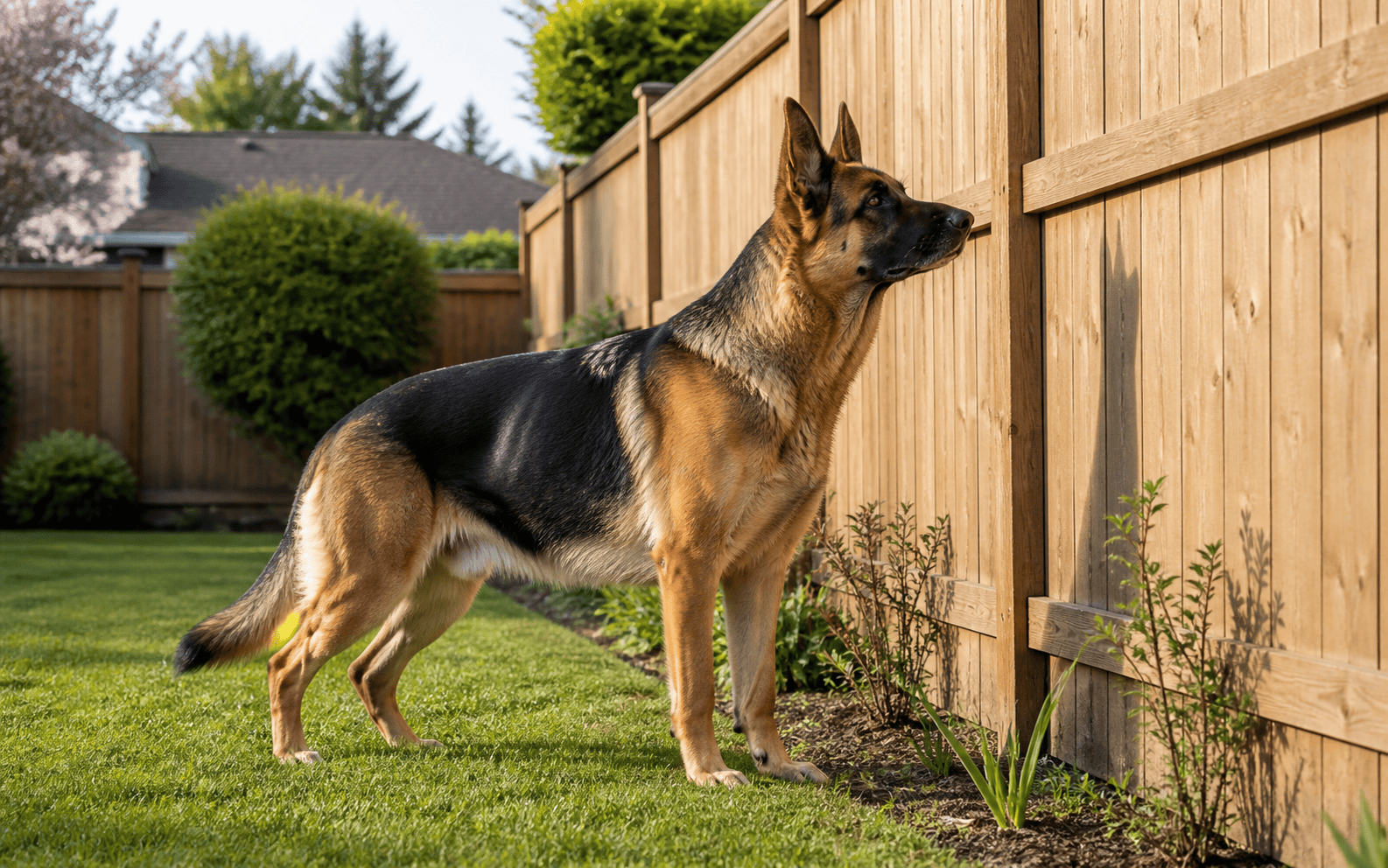
Management is critical here. Limiting your dog’s unsupervised access to fence lines or windows reduces the number of practice reps the behavior gets. You cannot train a behavior out of a dog if the dog is practicing it dozens of times a day without correction or redirection.
Active training involves teaching an incompatible behavior, such as coming to you for a reward when a trigger appears, rather than running toward the fence. For a more detailed breakdown of this specific scenario, the resource on how to stop territorial barking walks through the step-by-step approach used by professional trainers.
Building a Daily Training Routine That Sticks
Knowing how to train your dog not to bark is one thing; building a practice that fits into real life is another. Short, frequent sessions outperform long, infrequent ones by a wide margin.
A realistic daily structure might look like this:
| Session | Duration | Focus |
| Morning | 5 minutes | “Quiet” command basics or controlled exposure |
| Midday | 5 minutes | Impulse control or “place” command |
| Evening | 10 minutes | Desensitization work or threshold training |
| Throughout the day | Ongoing | Catching and rewarding calm moments |
The “throughout the day” component is often the most powerful. Every time your dog is quiet when they might have barked before, mark and reward it. You are teaching them that calm behavior is the most profitable choice.
Physical exercise and mental stimulation also play a significant supporting role. A dog that is adequately tired from a 30-minute walk and a puzzle feeder is simply less reactive than one sitting with pent-up energy by the window all afternoon.
When Professional Help Gets You There Faster
Some dogs have deeply ingrained barking habits or anxiety-based reactivity that does not respond adequately to owner-led training alone. This is especially common with dogs that were not socialized early, dogs with separation anxiety, or dogs that have been reinforced for barking over a period of years.
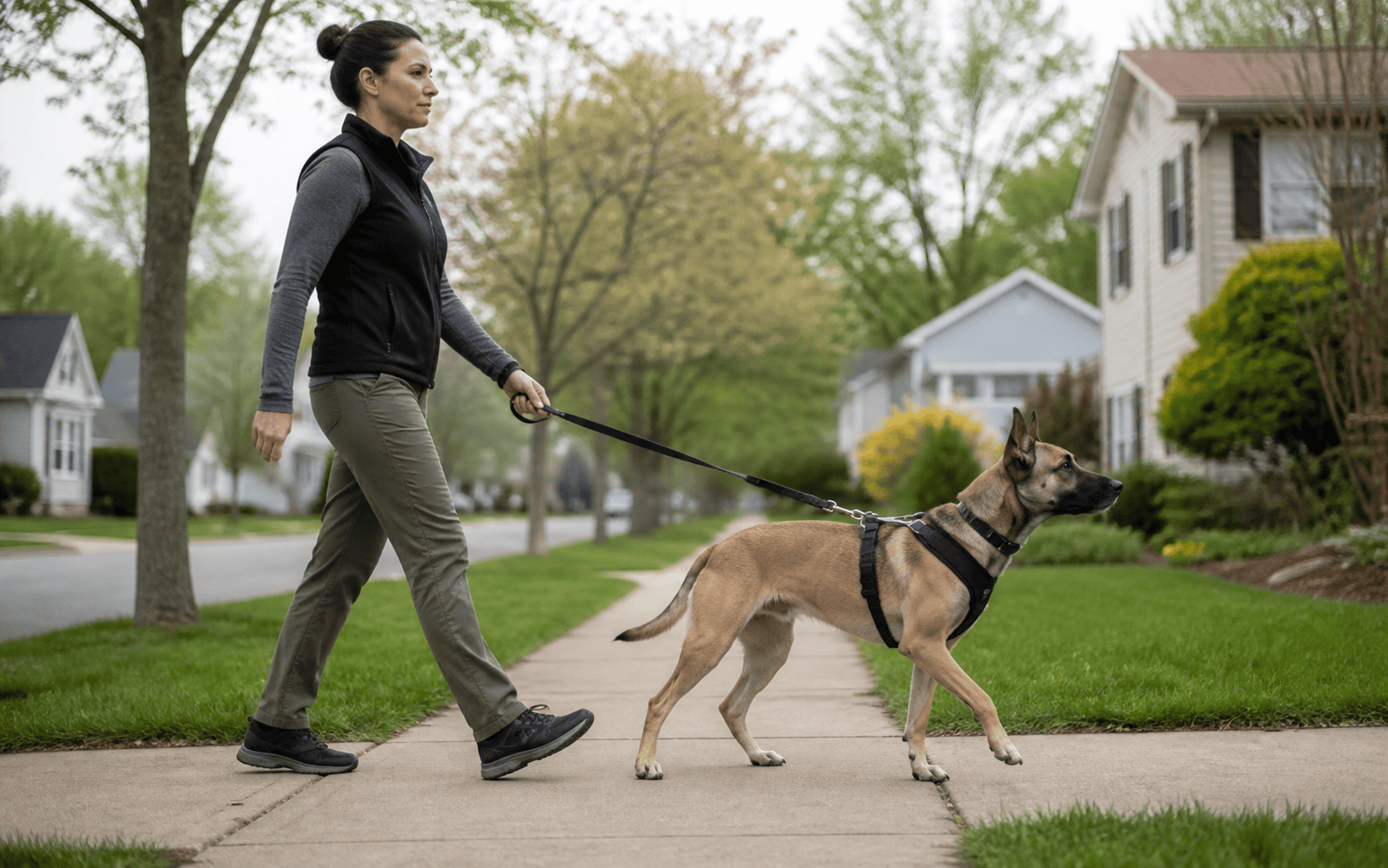
In those cases, working with a professional trainer accelerates progress significantly. A trainer can identify the root cause of barking with precision, build a customized protocol, and teach you the mechanics of delivery in real time, which is something no video or article can fully replicate.
For dog owners on Long Island, in home dog training long island puts a qualified trainer inside your actual environment, which is where the barking happens and where the habits need to be rebuilt. That context makes a meaningful difference compared to training in a neutral facility.
If you prefer a more intensive one-on-one format, private dog training long island offers structured sessions tailored to your dog’s specific triggers and behavioral history.
What Consistent Training Realistically Looks Like
One of the most important things to understand about learning how to train your dog not to bark is that the goal is not complete silence. Barking is a natural form of communication, and eliminating it entirely is neither realistic nor desirable. The goal is to teach your dog appropriate thresholds: a couple of barks to alert you is reasonable behavior; sustained, frenzied barking at every passing car is not.
Most owners working consistently with the methods outlined above report meaningful improvement within three to four weeks. Dogs with more entrenched habits or anxiety-based reactivity may take longer and benefit from professional support alongside the owner’s daily effort.
The combination of understanding your dog’s specific triggers, applying the right method for that trigger type, managing the environment to reduce unsupervised repetitions, and maintaining consistency across all household members is what separates owners who see progress from those who feel stuck. Every element of that formula matters, and each one builds on the others.
Things to Know
- The “quiet” command only works if you train it proactively during calm moments, not in the middle of a barking episode when your dog is too aroused to process new information.
- Anti-bark collars and citronella sprays may suppress barking temporarily, but they do not address the underlying cause and can increase anxiety in sensitive dogs.
- Dogs that bark excessively at night often have an unmet need, whether that is anxiety, insufficient exercise, or an environmental trigger like wildlife sounds outside, rather than a simple obedience problem.
- If multiple dogs in your household bark together, the group dynamic reinforces the behavior. You will need to train each dog individually before expecting the pattern to change as a unit.
- Some breeds are genetically predisposed to vocalize more than others, meaning your realistic training goal may be a reduction in frequency and intensity rather than near-silence.
- Progress is rarely linear. Expect a brief increase in barking when you first begin ignoring attention-seeking behavior — this is called an extinction burst, and it means the training is working.
Stop Letting Barking Run Your Household
Excessive barking puts stress on you, your family, and your neighbors, and the longer it continues without structured intervention, the harder the habit becomes to change. You already have the framework; now the most important thing is to act on it consistently.
If your dog’s barking is severe, anxiety-driven, or has resisted your best efforts at home training, bringing in a professional trainer removes the guesswork and gets you to results faster than going it alone. Reach out to K9 Mania Dog Training today and book an in-home or private session tailored specifically to your dog’s triggers and history.
You May Also want to Read Latest Post
Dog Boarding vs Board and Train
Best Dog Training for Leash Reactivity in Long Island
Board and Train for Leash Reactive Dogs
Is Board and Train Right for a Reactive Dog
Frequently Asked Questions
Can a dog be trained to stop barking?
Yes, excessive barking can be significantly reduced through consistent, trigger-specific training, though complete silence is neither a realistic nor a healthy goal.
Dogs bark as a form of communication, and the aim of training is to teach appropriate limits rather than eliminate vocalization entirely. With the right method applied to the right trigger type, most dogs show clear improvement within a few weeks of structured, consistent work.
How do I stop my dog from barking at everything?
Start by identifying whether your dog is reacting to visual triggers, sounds, movement, or people, because each type requires a slightly different approach.
A dog that barks at everything is often either under-stimulated, over-aroused, or has never been taught that quiet behavior is more rewarding than barking. Management, such as limiting unsupervised access to windows and fence lines, reduces the number of practice reps the habit gets while you work on active training. Desensitization paired with a reliable “quiet” command and a strong reinforcement history for calm behavior is the most effective long-term combination.
What is the “3 bark rule” for dogs?
The “3 bark rule” is an informal guideline used by some trainers that allows a dog to bark up to three times to alert you before being asked to stop with a “quiet” cue.
The idea behind it is that a small number of alert barks is natural and acceptable, while sustained barking beyond that point is what needs to be interrupted and redirected. It is not a formal training protocol but rather a practical threshold that helps owners respond consistently rather than trying to suppress every single vocalization the moment it begins.
What age should a dog start barking?
Most puppies begin vocalizing between two and four weeks of age, with recognizable barking typically developing between six and eight weeks.
The timing varies by breed and individual dog. Some dogs are vocal early and often, while others remain relatively quiet well into adolescence. If a previously quiet adult dog suddenly begins barking more than usual, it is worth ruling out a medical cause, such as hearing loss or cognitive changes in older dogs, before attributing the change purely to behavior.
What breeds bark the most?
Breeds developed for herding, guarding, and hunting tend to be the most vocal, with Beagles, Miniature Schnauzers, Fox Terriers, Yorkshire Terriers, and Siberian Huskies frequently cited among the most talkative.
Herding breeds like Shelties and Australian Shepherds were selectively bred to use their voice as a working tool, which makes barking deeply ingrained in their behavior. This does not mean high-bark breeds cannot be trained effectively; it means your baseline expectation for what “improved” looks like should account for the breed’s natural tendencies, and your training may need to be more consistent and intensive to achieve comparable results to a naturally quieter breed.
The Bottom Line on How to Train Your Dog Not to Bark
Barking problems rarely fix themselves, and waiting rarely makes them easier to address. The sooner you apply a consistent, trigger-matched approach, the faster your dog learns that calm behavior is both expected and rewarding. Whether your dog barks at the door, the fence, strangers, or seemingly nothing at all, there is a proven method that fits the situation.
If you have been working at this on your own without the progress you expected, that is not a reflection of your dog’s ability to learn. It usually means the method needs adjustment or the delivery needs refinement, both of which a professional trainer can identify quickly. Take the next step and contact K9 Mania Dog Training to schedule a session that puts the right plan in place for your specific dog, in your specific environment, with guidance you can actually use.