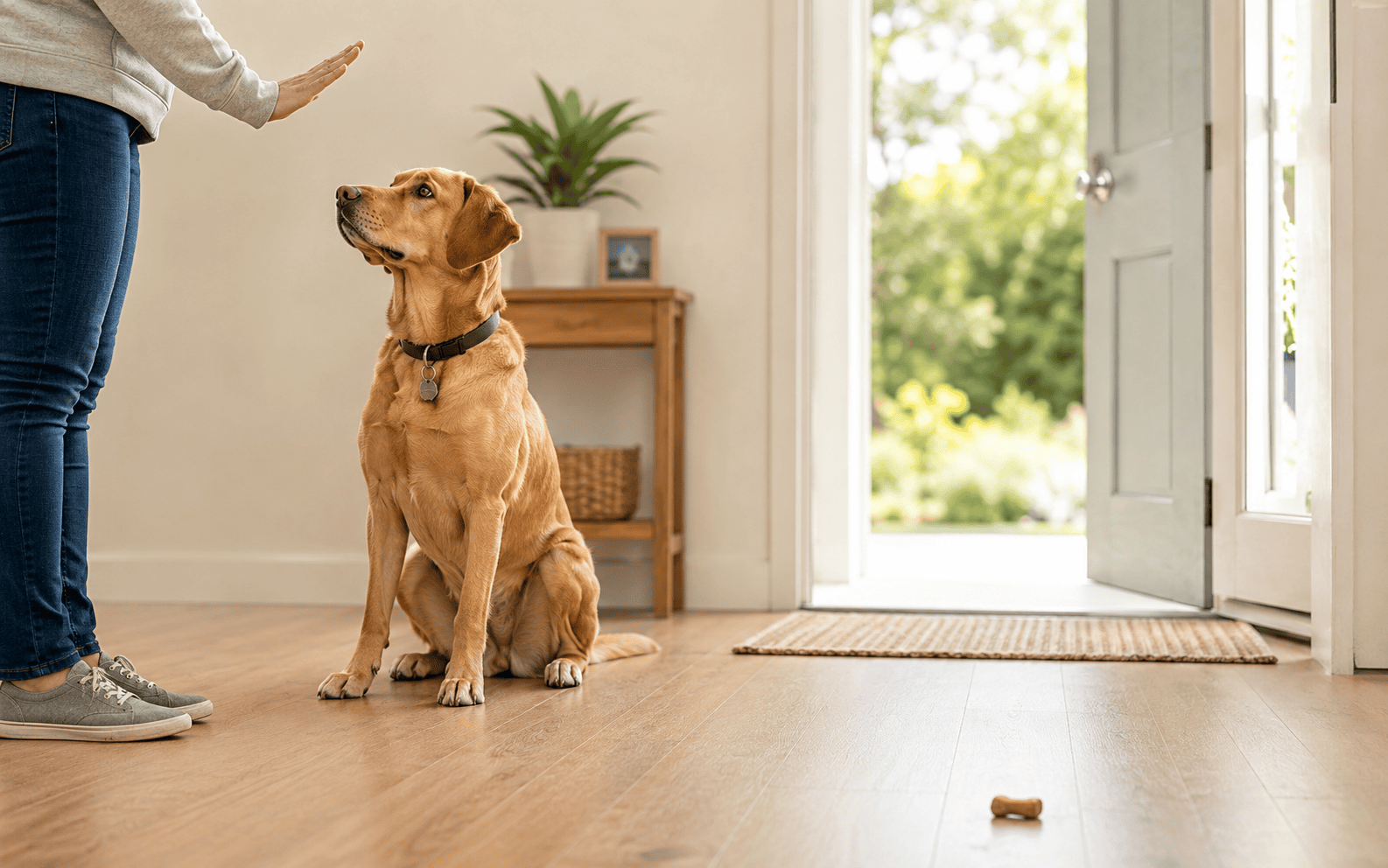
Dogs that lunge at squirrels, bolt through open doors, or steal food off the counter aren’t being bad, they’re being impulsive. Impulse control training teaches dogs to pause, check in with you, and choose a calmer behavior before acting on every instinct they feel.
Key Takeaways
- Impulse control is a learned skill, not a personality trait — any dog can improve with consistent practice.
- Short, frequent training sessions (5-10 minutes) are more effective than long, infrequent ones.
- Foundation exercises like “leave it,” “wait,” and “stay” are the building blocks of all impulse control work.
- Puppies and adolescent dogs (6-18 months) are the hardest to train because their prefrontal cortex is still developing.
- Professional support significantly speeds up results, especially for dogs with reactive or high-drive tendencies.
- Consistency across every family member and every environment is what makes progress stick.
Why Your Dog Struggles to Control Impulses
Before you label your dog “stubborn” or “untrainable,” it helps to understand what’s actually happening in their brain. Dogs are hardwired to act fast. In the wild, hesitation costs them food, safety, or mating opportunities. That drive to act immediately was a survival advantage — in your living room, it becomes the reason your dog rockets toward every visitor who walks through the door.
Breed plays a significant role here. High-energy working breeds like Belgian Malinois, Border Collies, and Jack Russell Terriers have been selectively bred for intense drive and quick reflexes. Their impulse thresholds are naturally lower. That doesn’t mean they can’t learn, but it does mean they often need more structured, repetitive training to build reliable self-control.
Age is another factor most owners underestimate. Dogs between 6 and 18 months — the adolescent phase — are notoriously difficult precisely because the prefrontal cortex, the part of the brain responsible for inhibiting impulses, is still developing. This is the same reason teenage humans make impulsive decisions. It’s biology, not defiance.
Environmental triggers amplify the problem. A dog who sits beautifully in your quiet kitchen may completely fall apart at a busy park. Impulse control doesn’t automatically transfer from one context to another. You have to train it across different environments, distractions, and arousal levels for the behavior to generalize.
The Core Exercises That Build Impulse Control
Effective impulse control training dogs benefit from most comes down to a handful of foundational exercises done consistently. These aren’t tricks — they’re structured scenarios that teach your dog to think before acting.
Leave It
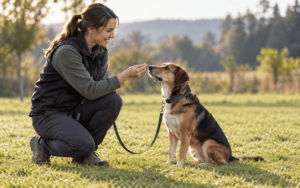
“Leave it” is one of the most practical impulse control exercises you can teach. Start by placing a low-value treat in your closed fist. When your dog stops pawing and nosing at your hand and pulls back even slightly, mark the behavior with a “yes” or a clicker and reward from your other hand. Over many repetitions, the dog learns that ignoring the obvious thing produces a better outcome.
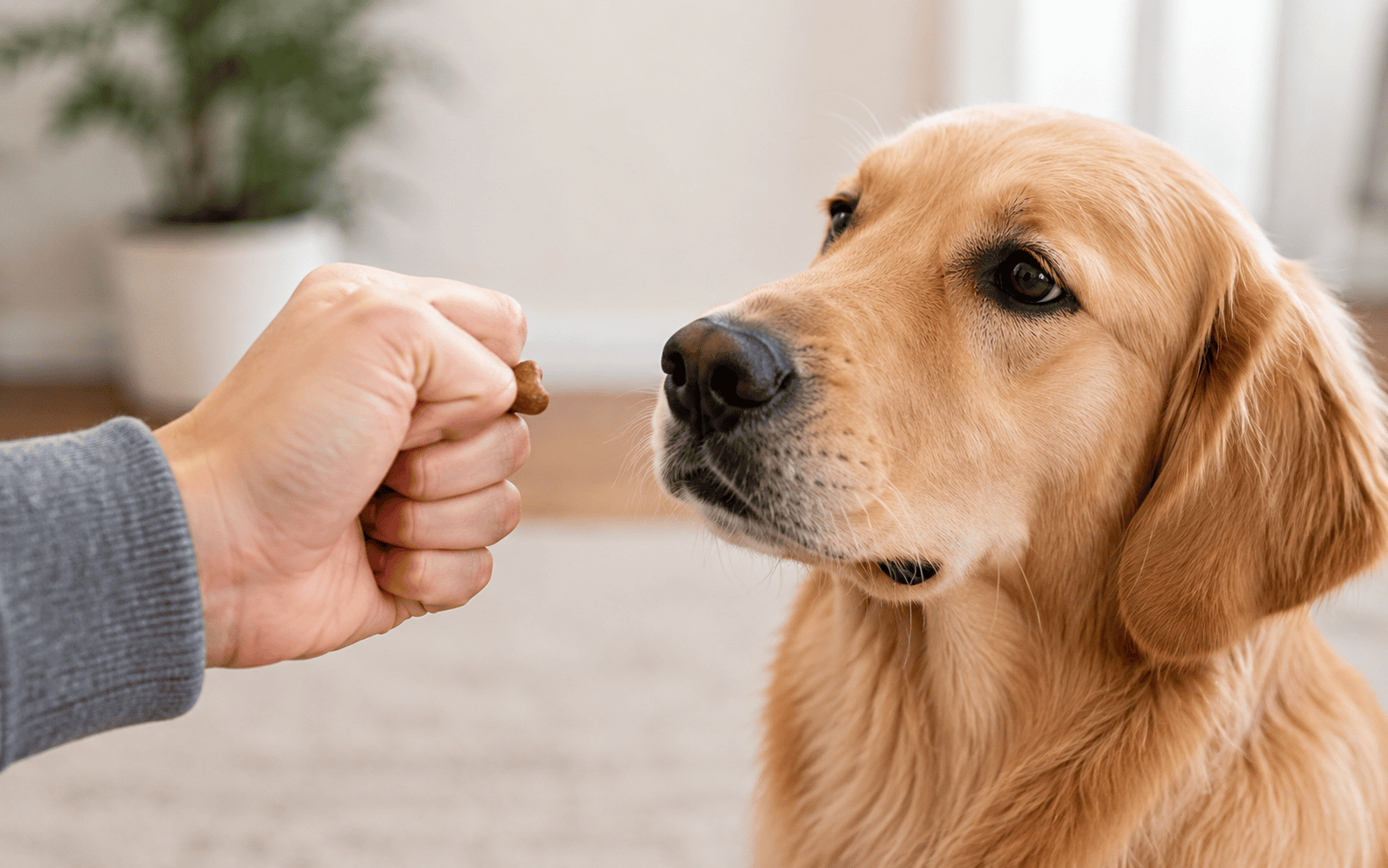
Progress gradually: open hand, treat on the floor, treat on the floor with distance, then high-value items like food scraps or toys. Each step raises the difficulty. Rushing through levels is one of the most common mistakes owners make — if your dog fails more than two or three times in a row, you’ve moved too fast.
Wait and Stay
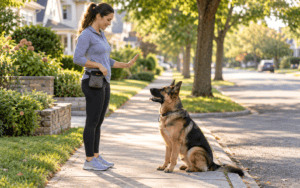
“Wait” teaches your dog to pause before crossing a threshold, whether that’s a doorway, a curb, or the gate to a dog park. “Stay” asks for sustained stillness over time and distance. Both require your dog to override the impulse to move forward.
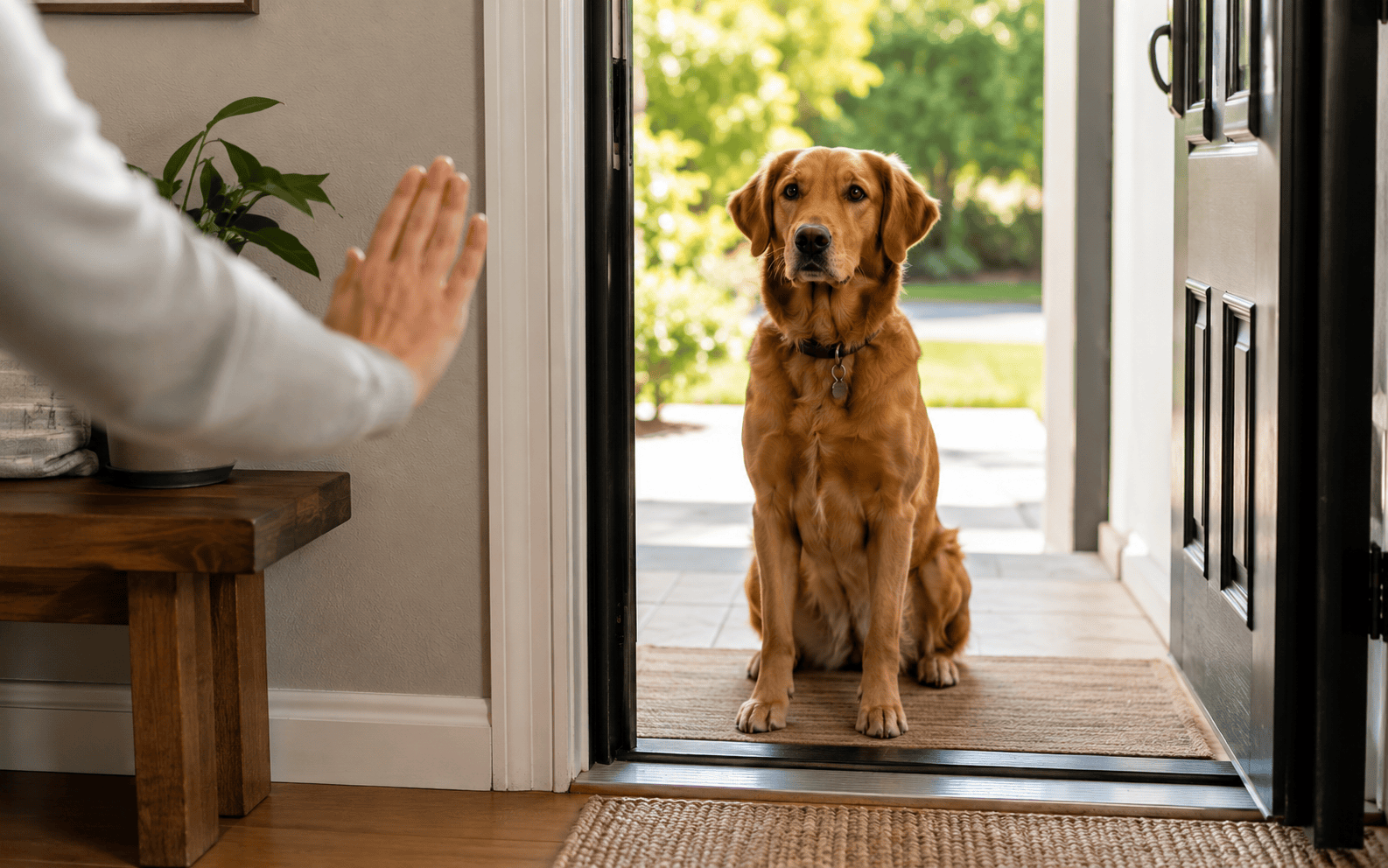
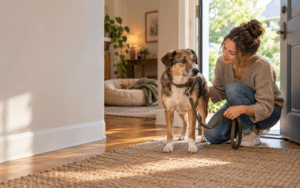
A good starting point is the doorway exercise. Ask your dog to sit before you open the door. If they break position when the door opens, calmly close it and reset. No punishment, no drama — just a clear consequence that the door closes when they move. Most dogs catch on within 10 to 15 repetitions during a single session. For a comprehensive breakdown of commands that pair well with this work, the resource on top 10 essential dog commands every owner must know is worth bookmarking.
The “It’s Your Choice” Protocol
Developed by trainer Susan Garrett, this exercise is deceptively simple. You hold a treat in your open palm. You do nothing. If the dog goes for it, you close your fist. You wait. The moment the dog backs off or looks away, you open your hand and let them take the treat. You’re teaching the dog that restraint is what unlocks rewards, not grabbing.
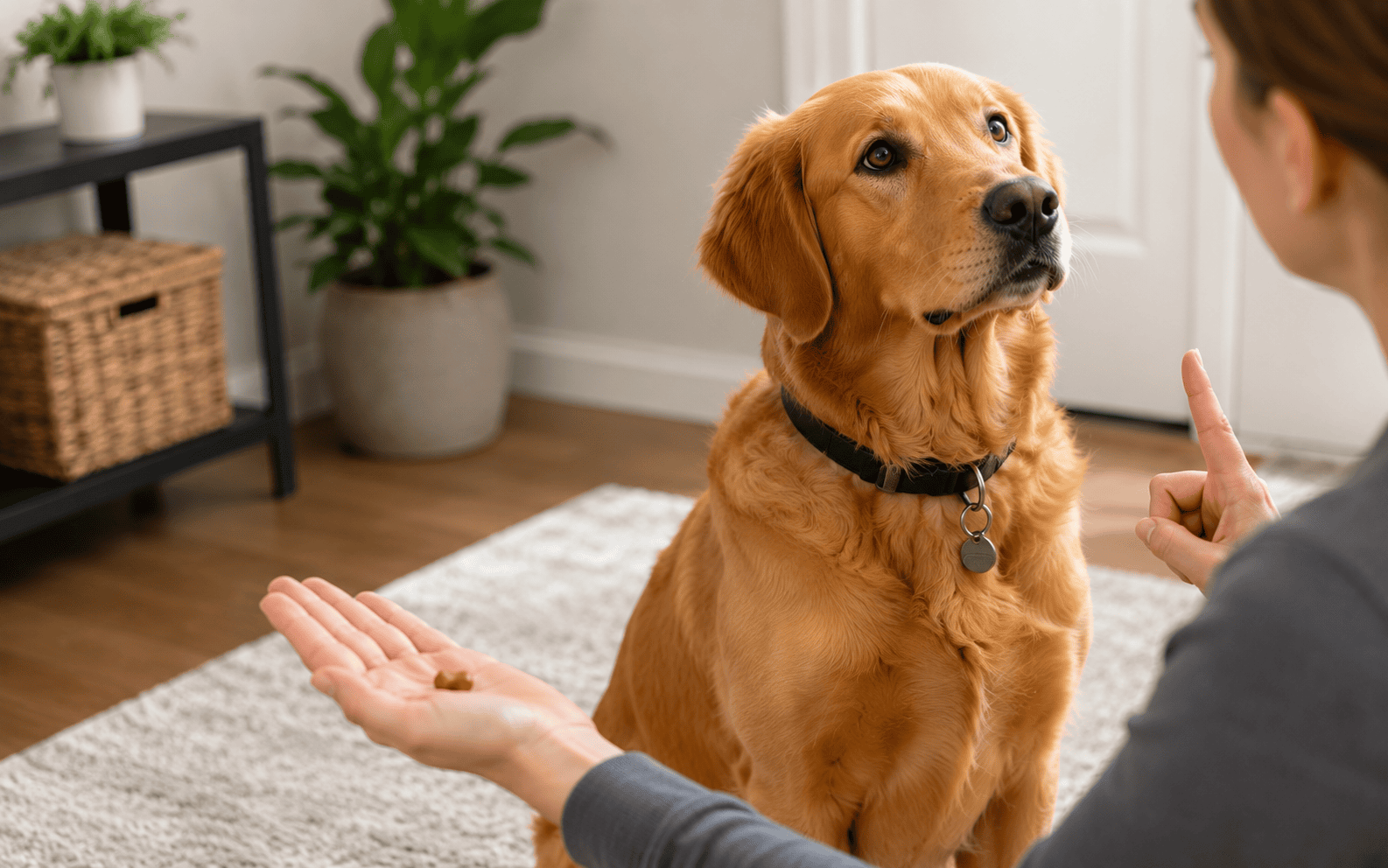
This protocol is powerful because you’re not using a verbal cue — you’re building an internal decision-making loop in the dog. Over time, dogs trained this way begin to default to self-control naturally, without waiting for commands.
Structured Feeding
How you feed your dog is itself a training opportunity. Asking for a sit or a down before placing the bowl, requiring the dog to wait until released, and practicing “leave it” with the food bowl builds daily repetitions of impulse control into your routine without adding extra training time.
Building Distractions Into Training Sessions
Training in your living room is the easy part. The hard part is proofing — teaching your dog to hold their impulse control when the environment gets exciting. This is where most training falls apart, and it’s also where dogs reveal how solid their foundation really is.
Use a distraction hierarchy. Start with mild distractions (another person walking by at a distance), then progress to moderate ones (another dog visible across the yard), then high-level distractions (squirrels, other dogs running, food on the ground). At each level, your dog should be succeeding 80% of the time before you move up.
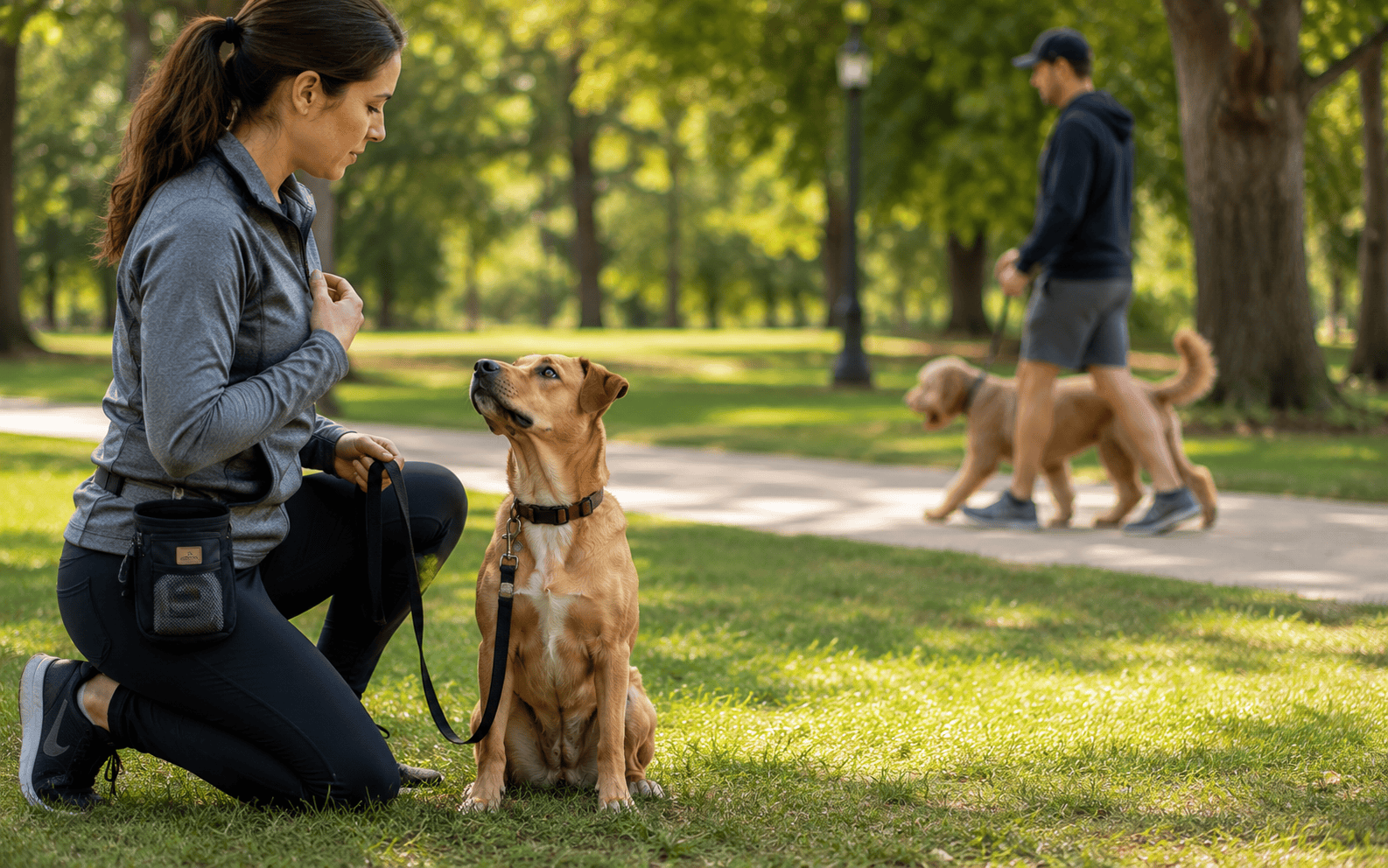
Two common errors to avoid: raising the distraction level too fast, and training only in familiar places. Take your dog to different locations, different times of day, and different surfaces. A dog that only practices impulse control in one location hasn’t really learned impulse control — they’ve learned a location-specific behavior.
One behavior that benefits dramatically from distraction-proofed training is jumping. Dogs that jump on people are acting purely on impulse — excitement overrides everything. If your dog struggles with this, the article on how to train a dog not to jump walks through a step-by-step approach that pairs well with broader impulse control work.
Impulse Control Across Different Training Formats
Not every dog — or owner — is suited to the same training setup. The format you choose affects how quickly you see results and how sustainable those results are long term.
| Format | Best For | Typical Duration | Cost Range (USD) |
| Private 1-on-1 lessons | Targeted issues, busy owners | 4-8 sessions | $75-$150 per session |
| Board and Train | Fast results, reactive dogs | 2-4 weeks | $1,500-$3,500 |
| In-Home Training | Context-specific issues | 4-6 sessions | $100-$200 per session |
| Group Classes | Social dogs, budget-conscious owners | 6-8 weeks | $150-$350 total |
| Self-Directed Training | Motivated owners, mild issues | Ongoing | Cost of resources only |
For owners on Long Island who want structured, professional help, the board and train long island option places your dog in a professional environment where impulse control exercises are practiced dozens of times daily. The density of repetition in these programs accelerates progress significantly compared to weekly lessons.
If you’d rather keep your dog at home, in home dog training long island brings a certified trainer directly to your environment. This is particularly useful for dogs whose impulse control problems are location-specific, like counter-surfing, door bolting, or reacting to specific triggers around the house. For a more flexible, customizable approach, private dog training long island lets you work one-on-one with a trainer at a pace that matches your dog’s progress.
Many owners find this format the most effective for understanding the “why” behind their dog’s behavior, not just following a script.
Integrating Impulse Control Into Everyday Obedience
Impulse control isn’t a separate curriculum — it’s the thread that runs through all good obedience work. A dog that can hold a sit while another dog walks by, wait at the door before crossing a street, and recall reliably from a running sprint has strong impulse control baked into their obedience.
That’s why structured obedience dog training should always include impulse control components, not treat them as an add-on. When trainers work on heel position with distractions, recall under pressure, or down-stay with duration, they’re building impulse control through the structure of obedience exercises — often without the owner even realizing it.
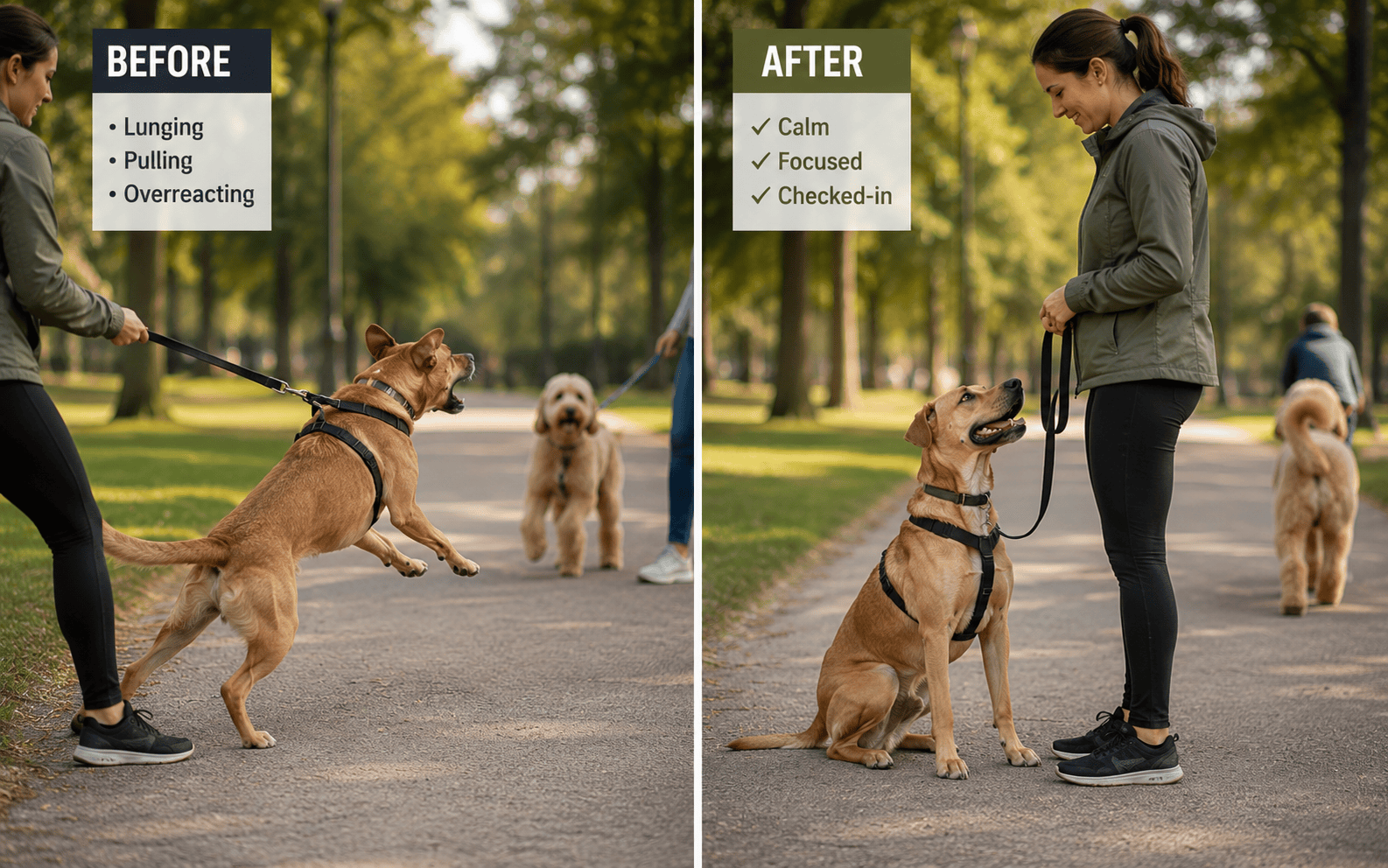
If you’ve been training your dog individually but struggling to see transfer to real-world situations, the issue is almost always insufficient proofing paired with a gap in impulse control fundamentals. Returning to basic obedience with a qualified trainer and specifically requesting impulse control-focused work usually breaks through those plateaus. Another common issue involves dogs that steal food from counters, and addressing this behavior requires deliberate work — the guide on how to stop dog from counter surfing provides targeted strategies that integrate naturally with broader impulse control training.
Things to Know
- Dogs don’t generalize well — a behavior learned in one room or location needs to be retrained in new environments before it’s reliable.
- Punishment-based methods often suppress behavior without teaching the dog what to do instead, which leads to unpredictable results under high arousal.
- Management (baby gates, leashes, crates) isn’t the same as training — it prevents rehearsal of bad habits while training happens, but doesn’t build skills on its own.
- Arousal level matters: a dog in a highly excited state literally cannot access the same decision-making pathways as a calm dog, so bringing arousal down before training is often the first step.
- Some dogs need medical evaluation — thyroid imbalances, pain, and neurological issues can all contribute to impulsivity that doesn’t respond well to training alone.
- Progress often looks nonlinear — dogs may seem to regress before they improve, especially when exposed to new environments or stressors.
Ready to Transform Your Dog’s Self-Control?
Book a free consultation with a certified trainer who specializes in impulse control training dogs need most — and ask specifically about their proofing process and how they measure progress across different environments. That single question will tell you more about the quality of a training program than any testimonial or price point.
Frequently Asked Questions
At what age should I start impulse control training with my dog?
You can start basic impulse control exercises as early as 8 weeks old.
Young puppies have short attention spans, so keep sessions to 2-3 minutes with simple exercises like “it’s your choice” and hand-feeding protocols. Starting early gives you a significant advantage before bad habits become ingrained.
How long does impulse control training take to show results?
Most owners see noticeable improvement within 3-4 weeks of consistent daily practice.
The timeline varies based on breed, age, and how frequently your dog has been able to rehearse impulsive behaviors. Dogs with a long history of jumping, lunging, or bolting will take longer to retrain because those neural pathways are well-established.
Can older dogs learn impulse control, or is it too late?
Older dogs can absolutely learn impulse control — it may just take more repetitions than it would for a younger dog.
Neuroplasticity doesn’t disappear with age, but older dogs may have stronger competing habits. A structured approach with a professional trainer typically yields good results even with dogs 5 years and older.
My dog is great at home but loses all control outside. What’s happening?
Your dog hasn’t yet generalized their impulse control to high-distraction environments — this is extremely common and very fixable.
This issue is about training context, not disobedience. The solution is a structured distraction hierarchy where you systematically raise difficulty across new locations and situations until the behavior is reliable everywhere.
Is there a difference between impulse control training and basic obedience?
Impulse control is a core component of obedience, but the two aren’t identical.
Basic obedience focuses on specific commands like sit, down, and heel. Impulse control training targets the underlying self-regulation that allows those commands to hold up under real-world pressure — excitement, distractions, and high-arousal situations.
The Bottom Line on Impulse Control Training Dogs Need
Building self-control in your dog is one of the most practical investments you can make. It directly affects safety, daily management, and your relationship with your dog. A dog with strong impulse control is easier to live with, safer in public, and more enjoyable in every context.
Start with the foundational exercises covered here, train across multiple environments, and don’t underestimate the value of professional guidance when progress stalls. The right trainer won’t just fix individual behaviors — they’ll teach you how to read your dog and maintain those improvements for life.