The benefits of dog agility training go far beyond teaching your dog to jump through hoops. Agility training builds physical fitness, sharpens focus, reduces behavioral problems, and deepens the relationship between you and your dog in ways that few other activities can match.
Key Takeaways
- Agility training improves your dog’s cardiovascular health, muscle tone, and coordination simultaneously.
- Regular agility work reduces anxiety-driven behaviors like excessive barking, digging, and destructive chewing.
- The handler-dog communication required in agility strengthens your bond faster than most other training methods.
- Any dog can participate in agility, not just purebreds or high-energy breeds.
- Agility training builds on obedience skills, so a solid foundation in basic commands is essential before starting.
- You can begin agility training at home with simple equipment before advancing to structured classes or competitions.
Why Agility Training Is More Than Just an Obstacle Course
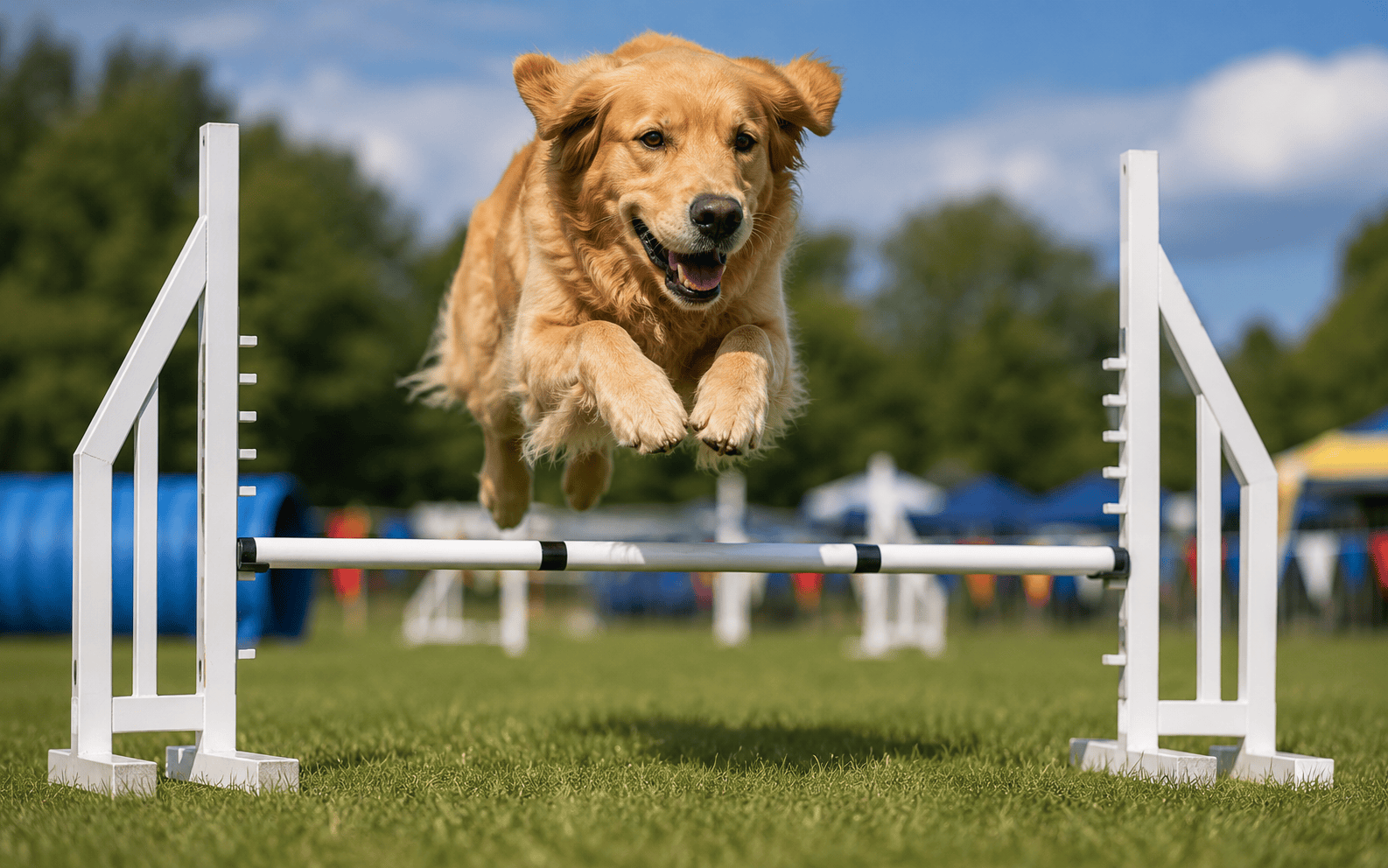
Most people picture border collies flying through weave poles at a televised competition when they hear “dog agility.” The reality is much more accessible. Agility training is a structured activity where your dog navigates a series of obstacles, including tunnels, jumps, A-frames, seesaws, and weave poles, guided entirely by your body language and verbal cues. No treats are stuffed into pockets mid-run. No leash guides your dog from station to station. It is pure communication.
That communication demand is what makes agility so powerful as a training tool. Your dog has to watch you constantly, read your signals, and make split-second decisions. For a dog that struggles with attention or impulse control, this kind of engagement is genuinely transformative.
Agility also scales well. A young, high-drive Australian shepherd and a calm, middle-aged beagle can both benefit from agility work, though the pace and complexity of their courses will look different. If you are wondering whether your dog has the temperament or trainability for it, checking out resources on most trainable dog breeds can help you set realistic expectations while also reminding you that drive and teachability exist across nearly every breed.
Physical Health Benefits Your Dog Gets From Agility
Running, jumping, balancing, and weaving are not just fun. They are a complete workout. Here is what agility training does for your dog’s body:
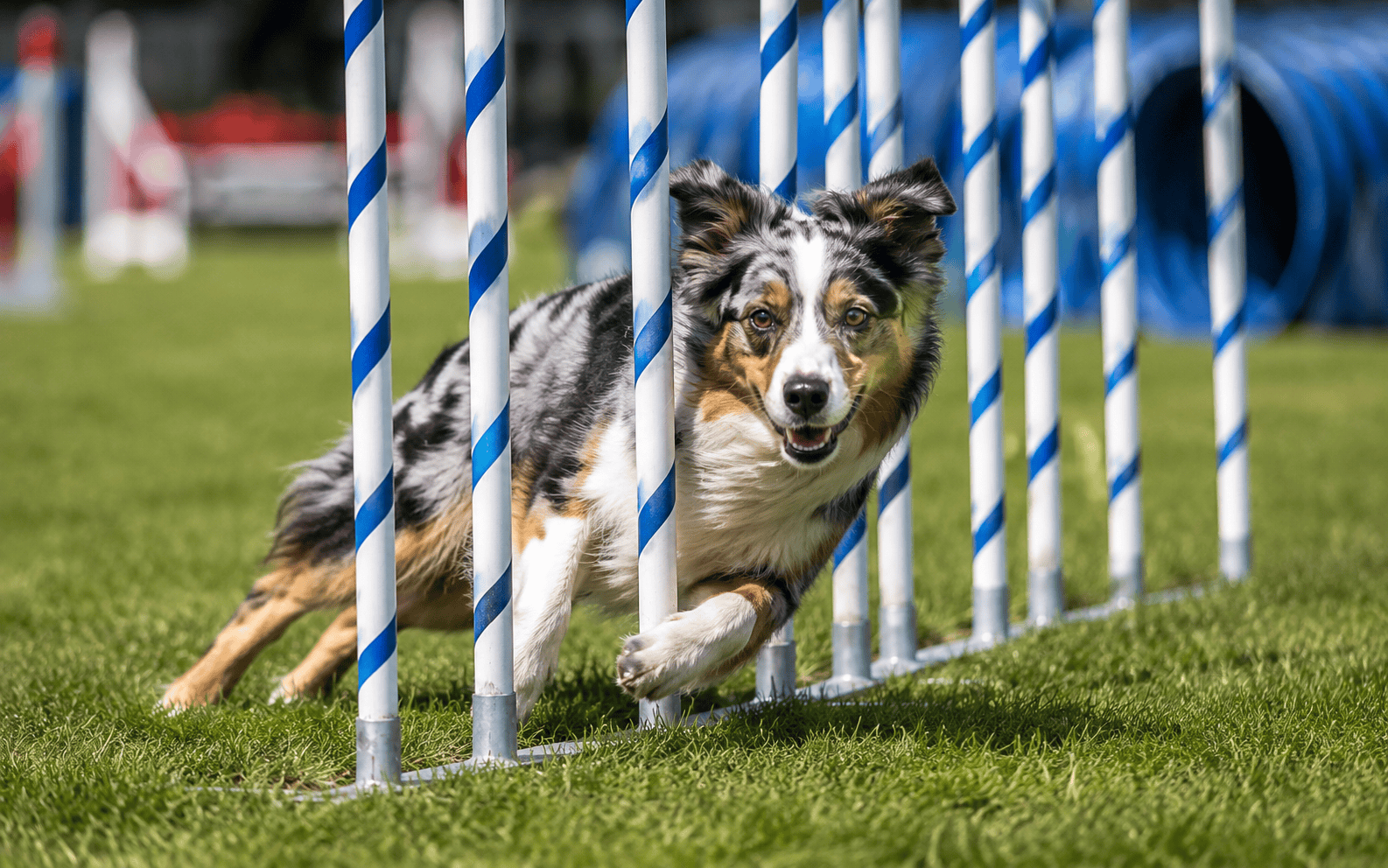
Cardiovascular conditioning: A single agility run, typically 30-60 seconds of full-speed movement, elevates heart rate significantly. Regular runs improve heart and lung efficiency over time, similar to interval training for human athletes.
Muscle development: The A-frame and dog walk obstacles require your dog to use stabilizing muscles that flat-ground walks never activate. Weave poles demand lateral movement and core engagement. These compound movements build functional strength rather than just bulk.
Weight management: According to the Association for Pet Obesity Prevention, over 50% of dogs in the United States are overweight or obese. Agility training burns significantly more calories than a standard 30-minute walk, making it an effective tool for weight management in active dogs.
Joint health through controlled movement: Contrary to what some owners worry about, properly designed agility training actually supports joint health by strengthening the muscles around joints. The key word is “properly designed.” Jump heights should be set appropriately for your dog’s size, and puppies under 12-18 months should avoid high-impact obstacles until their growth plates close.
Balance and proprioception: Navigating a seesaw or walking a narrow elevated plank forces your dog to develop body awareness that carries over into everyday movement. Older dogs especially benefit from this, as improved balance reduces fall-related injuries.
Mental and Behavioral Benefits That Change Your Dog at Home
Here is where agility training often surprises owners the most. The dog that used to chew through furniture or bark relentlessly at the window becomes noticeably calmer after consistent agility work. That is not a coincidence.
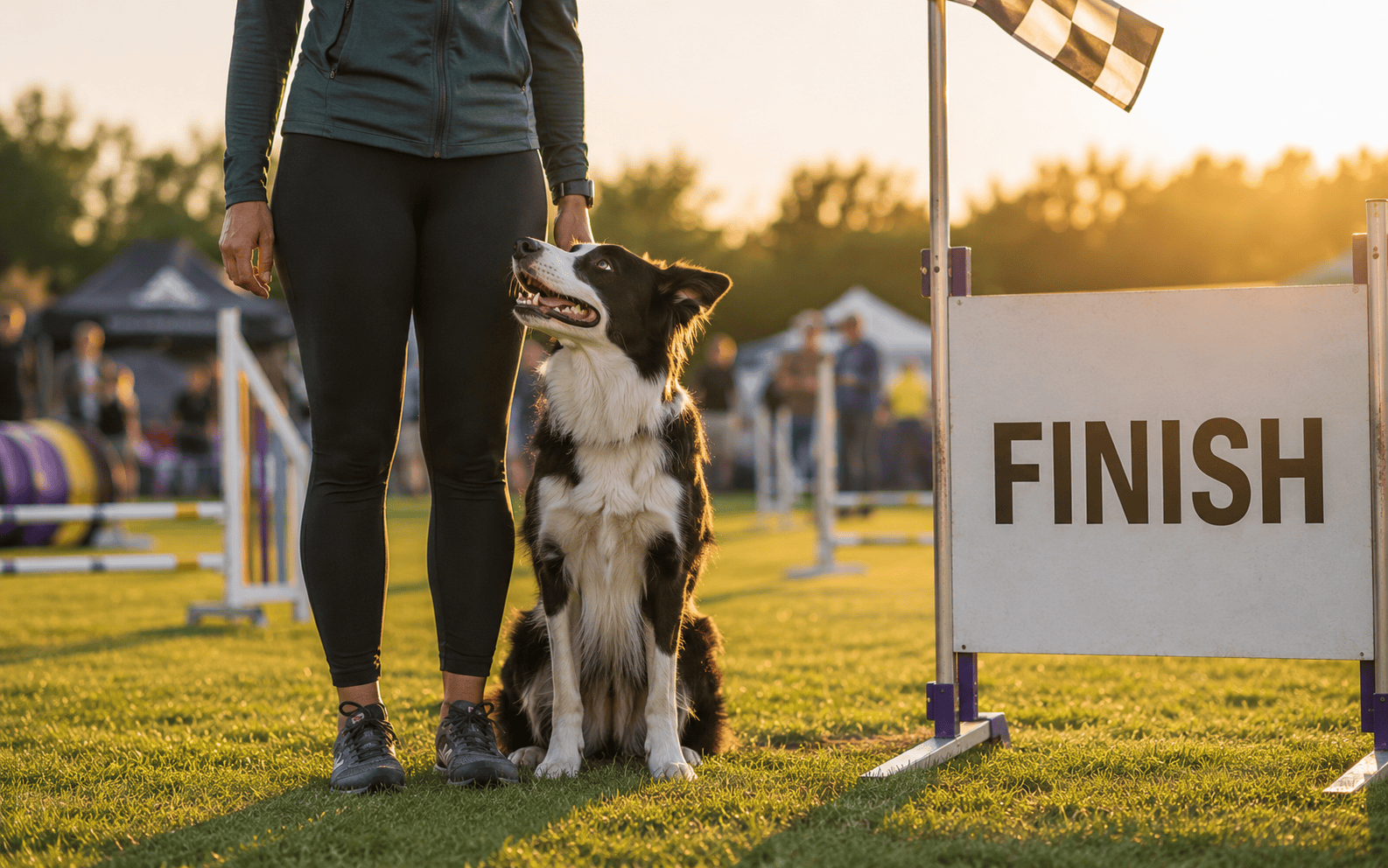
Mental exhaustion is just as effective as physical exhaustion for dogs. Agility requires your dog to process information rapidly: reading your cues, memorizing sequences, and adjusting mid-run. A 20-minute agility session can leave a high-energy dog more settled than an hour-long walk because the brain has been working the entire time.
Specific behavioral improvements owners report:
- Reduced anxiety and stress-related behaviors
- Improved focus and responsiveness to commands
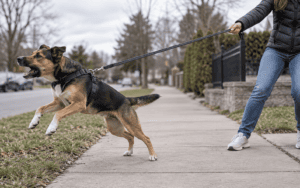
- Less reactivity toward other dogs and strangers
- Decreased hyperactivity indoors
- Better impulse control in everyday situations
Agility also builds confidence. Dogs that are shy or easily startled often blossom through agility training because every successfully completed obstacle is a small win. That accumulated confidence changes how they carry themselves generally.
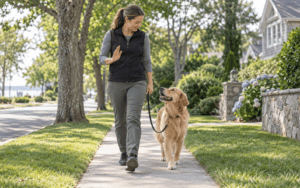
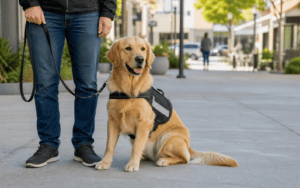
If your dog has existing behavioral challenges, combining agility with foundational obedience dog training creates the most effective results. Agility assumes your dog already understands “sit,” “stay,” “come,” and basic leash manners. Without those foundations, agility becomes chaotic rather than productive.
The Bond Between You and Your Dog: What Agility Does Differently
Most dog owners think of bonding as cuddling on the couch or going for walks together. Agility creates a different kind of bond, one built on trust, communication, and shared accomplishment.
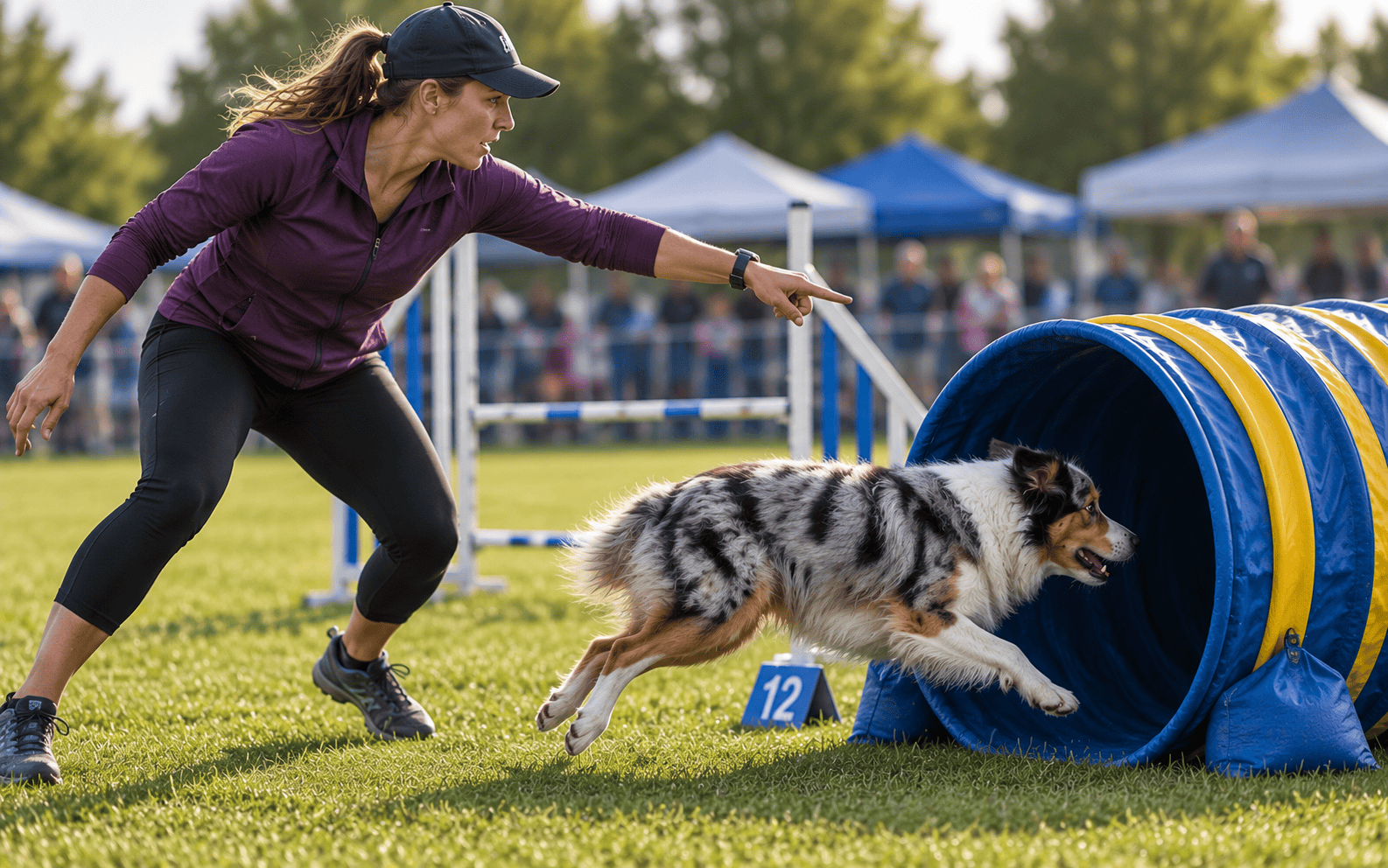
In agility, you cannot force your dog to perform. You cannot drag them through the course. Every obstacle your dog takes is a choice made based on their trust in your direction. When that trust is established, you see it everywhere outside of training. Your dog checks in with you more on walks. They respond faster to recall. They look to you for guidance in uncertain situations instead of reacting on their own.
This is also why off leash dog training tips pair so naturally with agility work. Running an agility course is essentially an advanced off-leash exercise. The responsiveness and attention your dog develops while navigating obstacles directly transfers to reliable off-leash behavior in other environments.
For handlers, agility is also genuinely enjoyable. You are moving with your dog, problem-solving together, and celebrating each improvement. That shared experience builds something that simply cannot be replicated through sit-and-stay drills alone.
Agility Training Options: From Home Practice to Structured Programs
| Training Format | Best For | Typical Cost | Time Commitment |
| Backyard agility (DIY equipment) | Beginners, budget-conscious owners | $50-$200 setup | 15-30 min/day |
| Group agility classes | Socialization + instruction | $20-$40/class | Weekly classes |
| Private agility coaching | Fast progress, specific issues | $75-$150/session | Flexible |
| Board and train programs | Busy owners, foundational skills | $1,500-$3,500 | 2-4 week stay |
| Competitive agility clubs | Experienced teams, trial prep | $50-$150/month | Multiple days/week |
Where you start depends on your dog’s current skill level and your schedule. If your dog has no formal training background, jumping straight into agility classes often frustrates both dog and handler. A better approach is to build the groundwork first.
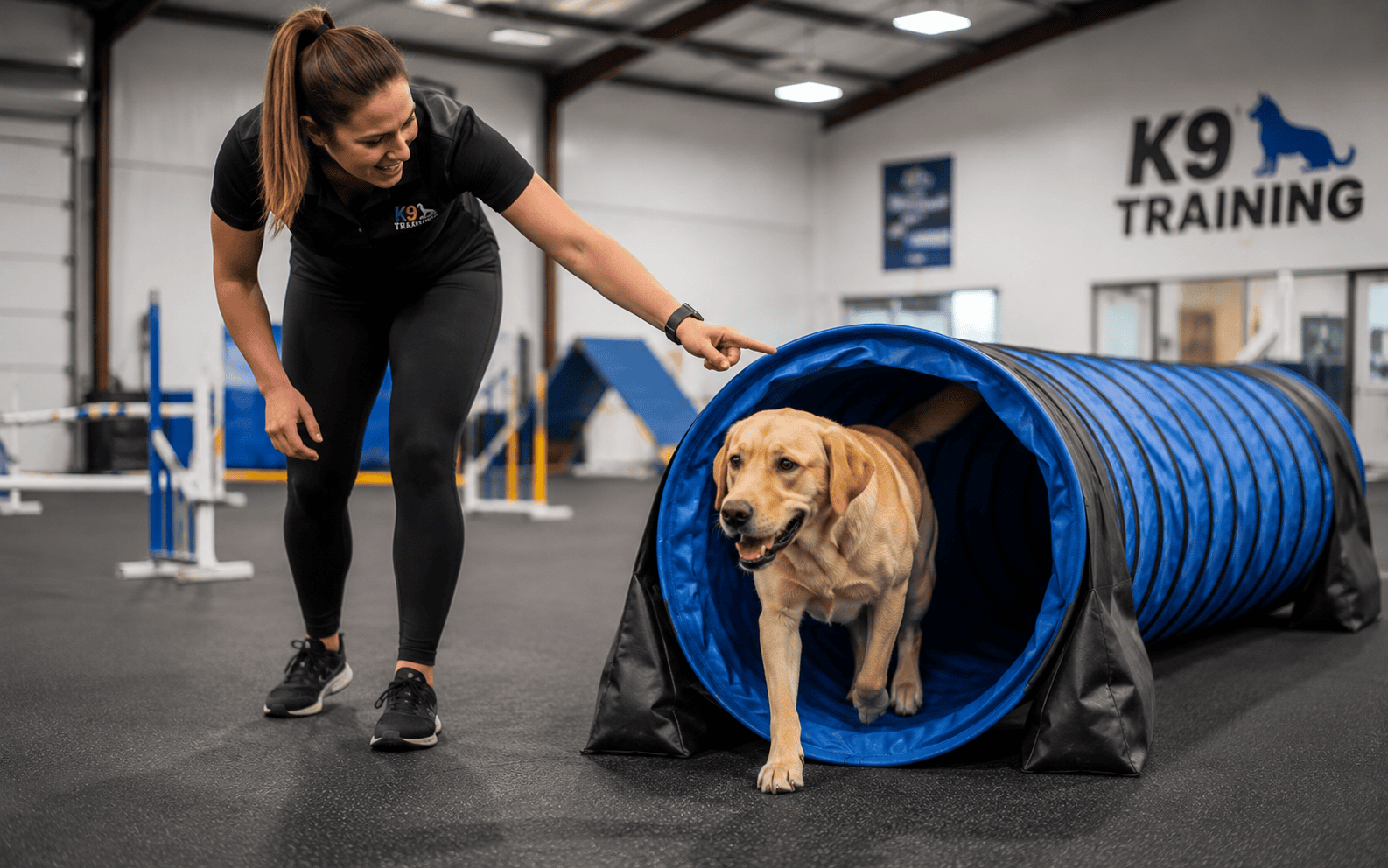
For Long Island residents specifically, board and train long island programs can be an excellent way to establish the obedience foundation your dog needs before transitioning into agility work. Dogs that come out of structured board and train programs typically pick up agility concepts faster because the communication basics are already in place.
If you prefer working with a professional who comes to you, in home dog training long island is another route worth considering, especially for dogs that need behavioral groundwork in their own environment before adding the stimulation of an obstacle course setting.
For owners who want focused, one-on-one attention to accelerate their dog’s agility progress, private dog training long island sessions allow trainers to address your dog’s specific gaps and design a progression plan that fits your goals.
Things to Know
- Age matters at both ends: Puppies under 12-18 months should not be jumping at full height due to open growth plates. Senior dogs can still enjoy modified agility with lower jumps and slower courses.
- Your dog does not need to be a specific breed: While border collies and Australian shepherds dominate competition, mixed breeds, bulldogs, and dachshunds all participate in recreational agility successfully.
- Consistency matters more than frequency: Two focused 20-minute sessions per week produces better results than daily, halfhearted practice.
- Handler mistakes are the most common training obstacle: Dogs rarely make the same mistake twice. If your dog is consistently missing an obstacle, re-examine your own cuing and positioning first.
- Fearful dogs need slower progressions: Never force a dog over or through an obstacle. Skipping steps to rush progress creates lasting aversions that are harder to fix later.
- Agility titles are real but not the goal: Organizations like the American Kennel Club (AKC) and the United States Dog Agility Association (USDAA) offer formal titling, but the benefits of dog agility training exist whether you ever enter a trial or not.
Ready to Start Your Dog’s Agility Journey?
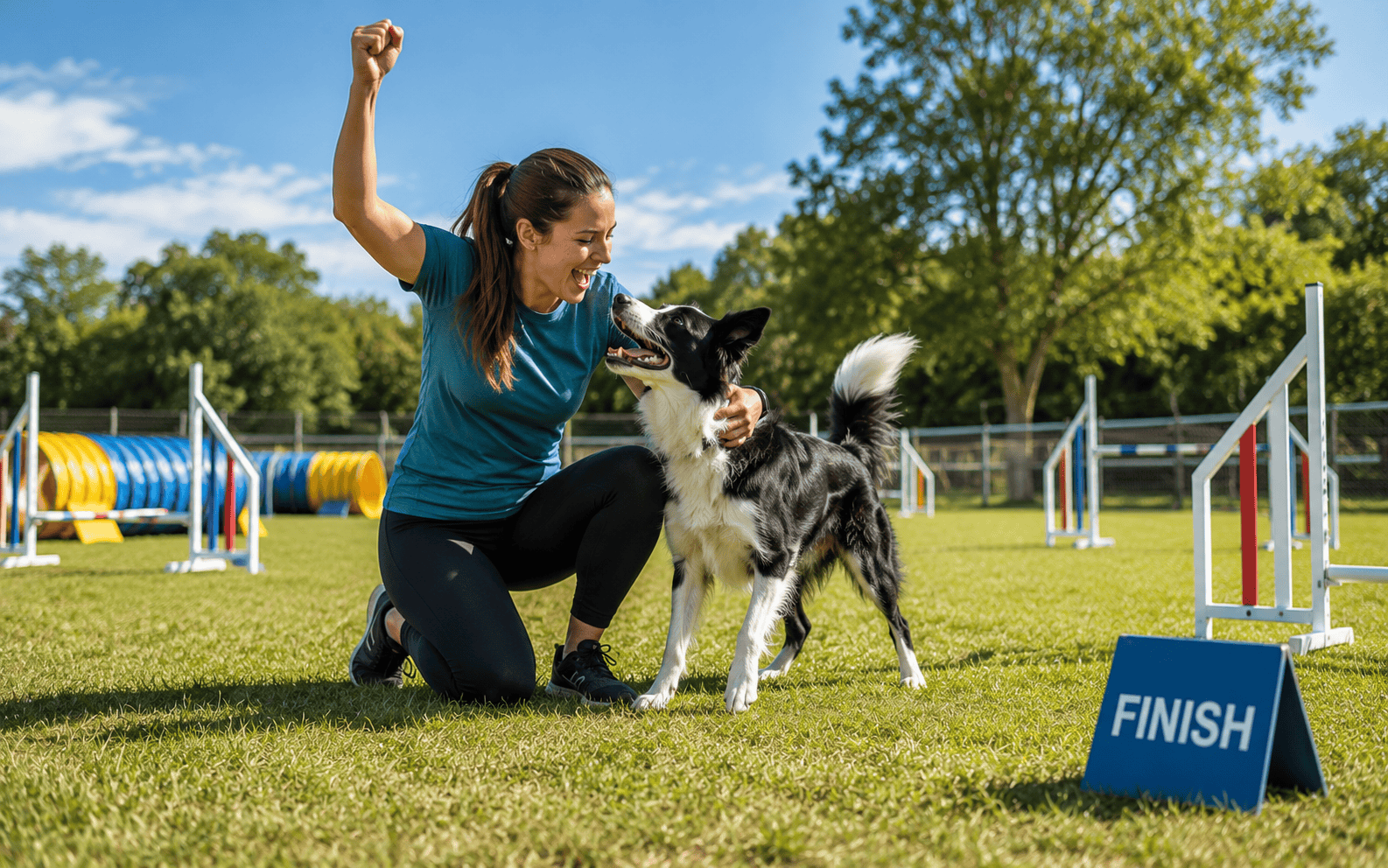
Take one concrete step this week: assess your dog’s current foundation skills. Can your dog sit, stay, and come reliably with distractions present? If yes, contact a local agility class or trainer to schedule an evaluation session. If the foundation needs work first, reach out to a qualified trainer who can map out the right progression for your dog specifically. Starting with an honest assessment of where your dog is now saves months of frustration and sets you both up for a genuinely rewarding experience.
You May Also Read
Teaching a Dog to Settle on a Mat
Agility Dog Training: What It Is, How It Works
Frequently Asked Questions
What age can a dog start agility training?
Dogs can begin learning basic agility concepts as young as 8 weeks old, but full obstacle work should wait until 12-18 months depending on breed size.
Puppies can start with flat work, like learning to follow your movement and respond to directional cues, from a very young age. High-impact jumping and contact obstacles should be introduced only after your veterinarian confirms growth plates have closed, which happens later in larger breeds than smaller ones.
Do I need a special breed for agility training?
No. Any dog, regardless of breed or mix, can participate in and benefit from agility training.
While herding breeds like border collies and Australian shepherds are frequent competitors at the elite level, recreational agility is open to all dogs. The activity is adapted to suit the dog’s physical capabilities, not the other way around.
How long does it take for a dog to learn agility?
Most dogs can learn basic obstacle navigation within 3-6 months of consistent training, though competition-ready handling takes considerably longer.
The timeline depends heavily on your dog’s existing obedience foundation, your consistency as a handler, and the complexity of obstacles introduced. Dogs with a strong recall and leash manners typically progress faster in agility environments.
Is agility training good for anxious or reactive dogs?
Yes, agility can significantly reduce anxiety and reactivity when introduced gradually and paired with appropriate behavioral support.
The confidence-building aspect of completing obstacles, combined with the mental engagement of the activity, often helps anxious dogs become more grounded. However, reactive dogs may need individual coaching rather than group classes initially to avoid overwhelming them.
How much does dog agility training cost?
Recreational agility training in the United States typically costs between $20-$40 per group class session or $75-$150 per private session.
Starter equipment for backyard practice runs $50-$200 for basic setups. Competitive agility, including entry fees, travel, and club memberships, can run $2,000-$5,000 or more annually for active competitors.
The Bottom Line on Benefits of Dog Agility Training
The benefits of dog agility training are wide-ranging and well within reach for most dog owners, regardless of breed, budget, or competitive ambitions. Physical fitness, behavioral improvement, mental stimulation, and a stronger human-dog bond are all real outcomes backed by what trainers and owners consistently observe. The activity meets your dog where they are and grows with them over time.
Your next step is simple: evaluate your dog’s foundation, connect with a qualified trainer in your area, and commit to consistent practice. The improvements you will see, both on the course and off it, are worth every minute of the effort.