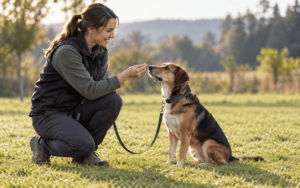

Off leash dog training tips gives your dog the freedom to run, explore, and respond to your commands without a physical connection. For Long Island dog owners specifically, mastering this skill opens up access to beaches, parks, nature preserves, and open spaces where a well-trained dog can truly thrive.
Key Takeaways
- Off leash reliability starts with solid on-leash fundamentals, never skip that phase.
- Recall is the single most critical command to proof before removing the leash in any environment.
- Long Island’s unique environment, from crowded beaches to busy suburban neighborhoods, demands distraction-specific training.
- Consistency across every family member is non-negotiable for off leash success.
- Professional dog training programs can dramatically accelerate results and build lasting habits.
- Rewarding your dog heavily in the early stages creates the positive association that holds up under real-world pressure.
Why Long Island Makes Off Leash Training Both Rewarding and Challenging
Long Island is a beautiful place to own a dog. From Jones Beach to Sunken Meadow State Park, from the trails at Caumsett to the open fields of Nassau County parks, there are genuinely incredible places where a well-trained dog can enjoy off leash time. But the same geography that makes Long Island appealing also makes off leash training more demanding than it might be in a rural setting.
The density of the Island matters. You are not training in a remote field where the only distraction is a passing bird. You are training near traffic, cyclists, other dogs, joggers, children, food vendors, and wildlife. Your dog needs to be reliable in all of those situations before you remove the leash in a public space.
Additionally, New York State and many Long Island municipalities have specific leash laws. Most parks require dogs to be on leash except in designated off leash areas. Knowing those rules and ensuring your dog is genuinely trained, not just hopeful to be obedient, keeps both your dog and your community safe.
The Foundation Your Dog Needs Before Going Off Leash
One of the most common mistakes Long Island dog owners make is attempting off leash freedom before the dog has mastered the basics. If your dog pulls on the leash, ignores you when distracted, or refuses to come when called, removing the leash will not fix those problems. It will expose them.
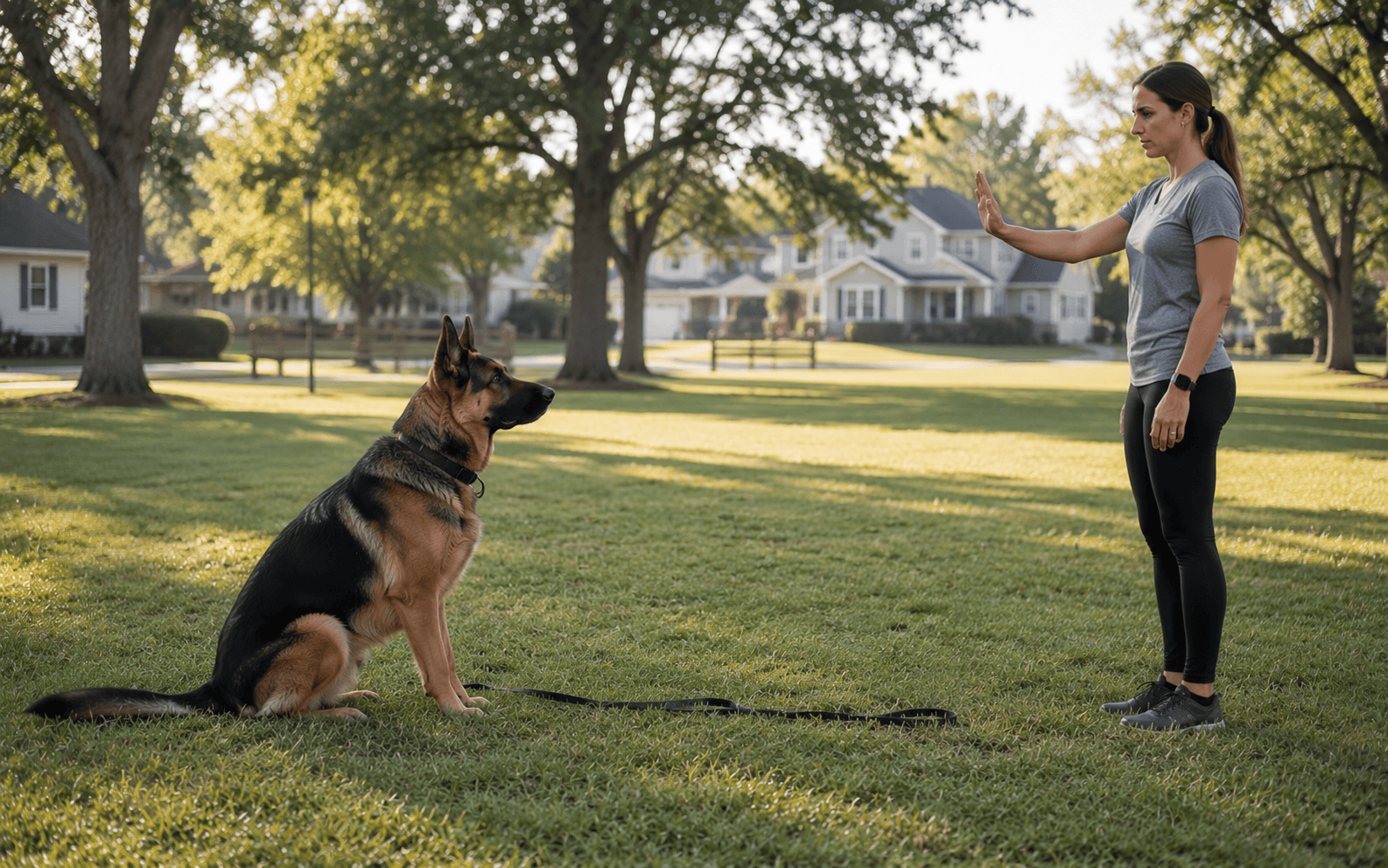
Here are the core skills your dog should have locked in before any off leash work begins:
- Sit and Stay: Your dog should hold a sit-stay for at least 30 seconds with mild distractions present.
- Down: A reliable down command gives you an emergency interrupt when needed.
- Leave It: This is essential near food, wildlife, and other dogs.
- Loose Leash Walking: Your dog should be comfortable walking beside you without tension on the leash.
- Name Recognition: Your dog should look at you immediately when you say their name.
Building these behaviors through obedience dog training creates the structure that makes off leash reliability possible. Think of it as the skeleton your off leash training hangs on. Without it, the whole system falls apart.
Recall: The Most Important Off Leash Skill You Will Ever Teach
If there is one skill that separates a safe off leash dog from a dangerous situation waiting to happen, it is recall. Recall means your dog comes to you immediately, every single time, regardless of what is happening around them.
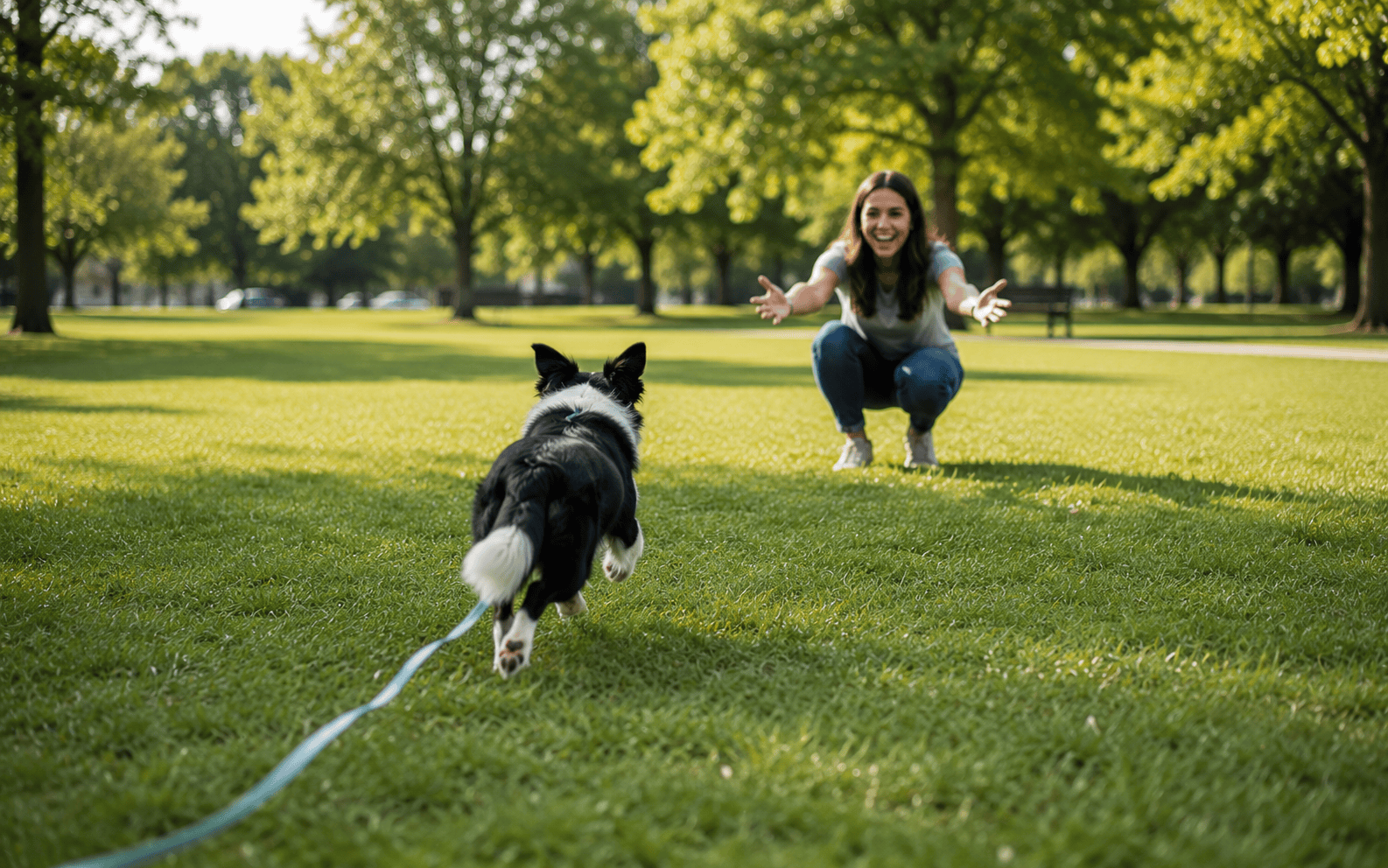
Understanding how to teach dog to come is a process that takes weeks of consistent practice, not a one-session fix. The core principle is straightforward: coming to you should always be the best thing that happens to your dog. You achieve this through high-value rewards, enthusiasm, and never, ever punishing a dog who comes to you even if they took too long.
Building Recall in Stages
Start indoors in a quiet room. Call your dog from a short distance, reward heavily with treats, praise, or play. Gradually increase the distance. Once indoor recall is solid, move outside to a low-distraction yard on a long training line (a 20 to 30-foot lead). The long line is crucial because it prevents the dog from learning they can ignore you and actually get away. It simulates off leash freedom while keeping you in control.
From the yard, move to progressively busier environments: a quiet park, then a moderate park, then the busy waterfront or beach. Every new environment is effectively a new training challenge for your dog.
Managing Distractions: The Real Test of Off Leash Training
Long Island is packed with distractions, and your training is only as good as how your dog performs when those distractions appear. A dog who sits perfectly in your living room but ignores you the moment they see a squirrel is not an off leash dog yet.
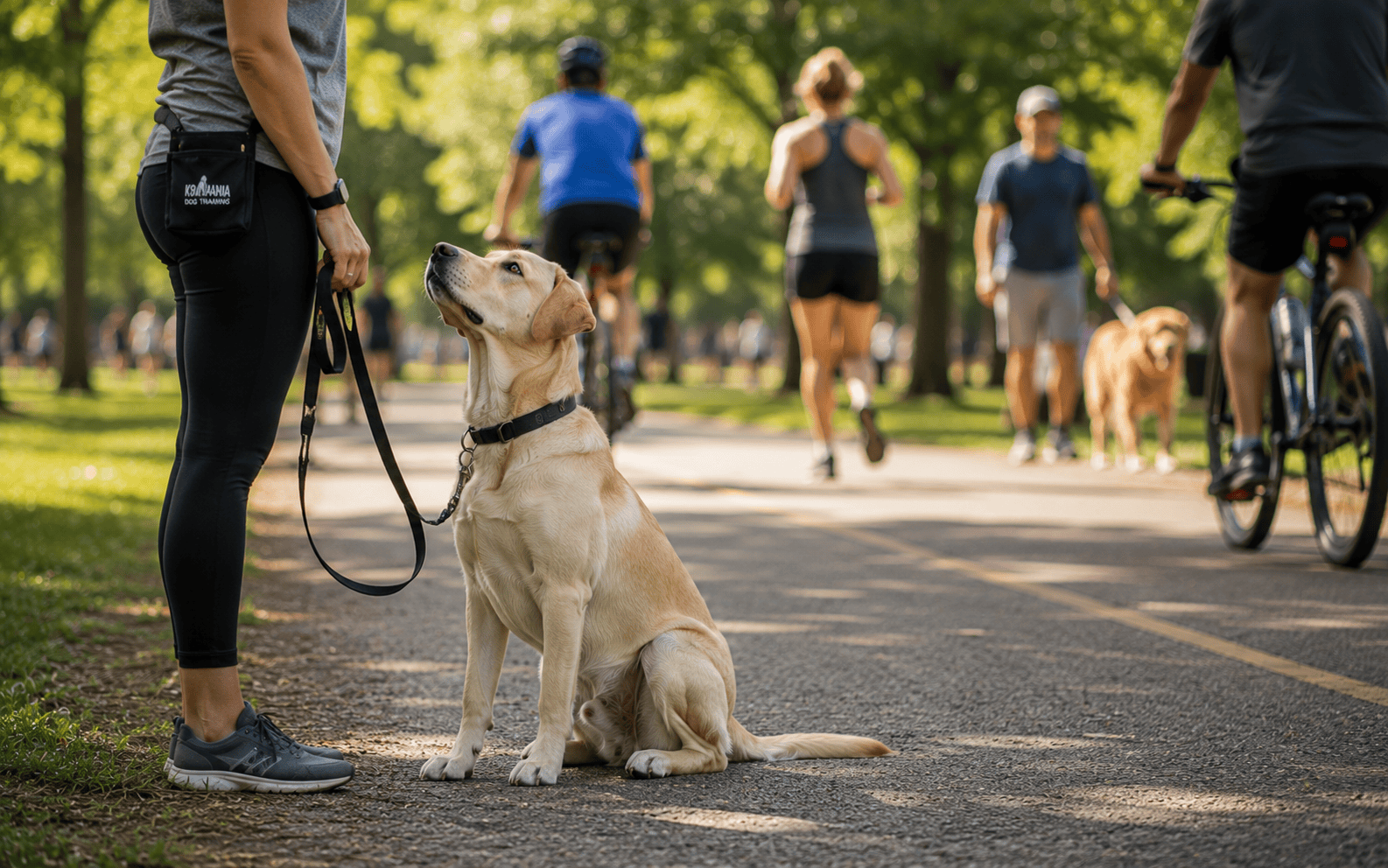
Learning how to get your dogs attention when distracted is a skill that requires deliberate practice in real-world conditions. The approach involves something called “proofing,” which means exposing your dog to the exact distractions they will face and reinforcing correct behavior through them.
Common Long Island Distractions to Proof Against
| Distraction Type | Where You’ll Encounter It | Training Priority |
| Other dogs | Parks, beaches, sidewalks | Very High |
| Wildlife (deer, geese, squirrels) | Nature trails, parks | High |
| Children running | Playgrounds, beaches | High |
| Cyclists and skaters | Paths and trails | Medium-High |
| Food smells | Beach concessions, picnics | Medium |
| Traffic noise | Suburban streets, parking lots | Medium |
Work through each category systematically. You do not need to tackle everything at once. Start with the distractions your dog struggles with most and build from there.
Training Formats That Work for Long Island Dog Owners
Every dog and every owner situation is different. Some people have the time, knowledge, and consistency to train independently. Others need professional support. Most benefit from a blend of both. Here is a breakdown of the most effective formats available to Long Island residents.
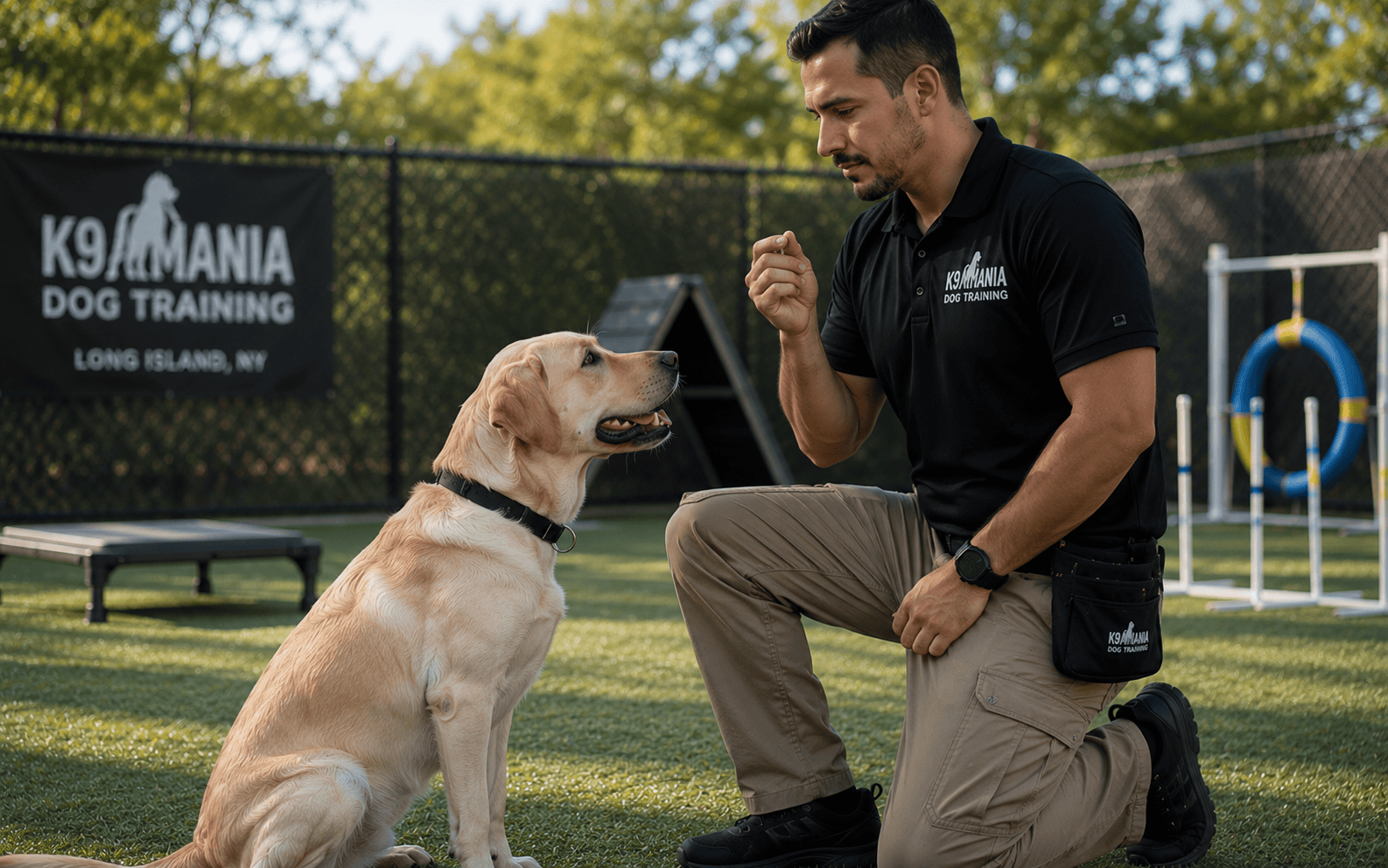
Private One-on-One Sessions
Private dog training long island gives you and your dog focused, personalized instruction. A trainer observes your specific dog, identifies the exact gaps in their behavior, and builds a program around those gaps. For off leash work, this is often the most efficient path because progress is not limited by a group class pace.
In-Home Training
Some trainers come directly to your home, which is particularly useful for dogs who struggle in new environments. In home dog training long island allows the trainer to see your dog in the exact context where issues occur, whether that is bolting out the door, ignoring you in the yard, or reacting to neighborhood dogs.
Board and Train Programs
For dog owners who want accelerated results, or who have a dog with significant behavioral gaps, board and train programs offer full immersion training. Through a board and train long island program, your dog lives with a professional trainer for a set period and receives consistent daily training. This approach builds habits quickly because the dog is working with an expert in multiple environments and multiple times per day.
Things to Know
- Long Island leash laws vary by municipality. Always verify the rules for the specific park or beach you plan to visit before letting your dog off leash.
- Off leash training is not a destination. It is an ongoing practice. Even well-trained dogs need refresher work when new distractions enter their environment.
- Never call your dog to come and then do something they dislike, like a bath or nail trimming, without also giving a positive reward. This erodes recall reliability over time.
- Weather affects dog behavior. Hot summer days on Long Island can make dogs more reactive and less focused. Plan high-focus training sessions in the cooler morning hours.
- High-value rewards matter more than you think. If your dog is competing against a squirrel, a dry biscuit will not win. Real chicken, cheese, or their favorite toy raises your value in high-distraction situations.
- Young puppies can begin foundational off leash skills as early as 8 to 10 weeks old in a safe, controlled environment.
Building a Consistent Daily Training Habit
The dogs who perform reliably off leash are almost always the ones whose owners train consistently, not the ones who trained hard for two weeks and then stopped. You do not need hour-long sessions. Five to ten minutes of focused training per day, repeated consistently, produces far better results than occasional marathon sessions.

Build training into daily routines your dog already anticipates. Before meals, practice a sit-stay. On your morning walk, practice focus and attention. In the yard, run short recall exercises. This keeps the skills sharp without turning every interaction into a formal session.
Also, make sure every person in your household uses the same commands and the same reward system. A dog who hears “come,” “here,” and “get over here” from different family members will respond inconsistently. Pick one word per behavior and commit to it across the board.
Ready to Take Your Dog Off Leash With Confidence?
If you have been putting off structured training because you were not sure where to start, now is the time to take one concrete step. Contact K9 Mania Dog Training and ask about their evaluation process. A professional trainer will assess your dog’s current skill level, identify the specific gaps in their behavior, and recommend the right training format for your situation and lifestyle. You do not need to figure this out alone, and your dog does not need to spend another summer on a short leash.
You May Also Read
One on One Dog Training Long Island
Frequently Asked Questions
Is off-leash training good for dogs?
Yes, off-leash training is excellent for dogs when done correctly and progressively.
It gives dogs the freedom to exercise fully, reduces frustration and anxiety caused by constant restraint, and builds a deeper communication bond between dog and owner. The key is ensuring the dog has genuine reliability before off leash freedom is granted in public spaces.
How can I train my dog to be off-leash?
Start with strong on-leash fundamentals, build a reliable recall, and introduce off leash practice on a long training line before moving to fully unrestricted environments.
Progress through increasing levels of distraction systematically. Every new environment should be treated as a new training context. Reward recall generously every single time, especially in the early stages.
What is the best methods to off-leash train your dog?
The most effective methods combine positive reinforcement recall training, long-line practice, and systematic distraction proofing in real-world environments.
For dogs with significant training gaps, professional programs like private sessions or board and train provide the structure and expertise needed to build lasting reliability. Consistency and patience across weeks and months are what ultimately produce results.
Is it okay to send your dog away for training?
Yes, sending your dog to a reputable board and train program is a legitimate and often highly effective training option.
The important piece is choosing a program that uses positive, humane methods and that includes owner education so you can maintain the trained behaviors at home. A program that trains the dog but not the owner will produce results that fade quickly once the dog returns home.
Does K9 Mania Dog Training offers off-leash dog training?
Yes, K9 Mania Dog Training offers off-leash dog training as part of their comprehensive training programs for Long Island dog owners.
They work with dogs at various skill levels and offer multiple formats including private sessions, in-home training, and board and train programs. Their trainers are experienced in proofing off leash behaviors in the specific environments and distractions that Long Island dogs encounter daily.
The Bottom Line on Off Leash Dog Training Tips for Long Island Dog Owners
Applying off leash dog training tips for Long Island dog owners consistently is what separates dogs who enjoy true freedom from dogs who are always one squirrel away from a dangerous situation. The process takes time, repetition, and a willingness to meet your dog where they are rather than where you want them to be. Start with the fundamentals, build recall as a top priority, and proof your training in the real environments your dog will actually face.
If you want professional support with any part of this process, reach out to K9 Mania Dog Training for a consultation. The investment you make in your dog’s training now pays off in years of safe, enjoyable off leash experiences on Long Island’s beaches, trails, and parks.