How to get your dog’s attention when distracted starts with teaching focus as a skill before real-world distractions are ever in the picture. Dogs don’t ignore you out of defiance, they ignore you because squirrels, other dogs, and sidewalk smells are simply more rewarding than anything you’re currently offering.
The good news is that attention is trainable. With the right methods and a little patience, you can become the most interesting thing in your dog’s environment, even on a busy trail or near a crowded dog park. This post breaks down exactly how to get there.
Things to Know
- Attention is a trained behavior, not something your dog either has or doesn’t.
- Start every new skill indoors where distractions are low, then build up in stages.
- The Watch Me command is the foundation of all focus and recall work.
- High-value treats are non-negotiable in high-distraction environments.
- If your dog has never learned to check in with you, recall will always fail outdoors.
- Rewarding attention the moment it happens is more powerful than waiting for a full behavior.
- Repeating cues over and over teaches your dog that commands are optional.
Why Your Dog Checks Out Outside
Before fixing the problem, it helps to understand why it happens. Outside, your dog’s senses are flooded. Smells from other animals, sounds from passing cars, and fast-moving things on the horizon all compete for their attention at the same time.
Dogs learn through association. If paying attention to you has never been especially rewarding, they stop trying. If pulling toward another dog has worked in the past because the leash eventually gave way, they’ll keep doing it.
This isn’t a dominance problem and it’s not a respect issue. It’s a training gap, and it has a clear fix.
Mastering the essential dog training commands gives you a strong base of control before distractions even enter the picture.
The Watch Me Command: Where All Focus Training Starts
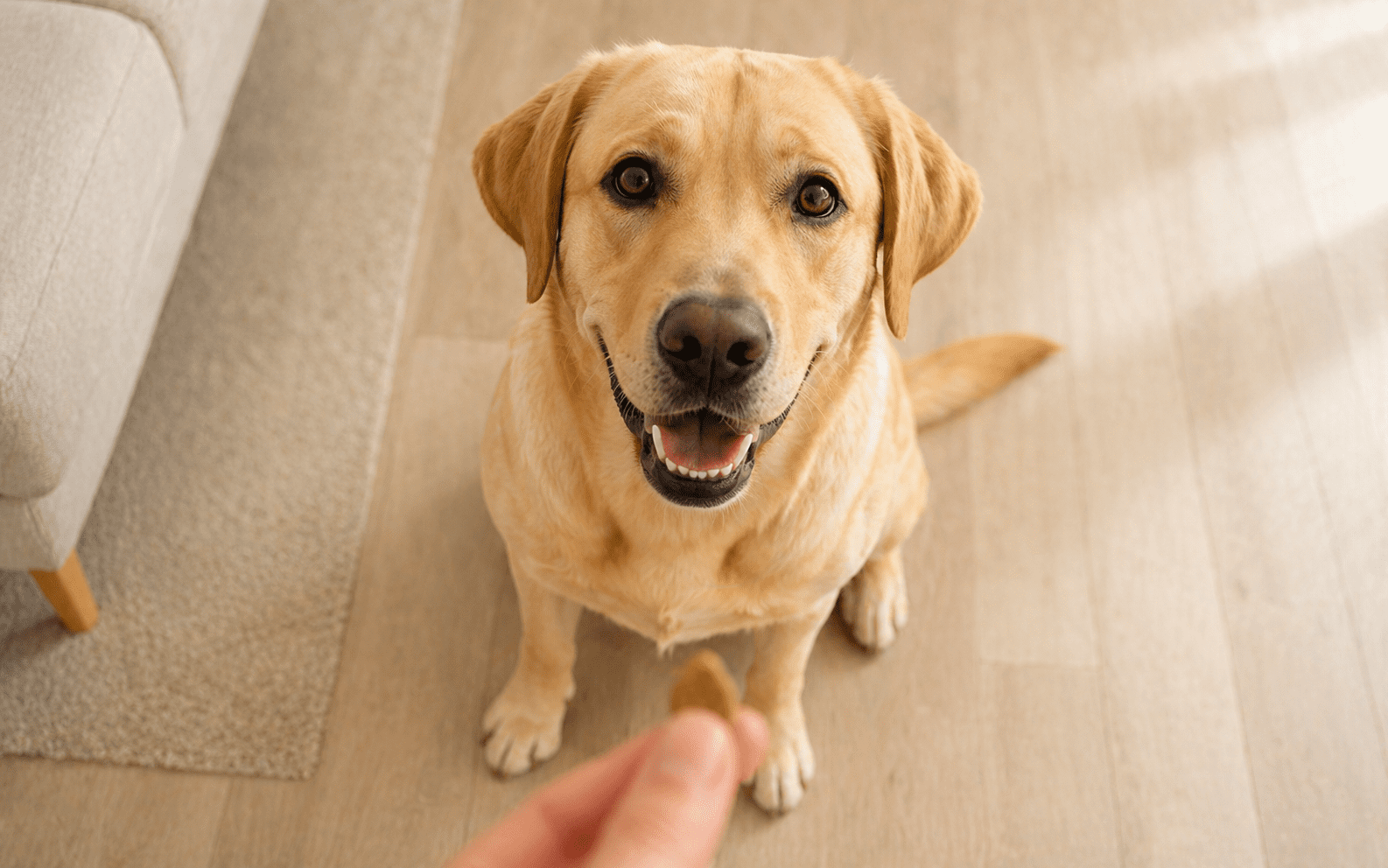
The Watch Me command teaches your dog to lock eyes with you on cue. It sounds basic, but it’s one of the most powerful tools you have for snapping a dog out of a fixation on something else.
How to Teach It Step by Step
Start in your living room with zero distractions. Here’s the process:
- Hold a treat near your eyes so your dog has to look up at your face to track it.
- The moment they make eye contact, mark it with “yes” or a clicker and reward.
- Once they’re doing it consistently, add the verbal cue “watch me” right before they look up.
- Gradually increase how long they hold eye contact before you reward.
- Once solid indoors, practice in the yard, then on the sidewalk, then near a park.
Each step adds a little more distraction, but your dog builds real confidence because they’re succeeding at each level before moving on.
Pairing Watch Me with a reliable recall gives you two tools that work together. Check out how to teach dog to come for a solid recall framework that layers well with attention work.
Building Focus in Stages
Jumping straight to a busy park before the skill is solid is the most common reason attention training falls apart. You have to proof the behavior in stages, or it collapses under pressure.
| Training Stage | Distraction Level | What to Reward | Treat Value |
| Indoors | None | Any eye contact | Low (kibble works) |
| Backyard | Very low | Eye contact on cue | Low to medium |
| Quiet sidewalk | Low | Eye contact and check-ins | Medium |
| Near a park | Moderate | Maintained focus | High (chicken, cheese) |
| Busy area | High | Any offered attention | Very high |
If your dog fails at one stage, don’t push through. Drop back one level, solidify it, and try again. Failures aren’t setbacks — they’re just data telling you to slow down.
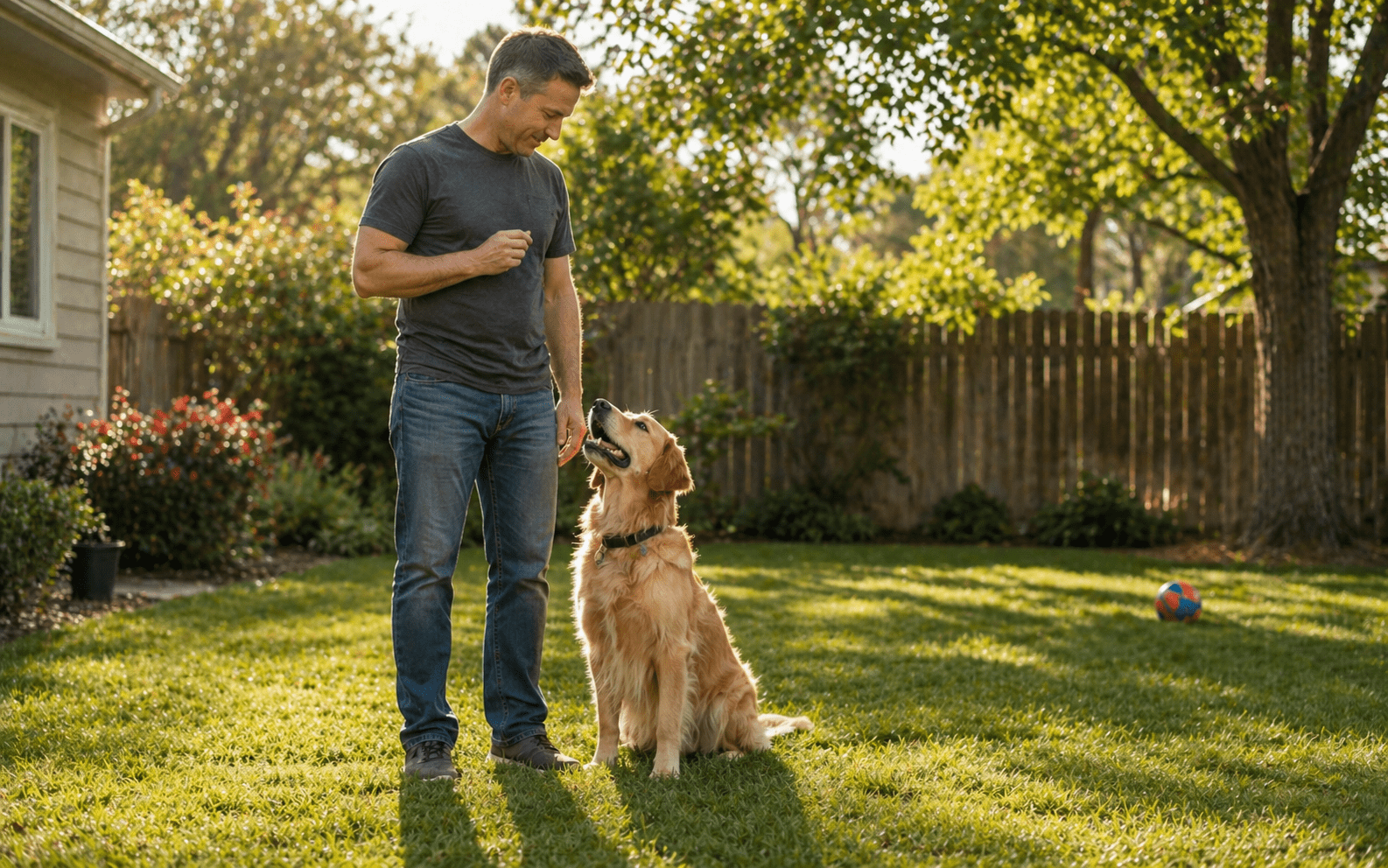
What Actually Makes a Dog Pay Attention to You
Getting your dog to focus outdoors isn’t only about commands. It’s about becoming worth paying attention to. Here’s what moves the needle:
Use high-value rewards. Kibble doesn’t compete with a squirrel. Small pieces of chicken, cheese, or hot dog do. Save your best treats for your hardest moments.
Be unpredictable. If your dog never knows what you’re about to do next — a direction change, a surprise treat toss, a short game of tug — they start watching you on their own.
Reward offered attention. When your dog looks up at you without being asked, mark it and reward it. You’re building a habit of checking in without needing a cue.
Keep sessions short. Five focused minutes beats thirty frustrating ones. Dogs learn better when they’re not mentally wiped out.
Say it once. If you repeat “watch me” ten times with no result, you’re training your dog that the cue doesn’t mean anything urgent. Say it once, help them succeed, then reward.
If outdoor training feels overwhelming to manage alone, in-home dog training Long Island can help you build these skills in a familiar, low-pressure setting first.
Using Walks as Focus Training Sessions
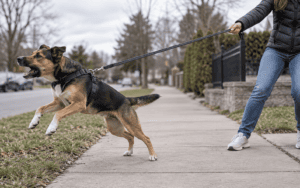
Walks are where most owners run into the biggest attention problems. Your dog hits the end of the leash toward another dog or completely tunes you out the moment you step outside.
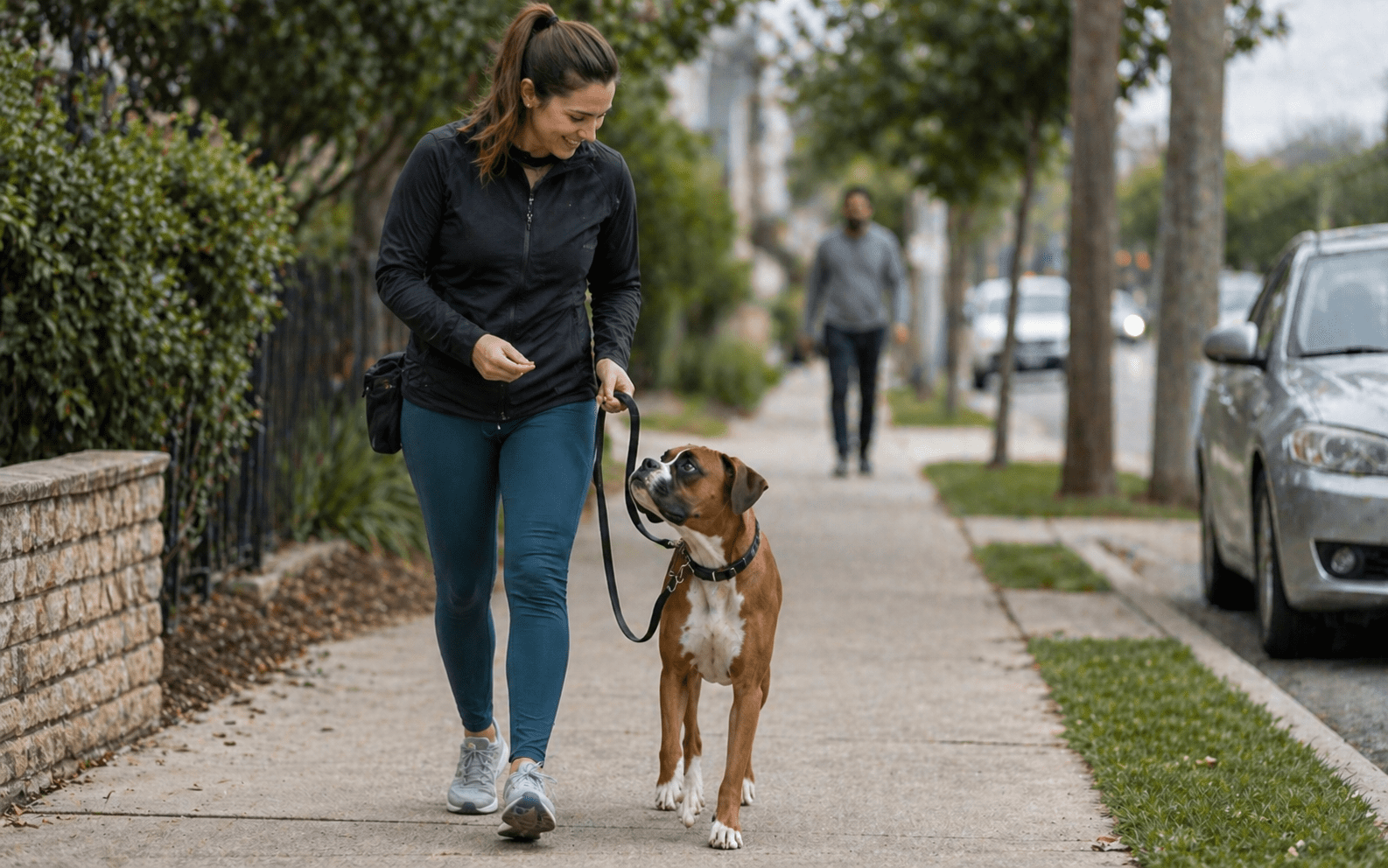
Here’s how to turn walks into productive training time:
Warm up before you leave. Do a few Watch Me reps in the driveway. You’re priming your dog’s brain before the walk starts.
Change direction when they pull. The moment your dog charges forward, calmly turn and walk the other way. This teaches them that paying attention to you is what gets them where they want to go.
Mark and reward unprompted check-ins. Every time your dog glances back at you during the walk, say “yes” and drop a treat. You don’t need to ask for it. Just catch it and reward it.
Use distance as your tool. When another dog or person is approaching, move far enough away that your dog can still think clearly. Practice Watch Me at that distance before closing the gap.
For dogs that react hard to other dogs or people on leash, learning how to train reactive dog on leash gives you a clearer framework for managing those moments safely.
Recall When Distracted: Why It Fails and How to Rebuild It
Recall fails outdoors for one main reason: coming to you has never been more rewarding than whatever your dog is chasing. That’s a training problem, not a loyalty problem.
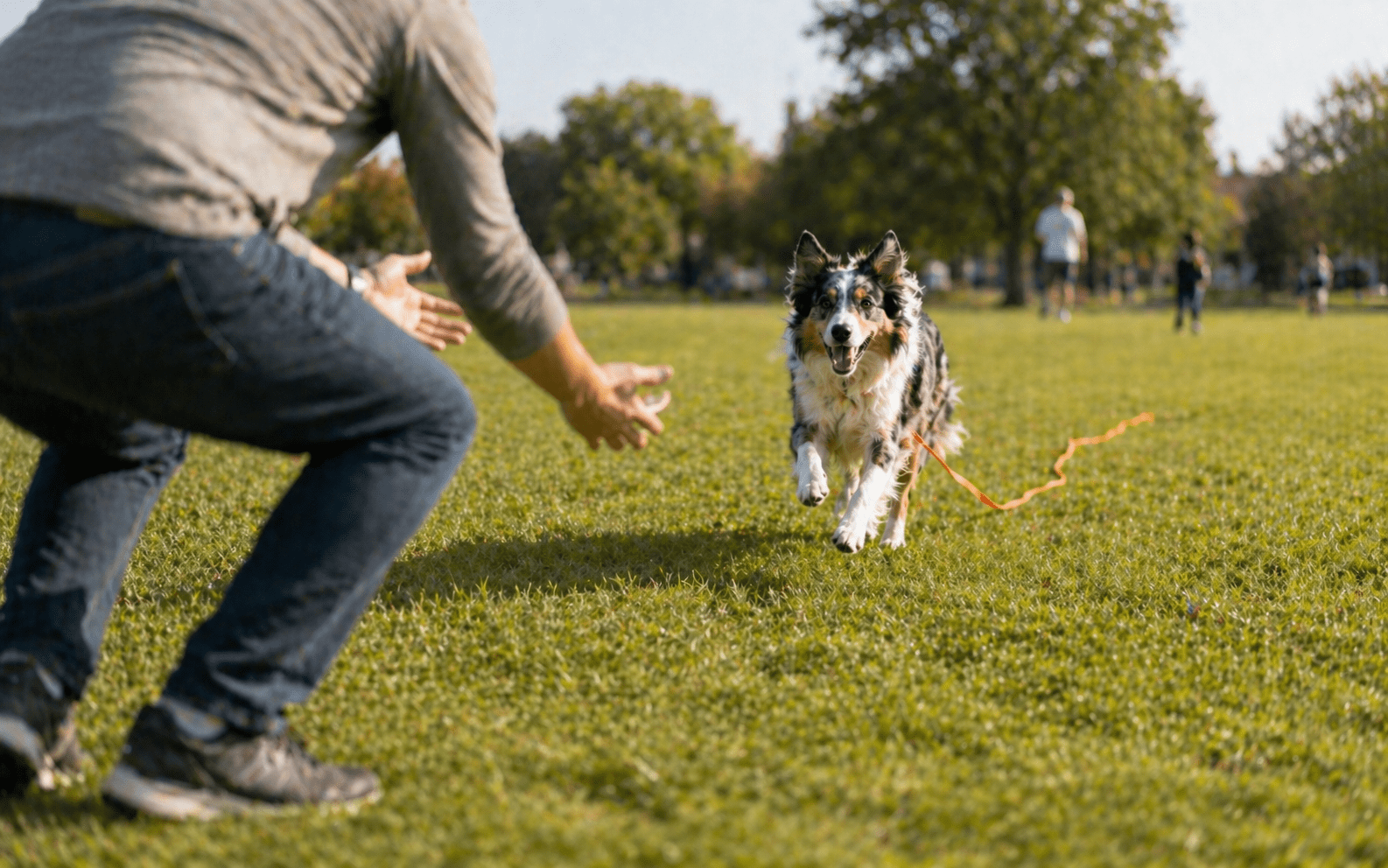
Here’s how to make your recall reliable again:
Never punish recall. If your dog finally comes back after ignoring you, that return has to feel like the best thing that’s happened all day. Scolding them when they arrive makes recall less likely next time.
Use a long line for practice. A 20 to 30 foot long line lets your dog move around while you stay in control. Call their name once. If they don’t respond, guide them back and reward big when they reach you.
Make coming to you a celebration. Crouch down, use a happy voice, and deliver a high-value treat every single time they come to you.
Don’t only recall to end fun. If the only time you call your dog is when it’s time to leave the park, they’ll start avoiding you when you call. Randomly recall them, reward, and release them back to play.
| Recall Problem | Likely Cause | Fix | Timeline |
| Dog ignores name completely | Name has lost its meaning | Teach a new recall word | 1 to 2 weeks |
| Dog comes halfway, then stops | Reward not high enough | Upgrade treat value immediately | Immediate |
| Dog comes slowly and reluctantly | Punishment history after recall | Never scold after recall again | Ongoing |
| Dog only comes indoors | Behavior not proofed outside | Stage-based outdoor proofing | 2 to 4 weeks |
| Dog bolts when off leash | No solid recall foundation | Long line training first | 4 to 8 weeks |
If recall has completely broken down, a structured program like board and train Long Island can reset the behavior quickly with consistent, daily reinforcement in a controlled environment.
Common Mistakes That Undo Your Progress
Good intentions can still produce bad habits. Watch out for these:
Repeating the cue. One cue, one chance. Saying “come, come, come, come” teaches your dog that the command is optional until the fifth try.
Rewarding too late. Timing matters more than most people realize. If you reward three seconds after eye contact, you’re rewarding whatever happened in those three seconds.
Using the same treats for everything. Your highest-value rewards should be reserved for your hardest moments. If chicken is always available, it stops feeling special.
Training when your dog is already over threshold. If your dog is already at a 9 out of 10 on the arousal scale, this isn’t the moment to train attention. Work at lower levels first and build up.
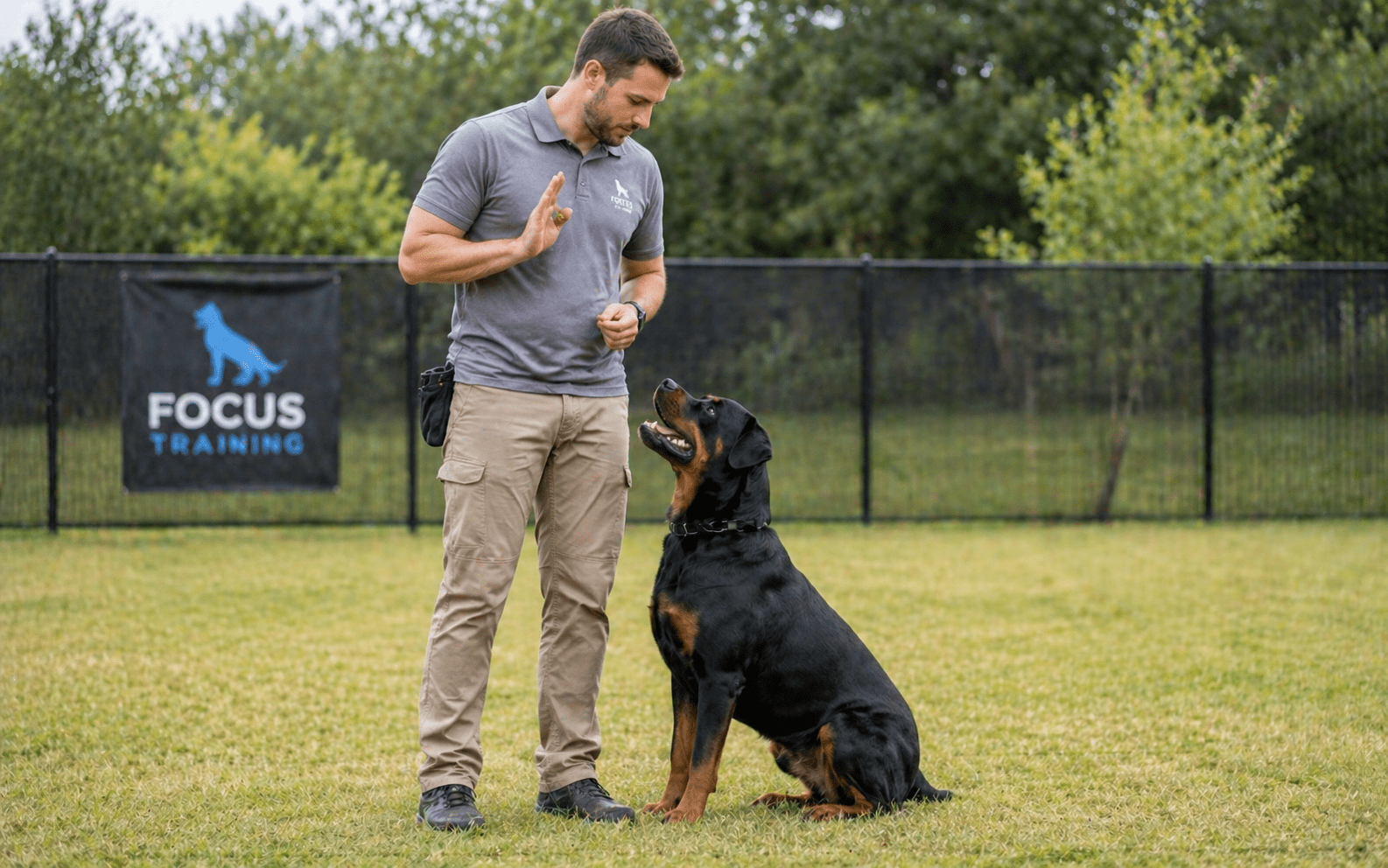
When you’ve been consistent for weeks and still aren’t seeing results, private dog training Long Island lets a professional identify exactly what’s going wrong and correct it fast.
Get Your Dog’s Attention When Distracted, and Keep It
At K9 Mania Dog Training, we’re Long Island’s leading board and train facility, and we help dog owners solve exactly this kind of problem every single day. Whether your dog has selective hearing on walks, a broken recall, or can’t focus near other dogs, we have a program built for it.
From intensive board and train programs to one-on-one private sessions, our trainers know how to build real, lasting results. Whatever behavior challenge you’re dealing with, trust K9 Mania to help you and your dog become a team that works together, no matter what’s in the environment. Visit k9maniadogtraining.com to get started.
You May Also Want to Read
FAQs: How to Get Your Dog’s Attention When Distracted
How do I get my dog’s attention immediately?
Use a sharp, short sound you’ve already conditioned, then reward the moment they look at you. The key is that the sound has to mean something before you need it in the field. Dogs respond to sounds that reliably predict something good. Practice it repeatedly in low-distraction settings so it becomes a reflex your dog offers automatically in harder environments.
What is the Watch Me command?
The Watch Me command teaches your dog to make eye contact with you on cue, which interrupts their fixation on distractions. You train it by holding a treat near your eyes, marking the instant eye contact happens, and rewarding immediately. Once the behavior is solid, you add the verbal cue and gradually practice in places with more and more distractions until it holds up anywhere.
How do I train my dog to ignore distractions on walks?
Start at a distance from the distraction where your dog can still respond to you, then reward every check-in. Slowly decrease the distance over multiple sessions as their focus improves. Changing direction when they pull toward something also teaches them that watching you is what moves the walk forward, not pulling toward the thing they want.
How to get a dog to recall when distracted?
Use a long training line, say the recall cue once, guide them back if they don’t respond, and reward big when they arrive. Practice this at increasing distraction levels over time, always making the return feel like a celebration. A recall that has never been heavily rewarded outdoors will always fall apart outdoors, no matter how well it works in your living room.
What to do if a dog ignores recall?
Never repeat the cue or chase your dog. Run in the opposite direction instead to trigger their chase instinct, then reward when they follow. If ignoring recall is a consistent pattern, the behavior needs to be retrained from scratch using a long line and high-value rewards in low-distraction settings before attempting it outside again.
What is the best recall command for dogs?
Any word works as long as it has not been weakened by repeated ignoring or tied to something unpleasant. Many trainers recommend a unique word like “here” or a whistle signal rather than the dog’s name, since names get used constantly and lose urgency. Whatever word you pick, consistency in how you train and reward it matters far more than the specific word itself.