Dogs sigh to communicate emotion, most often signaling contentment, mild frustration, or boredom depending on the situation. Understanding why do dogs sigh helps you read your dog’s mood more accurately and build a stronger connection with them.
That long exhale after your dog settles on the couch, the dramatic sigh when you put the leash away, or the soft breath right before they drift off to sleep, each one carries a different meaning. Knowing the difference turns you into a sharper, more connected dog owner.
Keep reading to find out exactly what those sighs are telling you and what, if anything, you should do about them.
Things to Know About Dog Sighing
- Dogs sigh with half-closed eyes when they feel content and safe.
- A sigh with wide-open eyes usually signals mild frustration or disappointment.
- Puppies and senior dogs tend to sigh more often than healthy adult dogs.
- Repeated sighing paired with other stress signals may need closer attention.
- Context matters more than the sound itself when reading your dog’s emotional state.
- Most sighing is completely normal and rarely a cause for concern on its own.
📌 Want to get better at reading your dog overall? Check out dog body language signals for a deeper breakdown of how your dog communicates without words.
What Dog Sighs Actually Mean
Dogs use vocalizations, posture, and subtle body movements to express how they feel. A sigh is one of those quieter signals, easy to miss but worth understanding.
Most sighs fall into one of two emotional categories: positive or negative. A dog that finishes a long walk and flops down with a big exhale is expressing relief and satisfaction. A dog that sighs right after you put the leash away is probably expressing mild disappointment.
The key is always looking at the full picture rather than the sound alone. What is your dog’s body doing? Are their muscles relaxed or tense? Are their eyes soft or wide open and fixed? Those details tell you far more than the sigh itself.
Contentment and Relaxation
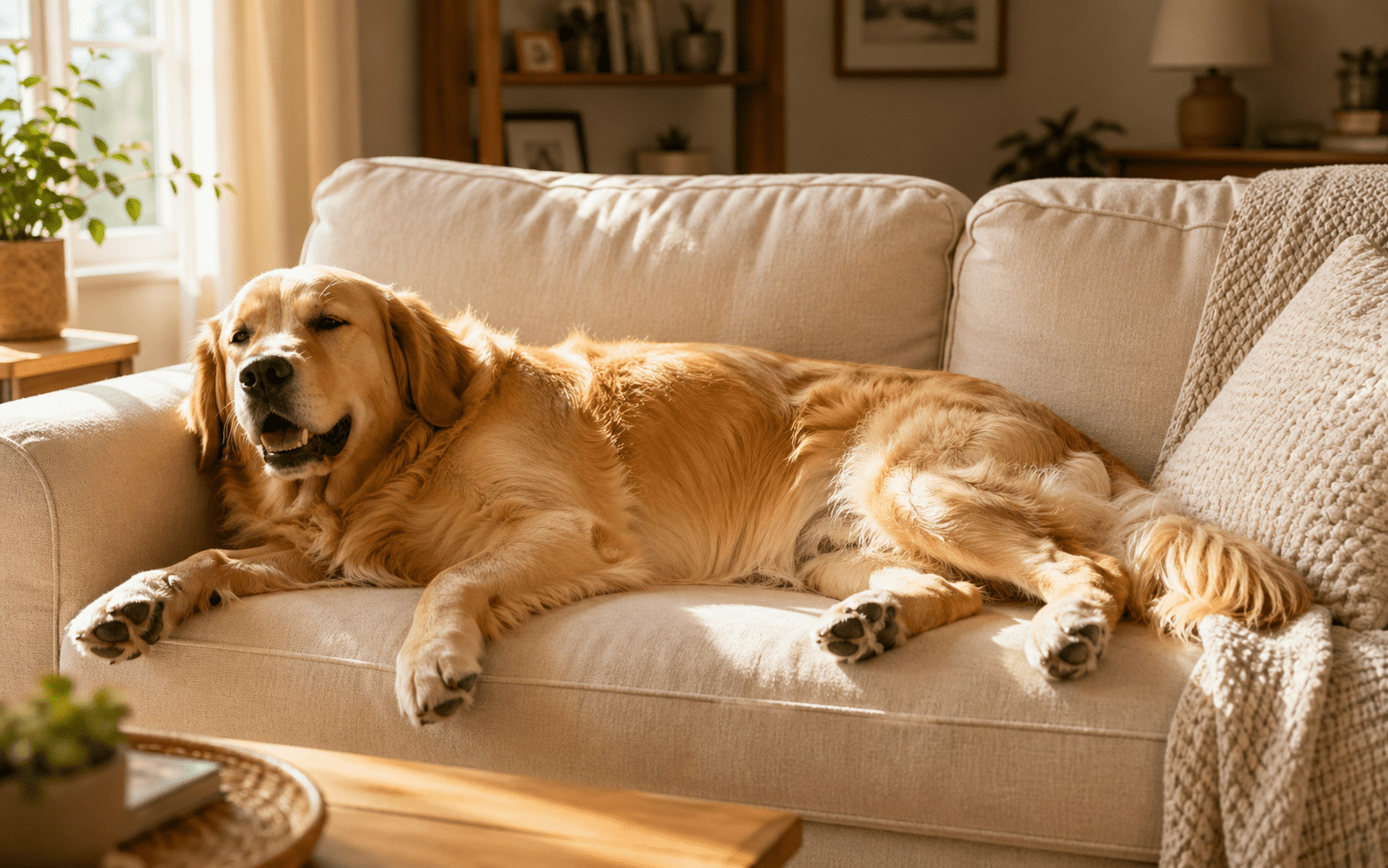
This is the most common reason behind a dog sigh. When your dog is curled up, belly full, and settling in for a nap, that slow deep exhale is basically a reset breath. It signals that they feel safe, comfortable, and at ease in the moment.
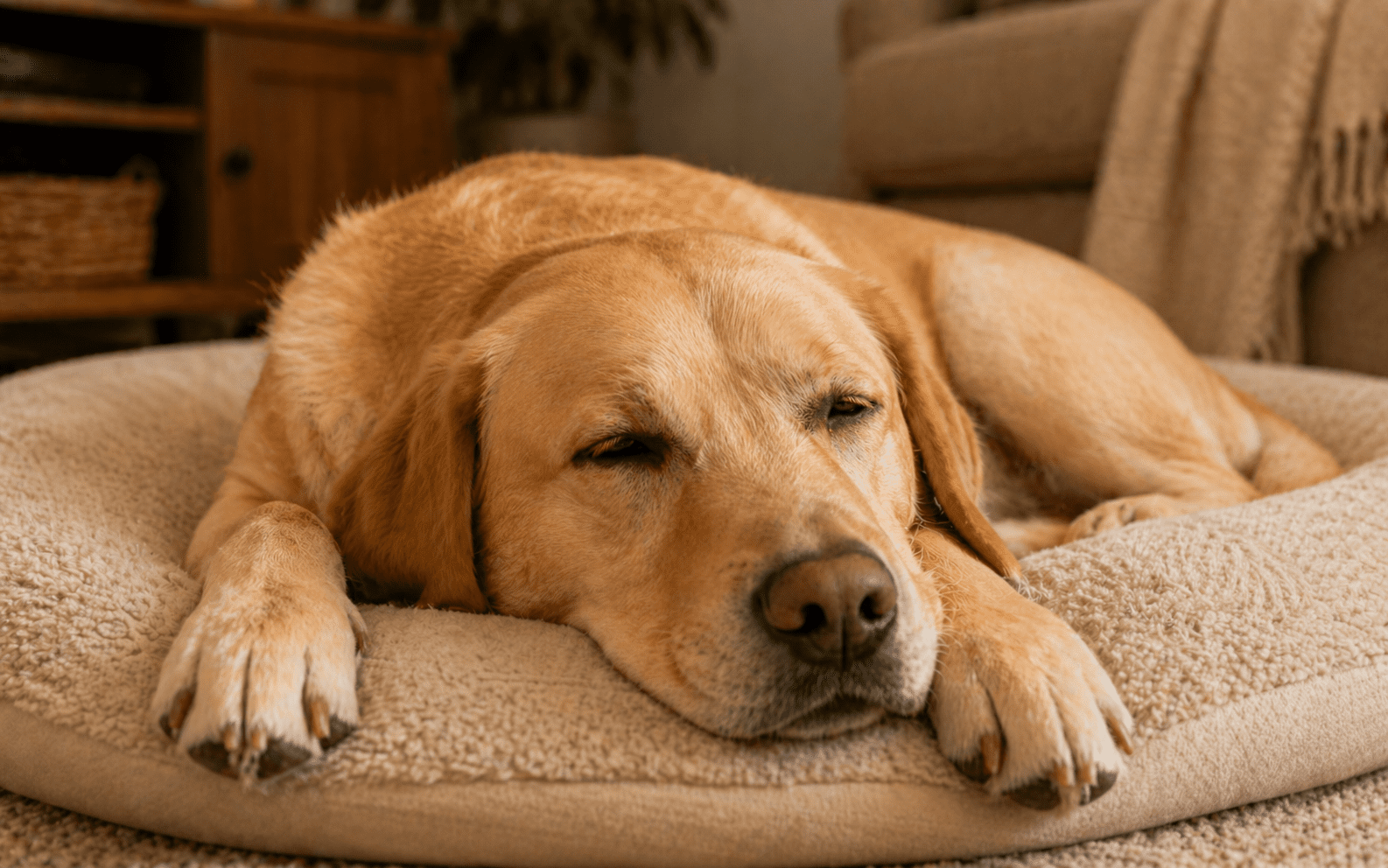
You will often notice this type of sigh paired with:
- Half-closed or soft eyes
- Loose, relaxed muscles throughout the body
- A comfortable resting position like sprawling or curling tight
- No tension in the face, ears, or jaw
This is a good sign. Your dog feels secure in their environment, which is exactly what every dog owner wants to see.
Mild Frustration or Disappointment
Not all sighs are happy ones. If your dog sighs with wide, open eyes, especially right after something they wanted did not happen, it is usually low-level frustration showing through.
Think about situations like these:
- You stop a petting session earlier than they wanted
- You leave the house without them
- You say “no” to something they were clearly hoping for
- A walk ends sooner than expected
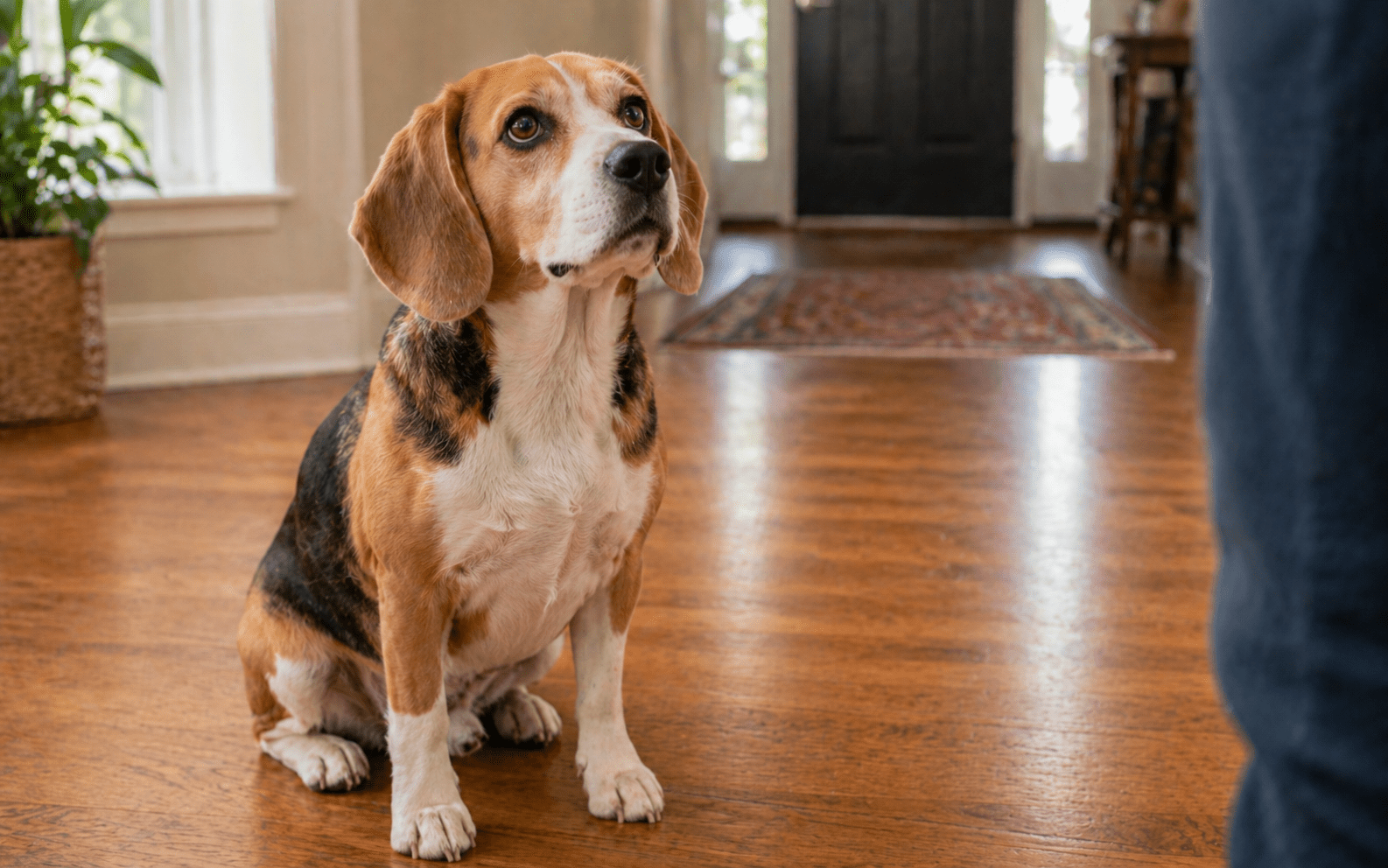
These sighs are not dramatic or alarming, but they are your dog’s quiet way of registering a complaint. Dogs are more emotionally expressive than most people realize, and this is one of their gentler outlets.
📌 Spotting the difference between a happy sigh and a frustrated one is a big part of reading your dog. Read more about signs your dog trusts you to see how emotional communication shapes your relationship.
Boredom and Low Stimulation
Dogs that are under-stimulated sigh more often. If your dog is lying around with nothing to do, releasing long exhales repeatedly, and not engaging with toys or their surroundings, boredom is likely the root cause.
This version of the sigh tends to be longer and more drawn out. You might also notice your dog staring blankly at the wall, following you from room to room without purpose, or pawing at things without real interest.
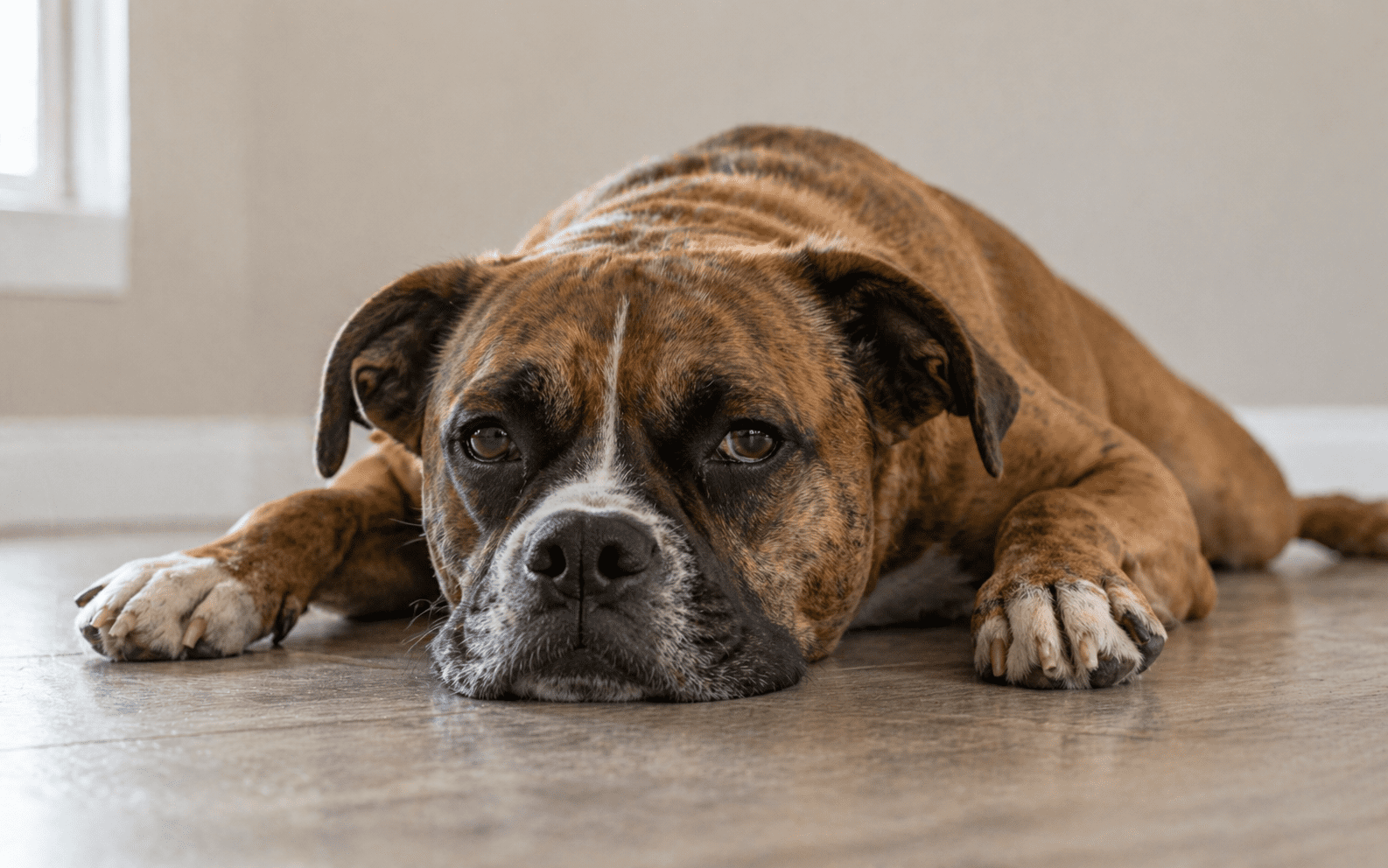
Boredom in dogs is worth addressing. Left alone too long, it can develop into destructive behavior, anxiety, or both. More exercise, mental enrichment, and structured daily training make a real difference.
Physical Release After Movement
Why do dogs sigh after settling down from a walk or a play session? It is the same reason people exhale deeply after sitting down after a long day. It is a physical release.
The body has been working, and the deep breath out is part of returning to a resting state. This kind of sigh has very little to do with emotion. It is a natural response to physical activity winding down.
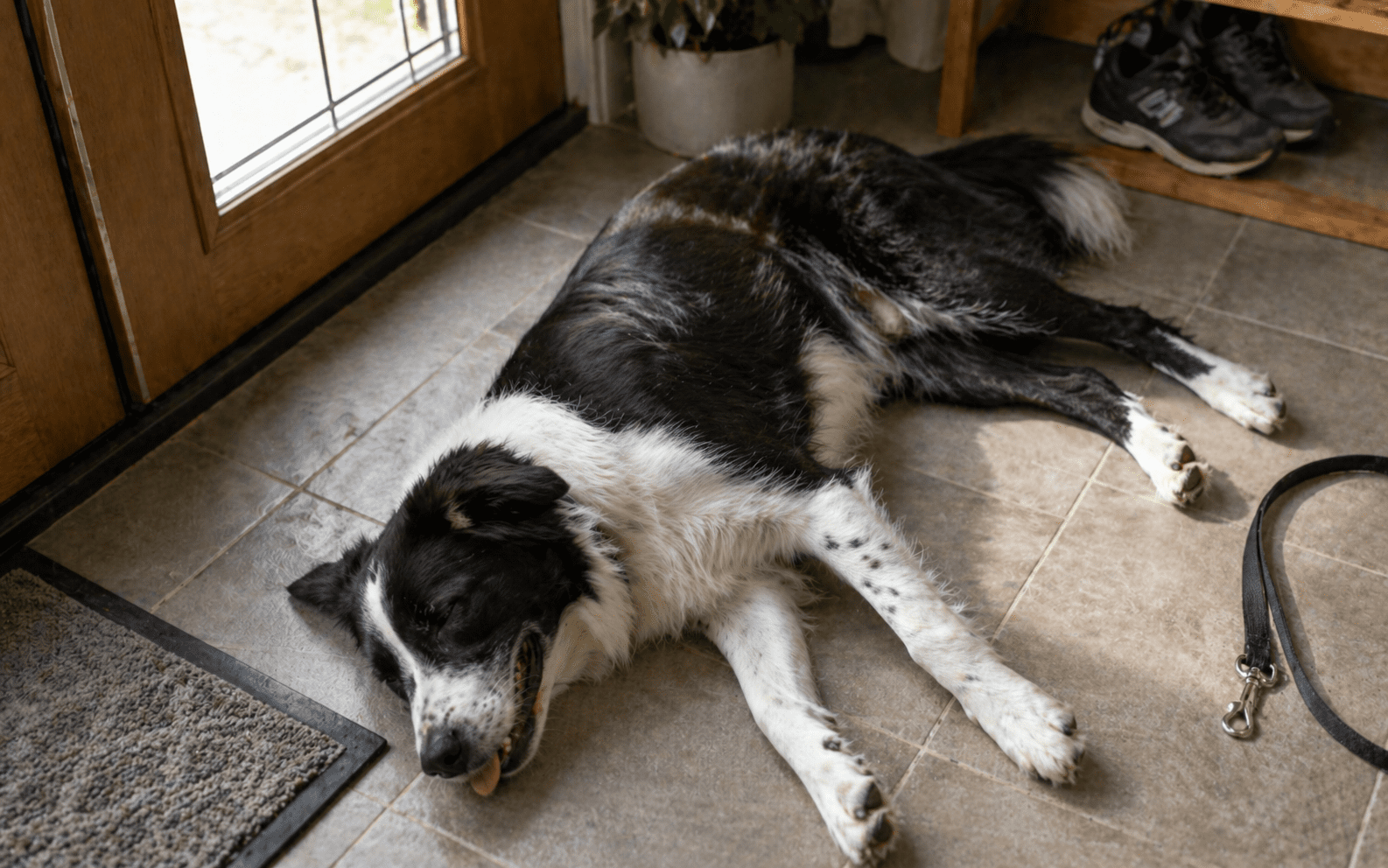
📌 Dogs also stretch for similar physical reasons. Find out more about why dogs stretch and how movement and body cues connect to your dog’s daily communication.
How to Tell One Sigh From Another
The same sound can mean very different things depending on context. Here is a simple side-by-side comparison of the most common types:
| Sigh Type | Eye Position | Body Language | What It Usually Signals |
| Contentment Sigh | Half-closed or soft | Relaxed, loose muscles | Happiness, safety, comfort |
| Frustration Sigh | Wide open, fixed gaze | Slight tension, often facing you | Mild disappointment or annoyance |
| Boredom Sigh | Glazed or wandering | Still, low energy, disengaged | Under-stimulation, needs activity |
| Physical Reset Sigh | Any position | Settling after movement or exercise | Normal post-activity exhale |
Use this table alongside what you observe in real time for the clearest read on your dog.
When Sighing Might Be Worth Closer Attention
Most sighing is completely harmless. But there are specific situations where frequent or unusual sighing deserves more attention.
Sighing Combined With Stress Signals
If your dog sighs often and you also notice pacing, excessive licking, repetitive yawning, or avoidance of eye contact, those are signs of ongoing stress or anxiety rather than normal emotional expression. A single sigh here and there is nothing. A recurring pattern layered with other behaviors deserves a closer look.
Common stress signals to watch alongside sighing:
- Excessive yawning outside of actual tiredness
- Lip licking when no food is present
- Pacing or inability to settle in one spot
- Avoidance of eye contact or turning away
- Low tail carriage or a tucked tail
If you see a cluster of these regularly, your dog may be dealing with anxiety that benefits from professional support.
Pain or Physical Discomfort
Older dogs may sigh more frequently when movement becomes uncomfortable. If your dog sighs heavily when they change positions, stand up slowly, or lie down with effort, especially when combined with reluctance to move, a vet check to rule out joint pain or other physical issues is a smart next step.
Changes in Routine or Environment
Dogs are creatures of habit. A recent move, a new person in the household, or a significant schedule change can all result in more frequent sighing as your dog adjusts. This usually resolves on its own, but extra structure and attention during transitions helps your dog feel more settled faster.
What Dog Sighs Are Not
It is easy to over-read your dog’s behavior. Here is a quick reality check on some common assumptions:
| What People Think | What It Actually Means |
| “My dog sighs because they are depressed” | Usually contentment or mild boredom, not clinical depression |
| “Sighing means my dog is sick” | Rarely. Physical causes only matter when combined with other symptoms |
| “My dog sighs to manipulate me” | Dogs express emotion, not strategy. It is honest communication |
| “Sighing means my dog is unhappy with me” | Most often it is a sign of comfort and safety in your presence |
How to Respond to Your Dog’s Sighs
You do not need to react to every sigh, but responding thoughtfully to patterns over time makes you a better communicator with your dog.
For contentment sighs: No action needed. This is exactly what you want.
For frustration sighs: Acknowledge your dog without directly rewarding the sigh. Give attention on your own terms, not as an immediate response to the complaint, or you may accidentally teach them that sighing gets results.
For boredom sighs: Add more enrichment to your dog’s daily routine. Extra walks, training sessions, and puzzle feeders all reduce this pattern over time.
For repeated stress-related sighing: Look at whether something in your dog’s environment has recently changed and address the root cause. If the behavior continues, working with a professional trainer will help you identify what is driving it.
If you want hands-on support in your own home, in home dog training Long Island brings expert guidance directly to the environment where your dog actually lives and behaves.
For dogs showing more complex emotional patterns or anxiety-based behavior, private dog training Long Island gives you focused, one-on-one sessions built around your specific dog’s needs.
And for dogs that need more immersive support, board and train Long Island delivers structured professional training in a focused environment with experienced handlers.
What the Sigh Says About Your Bond
Dogs are expressive by nature. The fact that your dog sighs around you at all is actually a meaningful signal. A dog that feels unsafe around someone does not relax enough to sigh in contentment. So if your dog regularly exhales and settles close to you, that is a quiet vote of confidence in your relationship.
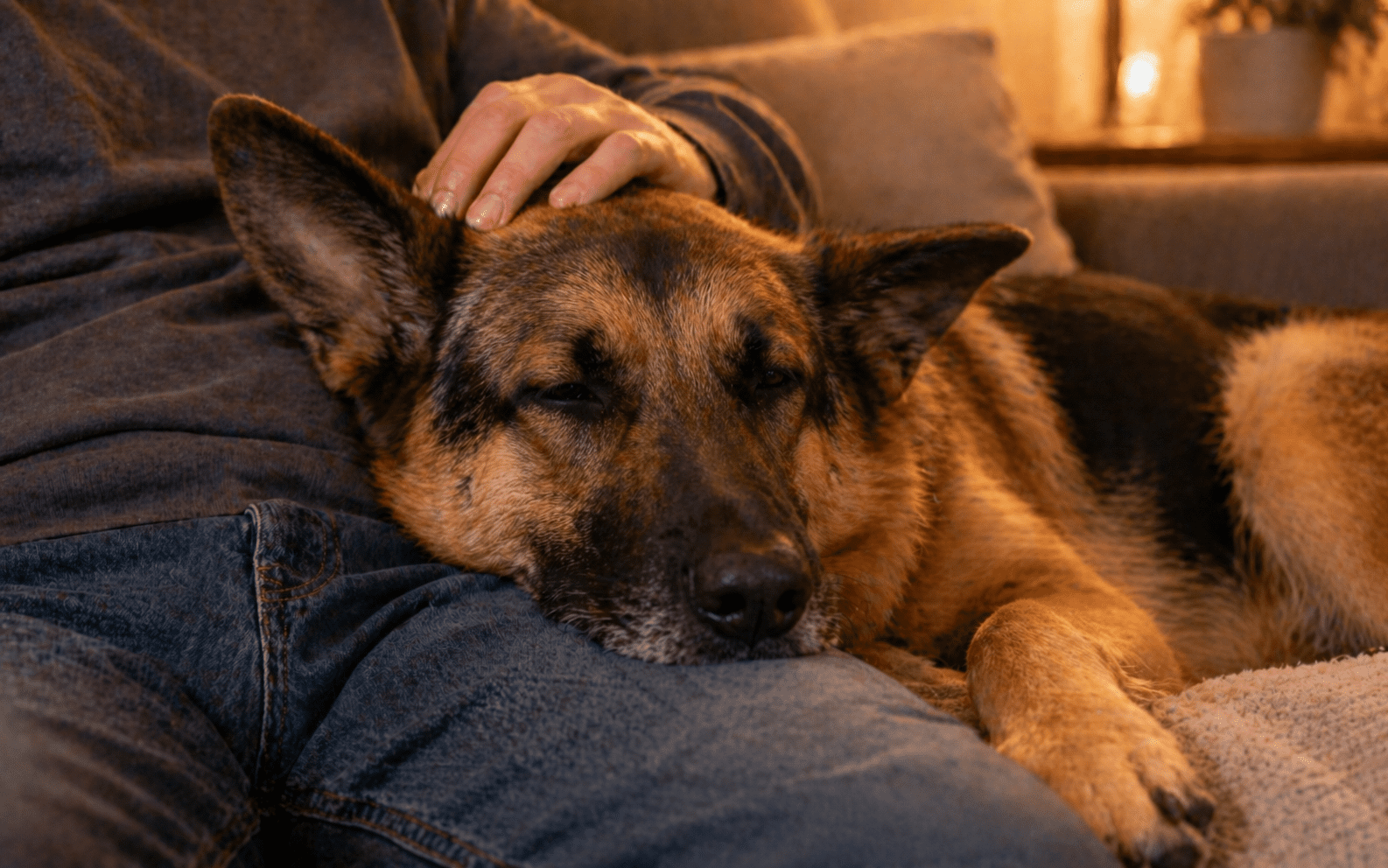
Why do dogs sigh most around the people they love? Because those are the moments they feel most at ease. That exhale is not random noise. It is your dog saying, in the only language they have, that being near you feels like home.
The Real Reason Behind Every Exhale: Why Do Dogs Sigh
A happy sigh and a frustrated one sound almost the same, but they mean completely different things. Learning to read the difference, alongside posture, eye expression, and timing, makes you the kind of owner your dog genuinely thrives with.
At K9 Mania Dog Training, Long Island’s leading board and train facility, we help dog owners understand their dogs at every level, from body language to behavior patterns. Whether your dog needs simple enrichment, anxiety support, or more structured behavioral work, our experienced trainers are ready to help. We work with every breed, every temperament, and every challenge. Trust K9 Mania Dog Training to give you and your dog the tools you both need to thrive together. Visit us to explore our training programs and get started today.
You May Also Want to Read
Frequently Asked Questions About Why Do Dogs Sigh
Why do dogs sigh so much?
Dogs sigh frequently when they are content, bored, or emotionally adjusting to their environment.
If sighing happens mostly during rest, it usually means your dog feels safe. Sighing during low-activity stretches throughout the day often points to boredom. Adding more daily exercise and mental enrichment typically reduces it.
Why do dogs let out a sigh?
Dogs let out a sigh as a form of emotional communication, expressing how they feel in that specific moment.
A sigh is not random. It follows a specific trigger, whether your dog just got comfortable, heard something disappointing, or finished physical activity. Paying attention to when it happens gives you the clearest read on what it means.
Is it good if my dog sighs?
In most cases, yes. A sigh usually signals that your dog is relaxed, content, and comfortable.
The exception is when sighing comes alongside other stress signals like pacing, lip licking, or avoidance behavior. In those cases, the pattern is worth addressing with a trainer or vet depending on how severe it is.
Why do dogs sigh when they lie down?
Dogs sigh when they lie down as a natural physical release or as an expression of settling in comfortably.
This is one of the most common and positive forms of the behavior. The body transitions from active to resting, and the exhale is part of that shift. In emotionally healthy dogs, this sigh almost always means comfort and safety.
Do dogs sigh when sad?
Dogs can sigh when experiencing mild disappointment, but this is different from human sadness and should not be over-interpreted.
A dog sighing after playtime ends is expressing low-level frustration, not deep sadness. True distress in dogs shows up through sustained patterns like withdrawal, reduced appetite, or lethargy, not the occasional exhale.
Why do dogs like to sigh?
Dogs do not sigh intentionally for enjoyment, but the moments that produce a contented sigh are the moments they enjoy most.
Rest after activity, closeness to their owner, and a secure home environment all produce the relaxed state that triggers a contented sigh. In that way, the sigh is a natural byproduct of the situations your dog genuinely loves.