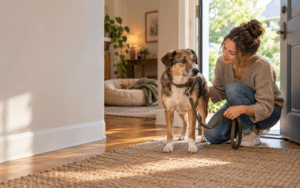
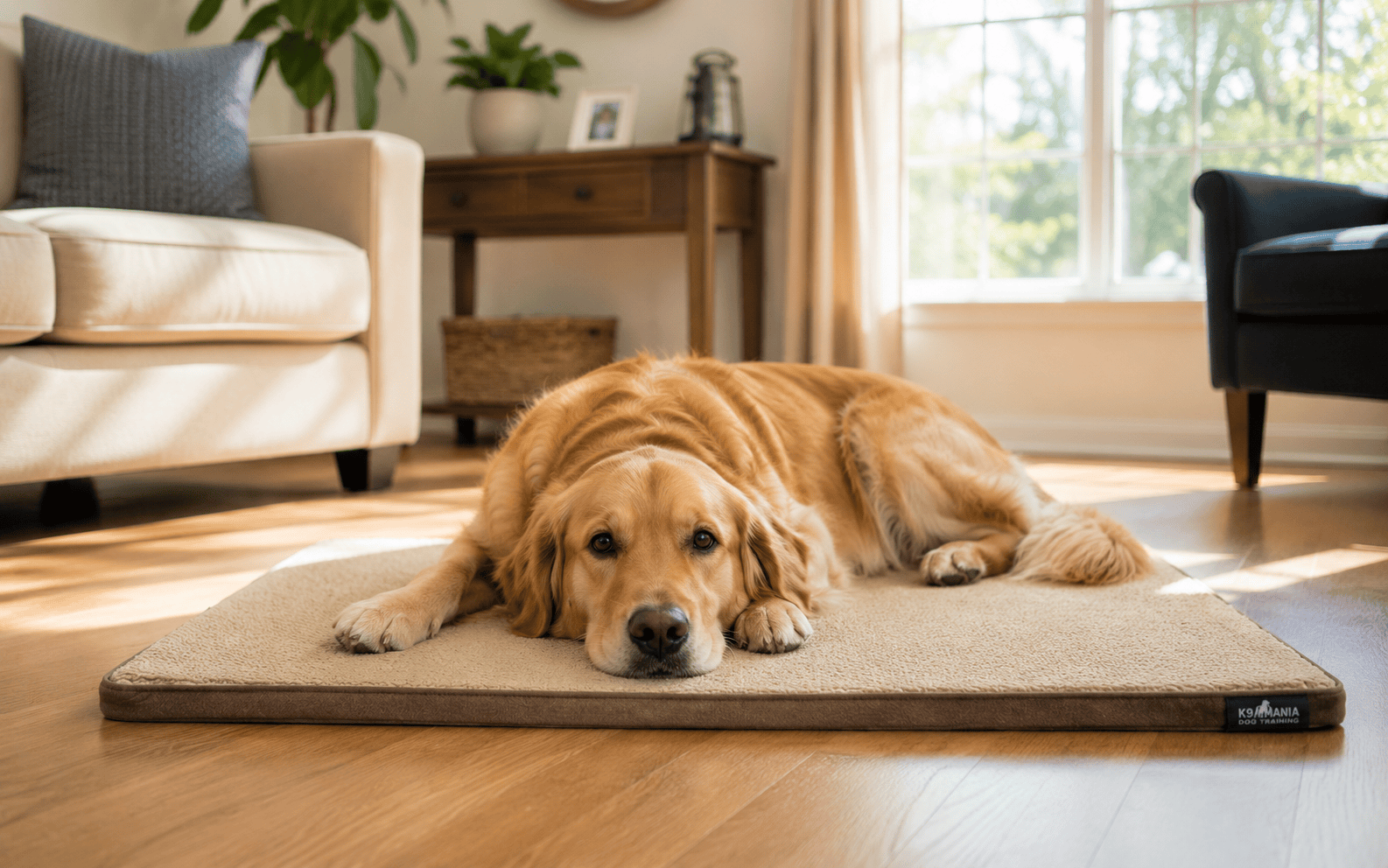
When you know how to teach a dog to settle on a mat, you give your dog a reliable off-switch that reduces chaos in your home and helps your pet feel genuinely secure. Mat training is a structured behavior where your dog learns to go to a specific spot, lie down, and stay calm on cue, regardless of distractions happening around them.
Key Takeaways
- Mat training builds a portable, consistent “calm zone” your dog recognizes anywhere you bring the mat.
- The behavior requires three components working together: targeting the mat, a down-stay, and a release cue.
- Short sessions of 3-5 minutes repeated several times a day outperform long, infrequent training marathons.
- A dog of any age can learn this skill, but puppies 8-16 weeks old tend to pick it up fastest.
- Consistency in reward timing is the single biggest factor separating fast learners from slow ones.
- Pairing mat training with broader obedience dog training produces the most well-rounded results.
Why Mat Training Is One of the Most Practical Skills You Can Teach
Most dog owners focus on the flashy commands first, like sit, stay, and heel. Mat training rarely makes the highlight reel, yet it solves a long list of daily frustrations that those commands alone cannot fix. Think about the scenarios: guests walking through your front door, a delivery arriving, children eating dinner, or your dog pacing anxiously during a thunderstorm. A reliable mat behavior addresses all of them with a single trained response.
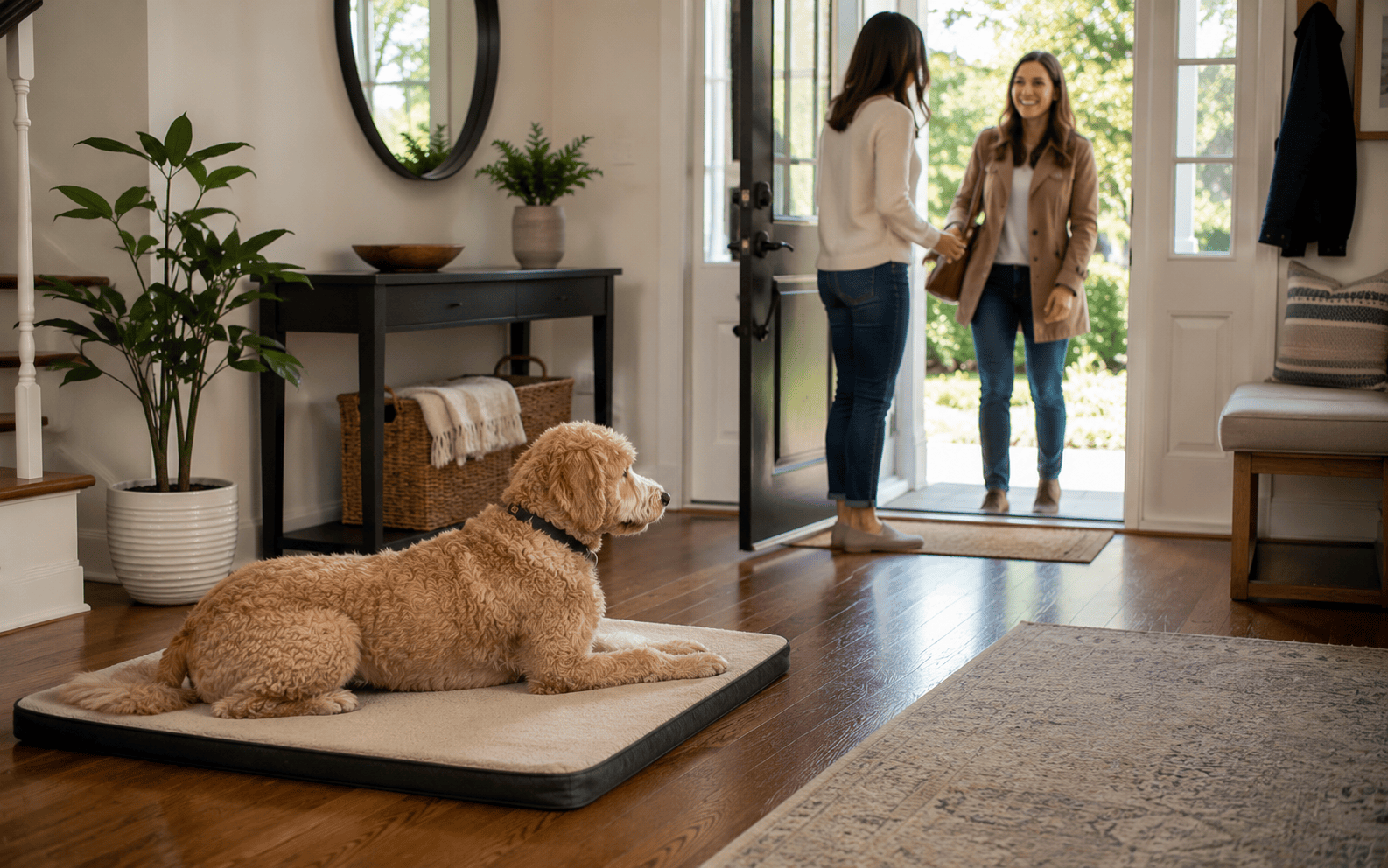
The mat acts as a physical anchor for your dog’s attention and body. Because the mat itself becomes a conditioned cue through repetition, you can take it anywhere, a hotel room, a friend’s backyard, a vet waiting area, and your dog will default to the same calm behavior. That portability is something a verbal command alone cannot replicate as reliably.
Mat training also reduces problem behaviors rooted in boredom and arousal. Dogs that haven’t learned to self-regulate often jump on guests, bark persistently, or counter-surf. If you’ve already worked on how to train a dog not to jump, adding mat training to your routine completes the picture by giving your dog an alternative behavior to default to when excitement spikes.
The Three Building Blocks Before You Begin
Before you run your first session, get clear on three things: your equipment, your reward, and your release word.
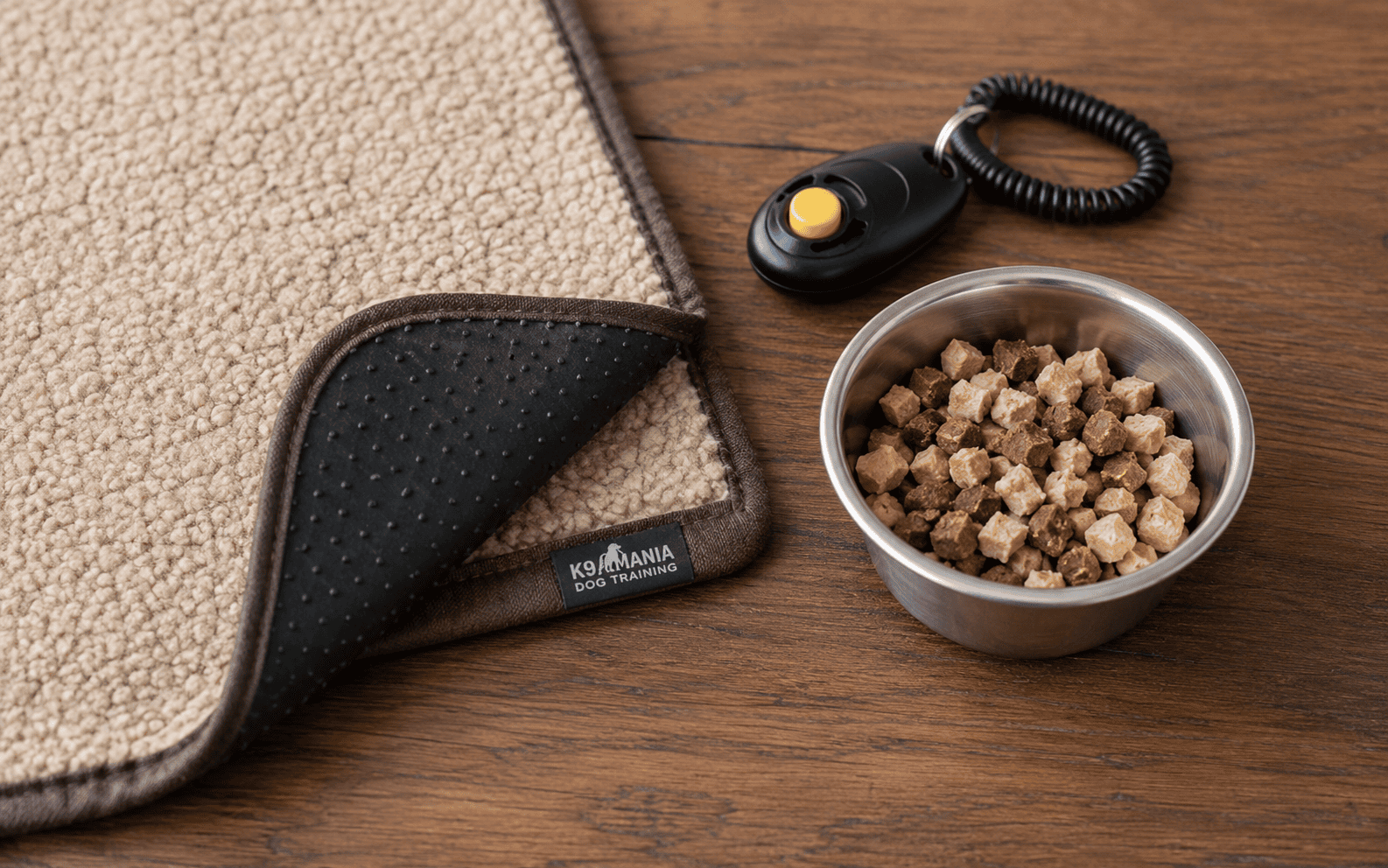
Equipment: Any flat mat with a clear visual boundary works. A rubber-backed bath mat, a foam puzzle mat, or a purpose-built dog cot all serve the same function. Choose something washable, roughly 24-36 inches, and large enough for your dog to lie flat without hanging off the edges.
Reward: Use high-value treats your dog doesn’t get during regular meals. Small pieces of chicken breast, freeze-dried beef liver, or similar soft treats work well because they’re fast to consume and don’t interrupt training momentum. Keep pieces pea-sized to avoid filling your dog up too quickly.
Release word: Pick a word you’ll use consistently to tell your dog the behavior is finished. “Free,” “break,” and “all done” are common choices. Never use “okay” because it appears too often in normal conversation and will confuse your dog.
Step-by-Step: How to Teach a Dog to Settle on a Mat
This process works best broken into four phases. Each phase should feel solid before you add the next layer of difficulty.
Phase 1: Introduce the Mat as a Rewarding Place
Place the mat on the floor in a quiet room. Stand near it and wait. The moment your dog steps onto the mat with any foot, mark the behavior with a clicker or a clear verbal marker like “yes” and immediately deliver a treat. Toss the treat slightly off the mat after rewarding so your dog has to step away and re-approach. Repeat 15-20 times per session. Within a few sessions, your dog will start deliberately targeting the mat through board and train long island programs or independent practice.
Phase 2: Add the Down
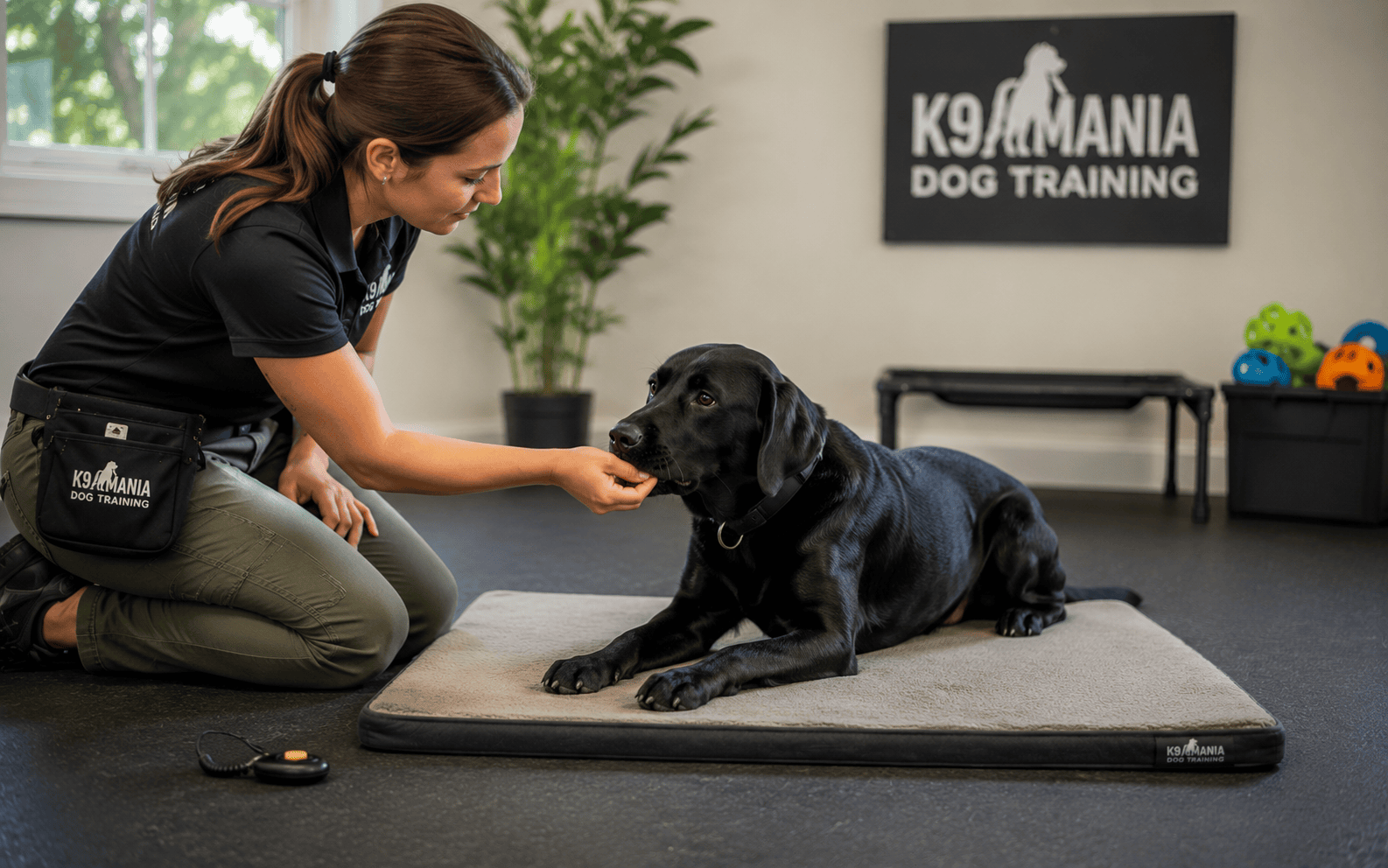
Once your dog is confidently stepping onto the mat, wait for a down before marking and rewarding. You can lure the down by holding a treat at your dog’s nose and slowly moving it toward the floor. The moment elbows hit the mat, mark and reward. Deliver several treats in a row while your dog holds position to build duration naturally.
Phase 3: Build Duration and Add the Cue
With your dog in a down on the mat, begin adding seconds between treat deliveries: 3 seconds, then 5, then 10, gradually extending to 30 seconds and beyond. Introduce a verbal cue like “mat” or “place” right as your dog steps onto it. Consistency here is everything, and working with in home dog training long island can help you refine your timing and delivery. If you say “mat” and your dog doesn’t respond, don’t repeat the cue. Reset, lure, and try again.
Phase 4: Add Distance and Distractions
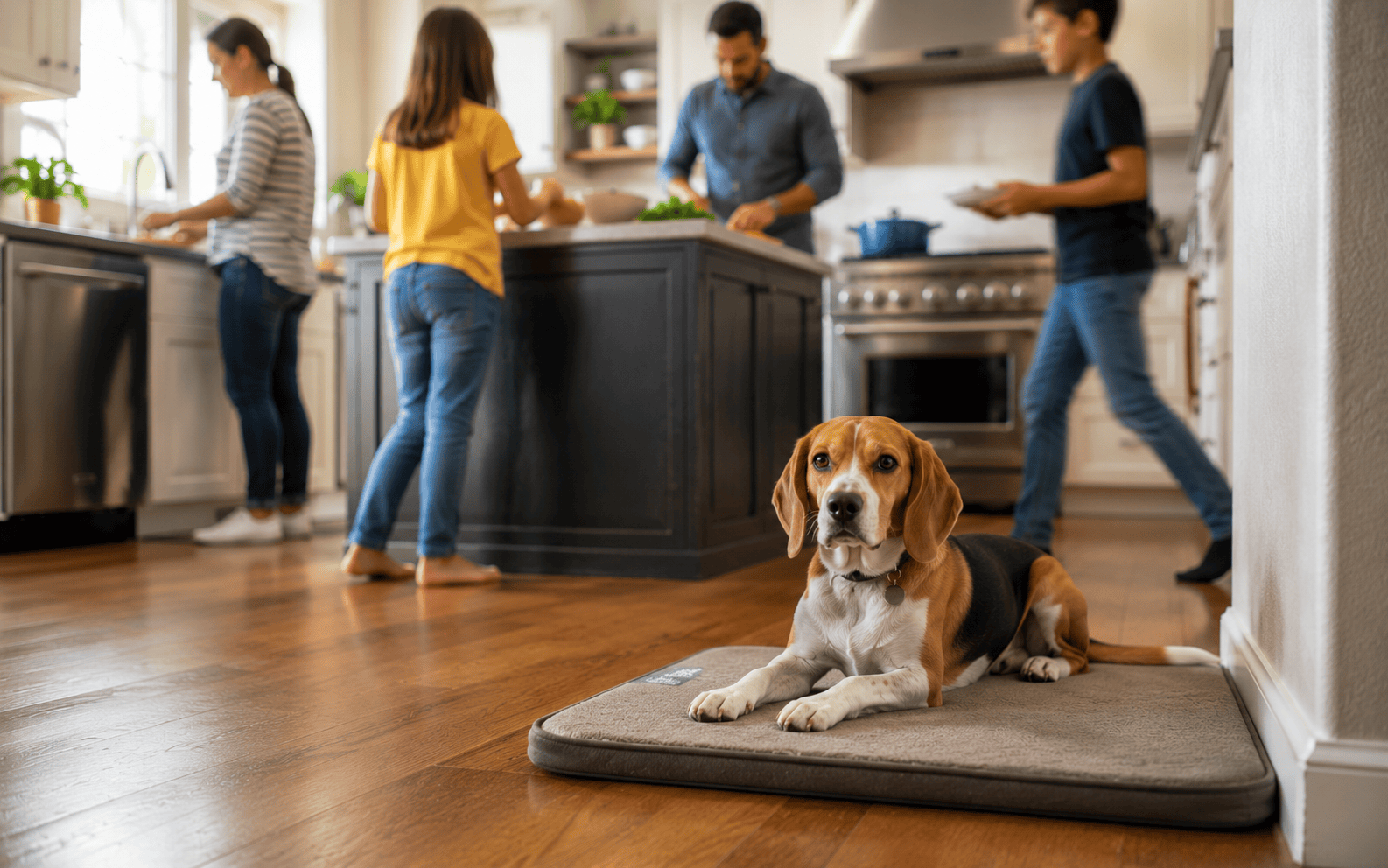
Start sending your dog to the mat from a few feet away rather than standing directly over it. Build up to sending from across the room. Then introduce mild distractions: someone walking past, a toy on the floor nearby, the sound of a doorbell on your phone. Reward generously when your dog holds position through a distraction, because that’s the hardest part and often where private dog training long island can make the biggest difference.
Things to Know
- The mat itself becomes the cue over time. This means if you move the mat to a new location, your dog may need a few repetitions to generalize the behavior in that new spot.
- Avoid using the mat as punishment. If you send your dog to the mat when you’re frustrated, you’ll erode the positive association you’ve built.
- Some dogs experience “mat guarding,” where they become protective of the mat around other pets. If this happens, rotate mat locations frequently and avoid feeding high-value treats on the mat in multi-dog households.
- Duration comes before distance, and distance comes before distraction. Jumping phases is the number one reason mat training stalls.
- Sessions longer than 10 minutes often lead to mental fatigue, which results in sloppy responses. Short, frequent sessions outperform long ones every time.
- Dogs trained with mat work alongside other foundational behaviors like those covered in the top 10 essential dog commands every owner must know tend to generalize calm behavior more readily throughout daily life.
Common Mistakes That Slow Down Progress
Rewarding too late. If your dog has already shifted position or looked away when you deliver the treat, you’re marking the wrong behavior. Timing within one second of the behavior is the standard to aim for.
Raising criteria too fast. Skipping from a 10-second duration to a 2-minute stay in one session frustrates your dog and breaks down the behavior. Progress in small, achievable increments.
Repeating the cue. Saying “mat, mat, mat” teaches your dog that multiple repetitions are acceptable. Say it once, then help your dog succeed if needed.
Using the release word inconsistently. If your dog wanders off the mat and you don’t redirect them back, you’re allowing them to self-release. Always use your release word intentionally.
Skipping generalization. Training only in one room means your dog links the behavior to that environment, not the mat itself. Move the mat to new locations regularly.
Connecting Mat Training to a Broader Obedience Plan
Mat training doesn’t exist in a vacuum. It works best when your dog already understands basic markers and has some experience with duration behaviors. If you want to understand what else belongs in your dog’s behavioral foundation, reviewing the top 10 essential dog commands every owner must know gives you a clear picture of where mat training fits within a complete training plan.
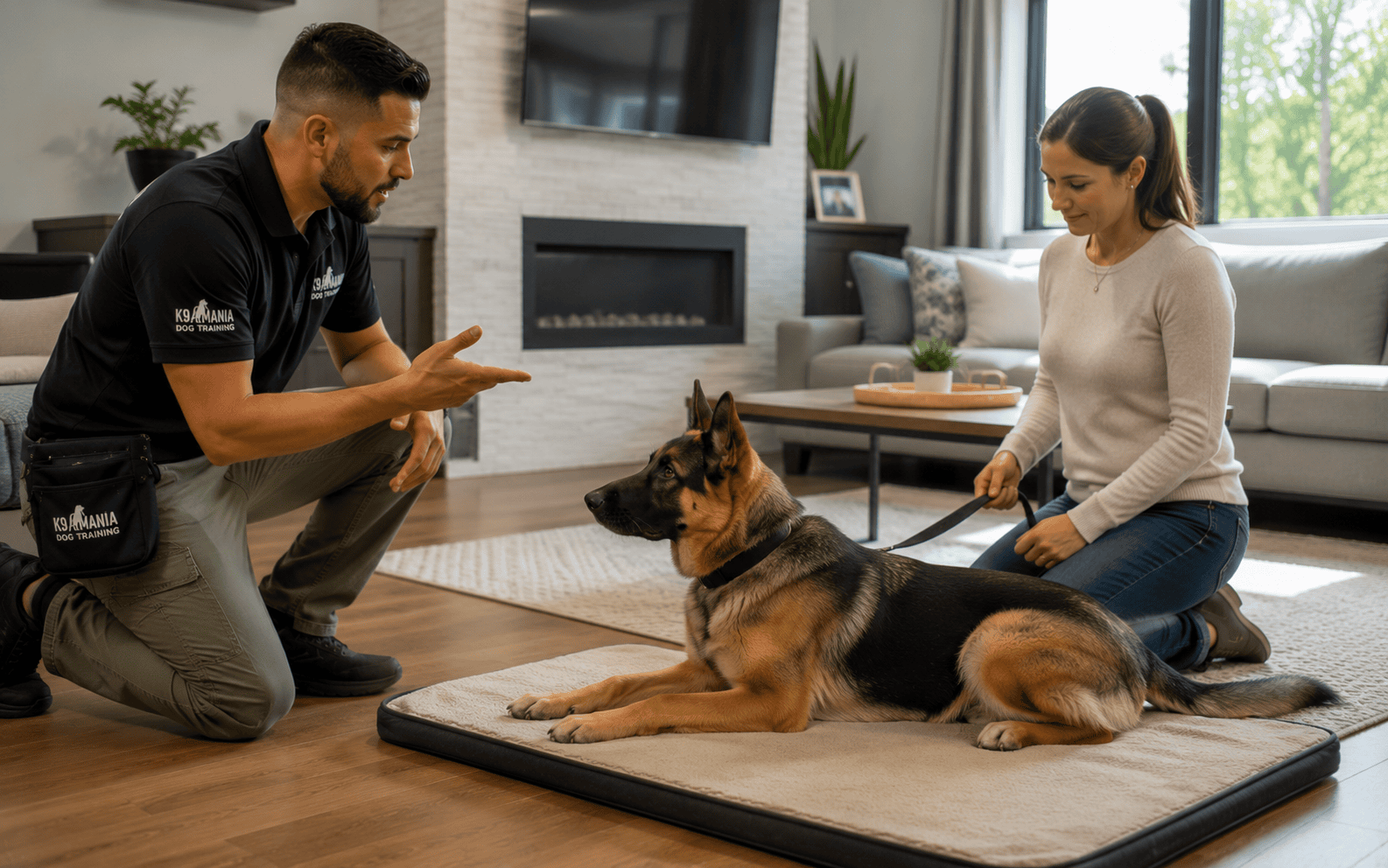
Dogs that have participated in structured programs, such as board and train long island, often arrive home with mat training already introduced, which makes reinforcement at home significantly easier. For dogs that haven’t gone through a formal program, working with a professional through in home dog training long island means the trainer works directly in your environment, where the actual distractions live.
If you prefer a more structured one-on-one approach on a regular schedule, private dog training long island allows for tailored sessions that move at your dog’s specific pace. Every dog learns differently, and what takes one dog two sessions might take another two weeks, and that’s entirely normal.
Ready to Put This Into Practice?
Pick up a mat today and commit to three 5-minute sessions over the next 48 hours. Use the four-phase structure above, start in a quiet room, and reward generously. Track your dog’s progress by noting how long they hold the down before breaking. Most owners see meaningful improvement within the first week of consistent practice. If you hit a wall or want faster results, reaching out to a qualified trainer is always a smart move, not a sign of failure.
You May Also Read
One on One Dog Training Long Island
Off Leash Dog Training Tips for Long Island Dog Owners
Frequently Asked Questions
What is mat training for dogs?
Mat training is a behavior where your dog learns to go to a specific mat, lie down, and remain calm until released.
It’s essentially teaching your dog a designated calm zone with a physical anchor. The mat becomes a conditioned cue that signals relaxation and focus, making it useful in a wide range of everyday scenarios.
How to train a dog to use a settle mat?
Start by rewarding any contact with the mat, then shape toward a down position, then build duration before adding distance and distractions.
Breaking the process into phases prevents frustration for both you and your dog. Keeping sessions under 10 minutes and using high-value treats ensures your dog stays engaged and motivated throughout.
What is the best age to introduce a settle mat?
Puppies as young as 8 weeks old can begin mat training, making early introduction one of the most effective timing choices.
That said, adult dogs learn this behavior successfully too. Senior dogs may need slightly longer sessions and softer mats for joint comfort, but the training process itself remains the same.
What’s your take on training a “settle”?
Teaching a settle is one of the highest-value investments you can make in your dog’s behavioral development because it addresses impulse control at the root.
Rather than managing a reactive or overexcited dog through constant redirection, you’re building a self-regulatory habit. Dogs with a strong settle behavior are noticeably easier to live with in everyday situations.
Does K9 Mania Dog Training has mat training for dogs?
Yes, K9 Mania Dog Training incorporates mat training as part of their broader obedience and behavior programs.
Their trainers work with dogs at various skill levels, from puppies learning the basics to adult dogs needing behavior modification. You can reach out directly to discuss which program structure fits your dog’s current needs and your training goals.
The Bottom Line on How to Teach a Dog to Settle on a Mat
Knowing how to teach a dog to settle on a mat gives you a practical tool you’ll use every single day. It builds impulse control, reduces household chaos, and gives your dog a clear behavioral expectation rather than leaving them to guess what calm looks like. The process takes patience, consistent timing, and a willingness to progress gradually rather than rushing through phases.
Start with one mat in one quiet room, use high-value treats, and trust the process. If you want professional support to accelerate results or work through specific challenges, contacting a certified trainer is the most direct path to lasting success.