How to Train a Dog Not to Jump
Teaching your dog not to jump starts with consistency and teaching an alternate behavior like sitting for greetings. When you ignore jumping, reward calm behavior, and practice daily, most dogs learn within two to four weeks that keeping all four paws on the ground gets them the attention they want.
Jumping is one of the most common behavior problems dog owners face, but it is also one of the most fixable with the right approach and patience. Whether your dog jumps on visitors, family members, or strangers during walks, this guide will show you practical steps to stop the habit for good.
Why Dogs Jump and Why It Matters
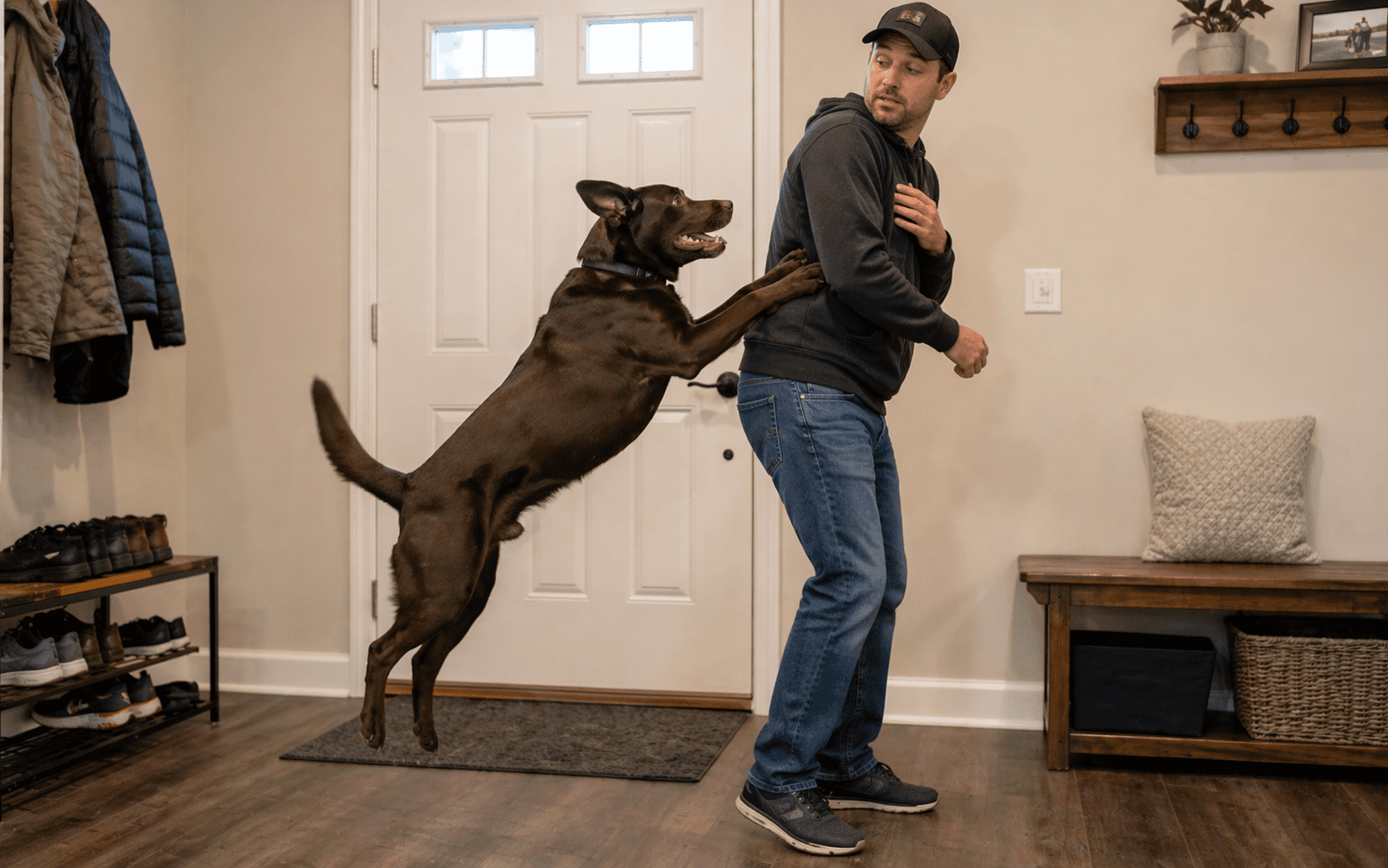
Dogs jump to get attention, show excitement, or greet people at face level. Puppies learn this behavior early because jumping often gets them what they want, like eye contact, pets, or verbal responses from people.
Understanding why your dog jumps helps you replace the behavior with something better. Jumping can knock over children, muddy clothes, scratch skin, or scare guests. For larger breeds, it can even cause injuries.
The good news is that learning how to train a dog not to jump is achievable for any dog at any age. You just need the right plan and consistency.
📌 Want to build a strong foundation? Start with these essential dog training commands that every dog should know.
Core Principles for Training Your Dog Not to Jump
Success depends on following a few key principles every single time your dog tries to jump. Inconsistency is the biggest reason training fails.
Consistency Is Everything
Every person in your household must follow the same rules. If one person allows jumping while another does not, your dog will stay confused and the behavior will continue.
This also applies to guests. Let visitors know your training plan before they interact with your dog. Ask them to ignore jumping and only give attention when all four paws are on the floor.
Reward the Behavior You Want
Dogs repeat actions that get rewarded. When your dog sits calmly during greetings, reward that instantly with praise, treats, or petting.
Timing matters. Reward within two seconds of the good behavior so your dog makes the connection. Keep treats handy near the front door or in your pocket during walks.
Ignore the Jumping Completely
When your dog jumps, turn away and cross your arms. Do not make eye contact, speak, or push your dog down. Even negative attention rewards jumping.
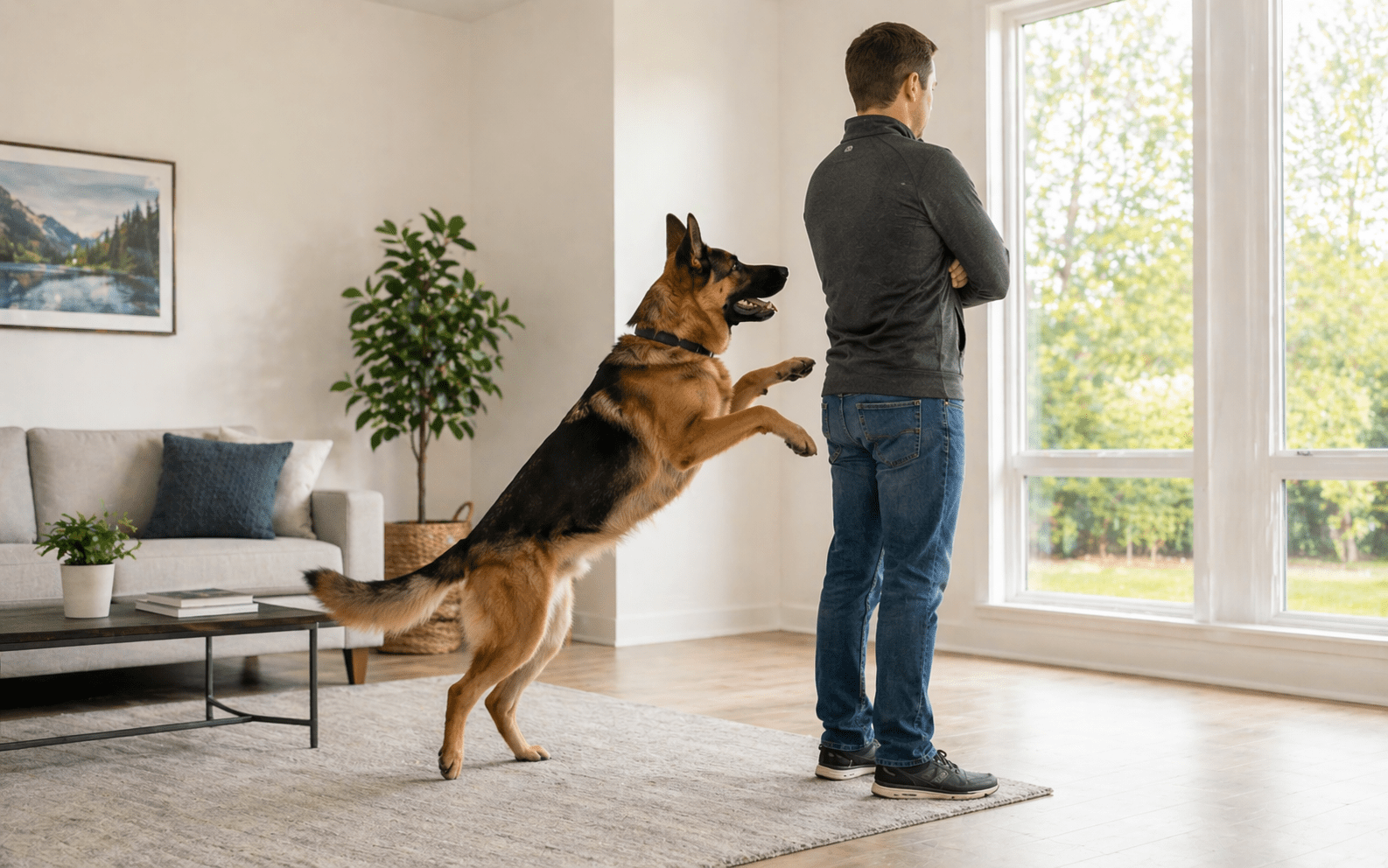
Stay calm and wait. The moment your dog’s paws touch the ground, give attention and praise. Repeat this every single time.
Step by Step: How to Train a Dog Not to Jump
This method works for puppies and adult dogs. The timeline depends on your dog’s age, energy level, and how consistent you are.
Step 1: Teach an Alternate Behavior
Your dog needs to know what to do instead of jumping. Sitting is the best replacement because a dog cannot sit and jump at the same time.
Practice the sit command in low distraction settings first. Once your dog reliably sits on command, you can use this during greetings.
When someone approaches, ask your dog to sit before they get attention. Reward the sit with treats and praise.
📌 Struggling with basic obedience? Explore our guide on dog obedience training commands to build a solid training foundation.
Step 2: Practice Greetings in Controlled Settings
Set up practice sessions with a friend or family member. Have them approach your dog while you hold the leash.
If your dog jumps, the person turns away immediately. No words, no eye contact, no touch. Wait for your dog to calm down and sit.
Once your dog sits, the person can greet calmly with pets and praise. Repeat this 10 to 15 times per session.
Step 3: Apply Training to Real Life Situations
After practicing in controlled settings, start using the method in real situations. This includes when you come home, when guests arrive, and during walks.
Keep your greetings calm. Do not get your dog overly excited when you walk in the door. Wait until your dog is calm before giving attention.
For guests, ask them to wait outside briefly while you get your dog to sit. Then let the guest in and remind them to ignore jumping.
Step 4: Use a Leash for Extra Control
During training, keep a leash on your dog when guests arrive. This gives you control and prevents your dog from practicing the jumping behavior.
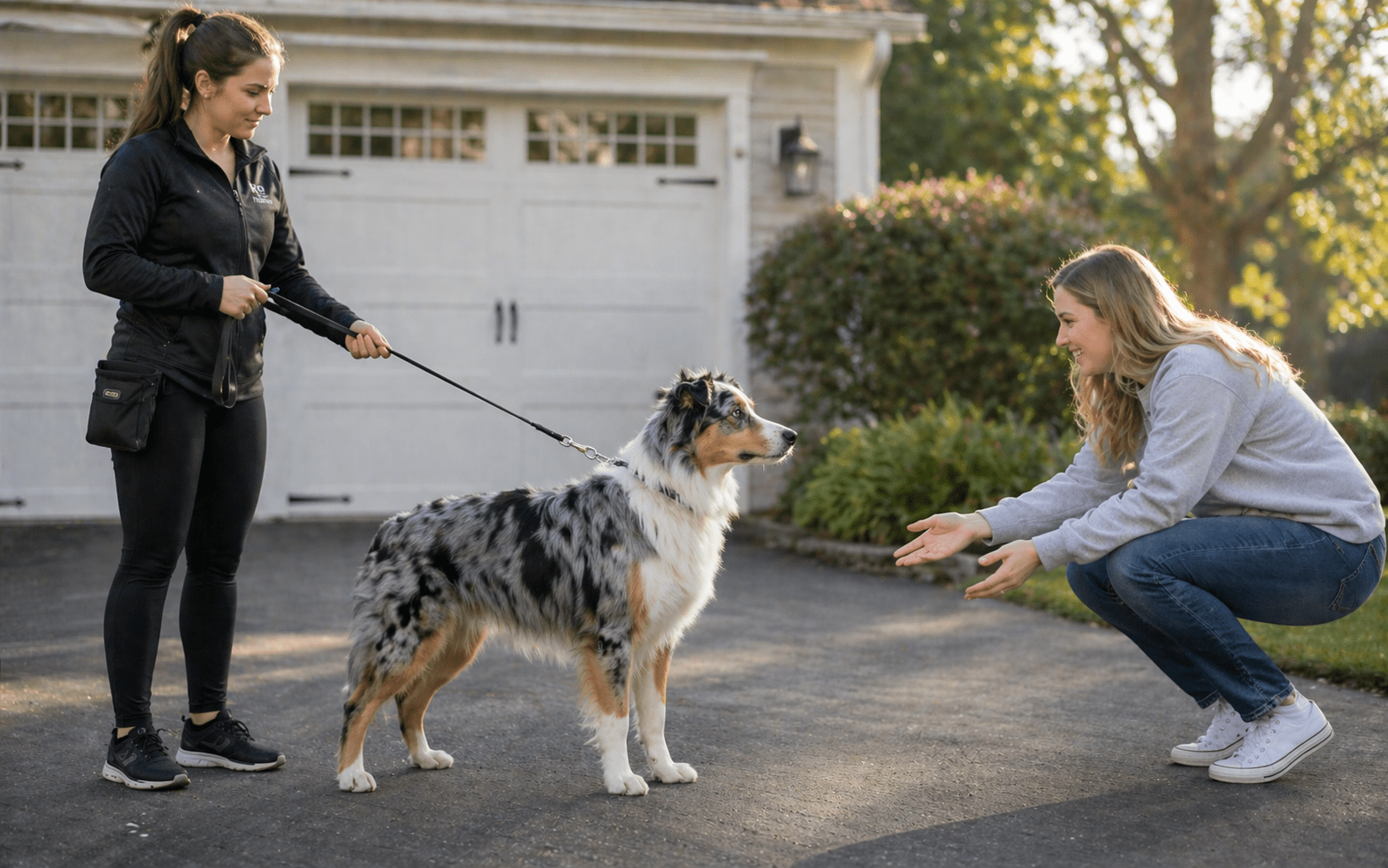
If your dog tries to jump, gently step on the leash so there is just enough tension to keep all four paws on the ground. Do not yank or pull. Just prevent the jump.
Release the tension when your dog is calm, then reward the sit.
Common Mistakes That Make Jumping Worse
Many dog owners accidentally reinforce jumping without realizing it. Avoid these common errors to speed up your training.
Giving Any Attention During Jumping
Pushing your dog down, saying “no,” or making eye contact are all forms of attention. Even negative responses can reward the behavior.
Stay completely silent and still when your dog jumps. Turn your body away and wait for calm behavior.
Inconsistent Rules Between People
If your partner lets the dog jump but you do not, the dog will keep trying. Everyone must follow the same plan.
Write down the rules and share them with everyone who interacts with your dog. This includes dog walkers, friends, and extended family.
Getting Your Dog Too Excited During Greetings
High pitched voices, fast movements, and over the top praise can trigger jumping. Keep greetings calm and quiet, especially when you first come home.
Wait a few minutes after arriving before giving your dog attention. This teaches your dog that calm behavior gets rewarded, not wild excitement.
Training Techniques That Work for Different Situations
Different settings require slight adjustments to your training approach. Here is how to handle common jumping scenarios.
Jumping on Guests at the Door
Before guests arrive, practice the sit command with your dog. When the doorbell rings, ask your dog to sit and reward calm behavior.
If your dog breaks the sit and jumps, have your guest turn away and step outside briefly. Reset and try again.
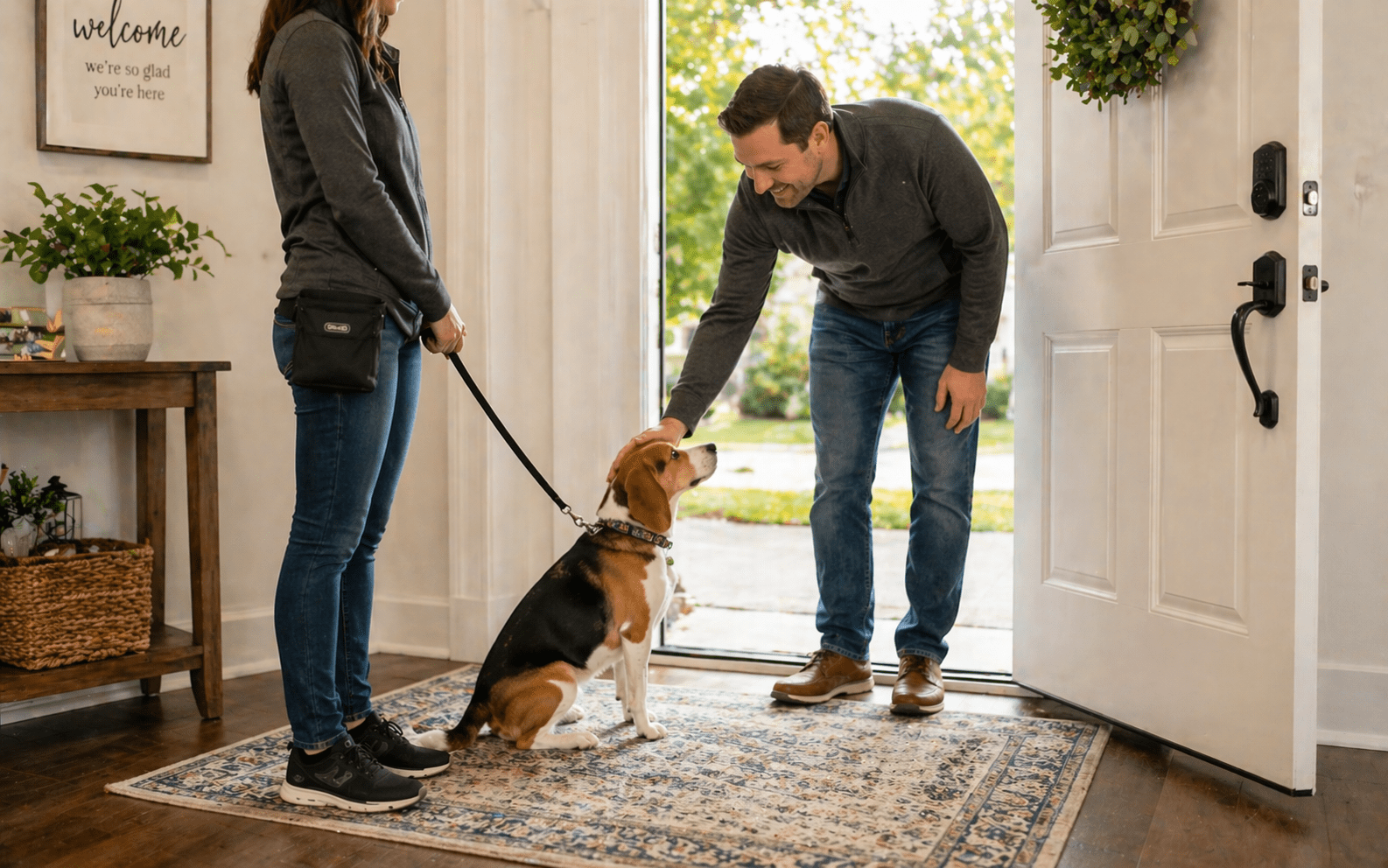
Consider using a baby gate to create space between your dog and the door. This gives you time to get your dog into a sit before the guest enters.
Jumping on You When You Come Home
This is one of the hardest scenarios because your dog is genuinely excited to see you. The key is to stay boring.
Do not greet your dog right away. Put your things down, ignore your dog completely, and wait for calm behavior. Once your dog sits or stands calmly, give quiet praise and pets.
Over time, your dog will learn that staying calm gets attention faster than jumping.
Jumping on Strangers During Walks
Keep your dog on a short leash during walks. When someone approaches, ask your dog to sit before they reach you.
If your dog tries to jump, create distance by stepping back. Wait for your dog to refocus on you, then ask for a sit.
Let the stranger know your dog is in training and ask them not to pet unless all four paws are on the ground.
Training Tools and Methods Compared
Different tools and methods can support your training. Here is a breakdown of what works best and why.
| Training Method | Best For | How It Works | Success Rate |
| Positive Reinforcement | All dogs, all ages | Reward calm behavior with treats and praise | High with consistency |
| Ignoring Jumping | Dogs that jump for attention | Turn away, give no response until calm | High for attention-seeking jumpers |
| Leash Control | High energy dogs | Use leash to prevent jumping during greetings | Moderate, requires supervision |
| Teaching “Sit” Command | Dogs that know basic commands | Ask for sit before any greeting or attention | Very high when combined with rewards |
Why Positive Reinforcement Works Best
Positive reinforcement focuses on rewarding what you want instead of punishing what you do not want. This builds trust and makes training enjoyable for your dog.
Dogs trained with rewards show less stress and more engagement during training sessions.
Professional Help for Stubborn Jumping Problems
Some dogs need more support, especially if jumping has become a deeply ingrained habit or if the dog is large and strong.
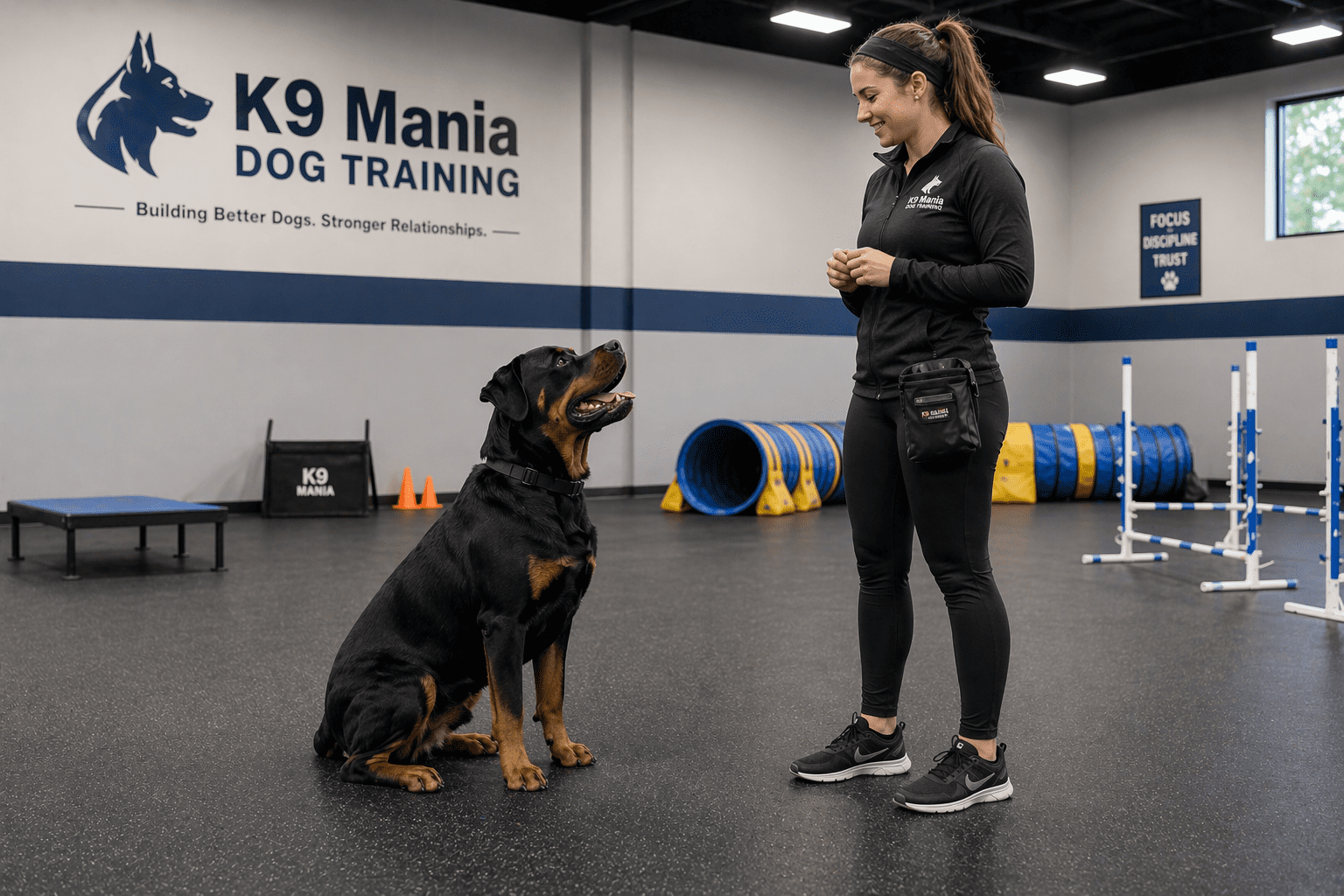
Professional dog behavior training can help identify why your dog jumps and create a custom plan. Trainers can also teach you advanced techniques and provide hands on guidance.
If your dog shows other behavior issues like leash pulling, barking, or aggression, professional training becomes even more important. A structured program like board and train Long Island can address multiple problems at once in a focused environment.
📌 Looking for more behavior solutions? Read our guide on how to stop dog chewing furniture for another common problem.
When to Seek Professional Training
You should consider professional help if your dog:
- Jumps aggressively or knocks people over regularly
- Does not respond to basic commands after weeks of practice
- Shows fear or anxiety during training
- Has additional behavior problems like aggression or extreme hyperactivity
Working with a professional can save you months of frustration and give you the tools to succeed long term.
Things to Know About Training Dogs Not to Jump
Here are practical tips and insights that make training easier and more effective.
Start training early. Puppies learn faster and have fewer bad habits to break. If you have a puppy, begin teaching calm greetings right away.
Exercise before training. A tired dog is easier to train. Give your dog 20 to 30 minutes of exercise before practice sessions so they are calmer and more focused.
Use high value treats. During training, use treats your dog loves. Small pieces of chicken, cheese, or hot dog work better than regular kibble.
Practice in short sessions. Keep training sessions under 10 minutes. Dogs learn better with frequent short sessions than long marathon practices.
Track your progress. Write down how often your dog jumps each day. Seeing improvement on paper keeps you motivated.
Stay patient. Some dogs learn in days, others take weeks. Do not give up. Consistency always wins.
Age and Breed Considerations
Different ages and breeds may need slightly different approaches to learning how to train a dog not to jump.
Puppies vs. Adult Dogs
Puppies have shorter attention spans but learn new behaviors quickly. Focus on preventing jumping from the start rather than breaking a habit later.
Adult dogs may take longer because jumping has been rewarded for months or years. Be patient and stay consistent.
High Energy Breeds
Breeds like Labrador Retrievers, Golden Retrievers, and Border Collies tend to jump more because of their high energy and excitement levels.
These dogs need more exercise and mental stimulation. Combine physical activity with training to see faster results.
Measuring Success and Staying Consistent
Track your dog’s progress to stay motivated and adjust your approach if needed.
Keep a simple log:
- How many times did your dog jump today?
- How many times did your dog sit calmly for greetings?
- What situations triggered jumping?
After two weeks, compare your notes. You should see fewer jumps and more calm greetings.
If progress stalls, review your consistency. Are you rewarding every good behavior? Is everyone in your household following the same rules?
Additional Training Methods Compared
Here is another look at specific techniques and when to use them.
| Technique | When to Use | Pros | Cons |
| Turn and Ignore | Attention-seeking jumpers | Simple, no tools needed | Requires patience, takes time |
| Leash Stepping | Large, strong dogs | Gives physical control | Needs supervision, not hands-free |
| Crate Training Before Greetings | Over-excited dogs | Calms dog before interaction | Requires pre-planning |
| Clicker Training | Dogs that know clicker basics | Precise timing, clear communication | Requires clicker skills |
When Clicker Training Helps
If your dog already knows clicker training, use it to mark the exact moment all four paws hit the ground. Click and treat immediately.
This precision speeds up learning because your dog knows exactly which behavior earned the reward.
Why Your Training Plan Must Include Everyone
Your dog will not understand why jumping is okay with one person but not another. Family meetings help everyone stay on the same page.
Explain the plan to kids, partners, and anyone else who lives with or visits your dog regularly. Show them how to turn away during jumps and reward sits.
Write the rules on a note by the front door as a reminder. Simple instructions like “Ignore jumping, reward sitting” keep everyone aligned.
From Jumping to Calm: Your Dog’s Behavior Transformation
Learning how to train a dog not to jump changes your daily life. You will enjoy stress-free greetings, safer interactions with children and elderly visitors, and a dog that listens and respects boundaries.
The effort you put in now pays off for years. Imagine opening the door to guests without worrying about your dog knocking someone over. Picture calm walks where strangers can approach without chaos.
This transformation is possible when you commit to the process. Stay patient, stay consistent, and celebrate small wins along the way. For more advanced training support or help with complex behavior issues, professional dog obedience training provides expert guidance tailored to your dog’s needs. Whether your dog is a puppy learning the basics or an adult with years of jumping habits, the right approach combined with professional support creates lasting results that make life with your dog more enjoyable every single day.
K9 Mania Dog Training is the leading board and train provider on Long Island, and we specialize in solving jumping and other behavior challenges. No matter how stubborn or energetic your dog may be, our proven methods can help you achieve the calm, well-mannered companion you deserve. Trust K9 Mania Dog Training to guide you through every step and deliver results that last.
You May Also Want to Read
How Do You Keep Your Dog Off the Couch
Frequently Asked Questions
What commands stop dogs from jumping?
The “sit” command is the most effective because a dog cannot sit and jump at the same time. Other helpful commands include “down” for lying down and “off” to teach your dog to remove paws from surfaces or people. Teaching these basic commands gives you control during greetings and helps redirect your dog’s excitement into calm, controlled behavior.
Can dogs be trained not to jump on people?
Yes, any dog can be trained not to jump with consistent practice and patience. The key is teaching an alternate behavior like sitting and rewarding calm greetings every single time. Even dogs that have jumped for years can learn new habits when owners stay consistent, ignore jumping completely, and only give attention when all four paws are on the ground.
What’s the best way to train a dog not to jump?
The best way is to ignore jumping completely by turning away and rewarding calm behavior instantly with treats and praise. Teach your dog to sit before greetings, practice with controlled setups using friends or family, and make sure everyone in your household follows the same rules. Consistency, patience, and positive reinforcement create the fastest and most lasting results.
What breed of dog jumps the highest?
Belgian Malinois, Border Collies, and German Shepherds are known for their impressive jumping ability, often clearing heights over six feet. Greyhounds and Australian Shepherds also jump very high due to their athletic builds and strong hind legs. While jumping ability varies by individual dog, high energy working breeds tend to jump higher and more frequently than other breeds.
How do I teach my dog to not jump?
Start by teaching your dog to sit on command, then ask for a sit before any greeting or attention. When your dog jumps, turn away completely without speaking or making eye contact, and only reward when all four paws are on the floor. Practice daily with family members and guests, use a leash for control during training, and stay patient since most dogs need two to four weeks of consistent practice.
What are signs of a well-trained dog?
A well-trained dog responds reliably to basic commands like sit, stay, come, and down in different environments and distractions. They walk calmly on a leash without pulling, greet people politely without jumping, and show self control around food, toys, and other dogs. Well-trained dogs also make eye contact with their owners, wait patiently when asked, and display calm confidence in new situations.