
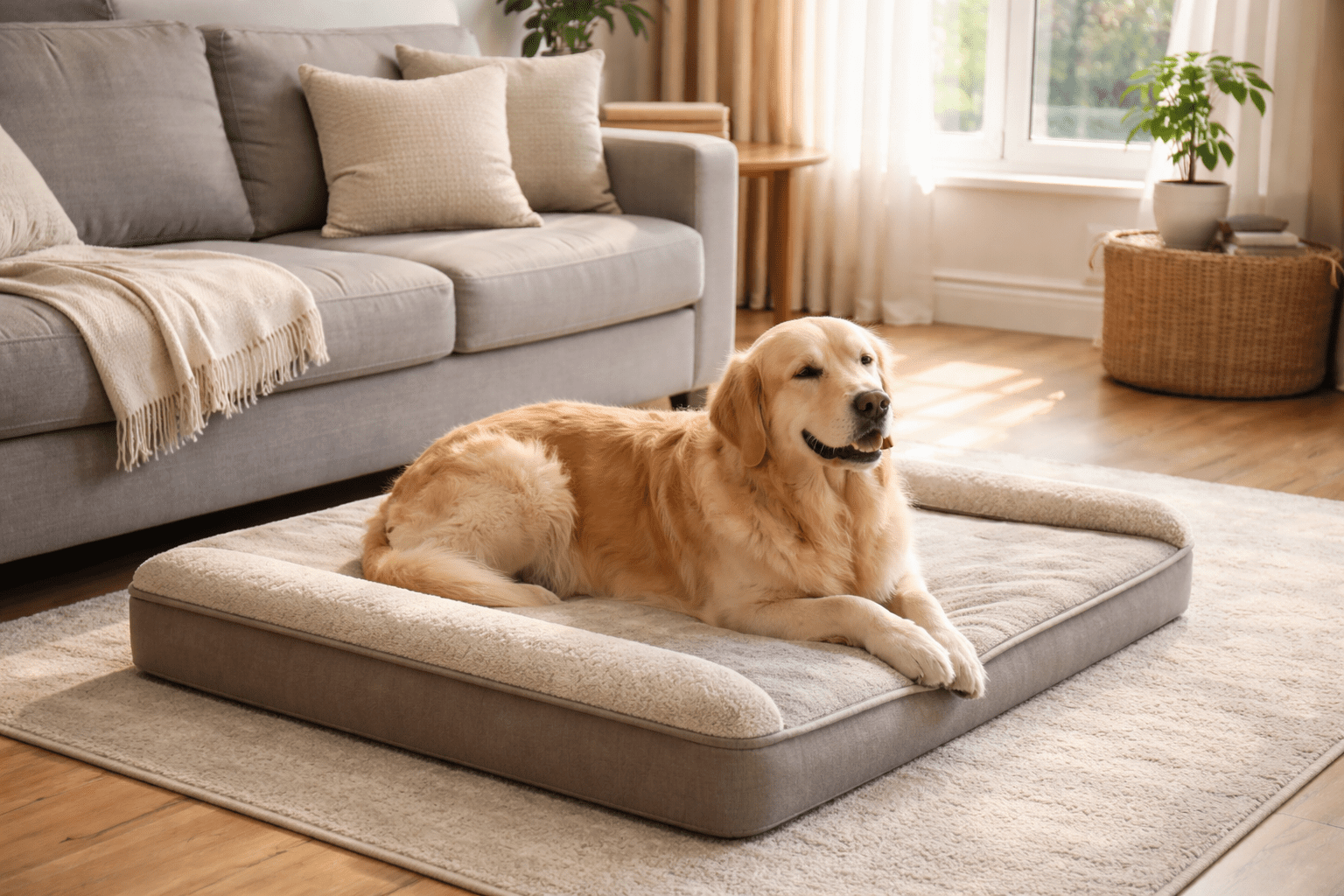
How do you keep your dog off the couch? You establish clear boundaries through consistent training, use deterrents like furniture covers or scent sprays, and provide a comfortable alternative like a quality dog bed.
The key to success is staying consistent with your rules and making sure everyone in your household enforces the same boundaries. When your dog understands that the couch is off limits and has a better option nearby, the behavior usually stops within a few weeks.
Whether you want to protect your furniture, reduce shedding, or simply set house rules, the right approach makes all the difference. Keep reading to learn practical methods that work for dogs of any age, breed, or temperament.
Why Dogs Love the Couch and What It Means
Dogs are drawn to couches for reasons rooted in comfort, pack behavior, and their natural instincts. Understanding why your dog wants to be on the couch helps you address the behavior more effectively.
Comfort and Elevated Resting Spots
Couches are soft, warm, and elevated. Dogs naturally seek out comfortable places to rest, and your couch offers cushioning that feels better than a hard floor. The elevation also gives them a better view of their surroundings, which appeals to their instinct to watch for threats or activity.
In the wild, dogs and their ancestors often chose raised spots to sleep because it kept them safer from ground-level dangers. Your couch mimics this same advantage, making it an attractive resting place.
Pack Bonding and Your Scent
Dogs are pack animals, and they bond closely with their human family members. Your couch smells like you, and sitting where you sit makes your dog feel closer to the pack. This is especially true if you spend a lot of time on the couch yourself.
When your dog climbs up, they are not trying to challenge your authority in most cases. They are simply seeking comfort and connection. This is why some dogs wait until you leave the room to jump up, they want the scent and warmth without necessarily breaking a rule they know exists.
📌 Teaching boundaries starts with clear communication. Learn how to build a strong foundation with essential dog training commands that make every training goal easier.
Training Methods to Keep Dogs Off Furniture
Training is the most reliable long term solution. When your dog understands what you expect and has been rewarded for following the rules, the behavior sticks even when you are not around.
The Off Command
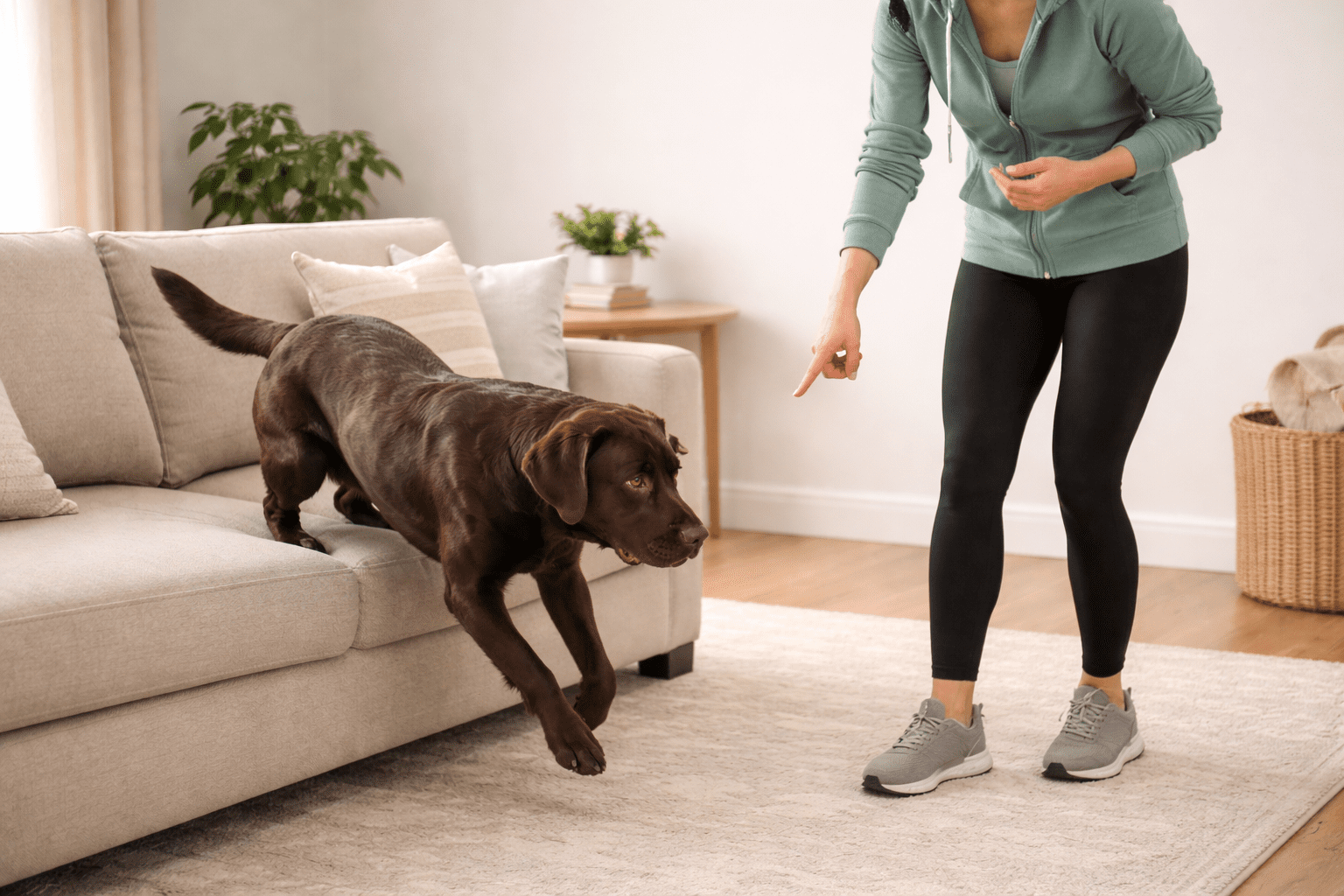
The “off” command tells your dog to get down from any elevated surface. Start by saying “off” in a calm, firm voice whenever your dog is on the couch. Guide them down gently if needed, and reward them immediately once all four paws are on the floor.
Repeat this every single time your dog gets on the couch. Consistency is everything. If you let your dog up sometimes but not others, they will get confused and the training will take much longer.
Use treats, praise, or a favorite toy as a reward. Positive reinforcement builds trust and makes your dog want to follow the rule.
The Place Command
Teaching your dog to go to a specific spot on command gives them a clear alternative to the couch. Choose a dog bed or mat and use the word “place” every time you guide them to it. Reward them for staying on their spot.
Once your dog understands “place,” you can redirect them there anytime they try to get on the couch. This method works well because it gives your dog something to do instead of just hearing “no.”
Over time, your dog will start going to their place on their own, especially if you make it comfortable and rewarding.
Consistency Across All Family Members
Every person in your home needs to follow the same rules. If one person allows the dog on the couch and another does not, your dog will not understand what is expected. This inconsistency confuses your dog and slows down progress.
Have a family meeting and agree on the rules before you start training. Make sure everyone knows how to use the “off” and “place” commands correctly. When everyone is on the same page, training happens faster and with less frustration.
Professional dog obedience training can help your entire family learn how to communicate clearly with your dog and enforce boundaries together.
Physical Deterrents and Barriers That Work
If training alone is not enough, physical deterrents can help reinforce the message while you build better habits. These tools make the couch less appealing or block access entirely.
Furniture Covers and Barriers
Plastic furniture covers, scat mats, or upside down office chair mats create an uncomfortable surface. Dogs dislike the crinkly texture and unstable feeling, so they avoid jumping up. You can also use baby gates or couch blockers to physically prevent access when you are not home. These barriers work best as temporary tools while you focus on training.
Aluminum Foil and Double Sided Tape
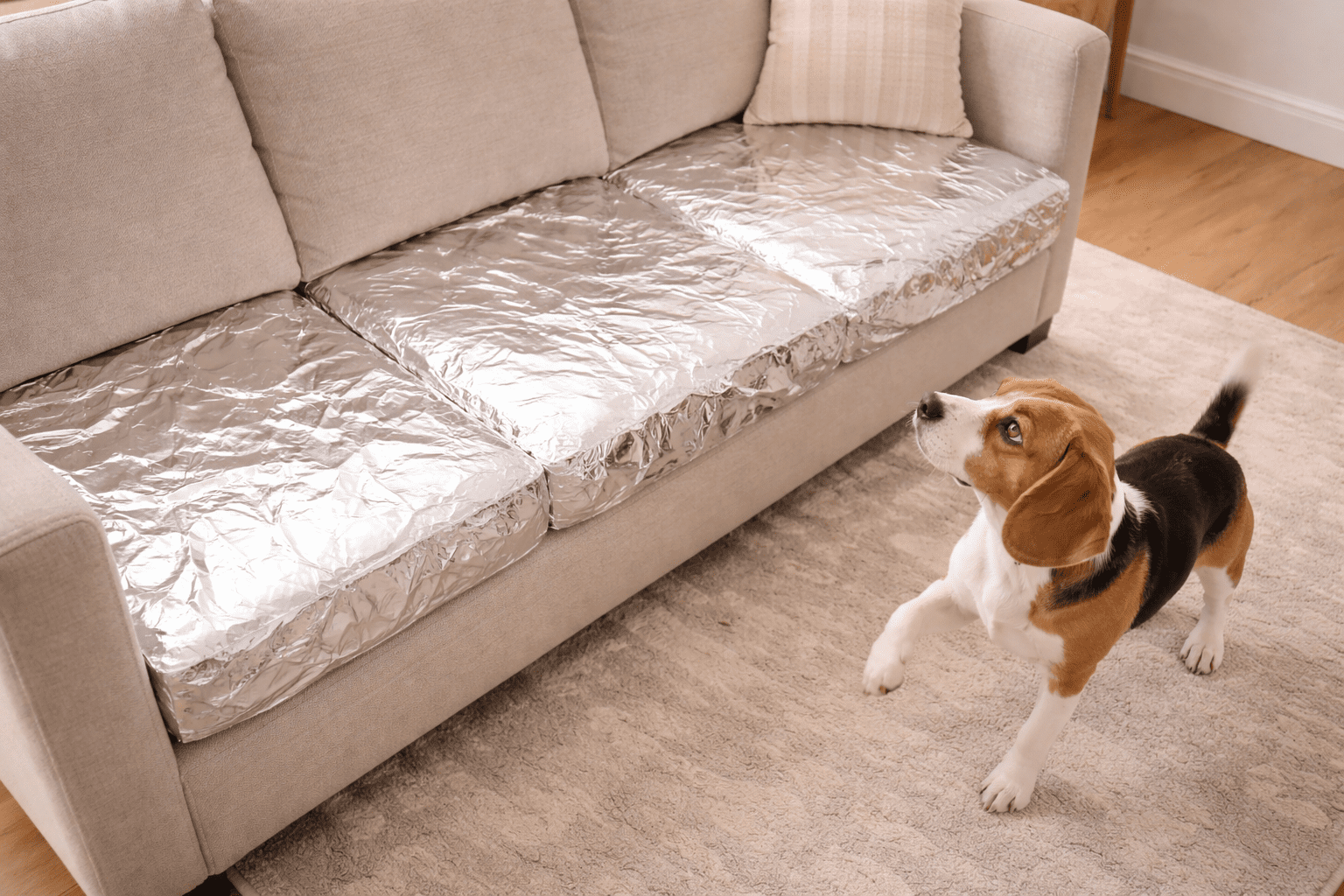
Many dogs dislike the texture of aluminum foil under their paws. Cover the couch cushions with foil, and most dogs will avoid jumping up. Double sided tape works in a similar way. These methods are safe, inexpensive, and work well for dogs who only jump up when you are not watching.
Motion Activated Deterrents
Motion activated air sprays or alarms startle your dog when they approach the couch, teaching them to stay away even when you are not around. Use these tools carefully, as some sensitive dogs may become anxious.
| Deterrent Type | How It Works | Best For |
| Furniture Covers | Creates uncomfortable texture | Dogs who jump up when you are home |
| Aluminum Foil | Slippery and noisy surface | Dogs sensitive to textures and sounds |
| Motion Activated Spray | Releases air when dog approaches | Dogs who sneak up when you are gone |
| Baby Gates | Blocks physical access to room | Persistent jumpers or untrained puppies |

Scent Based Solutions to Discourage Jumping
Dogs have a much stronger sense of smell than humans, so using scents they dislike can help keep them off the couch. These methods are safe and can be combined with other training techniques.
Citrus Scents
Most dogs dislike the smell of citrus. You can use lemon, orange, or grapefruit peels and place them on the couch cushions. You can also make a spray by mixing water with a few drops of citrus essential oil and lightly misting the couch.

Reapply the scent every few days to keep it strong. Over time, your dog will associate the couch with the unpleasant smell and avoid it.
Make sure the scent is not too strong for your own comfort. You still want to enjoy sitting on your couch.
Vinegar Spray
White vinegar is another scent dogs tend to avoid. Mix equal parts water and white vinegar in a spray bottle and lightly spray the couch. The smell fades quickly for humans but lingers longer for dogs.
Test the spray on a small, hidden area of your couch first to make sure it does not stain or damage the fabric. Vinegar is safe for most materials, but it is always better to check.
Commercial Pet Deterrent Sprays
Pet stores sell sprays designed to keep dogs off furniture. These products use scents that are unpleasant to dogs but mild or unnoticeable to people. Follow the instructions on the label for best results.
Some sprays also include bitter flavors that discourage chewing or licking. This can be helpful if your dog tries to mouth the couch cushions.
Give Your Dog a Better Alternative
One of the most effective ways to keep your dog off the couch is to provide a comfortable alternative they actually want to use. If their bed is more appealing than the couch, they will choose it naturally.
Choose the Right Dog Bed
Pick a bed that matches your dog’s size, age, and sleeping style. Orthopedic beds work well for older dogs or large breeds with joint issues. Bolster beds with raised edges appeal to dogs who like to rest their heads on something.
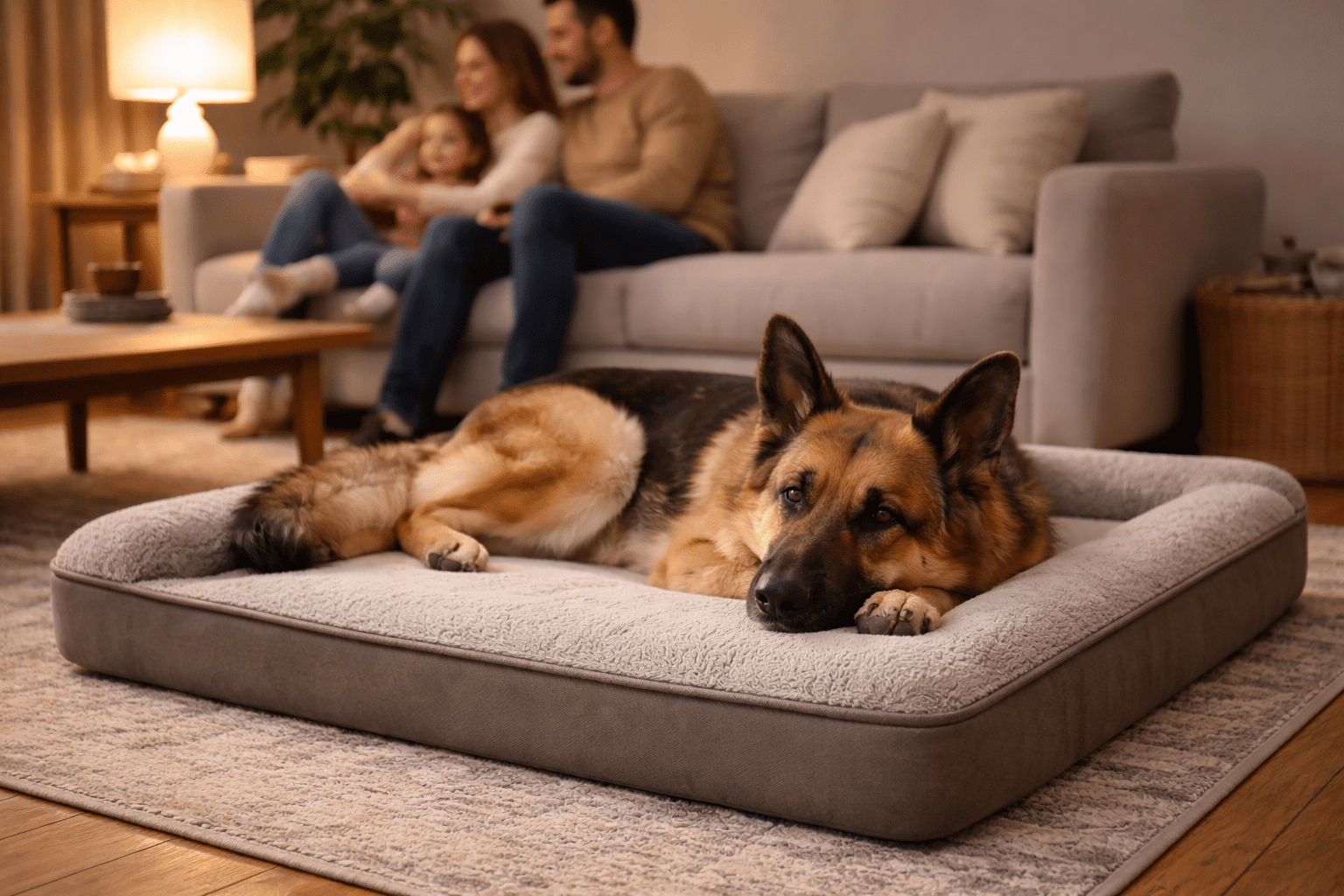
Place the bed in a spot your dog already likes to rest. If your dog usually sits near the couch, put the bed close by so they can still be near the family. Wash the bed regularly to keep it fresh and inviting.
Elevated Dog Cots for Added Comfort
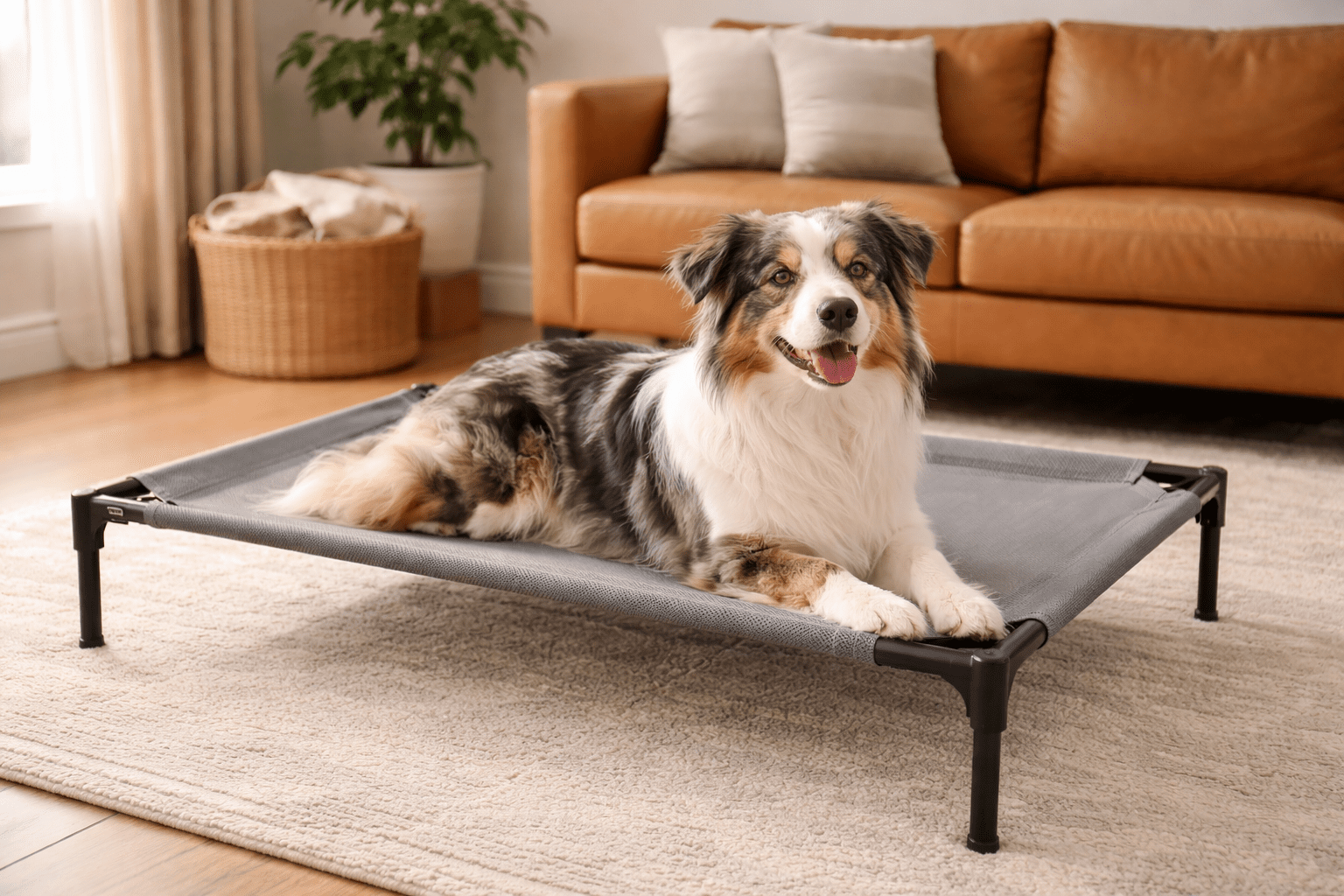
Some dogs prefer elevated cots because they allow airflow underneath and keep them cooler. Cots mimic the raised, cushioned feeling of a couch without breaking house rules. Look for cots with sturdy frames and durable fabric. If your dog loves being elevated, a cot gives them what they want without letting them on your furniture.
| Dog Bed Type | Best For | Key Features |
| Orthopedic Foam | Senior dogs, large breeds | Memory foam, joint support, washable covers |
| Bolster Bed | Dogs who like to lean or nest | Raised edges, cozy design, available in many sizes |
| Elevated Cot | Dogs who overheat or like airflow | Raised off ground, breathable, easy to clean |
| Heated Bed | Cold climates, older dogs | Self warming or electric, soft fabrics, energy efficient |
Addressing furniture rules is part of a larger picture. If your dog struggles with boundaries, dog behavior training helps you build respect and trust in every area of your home.
Things to Know Before You Start Training
Success depends on understanding a few key principles before you begin. Start training as early as possible, though older dogs can still learn with patience. Never punish your dog after the fact, as they will not connect it to being on the couch. Redirect them calmly instead.
Reward your dog every time they choose their bed over the couch. Positive reinforcement speeds up learning and builds trust. Be patient, as some dogs need several weeks to change habits. Make sure your dog gets enough exercise and mental stimulation. A tired dog is less likely to jump on the couch out of boredom.
Common Mistakes to Avoid
Certain mistakes can undo your training progress or confuse your dog. Knowing what to avoid helps you stay on track.
Inconsistency
Letting your dog on the couch sometimes but not other times sends mixed signals. Your dog does not understand context like “only when there are no guests.” Decide on a rule and stick to it every single day without exceptions.
Using Punishment Based Methods
Yelling, hitting, or harsh corrections can damage your relationship with your dog and cause fear or anxiety. Focus on positive reinforcement instead. Reward good behavior and redirect unwanted behavior calmly.
Ignoring the Root Cause
If your dog seeks the couch for warmth, provide a heated bed. If they want to be near you, move their bed closer. When you meet their need in an approved way, the problem behavior usually stops.
Learning the right techniques makes a big difference. Explore proven strategies with dog obedience training commands that help you communicate clearly and effectively.
When to Seek Professional Help
Some dogs need more than home training to break the couch habit, especially if the behavior is tied to anxiety, dominance issues, or lack of basic obedience. If your dog growls, snaps, or shows aggression when you try to remove them from the couch, this is a serious issue requiring expert guidance. Resource guarding can escalate if not handled correctly.
If you have been consistent for several weeks with no progress, a professional evaluation can identify what is not working. Professional board and train Long Island programs provide intensive training in a controlled environment, especially helpful for stubborn habits or multiple behavioral issues.
Step by Step Plan for Success
Follow this plan to teach your dog to stay off the couch and build better habits over time.
Week 1: Start using the “off” command every time your dog gets on the couch. Reward them immediately when they get down. Block access to the couch with gates or covers when you cannot supervise.
Week 2: Introduce the “place” command. Guide your dog to their bed and reward them for staying there. Use treats, praise, and affection to make the bed more appealing than the couch.
Week 3: Remove physical barriers for short periods while you are home. Watch your dog closely and redirect them to their bed if they approach the couch. Keep rewarding good choices.
Week 4: Extend the time you leave your dog unsupervised without barriers. Use deterrents like foil or scent sprays if needed. Continue reinforcing the “place” command daily.
Week 5 and Beyond: Stay consistent. If your dog breaks the rule, calmly redirect them without punishment. Over time, the new habit will become automatic.
Track your progress by writing down how often your dog chooses their bed versus the couch. Celebrate small wins and stay patient during setbacks.
If your dog struggles with impulse control in other areas, addressing those behaviors can help. Read more about how to stop dog chewing furniture to build better habits across the board.
Building Boundaries That Last: How Do You Keep Your Dog Off the Couch
How do you keep your dog off the couch for the long term? You combine clear training, consistent rules, and a comfortable alternative that meets your dog’s needs. When your dog understands the boundaries and has a better option, the behavior becomes second nature.
Physical deterrents and scent sprays can help in the short term, but lasting success comes from teaching your dog what you expect and rewarding them every time they follow through. Patience and consistency are the foundation of every successful training plan.
If you are struggling with furniture boundaries or other behavioral challenges, K9 Mania Dog Training is here to help. As the leading board and train provider on Long Island, we specialize in solving even the toughest behavior problems with proven, positive methods.
Whether your dog needs basic obedience or advanced behavior modification, our expert trainers create customized programs that deliver real results. Trust K9 Mania to give you the tools and confidence to build a stronger relationship with your dog. Visit k9maniadogtraining.com to learn more.
You May Also Want to Read
Why Do Dogs Like Squeaky Toys?
FAQs About Keeping Dogs Off the Couch
How to keep a stubborn dog off the couch?
Stubborn dogs need consistent training and physical deterrents combined. Use the off command every single time they jump up, and reward them when they stay on their bed. Block access with furniture covers or baby gates when you cannot supervise. Provide a comfortable alternative bed in the same room so they have a clear option. Stay patient and never give in, even once, because inconsistency teaches them to keep trying.
What smell do dogs absolutely hate?
Most dogs strongly dislike citrus scents like lemon, orange, and grapefruit. Vinegar is another smell dogs tend to avoid. Some dogs also dislike peppermint or eucalyptus, though reactions vary by individual. You can use these scents as natural deterrents by placing peels on the couch or making a mild spray with water and essential oils. Always test in a small area first to avoid damaging your furniture.
What smell will keep a dog off the couch?
Citrus sprays or vinegar solutions work well to keep dogs off the couch. Mix water with a few drops of lemon or orange essential oil and lightly spray the cushions. You can also use white vinegar mixed with equal parts water. Commercial pet deterrent sprays are designed specifically for this purpose and combine scents that are unpleasant to dogs but mild for humans. Reapply every few days to maintain effectiveness.
How to dog proof a couch?
Cover the couch with plastic furniture covers, aluminum foil, or scat mats to make the surface uncomfortable for your dog. Use baby gates to block access to the room when you are not home. Motion activated air sprays can startle your dog when they approach the couch, teaching them to stay away. For long term protection, train your dog to respect boundaries and provide a comfortable dog bed as an alternative resting spot.
How to teach a dog not to jump on a couch?
Start by teaching the off command so your dog knows how to get down when asked. Use treats and praise to reward them immediately after all four paws hit the floor. Teach the place command so they learn to go to their bed instead of the couch. Block access with barriers or deterrents while you are training. Stay consistent and make sure every family member follows the same rules. Redirect your dog calmly every time they try to jump up.
Should I ignore my dog when they jump on couch?
Ignoring alone usually does not work because being on the couch is self rewarding for your dog. They get comfort, warmth, and elevation even if you do not respond. Instead, use the off command to guide them down, then reward them for getting off. Combine this with training, deterrents, and a comfortable alternative bed. Ignoring works better for attention seeking behaviors like barking, but furniture boundaries require active redirection and clear communication.
This article is reviewed and updated regularly to reflect the latest information.