
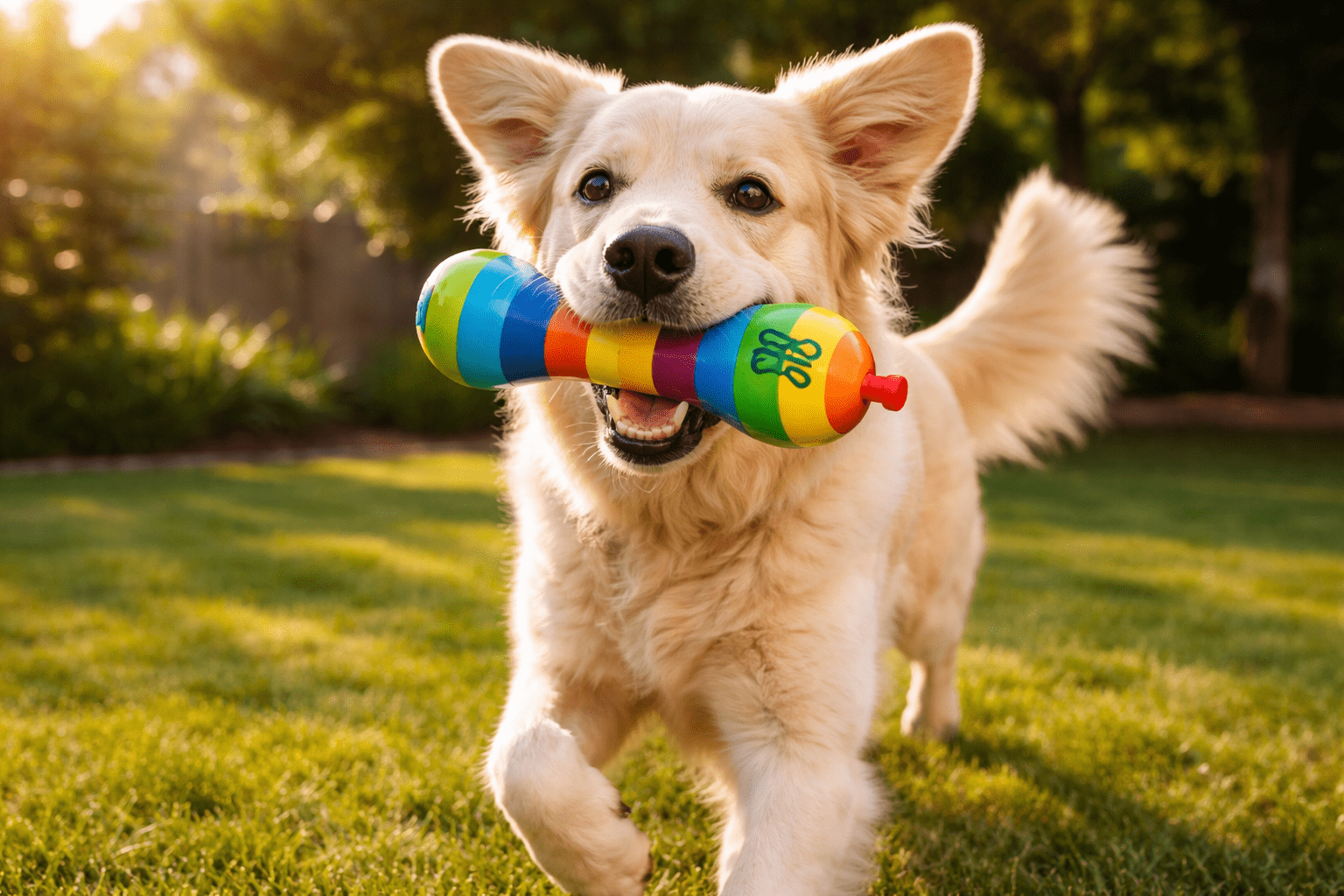
Why do dogs like squeaky toys so much? Dogs are hardwired to love squeaky toys because the high-pitched sound mimics injured prey, triggering their natural hunting instincts and releasing feel-good dopamine in their brains. This combination of ancestral programming and instant auditory feedback creates an irresistible attraction that explains why your dog can’t put that squeaker down.
If you’ve ever watched your dog go absolutely wild over a squeaky toy, you’re not alone. That piercing squeak that makes you cringe is like music to your dog’s ears. But there’s actually some fascinating science behind this obsession, and understanding it can help you choose better toys, manage playtime more effectively, and even use squeakers as powerful training tools.
Let’s dig into what makes squeaky toys so addictive for dogs and how you can use this knowledge to keep your pup happy, healthy, and mentally stimulated.
Ready to channel your dog’s play drive into better behavior? Explore our board and train Long Island program where we transform toy obsession into obedience.
Why Squeaks Trigger Your Dog’s Hunter Brain
Your dog’s brain is still wired like their wolf ancestors, even if they spend most of their time napping on your couch. When a toy squeaks, it activates the same neural pathways that wild canines use when hunting small animals. The auditory cortex lights up when they hear high-pitched sounds in the 2,000-4,000 Hz range—the same frequency as a small animal’s distress call.
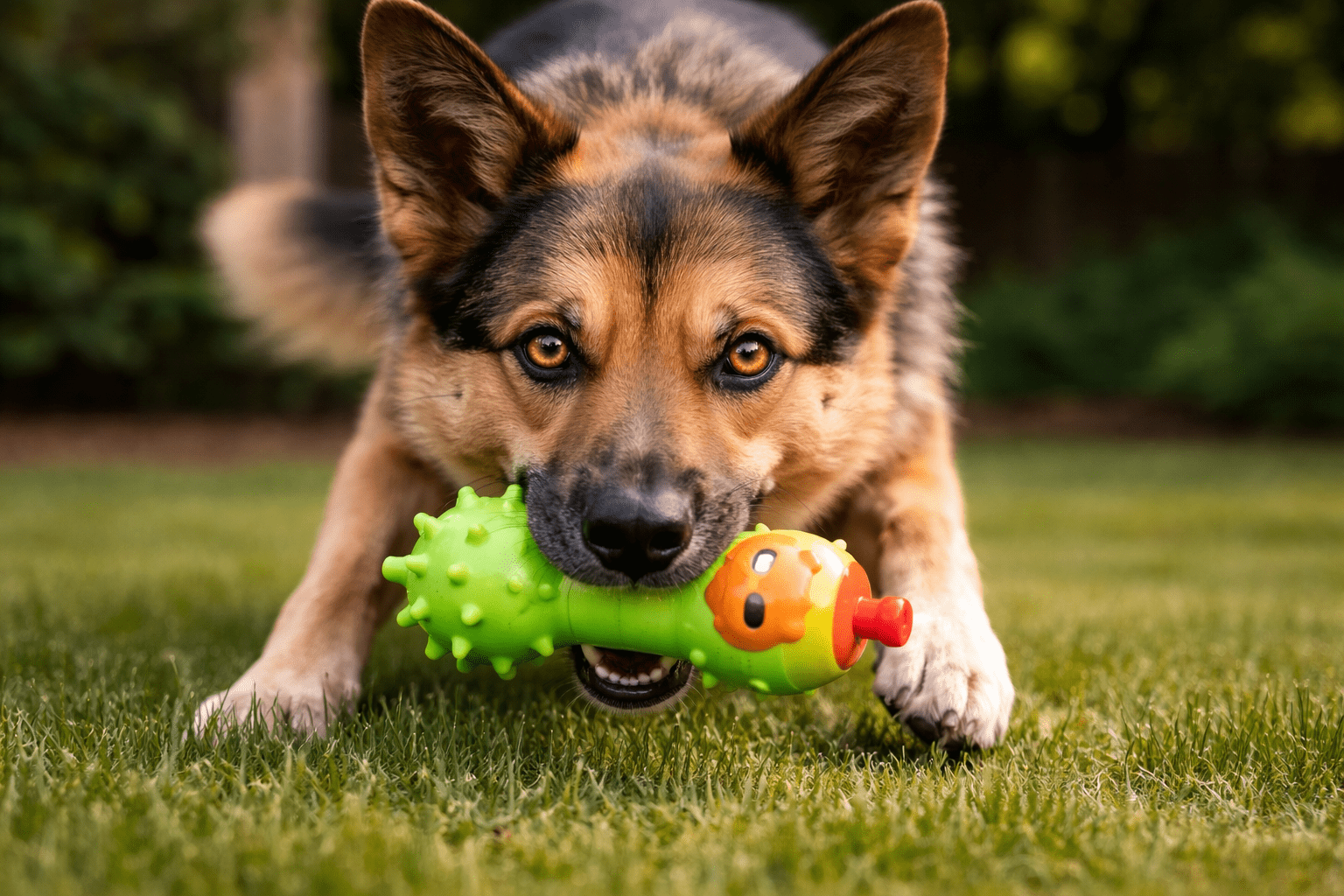
How Squeaky Sounds Mimic Injured Prey
Squeaky toys produce sounds remarkably similar to the squeals of mice, birds, or rabbits. When your dog bites down and hears that squeak, their brain registers it as a successful “catch” and releases dopamine, the feel-good neurotransmitter. This instant feedback creates a powerful loop: bite = squeak = brain reward. Your dog gets the auditory confirmation of success without the meal, which explains why they’ll squeak the same toy hundreds of times.
Why Dogs Can’t Resist the Sound
The inability to resist squeakers isn’t a character flaw—it’s biology. When you understand prey drive in dogs, you realize squeaky toys tap into fundamental canine motivators. The unpredictability factor also plays a role. Some squeakers are reliable, while others are random. This variable reinforcement is the same principle that makes slot machines addictive to humans.
Reasons Dogs Are Obsessed with Squeaky Toys
Instant Gratification and Feedback
Squeaky toys provide immediate rewards through instant sound feedback. Every bite creates satisfying cause-and-effect engagement, keeping dogs interested longer than silent toys. This builds confidence, especially for shy or anxious dogs who love controlling the sound production through their actions.
Satisfies Natural Hunting Instincts
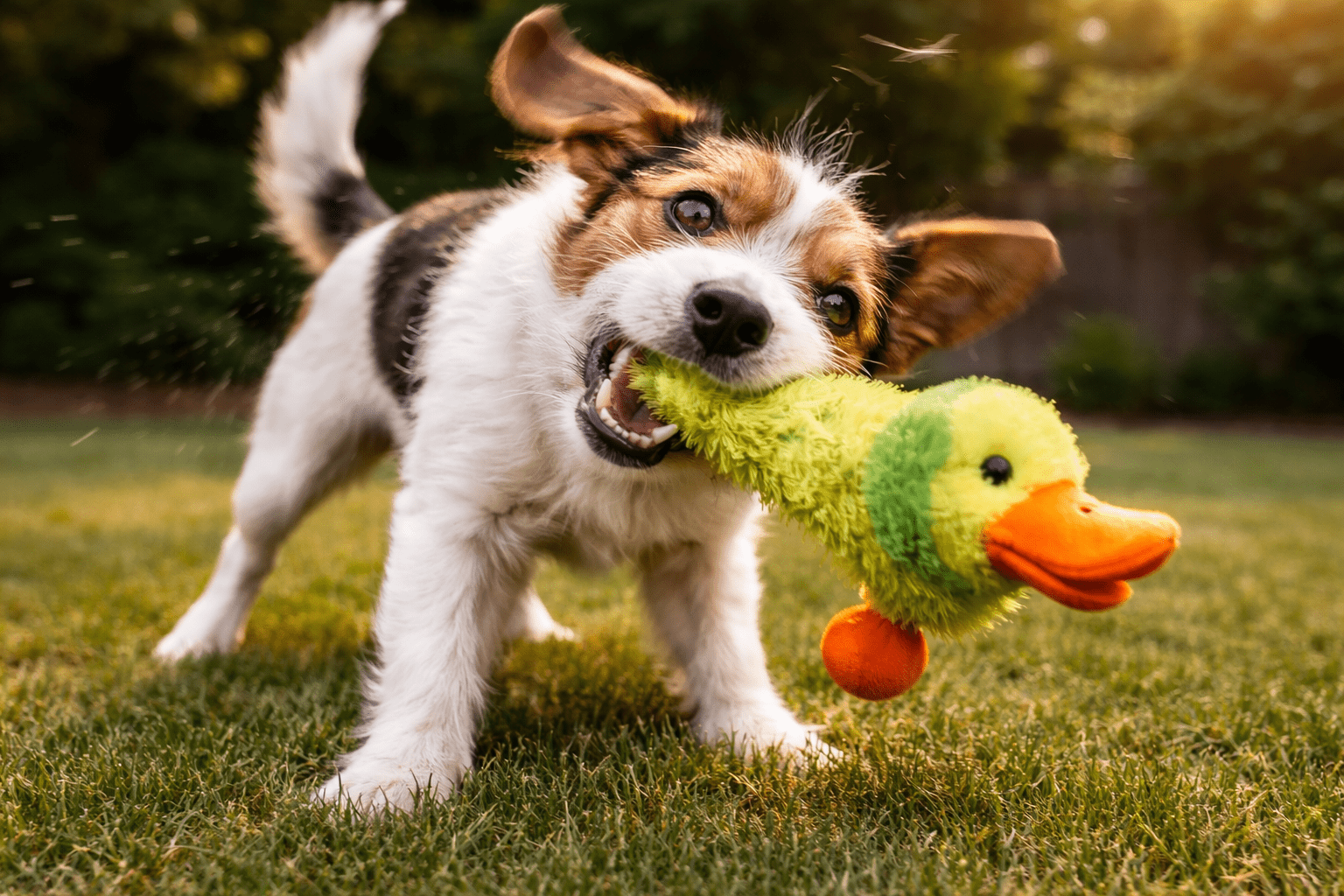
Despite regular feeding, dogs retain hunting drives. Squeaky toys let them practice the predatory sequence: stalking, chasing, catching, and “killing.” Breed influences interaction—terriers shake toys violently (bred for rodent killing), while retrievers carry squeakers gently (bred for bird retrieving).
Mental Stimulation and Problem-Solving
Smart dogs need mental challenges, and squeaky toys deliver. Figuring out how to make the sound, where it comes from, and how to extract the squeaker all engage your dog’s problem-solving abilities. This mental workout can be just as tiring as physical exercise. For dogs who need extra stimulation, check out our guide on dog toys for hyperactive dogs to find options that challenge both body and brain.
Attention-Seeking Behavior
When your dog squeaks a toy, you look. You might smile, talk to them, or even play along. Dogs quickly learn that squeaking gets your attention, and they’ll use this to their advantage. This attention-seeking behavior isn’t manipulative in a negative way. Dogs are social creatures who crave interaction with their humans. If squeaking brings you into the game, that’s a bonus reward on top of the sound itself.
The “Kill” Satisfaction
Many dogs don’t consider playtime complete until they’ve destroyed the squeaker. This “dissection” behavior mimics wild canines with prey, providing accomplishment and closure. Some dogs lose interest once the squeaker is silent, while others continue playing. This depends on whether they’re motivated by sound or physical manipulation.
Is It Normal for My Dog to “Kill” the Squeaker?
Absolutely. Squeaker destruction is completely normal canine behavior. It’s not a sign of aggression or destructiveness in most cases. Your dog is simply following through on instincts that have been honed over thousands of years of evolution.
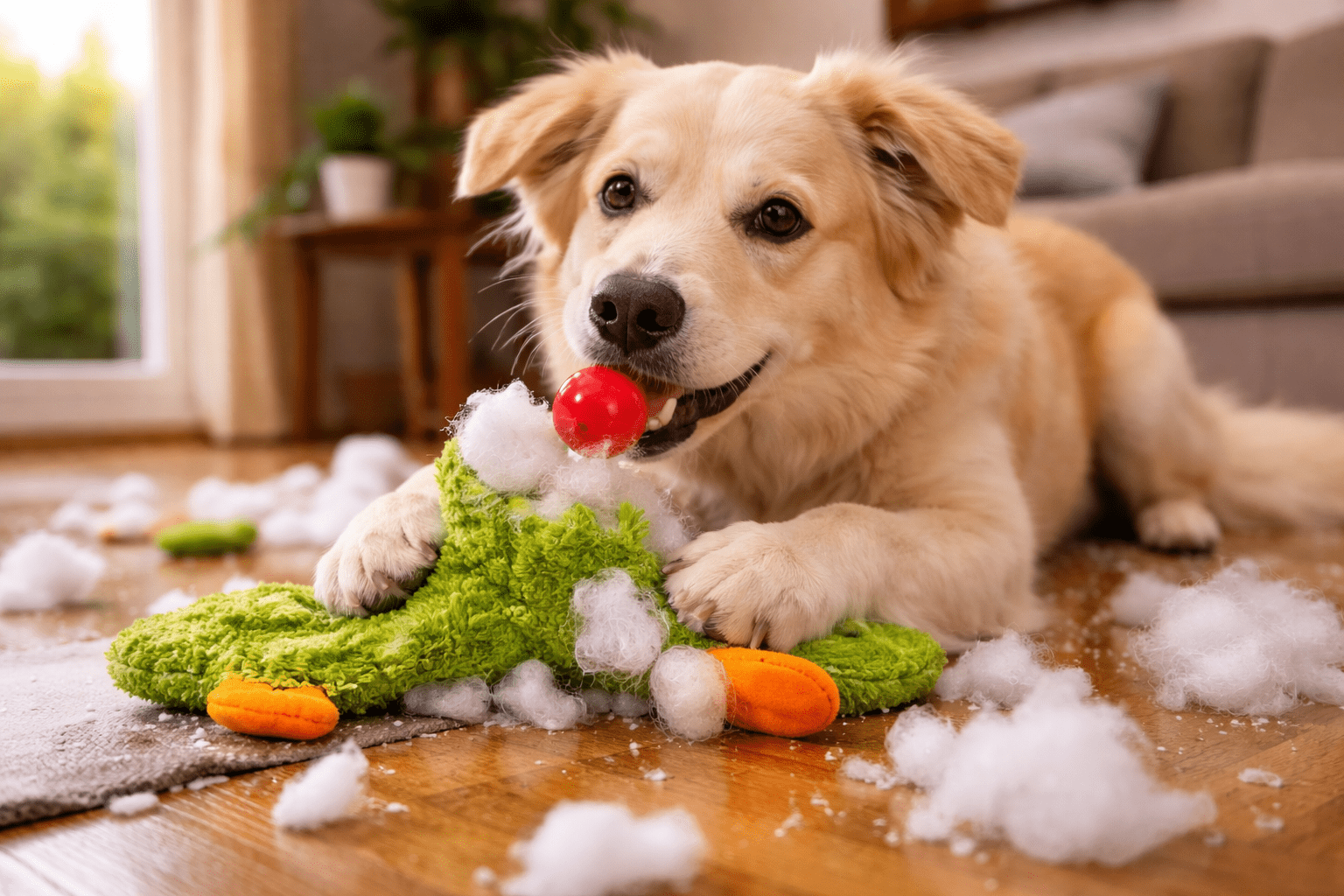
The process of locating the squeaker, tearing through fabric, and removing the noisemaker is puzzle-solving at its finest. Many dogs take genuine pride in this accomplishment. You’ll often see them parade around with the extracted squeaker like a trophy.
Understanding Destructive Play vs. Aggression
Destructive play with toys looks energetic but relaxed. Your dog’s body language stays loose, they might play-bow or pause between bouts of destruction, and they’re having fun. This is healthy outlet behavior for natural drives.
Aggressive behavior involves tense body language, hard eyes, raised hackles, growling that doesn’t sound playful, and possessive guarding. If your dog shows these signs around squeaky toys, that’s when you need professional help. Our dog behavior training program addresses resource guarding and aggressive tendencies before they become serious problems.
When Squeaker Destruction Becomes a Problem
Destroying toys becomes problematic when:
- Your dog swallows pieces of toys or squeakers (choking/intestinal blockage risk)
- Toy destruction costs you a fortune every week
- Your dog guards destroyed toys aggressively
- The behavior escalates to destroying household items
- Your dog becomes frustrated or overstimulated during destruction
If you’re replacing squeaky toys every few days, it’s time to either invest in heavy-duty options or limit squeaker access to supervised play sessions only.
Are Squeaky Toys Safe for All Dogs?
Not every dog should have unsupervised access to squeaky toys. While they’re generally safe, certain situations require extra caution or complete avoidance of squeakers.
Choking Hazards and Supervision Tips
The biggest risk with squeaky toys is choking or intestinal blockage from swallowed pieces. Small squeakers, plastic bits, and fabric chunks can all cause serious medical emergencies if ingested.
Safety guidelines for squeaky toy use:
- Always supervise play sessions, especially with new toys
- Choose squeakers sized appropriately for your dog (bigger dogs need bigger toys)
- Inspect toys before each play session for damage or loose parts
- Remove toys immediately once they start breaking apart
- Know the Heimlich maneuver for dogs (check with your vet)
- Keep your vet’s emergency number handy
For aggressive chewers, the squeaker can be extracted and swallowed in minutes. These dogs need either indestructible squeaky toys or should only play with squeakers during supervised training sessions.
Dogs Who Shouldn’t Have Squeaky Toys
Some dogs are better off without squeakers:
Resource guarders: Dogs who aggressively protect toys can become dangerous around high-value items like squeakers. These dogs need behavioral modification before getting squeaky toys.
Extreme chewers: Power chewers who can destroy “indestructible” toys in minutes risk swallowing dangerous pieces. Stick with hard rubber options without squeakers for these dogs.
Dogs with pica: If your dog compulsively eats non-food items, squeakers and toy stuffing pose serious health risks.
Overstimulated dogs: Some dogs get so worked up by squeakers that they can’t calm down. These dogs do better with quieter enrichment options.
Senior dogs with anxiety: Older dogs with cognitive decline might become distressed by unexpected squeaking sounds.
Best Types of Squeaky Toys for Different Dog Personalities
Not all squeaky toys are created equal. Matching the toy to your dog’s personality and play style increases enjoyment and safety.
| Dog Type | Best Squeaker Style | Why It Works |
| Gentle Chewers | Plush toys with multiple squeakers | Provides variety without destruction risk |
| Aggressive Chewers | Rubber squeakers with reinforced construction | Satisfies chewing needs safely |
| Fetch Lovers | Aerodynamic squeaky balls or discs | Combines two favorite activities |
| Puzzle Solvers | Hide-a-squeaker toys | Adds mental challenge to play |
| Anxious Dogs | Low-volume squeakers | Provides comfort without overstimulation |
| High-Energy Dogs | Durable rope toys with built-in squeakers | Channels energy productively |
For Gentle Chewers
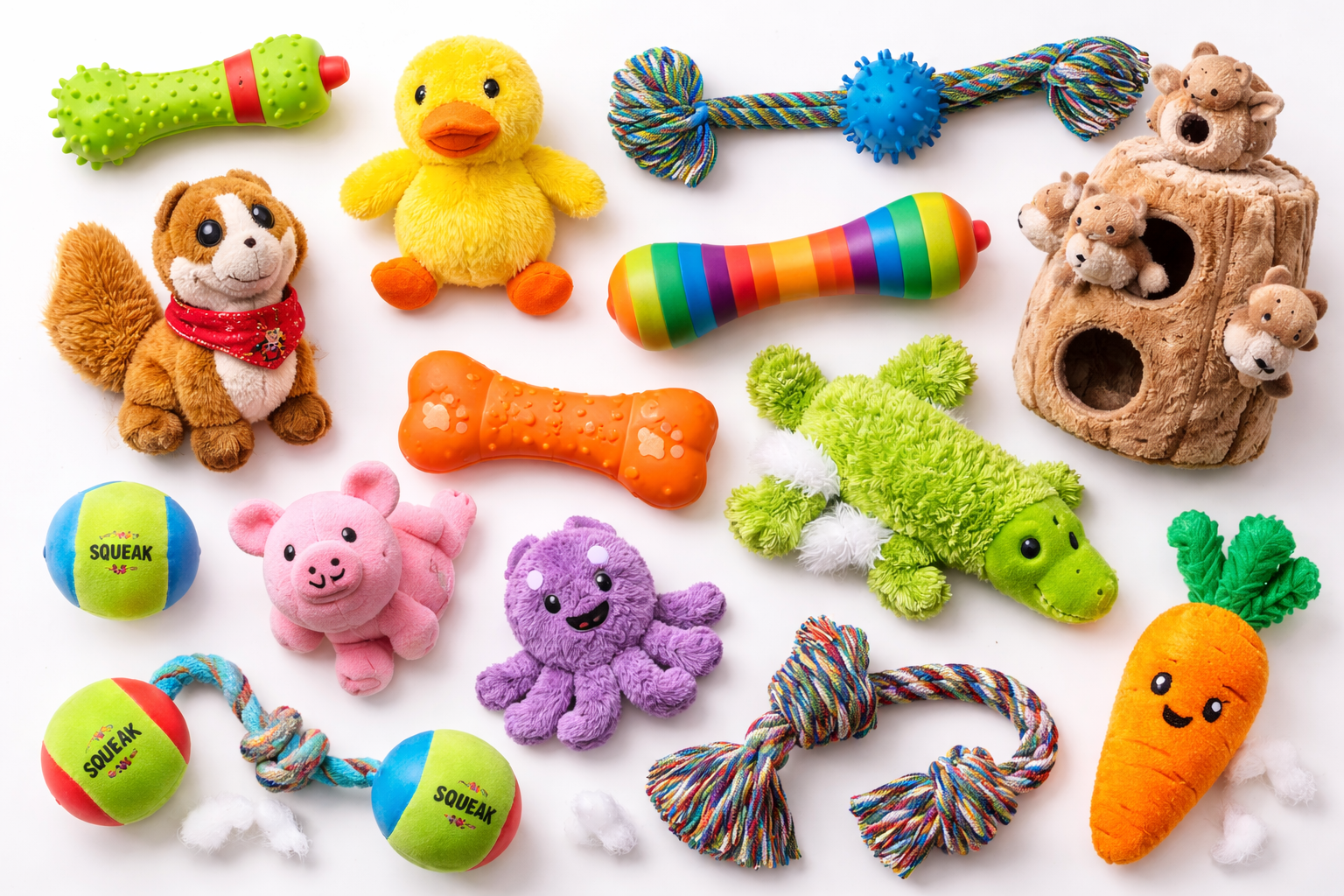
Gentle chewers can enjoy traditional plush squeaky toys without destroying them instantly. These dogs often love toys with multiple squeakers in different parts of the body, providing a treasure hunt experience. Look for well-constructed options with reinforced seams.
Character toys (like stuffed animals shaped like ducks, pigs, or other animals) are perfect for gentle players who enjoy carrying toys around. These dogs might even “adopt” their squeaky toys and treat them like puppies.
For Aggressive Chewers
Heavy-duty squeakers are essential for power chewers. Rubber toys with embedded squeakers offer the best durability. Brands that specialize in tough dog toys often use industrial-strength materials that can withstand serious jaw pressure.
Double-layered construction helps too. Some toys feature a tough outer layer protecting the squeaker, plus a secondary layer that prevents swallowing if the outer layer fails.
For Fetch-Obsessed Dogs
If your dog lives for fetch, combine their two loves with fetch-friendly squeaky toys. Balls with squeakers add auditory excitement to the chase. Flying discs with squeakers make midair catches even more rewarding. For more ideas on maximizing fetch time, read our guide on playing fetch with dog.
Look for aerodynamic designs that fly well and are easy to spot in tall grass. Bright colors help you and your dog locate the toy quickly during outdoor play.
For Puzzle-Loving Dogs
Smart dogs who get bored easily love puzzle-style squeakers. Hide-a-squirrel toys (plush tree trunks with squeaky squirrels hidden inside) engage problem-solving skills. Your dog has to figure out how to extract each squeaker, providing extended mental stimulation.
Treat-dispensing toys with squeakers combine rewards with sound, making puzzle-solving even more rewarding.
How to Use Squeaky Toys in Training
Squeaky toys aren’t just for playtime. They’re powerful training tools when used correctly. The high value dogs place on squeakers makes them excellent motivators for learning new behaviors.
Using Squeakers as Rewards
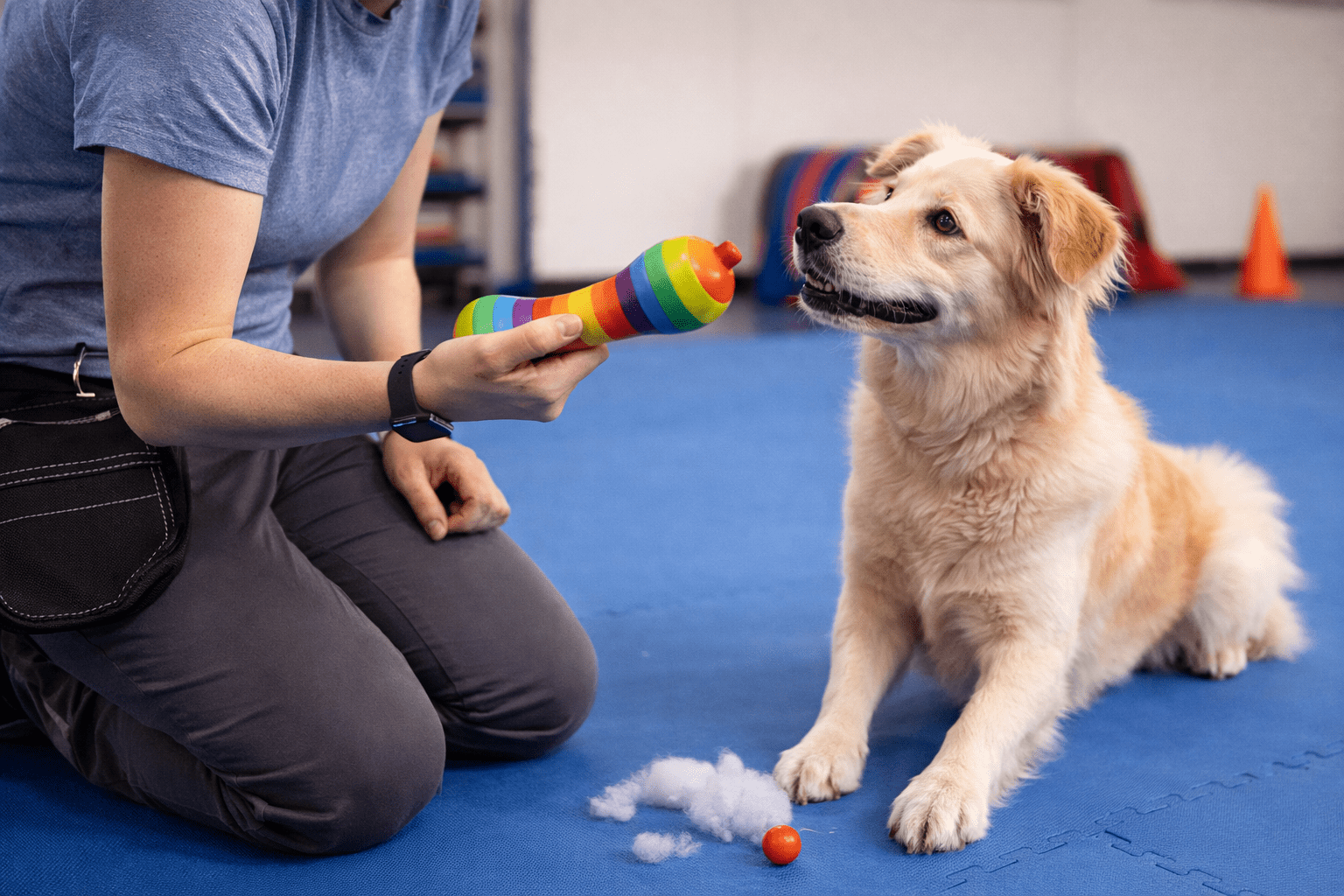
For dogs who love squeakers more than treats, use them as training rewards. After your dog performs the desired behavior, give them 10-15 seconds of squeaker play. This keeps motivation high during training sessions.
The key is keeping squeaker rewards short and controlled. You’re not letting your dog have free play—you’re providing structured access as a reward for good behavior. This builds value and keeps your dog engaged in training.
Teaching “Drop It” and “Leave It” with Squeaky Toys
Ironically, the toys dogs love most are perfect for teaching impulse control. Teaching “drop it” with a squeaker teaches your dog that releasing high-value items brings good things. Start with a less exciting toy, then gradually work up to squeakers.
Training steps:
- Let your dog hold a squeaky toy
- Offer a high-value treat near their nose
- When they drop the toy to take the treat, say “drop it”
- Give the treat, then return the toy
- Repeat until your dog drops on command before seeing the treat
“Leave it” works similarly but teaches your dog to ignore the squeaker entirely. This skill prevents toy possessiveness and builds self-control. Our private dog training sessions can help you master these essential commands using your dog’s favorite toys as motivation.
When to Limit Squeaky Toy Use
While squeaky toys offer many benefits, unlimited access isn’t always ideal. Knowing when to put the squeakers away prevents problems and keeps toys special.
Over-stimulation Signs:
- Your dog can’t settle down after squeaker play
- Panting excessively or seeming anxious
- Obsessively searching for squeakers when they’re put away
- Ignoring food, walks, or other activities in favor of squeakers
- Becoming reactive or aggressive during squeaker play
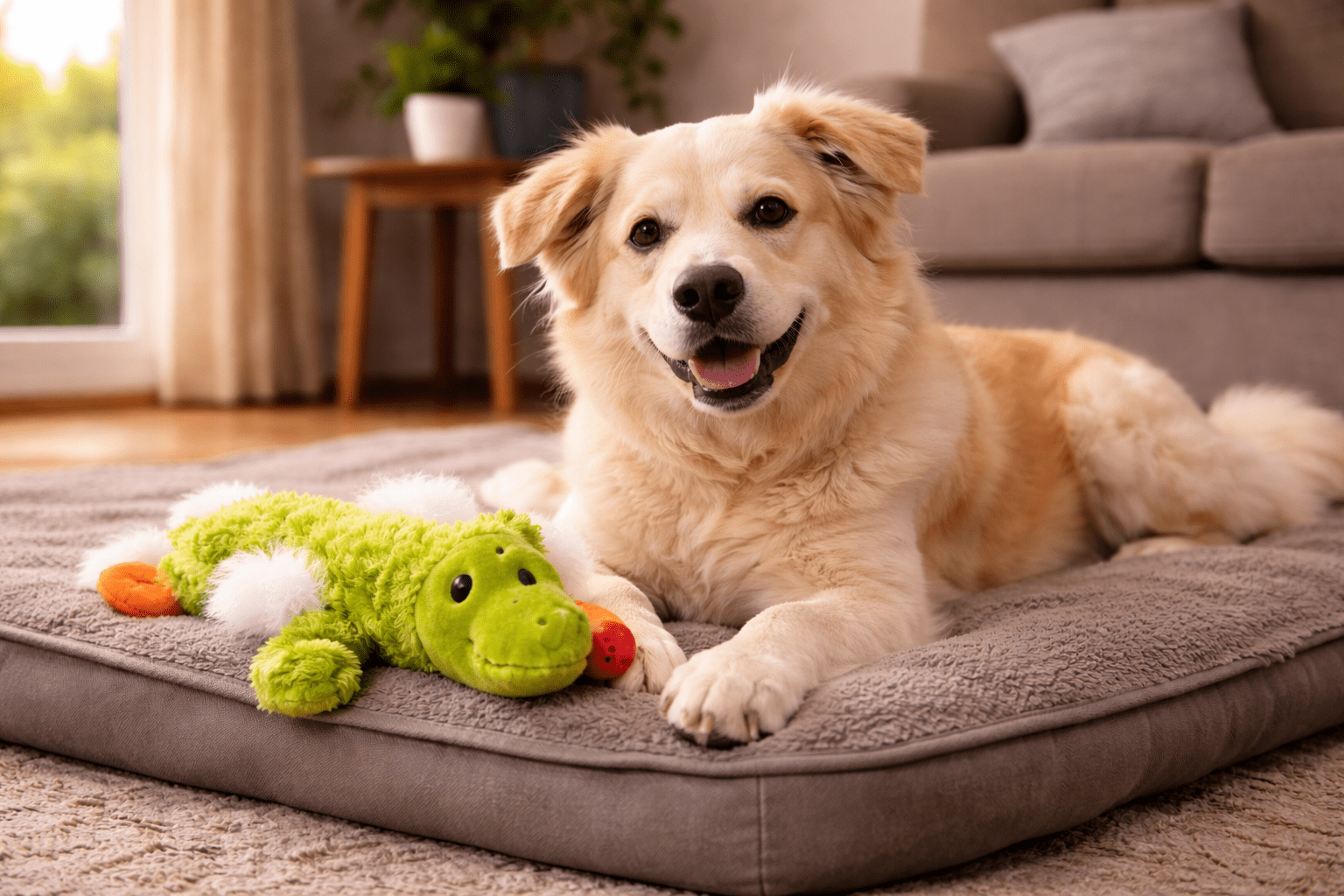
If you notice these signs, dial back squeaker access. Treat them like special occasion toys rather than everyday items.
Managing Toy Possessiveness:
Dogs who guard squeakers need structured toy access. Put squeakers away after supervised play sessions rather than leaving them out. This prevents guarding behavior from developing and keeps toys exciting.
If your dog already guards squeakers, work with a professional trainer. Resource guarding can escalate to serious aggression if not addressed properly.
Quiet Time Alternatives:
Not every play session needs to involve squeaking. Rotate between squeaky toys, silent toys, and other enrichment activities. Snuffle mats, frozen Kongs, and puzzle feeders provide mental stimulation without the noise.
This variety prevents squeaker burnout and gives you (and your neighbors) a break from constant squeaking. It also teaches your dog to enjoy different types of play.
| Situation | Squeaker Approach | Alternative Option |
| High-energy morning | 15-minute supervised squeaker play | Long walk or training session |
| Rainy day boredom | Rotate between 2-3 squeaky toys | Puzzle feeders or scent games |
| Bedtime wind-down | Put squeakers away | Chew toy or calming activity |
| Guest visits | Remove squeakers | Provide quiet toy or crate time |
| After meal settling | No squeakers | Gentle play or rest period |
| Training session | Use as high-value reward | Treats or praise |
Understanding Your Dog’s Squeak Obsession
So why do dogs like squeaky toys? It all comes down to instinct, brain chemistry, and the pure joy of making things happen. Those squeaks trigger your dog’s predatory drive, provide instant feedback, and release feel-good chemicals in their brain. It’s a perfect storm of satisfaction.
The key to healthy squeaker use is understanding your individual dog. Some can handle unlimited access, while others need strict supervision. Pay attention to behavior, choose appropriate toys, and use squeakers strategically in training. Whether your dog gently carries squeakers around or destroys them in minutes, you’re witnessing evolution in action.
At K9 Mania Dog Training, we understand that toy obsessions and high energy need proper outlets. As the leading board and train on Long Island, we help transform your dog’s natural drives into obedience and good behavior. Whether your dog is fixated on squeakers or struggling with other behavioral challenges, we can help you build a better relationship with your pup.
Trust K9 Mania Dog Training to guide you through any dog behavior issue with proven methods and personalized attention.
You May Also Want to Read
Why Does My Dog Lick Me So Much? Understanding Your Dog’s Behavior
Frequently Asked Questions
Why does my dog carry the squeaky toy around all day?
Your dog carries their squeaky toy around because it’s a high-value item they want to keep close and safe. This behavior mimics how wild canines carry prey back to their den. Some dogs also carry toys as a form of comfort or security, similar to how children carry blankets or stuffed animals. If your dog is female and not spayed, this behavior can intensify during false pregnancy when maternal instincts kick in and the toy becomes a surrogate puppy.
Can squeaky toys make my dog aggressive?
Squeaky toys themselves don’t cause aggression, but they can trigger resource guarding in dogs predisposed to this behavior. If your dog growls, snaps, or shows tense body language when you approach during squeaker play, they’re guarding the toy. This is different from prey drive, which is normal hunting behavior. Resource guarding needs professional behavioral intervention before it escalates. Most dogs play with squeakers without any aggression issues when properly supervised and trained.
How often should I replace squeaky toys?
Replace squeaky toys as soon as they show signs of damage like tears, loose squeakers, or exposed stuffing. For aggressive chewers, this might mean replacing toys every few days. Gentle players might keep the same squeaker for months. Inspect toys before each play session and remove any that could pose choking hazards. Rotating between multiple squeaky toys extends their lifespan and keeps your dog interested in their toy collection.
Why is my dog so obsessed with squeaky toys?
Extreme squeaker obsession happens because the toy hits multiple reward centers in your dog’s brain simultaneously. The sound mimics prey, the act satisfies hunting instincts, and your attention reinforces the behavior. Some dogs have higher prey drive than others, making them more susceptible to squeaker obsession. If the obsession interferes with normal activities like eating, sleeping, or walking, limit squeaker access to short supervised sessions and work on impulse control training.
How loud is too loud for dog squeaky toys?
If a squeaky toy seems uncomfortably loud to you, it’s probably too loud for your dog’s sensitive ears. Dogs can hear frequencies and volumes humans can’t, so what sounds moderate to us might be overwhelming to them. Look for squeakers marketed as “quiet” or “low volume” if your dog seems startled or anxious around regular squeakers. Signs that a toy is too loud include your dog dropping it immediately after squeezing, backing away from the sound, or showing stress signals like pinned ears or tucked tail.
Why do dogs go crazy for squeakers?
Dogs go crazy for squeakers because the sound triggers an intense dopamine release in their brains. This neurochemical reward creates excitement and pleasure that builds with each squeak. The unpredictable nature of when the squeak will happen (some squeakers are more reliable than others) creates variable reinforcement, which is highly addictive. Combined with the physical satisfaction of biting down and the potential for your attention, squeakers offer multiple layers of reward that make them irresistible to many dogs.