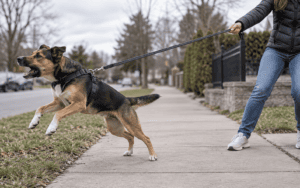
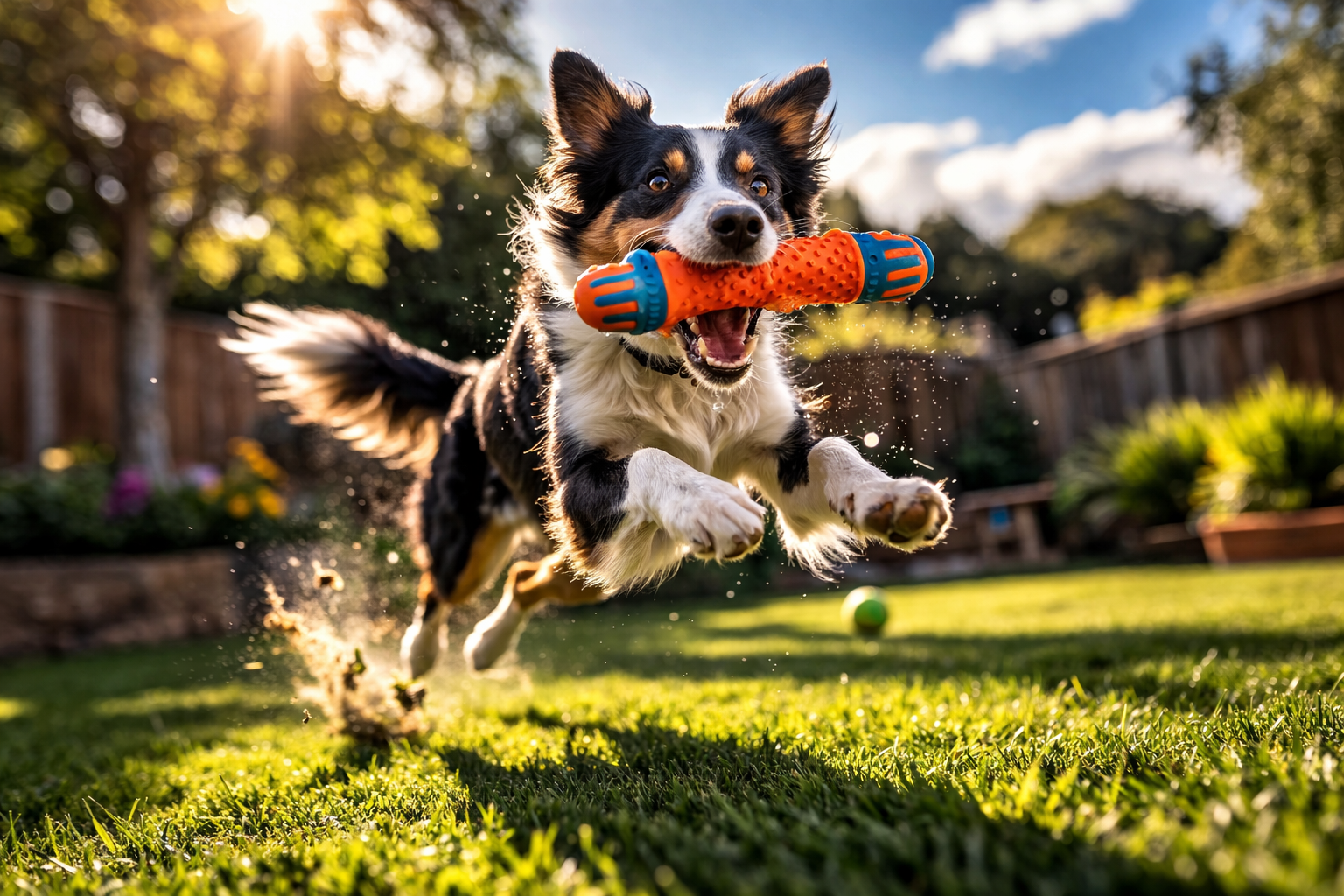
Dog toys for hyperactive dogs should be durable, mentally stimulating, and physically engaging to help burn off excess energy. Interactive puzzle toys, heavy-duty chew toys, and fetch toys are among the best options for keeping hyperactive dogs occupied and tired.
If your dog seems to have endless energy, bouncing off walls and getting into everything, you’re not dealing with a bad dog. You’re dealing with a dog that needs the right outlets for all that energy. The right toys can make a huge difference between a destructive, anxious pup and a happy, tired one.
Finding toys that can actually keep up with a hyperactive dog takes some strategy. You need something that won’t fall apart in five minutes, keeps their brain busy, and helps burn off that extra steam. In this guide, we’ll walk through the best toy options, what features matter most, and how to use them effectively.
Struggling with hyperactive behavior? Our board and train Long Island program teaches dogs impulse control and calm behaviors.
Why Hyperactive Dogs Need Special Toys
Not all dog toys are created equal, especially when you’re dealing with a high-energy dog. Regular toys might work for a calm Basset Hound, but they’ll be shredded in minutes by a hyperactive Border Collie or Jack Russell Terrier.
Energy Release and Mental Stimulation
Hyperactive dogs don’t just need physical exercise. They need mental challenges too. A 30-minute walk might tire out their legs, but their brain is still running at full speed.
Toys that make dogs think, problem-solve, and work for rewards tap into that mental energy. Puzzle toys where they have to figure out how to get treats, interactive games that require strategy, and toys that change up the challenge keep their minds engaged.
When a hyperactive dog’s brain is tired, their body usually follows. Mental stimulation can be just as exhausting as a long run, and it’s especially helpful on rainy days or when you can’t get outside for extended periods.
The best toys combine both. A toy that requires them to chase, catch, and figure out how to get a treat hits physical and mental needs at the same time.
Preventing Destructive Behavior
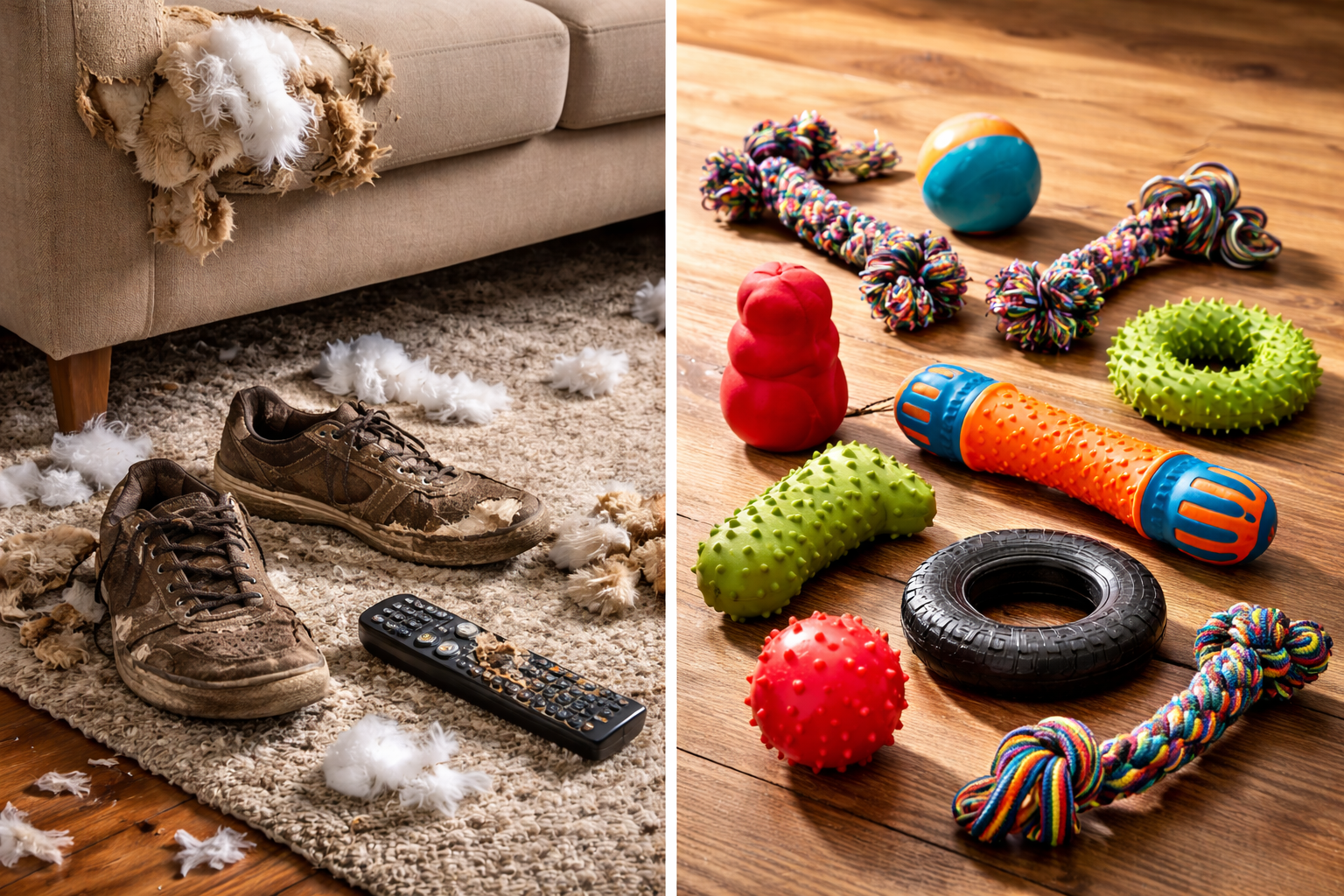
A bored hyperactive dog is a destructive dog. They’ll find something to do, and it’s usually something you don’t want them doing like chewing your couch, digging holes in the yard, or barking nonstop.
Giving them appropriate toys redirects that energy into acceptable outlets. Instead of destroying your furniture, they’re working on a tough chew toy. Instead of digging up your garden, they’re playing tug-of-war with a rope toy.
The right toys also build positive associations. When your dog learns that good things happen when they play with their toys, they’re more likely to reach for those instead of your shoes when they’re feeling energetic or anxious.
For dogs with serious behavioral issues, toys alone might not be enough. Learn how to train a hyperactive dog with proven techniques that create lasting change.
Types of Dog Toys for Hyperactive Dogs
Different toys serve different purposes. Understanding what each type offers helps you build a toy rotation that keeps your hyperactive dog engaged.
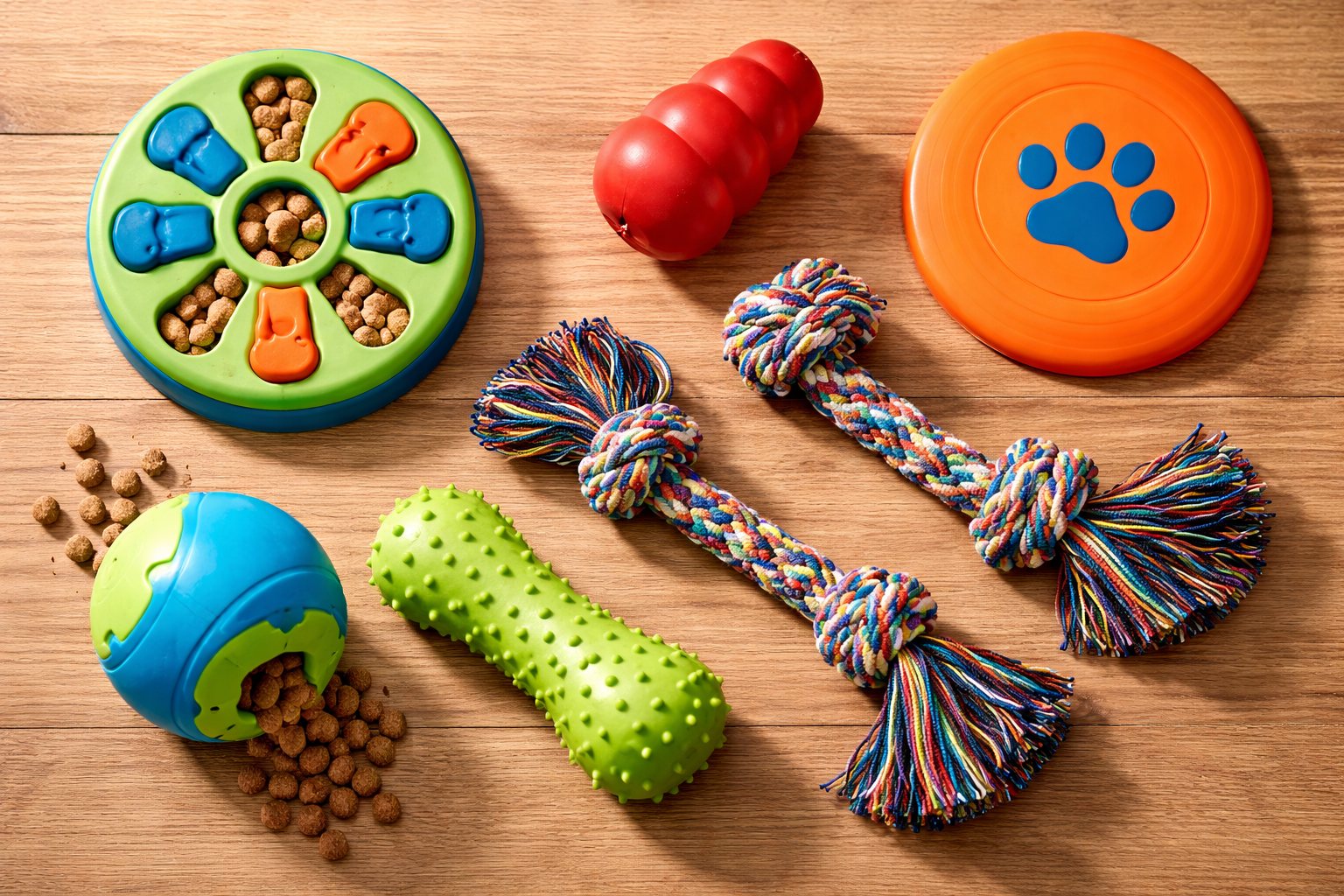
Here’s a breakdown of the main categories and what makes them work for high-energy dogs:
| Toy Type | Best For | Energy Level | Durability Needed |
| Interactive Puzzle Toys | Mental stimulation, solo play | Medium to High | Medium |
| Heavy-Duty Chew Toys | Aggressive chewers, calming | Low to Medium | Very High |
| Fetch and Retrieve Toys | Physical exercise, training | Very High | High |
| Tug Toys | Interactive play, bonding | High | Very High |
| Treat-Dispensing Toys | Food motivation, mental work | Medium | Medium to High |
Interactive Puzzle Toys
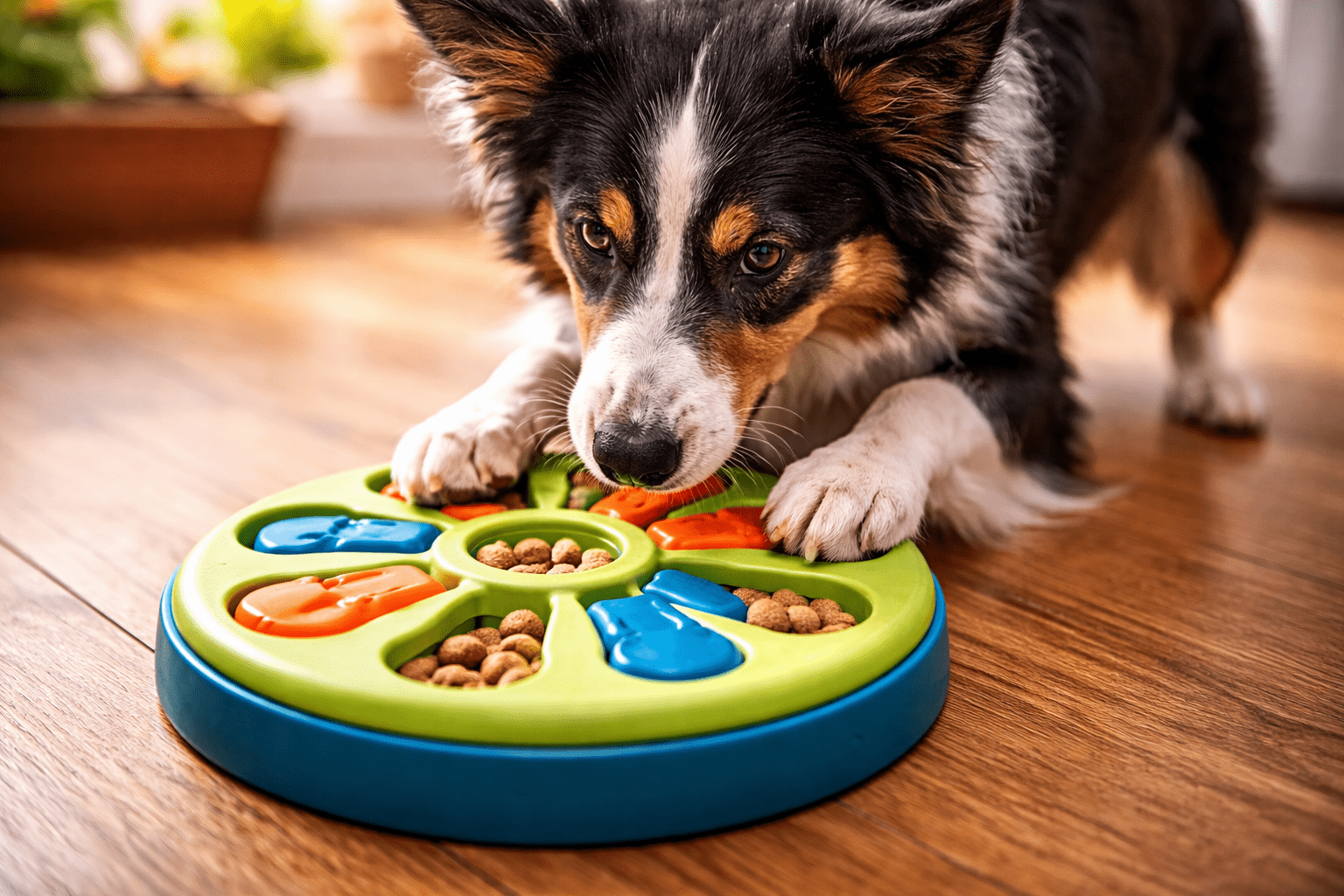
Puzzle toys make your dog work for their reward. They might need to slide pieces, lift flaps, or figure out sequences to get treats hidden inside.
These toys are perfect for dogs that have physical limitations or bad weather days. They tire out your dog’s brain without needing a huge yard or hours of running.
Start with easier puzzles and work up to harder ones as your dog gets better at solving them. If they get frustrated too quickly, they’ll lose interest. If it’s too easy, they’ll get bored.
Heavy-Duty Chew Toys
Hyperactive dogs often have powerful jaws and destructive chewing habits. Standard rubber toys won’t last an hour with some dogs.
Look for toys made from tough materials like natural rubber, nylon, or reinforced fabric. Brands that specifically market to power chewers usually test their products on dogs like pit bulls, German Shepherds, and other strong breeds.
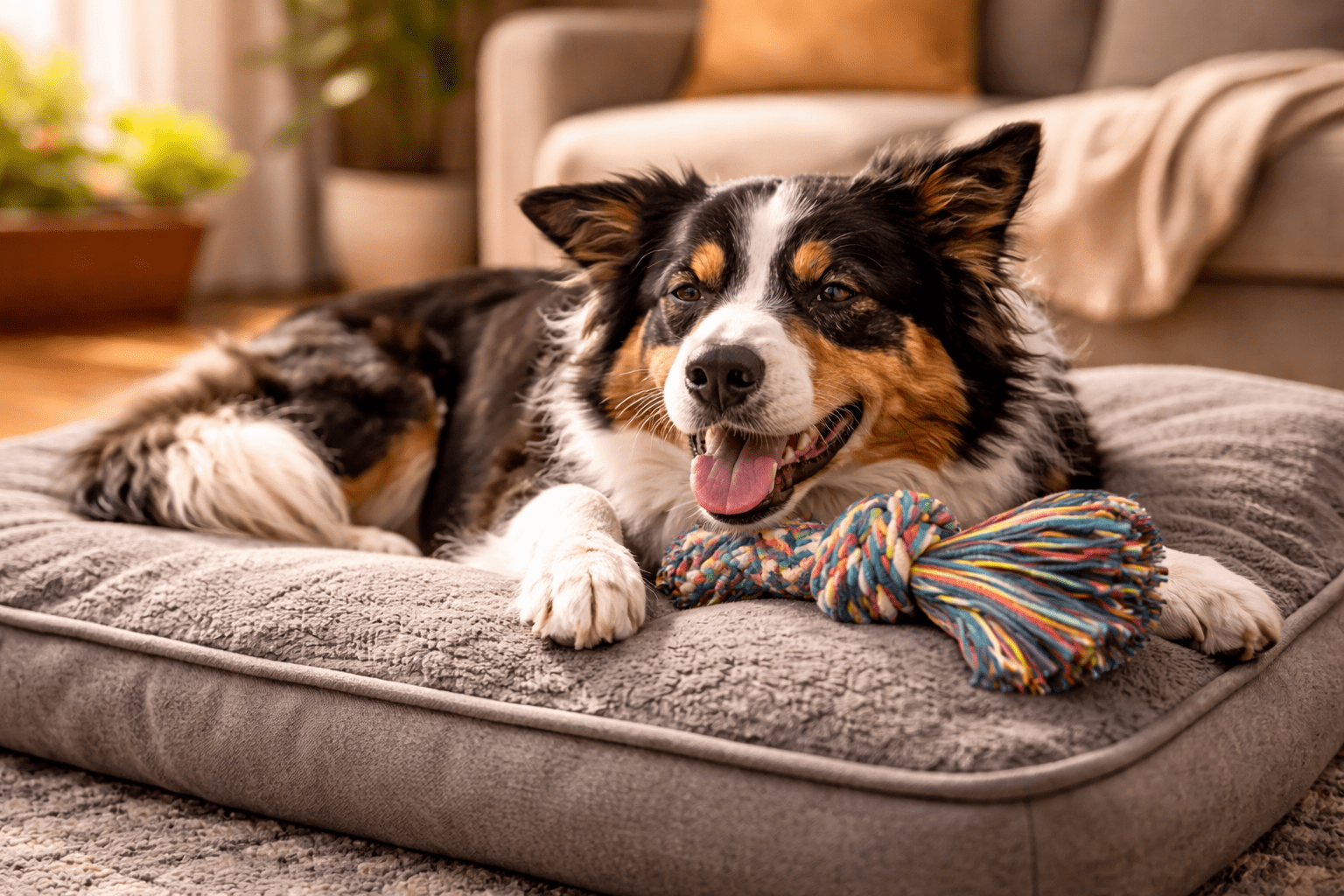
Chewing also has a calming effect on dogs. It releases endorphins and gives them something to focus on, which can help settle a hyperactive dog after intense play.
Fetch and Retrieve Toys
Balls, frisbees, and other throwing toys are classics for a reason. They let you exercise your dog without wearing yourself out, and most hyperactive dogs will chase until they drop.
Choose toys that are easy to see, safe for your dog’s mouth, and durable enough to handle repeated throws and catches. Avoid toys small enough to be swallowed or ones with parts that can break off.
Fetch toys also double as training tools. Teaching a solid recall and drop command through fetch games builds obedience while burning energy.
Tug Toys
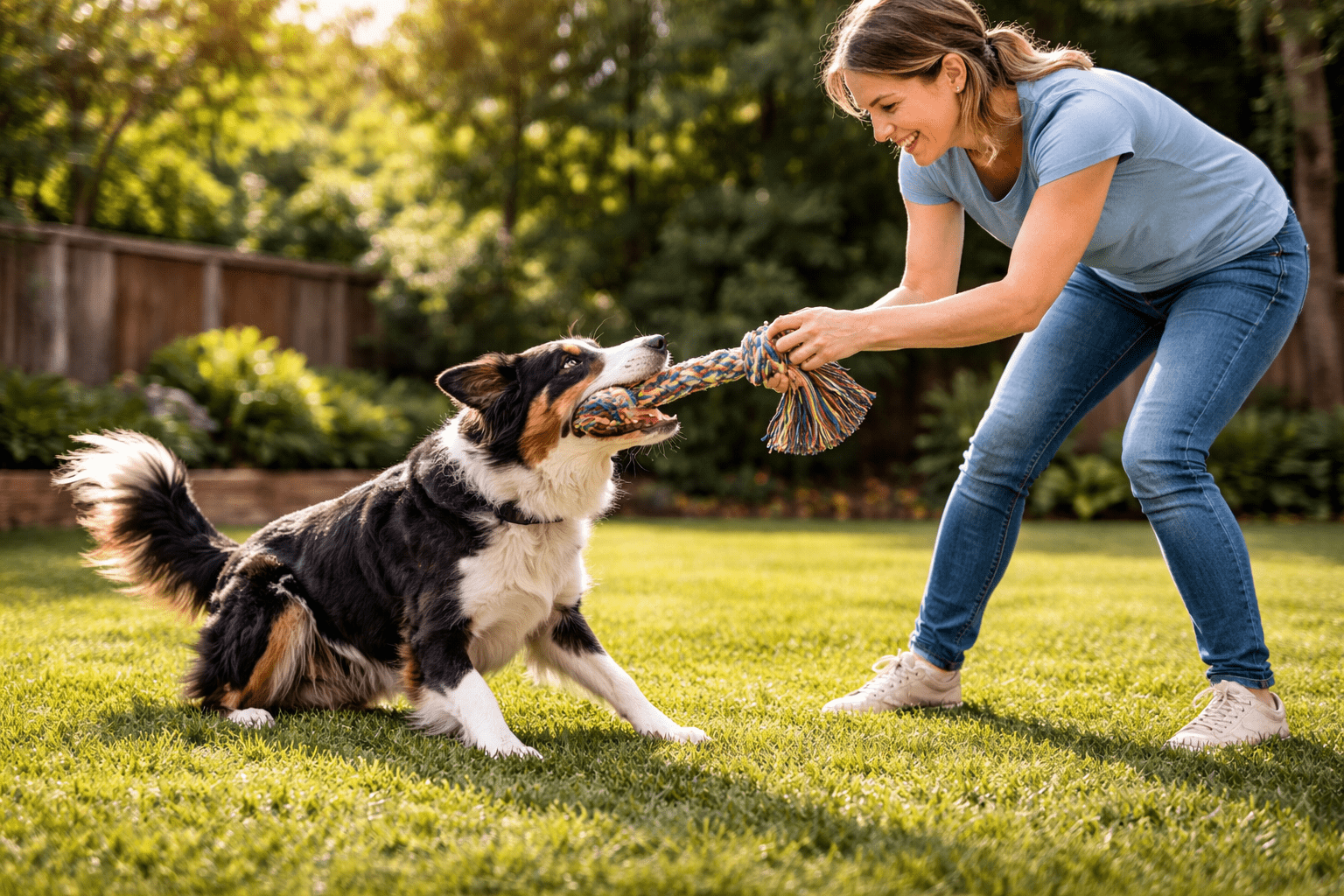
Rope toys and tug handles give you a way to interact directly with your hyperactive dog. Tug-of-war is excellent exercise and lets you build impulse control by teaching your dog to release on command.
Make sure the toy is long enough that your dog’s teeth won’t accidentally catch your hands during excited play. Reinforced handles and thick rope strands hold up better to aggressive tugging.
Some trainers worry that tug makes dogs aggressive, but research shows the opposite. Tug actually builds confidence and strengthens your bond when done with clear rules.
Need help teaching impulse control and proper play? Our private dog training Long Island sessions create customized plans for your dog’s specific needs.
Top Features to Look for in Toys for High-Energy Dogs
Not every toy marketed for dogs will hold up to a hyperactive pup. Here’s what separates toys that last from toys that become expensive trash.
Durability and Material Quality
Check what the toy is made from. Natural rubber, nylon, and reinforced fabric generally hold up better than cheap plastic or thin rubber.
Read reviews from other owners of hyperactive or power-chewer dogs. If a toy gets destroyed quickly by multiple dogs, it won’t survive yours either.
Some companies offer guarantees or replacements if their toys don’t hold up. That’s a good sign they stand behind their product’s durability.
Avoid toys with small parts, squeakers that can be pulled out, or stuffing that can be ripped apart and eaten. These create choking hazards and expensive vet visits.
Safety Considerations
Size matters. Toys too small can be swallowed whole. Toys too large are hard to carry and play with.
Check for sharp edges, loose pieces, or materials that could splinter. Natural materials like rope or wood can be great but watch for fraying or breaking that creates hazards.
Non-toxic materials are essential, especially for dogs that chew aggressively. Look for toys labeled as BPA-free and made without harmful chemicals.
Supervise new toys until you know how your dog interacts with them. What seems safe might become dangerous if your dog finds a weak spot or uses it in unexpected ways.
Engagement and Interest Level
The best toy in the world is useless if your dog ignores it. Hyperactive dogs often get bored quickly, so toys that offer variety or changing challenges keep their attention longer.
Toys that make noise, move unpredictably, or hide treats tap into natural hunting and foraging instincts. These trigger more interest than static toys.
Rotate toys weekly so they feel new again. Dogs get bored seeing the same toys every day, but bringing back something they haven’t seen in a week reignites interest.
Some dogs prefer certain textures, shapes, or play styles. Pay attention to what your dog naturally gravitates toward and build on those preferences.
Keep your hyperactive dog engaged with quality options. Browse our dog toys collection for durable, energy-burning toys designed for active pups.
Best Dog Toys for Different Hyperactive Behaviors
Different hyperactive behaviors need different toy solutions. Here’s how to match toys to your dog’s specific issues:
| Behavior | Recommended Toy Type | Why It Works | Example Use |
| Excessive Barking | Treat-dispensing puzzles, chew toys | Keeps mouth busy, provides mental outlet | Give puzzle toy when barking starts |
| Destructive Chewing | Heavy-duty rubber toys, antlers | Redirects chewing to appropriate items | Swap out furniture for tough chew toy |
| Constant Movement | Fetch toys, flirt poles | Burns physical energy productively | 20-minute fetch session before settling |
| Anxiety-Driven Hyperactivity | Calming chew toys, snuffle mats | Provides soothing repetitive activity | Use during stressful situations |
| Attention-Seeking | Interactive tug toys, training toys | Gives positive attention outlet | Scheduled play sessions with structure |
For Dogs That Can’t Settle Down
If your dog paces, jumps, and can’t seem to relax, they need toys that tire them out physically before you expect calm behavior.
Start with 15-20 minutes of intense fetch or tug. Once they’ve burned off that initial burst of energy, transition to a calming chew toy or treat puzzle.
This combination approach tackles both the physical and mental aspects of hyperactivity. The intense exercise releases pent-up energy, while the mental work that follows helps them practice settling.
Frozen treats in toys like rubber bones work especially well for settling. The cold has a calming effect, and working to get the frozen treat out takes concentration and time.
For Destructive Chewers
Redirect the chewing before it becomes a problem. When you see your dog eyeing the furniture or your belongings, immediately offer an appropriate chew toy.
Praise them heavily when they choose the right item to chew. Make chewing their toys more rewarding than chewing forbidden items.
Bitter sprays on furniture combined with highly rewarding chew toys create a clear contrast. The furniture tastes bad and offers nothing, while their toys taste good and provide satisfaction.
For serious cases, understanding how to calm a hyperactive dog addresses the root causes behind destructive behavior.
For Dogs with Separation Anxiety
Hyperactive dogs often struggle when left alone. Toys that keep them busy during your absence can reduce anxiety and prevent destruction.
Treat-dispensing toys that take 30-45 minutes to empty give them something positive to focus on instead of your departure. Start by giving them these toys while you’re home so they build positive associations.
Rotate special high-value toys that only come out when you leave. This creates anticipation and makes your departure predict good things instead of scary things.
Avoid toys that could become dangerous if you’re not there to supervise. Stick with options proven safe for unsupervised play.
How to Use Toys Effectively with Hyperactive Dogs
Having the right toys is only half the battle. How you use them determines whether they actually help manage your dog’s hyperactivity.
Creating a Toy Rotation System
Don’t leave all toys out all the time. This leads to boredom and your dog ignoring everything.
Keep 3-4 toys available at a time and store the rest. Each week, swap out the available toys for different ones from storage.
This rotation keeps toys feeling fresh and interesting. When your dog sees a toy they haven’t played with in two weeks, it’s almost as exciting as a brand new toy.
Group toys by type in your rotation. Make sure each week includes at least one chew toy, one interactive toy, and one fetch or tug option. This gives your dog variety in how they can engage.
Combining Toys with Training
Toys are powerful training tools. Use them as rewards for good behavior, not just free entertainment.
Teach your dog they earn playtime by offering calm behavior first. Make them sit and wait before you throw the ball. This builds impulse control even during exciting activities.
End play sessions before your dog wants to stop. Leaving them wanting more keeps their interest high and prevents them from getting overstimulated or frustrated.
Practice commands during play. Ask for a sit or down between throws. This reinforces training while keeping things fun.
Many professional programs, like understanding the effectiveness of board and train approaches, use toys as key motivation tools in behavior modification.
Supervision and Safety During Play
Watch how your dog interacts with new toys. Some dogs surprise you by finding ways to destroy “indestructible” toys or using them in dangerous ways.
Remove toys that show significant wear or damage. A toy that was safe yesterday might become a hazard once it starts falling apart.
Don’t leave toys with ropes, small parts, or batteries out when you can’t supervise. These pose choking and electrical hazards if your dog manages to break them open.
If your dog resource guards certain toys, work with a professional trainer. Toys should reduce stress, not create it.
For dogs that need structured guidance beyond toys, our e-collar training course teaches reliable off-leash control and better decision-making.
Final Thoughts on Dog Toys for Hyperactive Dogs
Finding the right dog toys for hyperactive dogs takes some trial and error, but it’s worth the effort. The perfect toy combination can transform your high-energy pup from a destructive tornado into a happy, tired dog. Focus on durability, mental stimulation, and matching toys to your dog’s specific behaviors, and you’ll see real improvements in their behavior and your sanity.
Remember that toys are tools, not magic solutions. They work best when combined with proper exercise, training, and mental enrichment. If your hyperactive dog is still struggling despite having great toys and plenty of activity, there might be underlying training or behavioral issues that need professional help.
At K9 Mania Dog Training, we’re the leading board and train Long Island program specializing in hyperactive and high-energy dogs. We can help address the root causes of hyperactivity and teach your dog the impulse control and calmness they need. Whatever training challenges you’re facing, we have the expertise to help.
Visit our website to learn how we can transform your hyperactive dog into a well-mannered companion.
You May Also Want to Read
- How to Train a Hyperactive Dog
- Playing Tug of War With Dog: Complete Guide for Safe & Fun Play
- How to Train a Dog with a Shock Collar: Complete Guide
- How to Socialize an Adult Dog: A Complete Training Guide
Frequently Asked Questions
What is the best thing for a hyper dog?
The best approach for a hyper dog combines physical exercise, mental stimulation, and structured training. Daily walks, interactive play sessions, puzzle toys, and consistent training help channel their energy productively. High-value toys that engage both their body and brain, like treat-dispensing puzzles or fetch toys, are particularly effective.
How to calm down a super hyper dog?
To calm a super hyper dog, first give them an outlet for their energy through vigorous exercise like fetch or running. Follow this with calming activities like chew toys, frozen treats, or puzzle toys that require focus. Establish a consistent routine, teach a “settle” command, and avoid accidentally rewarding hyperactive behavior with attention.
How to keep a hyperactive dog entertained?
Keep a hyperactive dog entertained by rotating different types of toys weekly, using treat-dispensing puzzles, scheduling regular play sessions, and incorporating training games into their day. Nose work games, hide-and-seek with toys, and interactive play with you provide both mental and physical stimulation that keeps boredom at bay.
Why is my dog so hyper and crazy?
Dogs become hyper and “crazy” for several reasons including lack of exercise, boredom, breed characteristics, age (puppies and young dogs have more energy), or anxiety. Some breeds are naturally high-energy and need more activity than others. Medical issues or diet can also contribute to hyperactive behavior in some cases.
At what age do hyper dogs calm down?
Most dogs start calming down between 1-3 years old as they mature out of puppyhood, though this varies significantly by breed. High-energy breeds like Border Collies or Jack Russell Terriers may not fully settle until 3-5 years old. However, regular exercise, training, and mental stimulation throughout their life will have more impact than age alone.
What dog breed is most hyper?
Border Collies are often considered the most hyper breed due to their extreme intelligence and energy bred for herding. Other notably hyperactive breeds include Jack Russell Terriers, Australian Shepherds, Belgian Malinois, Siberian Huskies, and Dalmatians. These breeds were developed for demanding jobs requiring constant activity and high energy levels.