How to calm a hyperactive dog starts with proper exercise, mental stimulation, and consistent boundaries that channel their energy productively. A hyperactive dog isn’t misbehaving on purpose—they simply have excess energy that needs an outlet through structured activities and clear rules.
If your dog bounces off the walls, can’t settle down, or seems to have unlimited energy, you’re dealing with a common challenge many dog owners face. The good news? Hyperactivity is manageable with the right approach and consistent effort.
This guide breaks down exactly how to calm a hyperactive dog using proven techniques that address the root causes rather than just the symptoms. You’ll discover practical strategies you can start using today to help your dog find their calm.
Need expert help managing your high-energy dog? Our obedience training course teaches dogs self-control and impulse management for lasting results.
Why Your Dog Is Hyperactive
Before you can calm your dog, you need to understand what’s driving their hyperactive behavior. Different causes require different solutions.
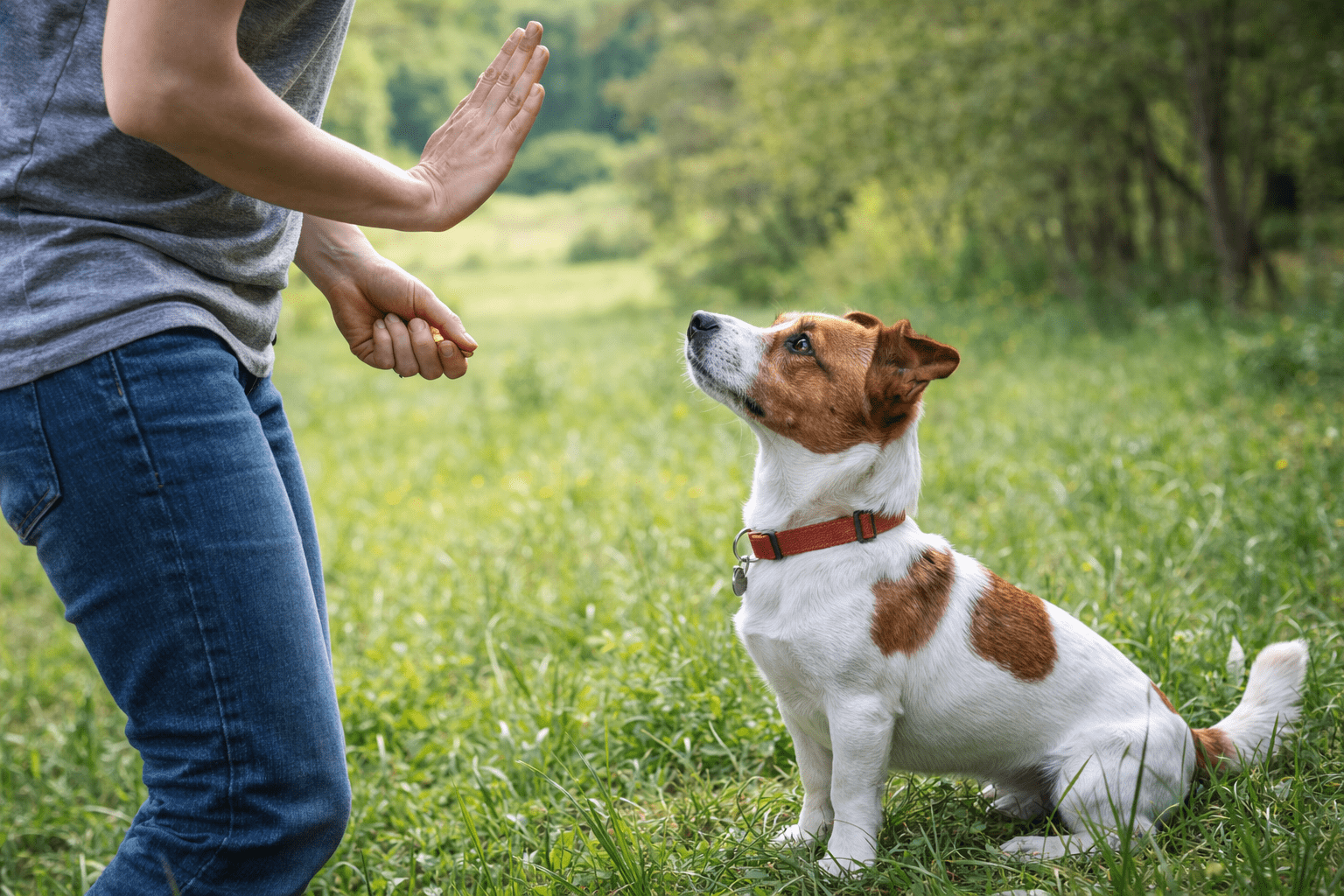
Common Causes of Hyperactivity in Dogs
Lack of physical exercise is the biggest reason dogs act hyperactive. A dog bred for herding sheep all day won’t be satisfied with a 10-minute walk around the block. Their genetics tell them they should be working, running, and using their body for hours.
Mental stimulation matters just as much as physical exercise. A bored dog will find ways to entertain themselves, usually in ways you won’t appreciate. They might tear up your couch, bark constantly, or zoom around your house at top speed.
Poor training or inconsistent rules create confusion and anxiety. When a dog doesn’t know what’s expected of them, they stay in a state of constant arousal. They’re always on alert, ready to react to everything around them.
Diet can play a role too. Some dogs react to certain ingredients in their food, similar to how kids get hyper from too much sugar. Low-quality foods with fillers and artificial additives can contribute to hyperactive behavior.
Age is another factor. Puppies and young dogs naturally have more energy than older dogs. They’re exploring their world and learning constantly, which means they’re in high gear most of the day.
Hyperactivity vs High Energy: Key Differences
A high-energy dog can settle down when asked and has good off-switches. They might play hard, but they also know how to relax. They respond to training and can focus when needed.
A hyperactive dog struggles to calm down even in quiet environments. They show impulsive behavior, poor focus, and can’t seem to control themselves. They may pace constantly, whine, jump on people, or react intensely to small triggers.
Here’s a comparison to help you identify what you’re dealing with:
| High-Energy Dog | Hyperactive Dog |
| Calms down after exercise | Still wired after long exercise sessions |
| Can focus during training | Struggles to focus, easily distracted |
| Settles in the evening | Remains restless throughout the day |
| Responds to “settle” or “place” commands | Ignores calm commands or can’t hold position |
| Excited but controllable | Impulsive and difficult to redirect |
Understanding this difference helps you set realistic expectations and choose the right training approach.
Exercise Strategies That Actually Work
Physical exercise is your first line of defense against hyperactivity, but not all exercise is created equal for calming a hyper dog.
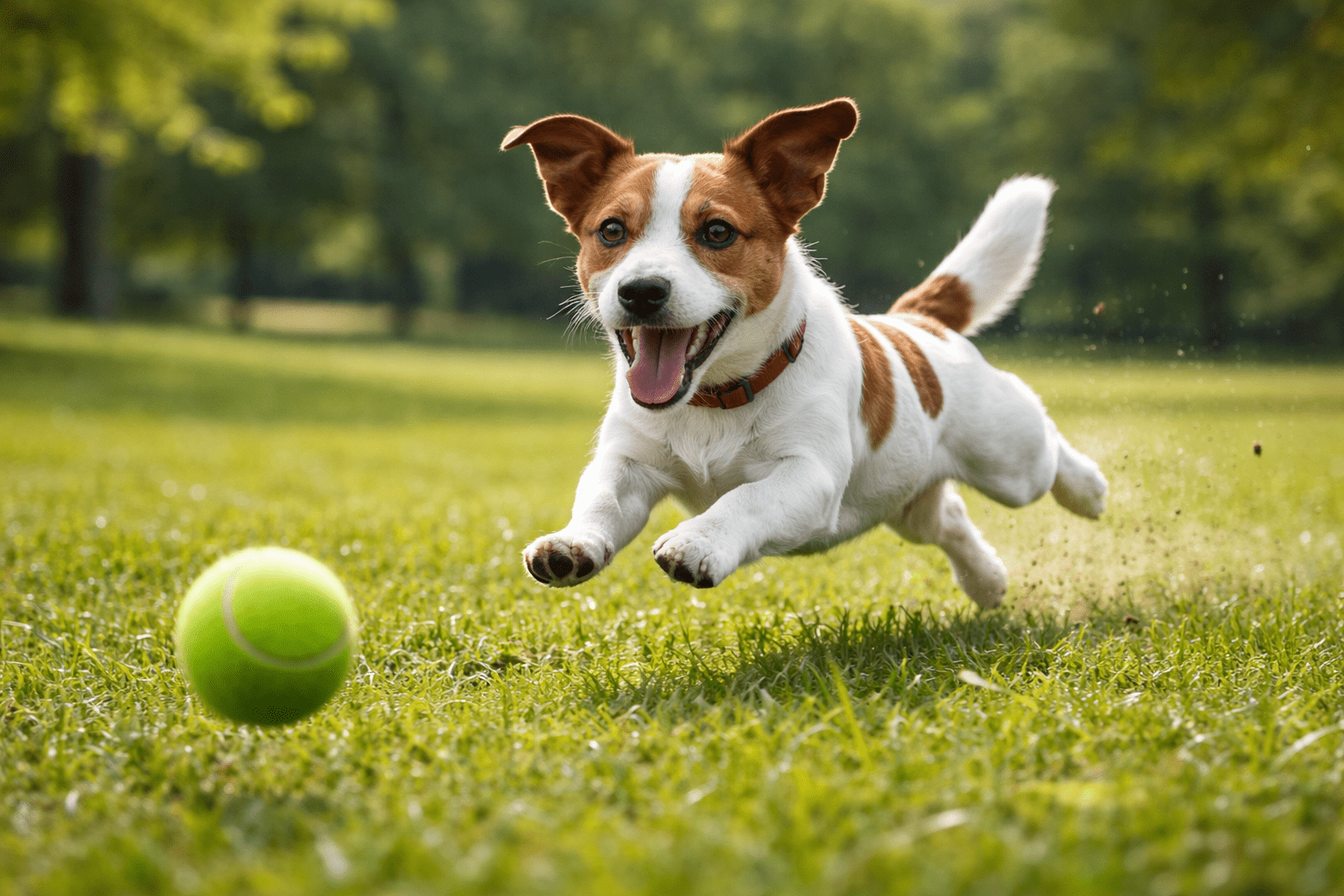
Types of Exercise for Different Energy Levels
Walking alone rarely tires out a truly hyperactive dog. They need activities that engage their mind and body together. Running, hiking on varied terrain, and swimming provide the intensity many high-energy breeds need.
Fetch and retrieve games work well because they combine running with mental focus. Your dog has to track the object, retrieve it, and bring it back—that’s physical and mental work combined.
Agility-style activities challenge your dog’s brain while burning energy. Set up a simple obstacle course in your yard using cones, tunnels, or platforms. Have your dog weave through objects, jump over barriers, or balance on surfaces.
Tug-of-war gets a bad reputation, but it’s actually excellent for burning energy and teaching impulse control. Play by rules: the game starts and stops when you say, and your dog must release the toy on command.
Nose work and scent games tap into your dog’s natural abilities. Hide treats around your house or yard and let your dog search for them. This type of mental exercise can tire a dog out faster than a long walk.
Creating an Exercise Routine
Consistency matters more than intensity for long-term results. Your hyperactive dog needs to know that exercise happens at predictable times each day. This routine helps regulate their energy levels and behavior.
Morning exercise sets the tone for the day. A tired dog in the morning is more likely to stay calm throughout the day. Aim for at least 30-60 minutes of vigorous activity before you leave for work or start your day.
Break up exercise into multiple sessions rather than one marathon workout. Two or three shorter, intense sessions work better than one long walk. This keeps your dog’s metabolism active and prevents energy buildup.
Include cool-down periods after intense exercise. Don’t go straight from running to lying on the couch. Spend 5-10 minutes walking at a slower pace or doing calm training exercises. This teaches your dog how to transition from excitement to calm.
Track what works and what doesn’t. If your dog is still bouncing off the walls after a certain routine, they need more. If they’re exhausted and sleeping well, you’ve found the right amount.
Looking for structured training that includes exercise protocols? Check out our board and train Long Island program for comprehensive behavior management.
Mental Stimulation: The Missing Piece
Most people focus only on physical exercise, but mental stimulation is just as important for learning how to calm a hyperactive dog. A mentally tired dog is a calm dog.
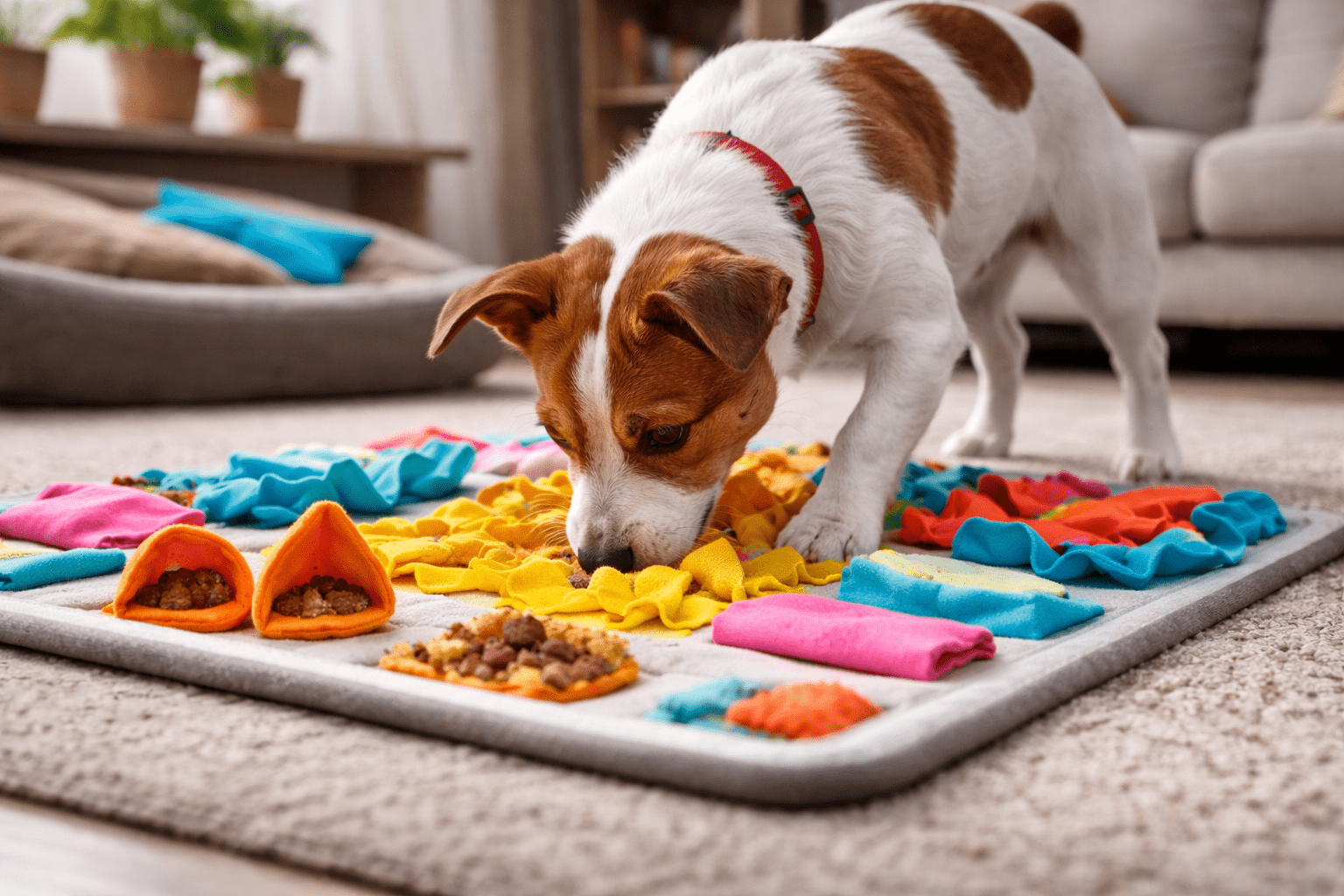
Brain Games and Puzzle Activities
Food puzzle toys make mealtime last longer and engage your dog’s problem-solving skills. Instead of gulping down food in 30 seconds, your dog has to work for 10-15 minutes to get the same meal.
The “find it” game teaches your dog to use their nose. Start simple by hiding treats in obvious places, then gradually make it harder. This game can occupy your dog for extended periods and leaves them mentally drained.
Training new tricks regularly keeps your dog’s mind sharp. Don’t just stick to basic commands. Teach your dog to spin, weave through your legs, or touch specific objects. The learning process itself is calming because it requires focus and concentration.
Rotating toys prevents boredom. Don’t leave all your dog’s toys out all the time. Keep some put away and swap them out every few days. This makes old toys feel new again and keeps your dog interested.
Snuffle mats mimic natural foraging behavior. Scatter kibble or treats in the mat and let your dog sniff them out. This satisfies their instinct to search for food and provides excellent mental exercise.
Training Exercises That Promote Calm Behavior
The “place” command teaches your dog to go to a specific spot and stay there. This becomes their calm zone where they learn to relax. Start with short durations and gradually increase the time.
Impulse control exercises are game-changers for hyperactive dogs. Practice having your dog wait for food, wait at doorways, and wait before getting toys. These small moments of self-control add up to better overall behavior.
The “settle” or “relax” command directly addresses hyperactivity. Reward your dog for lying down calmly, even for just a few seconds at first. Gradually extend the time they must remain calm to earn rewards.
Learn more about teaching essential calm behaviors with our guide on useful commands to teach dogs that improve impulse control and focus.
Environment and Routine Management
Your dog’s environment and daily routine play huge roles in their behavior. Small changes can make a big difference in managing hyperactivity.
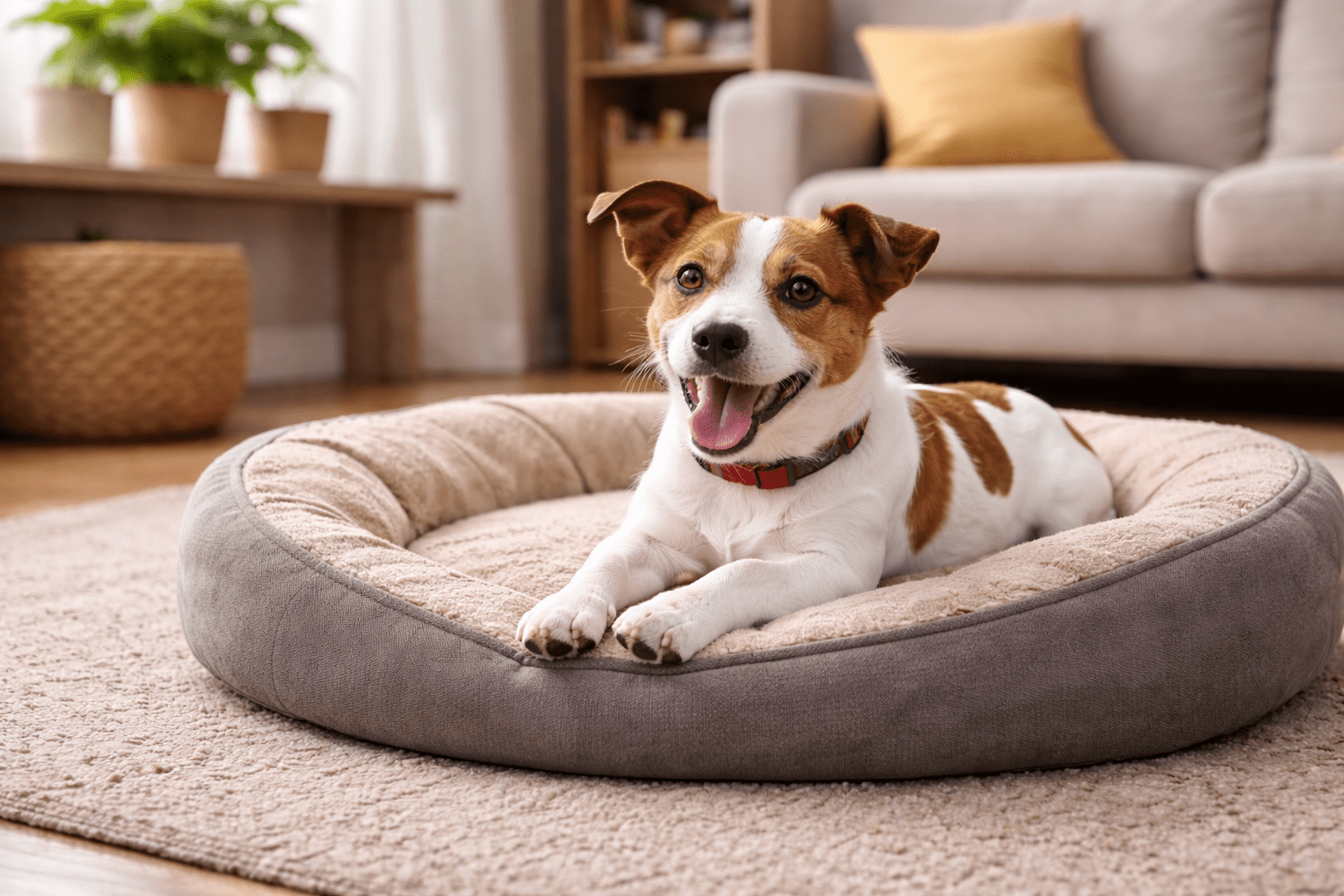
Creating a Calm Home Environment
Reduce overstimulation in your home. If your dog has a view of the street where they can see people and dogs passing by, they’ll stay in a constant state of alertness. Consider closing blinds or blocking the view during peak times.
Create a designated calm space for your dog. This could be a crate, a dog bed in a quiet corner, or a specific room. Make this space comfortable and rewarding so your dog views it as their relaxation zone.
Control noise levels in your home. Constant TV noise, loud music, or chaotic household activity can keep your dog wound up. Provide quiet time, especially in the evening when you want your dog to wind down.
Manage visitors and excitement triggers. If your dog goes crazy when people come over, practice having them go to their place when the doorbell rings. Reward calm behavior instead of allowing the chaos.
Establishing Predictable Routines
Dogs thrive on routine because it reduces anxiety and provides structure. When your hyperactive dog knows what to expect, they can relax between activities instead of staying hyped up all day.
Set consistent meal times rather than free-feeding. Scheduled meals help regulate your dog’s energy and create natural calm periods after eating.
Create a bedtime routine that signals the day is over. This might include a final bathroom break, a calming activity like gentle brushing, and then settling in their sleeping area. Dogs learn to recognize these cues and naturally wind down.
Here’s a sample daily routine for managing a hyperactive dog:
| Time | Activity | Purpose |
| 6:30 AM | Vigorous exercise (30-60 min) | Burn morning energy, set calm tone for day |
| 7:30 AM | Breakfast in puzzle toy | Mental stimulation, slow down eating |
| 8:00 AM | Place command practice (20 min) | Teach settling after excitement |
| 12:00 PM | Midday walk or backyard play | Break up day, prevent energy buildup |
| 5:00 PM | Evening exercise session | Prepare for calm evening |
| 6:00 PM | Training session (15 min) | Mental stimulation, reinforce calm behaviors |
| 7:00 PM | Dinner in puzzle toy | Mental work, natural calm period after eating |
| 9:00 PM | Calm enrichment activity | Wind down for bedtime |
| 10:00 PM | Final bathroom break, settle for night | Signal day is over |
Adapt this schedule to your lifestyle, but keep the timing consistent. Your dog’s internal clock will adjust, making calm behavior more automatic.
Training Techniques for Impulse Control
Training isn’t just about teaching tricks. It’s about teaching your dog self-control, which directly addresses hyperactivity at its core.
Teaching the “Settle” Command
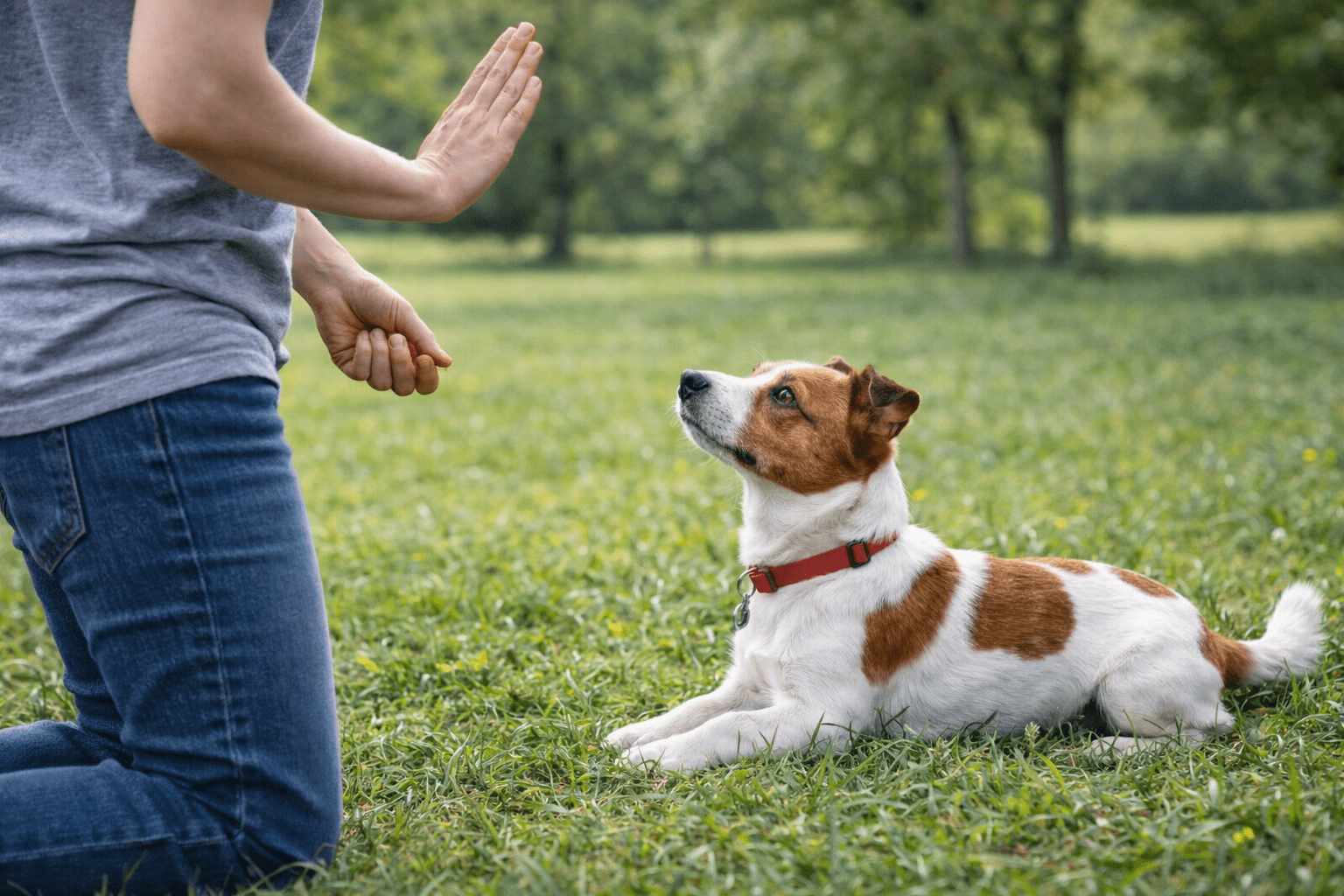
Start by capturing natural calm moments. When your dog lies down on their own, quietly say “settle” and give them a treat. Don’t make a big deal about it—keep your energy low and calm.
Practice during low-distraction times first. Once your dog understands the concept, gradually add distractions. Have them settle while you watch TV, while family members move around, and eventually while more exciting things happen.
Use a mat or bed as a visual cue. Place your dog’s bed in different locations and practice the settle command on that specific spot. The mat becomes a portable calm zone you can take anywhere.
Increase duration slowly. Start with 10 seconds of calm, then 30 seconds, then a minute. Rush this process and you’ll frustrate your dog. Take your time building up to longer periods of relaxation.
Boundary Training and Structure
Teach your dog to respect boundaries in your home. They shouldn’t be allowed to jump on furniture whenever they want or barge through doors first. These small boundaries teach impulse control throughout the day.
Use doorway thresholds as training opportunities. Make your dog wait calmly before going outside, coming inside, or moving from room to room. This constant practice adds up to better self-control.
For dogs who struggle with extreme hyperactivity or reactivity, our reactive dog training steps guide offers additional techniques for managing intense behavioral responses.
Health Issues That Mimic Hyperactivity
Schedule a vet checkup to rule out medical causes. Thyroid issues, allergies, and pain can all cause dogs to act hyperactive or restless.
Anxiety disorders sometimes look like hyperactivity. A dog with separation anxiety might seem hyperactive when they’re actually experiencing panic. Learn more about managing this specific issue in our guide on train dog with separation anxiety.
Some breeds are predisposed to hyperactive tendencies. Border Collies, Australian Shepherds, Jack Russell Terriers, and Belgian Malinois were bred for high-energy work. They need jobs to do, not just exercise.
Age-Specific Strategies
Different life stages require different approaches to managing hyperactivity.
Puppies and Young Dogs
Puppies have short attention spans and seemingly endless energy. They’re learning about their world, which means everything excites them.
Focus on short, frequent training sessions rather than long ones. Five minutes of focused training can tire a puppy more than 30 minutes of playing.
Enforce nap times. Puppies need 15-20 hours of sleep per day. If your puppy won’t settle, they might be overtired. Put them in their crate or quiet space for a forced nap.
Start early with impulse control training. The habits you build in puppyhood last a lifetime. Our puppy training Long Island program focuses on building calm, confident dogs from the start.
Adult and Senior Dogs
Adult dogs with lifelong hyperactivity need consistent management. You’re not going to “cure” a high-drive working breed, but you can teach them better self-control.
Senior dogs who suddenly become hyperactive might be experiencing cognitive decline or pain. Restlessness at night, pacing, and inability to settle can indicate health issues requiring veterinary attention.
Adjust exercise intensity for older dogs. They still need mental and physical stimulation, but high-impact activities should be reduced. Swimming and slow walks work well for seniors.
Common Mistakes to Avoid
Learning how to calm a hyperactive dog also means knowing what not to do. These common mistakes often make hyperactivity worse.
What Makes Hyperactivity Worse
Rewarding excited behavior accidentally teaches your dog that hyperactivity works. If you give attention, let them outside, or provide treats when they’re bouncing around, you’re reinforcing the behavior you want to stop.
Inconsistent rules confuse your dog. If jumping is sometimes okay and sometimes not, your dog stays in a state of uncertainty and arousal. Be consistent with what’s allowed and what isn’t.
Punishment doesn’t work for hyperactivity. Yelling at or correcting a hyperactive dog often increases their arousal rather than calming them. They might interpret your reaction as joining in their excitement.
Skipping exercise on busy days creates a cycle. One day of missed exercise leads to worse behavior, which stresses you out, which might cause you to skip exercise again. Protect your dog’s exercise time like you would an important appointment.
Giving up too soon is the biggest mistake. Behavior change takes time, especially with deeply ingrained hyperactivity. Most dogs need 4-6 weeks of consistent work before you see significant improvement.
Your Next Steps Toward a Calmer, Happier Dog
Learning how to calm a hyperactive dog requires commitment, but the reward is a calmer, more balanced companion. Focus on four essentials: proper exercise, mental stimulation, consistent training, and a structured environment. Consistency is key. When routines stay predictable, rules remain clear, and calm behavior is rewarded, dogs learn to regulate their energy.
Start with the basics: increase daily exercise, add enrichment activities for mental work, and teach a reliable settle command. Many owners notice positive changes within the first week. Stay patient and adapt to your dog’s needs. Some dogs need more physical outlets, while others benefit most from added mental challenges and clearer boundaries.
At K9 Mania Dog Training, we specialize in transforming hyperactive dogs into calm, confident companions. As the leading board and train Long Island facility, we understand that every hyperactive dog needs an individualized approach. Our expert trainers work directly with your dog to address the root causes of hyperactivity through proven techniques and structured programs.
You May Also Want to Read
- How to Train Your Dog to Stay Home Alone: A Complete Guide
- Why Is My Dog Acting Scared? Common Causes and Solutions
- How to Stop Dogs from Digging: Proven Strategies
- How to Stop a Dog from Eating Poop
Frequently Asked Questions
How do I stop my dog from being hyper?
Stop hyperactivity by providing adequate exercise (30-60 minutes of vigorous activity twice daily), mental stimulation through training and puzzle toys, and consistent boundaries. Teach calm behaviors like “place” and “settle,” reward relaxed states, and avoid accidentally reinforcing excited behavior with attention.
Do hyper dogs ever calm down?
Most dogs naturally calm down as they mature, typically around 2-3 years old. However, high-energy breeds may maintain elevated energy levels throughout their lives. With proper training, exercise, and mental stimulation, even the most hyperactive dogs learn better self-control and develop reliable off-switches.
How to calm a hyper-reactive dog?
Calm hyper-reactive dogs by identifying and managing triggers, teaching impulse control through threshold training, and creating distance from stimuli that cause reactions. Use high-value rewards for calm behavior near triggers, practice pattern interruption techniques, and gradually desensitize your dog to their triggers through controlled exposure.
What causes a dog to be so hyperactive?
Dogs become hyperactive due to insufficient exercise, lack of mental stimulation, inconsistent training, poor diet, anxiety, or breed genetics. Some breeds were developed for high-energy work and naturally have more drive. Medical issues like thyroid problems or food sensitivities can also contribute to hyperactive behavior.
How to naturally calm a hyper dog?
Naturally calm hyper dogs through increased physical exercise, brain games like nose work and puzzle toys, teaching relaxation protocols, and establishing consistent daily routines. Use calming activities like sniffing, chewing, and gentle massage. Create a quiet environment and reward naturally calm moments throughout the day.
How to calm an overly excitable dog?
Calm excitable dogs by removing attention and rewards during excited states and only rewarding calm behavior. Practice impulse control exercises like waiting at doorways and sitting before meals. Reduce environmental stimulation, establish predictable routines, and teach your dog to self-soothe through crate training and place commands.