
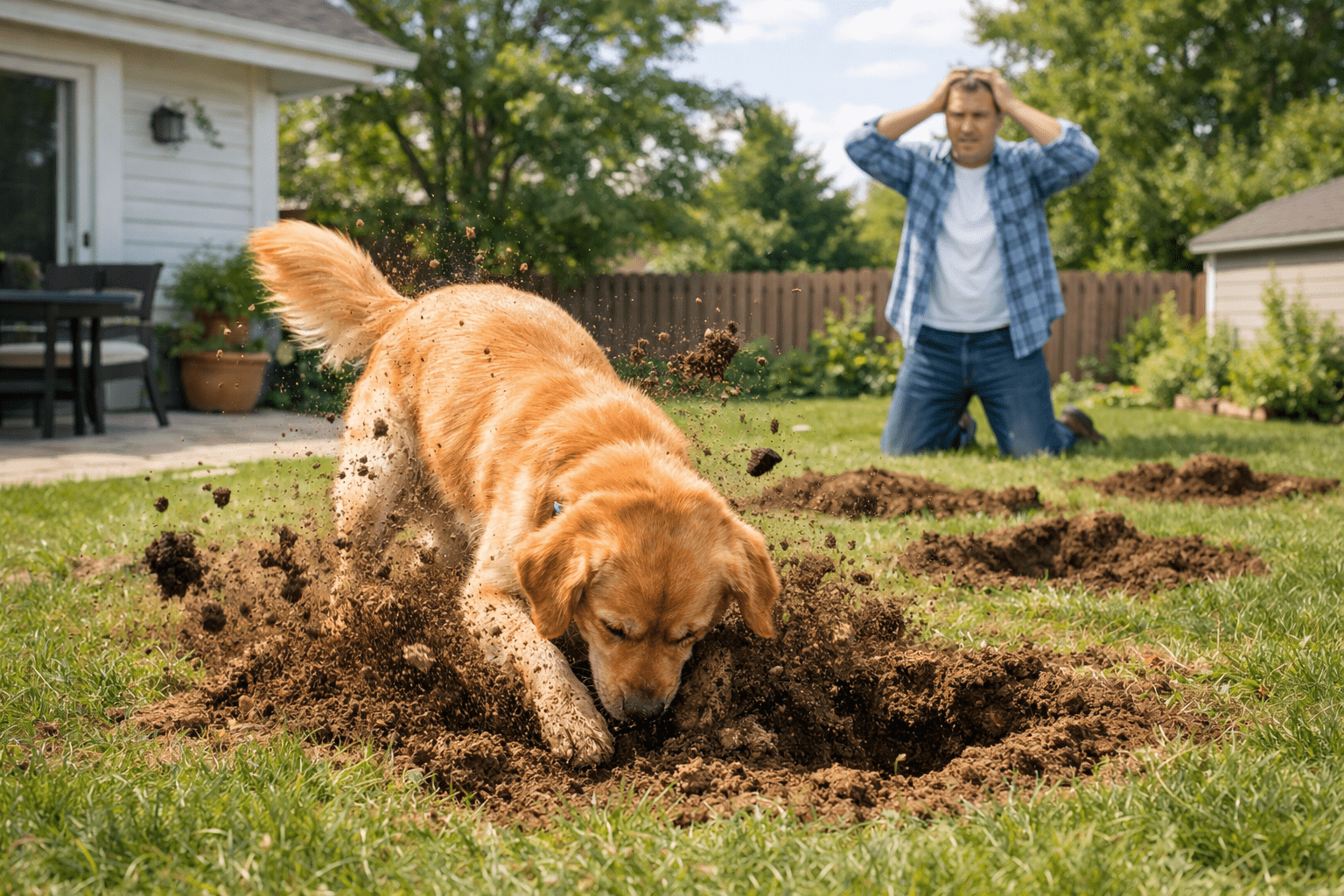
How to stop dogs from digging starts with understanding why your dog digs in the first place, then using targeted training methods and environmental changes to redirect this behavior. Most dogs can learn to stop digging within 2-4 weeks using consistent positive reinforcement and proper supervision.
If you have come home to find your once-beautiful yard looking like a construction site, you are not alone. Digging is one of the most frustrating behaviors dog owners face, but the good news is that it is entirely manageable with the right approach.
In this guide, we will walk you through why dogs dig, which breeds are most likely to dig, and the most effective strategies to stop this behavior for good. You will learn practical techniques you can start using today to reclaim your yard and keep your dog happy.
Ready to transform your dog’s behavior? Explore our obedience dog training programs designed to address common behavioral issues.
Why Dogs Dig and What It Means
Understanding the root cause of your dog’s digging is the first step toward solving the problem. Dogs do not dig just to frustrate you. They have specific reasons that drive this behavior, and knowing what those are will help you choose the right solution.
Common Reasons Dogs Dig Holes
Dogs dig for several reasons, and identifying which one applies to your pet makes a big difference in how you address it.
Boredom and Excess Energye
Many dogs dig simply because they have too much energy and not enough to do. When left alone in the yard for long periods without stimulation, digging becomes an entertaining activity. This is especially common in high-energy breeds that need regular exercise and mental challenges.
Hunting and Prey Drive
Some dogs dig because they detect small animals like moles, gophers, or insects underground. Their natural prey drive kicks in, and they start excavating to catch their target. You will often notice this type of digging happens in specific spots where animals are active.
Creating a Cool Spot
On hot days, dogs may dig to create a cool place to lie down. The dirt beneath the surface stays cooler than the ground level, providing relief from the heat. This behavior is more common in summer months or in dogs without adequate shade.
Anxiety and Stress
Dogs experiencing separation anxiety or stress may dig as a coping mechanism. This type of digging often happens near fences, gates, or doors as the dog tries to escape or deal with their emotional distress.
Instinctive Behavior
Certain breeds were developed specifically for digging tasks, like hunting badgers or burrowing animals. For these dogs, digging is hardwired into their genetics and feels completely natural.
Dog Breeds Most Prone to Digging
While any dog can develop digging habits, some breeds are more likely to dig than others because of their original purpose and genetics.
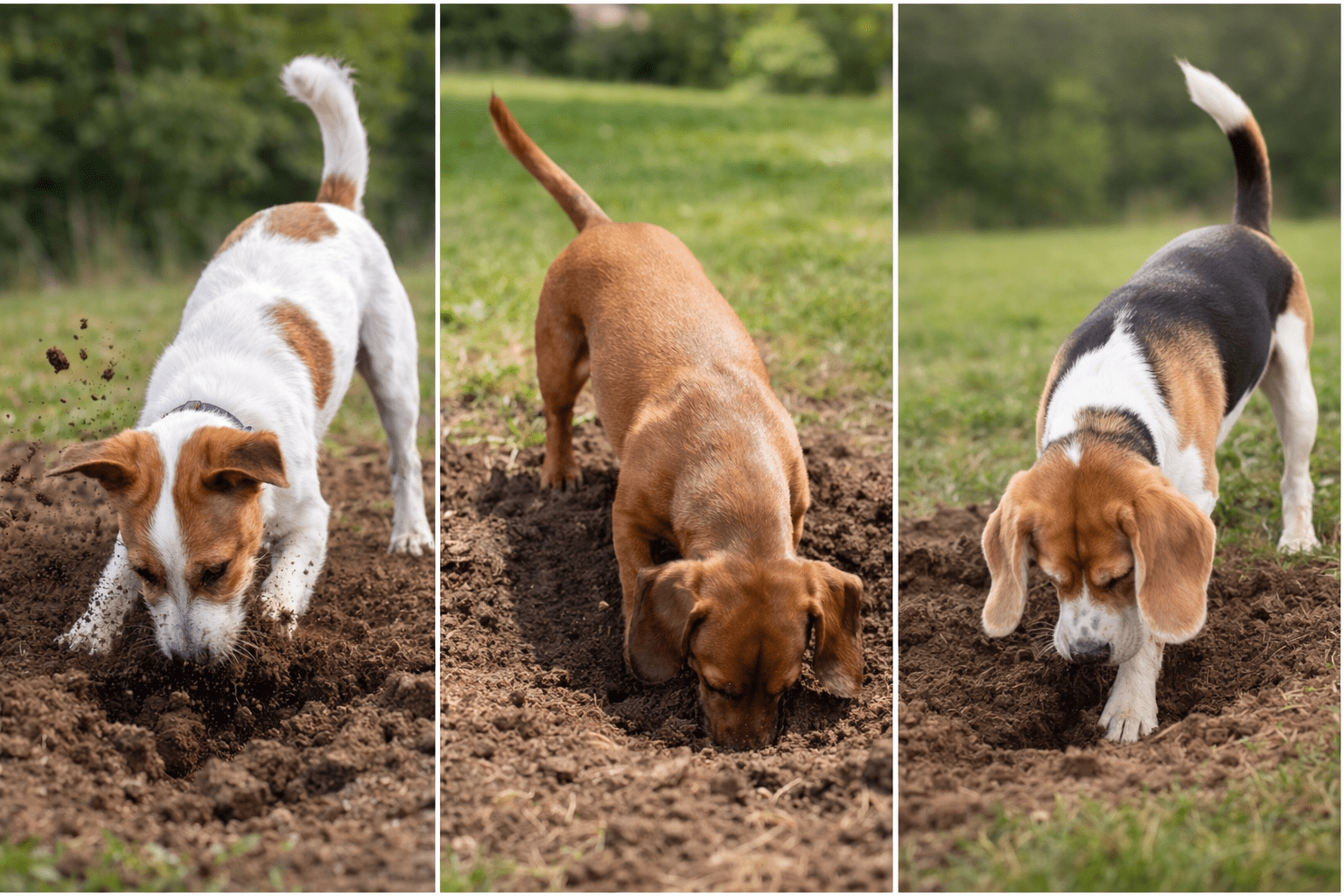
Terrier breeds top the list. Jack Russell Terriers, Fox Terriers, and Scottish Terriers were bred to dig out small game from underground dens. Dachshunds, despite their small size, are persistent diggers who were originally used to hunt badgers in their burrows.
Huskies and Malamutes dig to create cool resting spots, a behavior that helped them survive in Arctic conditions. Beagles and other scent hounds may dig when following an interesting smell underground.
Here is a quick look at breeds with strong digging tendencies:
| Breed Type | Examples | Primary Digging Trigger |
| Terriers | Jack Russell, Fox Terrier, Cairn Terrier | Hunting instinct, prey drive |
| Hounds | Beagle, Dachshund, Basset Hound | Tracking scents, burrowing instinct |
| Northern Breeds | Siberian Husky, Alaskan Malamute | Creating cool spots, denning behavior |
| Working Dogs | Border Collie, Australian Cattle Dog | Boredom, excess energy |
Even if your dog belongs to one of these breeds, you can still teach them not to dig in unwanted areas. Understanding their natural tendencies simply helps you create better training strategies and provide appropriate outlets for their energy.
How to Stop Dogs from Digging: Training Methods That Work
Training your dog to stop digging requires patience, consistency, and the right approach. The methods you use should address the specific reason your dog is digging while teaching them more appropriate behaviors.
Positive Reinforcement Techniques
Positive reinforcement training is one of the most effective ways to stop unwanted behaviors like digging. This approach rewards your dog for making good choices rather than punishing them for bad ones.

When you catch your dog about to dig or in the early stages of digging, interrupt them with a firm “no” or “leave it” command. Immediately redirect their attention to an acceptable activity like playing with a toy or practicing a command they know. As soon as they engage with the appropriate behavior, reward them with praise, treats, or play time.
The timing of your reward is critical. You need to mark the good behavior within seconds of it happening so your dog makes the connection. If your dog stops digging and comes to you, that is exactly when you should provide positive feedback.
Create a designated digging zone in your yard if your dog has a strong digging instinct. Bury toys or treats in this approved area and encourage your dog to dig there. When they dig in the right spot, give them lots of praise. If they start digging elsewhere, redirect them back to the approved zone.
Consistency is everything. Every family member needs to use the same commands and follow the same rules. Mixed messages will confuse your dog and slow down the training process. Learn more about the power of consistency in training to understand why this matters so much.
Supervision and Prevention Strategies
While training takes time, you also need immediate strategies to prevent digging from becoming a habit. Prevention is easier than trying to break an established behavior pattern.
Increase Exercise and Mental Stimulation
A tired dog is a well-behaved dog. Make sure your dog gets enough physical exercise for their breed and age. Most dogs need at least 30-60 minutes of vigorous activity daily, but high-energy breeds may need even more.

Mental stimulation is just as important as physical exercise. Puzzle toys, training sessions, and games like hide-and-seek keep your dog’s mind engaged. When dogs are mentally tired, they are less likely to find entertainment in destructive behaviors like digging.
Limit Unsupervised Yard Time
If your dog only digs when alone in the yard, reduce their unsupervised outdoor time until the behavior improves. When you cannot watch them, keep them inside or in a secure area where they cannot dig.
When you do let them out, stay present and intervene immediately if they start to dig. Your presence alone may be enough to prevent the behavior, and if they do start digging, you can redirect them right away.
Provide Adequate Shade and Comfort
If your dog digs to cool down, make sure they have plenty of shade and access to fresh water. A dog house, covered porch, or shaded area with good airflow helps keep them comfortable on hot days.
Consider providing a small wading pool or cooling mat as an alternative to digging. Many dogs appreciate having a cool spot that does not involve destroying your landscaping.
Address Anxiety and Separation Issues
If stress or anxiety drives the digging, you need to address the underlying emotional issue. This may require working with a professional trainer or behaviorist who can help your dog feel more secure when alone.
For dogs with separation anxiety, gradually increase the time they spend alone, starting with just a few minutes and building up. Make departures and arrivals low-key to reduce emotional intensity. Professional in-home dog training can provide personalized strategies for anxiety-related behaviors.
Physical Deterrents and Environmental Solutions
Sometimes training needs extra support from environmental changes that make digging less appealing or physically difficult. These solutions work best when combined with proper training and supervision.
Natural and Safe Digging Deterrents
Several natural substances can discourage dogs from digging in specific areas without causing them harm.

Citrus Peels and Essential Oils
Dogs generally dislike citrus scents. Place orange, lemon, or grapefruit peels in areas where your dog tends to dig. You can also mix citrus essential oils with water and spray the solution on problem spots. Reapply after rain or every few days to maintain effectiveness.
Vinegar Solution
White vinegar mixed with water (one part vinegar to three parts water) creates an unpleasant smell that deters many dogs. Spray this solution around the perimeter of flower beds or other areas you want to protect. Avoid spraying directly on plants, as concentrated vinegar can damage them.
Cayenne Pepper or Black Pepper
Sprinkling cayenne pepper or black pepper in digging zones can work because dogs dislike the sensation when they sniff it. Use this method carefully and sparingly, as it can irritate sensitive noses. Never use pepper if your dog has respiratory issues.
Commercial Dog Repellents
Pet stores sell commercial digging deterrents specifically formulated to be safe for dogs while being unpleasant enough to discourage digging. These products often combine multiple scents dogs dislike and can be more convenient than homemade solutions.
Physical Barriers and Yard Modifications
Making your yard less dig-friendly through physical changes can effectively stop the behavior.
Chicken Wire or Hardware Cloth
Bury chicken wire or hardware cloth a few inches below the surface in problem areas. When your dog tries to dig, their paws will hit the barrier and they will give up. Cover the wire with a thin layer of soil and grass to hide it.
Rocks and Decorative Stones
Placing large, flat rocks or decorative stones over favorite digging spots makes it impossible for your dog to dig there. This works particularly well around fence lines or garden edges. Make sure the rocks are heavy enough that your dog cannot move them.
Raised Garden Beds
If your dog targets specific flower beds or vegetable gardens, consider converting them to raised beds with wooden or metal sides. The physical barrier makes it much harder for dogs to access the soil.
Designated Digging Pit
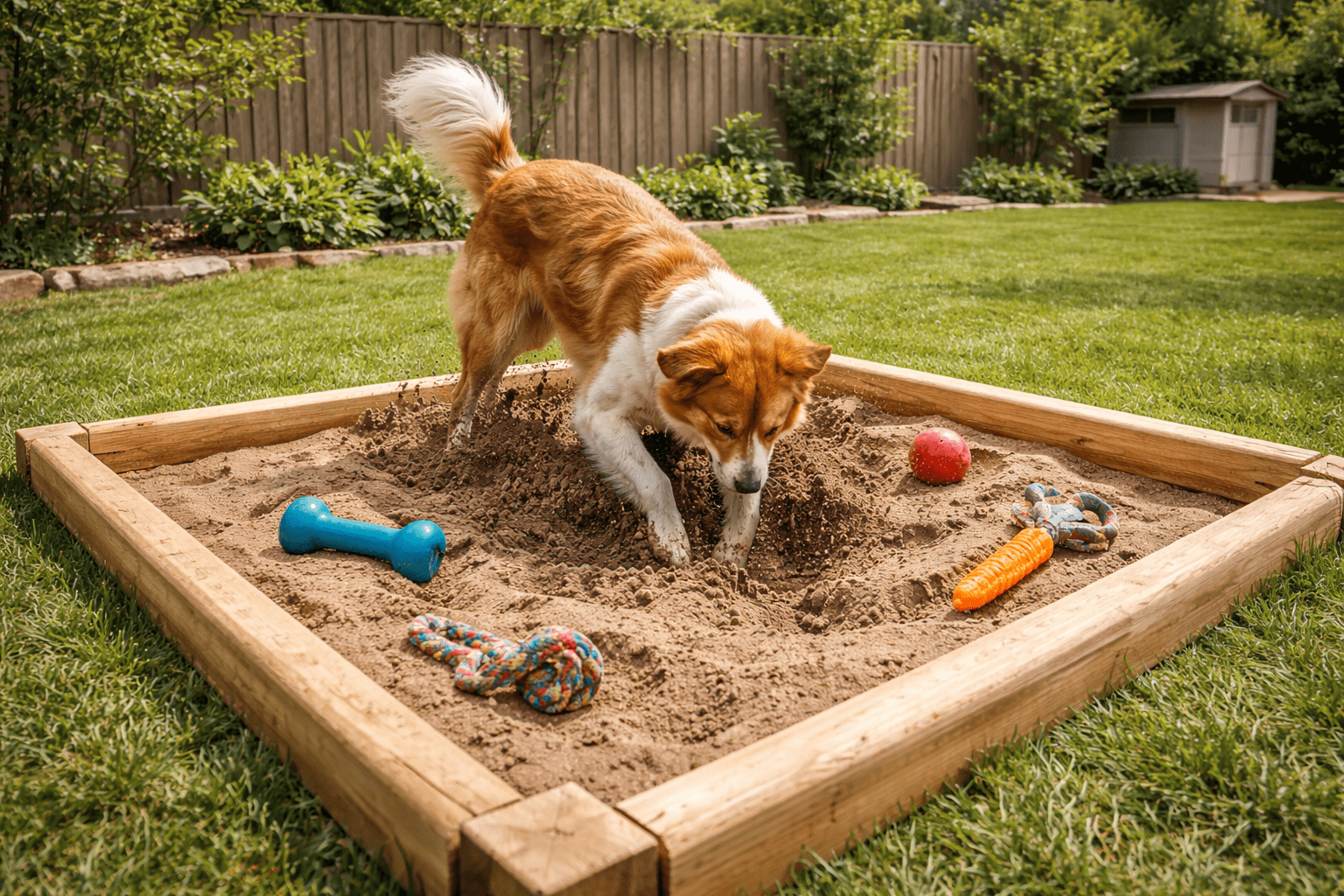
Create an approved digging area using a sandbox or a specific section of your yard. Bury toys, treats, or bones in this spot to make it more interesting than other areas. When you see your dog digging elsewhere, redirect them to this designated zone.
Here is a comparison of different deterrent methods:
| Deterrent Method | Effectiveness | Best Used For | Maintenance Required |
| Citrus peels/sprays | Moderate | Small areas, flower beds | Reapply every 3-5 days |
| Vinegar solution | Moderate | Garden perimeters, fence lines | Reapply after rain |
| Buried chicken wire | High | Persistent digging spots | One-time installation |
| Rocks and stones | High | Decorative areas, pathways | None after placement |
| Designated digging zone | High | Dogs with strong digging instinct | Weekly maintenance |
The most effective approach combines several methods. Use physical barriers for critical areas you absolutely need to protect, natural deterrents for larger spaces, and training to teach your dog what behaviors are acceptable.
Long-Term Success: Building Better Habits
Stopping your dog from digging is not just about quick fixes. Long-term success comes from creating a lifestyle and routine that addresses your dog’s needs while maintaining your expectations for yard behavior.
Creating a Consistent Daily Routine
Dogs thrive on routine and predictability. When you establish a consistent daily schedule, your dog knows what to expect and when, reducing anxiety and boredom that can lead to digging.
Start each day with exercise before you leave for work. A 20-30 minute walk or play session helps burn off energy that might otherwise go into destructive behaviors. Morning exercise also mentally prepares your dog for a calmer day at home.
Schedule regular training sessions throughout the week. Even 10-15 minutes of practicing commands or learning new tricks provides mental stimulation and reinforces your bond. Include commands that are part of your top things to teach your dog for a well-rounded foundation.
Feed your dog at the same times each day. Predictable meal times help regulate their energy levels and bathroom needs, making their entire day more structured.
Plan afternoon or evening activities that give your dog something to look forward to. This might include another walk, playtime in the yard with you present, or interactive toys that challenge their problem-solving skills.
When to Seek Professional Help
Some digging problems require professional intervention, especially when the behavior stems from deep-rooted anxiety, compulsive tendencies, or when your own efforts are not producing results.
Consider professional training if your dog continues digging despite consistent training efforts over several weeks. A qualified trainer can identify subtle issues you might miss and create a customized behavior modification plan.
Compulsive digging that seems obsessive or frantic may indicate an underlying behavioral disorder. Dogs who dig frantically without stopping, even when redirected, may need evaluation from a veterinary behaviorist.
Separation anxiety often manifests as digging near doors, gates, or fence lines. If your dog only digs when you are gone and shows other signs of distress like excessive barking, drooling, or destructive behavior, professional help is important for their wellbeing.
Working with a professional trainer does not mean you have failed. It means you are taking your dog’s needs seriously and investing in solutions that work. Programs like the board and train Long Island offer intensive training that can address persistent behavioral issues more quickly than working alone.
Wrapping Up: Your Path to a Dig-Free Yard
Learning how to stop dogs from digging combines understanding your dog’s motivation with consistent training and smart environmental management. Most dogs respond well to increased exercise, mental stimulation, and clear boundaries when these strategies are applied consistently.
Remember that some breeds have stronger digging instincts than others, but this does not mean the behavior cannot be managed. By addressing the root cause—whether it is boredom, anxiety, prey drive, or comfort-seeking—you can teach your dog more appropriate ways to meet their needs.
The strategies outlined in this guide work best when used together. Combine training with physical deterrents, increase your dog’s daily exercise, and consider creating an approved digging zone. With patience and consistency, you will see significant improvement within a few weeks.
At K9 Mania Dog Training, we understand how frustrating digging behavior can be for Long Island homeowners. Our experienced trainers specialize in solving common behavioral problems through proven methods tailored to each dog’s unique needs.
You May Also Want to Read
- Crate Training a Dog with Separation Anxiety
- Signs of Bad Dog Boarding
- How to Train Your Dog to Stay Home Alone: A Complete Guide
- Why Is My Dog Acting Scared? Common Causes and Solutions
Frequently Asked Questions
What repels dogs from digging?
Citrus scents are among the most effective natural repellents for digging. Dogs typically dislike the smell of oranges, lemons, and grapefruits, so placing peels or spraying diluted citrus essential oils in problem areas can deter them. Vinegar solutions, commercial dog repellents, and cayenne pepper also work but should be used carefully to avoid irritation.
Do coffee grounds stop dogs from digging?
Coffee grounds can temporarily deter some dogs from digging because of their strong scent, but results vary by individual dog. The grounds need frequent replacement as the smell fades quickly, especially after rain. Coffee grounds should not be your primary solution since some dogs may eat them, and caffeine is toxic to dogs even in small amounts.
What smell do dogs absolutely hate?
Dogs have strong aversions to citrus (oranges, lemons, limes), vinegar, and certain spicy scents like cayenne pepper. They also dislike strong chemical smells like ammonia and rubbing alcohol, though these should be avoided as they can harm your dog’s respiratory system. Stick with natural, safe deterrents like citrus or vinegar solutions for the best results.
Why is my dog constantly digging?
Constant digging usually indicates boredom, insufficient exercise, or anxiety. Dogs left alone in the yard without mental or physical stimulation often dig as a way to entertain themselves. Other causes include hunting prey underground, creating a cool spot on hot days, or trying to escape due to separation anxiety. Identifying the specific trigger helps you choose the right solution.
What dog breeds are prone to digging?
Terrier breeds like Jack Russell Terriers, Fox Terriers, and Cairn Terriers have the strongest digging instincts because they were bred to hunt burrowing animals. Dachshunds, Beagles, Siberian Huskies, and Alaskan Malamutes also dig frequently due to their original purposes as hunting or working dogs. However, any breed can develop digging habits if bored or understimulated.
What are some safe digging deterrents?
Safe deterrents include burying chicken wire a few inches below the surface in problem areas, placing large rocks over favorite digging spots, and using natural scent repellents like diluted citrus or vinegar sprays. Creating a designated digging pit where your dog is allowed to dig provides an outlet for the behavior. Avoid toxic substances like mothballs or anything that could harm your dog if ingested.