Positive reinforcement dog training is a method that rewards desired behaviors to encourage your dog to repeat them. This approach builds trust, strengthens your bond, and creates lasting behavioral changes without fear or punishment.
Whether you’re teaching a puppy basic commands or helping an older dog overcome challenges, reward-based training works for dogs of all ages and temperaments. The science is clear: dogs learn faster and retain lessons longer when training feels rewarding rather than stressful. In this guide, we’ll walk you through everything you need to know about positive reinforcement methods, from choosing the right rewards to avoiding common mistakes that slow progress.
Looking for expert guidance? Explore our online dog training courses designed for real results.
What Is Positive Reinforcement Dog Training
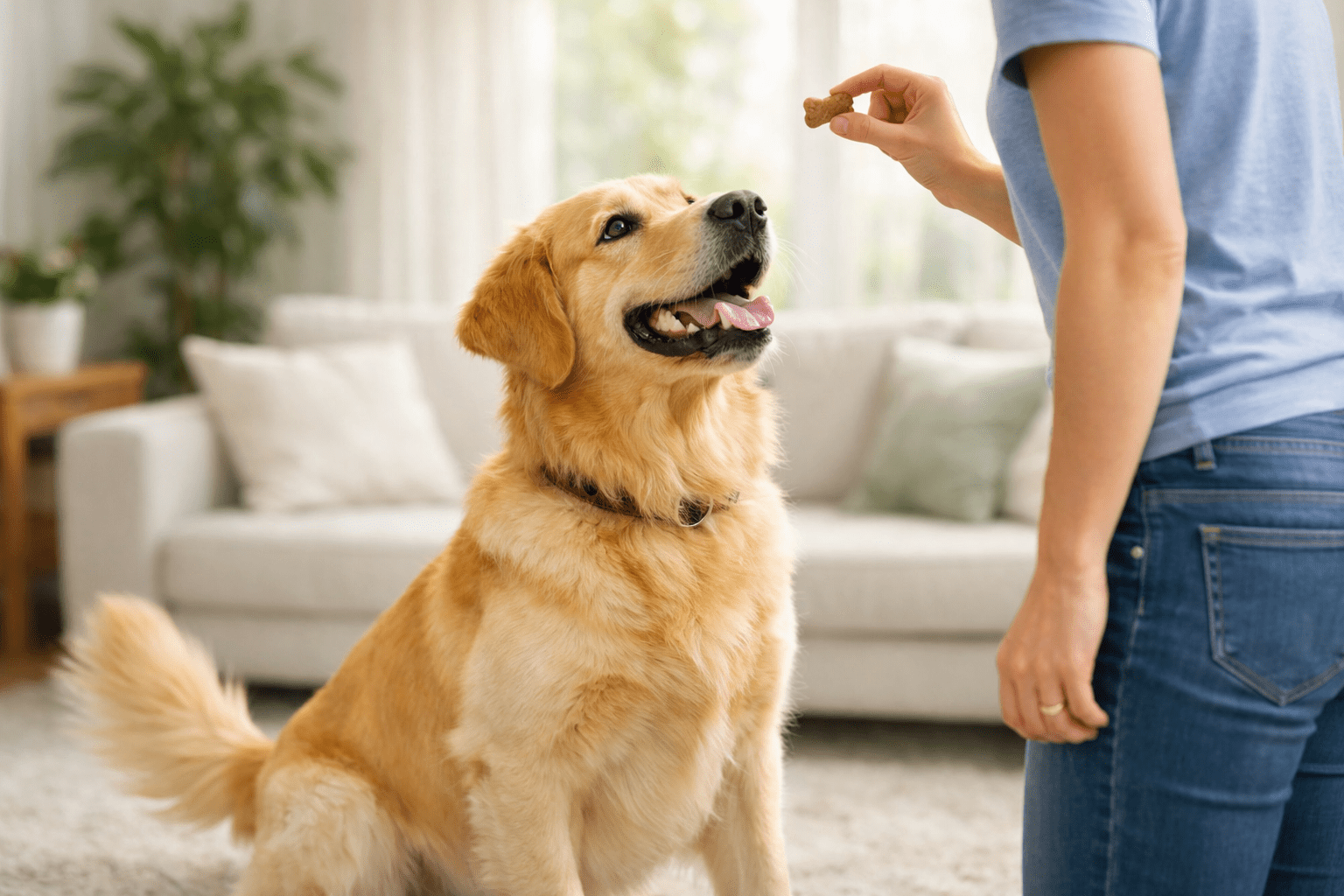
Positive reinforcement dog training focuses on rewarding good behavior instead of punishing unwanted actions. When your dog does something you like, you immediately give them something they value, like treats, praise, or playtime. This creates a positive association with the behavior, making your dog more likely to repeat it.
Unlike traditional training methods that rely on corrections or dominance, positive reinforcement builds cooperation through motivation. Your dog learns to make good choices because those choices lead to rewards they enjoy.
How It Works
The process is straightforward. You watch for behaviors you want to encourage, then reward them the instant they happen. Timing matters tremendously here. If you wait even a few seconds, your dog may not connect the reward with the behavior.
For example, when teaching your dog to sit, you say the command, and the moment their bottom touches the ground, you give a treat. Your dog learns that sitting on command equals rewards. Over time, the behavior becomes automatic.
This method taps into how dogs naturally learn. In the wild, animals repeat behaviors that lead to positive outcomes and avoid those that don’t. Positive reinforcement simply applies this principle in a controlled, intentional way.
Why It’s Effective
Research consistently shows that positive reinforcement produces faster learning and better retention than punishment-based methods. Dogs trained with rewards show less stress, fewer behavioral problems, and stronger bonds with their owners.
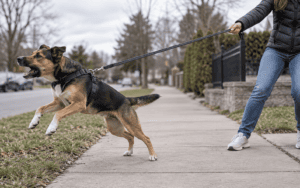
Punishment can create fear, anxiety, and aggression. A dog might stop the unwanted behavior temporarily, but they haven’t learned what to do instead. Worse, they may become fearful of you or the training environment.
Positive reinforcement teaches dogs what you want them to do. It builds confidence, reduces anxiety, and makes training enjoyable for both of you. Dogs trained this way are more eager to learn and less likely to develop behavioral issues down the road.
Key Principles of Positive Reinforcement
Success with positive reinforcement depends on understanding a few core principles. These guidelines help you communicate clearly with your dog and build behaviors that last.
Timing and Consistency
Perfect timing is everything in dog training. Your dog needs to connect the reward with the exact behavior you want. If you’re teaching “down” and your dog lies down, reward them within one second. Wait longer and they might think the reward is for something else, like looking at you or staying quiet.
Consistency means everyone in your household follows the same rules. If you reward your dog for sitting before meals but someone else lets them jump up, your dog gets confused. Mixed signals slow progress and can undo weeks of work.
Use the same commands every time. Don’t switch between “come,” “here,” and “come here.” Pick one word and stick with it. This clarity helps your dog understand exactly what you’re asking for.
Choosing the Right Rewards
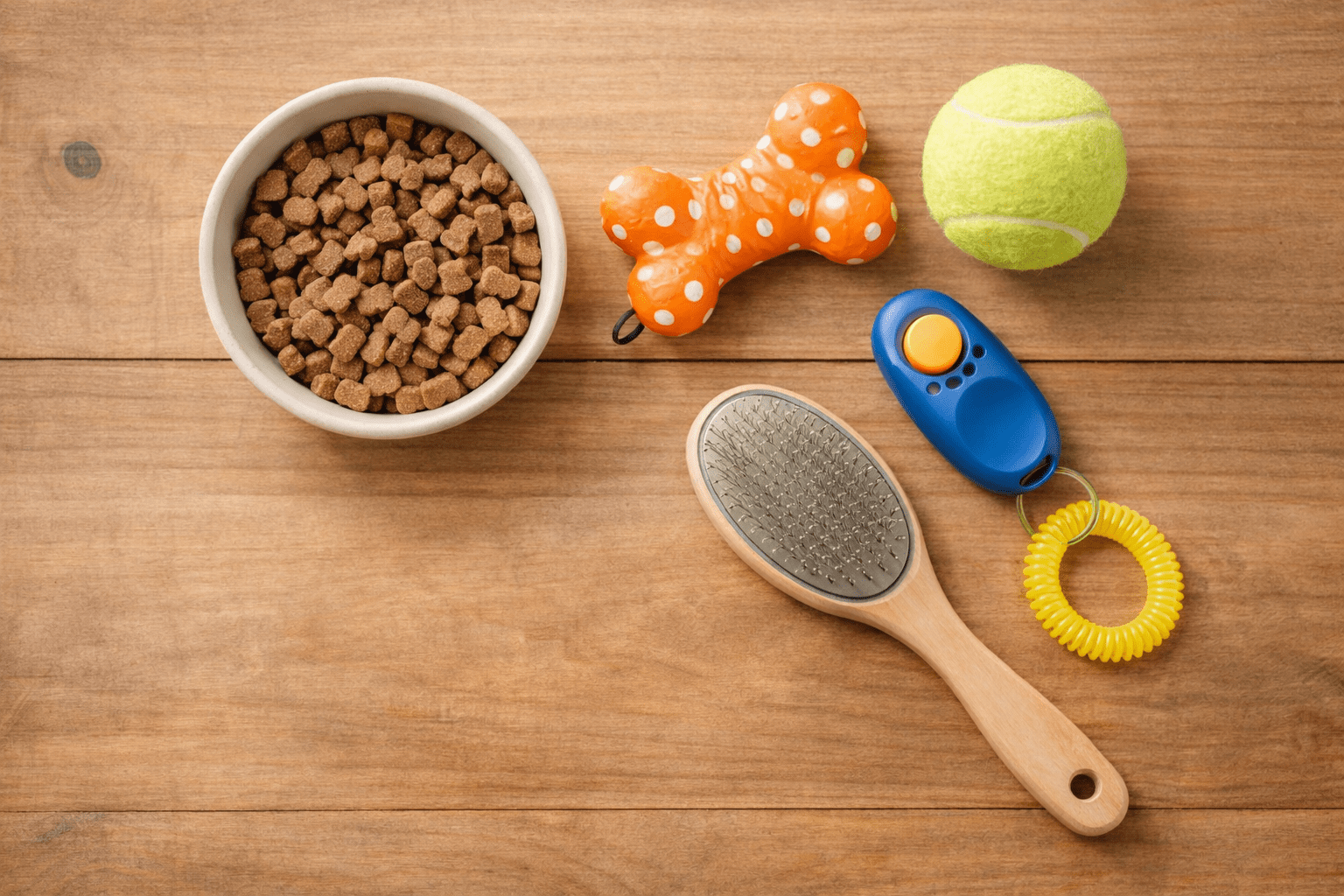
Not all rewards work equally well for every dog. Some dogs go crazy for treats, while others prefer toys or praise. Pay attention to what motivates your dog most, then use that as your primary reward.
High-value treats work best for teaching new behaviors or working in distracting environments. These might be small pieces of chicken, cheese, or commercial training treats. Save these special rewards for training sessions so they stay exciting.
Lower-value rewards like kibble or praise work well for practicing known behaviors in low-distraction settings. You can also use life rewards, like opening the door for a walk or throwing a ball. If your dog wants something, you can use it as a training opportunity.
Keep treats small, about the size of a pea. You’ll give lots of rewards during training, and large treats fill dogs up quickly or add too many calories.
Need help choosing the right approach? Our obedience dog training programs customize methods to your dog’s unique needs.
Types of Rewards in Positive Reinforcement Training
Different rewards serve different purposes in training. Understanding when to use each type helps you train more effectively and keeps your dog engaged.
| Reward Type | Best For | Examples | When to Use |
| High-Value Treats | Teaching new behaviors, high-distraction environments | Chicken, cheese, hot dogs, freeze-dried liver | Initial learning stages, outdoor training, recall practice |
| Low-Value Treats | Practicing known behaviors, low-distraction settings | Kibble, basic training treats, vegetables | Indoor practice, maintaining behaviors, casual training |
| Verbal Praise | Building confidence, reinforcing calm behaviors | “Good dog,” “Yes,” enthusiastic tone | Throughout training, after treat delivery, for polite behaviors |
| Play and Toys | High-energy dogs, building drive | Tug toys, balls, fetch games | End of training sessions, recall rewards, engagement building |
The key is matching the reward to your dog’s motivation level and the difficulty of the task. Teaching a brand new behavior in your backyard with squirrels running by? Break out the chicken. Practicing a solid “sit” in your quiet living room? Regular treats work fine.
Common Behaviors and Training Approaches
Different behaviors require slightly different strategies. Here’s how to apply positive reinforcement to common training goals:
| Behavior | Training Approach | Reward Timing | Pro Tips |
| Sit | Lure with treat above nose, reward when bottom touches ground | Instant, as soon as sitting | Keep treat close to nose, move slowly upward |
| Stay | Reward for remaining in position, gradually increase duration | After each successful stay interval | Start with 1-2 seconds, build slowly, practice in low-distraction areas |
| Come/Recall | Call dog’s name, reward heavily when they reach you | As soon as dog arrives at your feet | Never punish after recall, use exciting tone, practice on long leash first |
| Loose Leash Walking | Reward when leash is slack, stop moving when dog pulls | Continuously while leash is loose | Change direction when dog pulls, reward frequently at first |
Want personalized instruction? Check out these effective ways to train your dog that fit your lifestyle.
Positive Reinforcement Step-by-Step Training Guide
Let’s break down how to use positive reinforcement for real training scenarios. These methods work whether you’re starting with a puppy or retraining an adult dog.
Teaching Basic Commands
Start in a quiet, distraction-free space where your dog can focus. Have small, tasty treats ready and a positive attitude. Begin with the simplest behaviors and build from there.
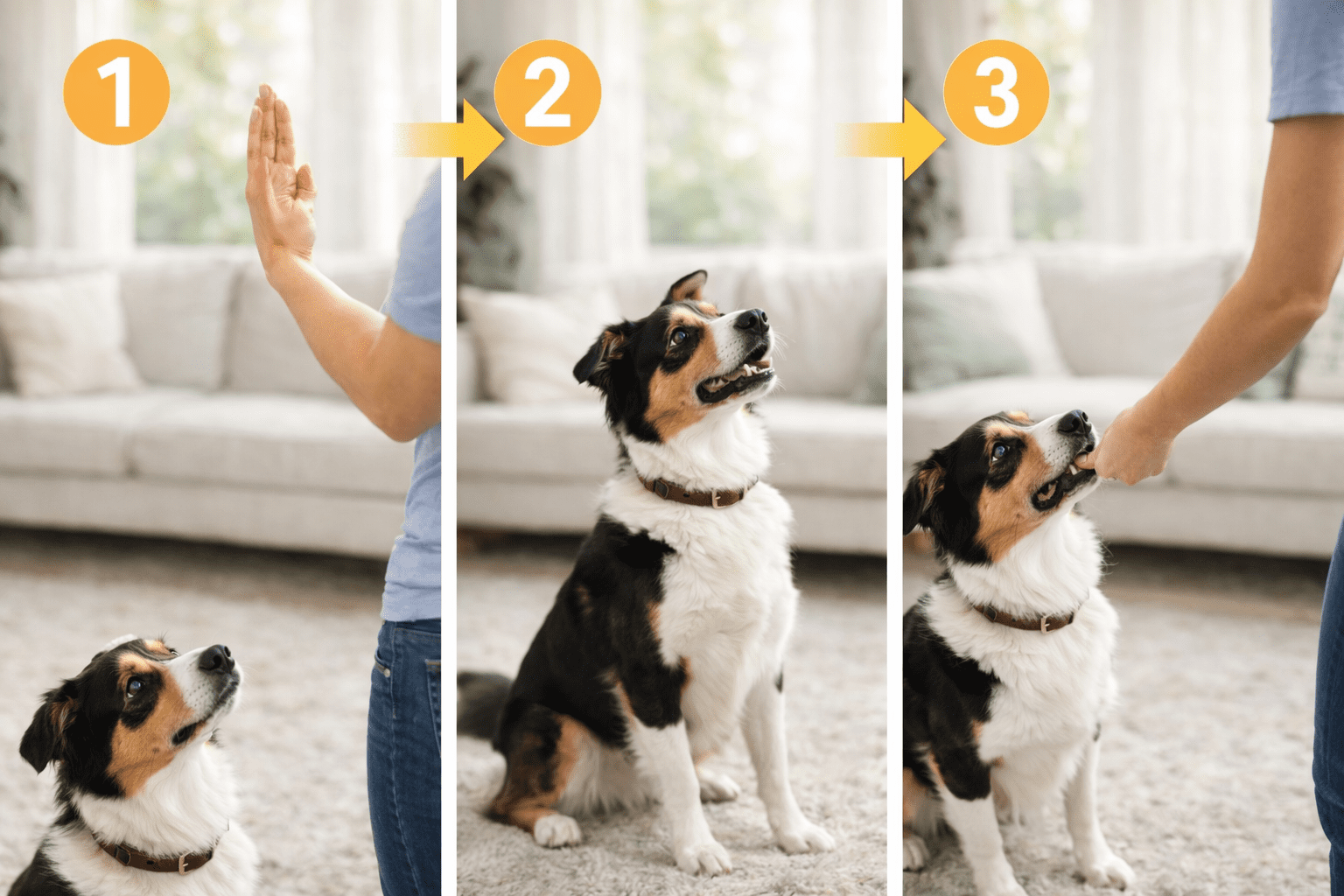
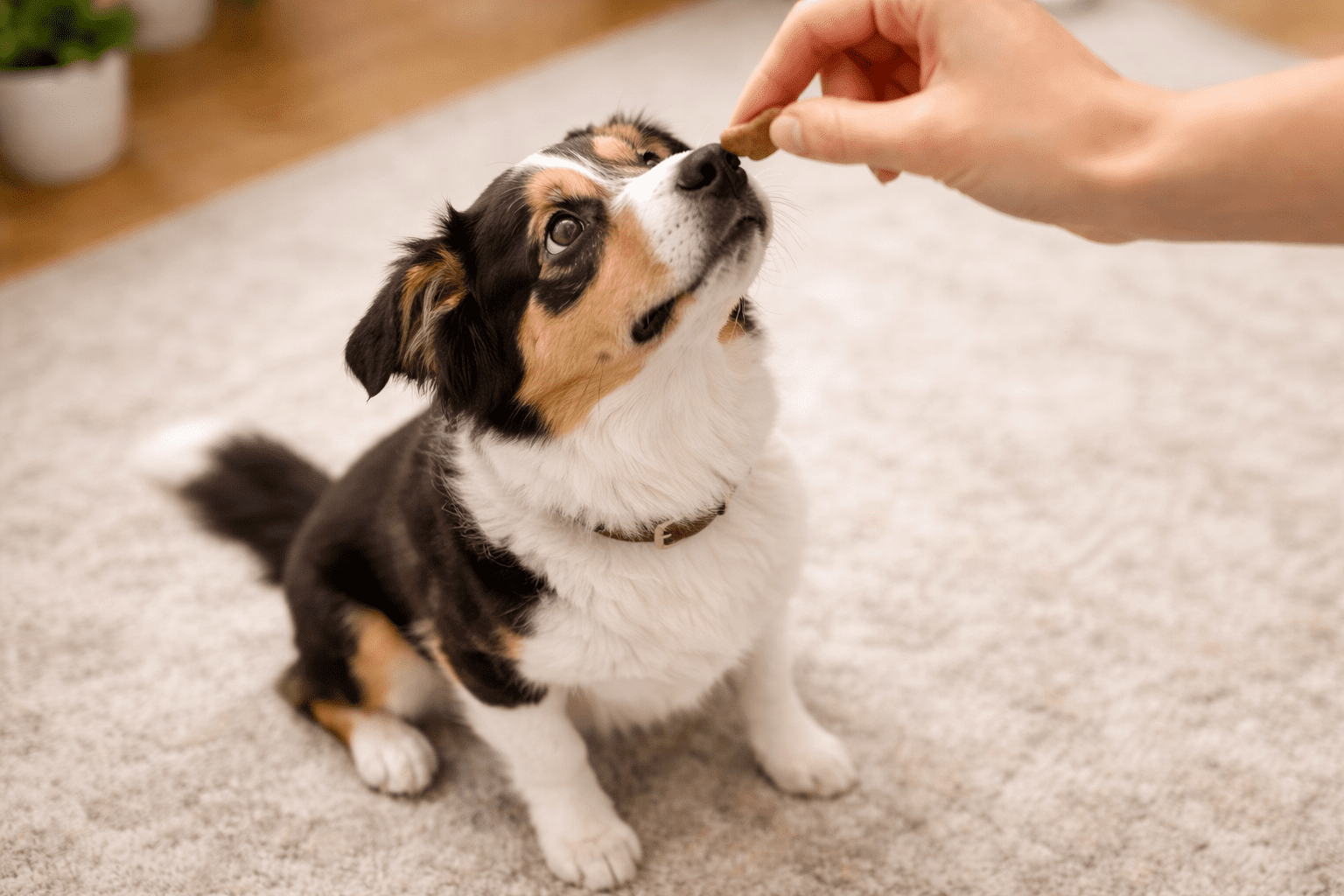
For “sit,” hold a treat near your dog’s nose and slowly move it up and back over their head. As their head follows the treat, their bottom naturally lowers. The instant it touches the ground, say “yes” or click a clicker, then give the treat. Repeat this 5 to 10 times per session.
Once your dog reliably follows the lure, add the verbal command. Say “sit” right before moving the treat. After several repetitions, try saying “sit” without the lure. If your dog sits, jackpot them with multiple treats and lots of praise.
Practice in different locations once your dog understands the behavior at home. Start in your yard, then try a quiet park. Gradually add distractions like other people or dogs at a distance.
For “come,” start by calling your dog when they’re already moving toward you. Say their name followed by “come,” then reward them enthusiastically when they reach you. Never call your dog to you for something unpleasant like nail trims.
Many behavior problems stem from unclear communication. Reinforcing essential obedience commands helps create predictable responses.
Dealing with Problem Behaviors
Positive reinforcement isn’t just for teaching new tricks. It’s incredibly effective for addressing unwanted behaviors too. The key is focusing on what you want your dog to do instead of the problem behavior.
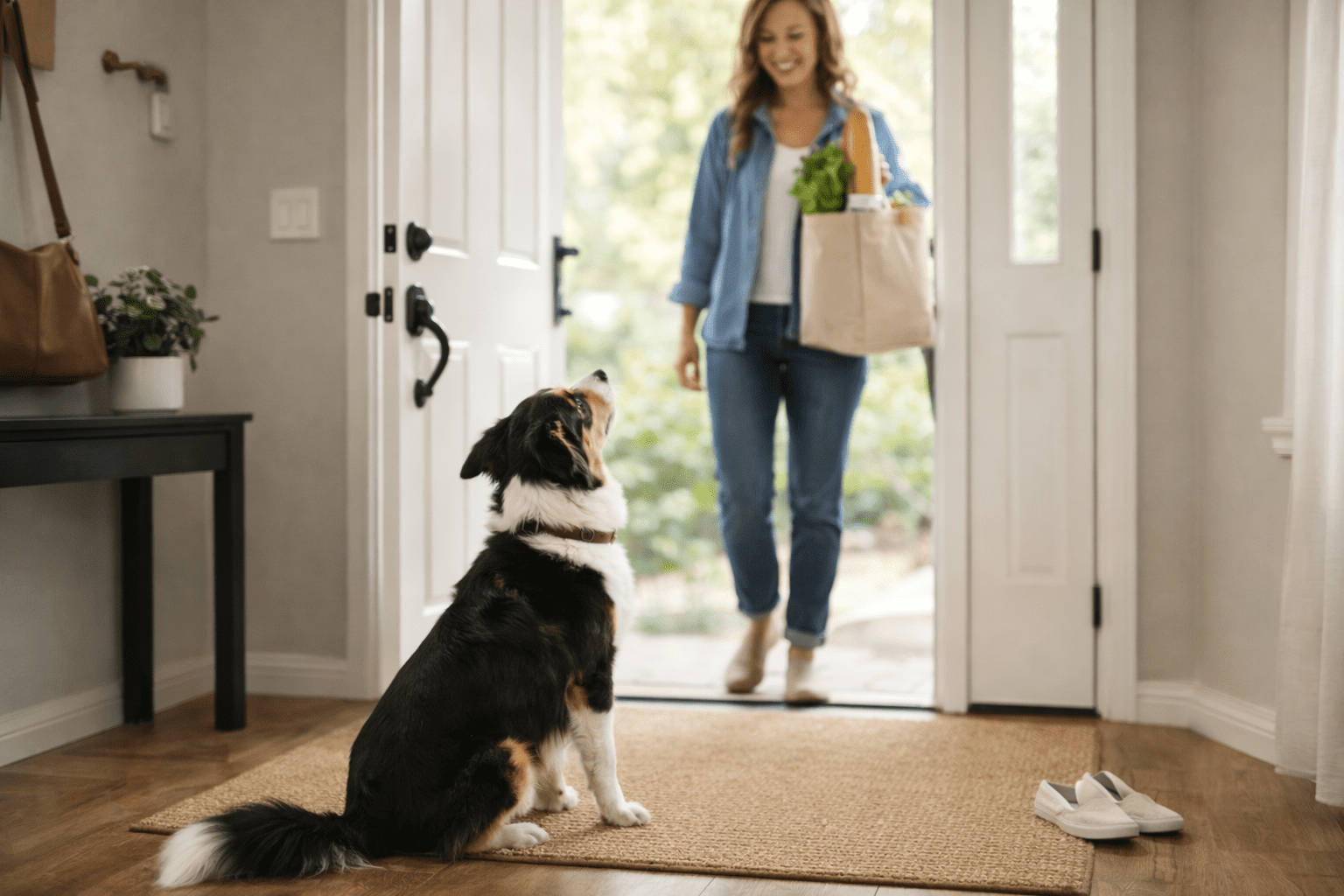
If your dog jumps on guests, teach them that sitting gets attention while jumping makes people turn away. When someone arrives, ask your dog to sit before greeting. If they jump, the person immediately turns their back. The moment all four paws are on the floor, turn back and reward with attention.
For barking, determine what triggers it. Is your dog alerting you, demanding attention, or expressing anxiety? Once you understand the cause, you can address it. If your dog barks for attention, ignore the barking completely and only interact when they’re quiet.
Chewing problems often stem from boredom or teething. Provide appropriate chew toys and reward your dog every time you catch them chewing the right things. If they grab something inappropriate, redirect them to a toy and praise them for chewing that instead.
Discover the best ways to train a puppy using reward-based methods that create lasting results.
Common Mistakes to Avoid
Even experienced trainers make mistakes that slow progress. Being aware of these pitfalls helps you train more effectively.
Inconsistent reward timing is the biggest issue. If you reward sometimes at three seconds and sometimes at one second, your dog can’t figure out what earned the reward. Use a marker word like “yes” or a clicker to mark the exact moment your dog does the right thing.
Repeating commands teaches your dog to ignore you. If you say “sit” five times before your dog responds, you’ve trained them that “sit” doesn’t mean anything until you’ve said it five times. Say the command once, wait three seconds, then help your dog into position if needed.
Rewarding too long after the behavior means your dog doesn’t connect the reward with what they did. Get faster at delivering treats. Keep them in your pocket or a pouch on your waist so you can reward instantly.
Not adjusting for distractions sets your dog up to fail. If your dog can sit perfectly at home but won’t sit at the park, you’ve added too much distraction too soon. Build gradually.
Stopping rewards too quickly is another common error. Just because your dog knows a behavior doesn’t mean you should stop rewarding it. Maintain behaviors by rewarding them intermittently. This actually makes the behavior stronger in the long run.
Making Positive Reinforcement Work Long-Term
Positive reinforcement isn’t just a training phase. It’s a lifestyle that shapes your relationship with your dog. Here’s how to make it stick.
Keep training sessions short and positive. Five to ten minutes of focused training beats an hour of frustration. Dogs learn better in short bursts, and ending on a positive note keeps them eager for the next session.
Train in different environments. Your living room is easy. The park with other dogs around is hard. Gradually practice in new locations so your dog learns to listen everywhere, not just at home.
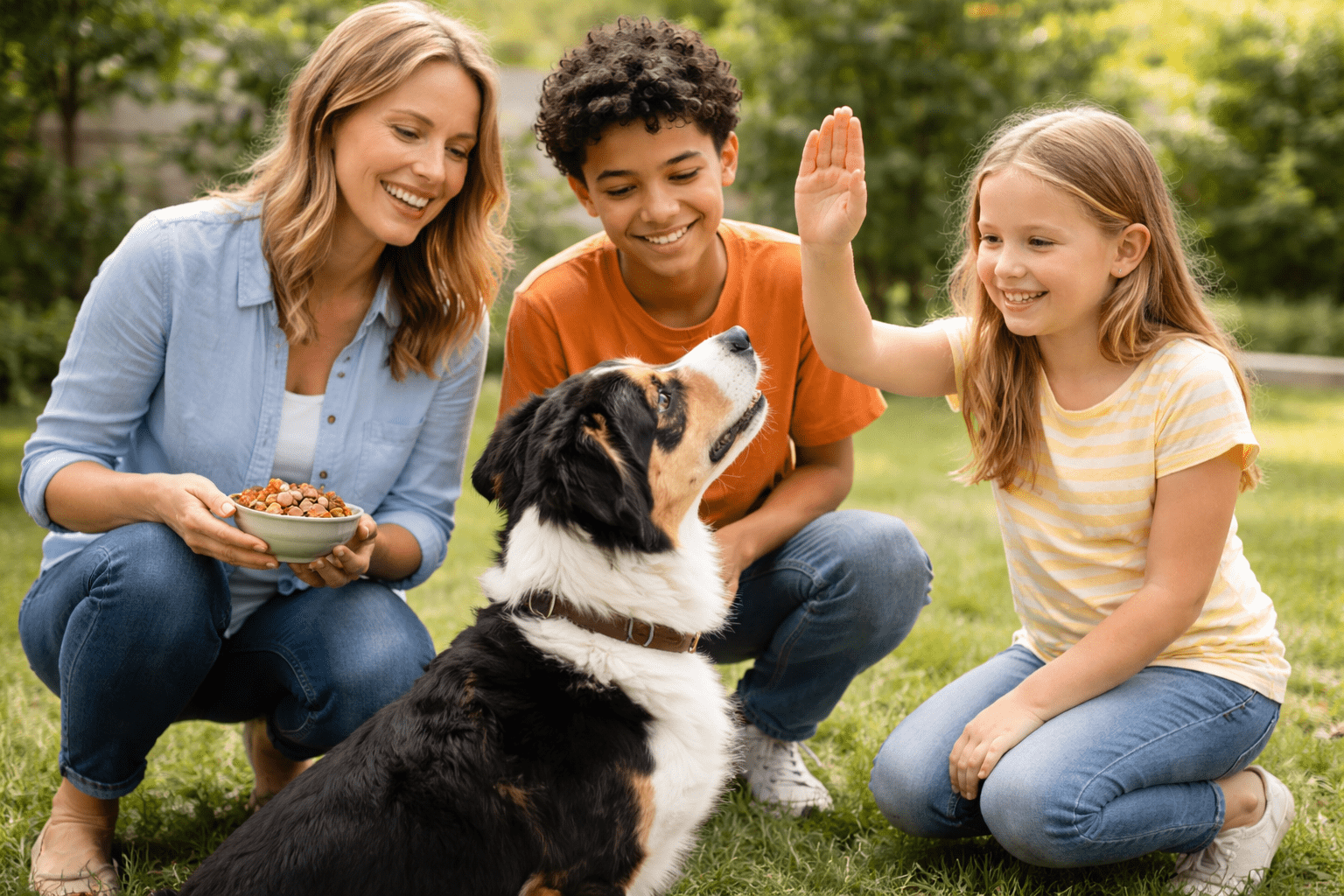
Involve your whole family. Everyone who interacts with your dog should follow the same training protocols. Hold a family meeting to agree on commands, rules, and how to reward behaviors. Consistency across handlers speeds up learning dramatically.
Continue rewarding intermittently. Once your dog reliably performs a behavior, you don’t need to reward every single time. Intermittent reinforcement (rewarding sometimes but not always) actually makes behaviors more resistant to extinction.
Add duration, distance, and distractions slowly. These are the three Ds of training. If your dog can sit for three seconds right next to you in your quiet house, don’t expect them to sit for 30 seconds across the room at a busy park. Change one variable at a time.
Still wondering is board and train worth it? Learn how professional training programs accelerate results.
Building Strong Behaviors Through Positive Reinforcement Dog Training
Positive reinforcement dog training isn’t just effective, it’s transformative. This approach builds confident, happy dogs who genuinely enjoy working with you. By rewarding the behaviors you want and ignoring those you don’t, you create lasting change without damaging your relationship.
The beauty of this method is its flexibility. Whether you’re teaching a puppy basic manners or helping a rescue dog overcome fears, positive reinforcement adapts to every situation. Start with the principles covered in this guide, practice consistently, and watch your dog thrive.
At K9 Mania Dog Training, we specialize in positive, reward-based methods that create real, lasting results. Whether you need help with basic obedience, behavioral issues, or advanced training, our experienced team is ready to guide you. We understand that every dog is unique, and we customize our approach to fit your dog’s personality and your family’s lifestyle.
Contact us today at our professional board and train in Long Island and discover how we can transform your dog’s behavior.
You May Also Want to Read
Board and Train for Aggressive Dogs: Complete Guide
Are Dalmatians Aggressive Dogs
Frequently Asked Questions
What is an example of positive reinforcement in dog training?
A classic example is rewarding your dog with a treat when they sit on command. You say “sit,” your dog sits, and you immediately give them a treat and praise. This teaches your dog that sitting when asked leads to good things, encouraging them to sit again in the future.
How do you discipline a dog with positive reinforcement?
Positive reinforcement doesn’t use traditional discipline. Instead of punishing unwanted behavior, you redirect your dog to a behavior you prefer and reward that. For example, if your dog jumps on guests, you teach them to sit for greetings and reward the sitting. The jumping stops because it doesn’t get rewarded, while sitting does.
Can you train a dog with only positive reinforcement?
Yes, many dogs are successfully trained using only positive reinforcement. This method teaches dogs what to do through rewards rather than what not to do through punishment. While some trainers combine methods, research shows that purely positive approaches create confident, well-behaved dogs without the risks associated with punishment-based training.
What are the 4 types of positive reinforcement?
The four main types are: food rewards (treats), verbal praise (“good dog”), physical affection (petting, scratching), and play or toys. Each dog has preferences, so effective training involves discovering which rewards motivate your dog most. High-energy dogs often love play, while food-motivated dogs respond best to treats.
How to teach a dog to sit with positive reinforcement?
Hold a treat close to your dog’s nose, then slowly move it up and back over their head. As your dog’s nose follows the treat, their bottom will naturally lower to the ground. The instant they sit, say “yes” and give the treat. After several repetitions, add the word “sit” just before the motion. Practice regularly until your dog sits on command alone.
Should I crate my dog during training?
Crates aren’t necessary during active training sessions but can help manage your dog between sessions. A crate provides a safe space where your dog can’t practice unwanted behaviors when you can’t supervise them. Use the crate positively by rewarding your dog for entering and staying calm inside. Never use it as punishment, which creates negative associations.