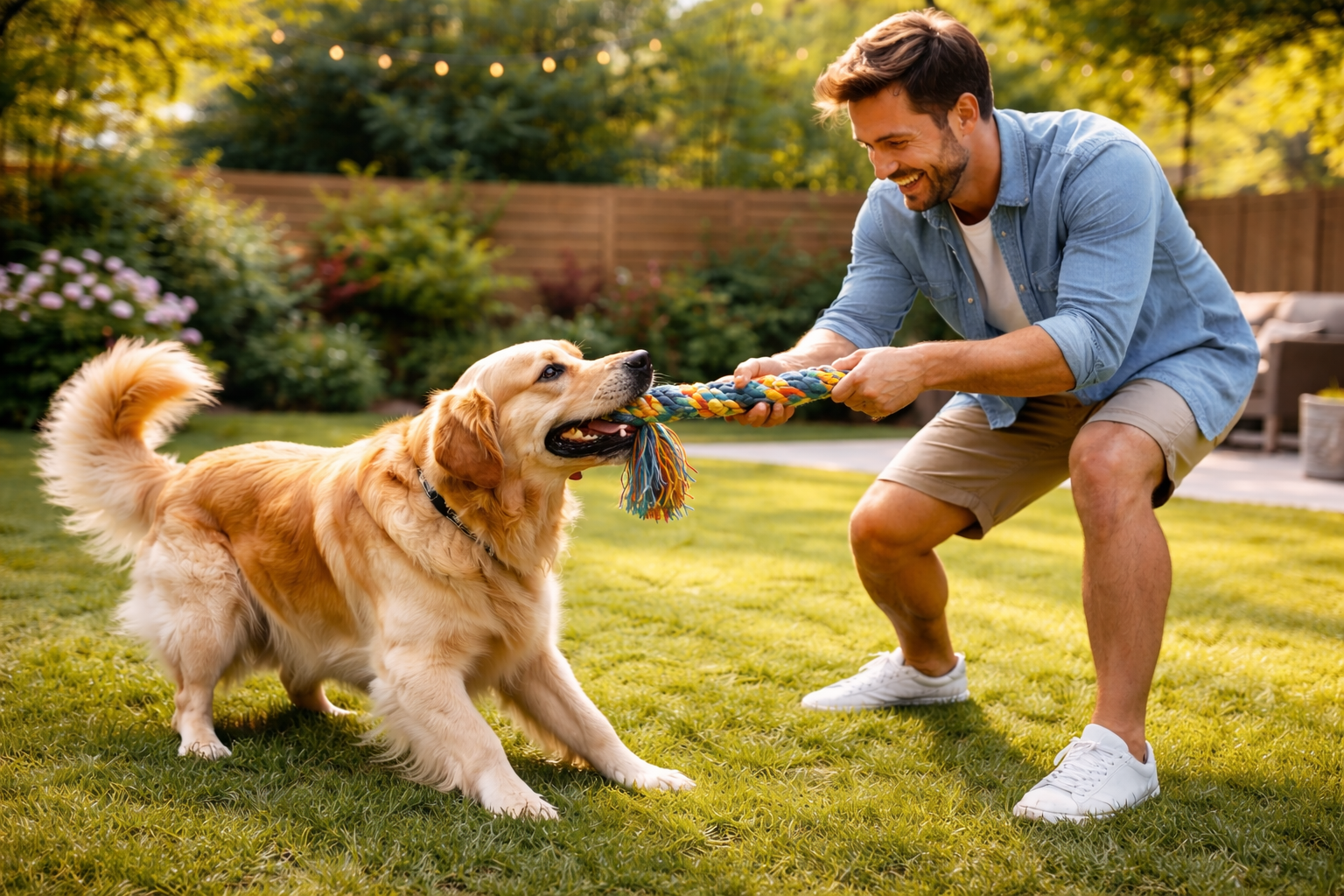
Playing tug of war with dog is not only safe but also highly beneficial for your pet’s physical and mental health when you follow proper guidelines. This interactive game strengthens your bond, provides excellent exercise, and can even reinforce training commands when played correctly.
Many dog owners worry that tug of war might encourage aggression or dominance issues, but research shows the opposite is true. When you establish clear rules and use the game as a training opportunity, tug of war becomes one of the best ways to engage with your dog while building impulse control and obedience.
In this guide, we’ll walk you through everything you need to know about playing tug safely, the benefits it offers, and how to avoid common mistakes that can turn playtime into a problem.
Build a stronger bond through structured play and training. Explore our board and train Long Island program for comprehensive behavioral development.
Why Playing Tug of War With Your Dog Is Beneficial
Tug of war offers more than just fun. This game provides serious physical and mental benefits that contribute to your dog’s overall wellbeing and training progress.
Physical Exercise and Energy Release
Tug of war gives your dog an intense workout in a short amount of time. The pulling motion engages their entire body, from jaw muscles to core strength and leg power.
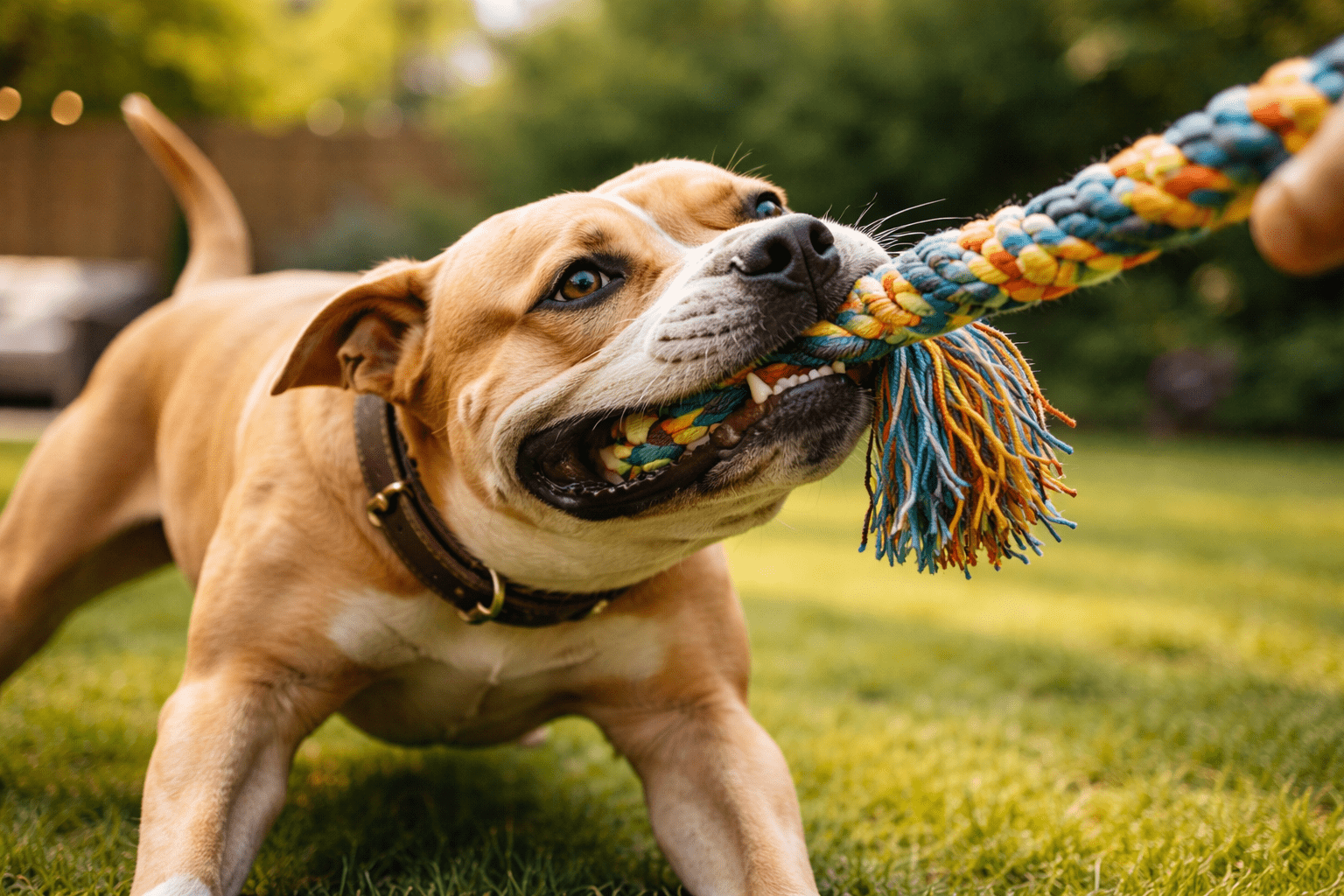
A solid 10-minute tug session can tire out your dog as much as a 30-minute walk. This makes it perfect for rainy days or when you have limited time for exercise.
The game also helps build muscle tone and improves coordination. Dogs learn to control their movements and adjust their strength based on your responses.
For high-energy breeds, tug provides an outlet for natural behaviors like pulling and gripping. This can reduce destructive behaviors that stem from boredom or pent-up energy.
Mental Stimulation and Impulse Control
Beyond physical benefits, tug of war challenges your dog mentally. They must focus on the toy, read your cues, and control their excitement level.
When you incorporate commands like “take it” and “drop it,” the game becomes a training session disguised as play. Your dog learns to listen even when highly excited.
This teaches impulse control, which is one of the most valuable skills for any dog. Being able to stop mid-game and release the toy on command transfers to better behavior in other situations.
The mental engagement also prevents cognitive decline in older dogs and keeps young dogs mentally sharp. It’s a workout for their brain as much as their body.
Bonding and Trust Building
Playing tug creates positive associations with you as the handler. Your dog sees you as a source of fun and engagement, not just someone who gives commands.
The back-and-forth nature of the game mimics natural canine play. This helps your dog feel understood and connected to you on an instinctual level.
When you let your dog win occasionally, you build their confidence. When you control the game’s start and stop, you establish leadership without force or intimidation.
This balance creates a relationship built on mutual respect and enjoyment. Your dog trusts that playtime with you is rewarding and safe.
Looking for expert guidance on interactive play and training? Check out our private dog training Long Island services for personalized sessions.
How to Play Tug of War With Your Dog Safely
Safety and structure turn tug of war from a free-for-all into a productive training tool. Following these guidelines ensures the game stays fun and beneficial for both you and your dog.
Choosing the Right Tug Toy
Not all toys work well for tug of war. The right toy makes the game safer and more enjoyable for your dog.
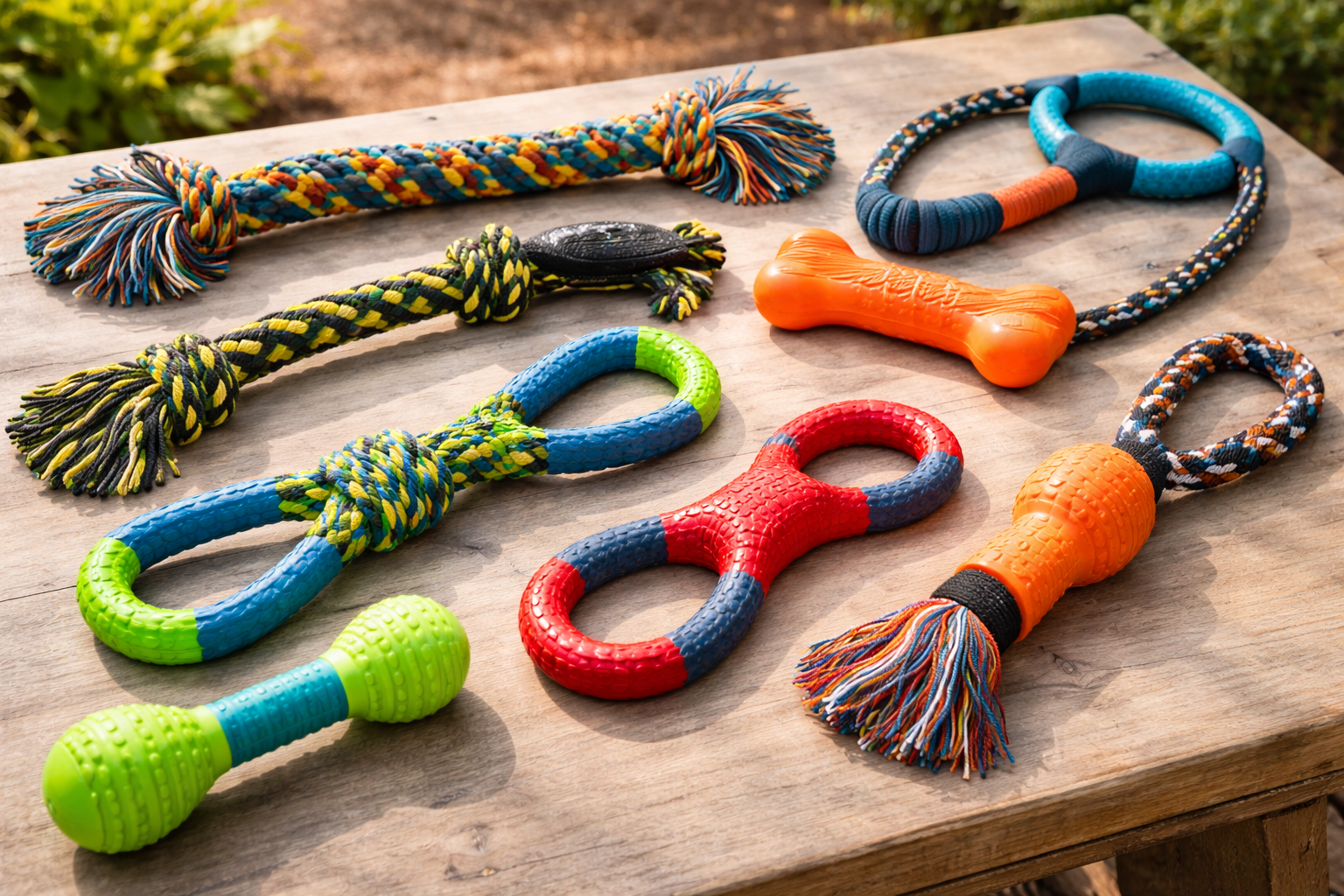
Look for toys specifically designed for tugging. These should be long enough that your hands stay far from your dog’s mouth during play. A good length is at least 12-18 inches.
Materials matter too. Rope toys work well because they’re durable and easy to grip. Rubber toys with handles give you control while being gentle on your dog’s teeth.
Avoid toys that are too hard or too small. Hard plastic can damage teeth, while small toys increase the risk of accidental bites to your hands.
Replace worn toys immediately. Frayed ropes or torn rubber can pose choking hazards or cause intestinal blockages if swallowed. If you’re choosing new gear, explore our dog training tools collection for safe, play-friendly options.
Establishing Clear Rules and Commands
Rules make tug of war a training opportunity rather than chaos. These boundaries keep everyone safe and reinforce your role as the decision-maker.
Always start the game with a specific command like “take it” or “get it.” This teaches your dog to wait for permission before grabbing the toy.
The most important command is “drop it” or “release.” Practice this outside of playtime first, so your dog understands what you want during the excitement of the game.
Never let your dog initiate tug by grabbing the toy from your hand without permission. If they do, the game stops immediately until they calm down.
Set a consistent rule about teeth touching skin. Even accidental contact should end the game for a brief timeout. This teaches bite inhibition and careful play.
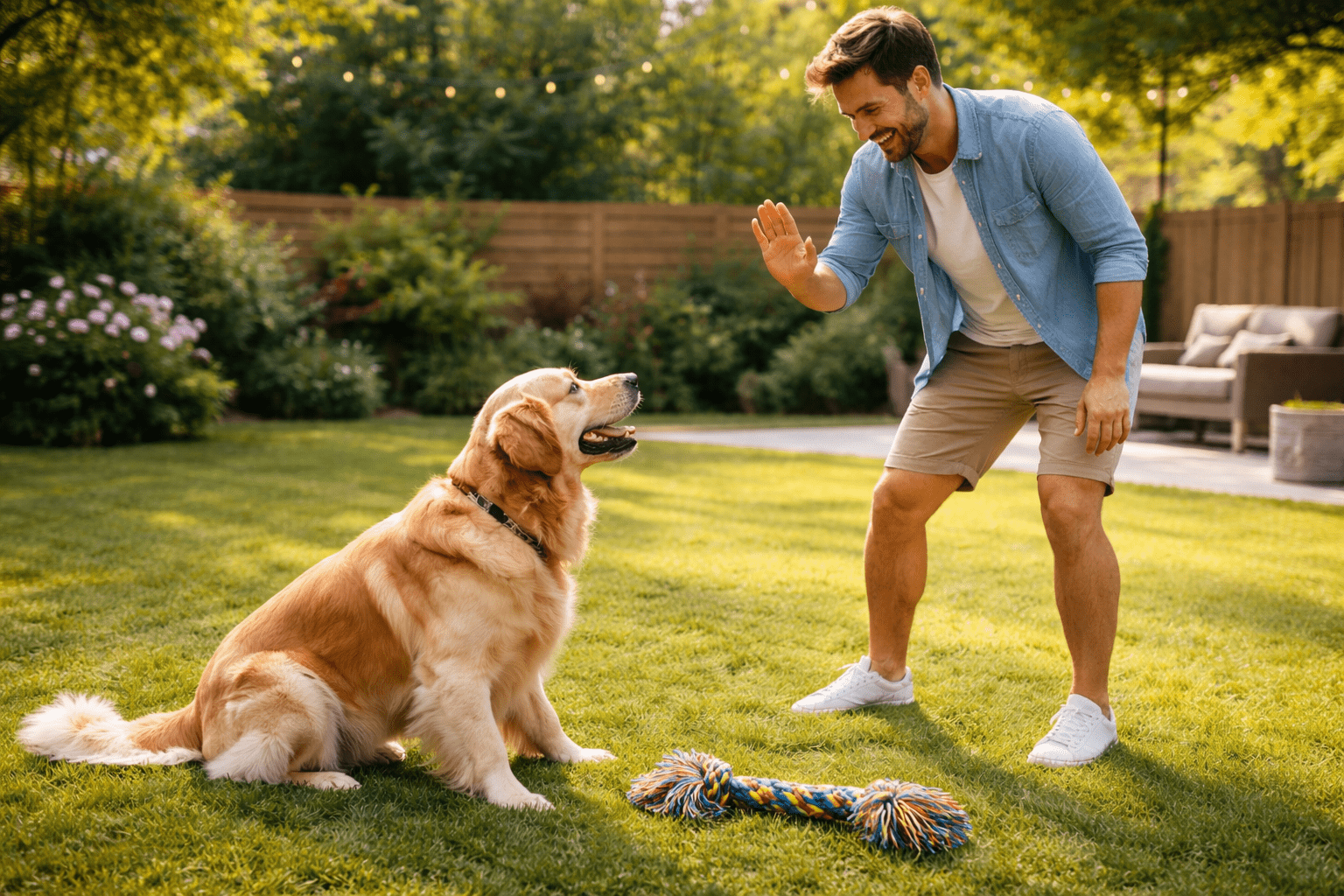
Proper Technique and Body Mechanics
How you play matters as much as the rules you set. Good technique prevents injuries to both you and your dog.
Hold the toy firmly but don’t yank or jerk it aggressively. Smooth, side-to-side movements are safer than sudden vertical pulls that could hurt your dog’s neck or teeth.
Let your dog do most of the pulling. Your job is to provide resistance, not to overpower them. This keeps the game fun and challenging without causing strain.
Stay at your dog’s level when possible. Bending down or kneeling prevents you from pulling upward, which puts unnecessary stress on their jaw and neck.
Watch your dog’s body language. If they seem overly intense, take breaks. Healthy play includes natural pauses where your dog can reset.
Common Mistakes to Avoid When Playing Tug of War
Even well-intentioned owners can make errors that turn tug of war into a problem. Recognizing these mistakes helps you keep the game safe and productive.
Allowing Overexcitement and Loss of Control
Tug of war naturally excites dogs, but too much arousal creates problems. When your dog gets too worked up, they stop thinking and just react.
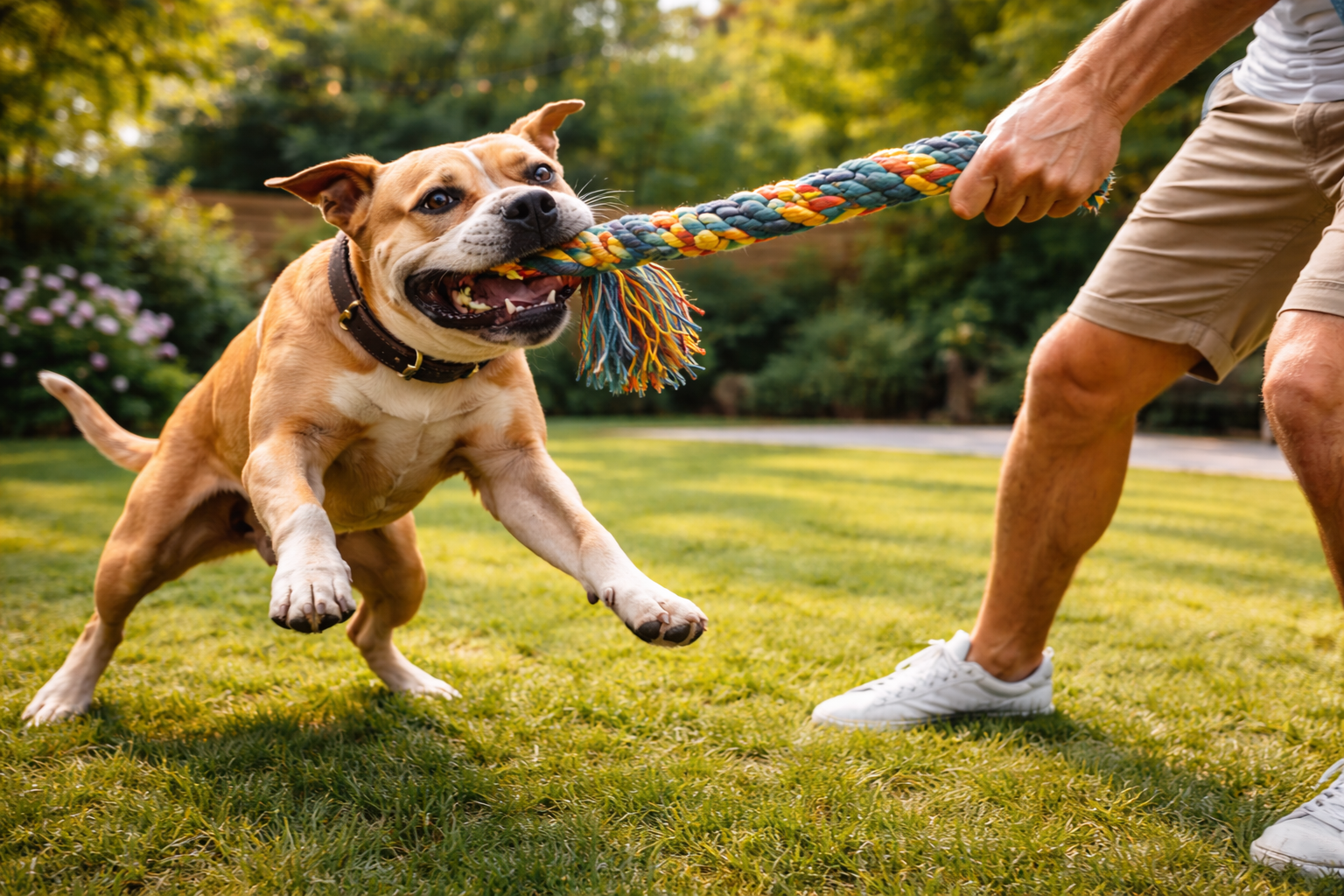
Signs of overexcitement include:
- Ignoring your commands completely
- Whining or barking frantically
- Jumping or spinning between tugs
- Grabbing at the toy when you haven’t given permission
If you notice these behaviors, stop the game immediately. Put the toy away and ask for a calm behavior like sit or down before resuming.
Some dogs need shorter play sessions. Five minutes of controlled tug is better than fifteen minutes of chaos.
Using the Wrong Toys
Avoid unsafe tug items like sticks, rope balls, clothing, socks, or towels. They can damage teeth and encourage bad habits. Never use your hands. Choose durable tug toys made specifically for safe play.
Failing to End the Game Properly
Always finish tug with structure. Ask for a clear “drop” command, reward compliance, then put the toy away. This reinforces obedience, keeps excitement under control, and prevents possessiveness.
Want to master game-based training techniques? Learn more about playing fetch with dog as another interactive training tool.
Tug of War Rules: What Works and What Doesn’t
Different approaches to tug of war produce different results. Understanding which methods support training and which create problems helps you play more effectively.
| Approach | Why It Works | Why It Doesn’t Work |
| You always win | Reinforces your control and decision-making authority; teaches dog to release on command | Can frustrate confident dogs and decrease their interest in playing over time |
| Dog always wins | Builds confidence in shy or fearful dogs; makes the game more rewarding for them | May encourage pushy behavior in already confident dogs; reduces your control over the game |
| Taking turns winning | Balances fun with structure; keeps dogs engaged while maintaining your leadership | Requires careful reading of your dog’s personality and adjusting based on their needs |
| Letting dog shake the toy | Natural canine behavior that satisfies prey drive instincts | Can lead to excessive roughness if not monitored; may damage teeth if dog is too aggressive |
| Pulling the toy away when dog isn’t looking | Creates an unfair game dynamic; damages trust | Teaches dog they can’t rely on you during play; may cause anxiety or guarding behavior |
| Rule | Purpose | How to Enforce |
| “Take it” to start | Teaches impulse control and permission-seeking | Hold toy still until dog sits or makes eye contact, then give command and release |
| “Drop it” to pause/end | Establishes your control over the game’s flow | Practice with treats first, then use during low-excitement moments before high-energy play |
| No teeth on hands | Prevents accidental bites and teaches gentleness | Immediately stop game if contact occurs; resume only after dog calms down |
| You control the toy | Reinforces that you decide when and how to play | Store toy out of reach; never leave it available for dog to grab independently |
| Regular breaks during play | Prevents overexcitement and maintains focus | Every 30-60 seconds, ask for drop it and have dog perform a simple command before continuing |
Training Your Dog to Play Tug of War the Right Way
If your dog has never played tug before or has developed bad habits, training them properly takes patience and consistency. These steps help you build a healthy tug routine from scratch.
Starting With Basic Commands
Before playing tug of war, teach “take it” and “drop it.” Start “drop it” using low-value toys and reward immediately when your dog releases. Practice until they respond without seeing a treat. For “take it,” say the command before offering the toy so they link the cue with the action. Once both commands are reliable, use them during tug.
Introducing Tug Gradually
Begin with short sessions (30–60 seconds). Show the toy, give “take it,” allow gentle pulling, then cue “drop it.” Praise and repeat 5–10 times. Practice daily. As your dog improves, slowly increase duration and intensity while maintaining control.
Addressing Problem Behaviors
Watch for issues early. Playful growling is normal; stiff, low growling means stop. If your dog won’t release, return to “drop it” training. Never force the toy away. If teeth touch your skin, end the game immediately. Consistency teaches proper play.
Need help with behavioral issues during play? Discover our dog boarding camp Long Island where dogs learn structure through positive reinforcement.
When Tug of War Might Not Be Appropriate
While most dogs benefit from tug of war, some situations call for caution or alternative games. Recognizing when to avoid tug keeps both you and your dog safe.
Dogs With Aggression or Possession Issues
If your dog shows resource guarding behaviors, tug of war can reinforce these problems. Dogs who growl over food bowls, toys, or sleeping spots need to work on those issues before playing tug.
Similarly, dogs with a history of aggression toward people should not play tug until a professional trainer addresses the underlying causes. The game’s intensity can trigger aggressive responses.
For these dogs, focus on training games that don’t involve competition over objects. Work with a qualified trainer to build better behaviors before introducing tug.
Puppies With Baby Teeth
Very young puppies can play gentle tug, but you need to be extra careful about their developing teeth and jaws. Rough pulling can damage baby teeth or cause permanent dental problems.
Keep tug sessions extremely gentle with puppies under six months. Focus more on teaching commands than on vigorous pulling.
Once adult teeth come in, you can gradually increase intensity. But always let the puppy do the pulling rather than yanking on your end.
Dogs Recovering From Injuries
Neck, back, or jaw injuries require complete rest from tug of war until your vet clears your dog for activity. The pulling motion can aggravate these injuries and delay healing.
Dental issues are another concern. If your dog has loose, broken, or painful teeth, tug of war will cause discomfort and worsen the problem.
Ask your vet before playing tug with any dog who has had recent surgery or is managing a chronic condition. Alternative games like gentle fetch or sniff work provide mental stimulation without physical strain.
Looking for comprehensive training solutions? Explore effective ways to train your dog for a well-rounded approach to behavior development.
Wrapping Up: Making Tug of War a Positive Experience
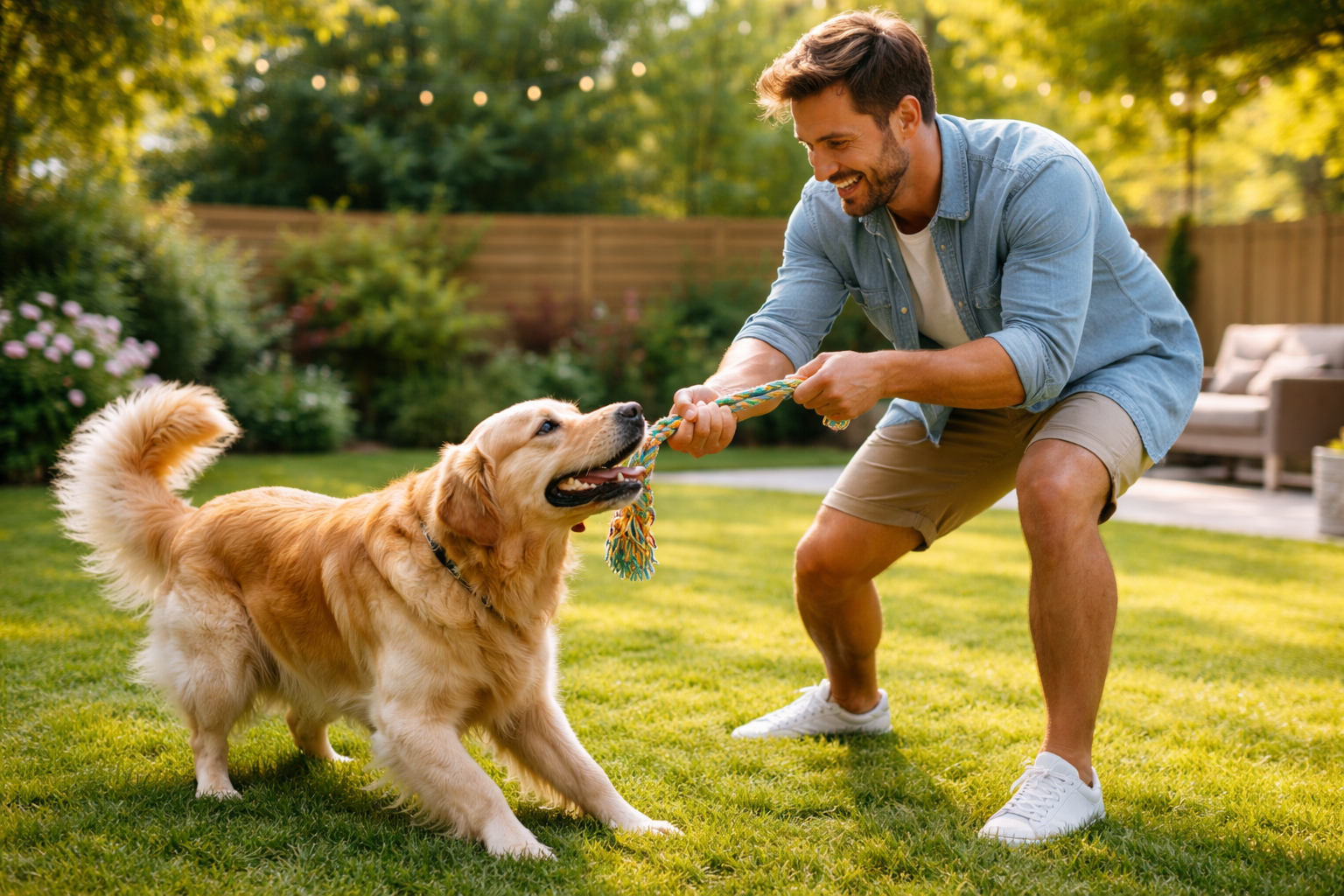
Playing tug of war with dog offers incredible benefits when you approach it with clear rules and proper technique. This game strengthens your bond, provides excellent exercise, and reinforces important training commands all at once.
The key is maintaining control throughout the game. Start and end on your terms, use consistent commands, and never let excitement override obedience. When done right, tug becomes one of the most valuable tools in your training toolkit.
Remember that every dog is different. Some love aggressive tugging while others prefer gentler play. Pay attention to your dog’s preferences and adjust your approach accordingly. The goal is always mutual enjoyment within a structured framework.
At K9 Mania Dog Training, we’re the leading board and train Long Island program specializing in balanced training methods. Whether you’re struggling with play behaviors or need comprehensive obedience training, our expert team can help. Visit our website to learn how we can support you and your dog’s training journey.
Ready to take training to the next level? Learn about effectiveness of board and train programs and how they transform behavior.
You May Also Want to Read
Frequently Asked Questions
Understanding the nuances of tug of war helps you play more confidently and effectively. These common questions address concerns many dog owners share.
What do dogs think when playing tug of war?
Dogs view tug of war as a fun, cooperative game rather than a dominance battle. They enjoy the physical challenge, the interaction with you, and the chance to use their natural pulling and gripping instincts. Research shows that dogs don’t see winning or losing as establishing rank. Instead, they simply enjoy the activity itself and the positive attention from their owner. The game satisfies their prey drive in a controlled, appropriate way.
Is it okay for my dog to growl when playing tug?
Yes, play growling is completely normal and healthy during tug of war. These growls are usually higher-pitched, shorter, and come from a dog with relaxed body language and a wagging tail. Play growls are your dog’s way of expressing excitement and enjoyment, similar to how humans might laugh during a competitive game. However, if the growling becomes low, sustained, and is accompanied by stiff body posture or hard stares, stop the game immediately as this indicates genuine aggression or resource guarding.
Is it good to let your dog win at Tug of War?
Letting your dog win occasionally is beneficial and doesn’t undermine your authority. Winning builds confidence, especially in shy or anxious dogs, and keeps the game rewarding enough that they want to continue playing. The key is maintaining control over when the game starts and stops, not whether your dog gets to hold the toy at the end. Many trainers recommend a balance where you win some rounds to reinforce commands and let your dog win others to maintain their enthusiasm.
How do dogs apologize?
Dogs apologize through body language rather than understanding the concept of apologies as humans do. Common apologetic behaviors include avoiding eye contact, lowering their head or body, licking their lips, tucking their tail, rolling over to expose their belly, or approaching you slowly with a lowered posture. These are appeasement behaviors designed to reduce tension after a conflict or when they sense you’re upset. Some dogs will also bring you toys or nudge your hand gently as a way to reconnect after tension.
Is playing tug-of-war with a dog good or bad?
Playing tug of war with dog is overwhelmingly positive when done correctly with proper rules and boundaries. The game provides excellent physical exercise, mental stimulation, and bonding opportunities while reinforcing training commands like “drop it” and impulse control. Modern research has debunked old myths that tug causes aggression or dominance issues. The problems arise only when the game lacks structure, allowing dogs to grab toys without permission, refuse to release them, or become overly aroused without breaks.
How long does 1 hour feel to a dog?
While we can’t know exactly how dogs perceive time, research suggests they experience time differently than humans do. Dogs likely don’t conceptualize hours or minutes but instead respond to patterns, routines, and environmental cues. One hour to a dog might feel longer during boring periods and shorter during exciting activities like play. Studies show dogs can distinguish between different time durations and anticipate regular events, suggesting they have some sense of time passage even if it’s fundamentally different from human time perception.