Learning how to train a hyperactive dog starts with understanding that excess energy needs proper outlets through structured exercise, mental stimulation, and consistent training. With the right approach, your bouncing ball of energy can transform into a well-behaved companion who knows when to play and when to relax.
If your dog seems like they drank three espressos before breakfast, you’re not alone. Many dog owners struggle with hyperactive pups who can’t seem to sit still, jump on everyone, or turn every moment into playtime. The good news? Hyperactivity isn’t a permanent personality trait – it’s a training opportunity.
In this guide, we’ll walk you through practical training methods to help your high-energy dog learn impulse control, burn off excess energy productively, and develop into a calmer, more focused companion.
Ready to transform your energetic pup? Explore our board and train Long Island program for intensive, professional training.
Foundation Training Principles for Hyperactive Dogs
Before jumping into specific exercises, you need to establish fundamental training principles that form the basis of all successful behavior modification. These foundation skills teach your dog impulse control and help them learn to focus despite their natural energy.
Building Impulse Control Through Training
Impulse control is the cornerstone of training hyperactive dogs. It’s the ability to resist immediate temptation and wait for permission.
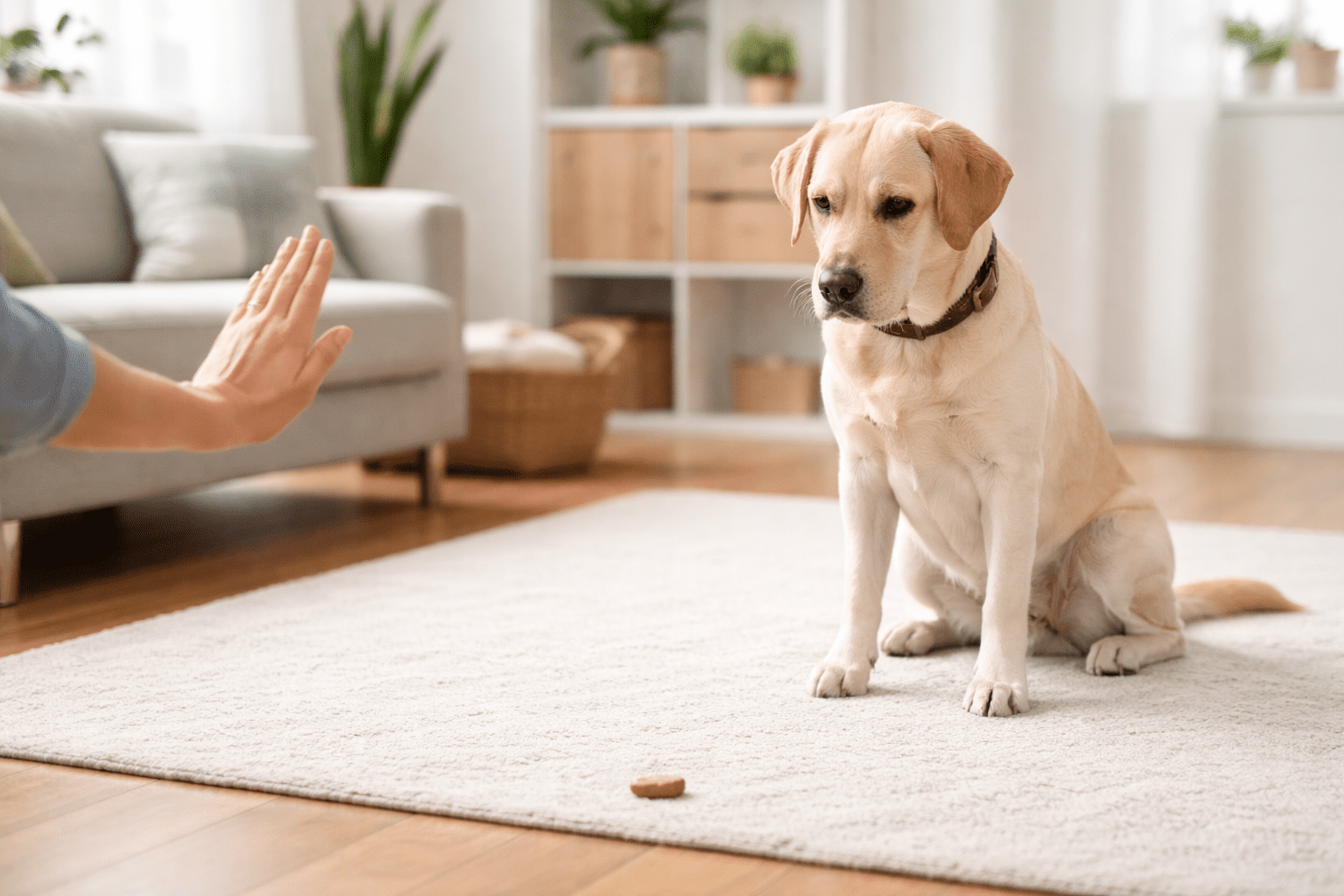
The Wait Command: Start with your dog in a sitting position. Place a treat on the floor about three feet away. Every time they move toward it, calmly say “wait” and block them with your body. When they hold position for even one second, release them with “okay” and let them get the treat. Gradually increase the wait time from one second to five, then ten, then thirty. Practice this three times daily.
Door Manners Training: Before opening any door, require your dog to sit and wait. Open the door just an inch. If they move, close it immediately. Only fully open the door when they maintain their position for at least five seconds. This teaches that calmness, not chaos, opens doors to fun things.
The Leave It Command: Hold a treat in your closed fist and present it at nose level. Let them sniff and paw at your hand, but don’t open it. The moment they back away or look at your face, immediately say “yes” and give them a different treat from your other hand. Practice this ten times per session, twice daily.
Establishing Structure and Routine
Hyperactive dogs thrive on predictability. Create a consistent daily routine that includes specific training times: morning training (7:00-7:15 AM), midday refresher (12:00-12:10 PM), and evening session (6:00-6:20 PM). Keep individual sessions short – five 10-minute sessions throughout the day are more effective than one 50-minute marathon.
If you struggle with consistency, our private dog training Long Island sessions can provide personalized guidance.
Exercise-Based Training for Energy Management
Physical exercise is essential when learning how to train a hyperactive dog, but it must be structured and purposeful. Structured exercise combined with training creates both physical tiredness and mental discipline.
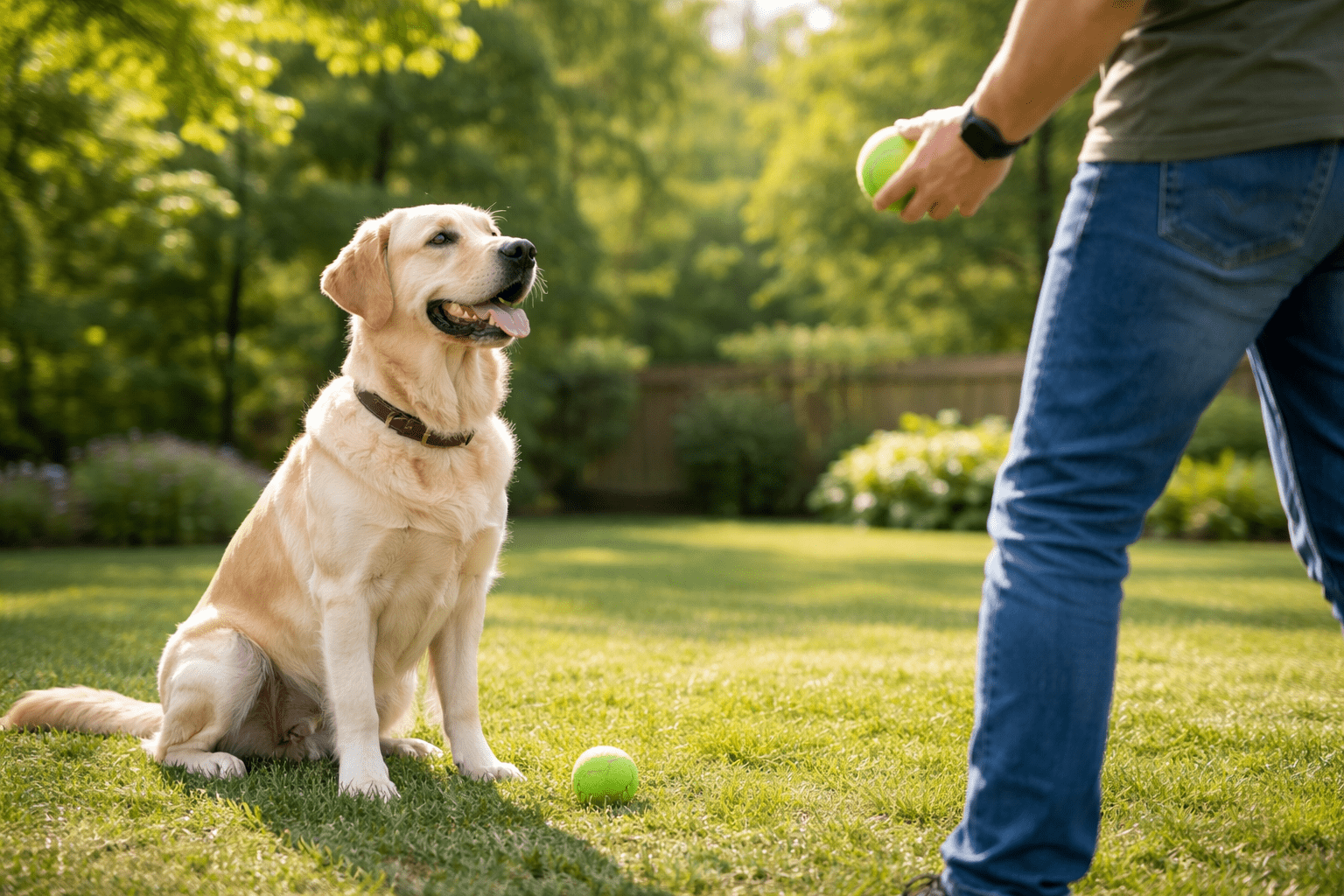
Structured Exercise Training Methods
Interval Walking Training: During walks, practice stop-and-go intervals. Walk normally for 30 seconds, then stop and ask for a sit. Wait for 10 seconds of calm behavior before continuing. Gradually increase the stillness periods to 30 seconds. By the end of a 20-minute walk, you’ve practiced the sit command 20-30 times.
Fetch with Commands: Require a sit-stay before every throw. Your dog must hold position until you say “okay,” then they can chase. When they return, they must sit and drop it on command before the next throw. This burns physical energy while building impulse control.
Tug-of-War Training: Establish a “take it” command to begin play and a “drop it” command to end each round. Practice 5 seconds of tugging, then “drop it,” pause for 3 seconds of calm, then “take it” again. If your dog gets too excited and won’t drop the toy, immediately stop playing. This teaches that controlled excitement continues the fun.
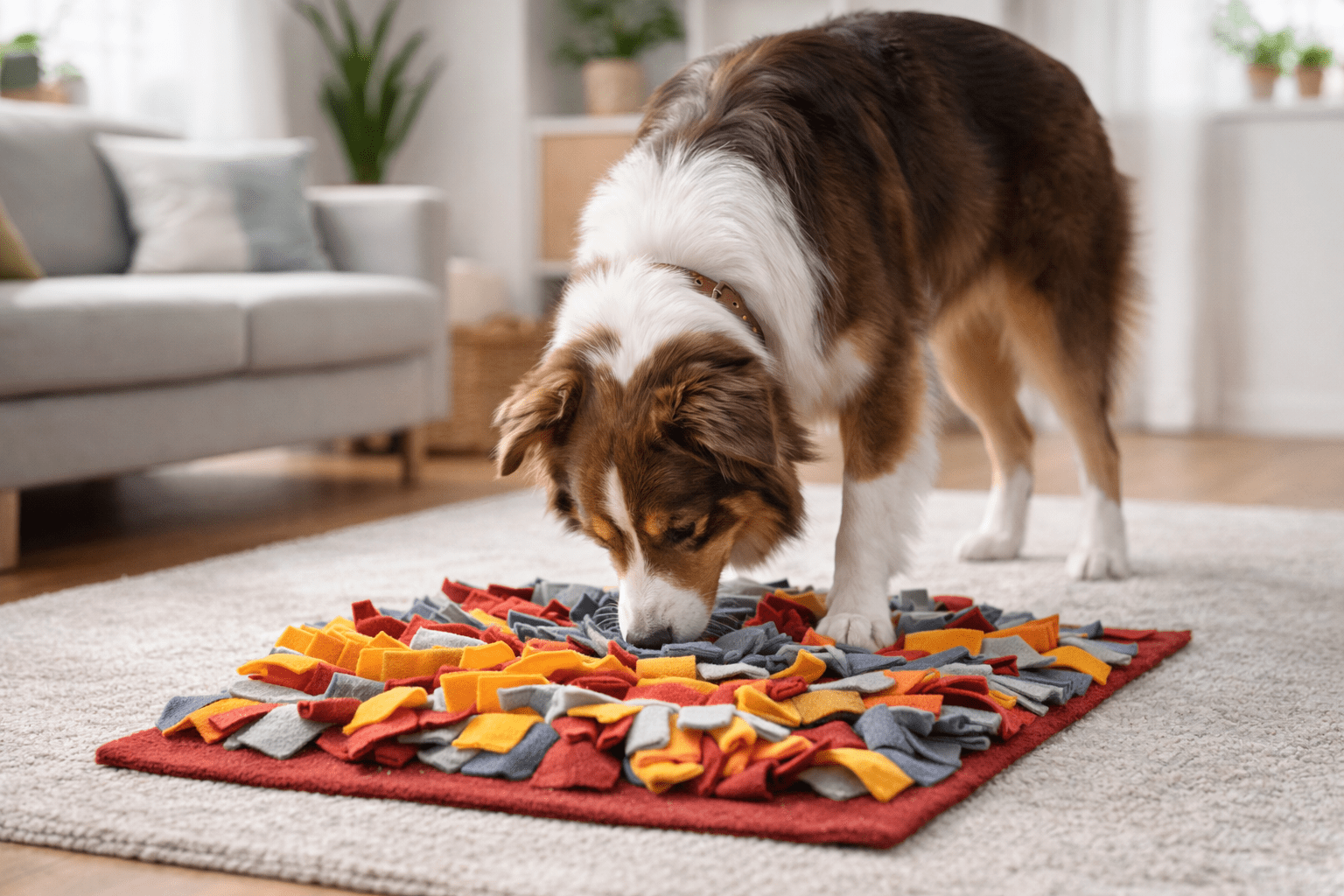
Mental Stimulation Training Activities
| Training Activity | Physical Demand | Mental Demand | Skills Practiced | Session Length |
| Scent Work Training | Low | Very High | Focus, patience, problem-solving | 15-20 minutes |
| Advanced Trick Training | Low to Moderate | High | Multi-step commands, impulse control | 10-15 minutes |
| Name Recognition Game | Low | High | Vocabulary building, focus | 5-10 minutes |
| Find the Treat | Moderate | High | Problem-solving, calm searching | 10-15 minutes |
| Shell Game | Very Low | Very High | Focus, impulse control, patience | 5-10 minutes |
Scent Work Training: Hide treats in increasingly difficult locations throughout your house. Start obvious, then progress to harder spots (under towels, in boxes). Give your dog the command “find it” and let them search. This requires focus and patience. Practice for 15 minutes daily.
Name Recognition Training: Teach your dog the names of their toys. Start with two distinctly different toys. Say the name of one toy and reward only when your dog brings that specific toy. This advanced training requires significant mental effort.
For dogs who need extra help, our dog boarding camp Long Island provides supervised exercise and training.
Core Obedience Training for Better Behavior
Specific obedience commands give you tools to manage hyperactive behavior in real-time. These are essential communication that allows you to guide your dog through exciting situations.
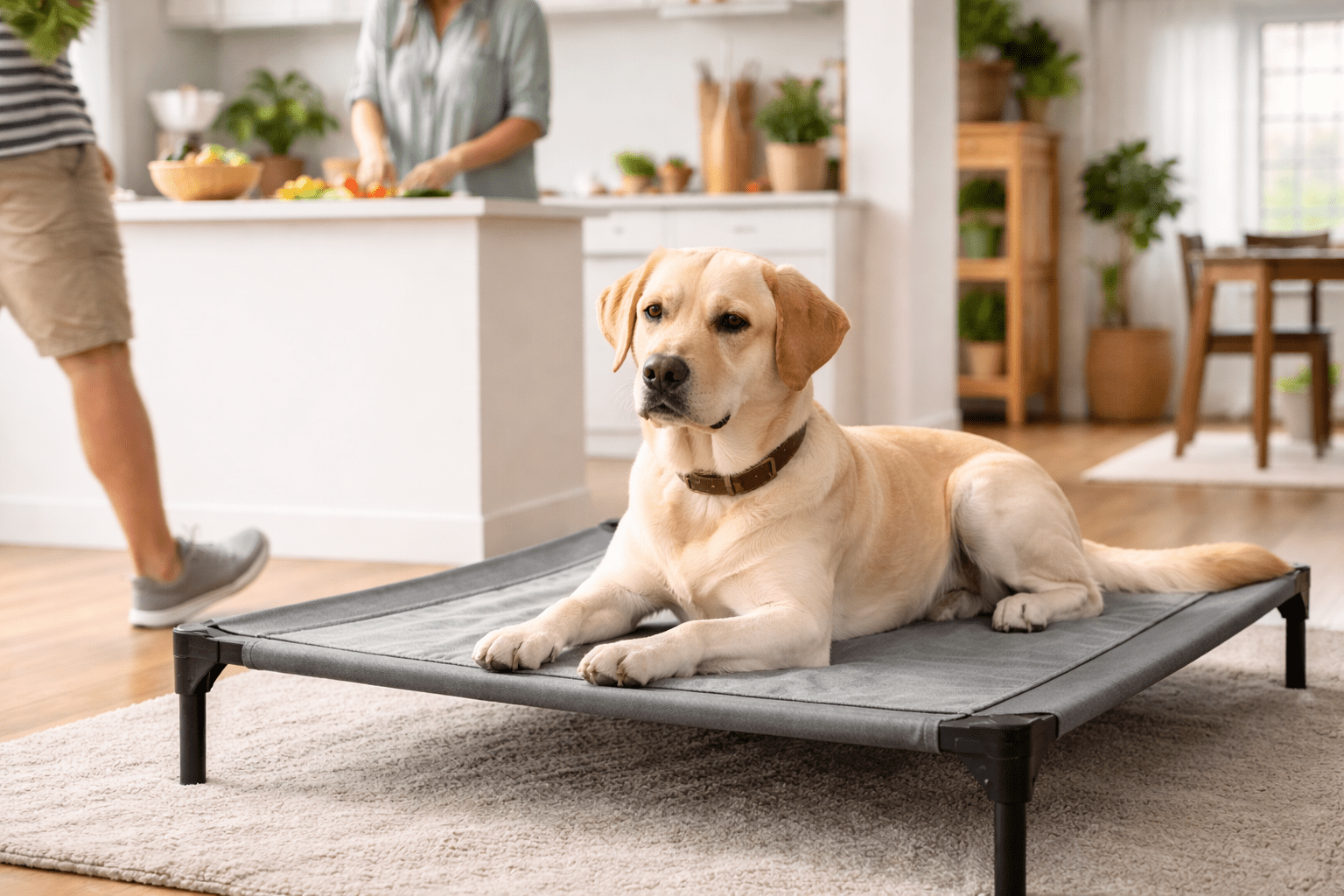
The Place Command for Calmness
The place command teaches your dog to go to a specific spot and remain there calmly until released.
Foundation Training: Choose a dog bed or mat as your dog’s “place.” Lure them onto it with a treat. The instant all four paws are on the place, say “yes” and give the treat. Release them with “okay” after 1-2 seconds. Repeat 10 times per session.
Building Duration: Start increasing the time they must stay there. Add one second at a time. Work up to 30 seconds, then one minute, then five minutes.
Adding Distractions: Practice while you walk around the room. Then try it while preparing their food. Have family members walk past. Ring the doorbell. Each distraction should initially reduce the expected time.
Real-World Applications: Use the place command when guests arrive, during family meals, or when you need them calm for any reason.
The Settle Command
Teaching Settle: With your dog on leash, step on the leash leaving just enough length that they can sit or lie down comfortably. Stand calmly and wait. The moment they sit or lie down, quietly praise and drop a treat between their paws. Gradually increase the time between treats.
Capturing Calm: Throughout the day, whenever you notice your dog resting calmly, approach gently and give them a treat without fanfare. This teaches that relaxation itself is rewarding.
Emergency Recall Training
Choose a unique word you never use casually (like “NOW” or “HERE”). Use the highest value treats imaginable. Say the emergency word once, and when your dog comes, throw a party with multiple treats. Practice in boring environments first, then gradually add distractions. Only use this recall in genuinely urgent situations or during practice.
Training for Specific Hyperactive Behaviors
Let’s address the specific behaviors that make hyperactive dogs challenging.
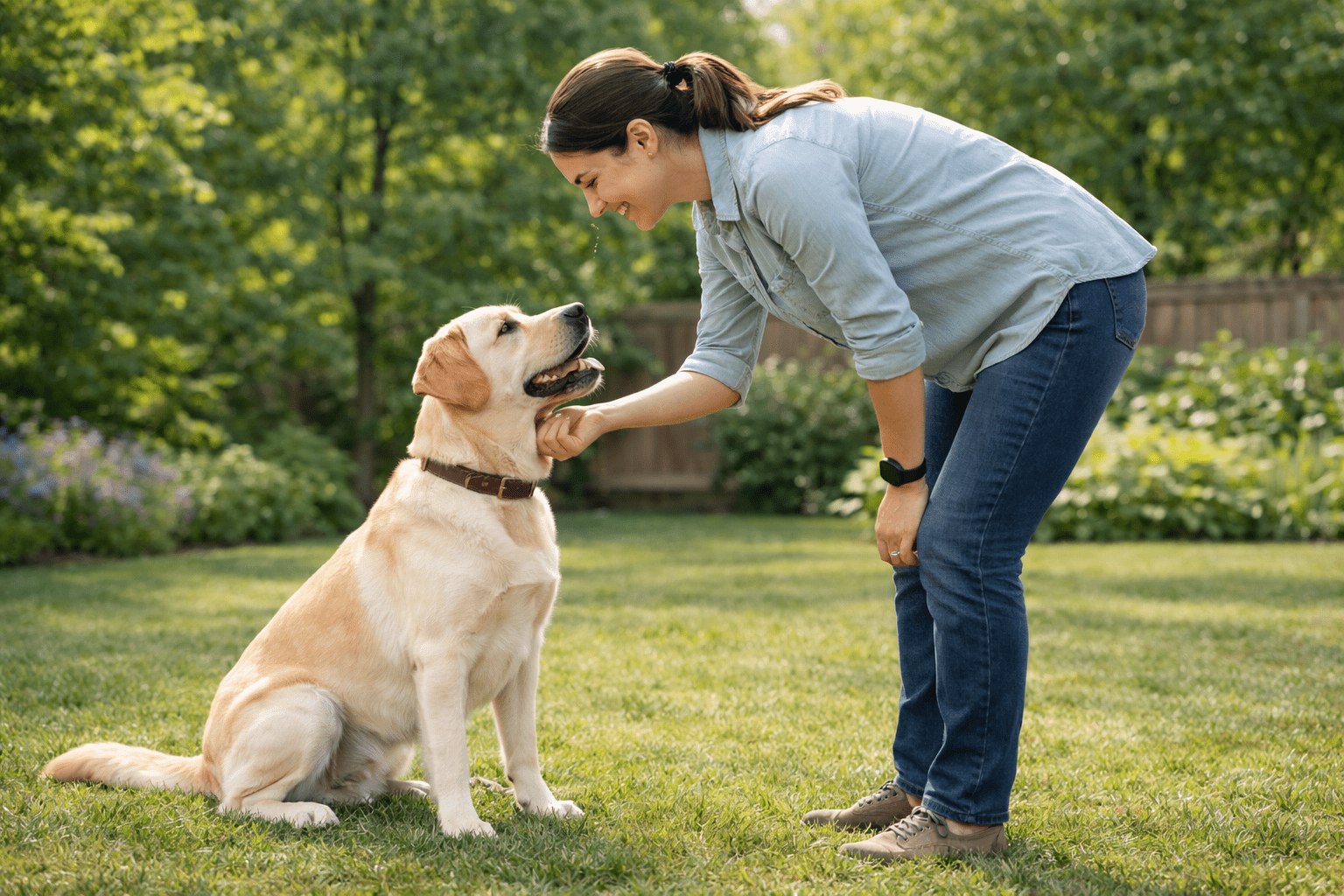
Training to Stop Jumping on People
The Four-Paws Rule: Your dog only gets attention when all four paws are on the floor. When your dog jumps, immediately turn your back and cross your arms. No eye contact, no talking, no touching. The instant they put four paws down, turn back and calmly pet them.
Training Guests: Before guests arrive, prep your dog with exercise and a place command. Instruct guests to follow the four-paws rule: ignore jumping, reward calm greetings.
Proactive Sitting: Teach your dog that sitting is the default behavior for greetings. Practice this dozens of times daily. Walk up to your dog, wait for them to sit, then pet and praise.
Training Against Excessive Barking
The Quiet Command: Trigger barking by ringing the doorbell. When your dog barks, say “speak” and reward after 2-3 barks. Once they reliably bark on command, wait for a pause in barking and immediately say “quiet” and reward the silence.
Demand Barking Solutions: If your dog barks at you for attention, completely ignore the barking. Wait for 5 seconds of quiet, then give attention. This teaches that silence, not noise, gets results.
Training Away Destructive Chewing
Chew Training Basics: Provide multiple appropriate chew options. When you see your dog chewing their toy, praise and reward them. If you catch them chewing furniture, calmly interrupt with “leave it,” redirect to an appropriate toy, then praise when they chew the right item.
Pre-Departure Protocol: Before leaving, provide 30-45 minutes of vigorous exercise. Leave frozen Kong toys stuffed with treats. Practice short departures (5 minutes) and gradually build up.
Advanced Training Techniques for Hyperactive Dogs
Once your hyperactive dog has mastered basic obedience, these advanced techniques provide additional control.
Threshold Training for Impulse Control
Approach a doorway with your dog on leash. Stop 3 feet before the threshold and ask for a sit. Step forward. If your dog breaks position, immediately step back and reset. Only cross the threshold together when your dog holds their sit. Practice at every doorway, 5-10 times per day.
Distraction Training Protocol
| Distraction Level | Example Situations | Training Approach | Success Criteria |
| Level 1: Mild | Family member walking by | Practice basic commands with rewards | 8/10 successful responses |
| Level 2: Moderate | Another person in room | Increase reward value | 7/10 successful responses |
| Level 3: Challenging | Another dog visible | High-value rewards, short sessions | 6/10 successful responses |
| Level 4: Intense | Dog park entrance | Jackpot rewards, smaller steps | 5/10 successful responses |
| Level 5: Extreme | Other dogs playing | Control environment, maximum rewards | 4/10 successful responses |
Start at Level 1 and don’t progress until your dog meets success criteria. This progressive approach prevents overwhelming your dog while building solid skills.
For comprehensive training, explore effective ways to train your dog or consider structured programs.
Training Challenges
Even with excellent technique, you’ll encounter obstacles.
When Training Doesn’t Seem to Work
Consistency Gaps: Are all family members following the same rules? Hold a family meeting and ensure everyone uses identical commands and rewards.
Insufficient Exercise: Increase exercise by 50% for one week and reassess whether training improves.
Reward Value: Test different treats to find what motivates your specific dog. High-arousal moments need higher-value rewards.
Training Duration: If sessions exceed 10 minutes, your dog stops learning. Shorter, more frequent sessions yield better results.
Managing Training Regression
Any change in environment, routine, or stress level can cause temporary regression. When this happens, go back to basics and re-teach the skill. Dogs go through an adolescent phase (6-18 months) where they temporarily “forget” everything. Maintaining consistency and training will click back into place.
Creating Long-Term Training Success
Progressive Training Timelines
Weeks 1-2: Focus on establishing routine and teaching basic commands. Expect small improvements in specific situations. Overall behavior may still seem chaotic.
Weeks 3-6: Noticeable changes emerge in your dog’s ability to settle and respond to commands. They’ll still have hyperactive moments but recover faster.
Months 2-4: Significant improvement in daily behavior. Your training becomes more polished, and your dog anticipates routines.
Months 6-12: Your dog has developed solid habits and reliable impulse control. Most dogs continue improving throughout their first 2-3 years.
Maintaining Training Results
Daily Micro-Training: Practice “sit” before meals, “wait” at doors, or “place” when the doorbell rings.
Weekly Skill Reviews: Dedicate 10-15 minutes weekly to practicing all commands in various locations.
Monthly Challenges: Introduce new tricks or test skills in increasingly difficult situations.
To learn more, check out how to calm a hyperactive dog or explore the effectiveness of board and train programs.
Final Thoughts on Training Your Hyperactive Dog
Training a hyperactive dog requires patience, consistency, and the right strategies, but the reward is a well-balanced companion who knows how to channel their energy appropriately. By combining structured exercise, impulse control training, core obedience commands, and addressing specific behaviors, you can transform your energetic dog into a calmer, more focused family member.
At K9 Mania Dog Training, we specialize in transforming high-energy, hyperactive dogs into well-mannered companions. Our board and train Long Island program provides intensive training in a structured environment, giving your dog the focused attention they need to overcome hyperactive behaviors.
Whether you need help with basic obedience or specific behavior issues, our experienced trainers are here to support you. Visit our website to discover how we can help you achieve the calm, well-behaved dog you’ve always wanted.
You May Also Want to Read
- How to Calm a Hyperactive Dog
- What Is Prey Drive in Dogs: Understanding Your Dog’s Hunting Instinct
- Why Do Dogs Run Away? Understanding the Causes and Prevention
- How to Stop a Dog from Chewing Furniture
Frequently Asked Questions
How do I stop my dog from chewing on furniture when left alone?
Provide at least 45-60 minutes of exercise before leaving your dog alone. Leave appropriate chew toys like frozen Kongs stuffed with treats. Practice gradual departures starting with just 30 seconds. Use crate training to prevent access to furniture when you can’t supervise. Catch your dog chewing appropriate toys and reward them heavily.
What repels dogs from chewing furniture?
Bitter apple spray, citrus-based deterrents, and commercial anti-chew sprays make furniture less appealing. However, deterrents must be combined with training. Spray furniture your dog targets, then provide approved chew items nearby. When your dog chooses their toy instead, praise and reward them.
How to train your dog to not chew on furniture?
Supervise your dog closely and interrupt furniture chewing immediately with “leave it.” Redirect them to an appropriate toy, then praise when they chew the right item. Provide multiple chew options and rotate them weekly. Increase daily exercise and mental stimulation to reduce boredom-driven chewing.
How do I get my dog to stop destroying furniture?
Increase exercise to at least 90 minutes daily for high-energy dogs. Add three 10-minute training sessions for mental stimulation. When you can’t supervise, confine your dog to a safe area with approved toys. Provide puzzle toys and food-dispensing toys to occupy your dog productively.
How do you discipline a dog that chews when left alone?
Never punish a dog for chewing discovered after the fact. Focus on prevention through adequate exercise, mental stimulation, and training. When you catch chewing in progress, calmly interrupt and redirect to an appropriate item. Reward good choices consistently.
What smells stop dogs from chewing?
Dogs dislike bitter apple, citrus (lemon, orange), white vinegar, and cayenne pepper smells. Create homemade deterrent spray by mixing equal parts white vinegar and water. Apply deterrent to targeted furniture while simultaneously providing approved chew toys. Remember that scent deterrents are training aids, not complete solutions.