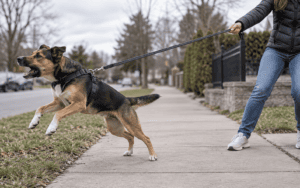
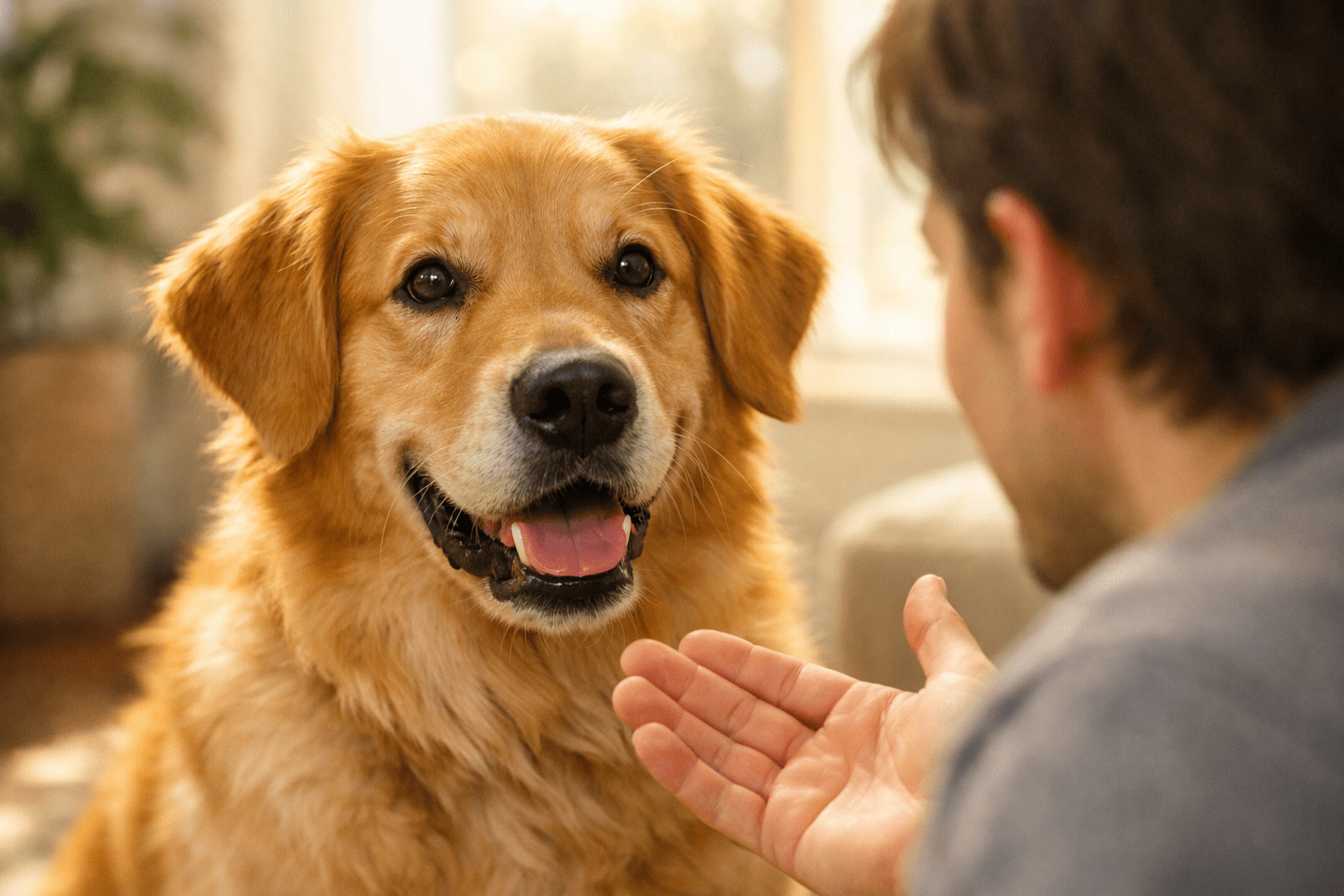
How do dogs know their name? Dogs learn to recognize their names through repeated association with positive experiences like treats, praise, and attention. When you consistently use their name before something good happens, they form a mental link between that specific sound pattern and rewards, making them respond when called.
Your dog doesn’t understand their name is a label the way humans do. Instead, they recognize it as a specific sound that predicts something important is about to happen. Think of it like a doorbell, your dog learns that certain sounds mean specific outcomes. Through repetition and positive reinforcement, that unique combination of sounds becomes meaningful to them.
Understanding how this process works can help you train your dog more effectively and strengthen your bond. Whether you’ve just brought home a new puppy or adopted an older dog, knowing the science behind name recognition will make training easier and more successful.
Ready to build a stronger connection with your dog? Our board and train Long Island program helps dogs master name recognition and essential commands in a focused environment.
What Makes Dogs Recognize Their Names?
Dogs recognize their names through a combination of auditory learning and positive reinforcement. Your dog’s brain processes the unique sound pattern of their name and connects it with outcomes they’ve experienced.
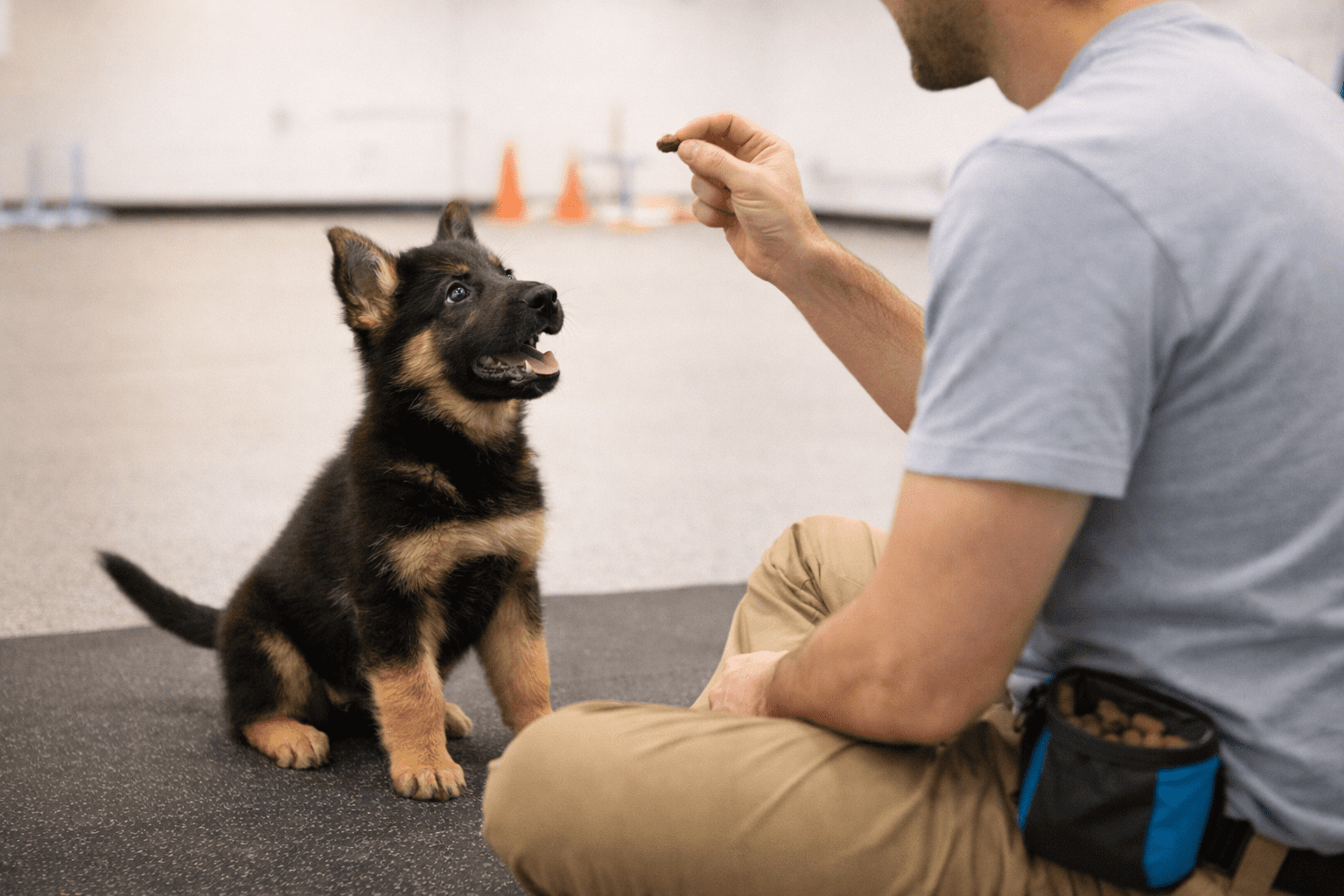
Every time you say your dog’s name followed by something they enjoy, their brain strengthens that association. This happens through a process called classical conditioning, where a neutral stimulus (the name) becomes linked with a meaningful response (attention, treats, play).
Key Factors in Name Recognition
Your dog’s ability to recognize their name depends on several important elements:
- Consistent Sound Pattern: Dogs pick up on the specific syllables and tone you use. If everyone in your household says the name differently, it takes longer for your dog to learn.
- Positive Association: Names become meaningful when paired with good experiences. Your dog learns that hearing their name means something pleasant is coming.
- Frequency of Use: The more often you use your dog’s name in positive contexts, the faster they learn to respond. Repetition builds neural pathways in their brain.
- Distinct Sound: Names that sound different from common commands or household words are easier for dogs to recognize and respond to.
- Attention and Rewards: When your dog looks at you after hearing their name, immediate rewards reinforce that this sound matters.
The tone and emotion in your voice also play a huge role. Dogs are incredibly sensitive to vocal cues and can detect enthusiasm, frustration, or calmness in how you speak. A happy, upbeat tone when saying their name creates stronger positive associations.
Do Dogs Know Their Names or Just Respond to Sound?
This question reveals an important distinction about canine cognition. Dogs don’t understand names as personal identifiers the way humans do. They recognize their name as a specific auditory cue that signals they should pay attention.
Research shows that dogs can distinguish their name from other similar-sounding words. A study published in Animal Cognition found that dogs respond more consistently to their actual name than to words with similar phonetic patterns. This suggests they’re not just reacting to any sound, they’ve learned to recognize the specific acoustic features of their name.
What Happens in Your Dog’s Brain
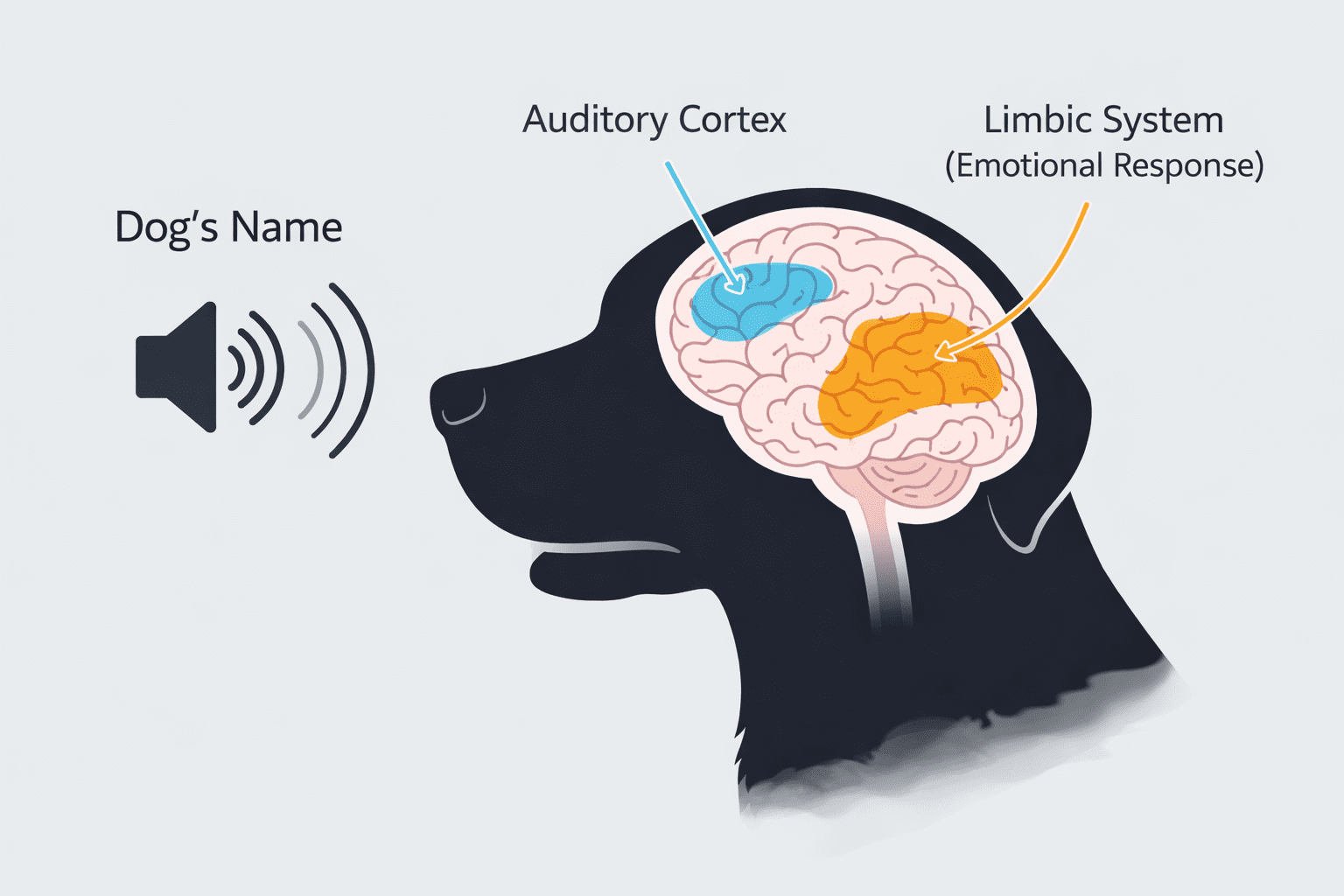
When your dog hears their name, several cognitive processes occur simultaneously:
Pattern Recognition: Your dog’s auditory cortex processes the sound waves and matches them against stored memory patterns. They recognize the unique combination of syllables that make up their name.
Emotional Response: The limbic system (emotional center) activates based on past experiences associated with that sound. If their name usually predicts treats or play, positive emotions trigger automatically.
Attention Shift: The name acts as an attention cue, telling your dog to focus on you and await further information or commands.
This is why dog behavior training emphasizes consistent name use, it builds reliable communication patterns between you and your dog.
How Dogs Learn to Associate Their Name with Themselves
The learning process for name recognition follows predictable stages. Understanding these stages helps you train more effectively and recognize when your dog needs more practice.
| Learning Stage | What Happens | Training Focus |
| Initial Exposure | Dog hears the name but doesn’t understand its significance | Say name before treats, meals, and positive interactions |
| Sound Recognition | Dog begins to recognize the specific sound pattern | Use name consistently with same pronunciation and tone |
| Association Building | Dog connects name with attention and rewards | Reward immediate eye contact when name is said |
| Reliable Response | Dog consistently looks at you when name is called | Practice in various environments with distractions |
The Role of Repetition and Consistency
Dogs need hundreds of repetitions to form strong associations. Each time you say your dog’s name and follow it with something positive, you strengthen the neural pathways that connect that sound to a response.
Consistency matters more than you might think. If family members use nicknames, variations, or say the name in different ways, your dog has to work harder to recognize which sounds actually mean them. This is similar to how the best ways to train a puppy emphasize using the same commands and cues every time.
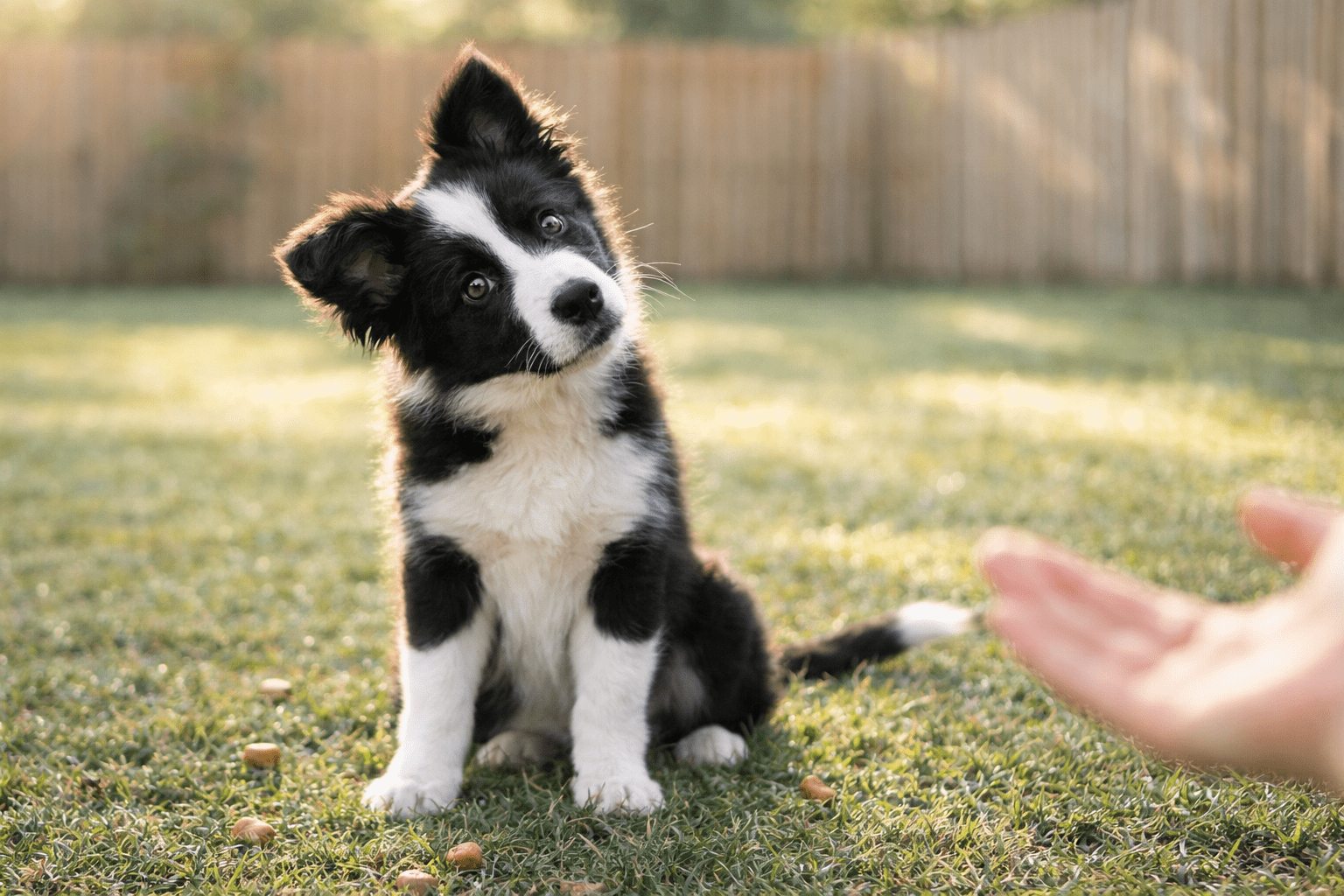
Young puppies typically need 2-4 weeks of consistent practice to reliably recognize their name. Older dogs learning a new name may take 4-8 weeks, depending on their previous training experience and how consistently you practice.
The Science Behind Name Recognition in Dogs
Scientific research has revealed fascinating details about how do dogs know their name on a neurological level. Brain imaging studies show that dogs process human speech in areas of the brain similar to where humans process language.
A groundbreaking study at Eötvös Loránd University in Hungary used fMRI scans to observe dog brains while they heard various words. Researchers found that dogs showed increased brain activity in the left hemisphere when hearing familiar words, including their names. This is the same area where humans process meaningful language.
Auditory Processing in Dogs
Dogs hear frequencies between 40 Hz and 60,000 Hz, compared to humans who hear 20 Hz to 20,000 Hz. This superior hearing allows dogs to detect subtle variations in how you say their name.
Your dog processes these acoustic features:
- Pitch and Tone: Higher-pitched, enthusiastic voices typically create stronger positive associations than flat or angry tones.
- Syllable Structure: Dogs recognize the rhythm and number of syllables in their name. Two-syllable names often work best because they’re distinct and easy to say with enthusiasm.
- Consonant-Vowel Patterns: Sharp consonants (like “K” in “Max” or “B” in “Bella”) are easier for dogs to distinguish than soft sounds.
- Duration and Stress: Where you place emphasis in the name affects how quickly dogs learn it.
This scientific understanding informs modern training methods used in private dog training programs, where trainers use specific vocal techniques to maximize learning.
Teaching Your Dog Their Name: Step-by-Step Guide
Whether you have a new puppy or a rescue dog, teaching name recognition follows the same basic principles. These steps work for dogs of any age, though puppies typically learn faster than older dogs with established habits.
Getting Started
Step 1: Choose the Right Name
Pick a name that’s one or two syllables, easy to say clearly, and doesn’t sound like common commands. Avoid names that rhyme with “no,” “stay,” or other commands you’ll use frequently.
Step 2: Create Positive Associations
For the first week, say your dog’s name before anything they enjoy:
- Meals and treats
- Playtime and walks
- Petting and affection
- Opening doors to go outside
Never use their name when correcting or scolding. You want the name to always predict something good.

Step 3: Practice Name Recognition Games
Start in a quiet room with minimal distractions:
- Say your dog’s name in a happy, upbeat tone
- The moment they look at you, mark it with “yes” and give a treat
- Wait a few seconds, then repeat
- Practice 10-15 repetitions, several times daily
Step 4: Add Distance and Distractions
Once your dog reliably looks at you in a quiet room, gradually increase difficulty:
- Practice from farther away
- Add mild distractions like toys on the floor
- Practice in different rooms
- Eventually practice outside with more distractions
Step 5: Use in Real Situations
Start using their name before giving commands or during daily activities. This reinforces that their name means “pay attention to me.”
Understanding essential dog training commands helps you see how name recognition fits into your overall training program.
Common Mistakes When Teaching Dogs Their Names
Many dog owners unknowingly slow down their dog’s learning by making these common errors. Recognizing and avoiding these mistakes helps your dog learn their name faster and more reliably.
| Mistake | Why It’s a Problem | Better Approach |
| Using name for corrections | Creates negative associations with the name | Use “no” or “eh-eh” for corrections, never the name |
| Repeating name without consequence | Teaches dog to ignore their name | Say name once, wait for response, then reward |
| Using too many nicknames | Confuses the dog about which sounds matter | Stick to one primary name during training |
| Saying name with commands | Dog learns name is part of the command | Say name to get attention, pause, then give command |
| Inconsistent pronunciation | Makes it harder for dog to recognize the pattern | Everyone should say the name the same way |
| Not rewarding quickly enough | Dog doesn’t connect the name with the reward | Reward within 1-2 seconds of them looking at you |
The Overuse Problem
One of the biggest mistakes is using your dog’s name too often without any meaningful consequence. If you constantly say “Buddy, Buddy, Buddy” while your dog ignores you, you’re actually training them that their name doesn’t require a response.

Every time you say your dog’s name, something should happen. Either you’re about to give a command, offer a treat, start play, or provide some form of attention. This keeps the name meaningful and ensures your dog continues responding to it.
Pay attention to dog body language signals when you say their name. If your dog’s ears perk up and they make eye contact, they’re showing they recognize and respond to the sound. If they ignore you repeatedly, take a break from using the name and rebuild positive associations.
When to Use Your Dog’s Name (and When Not To)
Strategic use of your dog’s name makes it more powerful and effective. Knowing when to say it and when to stay quiet improves communication and prevents the name from becoming background noise.
Best Times to Use Their Name
To Get Attention Before Commands: Say your dog’s name, wait for eye contact, then give your command. This two-step process ensures your dog is paying attention before you ask them to do something.
During Positive Interactions: Use their name when starting play sessions, offering treats, or beginning enjoyable activities. This maintains positive associations.
When Calling Them to You: Their name should be the cue that means “come check in with me” or “pay attention to what’s happening.”
In Training Sessions: Regular training reinforces that hearing their name means good things and requires a response.
When NOT to Use Their Name
During Corrections or Punishment: Never say your dog’s name when you’re upset or correcting unwanted behavior. This creates negative associations that make the name less effective for getting attention.
Repeatedly Without Purpose: Avoid saying your dog’s name multiple times in a row or when they’re already paying attention to you.
Mixed with Commands: Don’t say “Buddy sit” as one phrase. Instead, say “Buddy” (wait for attention), then “sit” as a separate command.
When Emotions are High: If you’re frustrated or angry, avoid using their name until you’ve calmed down. Dogs pick up on emotional tone and can develop negative associations.
Building a Stronger Bond Through Name Recognition
Understanding how do dogs know their name reveals something profound about the human-dog relationship. Your dog’s name becomes a bridge between their world and yours—a sound that carries meaning, emotion, and connection.
When you invest time in teaching name recognition properly, you’re doing more than training a response. You’re building a foundation of trust and communication that strengthens every aspect of your relationship. Your dog learns that when you call their name, it’s worth paying attention because good things happen when they connect with you.
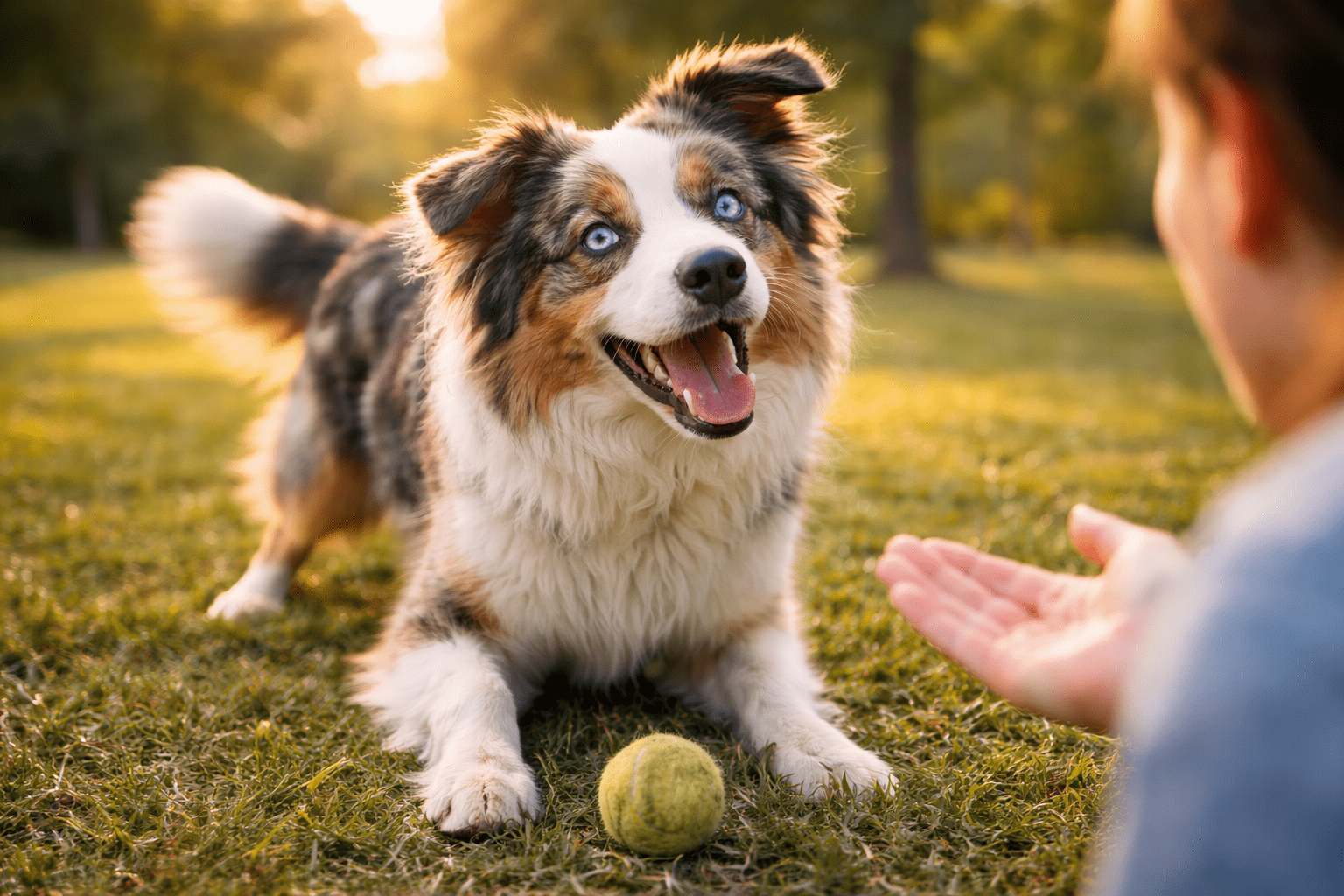
The process also teaches you to be more mindful of how you communicate with your dog. You become aware of your tone, consistency, and the associations you’re creating. This awareness improves all your training efforts and helps you understand your dog’s perspective better.
Remember that name recognition isn’t a one-time achievement. Continue using your dog’s name positively throughout their life to maintain that strong, reliable response. Each time your dog turns to look at you when you call their name, you’re reinforcing the bond between you and celebrating the amazing ability dogs have to bridge the gap between human and canine communication.
Your Partner in Building Better Communication
Teaching your dog to recognize their name is just the beginning of creating clear, effective communication. At K9 Mania Dog Training, we specialize in helping dogs and owners build strong foundations through proven training methods. As Long Island’s leading board and train Long Island provider, we work with dogs of all ages and backgrounds to develop reliable responses and positive behaviors.
Whether you’re struggling with name recognition, need help with behavior issues, or want to give your dog advanced training, our experienced team can help you achieve your goals and strengthen the bond you share with your dog.
You May Also Want to Read
- How to Train Your Dog to Run with You
- How to Train a Stubborn Dog
- Why Does My Dog Lick Me So Much? Understanding Your Dog’s Behavior
Frequently Asked Questions on How Dogs Know Their Name
Do dogs truly know their names?
Yes, dogs truly recognize their names as distinct sounds that signal they should pay attention. Research shows they can differentiate their name from similar-sounding words. However, they don’t understand it as a personal identifier like humans do. Instead, they learn through repetition that this specific sound pattern predicts attention, rewards, or interaction with you.
Is it okay to rename a dog?
It’s perfectly fine to rename a dog, especially rescue dogs or newly adopted pets. Dogs are adaptable and can learn a new name within a few weeks with consistent training. Use the same positive association methods—say the new name before treats, meals, and play. Avoid using the old name during the transition period to prevent confusion.
At what age is it too late to change a dog’s name?
It’s never too late to change a dog’s name. While puppies learn new names faster (typically 2-4 weeks), adult and senior dogs can learn new names too—it just takes more repetition. Older dogs may need 4-8 weeks of consistent practice. The key is patience and positive reinforcement, not the dog’s age.
Can a dog go by two names?
Dogs can learn to respond to multiple names, but it’s not ideal during initial training. Each additional name requires separate training and can slow down reliable response. If you want to use a nickname, wait until your dog responds perfectly to their primary name. Then introduce the second name using the same positive reinforcement methods.
What names should dogs avoid?
Avoid names that sound like common commands (“Joe” sounds like “no,” “Kit” sounds like “sit”). Skip names that rhyme with corrections or commands you’ll use frequently. Also avoid very long names (more than three syllables) that are hard to say quickly and clearly. One or two-syllable names with distinct consonant sounds work best.
Do dogs mind if you change their name?
Dogs don’t have emotional attachments to their names the way humans do. They simply recognize names as sounds connected to outcomes. When you change a name and consistently pair the new name with positive experiences, your dog will adapt without stress or confusion. What matters to them is the positive association, not the specific sound itself.