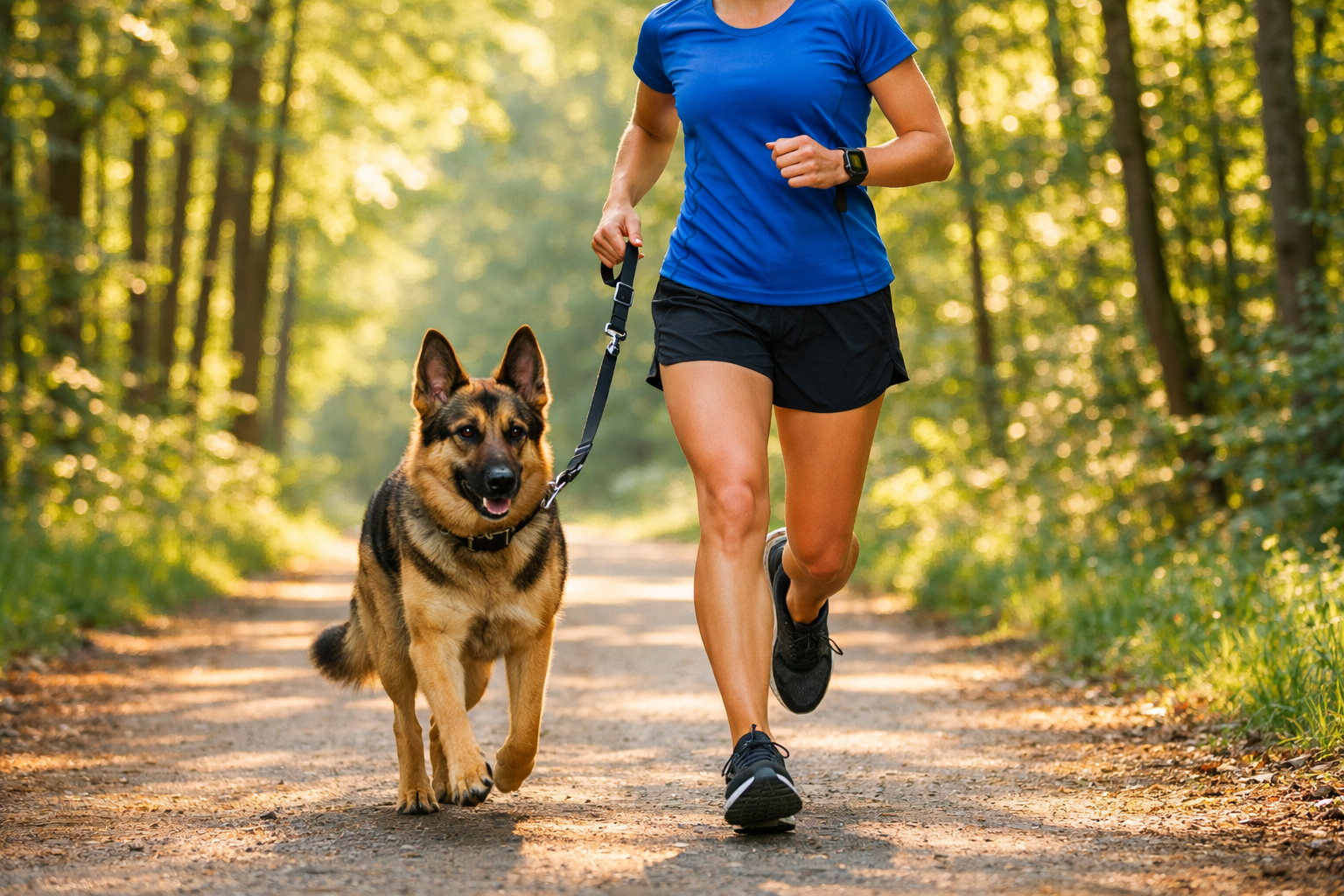
Want to know how to train your dog to run with you and turn your daily jog into a shared adventure? It’s easier than you think, and the benefits go way beyond fitness.
Running with your dog strengthens your bond, burns off excess energy, and gives you both a fun way to stay active. But jumping straight into long runs without proper training can lead to injuries, frustration, or a dog that pulls you all over the sidewalk.
In this guide, you’ll learn the step-by-step process for teaching your dog to run safely by your side, from basic commands to building endurance. Whether you have a high-energy puppy or an older dog ready for a new challenge, we’ll cover everything you need to know.
Struggling with leash manners? Our dog leash pulling training program teaches dogs to walk and run calmly beside you.
Why Run With Your Dog
Running with your dog creates benefits that go beyond simple exercise. You’ll notice positive changes in your dog’s behavior, health, and your relationship together.
Physical and Mental Benefits for Your Dog
Regular running helps your dog stay at a healthy weight while building strong muscles and joints. Dogs that run consistently also develop better cardiovascular health when trained properly.
It goes beyond physical benefits. Running provides mental stimulation through new sights, sounds, and smells, helping reduce boredom-related behaviors like chewing or barking.
High-energy breeds especially need this outlet. Without it, problem behaviors often show up at home. Running also helps anxious dogs release nervous energy, creating a calmer, more balanced routine.
Strengthening Your Bond Through Exercise
Shared activities build trust between you and your dog. When you run together, you’re working as a team toward a common goal.
Your dog learns to pay attention to your pace, direction changes, and stopping cues. This requires communication and cooperation that carries over into other areas of training.
The time spent together during runs creates positive associations. Your dog connects you with fun, adventure, and rewards. This strengthens your relationship in a way that sitting on the couch never could.
Running side by side also establishes you as the leader. Your dog follows your cues, matches your speed, and looks to you for guidance. This natural leadership dynamic makes other training easier too.
Before You Start Training
Getting your dog ready to run takes more than just clipping on a leash. You need to make sure your dog is physically ready and has the right gear for safe, comfortable runs.
Age and Health Considerations
Avoid long runs for dogs under 18 months—joints are still developing. Large breeds may need up to two years. Check with your vet, especially for breathing, joint, or heart issues. Watch for warning signs like heavy panting, limping, or refusal to move.

Essential Gear and Equipment
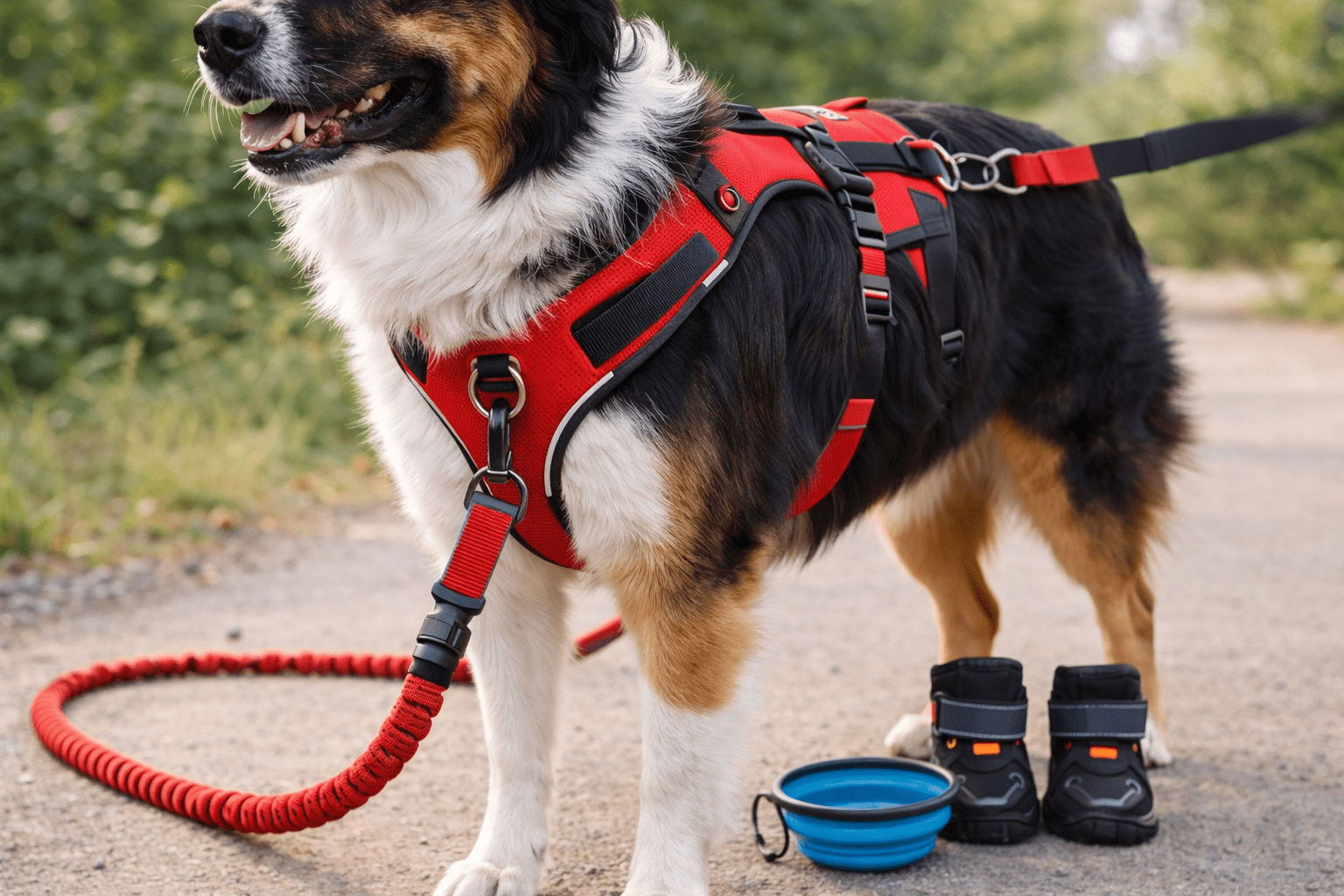
Use a well-fitted harness instead of a collar. Choose a sturdy leash (not retractable), bring water, and consider booties for harsh surfaces.
Need help with basic commands first? Our dog obedience training builds the foundation your dog needs before running.
How to Train Your Dog to Run with You: Step-by-Step Process
Teaching your dog to run with you requires patience and a structured approach. Follow these steps to build a safe, enjoyable running routine that works for both of you.
Start With Basic Obedience Commands
Your dog needs solid recall, sit, and heel commands before you start running together. These basics keep both of you safe when you’re moving fast.
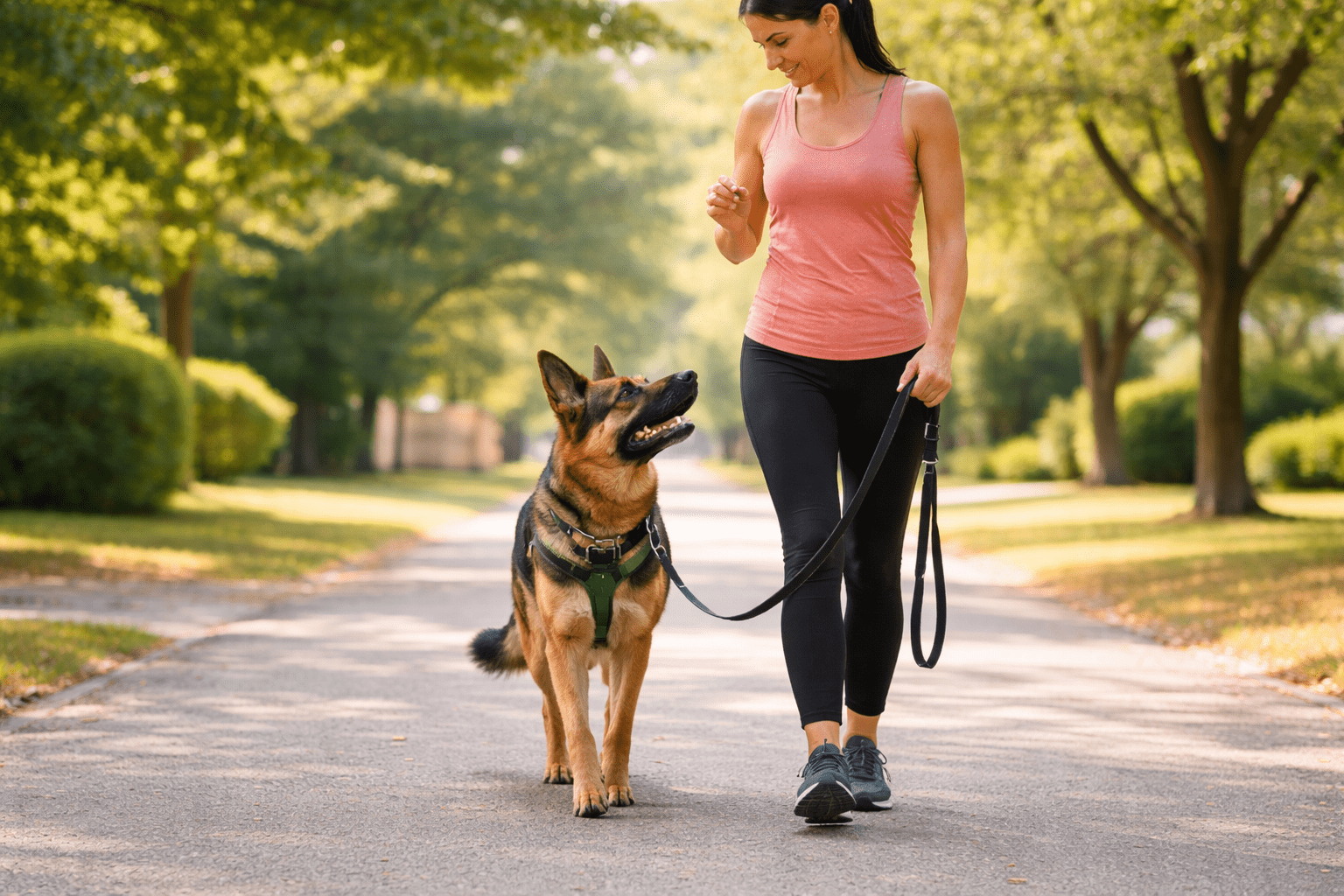
Practice “heel” during walks first. Your dog should walk calmly beside you without pulling. If your dog can’t walk politely on a leash, running will only make the problem worse.
Work on “stop” and “wait” commands. You’ll need these at intersections, when crossing streets, or if you need to slow down suddenly.
Teaching “leave it” helps when your dog spots squirrels, other dogs, or interesting smells during runs. A distracted dog can pull you off balance or into traffic.
Consistent training creates a dog that listens even when excited. If your dog struggles with basic commands, consider professional help before adding the complexity of running.
Building Endurance Gradually
Start with short distances at a slow pace. Begin with just five to ten minutes of easy jogging, then walk the rest of your route.
Add one to two minutes of running each week. This gradual increase lets your dog’s muscles, joints, and paw pads adapt without injury.
Watch your dog’s gait and breathing. If they’re limping, excessively panting, or lagging behind, you’re pushing too hard. Scale back and build more slowly.
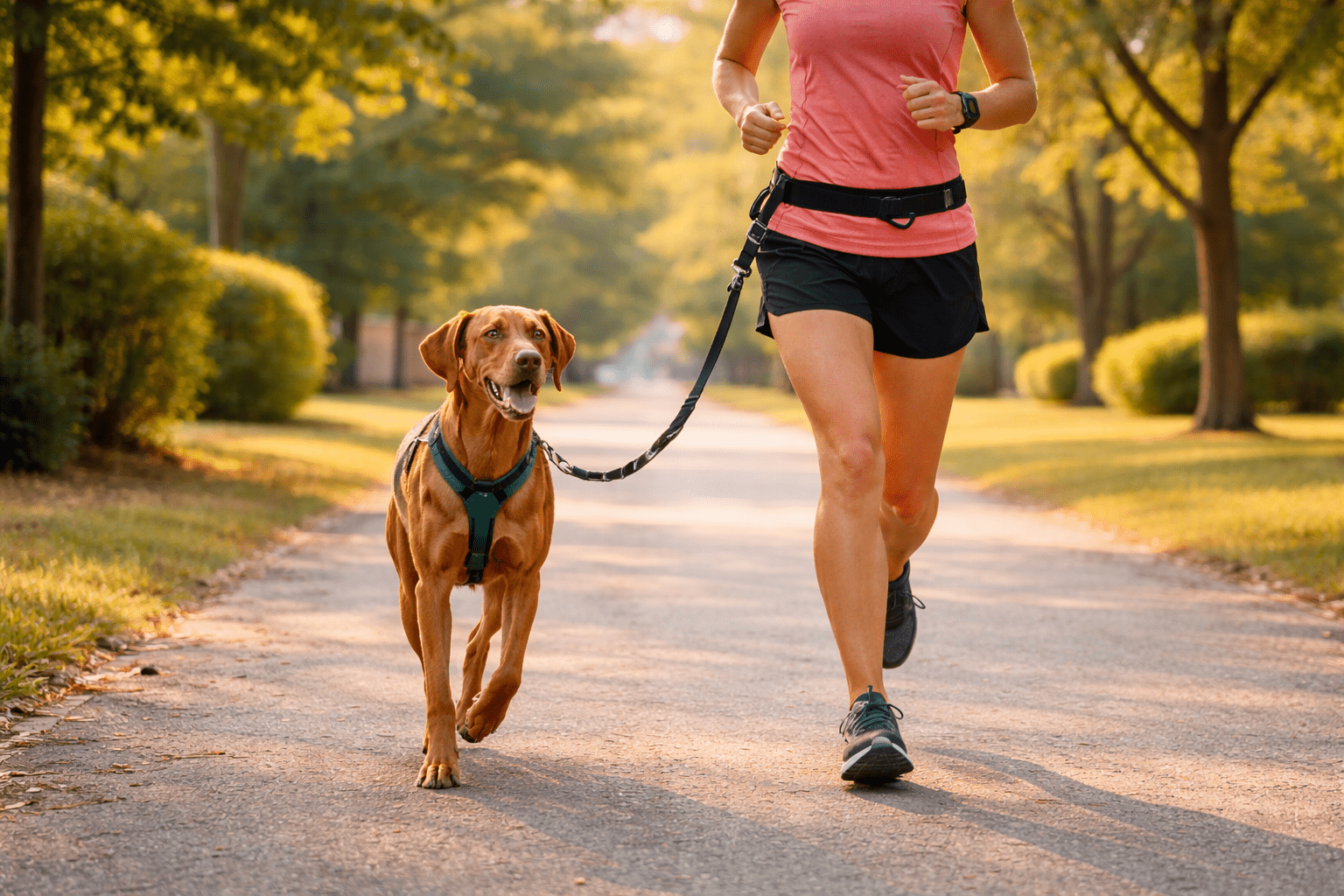
Warm up before each run with a five-minute walk. This gets blood flowing to muscles and reduces injury risk. Cool down the same way at the end.
Take rest days between runs, especially in the first few weeks. Your dog’s body needs time to recover and strengthen between workouts.
Here’s a sample progression schedule:
| Week | Running Time | Walking Time | Frequency |
| 1-2 | 5 minutes | 20 minutes | 3 days/week |
| 3-4 | 10 minutes | 15 minutes | 3 days/week |
| 5-6 | 15 minutes | 10 minutes | 3-4 days/week |
| 7-8 | 20 minutes | 5 minutes | 4 days/week |
Teaching Proper Running Form and Position
Your dog should run on one side of you, not weaving back and forth. Pick a side (usually left) and stay consistent.
Use the “heel” command to keep your dog at your side. Reward them with treats or praise when they maintain the correct position.
If your dog pulls ahead, stop running immediately. Wait for them to return to your side, then start again. Consistency teaches them that pulling stops the fun.
Keep the leash slightly loose. A tight leash creates tension and encourages pulling. Your dog should have enough slack to move naturally but not enough to wander.
Practice direction changes during runs. This keeps your dog paying attention to you instead of getting distracted. Turn left, right, or reverse direction randomly.
Dealing With Distractions and Challenges
Other dogs, runners, cyclists, and wildlife will cross your path. Prepare your dog to handle these distractions calmly.
When you see a potential distraction ahead, get your dog’s attention before they notice it. Use treats or a verbal cue to keep their focus on you.
Create distance from the distraction if needed. Cross the street or change your route to avoid overwhelming your dog while they’re learning.
If your dog reacts to something, stop running and practice basic commands. Get them sitting or in a heel position, then continue only when they’re calm.
Some dogs get overstimulated by the excitement of running. If your dog starts getting too hyper, slow to a walk and practice calm behavior before resuming.
Want to know if professional training is worth it? Read our guide on is board and train worth it to see how it can help.
Best Practices for Safe Running
Keeping your dog safe during runs requires attention to weather conditions, proper hydration, and careful paw care. These practices prevent injuries and make running enjoyable for both of you.
Weather and Temperature Guidelines
Hot weather poses serious risks for dogs. If it’s over 75 degrees Fahrenheit, run early morning or evening when it’s cooler.
Check pavement temperature with your hand. If you can’t hold your palm on the ground for five seconds, it’s too hot for your dog’s paws.
Dogs overheat faster than humans because they can’t sweat. Watch for excessive panting, drooling, or slowing down. Stop immediately if you see these signs.
Cold weather needs preparation too. Dogs with short coats may need a running jacket when temperatures drop below 40 degrees.
Ice and salt on winter sidewalks can damage paw pads. Use protective booties or choose cleared paths.
Rain and wet conditions make surfaces slippery. Slow your pace and watch for your dog losing traction.
Here’s a quick temperature guide:
| Temperature | Running Safety | Precautions Needed |
| Below 20°F | Limit time outdoors | Booties, jacket, short runs only |
| 20-40°F | Generally safe | Watch for cold sensitivity, consider booties |
| 40-70°F | Ideal running weather | Standard hydration, normal precautions |
| 70-80°F | Use caution | Run early/late, bring extra water, watch for overheating |
| Above 80°F | Not recommended | Avoid running or keep sessions very short |
Hydration and Nutrition Tips
Bring water for runs longer than 20 minutes. Offer your dog small amounts every 15-20 minutes rather than letting them gulp large quantities at once.
Don’t feed your dog right before running. Wait at least an hour after meals to prevent bloating or stomach issues during exercise.
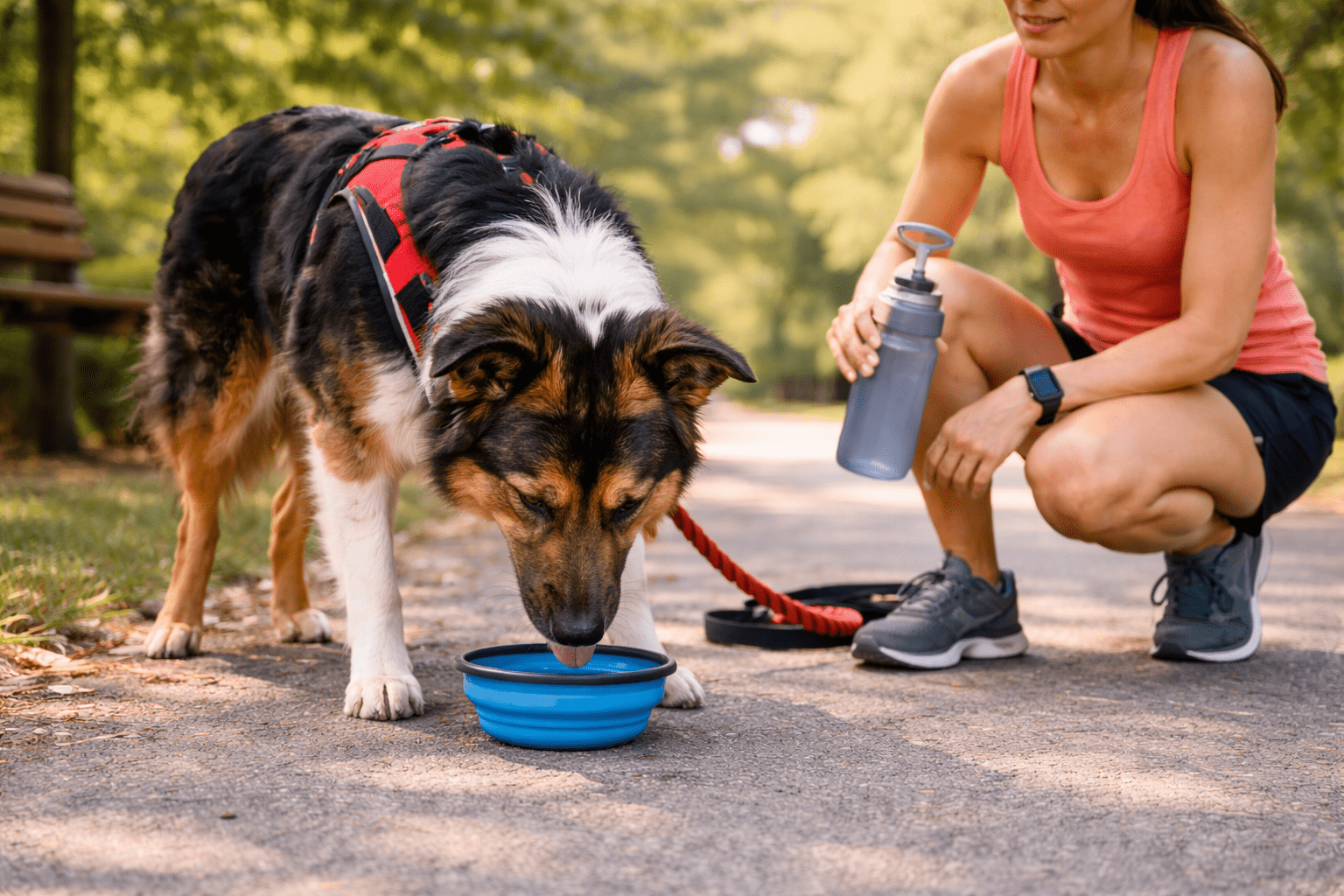
Give your dog a small meal or snack about an hour after running to help recovery. This replaces energy burned during your workout.
Keep fresh water available at home for when you return. Your dog will be thirsty and needs to rehydrate fully.
On very hot days, you can add ice cubes to your dog’s water bowl. This helps cool them down from the inside.
Paw Care and Injury Prevention
Check your dog’s paws before and after every run. Look for cuts, cracks, embedded objects, or worn paw pads.
Rough surfaces like concrete and asphalt wear down paw pads over time. Vary your running surfaces when possible—grass and dirt trails are gentler.
Trim the fur between your dog’s paw pads. Long hair can collect debris and ice, causing discomfort or injury.
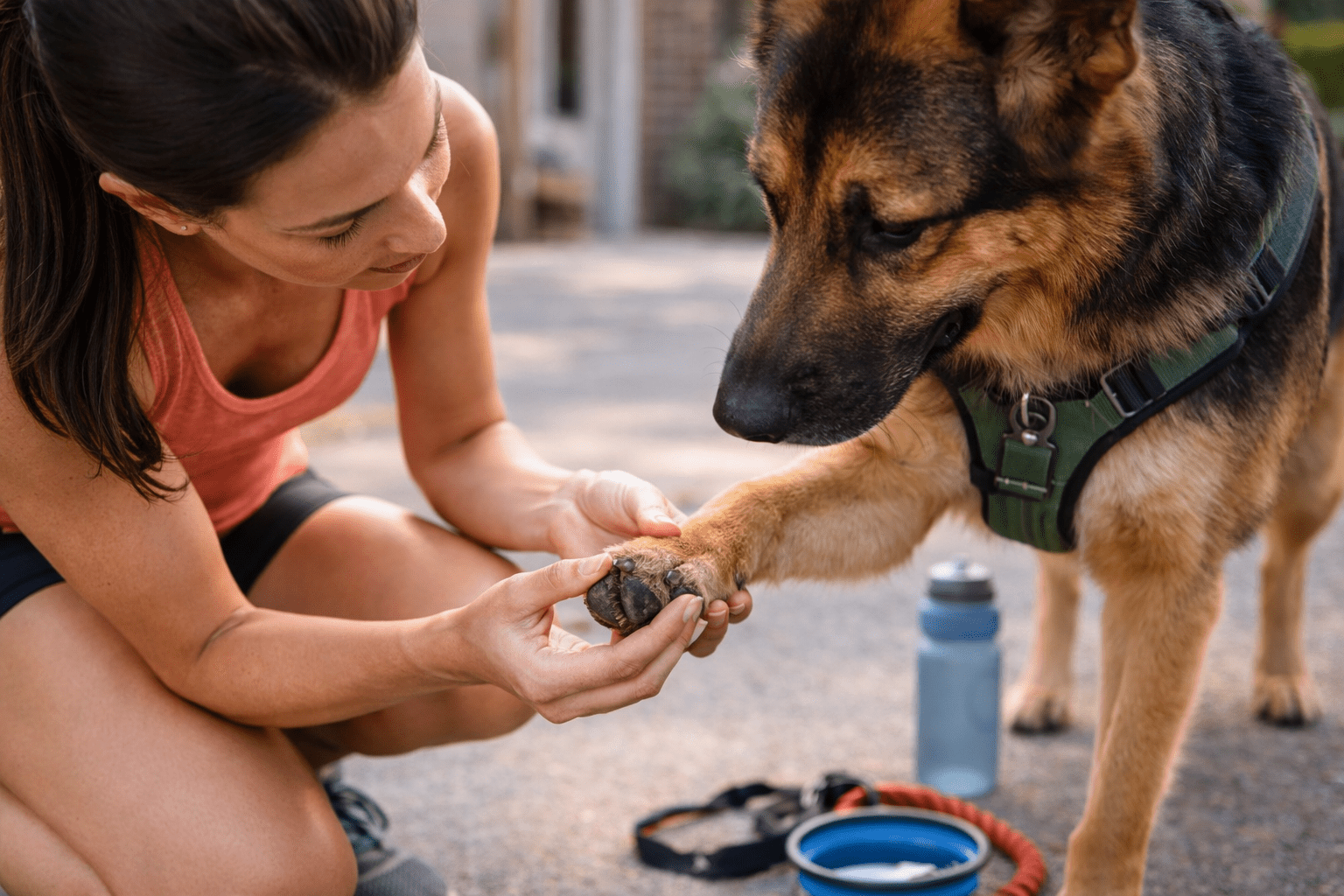
Keep nails trimmed short. Long nails change how your dog’s foot strikes the ground and can cause joint problems.
If your dog starts limping during a run, stop immediately. Continuing on an injury makes it worse. Walk slowly home and check for problems.
Build up calluses gradually by starting on softer surfaces and slowly introducing harder ones. This toughens paw pads naturally.
Looking for comprehensive training help? Check out our board and train preparation guide to see what professional training involves.
Common Mistakes to Avoid
Even experienced dog owners make mistakes when starting to run with their dogs. Avoiding these common errors keeps both of you safe and makes training more successful.
Pushing Too Hard Too Fast
The biggest mistake is doing too much too soon. Your enthusiasm doesn’t mean your dog is ready for a five-mile run on day one.
Overtraining causes injuries like sprains, muscle strains, or damaged paw pads. These setbacks delay your progress and can cause long-term problems.
Young dogs are especially vulnerable to overuse injuries. Their growing bones can’t handle the same impact as adult dogs.
Listen to your dog’s signals. If they’re slowing down, panting heavily, or trying to stop, respect those signs. Pushing through fatigue leads to injuries.
Remember that different breeds have different exercise needs and abilities. A Greyhound has different stamina than a Corgi, even if they’re the same age and weight.
Ignoring Signs of Discomfort or Fatigue
Dogs won’t always show obvious signs of pain. You need to watch carefully for subtle changes in behavior or movement.
Limping is obvious, but other signs are less clear. Your dog might lag behind, refuse to run, or seem less enthusiastic than usual.
Excessive panting, especially with a blue or very red tongue, signals overheating. Stop immediately and find shade and water.
If your dog sits or lies down during a run, don’t force them to continue. This is a clear sign they need rest.
Changes in gait or favoring one leg means something hurts. Even if the limp seems minor, take a break and check for injuries.
Skipping Rest and Recovery Days
Your dog’s muscles need time to recover and rebuild after runs. Without rest days, you risk chronic fatigue and overuse injuries.
Plan at least one or two rest days per week, even as your dog builds endurance. More rest is better when starting out.
Recovery doesn’t mean complete inactivity. Light walks or play sessions keep your dog moving without the intensity of running.
Watch for signs of cumulative fatigue like decreased enthusiasm, slower pace, or reluctance to run. These mean your dog needs more rest time.
If your dog seems sore the day after a run, skip the next running session. Gentle movement like swimming can help recovery without adding impact stress.
Need help with puppy training basics? Our guide on best ways to train puppy covers essential skills for young dogs.
Your Next Steps to Running Success with Your Dog
Now that you know how to train your dog to run with you, it’s time to put these steps into action. Start slow, stay consistent, and pay attention to your dog’s signals throughout the process.
Remember that every dog learns at their own pace. Some dogs take to running naturally, while others need more time to build confidence and endurance. Don’t compare your progress to other runners and their dogs.
The key to success is building a solid foundation with basic obedience before adding the challenge of running. Dogs that can walk politely on a leash and respond to basic commands transition to running much more easily.
Whether you’re working with a high-energy puppy or an older dog ready for a new challenge, K9 Mania Dog Training can help. As the leading board and train Long Island provider, we have the experience and expertise to handle any dog behavior issues. Our professional trainers can build the obedience foundation your dog needs before you start running together. Trust us to help you and your dog succeed in whatever goals you set.
You May Also Want to Read
- Why Do Dogs Like Belly Rubs?
- How to Socialize a Fearful Dog
- 15 Best Dog Breeds for Apartments
- Best Dogs for First Time Owners
Frequently Asked Questions
What kind of dog can run with you?
Most healthy adult dogs can run with you once they reach full skeletal maturity. Sporting breeds like Labrador Retrievers, German Shorthaired Pointers, and Vizslas excel at running because they were bred for endurance and athleticism. Herding breeds like Border Collies and Australian Shepherds also make excellent running partners due to their high energy levels and stamina. However, avoid running with brachycephalic breeds like Bulldogs, Pugs, or Boston Terriers because their shortened airways make breathing during exercise difficult and dangerous.
Is it good for your dog to run with you?
Running with your dog provides excellent physical and mental benefits when done correctly. Regular running helps maintain healthy weight, builds muscle strength, and improves cardiovascular health in dogs. The mental stimulation from exploring new routes and encountering different environments reduces boredom and associated behavior problems. Running also strengthens the bond between you and your dog through shared activity and teamwork. However, you must consider your individual dog’s age, health status, and physical limitations before starting any running program to ensure it’s safe and beneficial.
What dog breeds are good running companions?
The best running companion breeds include Weimaraners, Rhodesian Ridgebacks, Siberian Huskies, and German Shepherds. These breeds have the physical build, endurance, and energy levels needed for sustained running. Retrievers like Golden Retrievers and Labrador Retrievers also excel at running and enjoy the activity. Pointer breeds and Dalmatians were bred for stamina and make fantastic long-distance running partners. Choose a breed that matches your running goals—sprinters might prefer Greyhounds for shorter, faster runs, while marathon runners might choose Huskies or Vizslas for longer distances.
What small dog can be a running partner?
Small dogs can definitely be running partners if you adjust your expectations and distance goals. Jack Russell Terriers have incredible energy and stamina despite their size, making them excellent running companions for shorter distances. Miniature Pinschers and Parson Russell Terriers also have the athletic build and enthusiasm for running. Beagles can handle moderate running distances with proper conditioning. Remember that smaller legs mean more steps to cover the same distance, so small dogs tire faster than larger breeds. Keep runs shorter and watch carefully for signs of fatigue in your small running partner.
What dogs can you take on long distance runs?
Long-distance running requires dogs with exceptional endurance and stamina. Siberian Huskies and Alaskan Malamutes were bred to pull sleds for miles and have the cardiovascular capacity for marathon-level distances. Vizslas, Weimaraners, and Rhodesian Ridgebacks can handle long runs when properly conditioned. German Shorthaired Pointers and other sporting breeds excel at sustained exercise. Build distance gradually regardless of breed, and always consider individual fitness level rather than assuming breed alone determines capability. Even distance-running breeds need months of conditioning before attempting truly long runs.
Can my dog run a 5K with me?
Most healthy adult dogs can work up to running a 5K distance with proper conditioning and training. Start with much shorter distances and gradually increase over several weeks or months depending on your dog’s fitness level. A 5K (3.1 miles) is achievable for most medium to large breed dogs once they’re fully grown and conditioned. However, factor in your dog’s age, breed, and overall health before attempting this distance. Very young puppies, elderly dogs, and brachycephalic breeds should not run 5K distances. Build endurance slowly and watch for signs of fatigue or discomfort throughout your training program.