Why do dogs like belly rubs? Dogs enjoy belly rubs because the gesture releases feel-good hormones, signals trust between you and your pet, and provides stimulation to nerve-rich areas that dogs cannot easily reach themselves. This simple act strengthens your bond and satisfies your dog’s natural desire for social contact and affection.
If you’ve ever wondered what makes your furry friend roll over and expose their belly with pure joy, you’re about to discover the fascinating reasons behind this beloved behavior. From trust signals to brain chemistry, belly rubs reveal a lot about your dog’s emotional world and your relationship with them.
In this guide, we’ll break down the science, psychology, and practical tips for understanding why dogs love belly rubs and how to give them safely and effectively.
Build a stronger bond with your dog through proper training. Explore our board and train Long Island program for comprehensive behavior solutions.
What Makes Belly Rubs Special for Dogs
Belly rubs are not just about physical touch. They represent a unique combination of sensory pleasure, emotional bonding, and instinctive trust that makes this interaction special for your dog.
The Trust Factor Behind Belly Exposure
When a dog rolls over and shows you their belly, they are making themselves vulnerable. The belly area contains vital organs and is one of the most defenseless parts of a dog’s body. In the wild, exposing this area would be risky, so when your dog does this with you, it signals deep trust.
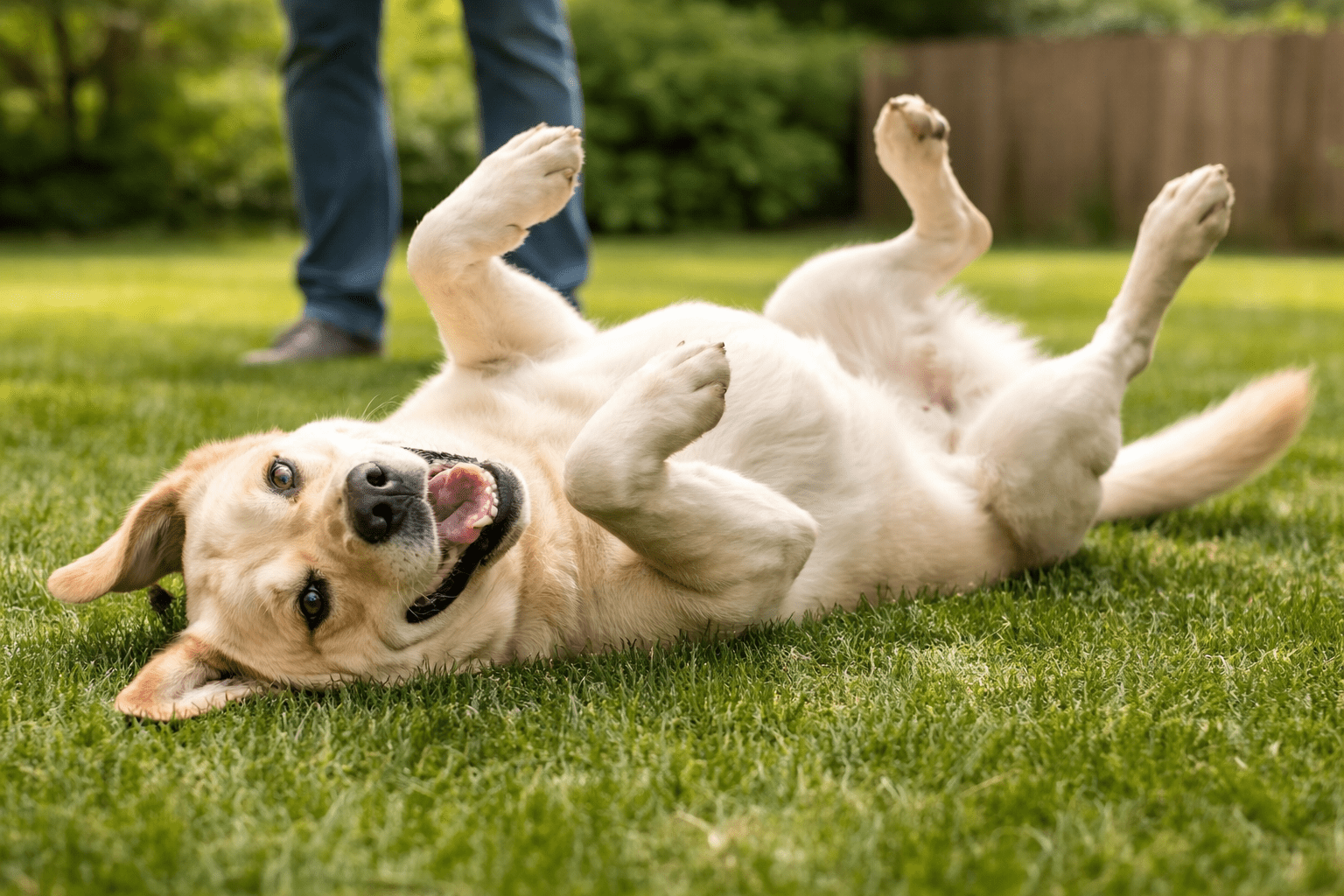
This behavior shows your dog feels safe in your presence. They know you will not harm them, and they are comfortable enough to put themselves in a submissive position. Not every dog will expose their belly to strangers, which makes this gesture even more meaningful when directed at you.
Understanding dog body language signals helps you recognize when your dog is genuinely relaxed versus showing fear-based submission. A truly relaxed dog will have soft eyes, a loose body, and may even make playful movements while on their back.
Physical Sensations and Nerve Endings
The belly region contains numerous nerve endings that respond positively to gentle stimulation. When you scratch or rub this area, you activate these nerve pathways, creating pleasurable sensations your dog cannot easily achieve on their own.
Dogs cannot reach their belly area effectively with their paws or mouth, so they rely on external help for this kind of stimulation. Your touch provides relief and satisfaction in areas they struggle to groom or scratch themselves.
The gentle pressure and rhythmic motion of belly rubs also have a calming effect. This physical contact can lower your dog’s heart rate and promote relaxation, similar to how massage works for humans.
The Science Behind Why Do Dogs Like Belly Rubs
The answer to why do dogs like belly rubs goes beyond simple pleasure. There are biological and chemical reactions happening in your dog’s brain that make this experience so rewarding.
Hormones and Brain Chemistry
When you give your dog belly rubs, their brain releases oxytocin, often called the “love hormone.” This hormone creates feelings of contentment and attachment, the same way it bonds mothers and puppies. Oxytocin reduces stress and anxiety while promoting trust and safety.
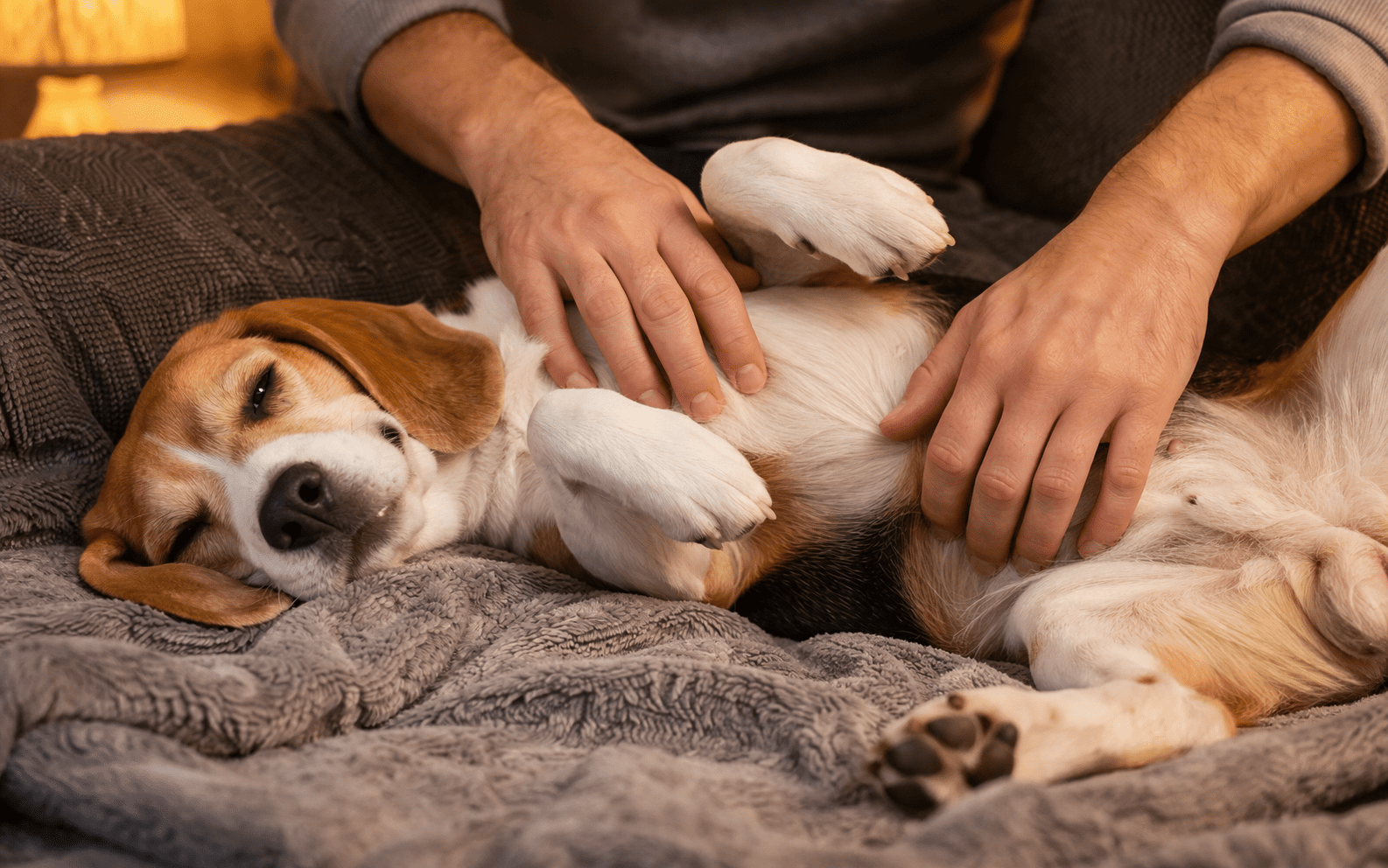
Belly rubs also decrease cortisol, the stress hormone in dogs. This dual effect of increasing feel-good chemicals while reducing stress makes belly rubs a powerful tool for emotional wellbeing.
Evolutionary and Pack Behavior Roots
Dogs inherited social grooming behaviors from their wolf ancestors, where physical closeness reinforced pack bonds. When your dog seeks belly rubs, they see you as family, and this interaction strengthens your role in their life. In home settings, belly exposure is less about submission and more about inviting affection and positive interaction.
Reading Your Dog’s Body Language During Belly Rubs
Not all belly exposure means your dog wants a belly rub. Learning to read the subtle differences in your dog’s body language ensures you respond appropriately and maintain trust.
Signs Your Dog Wants Belly Rubs
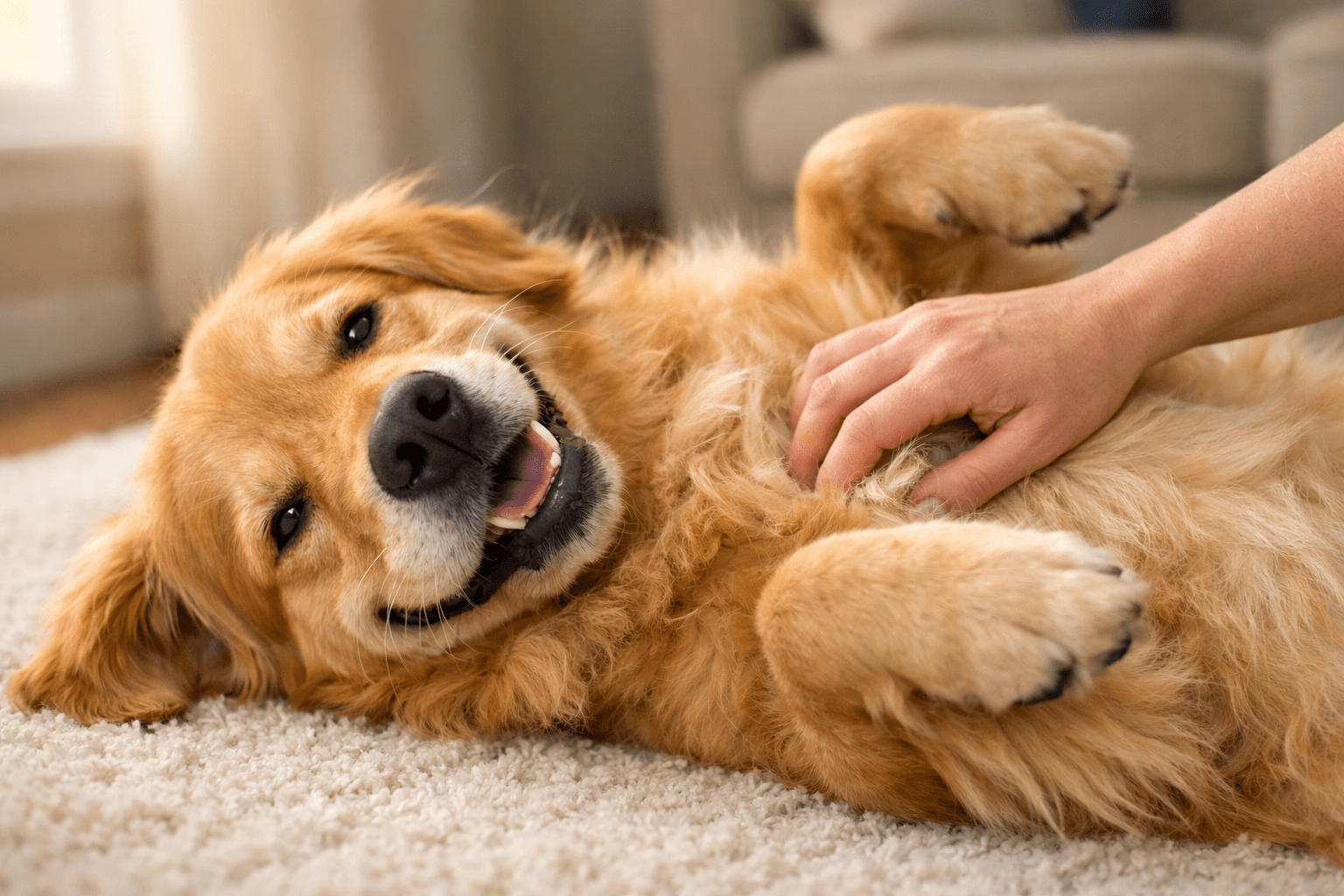
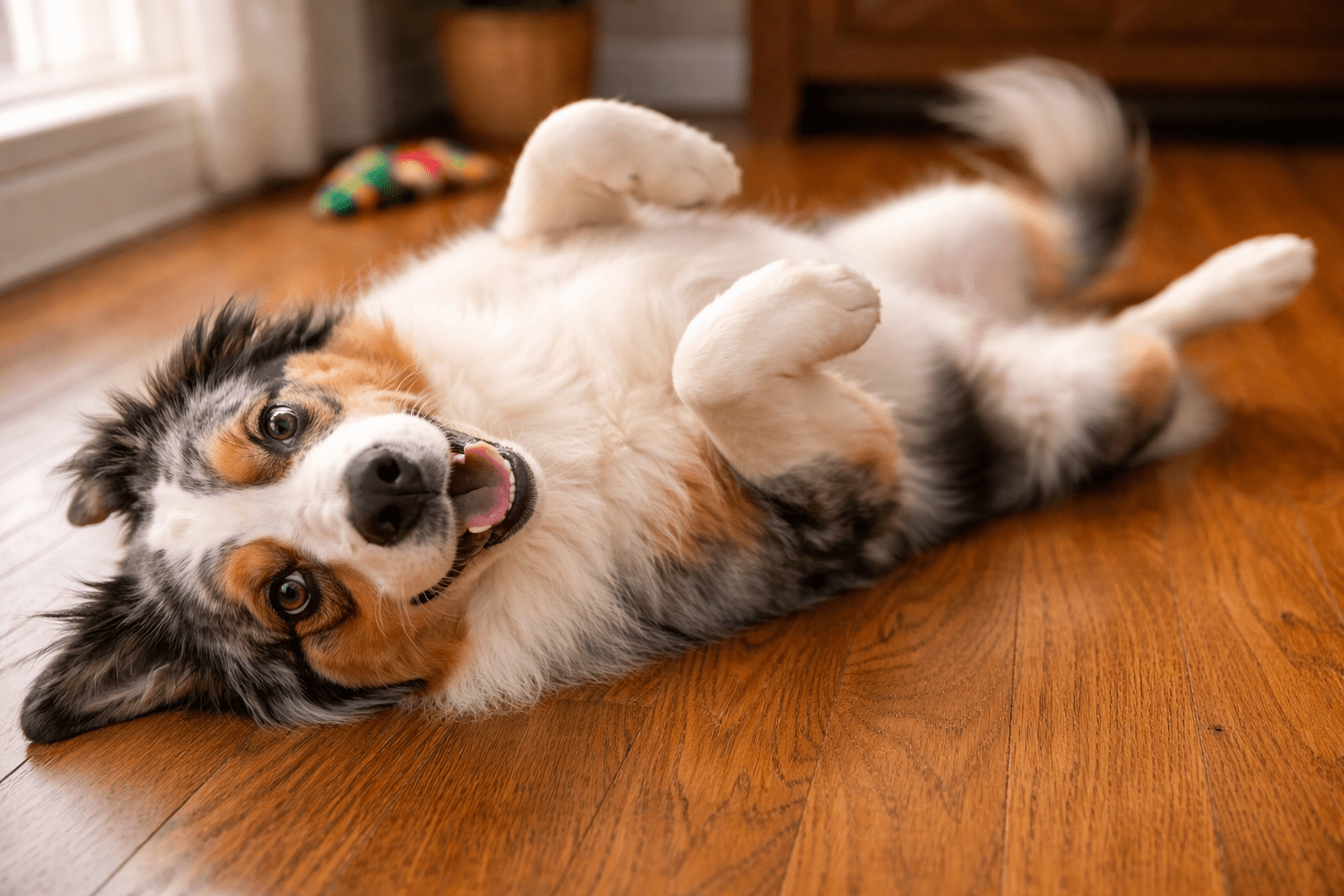
A dog who genuinely wants belly rubs will display relaxed, inviting body language. Look for these positive signals:
- Loose, wiggly body movements
- Soft, relaxed eyes with a gentle gaze
- Mouth slightly open in a relaxed expression
- Tail wagging or held in a neutral position
- Playful behavior before rolling over
- Staying in position and leaning into your touch
Similar to why dogs put paw on you, belly exposure is often an active request for attention. Your dog may nudge you, make eye contact, or position themselves directly in your path.
When Belly Exposure Does Not Mean Belly Rubs
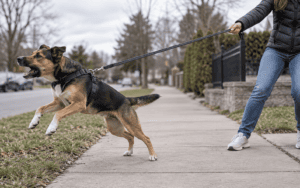
Some dogs expose their belly due to fear or stress, not because they want affection. These situations require a different response. Warning signs include:
- Stiff, tense body posture
- Wide eyes showing whites (whale eye)
- Ears pinned back against the head
- Closed mouth or lip licking
- Avoiding eye contact
- Staying very still or trembling
- Tail tucked between legs
In these cases, your dog is showing submissive appeasement, not asking for belly rubs. Respect this boundary and give your dog space. Forcing interaction when they are stressed can damage trust and create negative associations.
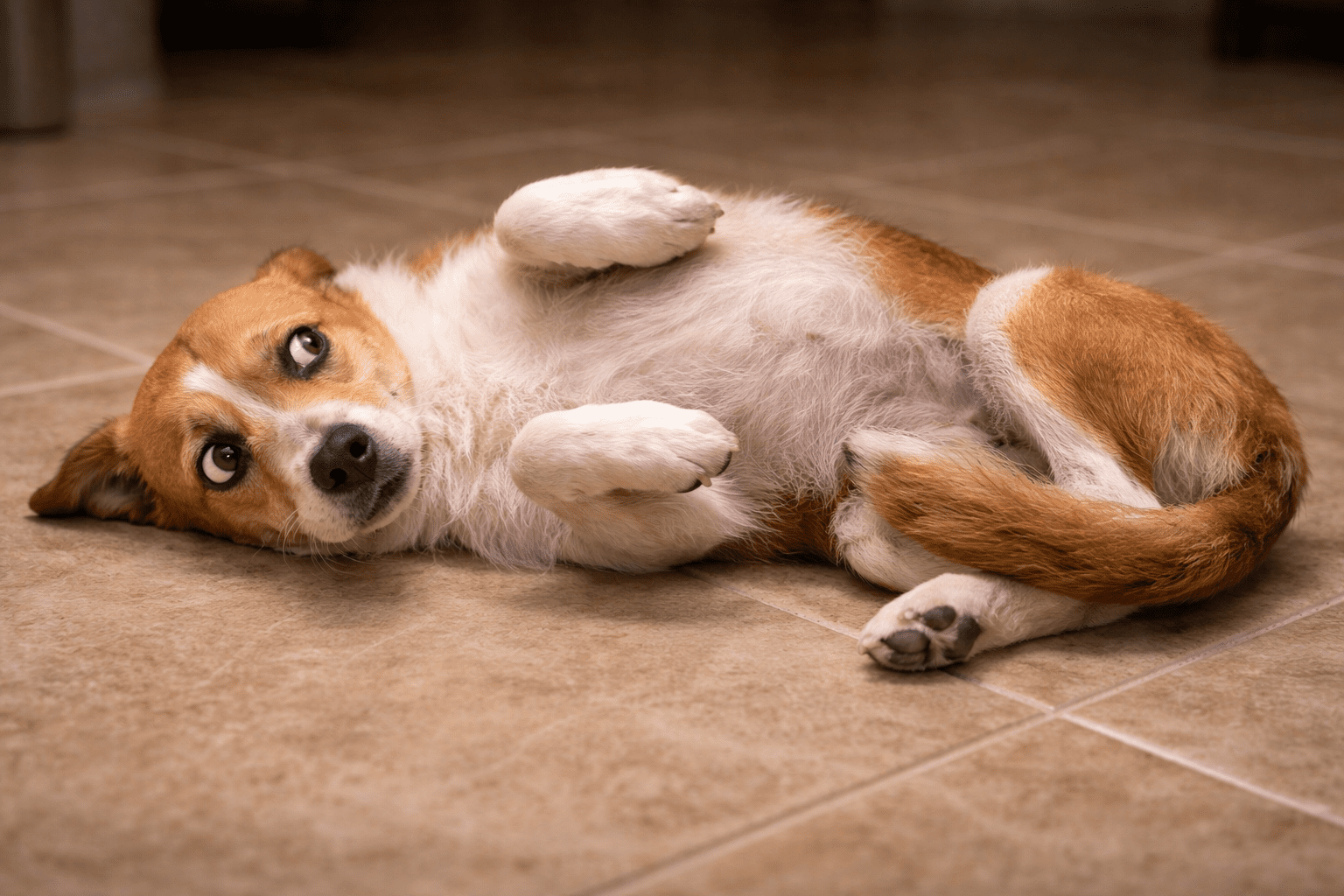
If you notice your dog frequently showing fear-based belly exposure, consider professional help through dog behavior training to address underlying anxiety issues.
How to Give Perfect Belly Rubs
Understanding the right technique ensures both you and your dog enjoy this bonding experience. The quality of belly rubs matters just as much as the frequency.
Proper Technique and Pressure
Start with gentle, slow movements using your fingertips or full palm. Most dogs prefer circular motions or light scratching rather than hard pressure. Pay attention to your dog’s reactions to find their sweet spot.
The lower belly and sides often respond well to gentle scratching, while the chest area may prefer broader strokes. Avoid the genital area and be careful around sensitive spots like nipples or any skin issues.
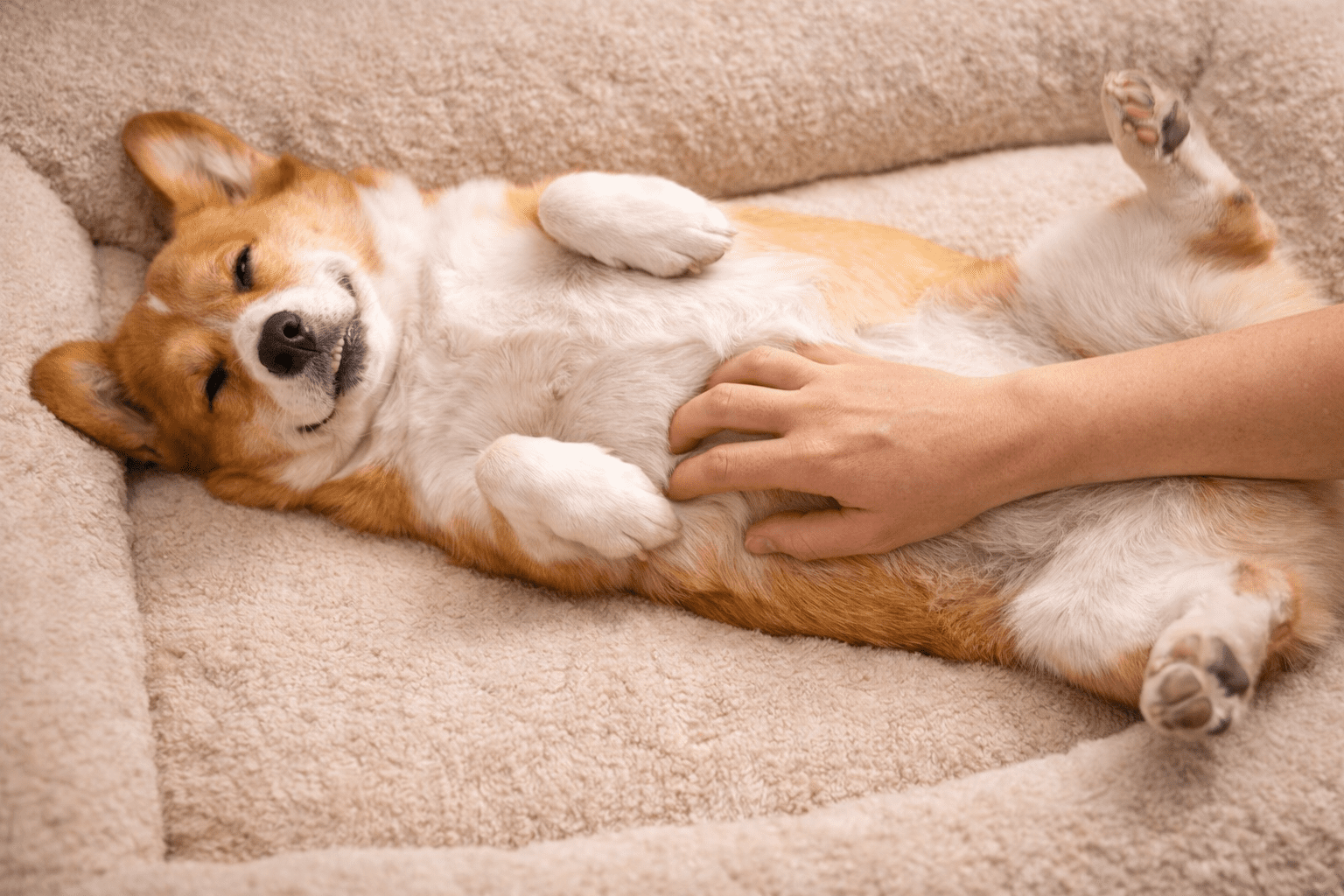
Watch for the “scratch reflex” where your dog’s leg kicks involuntarily. This is a natural response to stimulation of certain nerve pathways and usually indicates you have found a particularly satisfying spot. However, if your dog seems uncomfortable despite the leg kick, adjust your approach.
Duration and Timing
Keep belly rub sessions relatively short, between 30 seconds to a few minutes. Quality matters more than quantity. Multiple short sessions throughout the day often work better than one long session that might overstimulate your dog.
Choose calm moments for belly rubs rather than high-energy playtime. After a walk, before bed, or during quiet relaxation time are ideal. This reinforces belly rubs as a calming, bonding activity rather than exciting play.
Stop if your dog gets up, moves away, or shows signs of discomfort. Always let your dog control the duration. Forcing continued interaction when they are done can create negative associations.
Breed and Individual Differences in Belly Rub Preferences
Just like why my dog sits on me varies by individual personality, belly rub preferences also differ among dogs. Understanding these variations helps you respect your dog’s unique needs.
Breed-Specific Tendencies
Some breeds are more likely to enjoy and seek out belly rubs due to their temperament and socialization history:
| Breed Group | Belly Rub Tendency | Characteristics |
| Companion Breeds (Cavalier King Charles Spaniel, Havanese) | High | Bred for close human contact, very affectionate, seek physical touch |
| Working Dogs (Labrador Retriever, Golden Retriever) | High to Moderate | People-oriented, responsive to positive interaction, eager to please |
| Terriers (Jack Russell, Yorkshire Terrier) | Moderate | Independent nature, may prefer on their own terms, active personalities |
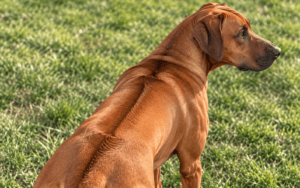
| Guard Dogs (German Shepherd, Rottweiler) | Moderate to Low | Reserved with strangers, selective about physical contact, need trust building |
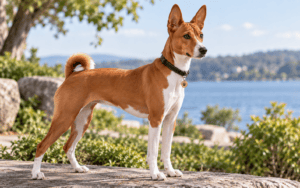
| Independent Breeds (Shiba Inu, Basenji) | Low to Moderate | Less physically demonstrative, prefer other forms of interaction, strong boundaries |
These are general tendencies, not strict rules. Individual personality always plays a bigger role than breed alone.
Personality and Past Experience
Your dog’s history significantly impacts their comfort with belly rubs. Dogs from positive, well-socialized backgrounds typically enjoy physical affection more readily. Rescue dogs or those with trauma may need time and patience to build trust.
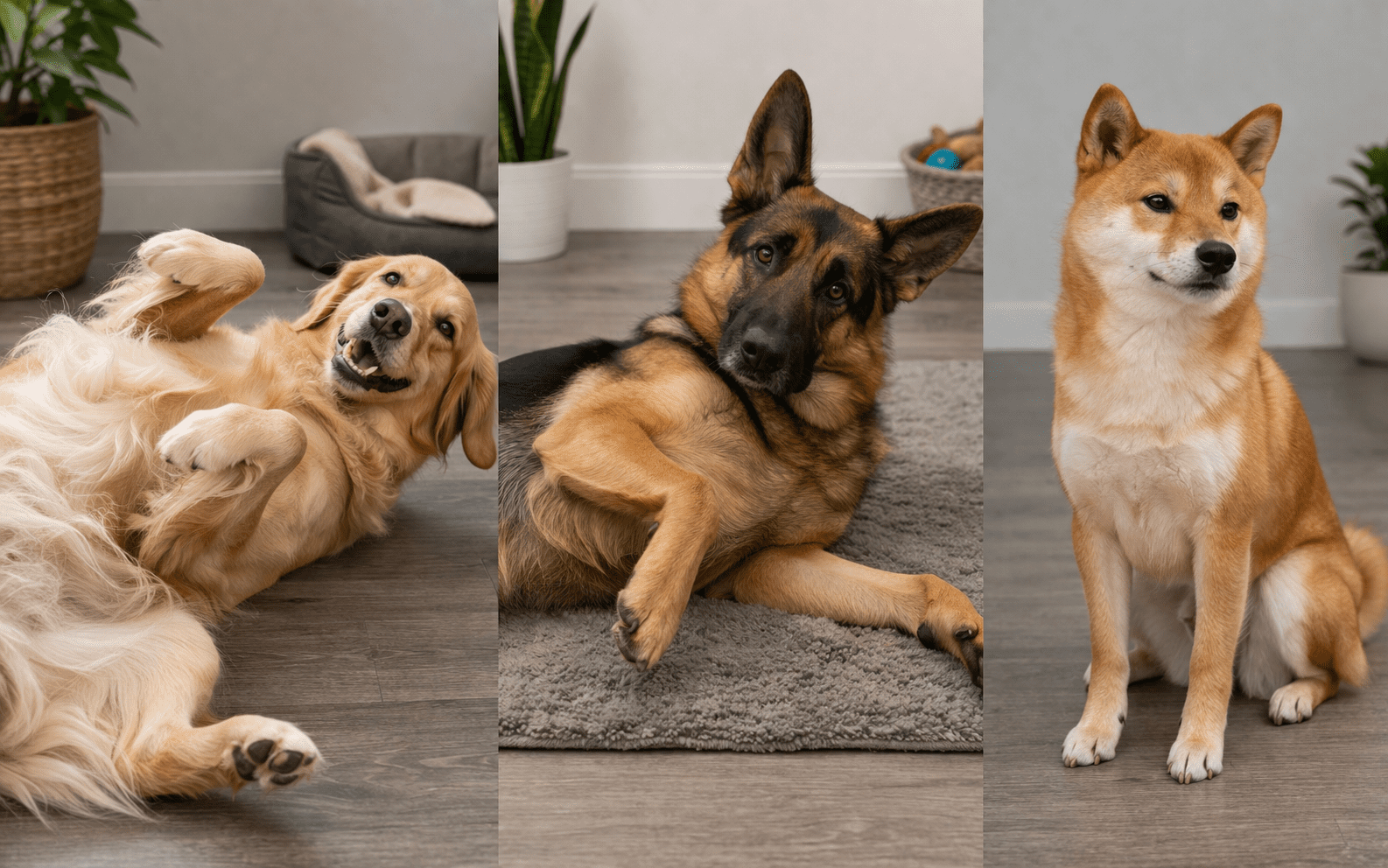
Some dogs are naturally more independent and prefer less physical contact overall. Others are velcro dogs who cannot get enough touch and attention. Neither preference is wrong, they simply reflect your dog’s personality.
Age also matters. Puppies may be more wiggly and playful during belly rubs, while senior dogs might enjoy gentler, shorter sessions that respect their aging bodies and potential arthritis or sensitivity.
Common Scenarios and What They Mean
Different contexts for belly exposure can signal different things. Learning to read these situations helps you respond appropriately.
Belly Rubs During Play Versus Rest
During active play, a dog flopping on their back often signals playfulness rather than a request for belly rubs. They may roll quickly, bounce back up, and continue playing. This behavior is more about play invitation than seeking gentle affection.
During rest or calm moments, slow rolling over with a relaxed demeanor clearly signals desire for belly rubs. The pace and energy level tell you what your dog wants.
Meeting New People or Dogs
When your dog shows their belly to strangers, assess the full context carefully. A confident, social dog may invite belly rubs from new friends. A nervous dog might be showing submissive appeasement.
Watch the rest of the body language. A wagging tail, forward ears, and approach behavior suggest friendly interest. Avoidance, tension, or stress signals mean your dog needs space, not touch.
Comparing Belly Rubs to Other Forms of Affection
Dogs show and receive affection in multiple ways. Understanding where belly rubs fit helps you provide well-rounded emotional support.
| Affection Type | Primary Benefit | Best Timing | Dog Preference |
| Belly Rubs | Trust building, stress relief, bonding | Calm, quiet moments | Dogs who enjoy physical touch and show relaxed belly exposure |
| Petting/Scratching | General affection, attention | Anytime, versatile | Most dogs, less vulnerable than belly rubs |
| Play | Exercise, mental stimulation, bonding | Active times, when dog has energy | High-energy dogs, younger dogs |
| Training/Working Together | Mental challenge, purpose, communication | Structured sessions | Working breeds, intelligent dogs |
| Quiet Presence | Companionship, security | Rest periods, bedtime | Independent dogs, seniors, anxious dogs |
The best approach combines multiple forms of affection based on your dog’s individual preferences and needs throughout the day.
When to Avoid Dog Belly Rubs
Knowing when not to give belly rubs is just as important as knowing how to give them properly.
Medical Concerns and Pain
Never force belly rubs if your dog shows signs of pain or discomfort in the abdominal area. Conditions like bloat, digestive issues, skin problems, or injuries can make belly touch painful.
If your dog previously enjoyed belly rubs but suddenly avoids them, schedule a veterinary checkup. Behavioral changes often signal underlying health problems.
Pregnant or nursing dogs may have sensitive bellies. Respect their boundaries and avoid this area unless they actively seek the contact.
Respect and Consent
Always give your dog the choice to accept or refuse belly rubs. Consent-based interaction builds trust and respects your dog’s autonomy.
If your dog moves away, covers their belly, or shows stress signals, stop immediately. Forcing continued contact teaches your dog that their communication does not matter, which damages your relationship.
Some days your dog may want belly rubs; other days they may prefer different interaction. This variation is normal and healthy. Honor your dog’s changing needs and moods.
Why Do Dogs Like Belly Rubs and What It Reveals
The simple question of why do dogs like belly rubs opens a window into canine psychology, bonding, and communication. This behavior combines trust, biology, social bonding, and pleasure in one meaningful interaction.
When your dog rolls over for belly rubs, they are telling you they feel safe, they trust you completely, and they want to strengthen your connection. The release of bonding hormones, the physical pleasure from stimulation, and the emotional security all contribute to making belly rubs a favorite activity.
By learning to read your dog’s signals, respecting their boundaries, and providing belly rubs thoughtfully, you deepen your relationship and support your dog’s emotional wellbeing. This seemingly simple gesture carries profound meaning in the language of dogs.
Professional guidance through dog obedience training can help you better understand your dog’s communication and build an even stronger foundation of trust and respect.
The Connection Between Belly Rubs and Bonding
Understanding why do dogs like belly rubs reveals how every positive interaction strengthens your relationship, with belly rubs representing one of the most intimate forms of canine-human connection. These moments show your dog choosing vulnerability with you, seeking comfort and connection, and reinforcing mutual trust.
Whether your dog loves belly rubs or prefers other affection, respecting their preferences creates a happier, more secure companion.
At K9 Mania Dog Training, we understand that building a strong bond with your dog goes beyond belly rubs. As Long Island’s leading board and train program, we help you address any dog behavior issues and develop the communication skills that create lasting trust.
Whether you are working on obedience, behavior challenges, or simply want to deepen your relationship with your dog, our expert trainers can guide you. Visit our website to learn how we can help you and your furry companion thrive together.
You May Also Want to Read
- What Is Displacement Behavior in Dogs?
- Why Do Dogs Circle Before Lying Down?
- 10 Most Trainable Dog Breeds That Learn Fast
- How to Train a German Shepherd: Complete Guide for Success
Frequently Asked Questions
Do dogs actually enjoy belly rubs?
Yes, most dogs genuinely enjoy belly rubs when they voluntarily expose their belly in a relaxed state. The experience releases oxytocin in their brain, which creates feelings of pleasure and bonding. However, enjoyment depends on the individual dog’s personality, past experiences, and current mood. Some dogs prefer other forms of affection like ear scratches or back rubs. Always watch your dog’s body language to confirm they are enjoying the interaction rather than showing submissive fear.
Which dog breed likes belly rubs the most?
Companion breeds like Golden Retrievers, Labrador Retrievers, and Cavalier King Charles Spaniels typically enjoy belly rubs the most because they were bred for close human contact and affectionate behavior. These breeds are generally very people-oriented and seek physical touch frequently. However, individual personality matters more than breed, so you may find independent breed dogs who love belly rubs or typically affectionate breeds who prefer less physical contact. Your specific dog’s preferences should guide your interactions.
How to tell if a dog wants belly rub?
A dog who wants belly rubs will show relaxed, inviting body language including soft eyes, a wiggly or loose body, gentle tail wagging, and will actively seek your attention. They may roll over slowly in front of you, make eye contact, or nudge you with their nose. Their mouth will be relaxed or slightly open in a calm expression. In contrast, fearful belly exposure shows tense muscles, pinned ears, whale eyes, and avoidance behavior, which means the dog needs space rather than touch.
Do dogs show their belly when they trust you?
Yes, showing their belly is one of the strongest trust signals a dog can give because the belly contains vital organs and is highly vulnerable. When dogs expose this area to you, they are demonstrating they feel completely safe in your presence and do not fear harm. This behavior indicates a secure bond and positive relationship. However, context matters since some dogs show belly exposure due to fear-based submission, so always evaluate the full body language and situation before assuming trust.
What do dogs feel when you scratch their belly?
When you scratch their belly, dogs experience pleasurable physical sensations from stimulating nerve-rich areas they cannot reach themselves. This touch releases oxytocin and endorphins in their brain, creating feelings of happiness, contentment, and bonding with you. The gentle pressure and rhythmic motion also have calming effects that lower heart rate and reduce stress hormones like cortisol. Many dogs find specific spots particularly satisfying, which may trigger the involuntary scratch reflex where their leg kicks in response to the stimulation.
Why do dogs kick their legs during belly rubs?
The leg kicking during belly rubs is an involuntary scratch reflex triggered when you stimulate specific nerve pathways in the belly area. This automatic response is similar to how your leg kicks when a doctor taps your knee reflex. The scratching motion is your dog’s natural attempt to remove what their nervous system perceives as an irritant, even though in this case it is pleasurable touch. This reflex does not necessarily mean discomfort, but if your dog seems bothered or moves away despite the leg kick, adjust your technique or location.