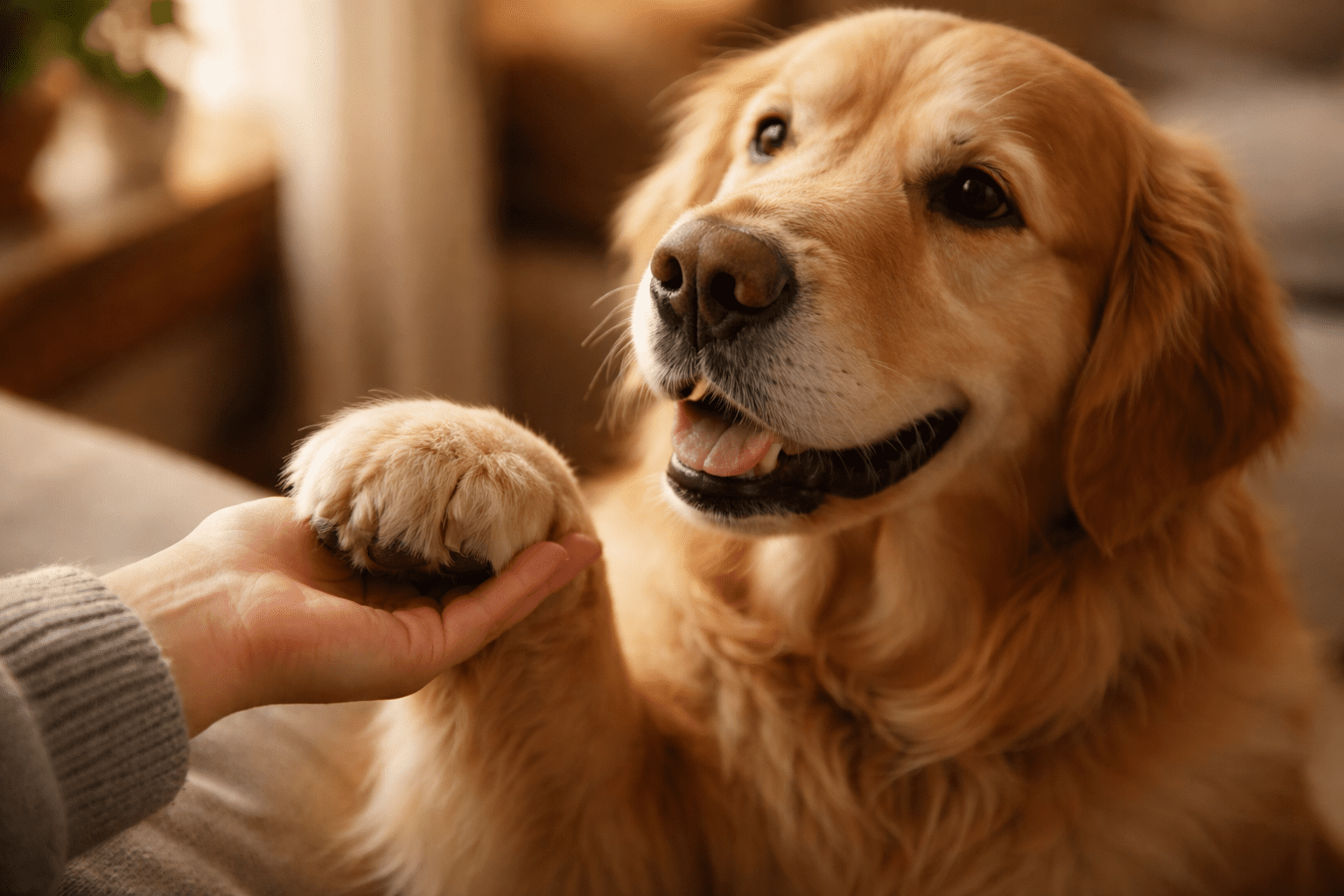
Why do dogs put their paw on you? This gentle gesture usually means your dog wants attention, affection, or is trying to communicate a specific need. It’s one of the most endearing ways dogs interact with their owners.
When your furry friend lifts their paw and places it on your leg or hand, they’re using body language to connect with you. This behavior can mean different things depending on the context, your dog’s personality, and what’s happening around them.
In this guide, we’ll break down the meaning behind pawing behavior, explore different reasons dogs do it, and help you understand how to respond appropriately to strengthen your bond.
Looking to build better communication with your dog? Our board and train Long Island programs teach you how to read and respond to your dog’s behavior effectively.
What It Means When Dogs Put Their Paw on You
Dogs communicate primarily through body language, and pawing is one of their most direct ways to get your attention. Unlike barking or whining, a paw on your leg is a polite, physical request for interaction.
This behavior typically develops early in a dog’s life and continues into adulthood because it works. When puppies paw at their mother, they get fed or comforted, so they learn this action produces positive results.
Basic Communication Through Pawing
When a dog places their paw on you, they’re initiating contact in the most straightforward way they know. Think of it as their version of tapping someone on the shoulder.
The gentle pressure of a paw is usually a friendly gesture. Your dog has learned that this behavior gets your eyes on them, which is exactly what they want. Most dogs prefer this method over more disruptive behaviors like jumping or barking.
Dogs also use pawing to test your response. If you pet them when they paw you, they’ll remember that connection and repeat the behavior. If you ignore it, they might try a different approach or increase their efforts.
Different Types of Paw Behaviors
Not all pawing looks the same, and the style of pawing can tell you a lot about what your dog wants.
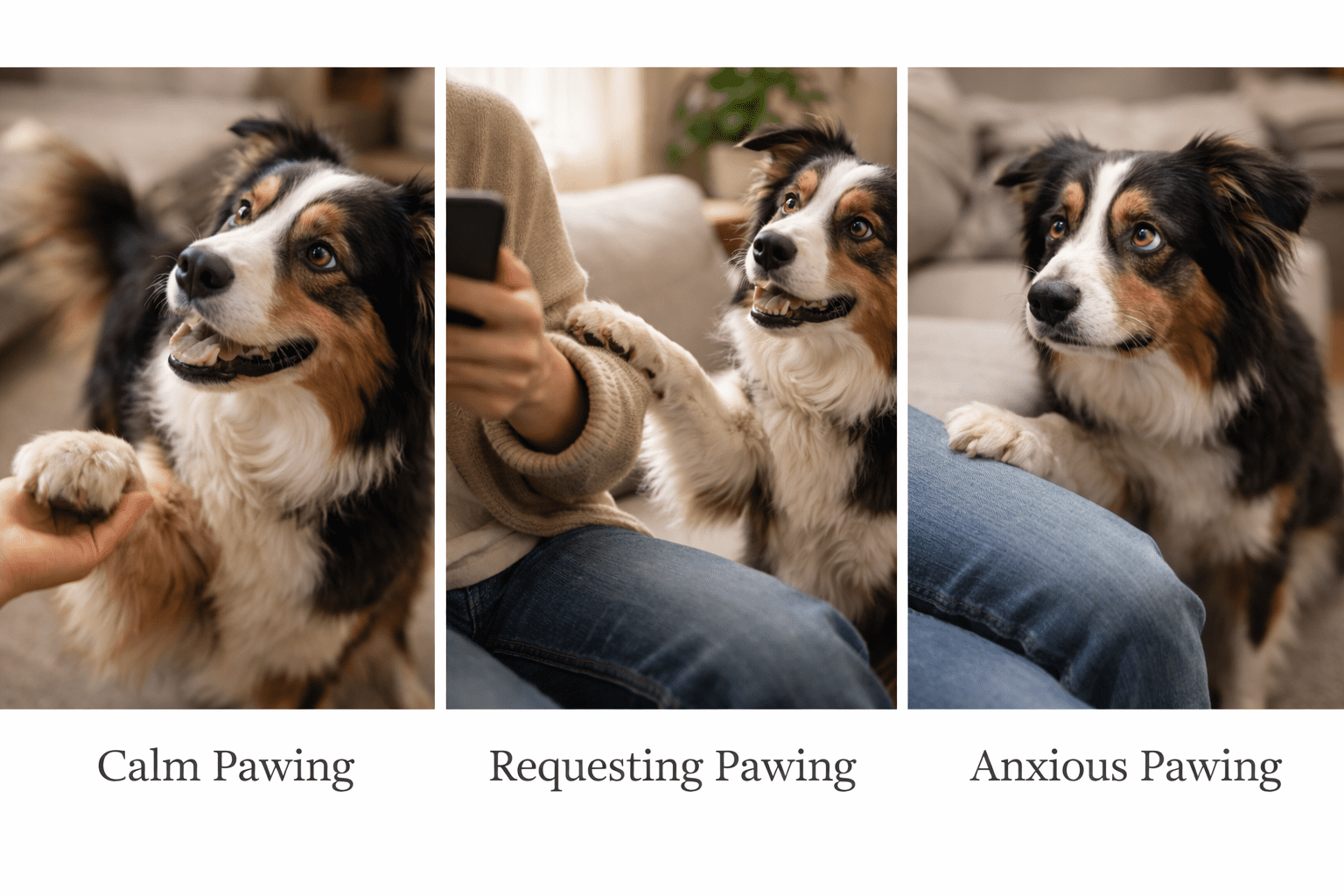
A soft, single paw placement usually means your dog wants gentle attention or is checking in with you. Repeated pawing with more pressure often signals urgency, like needing to go outside or wanting their dinner.
Some dogs will scrape or scratch at you with their paw, which can indicate frustration or excitement. Others might hold their paw on you for several seconds, which typically shows they want prolonged contact or comfort.
Pay attention to your dog’s overall body language when they paw you. A relaxed dog with a wagging tail has different intentions than a tense dog with pinned ears.
Reasons Why Dogs Put Their Paw on You
Understanding why do dogs put their paw on you helps you respond in ways that strengthen your relationship and address their needs appropriately.
Seeking Your Attention
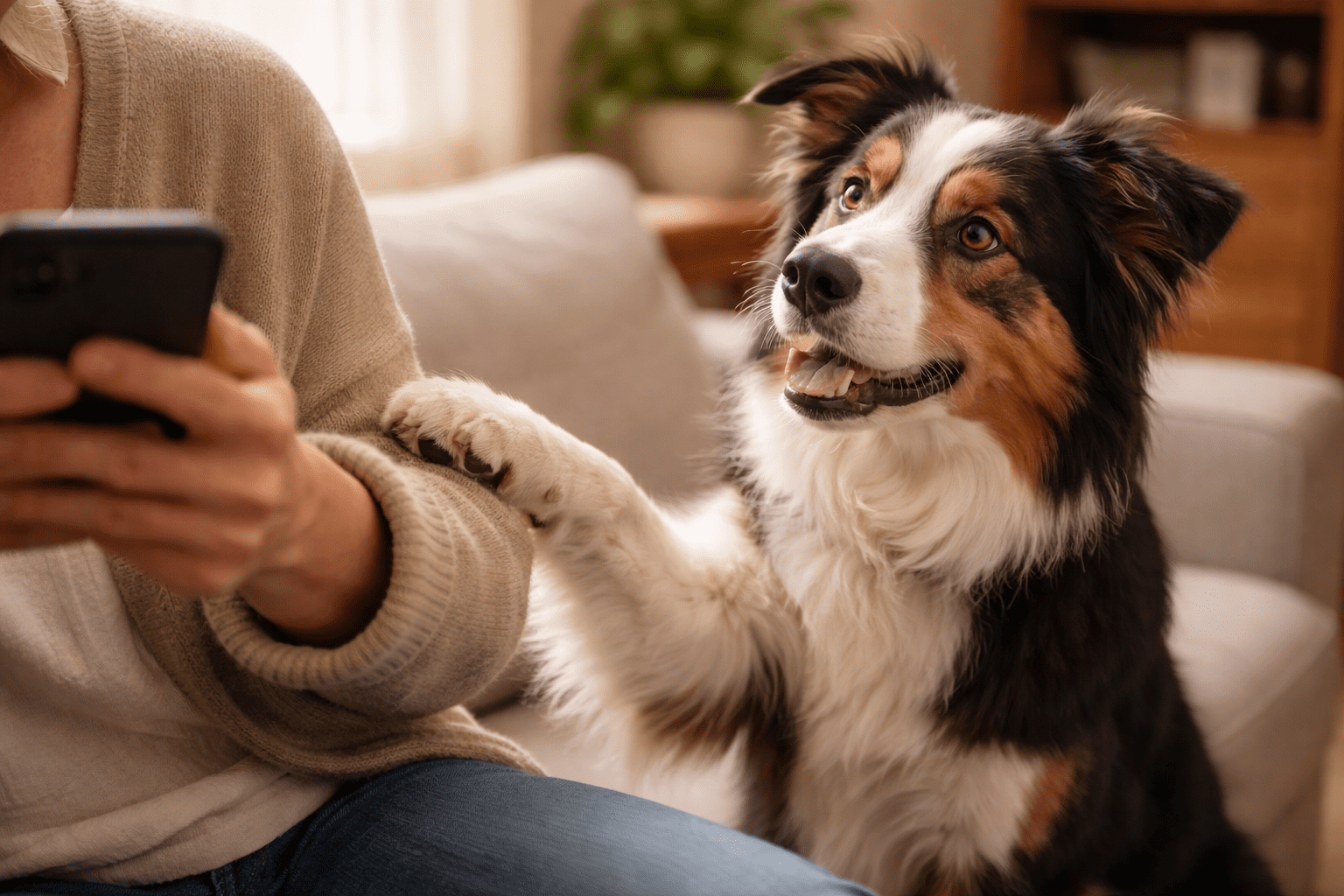
The most common reason dogs paw at their owners is simple: they want your attention. This might be the most successful strategy in your dog’s communication toolkit.
When you’re focused on your phone, computer, or TV, your dog might gently place a paw on you as a reminder they exist. This behavior is especially common in dogs who are very bonded to their owners.
Dogs quickly learn that pawing interrupts whatever you’re doing and redirects your focus to them. Even if you only glance down and say their name, that’s a win from their perspective.
Showing Affection and Bonding
Pawing isn’t always about getting something. Sometimes your dog simply wants to express love and maintain physical contact with you.
When you’re sitting together and your dog rests their paw on your leg, they’re often just enjoying your presence. This gentle touch releases feel-good hormones for both of you and reinforces your bond.
Dogs are pack animals who naturally seek physical closeness with their family members. A paw on you is their way of saying “I’m here with you” without needing anything in return.
This affectionate pawing is usually calm and gentle, often accompanied by a relaxed body posture and soft eyes. Your dog might do this while lying next to you or resting their head on your lap.
Asking for Something Specific
Dogs are smart enough to use pawing to request specific things they’ve learned you can provide.
If your dog paws you near mealtime, they’re probably reminding you about dinner. A paw at the door means they need to go outside. Pawing while you’re holding a toy suggests they want to play.
This behavior shows your dog has made clear connections between actions and outcomes. They’ve figured out that pawing near certain times or places gets them what they need.
Some dogs become very precise with this communication. They might paw you, then walk to their water bowl if it’s empty, or paw you and look toward the leash when they want a walk.
Expressing Anxiety or Seeking Comfort
When dogs feel worried, scared, or stressed, they often seek reassurance from their trusted person through pawing.
During thunderstorms, fireworks, or vet visits, your dog might repeatedly paw at you looking for comfort. This behavior says “I’m scared and need you close” in the clearest way they can express it.
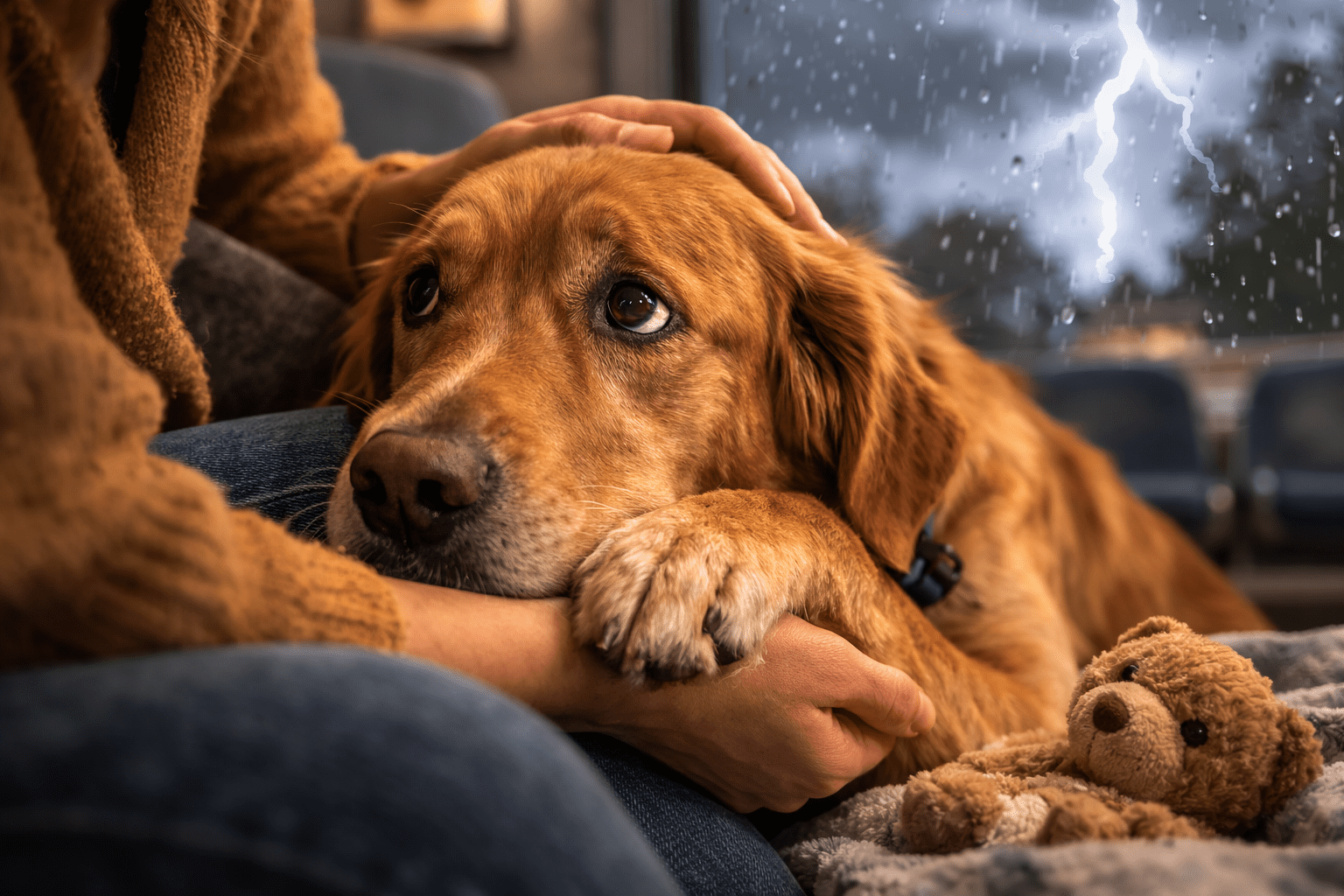
Anxious pawing usually comes with other stress signals like panting, trembling, or trying to climb into your lap. The pawing might be more insistent and urgent than typical attention-seeking behavior.
If your dog has separation anxiety, they might paw excessively when they sense you’re about to leave. This is their way of trying to keep you close and prevent the anxiety they associate with being alone.
Learned Behavior and Reinforcement
Many dogs paw simply because this behavior has been reinforced over time, sometimes without owners realizing it.
If you’ve consistently responded to pawing with attention, treats, or play, your dog has learned this is an effective strategy. Even negative attention like saying “stop” can reinforce the behavior because it’s still attention.
Dogs who were rewarded for pawing as cute puppies often continue this behavior into adulthood. What was adorable in a 10-pound puppy can become demanding in a 70-pound adult dog.
The good news is that learned behaviors can be modified. Understanding that you’ve reinforced this pattern is the first step toward changing it if needed.
How to Respond When Your Dog Paws You
Knowing how to react to pawing helps you encourage good communication while preventing pushy or demanding behavior.
When to Encourage the Behavior
Pawing can be a positive form of communication when it’s gentle and appropriate. If your dog politely paws to go outside for bathroom breaks, that’s a behavior worth encouraging.
When your dog paws during training sessions or learning new commands, this shows engagement and willingness to interact. Rewarding this participation builds confidence and strengthens your training bond.
Gentle pawing during calm bonding time, like when you’re relaxing together, is fine to accept. This maintains your emotional connection and lets your dog express affection naturally.
If you want to keep this behavior, respond consistently but on your terms. Pet them for a moment, acknowledge them, then return to what you were doing so they learn patience.
When to Redirect the Behavior
Pawing becomes problematic when it’s demanding, excessive, or happening at inappropriate times. If your dog paws frantically whenever you sit down, they’re being pushy rather than polite.
When pawing accompanies whining, barking, or jumping, it’s part of a pattern of demanding behavior that needs redirection. Respond by asking for a calm “sit” before giving attention.
If your dog paws you while you’re eating, working, or in conversation, teach them to wait patiently instead. Stand up and ignore them until they settle, then reward the calm behavior.
For dogs who paw hard enough to scratch or hurt, redirect immediately to gentler forms of communication. Our private dog training Long Island services can help you teach alternative behaviors your dog can use to get your attention appropriately.
Understanding Different Pawing Patterns
Different contexts and body language cues help you interpret what your dog means when they paw you.
| Pawing Style | Body Language | Likely Meaning | Best Response |
| Single gentle tap | Relaxed posture, soft eyes, wagging tail | Seeking affection or checking in | Brief acknowledgment, pet if desired |
| Repeated soft paws | Alert ears, focused gaze, sitting politely | Requesting something specific (food, walk, play) | Check what they need, provide if appropriate |
| Persistent heavy pawing | Tense body, whining, pacing | Urgency (bathroom, anxiety, discomfort) | Investigate immediately, address the need |
| Scraping or scratching | Excited jumping, play bow, toy nearby | High energy, wanting to play | Redirect to appropriate play if timing works |
| Holding paw on you | Leaning against you, relaxed breathing | Bonding, seeking comfort, showing trust | Accept the contact, enjoy the moment |
| Frantic repeated pawing | Panting, trembling, wide eyes | Stress, fear, or medical issue | Comfort them, check for problems |
This table shows you exactly what to look for when trying to understand why do dogs put their paw on you in different situations.
Paw Behavior vs Other Dog Communication Methods
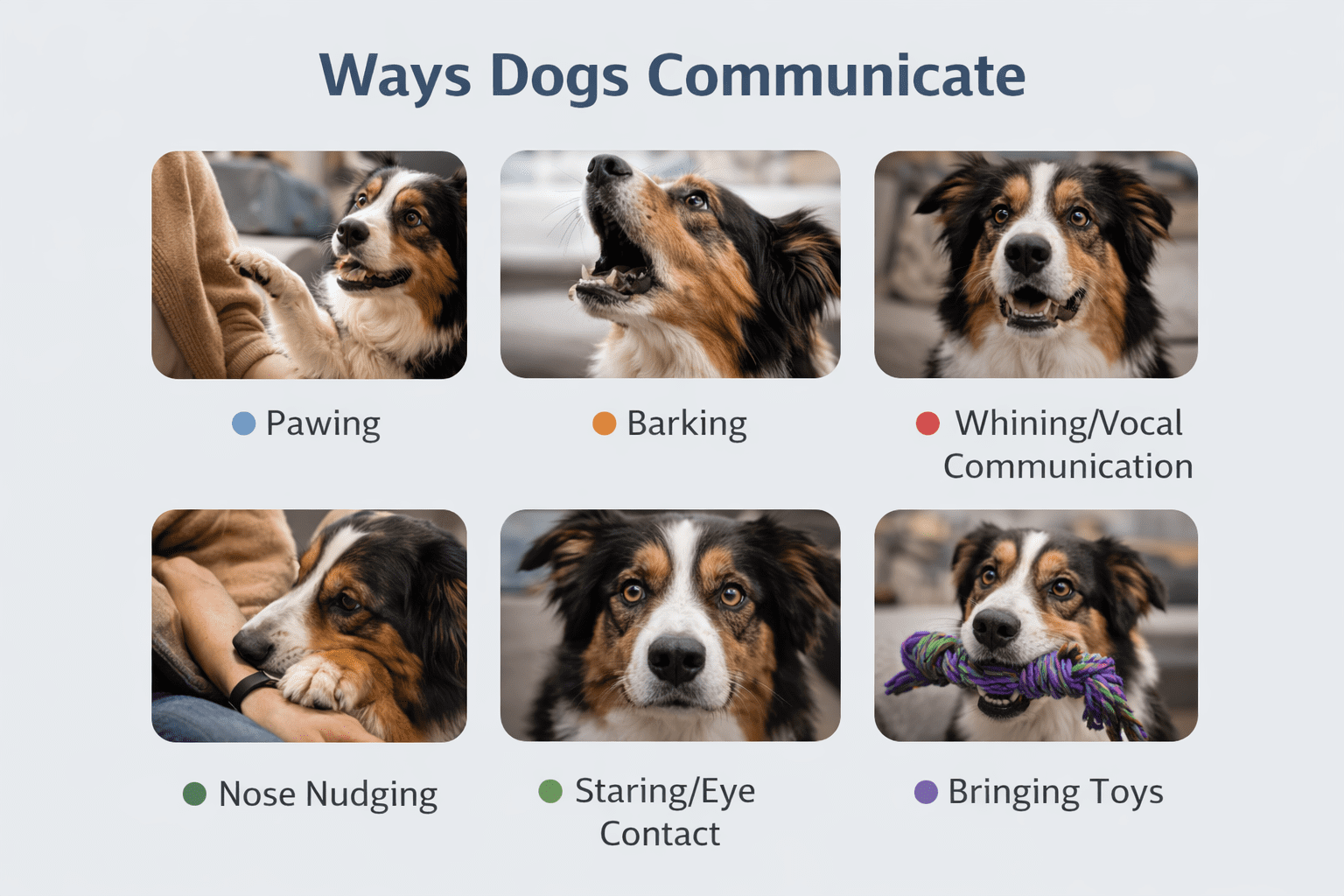
Dogs have several ways to communicate, and pawing is just one tool in their repertoire.
| Communication Method | What It Looks Like | Common Meanings | When Dogs Use It |
| Pawing | Lifting paw and placing it on person | Attention, affection, requests, anxiety | Close-range, direct interaction needed |
| Barking | Vocal sound at various pitches | Alert, excitement, demand, warning | Distance communication, urgent needs |
| Whining | High-pitched vocal sound | Stress, wanting something, pain | Expressing discomfort or strong desire |
| Nudging with nose | Pushing with snout | Affection, play invitation, “pet me” | Close-range gentle request |
| Staring | Direct eye contact | Focus, wanting something, questioning | Silent communication from any distance |
| Bringing toys or objects | Carrying item to person | Play request, showing off, offering gift | Interactive play or sharing |
Understanding these different methods helps you see pawing in context with your dog’s full communication style.
Training Your Dog About Pawing Behavior
Whether you want to encourage, modify, or reduce pawing, training gives you control over this behavior.
Start by deciding what you want. If pawing is fine sometimes but not others, you’ll need to teach your dog the difference. Consistency is key to any training success.
Teaching Alternative Behaviors
If your dog paws too much, teach them other ways to get your attention that you prefer.
Train a “touch” command where your dog gently touches their nose to your hand instead of pawing. This gives them an alternative behavior that’s easier to control and less likely to become pushy.
Teach them to sit quietly and make eye contact when they want something. Reward this calm request immediately so they learn patience gets better results than demanding pawing.
For dogs who paw when anxious, work on building confidence through our obedience dog training programs. A confident dog relies less on constant reassurance and learns to self-soothe.
Setting Clear Boundaries
Dogs thrive with clear, consistent rules about what’s acceptable and what’s not.
If you don’t want pawing during meals, never reward it even once. Stand up and turn away every single time until your dog learns that pawing during dinner gets them nothing.
Create a specific release word like “okay” that signals when interaction time begins. Before that word, pawing gets ignored. After that word, gentle pawing for attention is fine.
Use the same response every time your dog paws inappropriately. Mixed messages confuse dogs and make training take longer. Everyone in your household should follow the same rules.
Recognizing When Professional Help Is Needed
Sometimes pawing is part of bigger behavioral issues that need expert guidance.
If your dog’s pawing is accompanied by aggression, severe anxiety, or other concerning behaviors, professional training helps address the root cause. What looks like simple attention-seeking might actually be stress or insecurity.
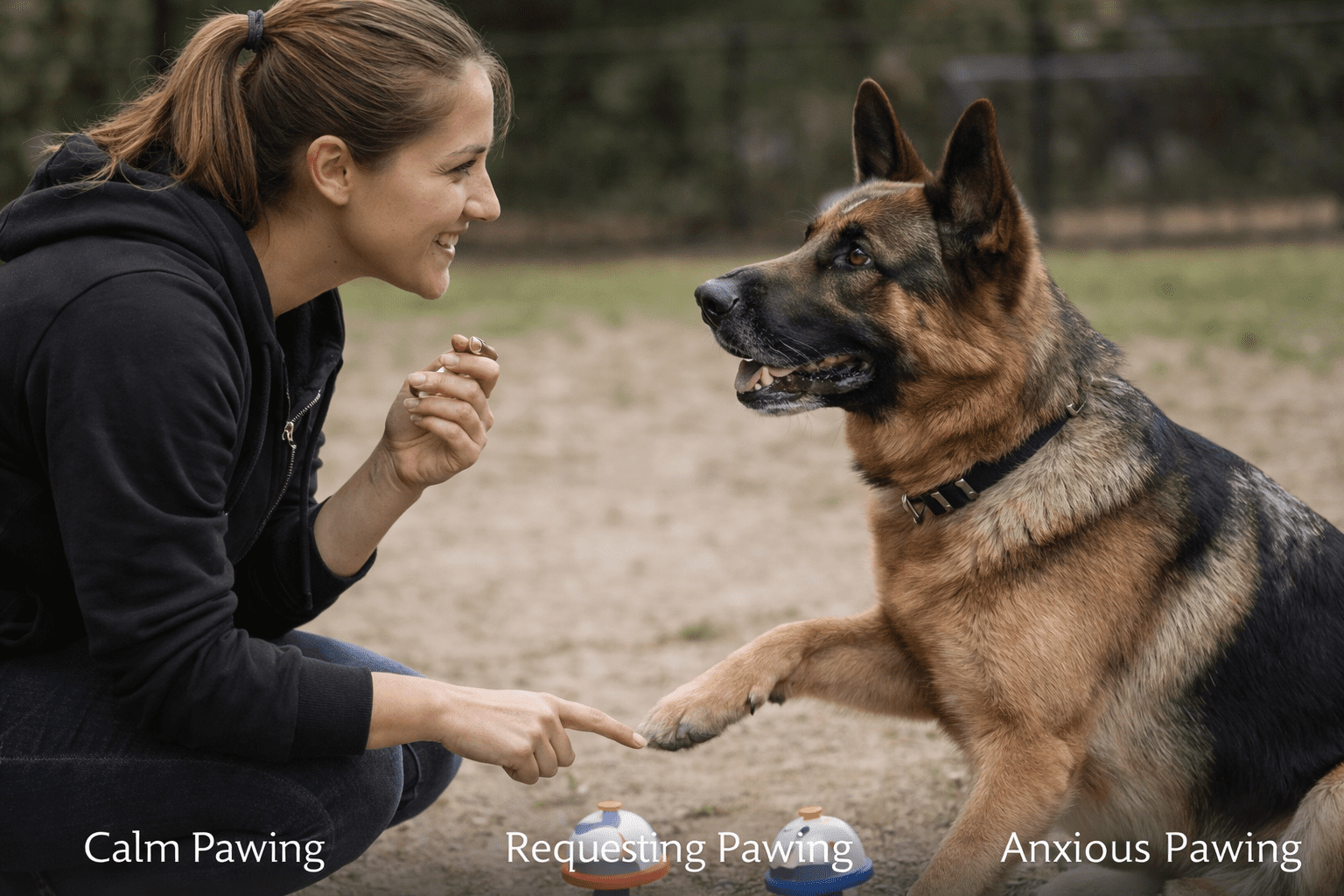
Dogs who paw excessively despite your efforts to redirect might have learned the behavior so deeply that they need structured training to break the pattern. Our effective ways to train dogs approach gives you proven methods that work.
When pawing interferes with daily life or becomes destructive (scratching doors, damaging furniture, hurting people), it’s time to bring in professional help before the problem gets worse.
Understanding Your Dog’s Unique Pawing Style
Every dog has their own communication preferences, and pawing might be more or less common depending on your dog’s personality.
Some breeds are naturally more “paw-oriented” in their communication. Retrievers, for example, were bred to use their mouths and paws for work, so pawing comes naturally to them.
Your dog’s individual history matters too. Dogs who were rewarded heavily for pawing as puppies will do it more as adults. Rescue dogs might paw more if they’re still building trust and seeking reassurance.
Pay attention to patterns in when and how your dog paws you. Do they do it more in the morning? When certain people are around? During specific activities? These patterns reveal what triggers the behavior.
The strength and style of pawing also varies by personality. Confident dogs might paw boldly and persistently, while shy dogs use tentative, gentle paw touches to test if interaction is welcome.
Wrapping Up: What Your Dog’s Paw Really Means
Understanding why do dogs put their paw on you opens up a whole new level of communication with your best friend. This simple gesture carries meaning that ranges from “I love you” to “I need something” to “I’m worried and need comfort.”
The next time your dog reaches out with their paw, take a moment to consider the context. Look at their body language, think about the timing, and respond in a way that meets their needs while maintaining healthy boundaries.
When you’re looking for professional guidance on dog behavior and communication, K9 Mania Dog Training stands ready to help. As Long Island’s leading board and train Long Island provider, we understand every aspect of canine behavior and can teach you and your dog to communicate clearly. Whether your dog’s pawing needs encouragement or redirection, our expert trainers can help you build the relationship you want. Visit our website to learn how we can support your training goals.
Want to strengthen your bond through better training? Read our guide on the best ways to train a puppy to start building clear communication from day one.
You May Also Want to Read
- Why Do Dogs Tilt Their Heads: Understanding This Adorable Behavior
- Why Is My Dog So Clingy? Understanding and Managing Velcro Dog Behavior
- Why Do Dogs Stretch? Understanding Your Dog’s Body Language
- Why Do Dogs Sniff Your Crotch? Understanding Canine Behavior
Frequently Asked Questions
What does it mean when your dog rests its paw on you?
When your dog rests their paw on you, they’re usually seeking connection, comfort, or attention. This gentle contact is your dog’s way of maintaining physical touch and staying close to you. It often happens when your dog is relaxed and content, similar to how humans might rest a hand on someone they care about. The behavior shows trust and affection, indicating your dog feels safe and wants to be near you.
How to tell if your dog loves you?
Dogs show love through consistent behaviors beyond just pawing. They follow you from room to room, get excited when you come home, and seek physical contact through leaning, cuddling, or gentle pawing. A dog who loves you will maintain eye contact, bring you toys, and show relaxed body language in your presence. They’ll also display protective instincts and prefer your company over others. Learning to read these signs through resources like is private dog training worth it can help you understand your dog’s emotional state better.
When I stop petting my dog, he puts his paw on me. Why?
This behavior means your dog wants you to continue the interaction. It’s their polite way of saying “please don’t stop.” Your dog has learned that pawing can restart the petting session, making it a learned request for more attention. This shows your dog enjoys the physical affection and isn’t ready for it to end. While it’s cute, be mindful not to always give in, or your dog might become demanding rather than polite about requesting attention.
How to tell if a dog has imprinted on you?
A dog who has imprinted on you will show intense attachment and preference for you over other people. They’ll watch your every move, seek you out first when distressed, and show anxiety when separated from you. Imprinted dogs often mirror your emotions, respond quickly to your commands, and position themselves to stay close. They may also paw at you frequently to maintain contact. Strong imprinting creates deep bonds but should be balanced with healthy independence to prevent separation anxiety.
What is the hardest command to teach a dog?
The “leave it” command is often considered one of the hardest to teach because it requires dogs to ignore their natural instincts and impulses. This command asks them to resist something they want, which goes against their immediate desires. Other challenging commands include reliable recall in distracting environments and extended “stay” commands. Success with difficult commands requires patience, consistency, and often professional guidance to build the impulse control needed for mastery.
Why does my dog paw me when lying down?
When your dog paws you while lying down, they’re typically seeking comfort, reassurance, or gentle attention without getting up. This relaxed pawing often happens during calm bonding time when your dog wants to acknowledge your presence and maintain connection. It can also mean they want you to pet them while they rest, or they’re settling in and want you to stay close. This behavior shows contentment and trust, as your dog feels secure enough to relax while still interacting with you.