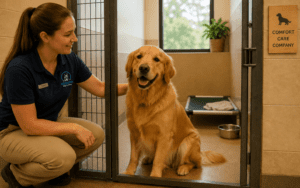
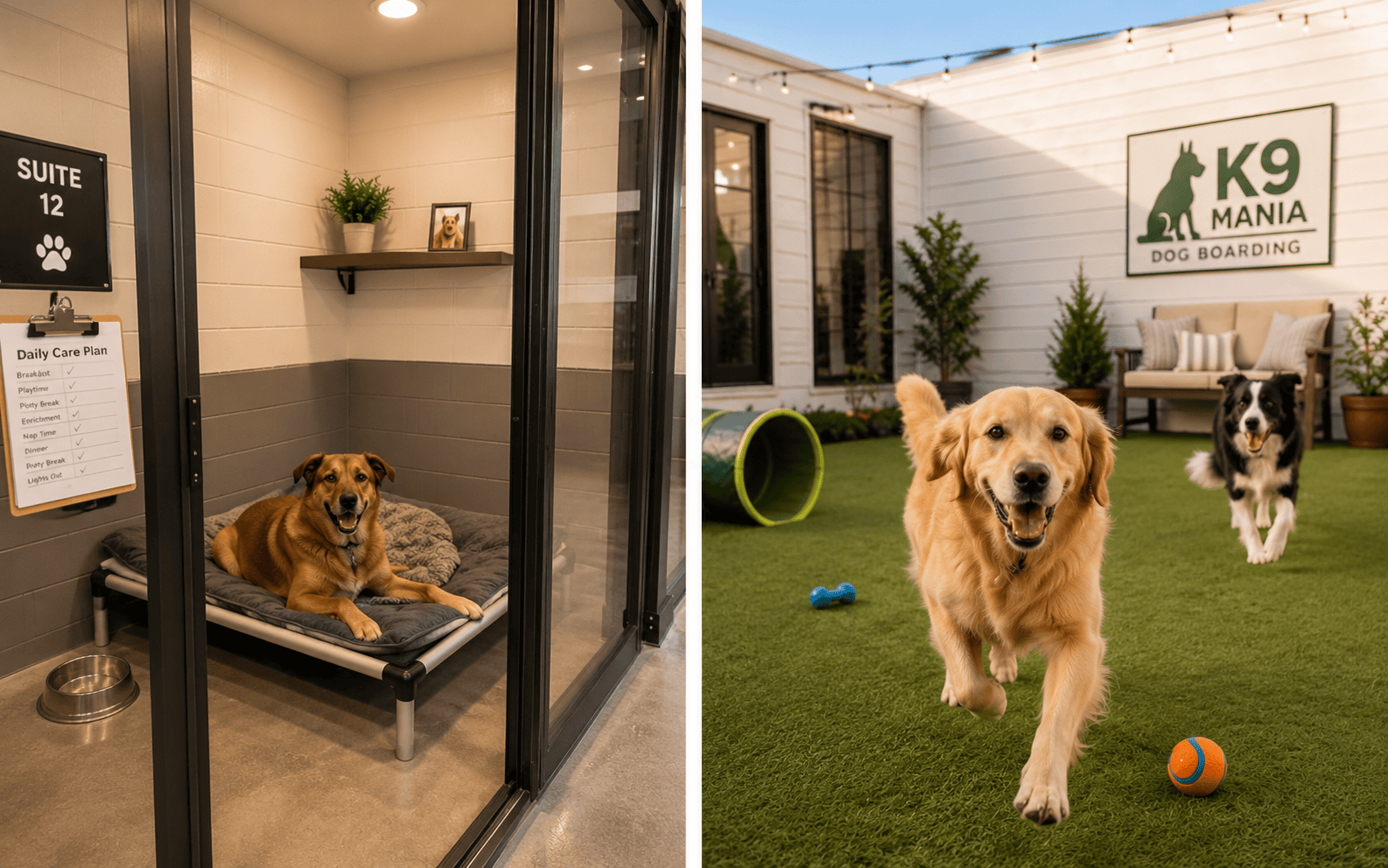
When choosing between a kennel and dog boarding, the core difference comes down to environment and structure: kennels are typically facility-based enclosures focused on containment, while dog boarding offers a more personalized, home-like or camp-style experience. Understanding the nuances between these two options can save you money, reduce your dog’s stress, and give you peace of mind while you’re traveling.
Key Takeaways
- Kennels prioritize structured containment in a facility setting, while dog boarding tends to offer more social interaction and personalized care.
- Boarding options vary widely, from in-home stays to full training camps, so pricing and services can range from $30 to $150+ per night.
- Dogs with anxiety or behavioral issues often do better in smaller boarding environments where staff-to-dog ratios are lower.
- Some boarding programs incorporate obedience dog training into the stay, giving your dog tangible skills while you’re away.
- Location and proximity to your home matters: knowing reputable local options gives you flexibility in an emergency.
- Always tour any facility in person and ask about daily schedules, staff credentials, and emergency protocols before booking.
What a Traditional Kennel Actually Looks Like
Most people picture a kennel as a row of chain-link runs inside a large facility. That image is not far off. Traditional kennels, often attached to veterinary clinics or standalone pet boarding businesses, house dogs in individual enclosures, typically concrete or rubber-floored runs separated by walls or wire partitions. Dogs are let out for scheduled bathroom breaks, sometimes two to four times per day, and spend the majority of their time in their designated space.
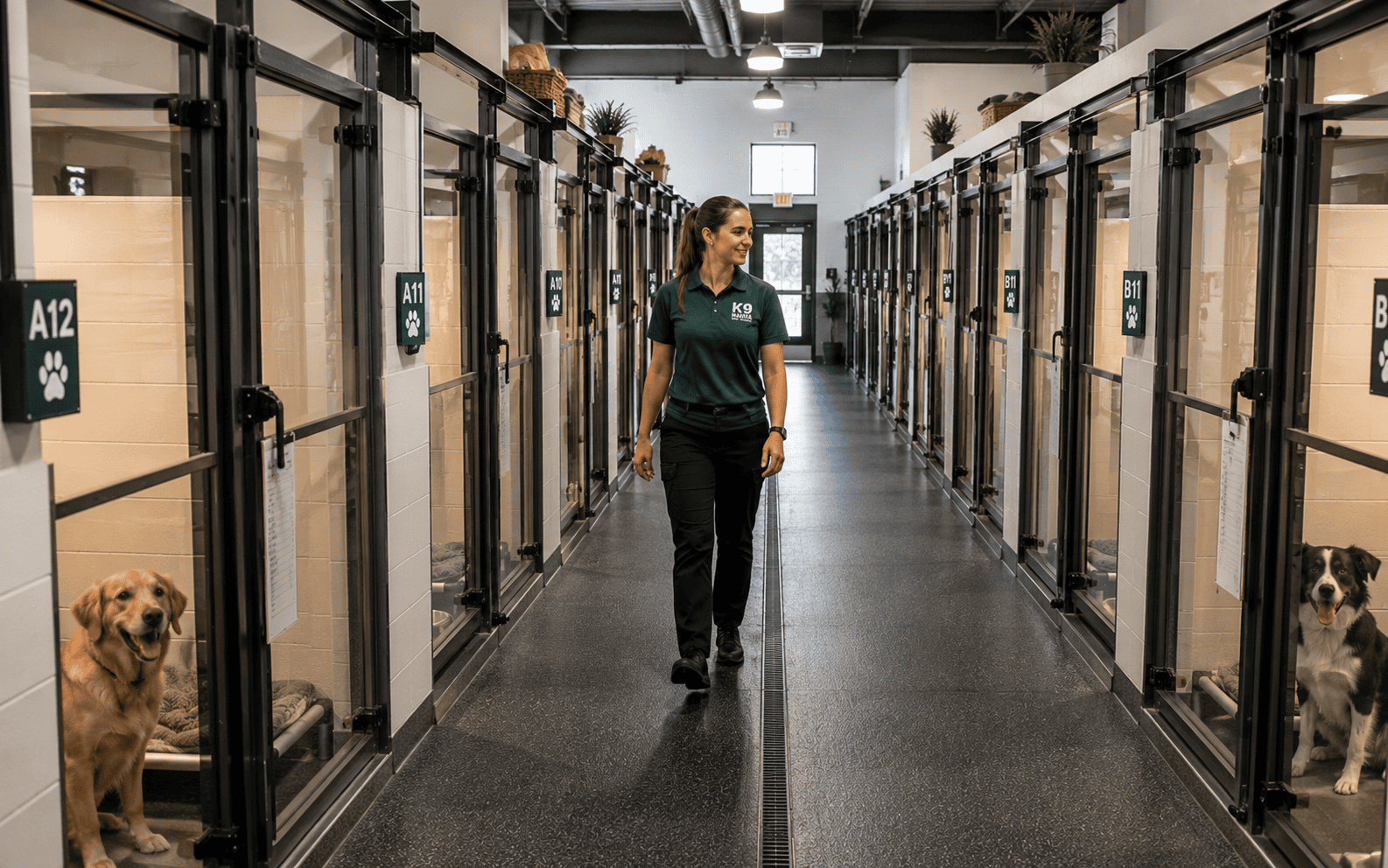
This setup has real advantages. Kennel facilities are often well-regulated, with staff on-site during business hours and sometimes overnight. They can handle a high volume of dogs simultaneously, which makes them a reliable option during busy travel seasons like Thanksgiving or the Fourth of July. For dogs that are independent by nature or tend to get overstimulated around other dogs, a quiet kennel run can actually reduce stress rather than increase it.
However, the limitations are just as real. Limited socialization, minimal one-on-one time with staff, and a noisy environment can be hard on dogs that are used to being around people constantly. Separation anxiety can worsen in these settings. And while many kennels are clean and professional, the sheer volume of animals passing through increases the risk of illness, even when vaccination requirements are enforced.
What Dog Boarding Offers That Kennels Often Don’t
Dog boarding is a broader category that includes in-home dog sitting, boarding facilities that operate like open-plan doggy daycares, and structured training-based boarding programs. If you want a deeper breakdown of the concept itself, this resource on what is dog boarding covers the different models clearly and is worth reading before you book anything.
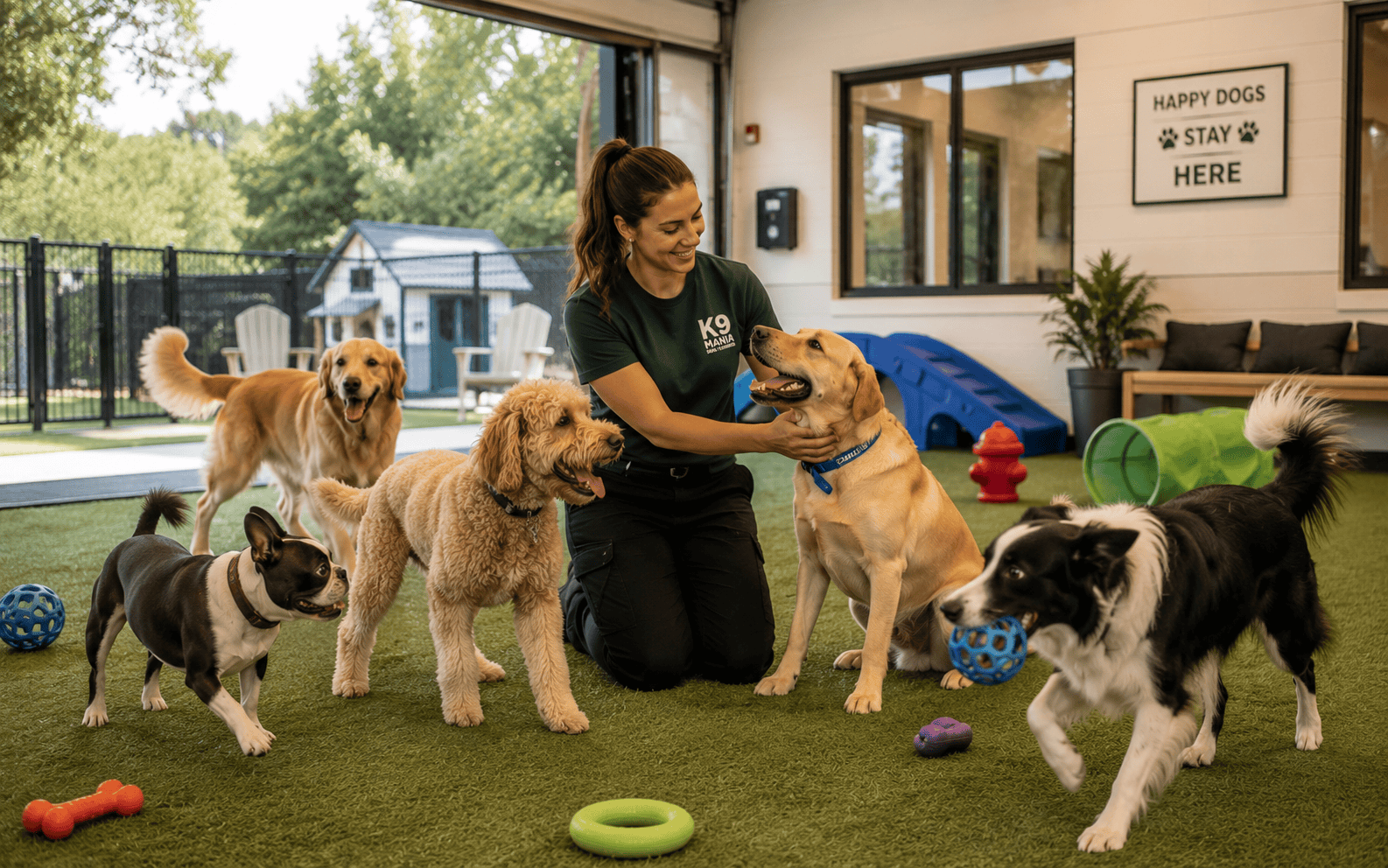
The key differentiator is the level of engagement your dog receives. In a typical boarding setup, your dog may have access to play areas throughout the day, interact with other dogs in a supervised group setting, and spend time with staff who actually know their name and routine. That personalized attention can make a meaningful difference in how well a dog adjusts during your absence.
Pricing reflects this difference. Kennel stays in the United States typically run between $25 and $55 per night, depending on the region and facility size. Dog boarding, particularly in metropolitan areas like New York or Los Angeles, can range from $50 to $150 or more per night. The higher cost usually comes with more hands-on supervision, smaller group sizes, and in some cases, supplemental services like grooming or training sessions.
Here is a side-by-side comparison to help clarify the differences:
| Feature | Traditional Kennel | Dog Boarding |
| Environment | Individual enclosed runs | Open play areas or home-like settings |
| Daily social time | Limited (scheduled breaks) | Frequent throughout the day |
| Staff ratio | Higher dog-to-staff ratio | Lower dog-to-staff ratio |
| Average cost per night | $25-$55 | $50-$150+ |
| Training integration | Rare | Often available |
| Best for | Independent, low-anxiety dogs | Social, anxious, or behavior-focused dogs |
| Vaccination requirements | Standard | Standard |
The Rise of Training-Integrated Boarding Programs
One of the most significant developments in the pet care industry over the past decade is the growth of board and train long island programs, where a dog lives at a facility or trainer’s location and receives structured obedience and behavioral training throughout the stay. This is a fundamentally different value proposition from either a traditional kennel or a standard boarding arrangement.

If you are on Long Island and considering this approach, looking into more detailed options gives you a concrete starting point. These programs typically last anywhere from one to four weeks, and the dog returns home having worked through specific behavioral challenges like leash pulling, jumping, reactivity, or recall issues.
The cost is higher than standard boarding, often ranging from $1,500 to $4,000 for a multi-week program, but many owners find the return on investment compelling when compared to paying for months of weekly private sessions. The tradeoff is that you are not present during the training process, which means follow-through at home requires a proper handoff session with the trainer. Without that transition, skills can fade.
For dogs attending a dog boarding camp in long island, the camp environment typically combines structured training sessions with socialization time, physical exercise, and mental stimulation. That combination produces faster behavioral change than training alone because the dog is not reverting to home habits between sessions.
Things to Know
- Not all boarding facilities are licensed or inspected by state or local authorities. In New York, for example, animal shelters and pet dealers are regulated, but private boarding facilities have varying levels of oversight depending on the county. Always ask about licensing.
- Dogs with a history of aggression toward other dogs may not be suitable for group boarding environments, even if the facility appears well-run. Confirm supervision protocols before assuming group play is safe for your dog.
- Many facilities require proof of up-to-date vaccinations, including rabies, distemper, and Bordetella (kennel cough). Some also require a negative fecal test. Have records ready before touring.
- Short trial stays, often called “meet and greets” or “day trials,” are offered by many boarding facilities. Using one before your actual trip helps you see how your dog responds and gives staff a chance to assess temperament.
- Some dogs do better with in home dog training long island arrangements where a sitter watches your dog in their own home than in any facility setting. This option often has the lowest dog-to-caretaker ratio of all.
- If your dog already has foundational skills from obedience training sessions, they typically adapt faster to boarding environments and require less management from staff.
How to Choose Based on Your Dog’s Specific Needs
The decision between a kennel and dog boarding should not be based on price alone. Your dog’s temperament, health, age, and behavioral history all factor into which environment will serve them best.

Older dogs with joint issues may struggle on concrete kennel floors and do better in a home-like boarding setting with softer surfaces. Puppies under six months need more frequent bathroom breaks and social stimulation than most kennels can provide. High-energy working breeds like Belgian Malinois, Border Collies, or Siberian Huskies often become destructive or anxious when under-stimulated, making a training-integrated boarding program a much smarter choice than a standard kennel run.
If your dog has behavioral challenges but is not yet enrolled in any structured program, it is worth exploring options like private dog training long island before or alongside your boarding decision. Getting a few foundational skills in place before a long boarding stay makes the experience significantly smoother for both your dog and the staff caring for them.
For owners who want more targeted, customized work, additional specialized training can address specific triggers or behavioral patterns in a way that group classes cannot. A trainer who knows your dog’s history can also advise you on which boarding setup will be the least stressful option based on what they have observed.
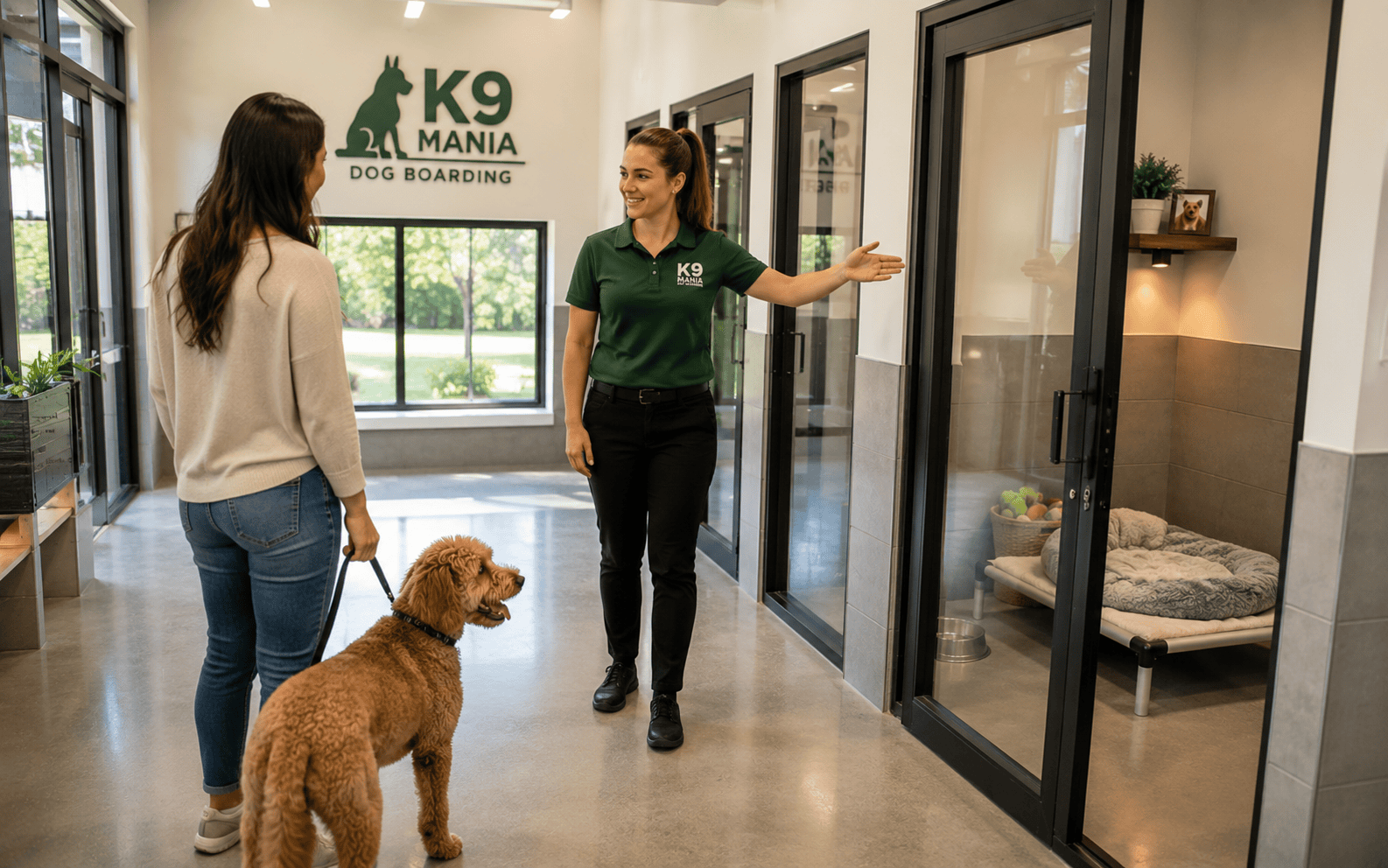
Questions to Ask Before You Book Any Facility
Whether you are leaning toward a kennel or a boarding program, the quality of any facility comes down to its people, policies, and daily practices. Here are the questions that separate good facilities from great ones:
- What is the staff-to-dog ratio during both daytime and overnight hours?
- How are dogs grouped for play, and what criteria are used (size, temperament, vaccination status)?
- What happens if my dog becomes ill or injured during the stay?
- Is there a veterinarian on call or affiliated with the facility?
- Can I tour the sleeping areas, play areas, and any outdoor spaces?
- How many hours per day is my dog out of their run or crate?
- What is the policy if my dog does not get along with other dogs?
A facility that answers these questions confidently, without hesitation or vague reassurances, is a facility that has thought through its operations seriously.
Ready to Find the Right Fit for Your Dog?
Before your next trip, schedule an in-person tour at one or two local facilities and bring a list of the questions above. If your dog has behavioral challenges, reach out to a certified trainer first and discuss which boarding environment aligns with their current skill level and temperament. The best time to evaluate your options is before you have a flight booked and are under pressure to decide quickly.
You May Also Read
Training Puppies vs. Adult Dogs
One on One Dog Training Long Island
Frequently Asked Questions
Is a kennel or dog boarding better for a dog with separation anxiety?
Dog boarding, particularly in a smaller or home-like setting, is typically better for dogs with separation anxiety than a traditional kennel.
The constant noise and limited human contact in a kennel can amplify anxious behavior. Boarding environments with higher staff-to-dog ratios allow caregivers to offer more reassurance and maintain a closer resemblance to a home routine, which reduces the severity of anxiety episodes.
How much does dog boarding cost compared to a kennel in the U.S.?
Traditional kennels in the U.S. average between $25 and $55 per night, while dog boarding typically runs $50 to $150 or more per night depending on location and services included.
Metropolitan areas and premium facilities with training components sit at the higher end of that range. The price gap usually reflects staff ratios, amenities, and the level of personalization your dog receives during the stay.
Can my dog learn new behaviors during a boarding stay?
Yes, if you choose a board and train or training-integrated boarding program, your dog can make significant behavioral progress during their stay.
These programs are structured around daily training sessions and can address issues like leash reactivity, jumping, poor recall, and resource guarding. The key is ensuring your trainer provides a proper handoff session so you can maintain those skills at home.
How do I know if a boarding facility is safe?
The most reliable indicators are cleanliness, clear policies, low staff turnover, and willingness to give you a full unscheduled tour.
Look for facilities that require vaccination records, have transparent emergency protocols, and can explain exactly what your dog’s daily schedule looks like. Reading recent reviews on Google and asking your veterinarian for a recommendation are also solid strategies.
At what age can a puppy go to a boarding facility?
Most boarding facilities accept puppies once they have completed their initial vaccination series, typically around 16 weeks of age.
Before that point, puppies are too vulnerable to contagious illness to be in a shared environment safely. Even after vaccinations, look for a boarding option with a small group size and staff experienced with young dogs, since puppies have very different needs than adult dogs.
The Bottom Line on Kennel vs Dog Boarding
Choosing between kennel vs dog boarding is ultimately about matching your dog’s individual needs to the right environment, not about picking the cheapest or most convenient option. Kennels work well for short stays with independent, low-anxiety dogs. Boarding programs, especially those with training components, offer more value for social, high-energy, or behaviorally complex dogs and can actually improve your dog’s behavior while you are away.
Take the time to tour facilities, ask hard questions, and consult a trainer if you are unsure which direction to go. Your dog cannot tell you what they need, but with the right information, you can figure it out for them.