Summary:
Early Signs Your Dog Training is Working
The first indicators of successful training often appear within the first few weeks, but they’re not always obvious. Training forms new associations and connections in your dog’s brain which increases confidence and improves their overall mental and emotional state.
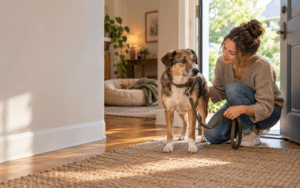
You’ll notice your dog starting to check in with you more frequently during walks. They might glance back at you before making decisions or pause when they used to charge ahead. These small moments of consideration are actually huge wins—they show your dog is learning to think before acting.
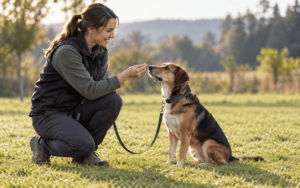
Another early sign is improved focus during training sessions. Even if your dog hasn’t mastered the commands yet, they’re staying engaged longer and getting distracted less easily.
Behavioral Changes That Show Real Progress
If your dog is beginning to engage in other important dog behaviors, it’s a great indication that they are making progress. Because they may either be more confident and comfortable in their environment because of training progress, or they are learning what is and isn’t an appropriate way to indulge their instincts.
Watch for these specific behavioral improvements. Your dog might start sniffing more during walks—this isn’t distraction, it’s actually a sign of mental enrichment and confidence. Dogs use their noses to take in information about the world around them, so sniffing is mentally enriching for them.
You’ll also notice your dog becoming more playful and bringing toys to you more often. Being able to engage with play means they are relaxed and comfortable in their environment, thanks to the confidence training brings them. It also means they’ve learned the difference between having fun with toys and games vs. engaging in unwanted behaviors.
Recovery time is another crucial indicator. When your dog does react to something—like barking at the doorbell—they bounce back faster and redirect their attention to you more easily. Maybe they still barked at the man in the hat – but it was less intense and didn’t last as long. Or they barked at the doorbell, but then went straight to their bed when asked. That’s progress.
The changes might seem small day-to-day, but they add up to significant improvements in your dog’s overall behavior and your relationship with them.
How to Measure Training Success Over Time
Progress isn’t binary. Instead of asking whether your dog did or didn’t do a certain behavior, look at the shades in between. Real progress in dog training happens gradually, and the best way to track it is by keeping a simple training log.
Document the small wins alongside the challenges. Jotting down small wins helps you track changes over time. Try not to only record the tricky moments – include the tiny green shoots of change, and the enjoyable moments you’ve shared too. This approach helps you see patterns you might otherwise miss.
You might spot progress you’d missed in the moment. As your dog improves, your expectations often rise too – so it’s worth pausing to appreciate how far you’ve already come. What seemed impossible three months ago might now be routine.
Look for consistency across different environments. A dog that sits reliably in your kitchen but ignores you at the park hasn’t fully learned the command yet. Proofing means ensuring your dog understands the behavior and its cue, no matter the environment or what distractions might be around. Dogs don’t generalize well, so if you teach them to sit while you’re in the kitchen, they will think “sit” only applies in that room. You need to build out the behavior in new locations.
Professional dog training Long Island programs typically measure success through specific benchmarks: reduced reaction intensity, faster recovery times, improved focus duration, and successful command execution in various environments. These metrics give you concrete ways to evaluate your dog’s progress beyond just “good” or “bad” days.
Long-Term Success Indicators in Dog Training
Long-term success in dog training goes beyond basic command compliance. You’re looking for deep behavioral changes that stick even when you’re not actively training. Your dog should demonstrate learned behaviors consistently, regardless of distractions or environmental changes.
The most reliable indicator of successful training is generalization—when your dog applies what they’ve learned across different situations without constant reminders. This typically develops 3-6 months into consistent training with professional guidance.
Signs Your Dog Has Internalized Their Training
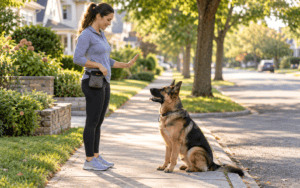
True training success shows up in your dog’s automatic responses to situations. They’re no longer thinking through each command—the behaviors have become natural reactions. You’ll notice your dog automatically sitting at crosswalks, staying calm when guests arrive, or redirecting their own attention away from triggers.
Remember to always praise your dog for any improvement, no matter how small. It’s easy to get caught up in the end goal of training, but celebrating the little wins is just as important, and will help keep both you and your dog motivated.
We look for what we call “emotional regulation”—your dog’s ability to manage their own stress and excitement levels. A successfully trained dog doesn’t need constant management from you. They’ve learned to self-regulate in challenging situations.
Watch for these advanced indicators: your dog choosing to disengage from potential conflicts, seeking you out for guidance in uncertain situations, and maintaining learned behaviors even when they’re excited or stressed. These responses show that training has become part of their natural behavioral repertoire.
The timeline for reaching this level varies significantly based on the dog’s starting point, the consistency of training, and the complexity of issues being addressed. Most dogs show these deeper changes within 6-12 months of consistent professional training, though some behavioral modifications can take longer to fully solidify.
When Training Results Become Permanent
Permanent training results develop when your dog consistently demonstrates learned behaviors across all environments and situations without active reinforcement. This level of success typically emerges after months of consistent practice and professional guidance.
The trick to being successful is always going to be patience and consistency. Just remember to take your time and be consistent. Every dog is different, and so is the way that they learn. Don’t get discouraged if your dog is not progressing as fast as you expected.
You’ll know training has become permanent when your dog maintains good behavior during high-stress situations—like vet visits, storms, or when meeting new dogs. They’re not performing behaviors to earn rewards anymore; they’re acting from genuine behavioral change.
The most telling sign is how your dog behaves when you’re not around. Permanent training results mean your dog follows household rules, respects boundaries, and manages their own behavior whether you’re home or away. This level of reliability usually develops after 8-12 months of consistent professional training.
We report that dogs reaching this level of training success maintain their improved behaviors for years with minimal refresher sessions. The investment in thorough, professional training pays dividends in long-term behavioral stability and a stronger human-dog relationship.
Recognizing True Training Success in Your Dog
Real training success isn’t about perfect obedience—it’s about building a dog who thinks before acting, recovers quickly from mistakes, and maintains good behavior across different situations. The signs are often subtle but meaningful: better focus, faster recovery from distractions, and increased confidence in new environments.
If you see your dog doing any of these, it’s a great sign that your hard work in training is paying off! Hopefully, this has eased your mind and helped you see that your dog is making great progress in their training journey. Remember that progress happens in layers, not linear improvements.
If you’re struggling to see these signs of progress or want to accelerate your dog’s training success, professional guidance can make the difference between frustrating months of minimal progress and clear, measurable improvements. We specialize in helping Long Island dog owners achieve these lasting results through proven training methods tailored to each dog’s unique needs.