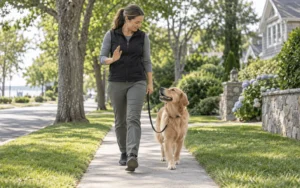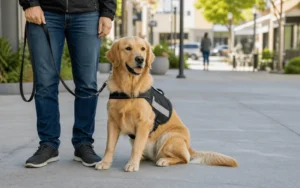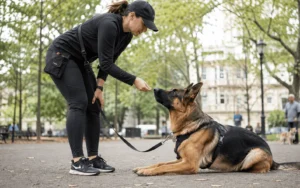

What to do when your dog comes home from board and train comes down to three things: use the exact commands and tools your trainer used, keep a tight daily routine, and practice in short sessions every day for the first two to four weeks. Dogs do not automatically carry training into a new environment, so the first month at home decides whether the results stick or fade.
Quick Insights
- The first 14 days are critical. Your dog is learning that the facility rules also apply at home.
- Consistency beats intensity. Short daily sessions work better than one long weekend session.
- Everyone in the house must match. Same words, same signals, same leash handling.
- Expect a small dip. Some boundary testing in week one is normal.
Bringing your dog home soon? K9 Mania’s board and train Long Island program includes a full owner handoff session and follow-up support. Call (516) 217-1604 to talk to our team.
Why Does the First Month at Home Matter So Much?
Your dog learned new behaviors with a trainer who was consistent every time. Home brings new smells, more people, and old triggers like the front door. Dogs do not generalize well, so a solid “place” at the facility still has to be taught again in your living room.

Your dog also needs to learn that you hold the same standard as the trainer. Let small things slide, and the rules quickly become optional.
| Factor | At the Facility | At Home | What You Should Do |
| Handler | One trainer | Several family members | Agree on one set of commands |
| Distractions | Controlled | Random | Add distractions slowly |
| Routine | Fixed schedule | Changes daily | Set fixed meal, walk, and training times |
| Freedom | Earned in steps | Full house access | Limit freedom first, then expand |
How Do You Keep Board and Train Results From Fading?
Run your house the way the trainer ran the program: structure first, freedom later. Most regression happens when owners give full freedom on day one and only react after a problem shows up.
Treat the first month as a continuation of training. If you planned ahead using our guide on how to prepare for board and train, you already have a head start.
| Household Type | Best Approach | Why It Works |
| Single owner, quiet home | Owner-led practice with handoff notes | Easy to stay consistent |
| Busy family with kids | Written house rules plus weekly check-ins | Keeps everyone aligned |
| Reactive or aggressive dog | Follow-up sessions with a behaviorist | Safer proofing of triggers |
| Owner with limited time | Training built into daily routines | Practice happens during meals and walks |
6 Steps to Follow After Your Dog Comes Home
1. Treat the Handoff Session Like a Class
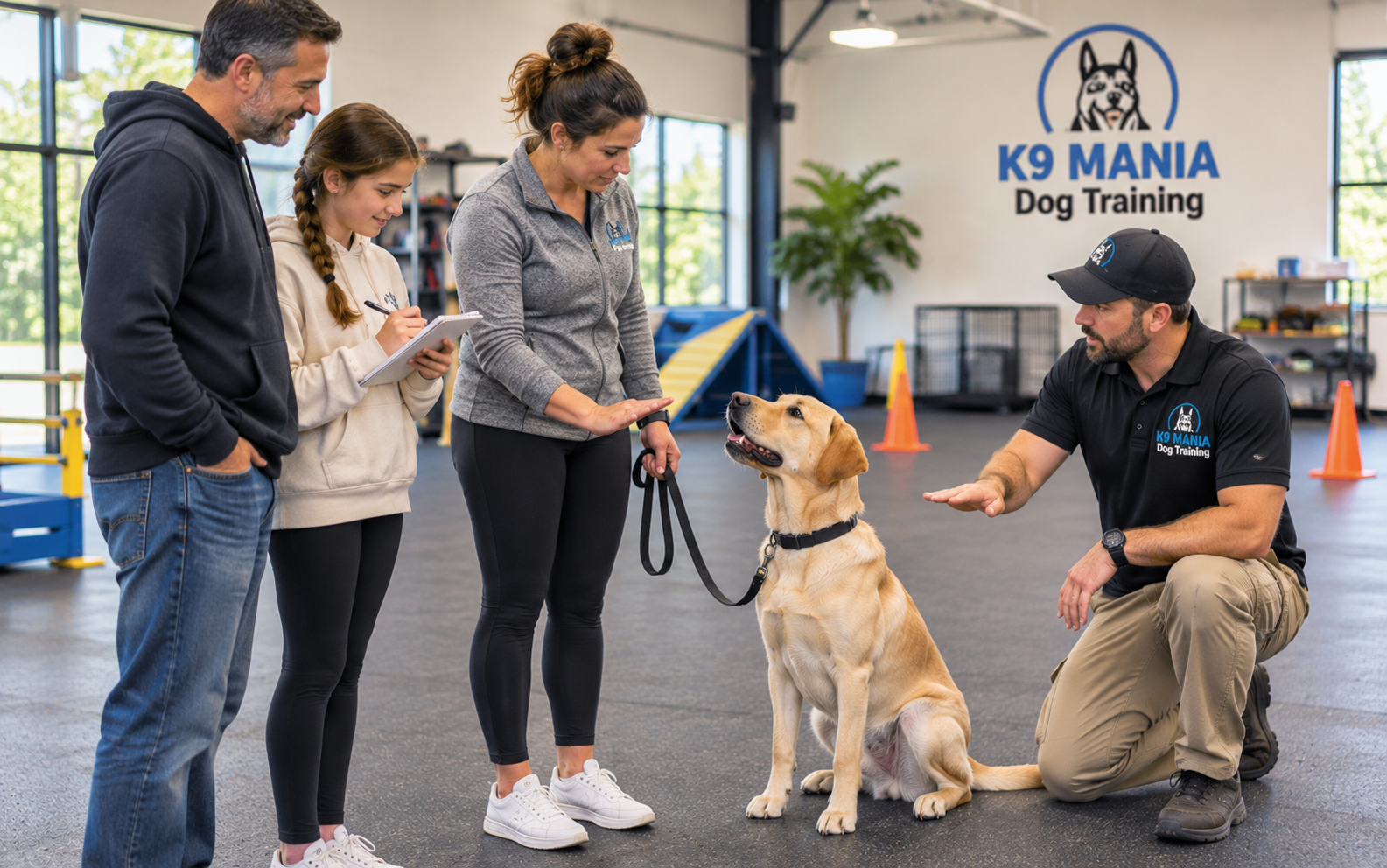
Why: This is where you learn the exact commands and timing your dog knows.
How: Bring every handler, take notes, and ask the trainer to watch you work the dog.
Which is best: Have everyone who walks or feeds the dog attend in person.
2. Keep the Same Daily Schedule
Why: Predictable days lower stress and reduce testing.
How: Copy the rhythm of our board and train daily schedule.
Which is best: Working owners can anchor practice to breakfast, the evening walk, and bedtime.
3. Limit Freedom for Two Weeks
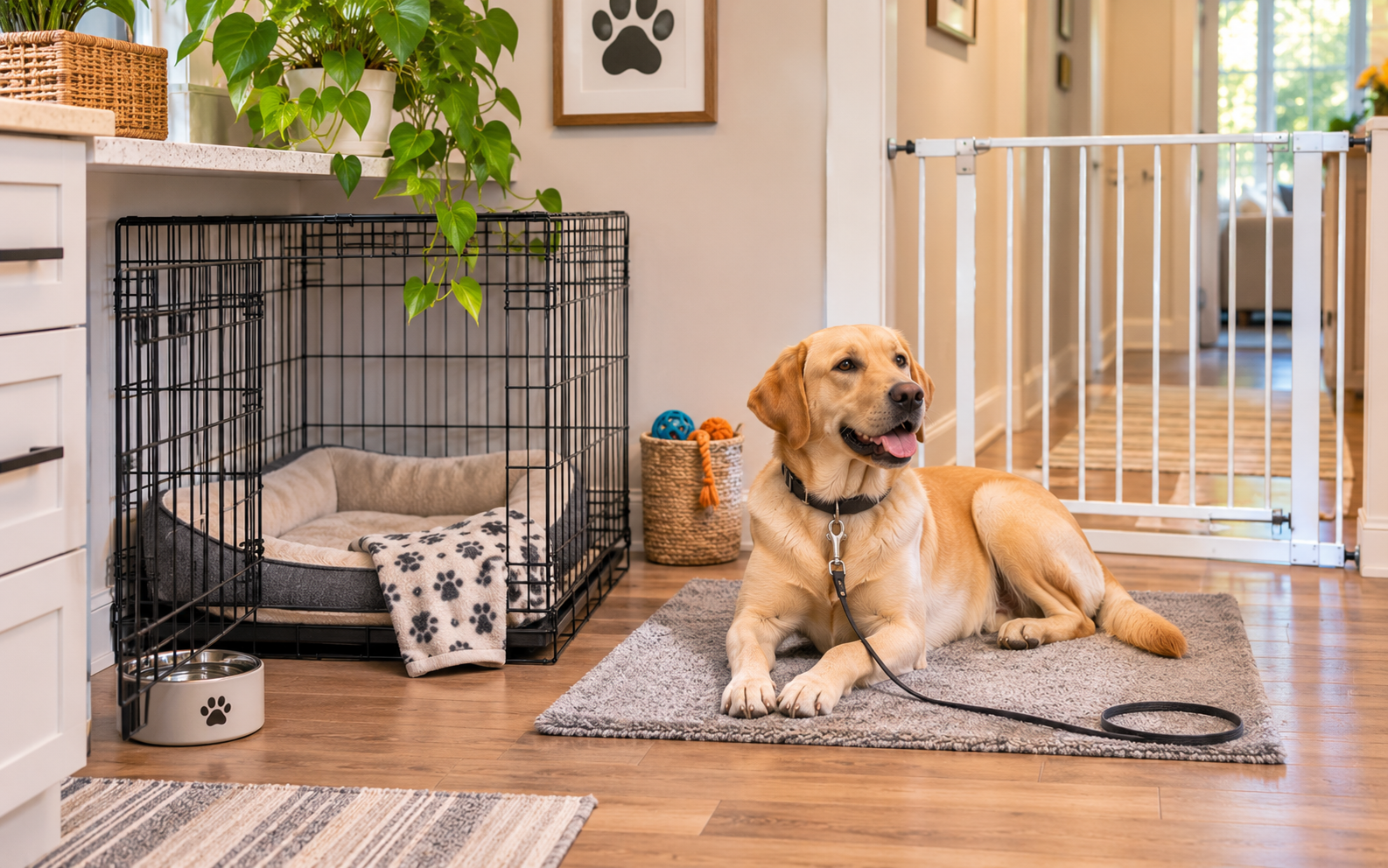
Why: Too much freedom lets old habits return.
How: Use a crate, a house leash, or a gated area when you cannot supervise.
Which is best: A house leash suits dogs that bolt; crate time suits dogs that struggle to settle.
4. Practice Short Sessions Every Day
Why: Skills fade without repetition.
How: Run two or three 5 to 10 minute sessions on sit, down, place, recall, and heel.
Which is best: Fold practice into real life, like a sit before every meal.
5. Add Distractions Slowly

Why: A command is only reliable once it works around distractions.
How: Move from a quiet room to the yard, then the street, then a park.
Which is best: If your dog struggles, step back one level for a few days.
6. Stay in Touch With Your Trainer
Why: Small issues are easier to fix early.
How: Send short videos of problem moments and ask for feedback.
Which is best: Owners of anxious or reactive dogs should book a follow-up within 30 days.
Common Mistakes Owners Make After Pickup
- A “welcome home” free-for-all. Full house access on day one signals the rules are over.
- Changing the commands. New words mean starting over.
- Dropping tools too early. Ask your trainer before phasing out equipment.
- Repeating commands. Say it once, then follow through.
For more habits that keep training solid, browse our dog training tips.
Your First 30 Days: A Training Timeline
Knowing what to do when your dog comes home from board and train is easier with a clear plan.
| Timeframe | Main Focus | Signs You Are on Track |
| Days 1 to 7 | Routine and consistency at home | Dog settles and responds to first commands |
| Week 2 | Low-level distractions | Holds place with mild activity nearby |
| Week 3 | Real-world practice | Loose leash walks and calm greetings |
| Week 4 and beyond | Expanding freedom and maintenance | Good choices without constant reminders |
When to Call a Professional
Get help if old behaviors return after two weeks, new fear or reactivity appears, or your dog listens to some family members but not others.
Our private dog training Long Island sessions target the exact skills that are slipping. If problems only happen at home, in home dog training Long Island brings a trainer to your door. A short refresher stay in our board and train Long Island program can also tighten things up. You can compare all of our Long Island dog training options to find the right fit.
Every program is backed by our certified animal behaviorist and a 10,000 square foot facility in Deer Park.
Keep the Progress Going With K9 Mania
Knowing what to do when your dog comes home from board and train is what turns a few weeks of training into a lifetime of good behavior. K9 Mania is Long Island’s leading board and train program, with the best dog behaviorist on Long Island guiding every plan.
We do not just train your dog and send it home. We coach you through the handoff, answer your questions, and stay with you when you need a refresher. Whatever behavior issue you are facing, our team can help. Trust K9 Mania to keep your dog calm, confident, and well-mannered at home.
Related Reading
- Is board and train worth it?
- Board and train daily schedule
- All about board and train and how to prepare for it
Frequently Asked Questions
How long does it take a dog to adjust after board and train?
Most dogs settle within 3 to 7 days. Full transfer of training to the home usually takes two to four weeks of daily practice. Anxious or reactive dogs may need a bit longer.
Is it normal for my dog to act differently after coming home?
Yes. Some dogs seem tired, quieter, or more focused. Others test boundaries in the first week. Both are common. Stay calm and consistent, and the behavior evens out.
Will my dog forget its training at home?
Dogs do not forget training, but skills weaken without practice. If owners stop reinforcing commands, old habits creep back. Short daily sessions keep the training sharp.
Should I keep using the same collar or leash the trainer used?
Yes, at least at first. Your dog learned with that equipment, and switching too early can confuse it. Ask your trainer when and how to phase tools out.
Can I let my dog sleep in my bed right after board and train?
It is better to wait. Keep the sleeping setup the trainer used, usually a crate, for the first few weeks. Once behavior is steady, you can decide on new privileges.
What if my dog starts showing old bad habits again?
Go back to more structure: less freedom, more leash time, and shorter, more frequent sessions. If the habit continues past two weeks, book a follow-up session with your trainer.
Like our dog training tips? Add K9 Mania as a preferred source on Google.