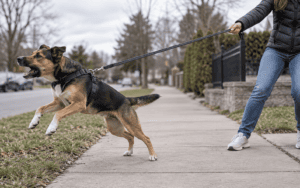
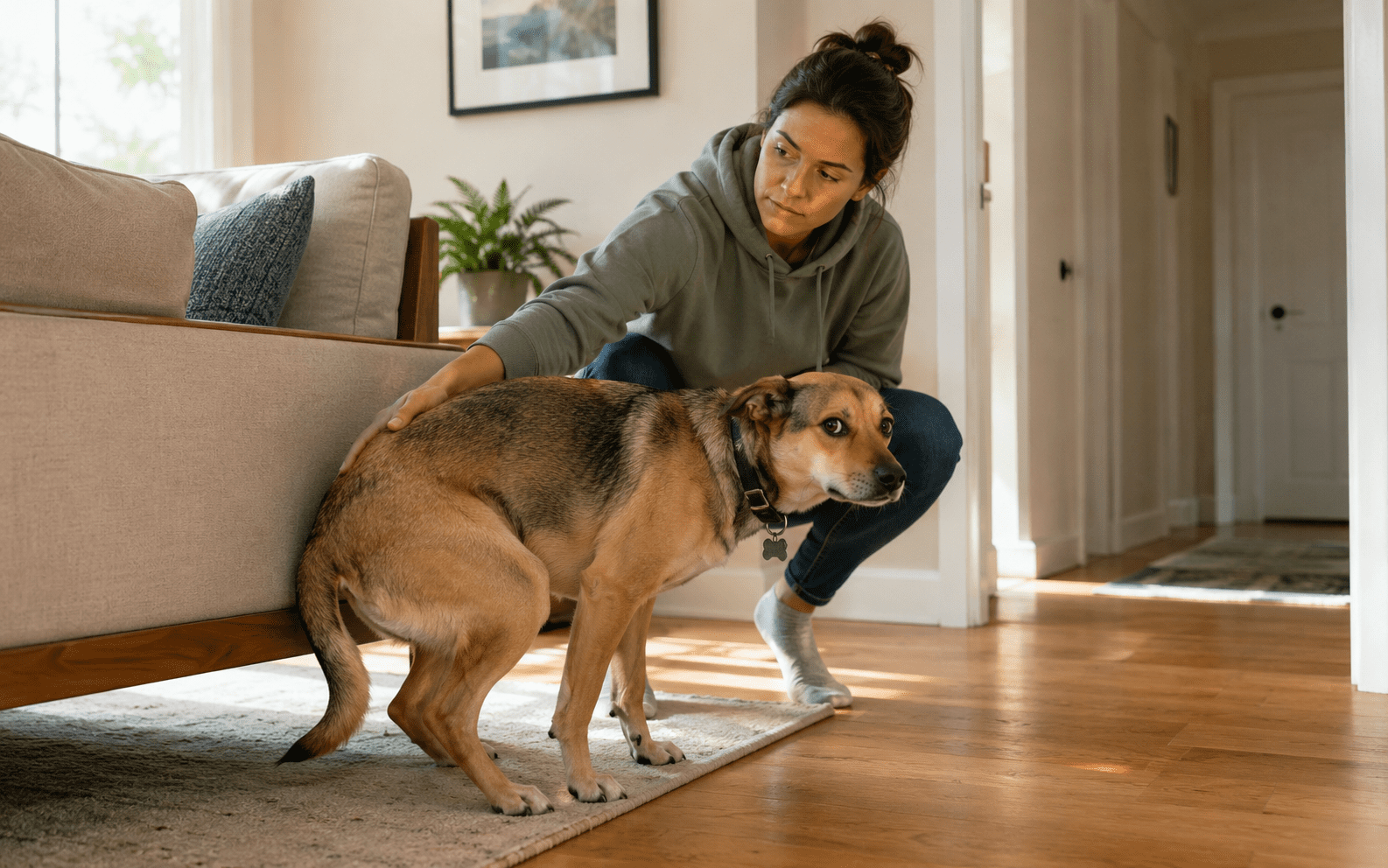
How to stop a dog from marking in the house starts with understanding that marking is not a house training failure. It’s a communication behavior driven by hormones, anxiety, or territorial instincts, and it responds well to a combination of proper cleanup, spay or neuter surgery, environmental management, and consistent training.
Whether your dog just started or has been doing it for months, this guide walks you through every step so you can fix the problem without guessing.
Things to Know:
- Marking is intentional and usually leaves small amounts on vertical surfaces, not large puddles on the floor.
- Unneutered males are the most common offenders, but females and neutered dogs can mark too.
- Enzyme-based cleaners are non-negotiable. Regular cleaners leave scent traces your dog can still smell.
- Stress and changes at home can trigger marking even in dogs that never did it before.
- No single fix works on its own. Consistency across all steps is what actually stops it.
Why Dogs Mark Inside the House
Dogs mark to communicate. In the wild, urine tells other animals about territory, reproductive status, and social rank. Indoors, that instinct doesn’t switch off just because there’s carpet.
The most common reasons a dog marks inside include:
- Hormones. Intact males and females in heat are the most hormonally driven markers. Testosterone in particular increases the urge to claim space.
- New animals or people. A new pet, a baby, or even a houseguest can make your dog feel the need to reassert their presence.
- Anxiety. Dogs that struggle with train a dog with separation anxiety may mark as a self-soothing behavior when left alone or stressed.
- Territorial responses. Seeing another dog through a window or smelling a dog on your clothes can trigger marking inside. This connects directly to territorial aggression in dogs and how some dogs respond to perceived threats even within their own home.
- Incomplete house training. Some dogs were never fully taught what was expected, and marking became a default habit.
Marking vs. Accidents: How to Tell the Difference
Before you fix the problem, you need to know what you’re actually dealing with.
| Feature | Marking | Potty Accident |
| Amount of urine | Small, often just a few drops | Larger puddle or full bladder release |
| Location | Vertical surfaces, corners, furniture legs | Anywhere, usually on the floor |
| Timing | Near new objects or after another animal visits | When the dog hasn’t been taken out in time |
| Dog’s posture | Leg lift or squat against a surface | Squat directly on the floor |
| Frequency | Multiple spots in one session | Usually one spot |
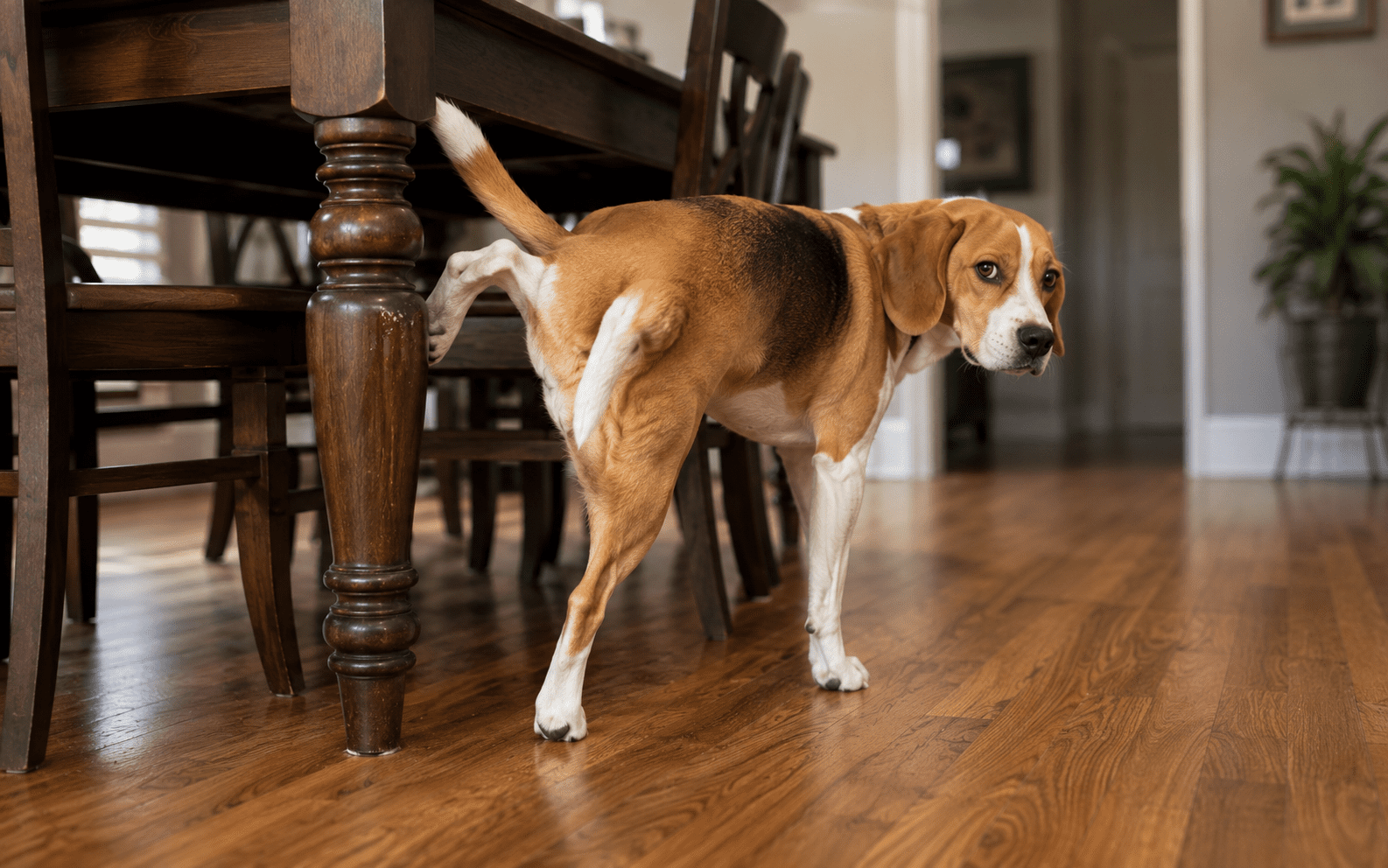
If your dog leaves large puddles on the floor, the issue is more likely an incomplete foundation from how to potty train your dog rather than marking. If you’re seeing small amounts on walls, furniture legs, and corners, that’s marking.
How to Stop a Dog from Marking in the House
There is no single fix here. The approach that works combines several steps done consistently, not just one trick in isolation.
Step 1: Spay or Neuter Your Dog
This is the highest-impact step for most dogs, especially intact males. Neutering reduces the hormonal drive to mark by roughly 50 to 60 percent in most cases. It works best before marking becomes a deeply ingrained habit, but it can still help adult dogs.
Spaying females helps too, especially if marking spikes around heat cycles. If your dog is already neutered and still marking, hormones aren’t the only driver. Keep going through the other steps.
Step 2: Clean Every Marked Spot with an Enzyme Cleaner
This step is non-negotiable. Dogs return to the same spots because they can still smell residual urine even after you’ve scrubbed it with soap and water. Standard cleaners don’t break down urine proteins completely.
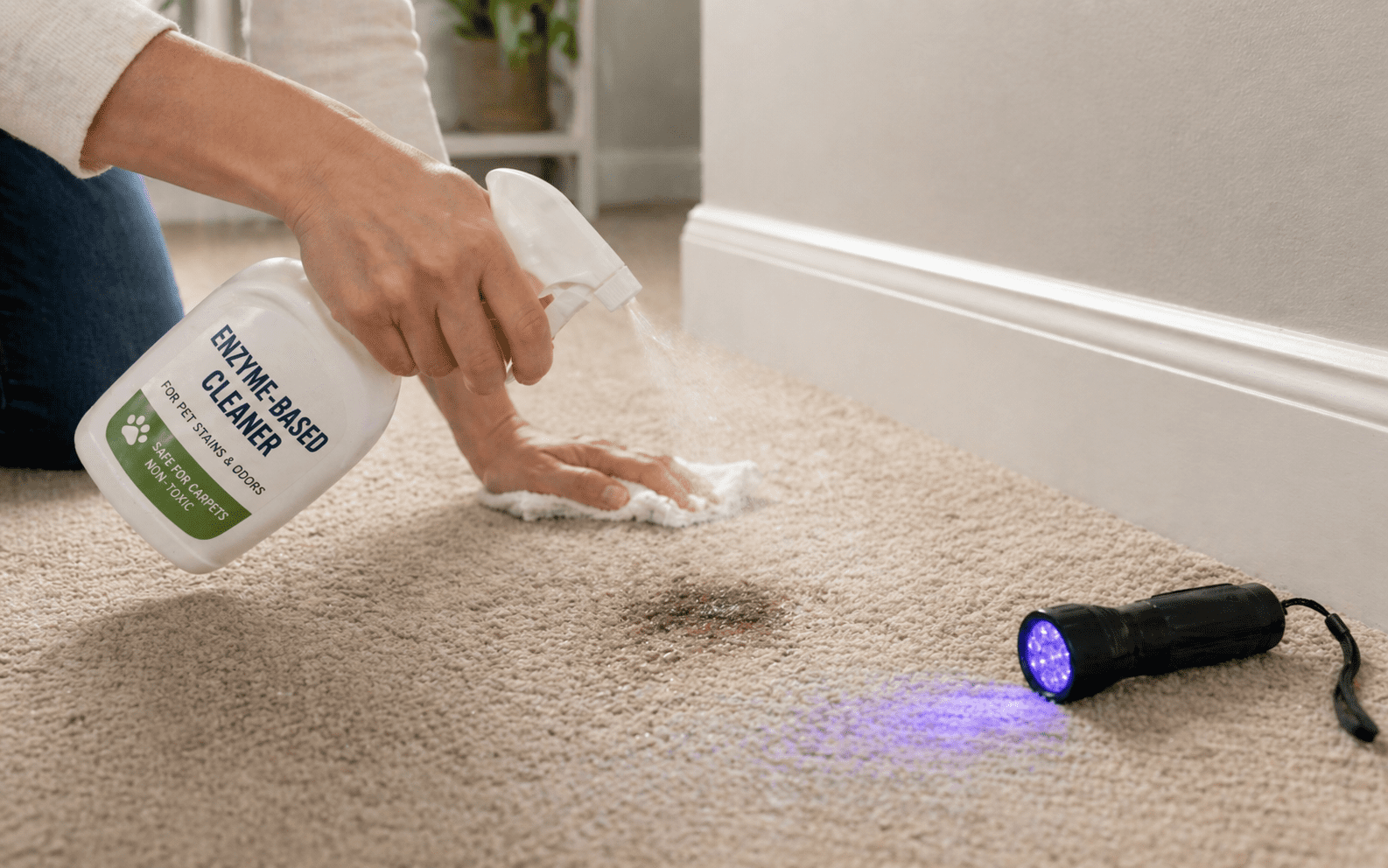
Enzyme-based cleaners do. Spray it on, let it soak for the time listed on the label, then blot it dry. Don’t scrub. Scrubbing spreads the scent. Use a UV blacklight at night to find spots you’ve missed. Urine glows under UV light and often reveals a much bigger problem than expected.
Step 3: Limit Access Until the Behavior Is Under Control
Until marking stops, your dog should not have unsupervised access to the whole house. This isn’t punishment. It’s management.
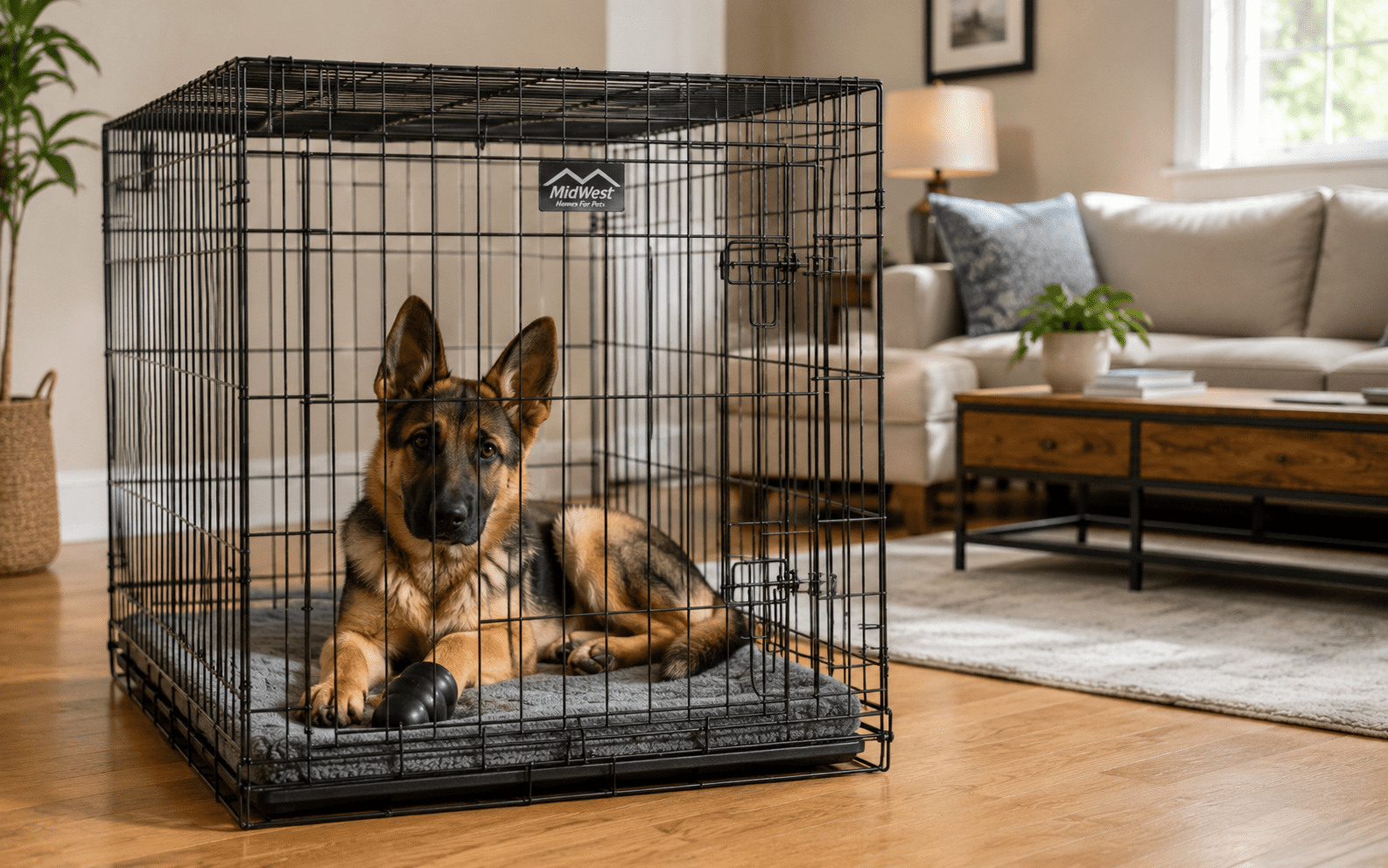
Use baby gates, close doors, or keep your dog on a leash tethered to you. When you can’t watch them, crate them. Dogs rarely mark in their own crate because they won’t soil their sleeping space. As marking episodes decrease, gradually expand access room by room.
📌 Need help creating calm behavior at home? Check out our guide on crate training a dog with separation anxiety for step-by-step training tips.
Step 4: Interrupt and Redirect in the Moment
If you catch your dog in the act, use a firm “no” or a single clap to interrupt, then immediately take them outside to finish. When they go outside, praise them clearly.
Do not punish after the fact. If you find a spot ten minutes later, correcting your dog accomplishes nothing. Dogs don’t connect delayed corrections to something that already happened.
Step 5: Remove or Address the Trigger
If your dog marks near windows, block their view of other dogs outside using window film. If marking started after a new pet arrived, work on gradual, positive exposure to reduce the competitive tension.
For dogs whose marking is clearly tied to stress or anxiety, working with a trainer through in home dog training Long Island helps identify the actual root trigger instead of guessing at it on your own.
Which Dogs Are Most Likely to Mark Indoors
Marking is more common in certain dogs, but it can happen in any breed, age, or sex.
| Dog Type | Likelihood of Marking | Primary Trigger |
| Intact male | Very high | Hormones, territory |
| Intact female | Moderate, especially in heat | Hormones |
| Neutered male | Low to moderate | Habit, anxiety, new animals |
| Spayed female | Low | Anxiety, social stress |
| Multi-dog household | Higher across all dogs | Competition, social hierarchy |
| Recently rehomed dog | High initially | New environment stress |
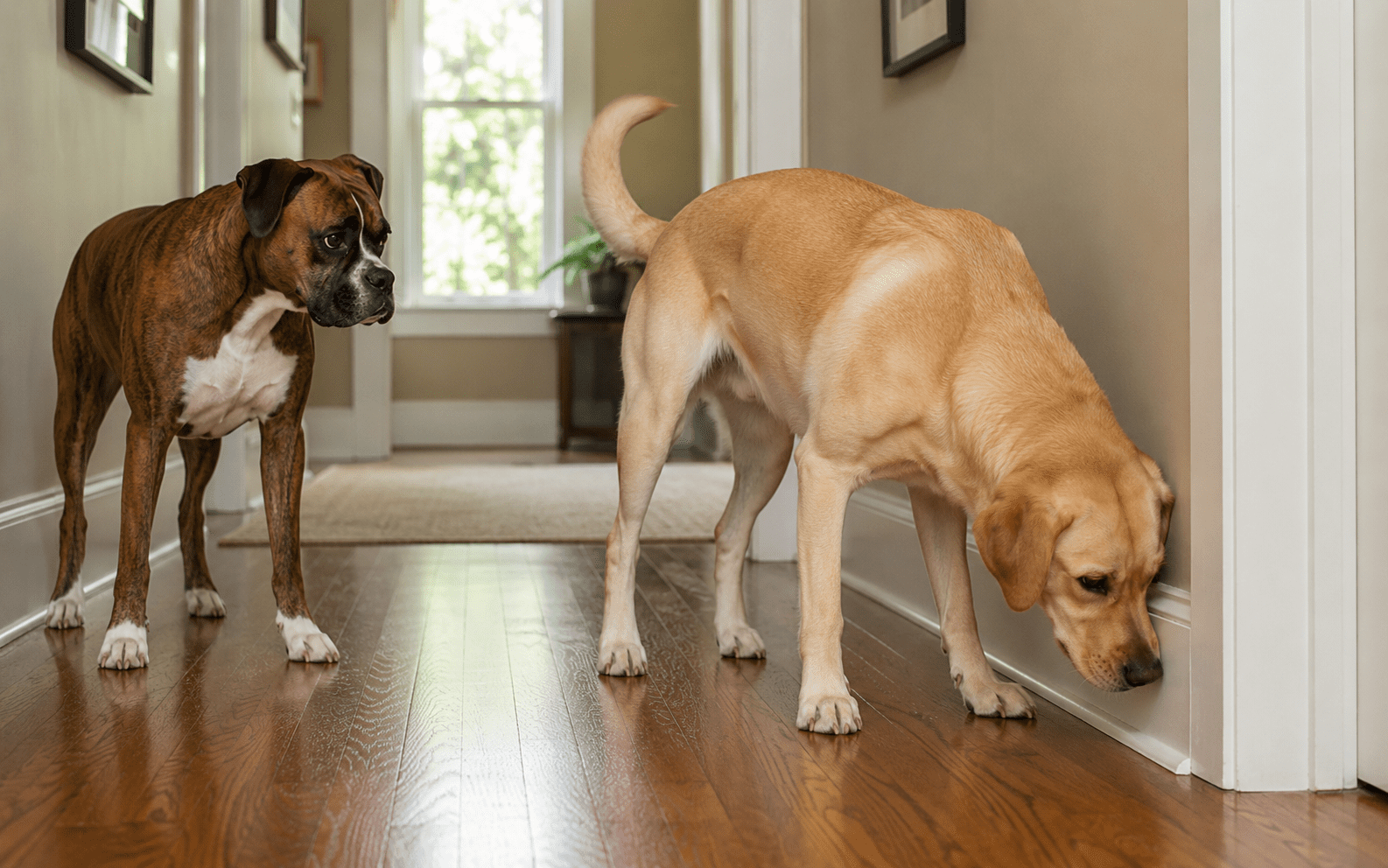
If you have multiple dogs and marking seems competitive between them, structured training makes a real difference. A board and train Long Island program is worth considering for dogs with deeply ingrained marking habits that haven’t responded to owner-led corrections.
When Marking Points to a Bigger Problem
Most marking cases resolve with the steps above. But if your dog marks excessively, hits new spots daily, or seems unable to settle, it’s worth looking deeper.
Persistent indoor marking sometimes signals:
- Unresolved anxiety. Dogs dealing with stress often mark as an outlet. If you’re also seeing destructive chewing or excessive barking, anxiety is likely driving it.
- Medical issues. A UTI, bladder stones, or hormonal imbalance can increase urinary frequency and look like marking. Rule out medical causes with your vet before assuming it’s purely behavioral.
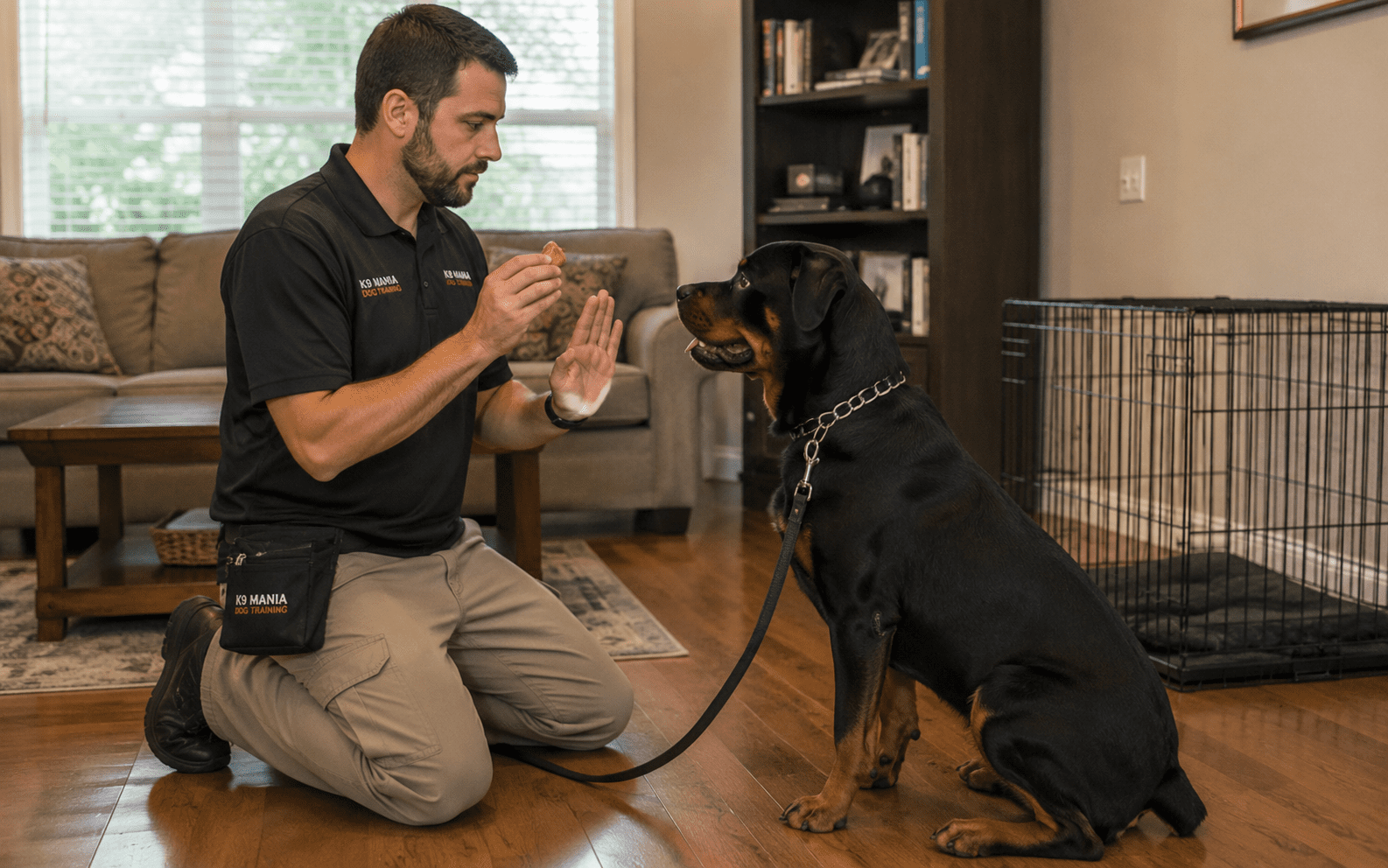
- Gaps in training. Some dogs never fully learned what was expected of them. In those cases, starting fresh with private dog training Long Island gives you a clear plan and a real baseline to build from.
Stop the Cycle: Your Full Plan for How to Stop a Dog from Marking in the House
Marking is fixable. It takes enzyme cleaning, supervision, trigger management, and consistent training all working together. None of these steps alone will hold long-term. Done together, they break the habit and keep it from coming back.
The dogs that keep marking are usually in homes where one piece is missing, often the enzyme cleaner, or the supervision, or the structured training. Address all three and you’ll see results.
At K9 Mania Dog Training, we’re Long Island’s leading board and train facility and home to experienced animal behaviorists who get to the root of why your dog behaves the way they do. Whether the marking is hormonal, anxiety-driven, or habit-based, we have a program built for it. You don’t have to keep guessing or dealing with this on your own. Trust K9 Mania Dog Training to help you and your dog move forward for good.
You May Also Want to Read
How to Get Your Dog’s Attention When Distracted
Do Dogs Have Object Permanence?
How to Stop Dog from Scratching Door
Frequently Asked Questions
What is the 7 7 7 rule for dogs?
The 7 7 7 rule means exposing a puppy to 7 new people, 7 new places, and 7 new experiences within their first 7 weeks in a new environment. It’s a socialization guideline that builds confidence early and reduces fear-based behaviors later in life, including anxiety-driven marking indoors.
What repels dogs from marking?
Citrus-based sprays, bitter apple, and commercial deterrent products can discourage dogs from marking specific spots. These work best as a temporary layer on top of enzyme cleaning and training. They won’t fix the root cause on their own, but they help break the habit at spots your dog keeps returning to.
What smell will stop a dog from peeing in the house?
Citrus scents, white vinegar diluted in water, and commercial bitter sprays are the most commonly effective smells that deter dogs from urinating indoors. Apply them to already-cleaned areas and reapply regularly since the scent fades. Always test on fabric or furniture first to avoid damage.
Does vinegar stop dog marking?
Vinegar can deter a dog from revisiting a spot, but it won’t eliminate the urine scent that draws them back in the first place. Clean the area with an enzyme cleaner first to destroy the urine proteins, then apply diluted vinegar as a deterrent on top. Using vinegar alone leaves enough scent behind for the dog to find again.
How to stop an adult dog from marking?
Adult dogs respond well to neutering if still intact, enzyme cleaning of all known spots, close supervision, and consistent structured training. The key is removing the scent trail completely, limiting unsupervised access, and working on any anxiety or environmental triggers. Habit-based marking in adult dogs takes more patience but responds well to a structured plan.
What age do male dogs start marking in the house?
Most male dogs begin marking between 6 and 12 months old as testosterone rises during puberty, though some start as early as 4 to 5 months. Neutering before or shortly after this window significantly reduces the behavior. Dogs neutered later can still improve, though the habit tends to be more established and takes longer to break.