
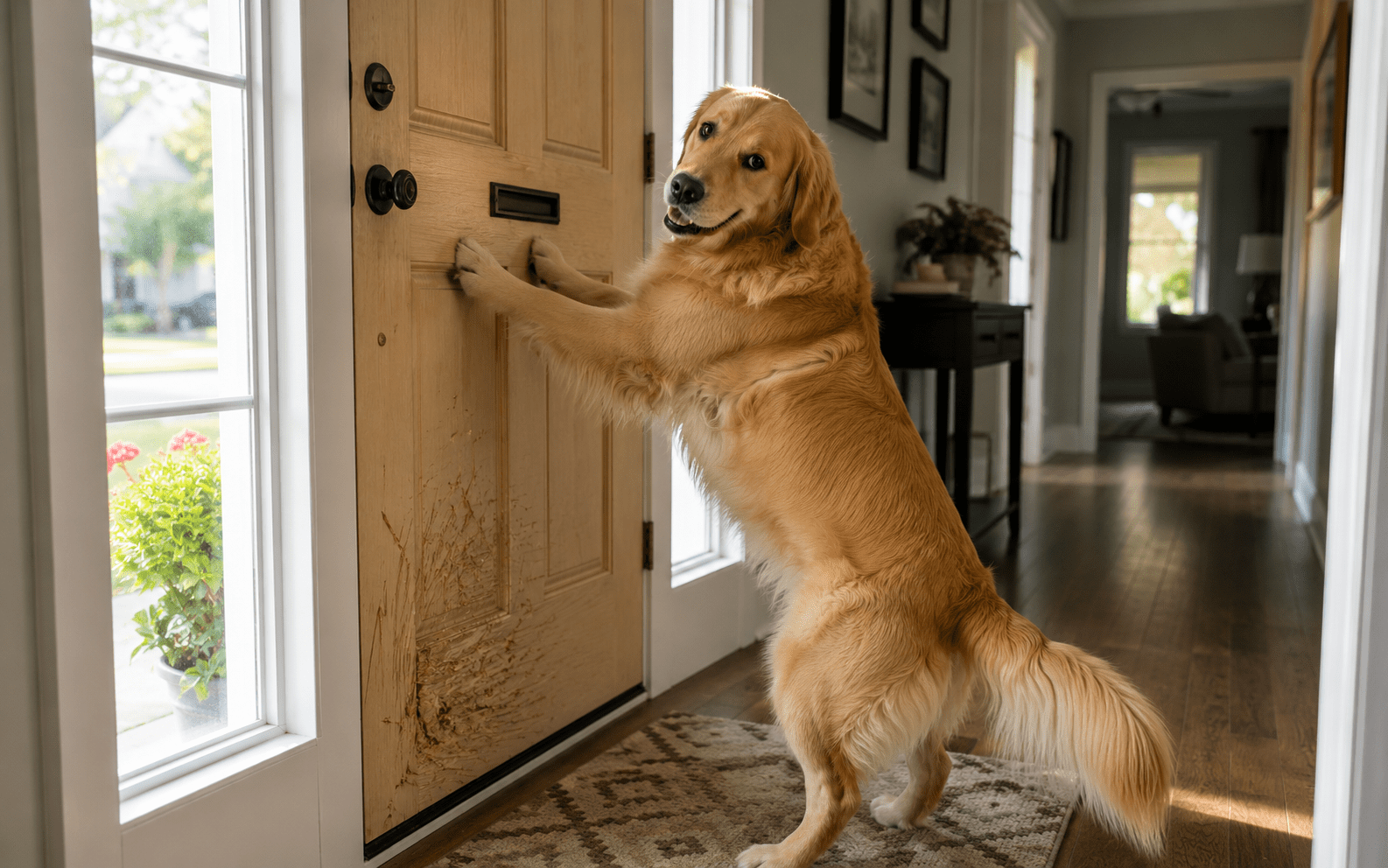
How to stop dog from scratching door starts with understanding why your dog does it in the first place. Most dogs scratch at doors because they want attention, need to go outside, or are dealing with anxiety, and fixing it means addressing the root cause, not just the symptom.
📌 Things to Know
- Door scratching is almost always a learned habit because it worked at least once.
- Teaching an alternative behavior is more effective than punishment.
- Physical barriers protect your door while training is still in progress.
- Separation anxiety is one of the biggest triggers and needs its own approach.
- Consistency from everyone in the house is what makes any training plan actually stick.
Why Is My Dog Scratching at the Door?
Before you fix the behavior, you need to know what’s driving it. Dogs don’t scratch to be difficult. They do it because at some point, it worked. Someone opened the door, gave them attention, or let them in, and now scratching is just how they communicate.
Here are the most common reasons:
- Attention seeking: Scratching gets a reaction fast, and your dog figured that out.
- Needing to go outside: They’re signaling a bathroom break the only way they know how.
- Boredom or excess energy: A dog without enough stimulation will always find an outlet.
- Separation anxiety: The door is what separates them from you, and that creates real panic.
- Excitement: Some dogs scratch when they hear you on the other side and can’t contain it.
The cause matters because the fix changes depending on what’s actually behind the behavior. A bored dog needs more exercise and enrichment. An anxious dog needs a completely different plan. If your dog also whines, barks, or destroys things when you’re gone, start by learning how to train a dog with separation anxiety before anything else.
Does Ignoring the Scratching Actually Work?
Yes, and it’s one of the most important steps. Every time you open the door while your dog is scratching, you reinforce the behavior. Your dog learns that scratching gets results, so they do it more.
The rule is simple: the door never opens while scratching is happening. If your dog scratches, you wait. The moment they stop, even briefly, that’s when you open the door or give attention.
This alone won’t fix everything, but nothing else works well without it. Every person in the house has to follow the same rule. One exception teaches your dog the behavior still has value.
What Is the Fastest Way to Train a Dog to Stop Scratching?
Replacing the scratching with a different behavior is the most effective approach. Give your dog something specific to do at the door instead.
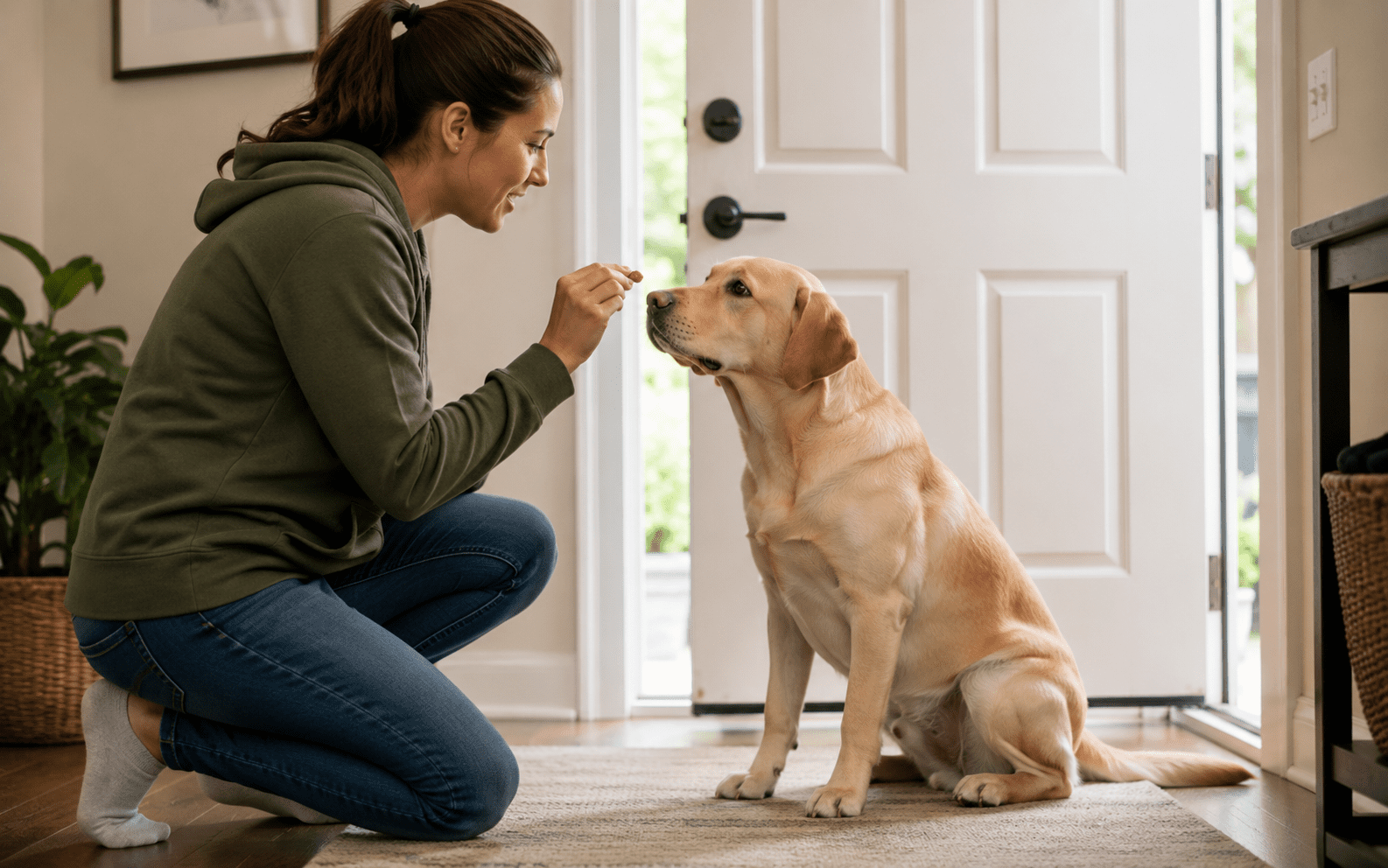
Here’s how to set it up:
- Choose a replacement behavior like a sit, a down, or ringing a hanging bell.
- Every time your dog heads toward the door, redirect them to the new behavior.
- Reward immediately and consistently every time they do it right.
- Never reward scratching by opening the door or giving attention while it’s happening.
Most dogs make real progress within two to three weeks when this is applied consistently. Private dog training Long Island is a strong option if you want a trainer to build this system with you from the start, especially with dogs that have been scratching for a long time.
Does Correction or Punishment Help?
Not usually. Pushing your dog away or raising your voice can raise their anxiety, which often makes the behavior worse. Dogs don’t always connect a correction to the specific action that caused it.
Rewarding what you want to see works faster and builds trust. If your dog sits calmly near the door instead of scratching, that earns a treat and attention every time.
Why Does My Dog Scratch When I Leave?
If scratching only happens when you’re gone or about to leave, separation anxiety is likely the cause. This is different from attention-seeking scratching and needs a different training approach.
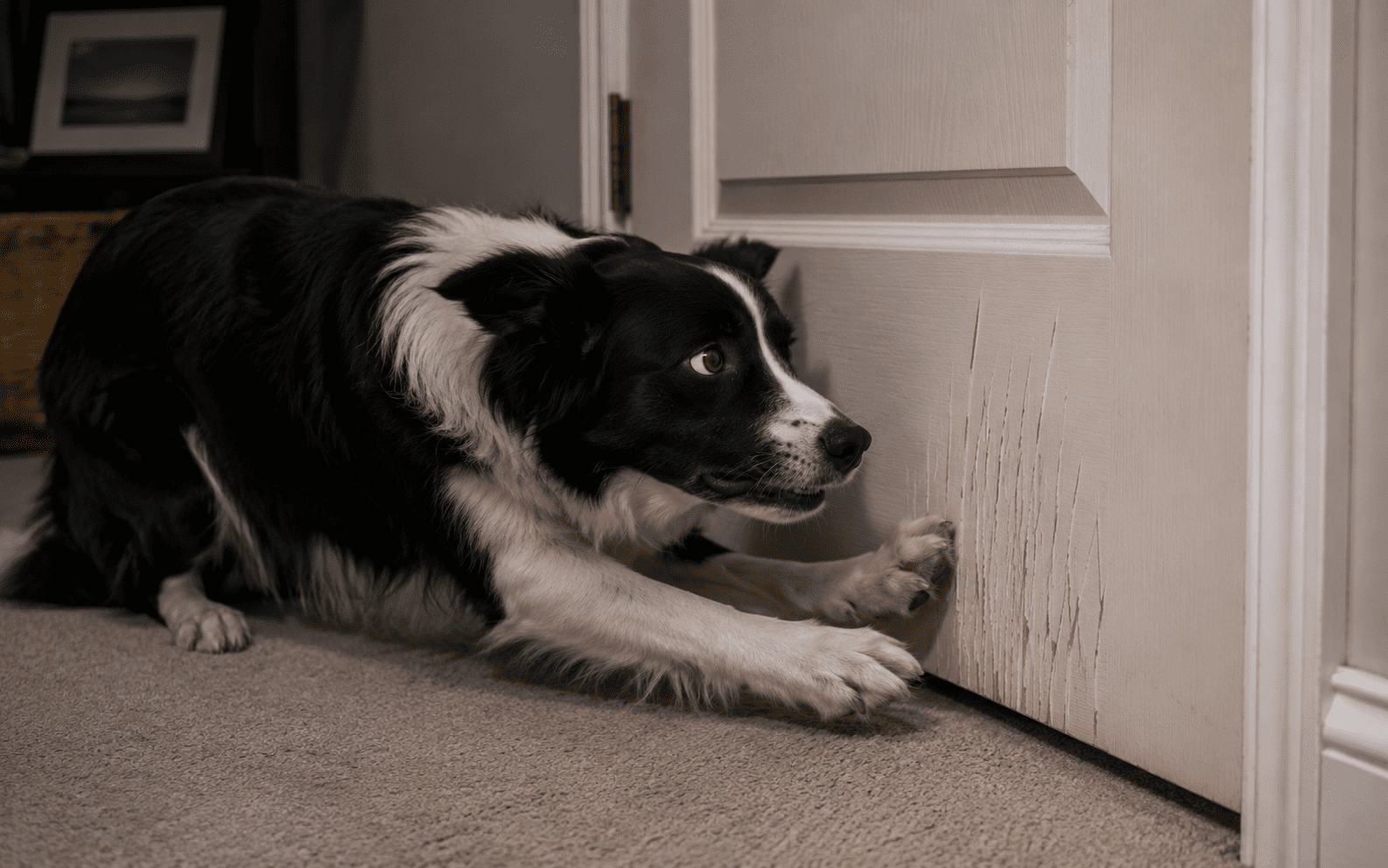
Signs that point to anxiety-driven scratching:
- It starts the moment you pick up your keys or put on your shoes
- Your dog also barks, howls, or destroys other things when alone
- They follow you closely before you leave and seem distressed at the door
Building comfort with being alone takes time and consistency. Work on short, calm practice departures and gradually extend the time your dog spends alone. A full breakdown of this process is covered in how to train dog to stay home alone, which walks through the steps to reduce departure anxiety at its source.
What Can You Put on a Door to Protect It From Scratching?
Training takes time and your door takes damage while you wait. Using physical protection during training is the smart move. Here are the options that actually hold up.
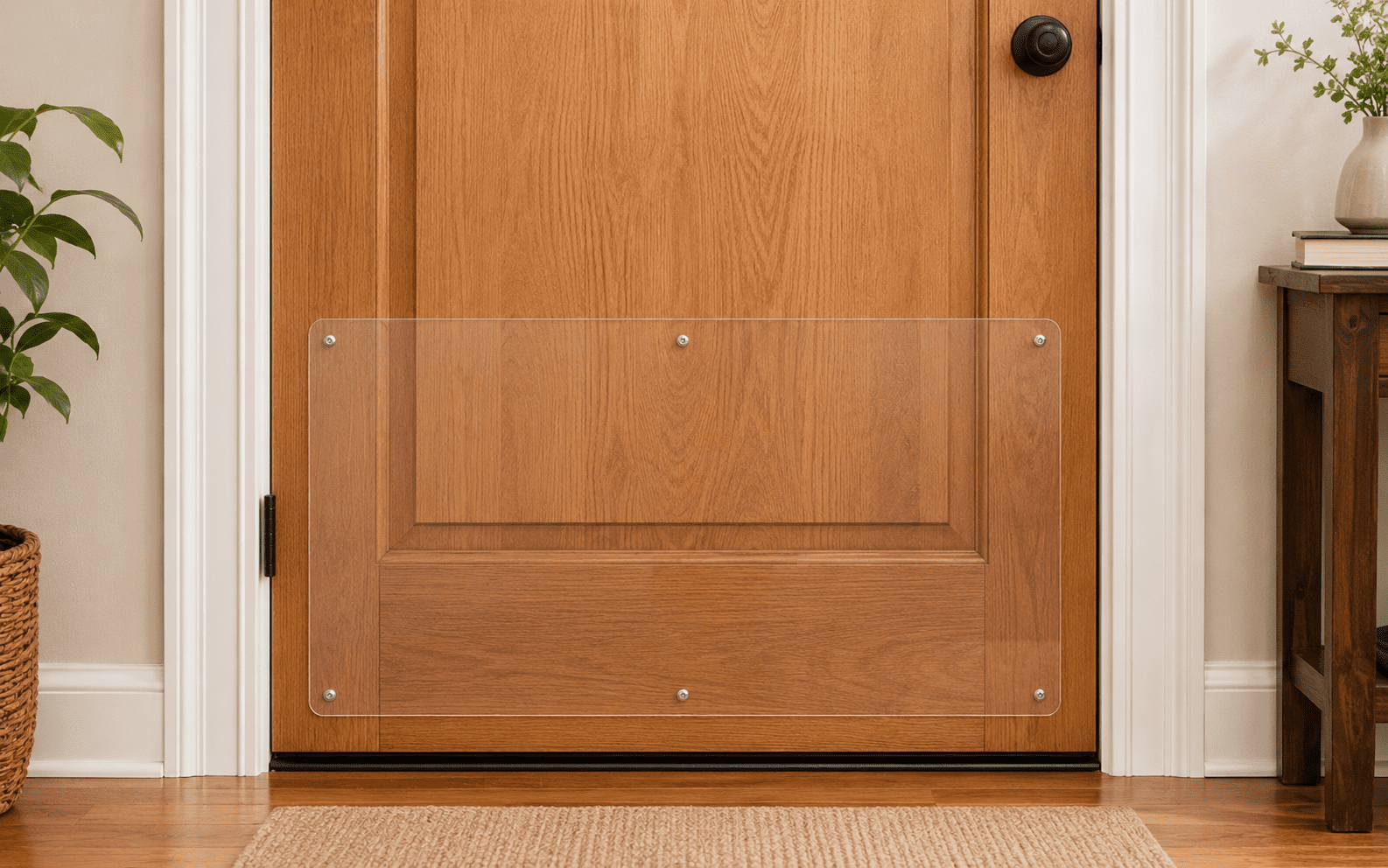
Scratch Guard Panels
These attach to the lower section of your door and absorb the impact instead of your wood or paint. Most are clear acrylic or metal and install without tools. Get ones rated for large or persistent dogs since lightweight versions won’t last.
Protective Vinyl Film
Self-adhesive vinyl wraps stick directly to the door surface and peel off cleanly. They’re a budget-friendly temporary option while training is underway. They won’t stop a determined dog, but they reduce surface damage.
Nail Caps
Soft silicone caps fit over your dog’s nails to reduce scratching damage. They don’t stop the behavior, but they protect surfaces between replacements. Caps need to be swapped out every four to six weeks as nails grow.
Door Reinforcement Plates
Metal kick plates attach to the base and edges of a door for the most durable protection. These are the best option for heavy scratchers and work especially well on steel or solid wood doors.
| Protection Option | Best For | Durability | Ease of Use |
| Scratch Guard Panel | Interior wood doors | High | Easy, no tools needed |
| Protective Vinyl Film | Light to moderate scratching | Medium | Very easy, peel and stick |
| Nail Caps | Reducing nail damage | Low to Medium | Moderate, needs reapplication |
| Door Reinforcement Plate | Heavy scratchers, permanent fix | Very High | Moderate, requires installation |
How Do You Fully Dog-Proof a Door?
If scratching is severe or your dog pushes through basic protection, a layered approach is the answer. Dog-proofing a door means combining physical barriers with training and management tools working at the same time.
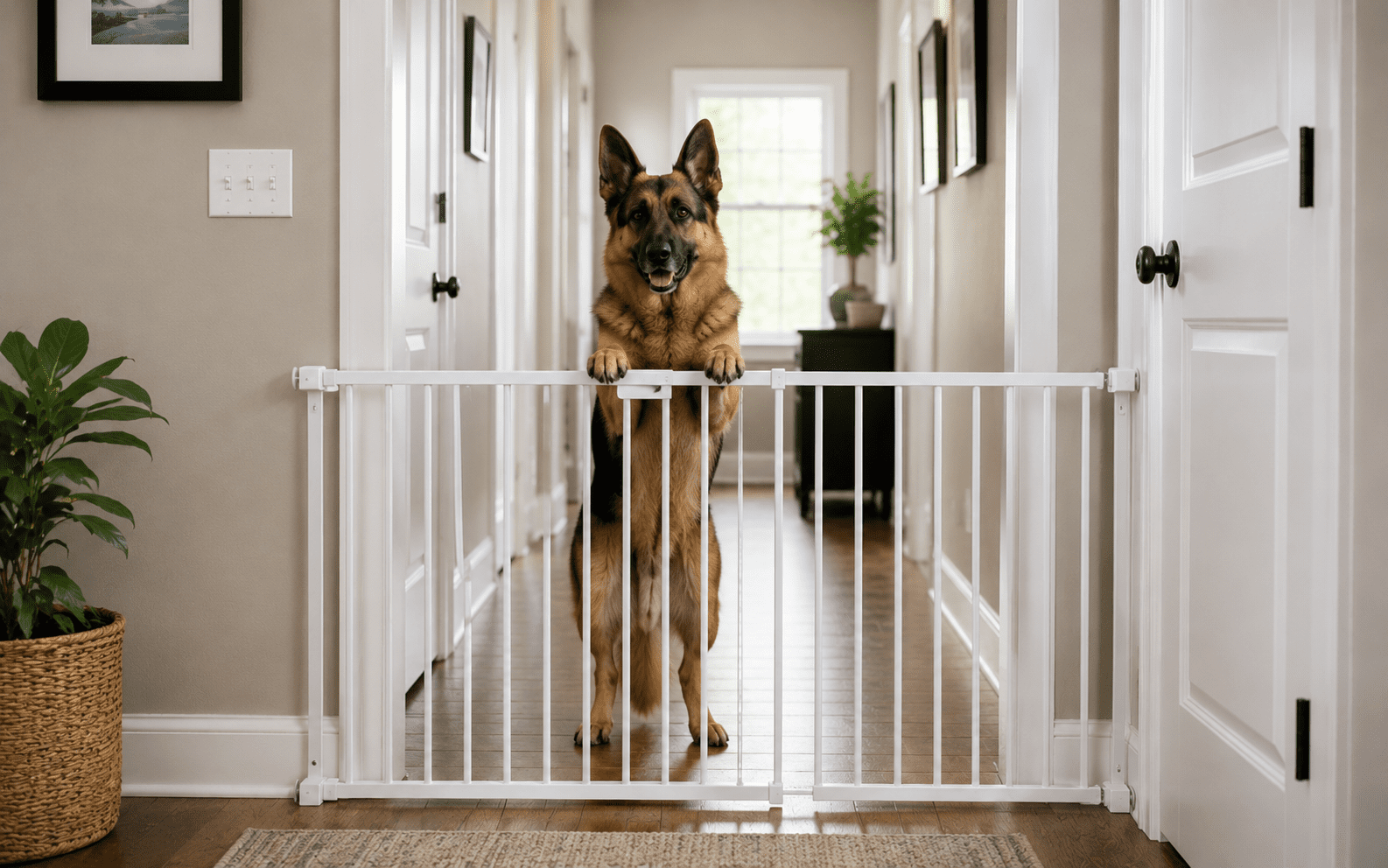 A solid setup looks like this:
- A scratch panel on the lower third of the door
- A baby gate or pet barrier to limit access when unsupervised
- A motion-activated air deterrent near the door as a passive reminder
- A food puzzle or long-lasting chew before you leave to redirect energy
If the scratching connects to a bigger pattern of destructive behavior, the same root cause is usually behind both. Working through how to stop destructive dog chewing can help you see the full picture and tackle both issues together.
For dogs that scratch all day while you’re at work, structured training often produces faster results than at-home correction alone. Board and train Long Island addresses the behavior in a consistent environment every single day, which accelerates progress compared to short daily practice at home.
Which Scratching Cause Is Most Important to Fix First?
Not all scratching looks the same, and the fix that works for one cause won’t work for another. This comparison helps you identify what you’re dealing with and where to focus first.
| Cause | Key Signs | Primary Fix | Training Priority |
| Attention Seeking | Scratches when you are home and visible | Ignore the scratch, reward calm behavior | High |
| Needs to Go Out | Scratches at consistent times, paces nearby | Set a regular bathroom schedule | Medium |
| Boredom | Scratches and chews other things too | More exercise and daily enrichment | High |
| Separation Anxiety | Scratches only when alone or at your departure | Anxiety-specific training protocol | Very High |
| Excitement | Scratches when you arrive home | Calm arrivals, teach a place command | Medium |
When Should You Call a Professional Dog Trainer?
Some scratching problems respond quickly to consistent home training. Others point to deeper behavioral issues that need a trained eye. Consider getting professional help if:
- Your dog scratches until their paws become raw or bleed
- The behavior spikes around loud noises, storms, or outside triggers
- Nothing you’ve tried has made a real difference after two to three weeks
- Your dog also howls, barks, or destroys furniture when left alone
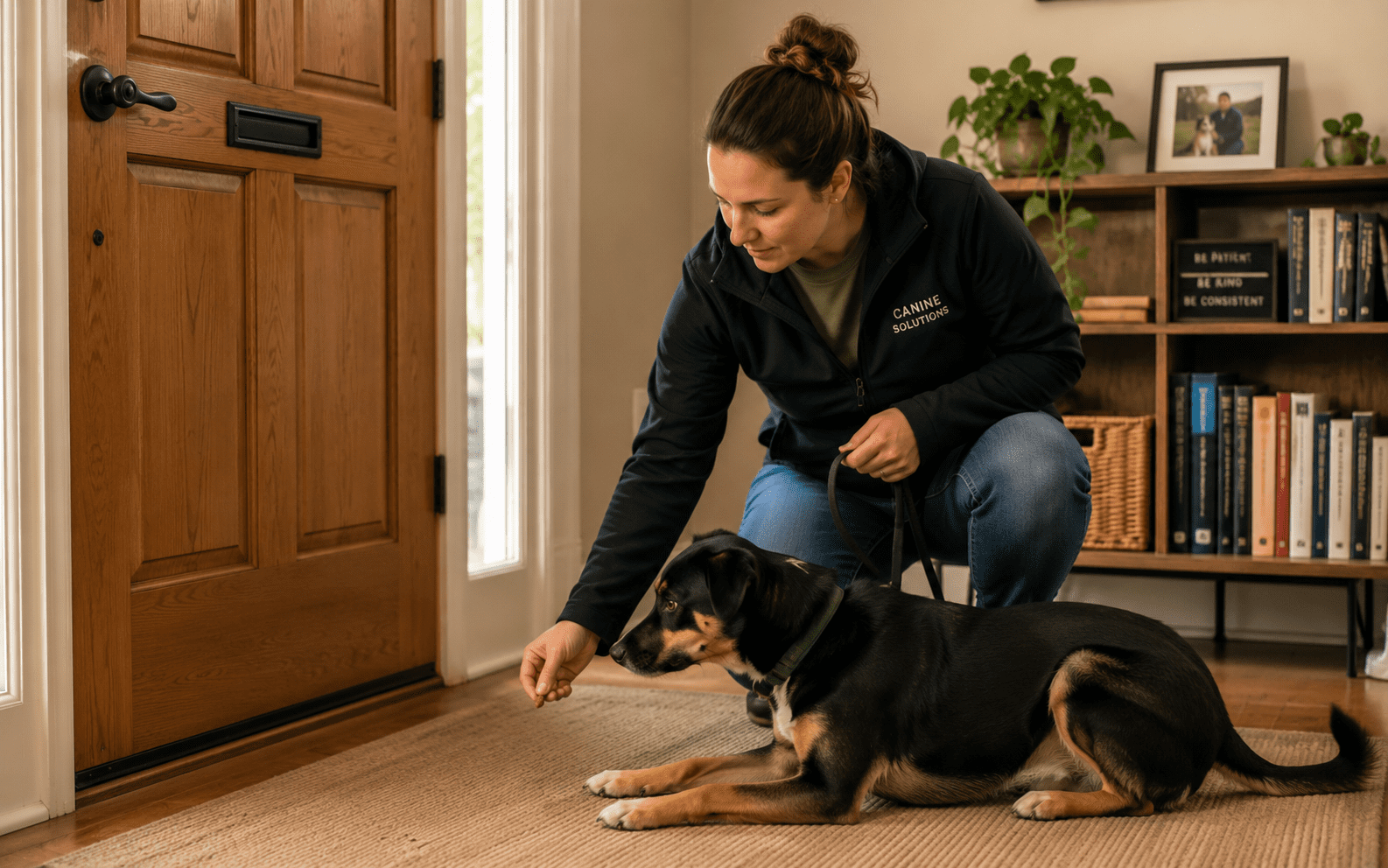
In home dog training Long Island is a strong option when the scratching is tied to a specific door or space in your home. A dog trainer can observe the behavior in real context and build a plan around what’s actually happening in your environment.
Stop the Scratch for Good: Closing Thoughts on How to Stop Dog from Scratching Door
How to stop dog from scratching door comes down to two things working together: training an alternative behavior and protecting your door while that happens. One without the other is half a solution. Most dogs improve within two to four weeks of consistent effort. Keep everyone in the house consistently on the same page and results will follow.
At K9 Mania Dog Training, we’ve helped hundreds of Long Island families solve this exact problem. As the leading board and train Long Island program, our team includes the best animal behaviorists for dogs on Long Island. Whether your dog scratches from anxiety, boredom, or habit, we have a program built around it. Trust K9 Mania Dog Training to help you build a calmer, better-behaved dog. Visit our website to get started.
You May Also Want to Read
How to Get Your Dog’s Attention When Distracted
Do Dogs Have Object Permanence?
Frequently Asked Questions
How do I get my dog to stop scratching at the door?
Teach a replacement behavior and never open the door while scratching is happening. Pick something specific like a sit or bell ring, reward it consistently, and ignore the scratching completely. Consistency from every person in the house is what makes this work. Most dogs show real improvement within two to three weeks of repeated practice.
What can I put on my door to stop my dog from scratching?
Scratch guard panels, protective vinyl film, and metal door reinforcement plates are the most reliable options. Clear acrylic panels attach to the lower section of a door and absorb damage during training. For heavy or persistent scratchers, a metal kick plate provides the most durable long-term protection without affecting the look of your door.
Do dogs like it when you activate their scratch reflex?
Most dogs enjoy the sensation, similar to how they respond to a good belly rub. The scratch reflex is a natural neurological response triggered near the flank or base of the tail. It causes an automatic kicking motion in the back leg and is generally harmless. Most dogs find it relaxing rather than irritating.
What barrier keeps dogs from scratching doors?
Baby gates block door access entirely, while scratch panels protect the door surface directly. For interior doors, a gate placed in front works well. For high-traffic exterior doors, attaching a scratch panel directly to the surface is more practical and doesn’t block normal movement in and out of the space.
How to make a door dog proof?
Layer a scratch panel on the lower third of the door with a pet barrier and a chew or food puzzle to redirect attention. No single product solves the problem without training running alongside it. The best results come from combining physical protection with consistent behavioral training and enough daily exercise to reduce the energy driving the scratching.
Are car door edge guards a good idea?
Car door edge guards protect vehicle door edges from chips and dings in parking situations, not from dog scratching. They are designed for metal-to-metal contact, not pet damage. For protecting your car from dogs, look for pet-specific products like seat covers, cargo liners, or window screen guards built for that purpose.