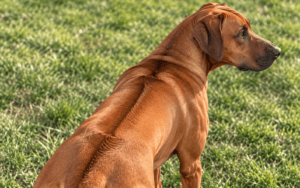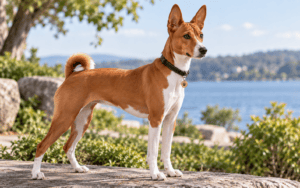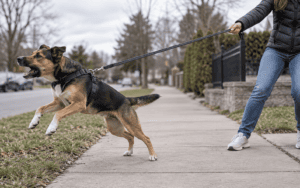

How to calm a panting dog starts with understanding why your dog is panting and then using targeted calming techniques like creating a cool, quiet environment and using gentle reassurance. Most panting dogs respond well to removing stressors, offering water, and employing calming touch or pressure techniques.
Whether your dog is panting from stress, heat, or anxiety, knowing how to respond quickly can prevent the situation from escalating. This guide will walk you through proven methods to help your dog settle down and breathe normally again.
Ready to help your panting pup feel better? Keep reading to discover exactly what to do when your dog won’t stop panting.
Help your dog build confidence and reduce anxiety. Explore our board and train Long Island program for lasting behavioral improvements.
Why Dogs Pant and When It Becomes a Problem
Panting is completely normal for dogs. They use it to cool down since they can’t sweat like humans do. After a run at the park or on a hot summer day, you’ll see your dog breathing heavily with their tongue hanging out.
This kind of panting usually stops within 10 to 30 minutes once your dog cools down or rests. But sometimes panting signals something more serious that needs your attention.
Normal Panting vs. Excessive Panting
Normal panting has a steady rhythm and your dog seems comfortable. Their body is relaxed and they can easily stop panting when they’ve cooled down or caught their breath.

Excessive panting looks different. Your dog might pant rapidly with shallow breaths, even when they haven’t been active. They may seem restless, unable to settle down, or show other signs of distress like pacing or whining.
The key difference is context and duration. If your dog pants for hours without an obvious reason like heat or exercise, something else might be going on.
Common Triggers for Stress-Related Panting
Stress and anxiety are major causes of excessive panting in dogs. Thunderstorms, fireworks, or unfamiliar environments can trigger this response. Some dogs pant heavily during car rides or vet visits.
Pain also causes panting. If your dog is injured or dealing with an illness, they might pant as a way to cope with discomfort. Older dogs with arthritis often pant more, especially when moving around.
Other triggers include:
- Separation anxiety when left alone
- Fear of loud noises or new people
- Overheating from being in a hot car or direct sunlight
- Certain medications that increase heart rate
- Underlying health conditions like heart disease or respiratory issues
If you notice your dog panting without an obvious trigger, especially if it’s accompanied by other symptoms like lethargy or loss of appetite, a vet visit is important.
Immediate Steps to Calm a Panting Dog
When your dog is panting heavily, quick action can make a big difference. These immediate techniques help your dog feel safer and more comfortable right away.
Create a Cool and Comfortable Environment
Temperature control is your first priority. Move your dog to a cooler area away from direct sunlight or heat sources. Turn on a fan or air conditioning if possible.
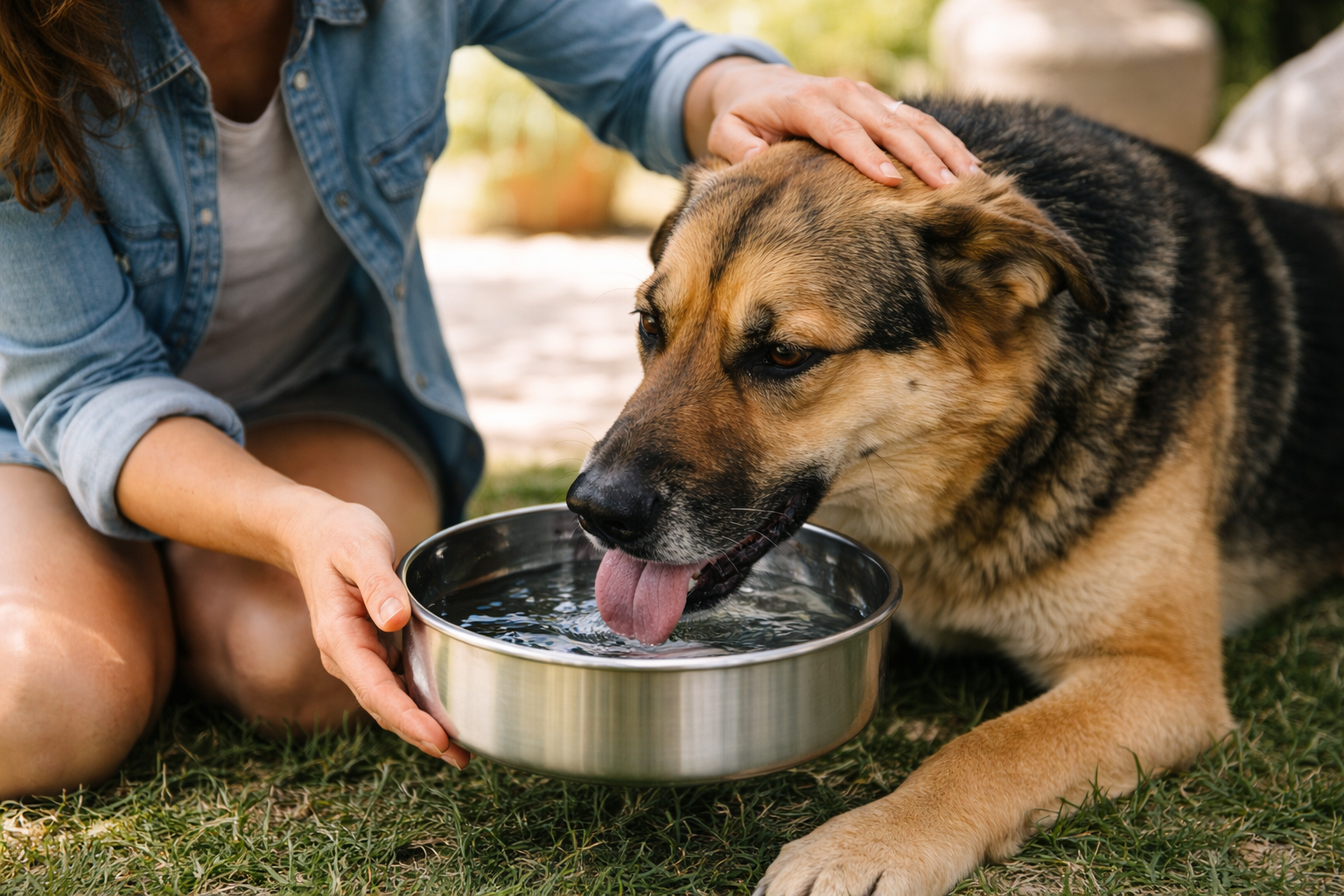
Offer fresh, cool water immediately. Don’t force your dog to drink, but make it easily accessible. Some dogs respond well to ice cubes or frozen treats that help cool them from the inside.
You can also place a damp towel on their paws or belly. Avoid ice-cold water directly on their body as this can cause blood vessels to constrict, which actually makes it harder to cool down.
Make sure the space is quiet and free from chaos. Loud noises or lots of activity can increase stress and make panting worse.
Remove Stressors and Provide a Safe Space
Identify what might be causing the stress and remove it if possible. If it’s a thunderstorm or fireworks, create a den-like area where your dog feels protected. A crate covered with a blanket or a quiet room with minimal windows works well.
Turn on white noise or calming music to block out scary sounds. Some dogs benefit from having their favorite toys or a piece of clothing that smells like you nearby.
Dim the lights to create a more soothing atmosphere. Bright lights can feel overwhelming to an already stressed dog.
Let your dog choose where they want to be. Don’t force them into a specific spot. Some dogs prefer to hide under furniture while others want to be close to you.
Use Calming Touch and Pressure Techniques
Physical touch can be incredibly calming when done correctly. Gentle, slow strokes along your dog’s body can help reduce their heart rate and breathing. Focus on areas like the chest, shoulders, and back.
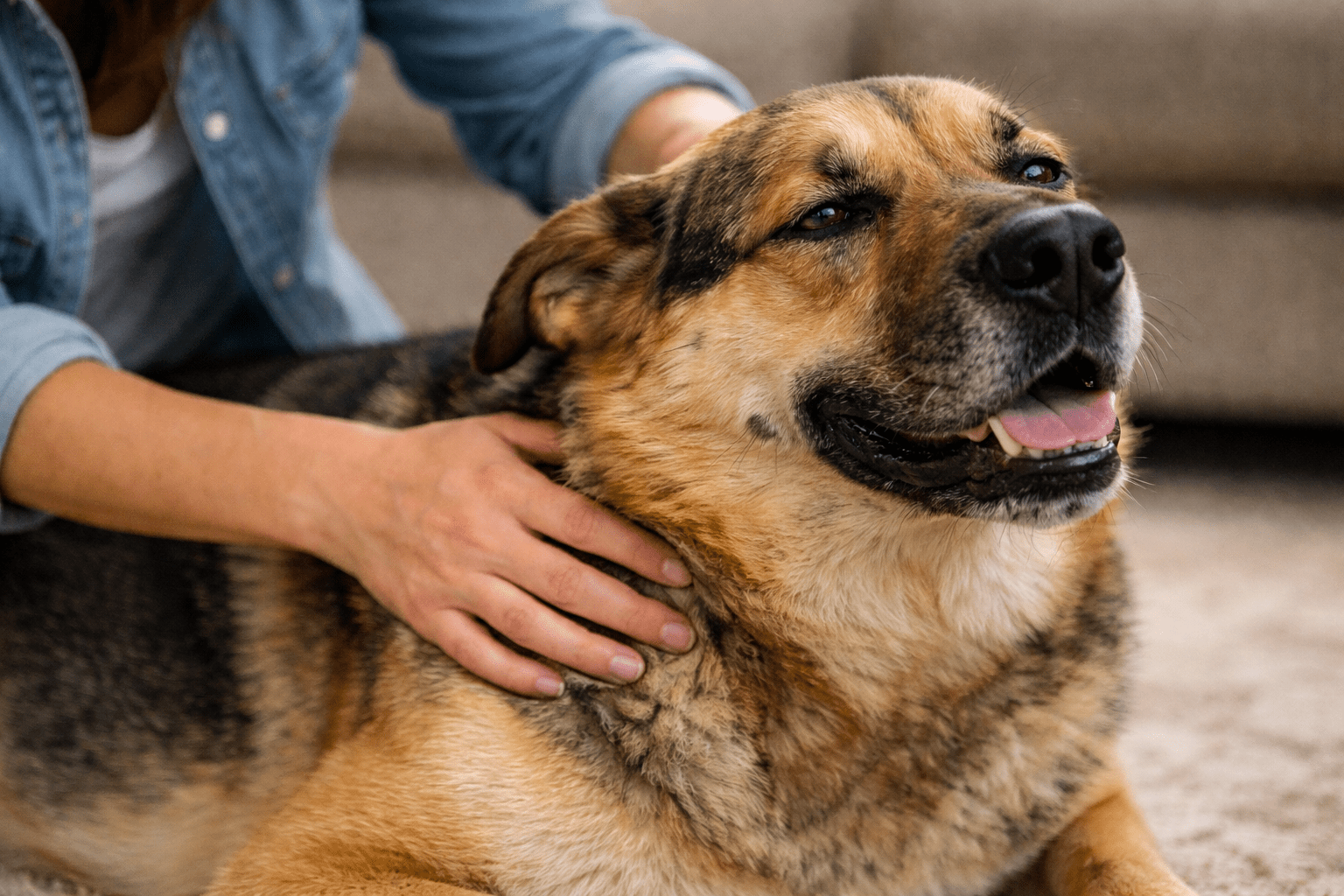
Some dogs respond well to pressure techniques. A snug-fitting anxiety wrap or even gentle pressure applied with your hands can create a sense of security. This works on the same principle as swaddling a baby.
Avoid restraining your dog or holding them too tightly, which can increase panic. Let them move away if they want to, and never force physical contact.
Massage can also help. Use circular motions on tense muscles, especially around the neck and shoulders where dogs hold a lot of tension.
If why my dog acting scared is a recurring issue, our professional trainers can help identify triggers and build confidence through proven behavioral techniques.
Long-Term Strategies for Managing Panting Episodes
While immediate techniques help in the moment, building long-term habits prevents panting episodes from happening as often. These strategies work best when used consistently over time.
Training Techniques That Build Calmness
Teaching your dog to relax on command is one of the most valuable skills you can develop. Start with basic obedience training that includes commands like “sit,” “stay,” and “settle.”
Practice these commands during calm moments, not just when your dog is stressed. Reward your dog with treats and praise when they respond correctly. Over time, these commands become anchors that help your dog shift into a calmer state even when anxious.
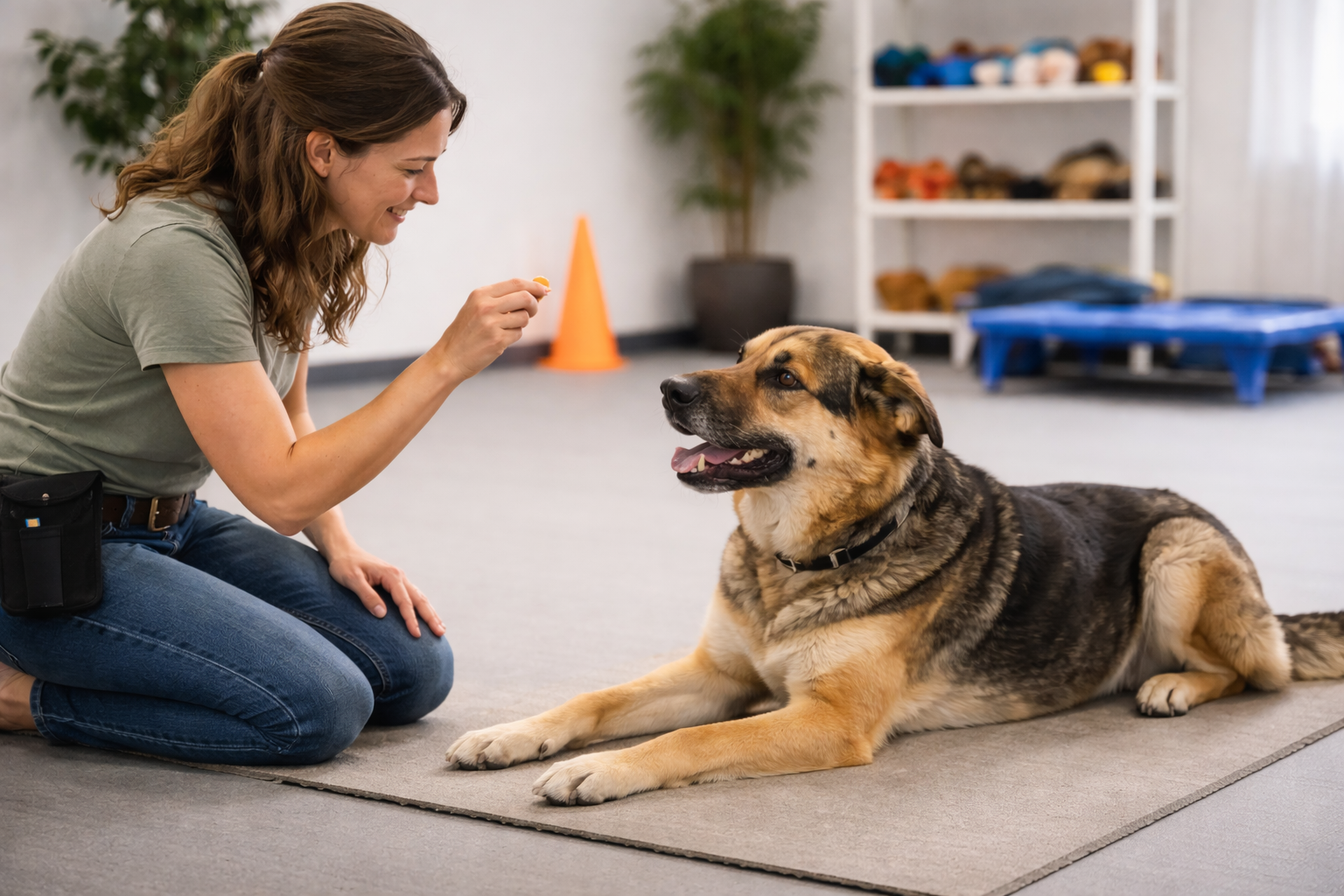
Desensitization training works well for specific triggers. If your dog pants during thunderstorms, play recordings of storm sounds at a very low volume while giving treats and praise. Gradually increase the volume over weeks or months until your dog can handle the real thing without excessive stress.
Counter-conditioning pairs the scary trigger with something positive. For example, if car rides cause panting, start by giving treats near the car, then inside the car with the engine off, then during short drives. This slowly changes your dog’s emotional response.
Consistency is everything. Dogs learn through repetition, so make training part of your daily routine. Even five minutes a day makes a difference when done regularly.
For more guidance on building consistent training habits, check out our article on the power of consistency in training .
Environmental Changes That Reduce Stress
Your home environment plays a huge role in your dog’s stress levels. Create predictable routines for feeding, walks, and playtime. Dogs feel more secure when they know what to expect.
Set up a designated safe zone where your dog can retreat when feeling overwhelmed. This could be a crate, a specific room, or even just a comfortable bed in a quiet corner. Make sure family members respect this space and don’t disturb your dog when they’re using it.
Reduce exposure to known triggers when possible. If your dog pants during neighborhood walks due to other dogs, try walking at quieter times or in less busy areas.
Exercise is critical for mental and physical health. A tired dog is usually a calmer dog. Make sure your dog gets appropriate daily exercise based on their breed, age, and health status. Mental stimulation through puzzle toys and training games is just as important as physical activity.
Natural Calming Aids and Supplements
Several natural options can support a calmer state of mind in dogs. These work best when combined with training and environmental changes, not as standalone solutions.
Here are some commonly used natural calming aids:
| Natural Remedy | How It Works | Best For |
| CBD oil for dogs | May reduce anxiety through interaction with the endocannabinoid system | General anxiety, noise phobias |
| L-theanine supplements | Amino acid that promotes relaxation without sedation | Ongoing stress, hyperactivity |
| Chamomile | Gentle herb with mild sedative properties | Mild stress, digestive upset |
| Valerian root | Natural sedative that calms the nervous system | Severe anxiety, storm phobias |
| Adaptil (dog-appeasing pheromone) | Synthetic pheromone that mimics calming scent from mother dogs | Separation anxiety, environmental stress |
| Lavender aromatherapy | Scent shown to have calming effects | Mild stress, sleep issues |
Always consult your veterinarian before starting any supplement. Some can interact with medications or aren’t appropriate for dogs with certain health conditions.
Quality matters with supplements. Look for products specifically formulated for dogs with clear dosing instructions and third-party testing.
Does your dog struggle with hyperactivity that leads to panting? Learn effective techniques in our guide on how to calm a hyperactive dog .
Recognizing When Panting Requires Veterinary Attention
Not all panting is harmless. Sometimes it signals a medical emergency that needs immediate professional care. Knowing the warning signs can save your dog’s life.
Warning Signs of Medical Emergencies
Certain symptoms alongside panting require urgent veterinary attention. If your dog’s gums appear blue, purple, or very pale, this indicates oxygen deprivation and is a critical emergency.
Collapse or inability to stand while panting heavily suggests serious problems like heatstroke, heart failure, or internal bleeding. Don’t wait to see if it improves.
Other red flags include:
- Panting combined with vomiting or diarrhea
- Bloated or distended abdomen
- Seizures or loss of consciousness
- Excessive drooling or foaming at the mouth
- Rapid breathing that doesn’t slow down even after resting in a cool environment
- Panting along with signs of pain like whimpering or reluctance to move
Heatstroke is particularly dangerous. If your dog has been in a hot environment and is panting rapidly with a body temperature over 104°F, cool them gradually with lukewarm water and get to a vet immediately. Never use ice water as this can cause shock.
Common Health Conditions That Cause Panting
Several medical conditions present with panting as a primary symptom. Understanding these helps you have informed conversations with your veterinarian.
Heart disease reduces the heart’s ability to pump blood efficiently, causing the body to work harder and leading to increased panting. Older dogs and certain breeds like Cavalier King Charles Spaniels are more susceptible.
Cushing’s disease creates excess cortisol production, which often manifests as increased panting, drinking, and urination. Dogs with Cushing’s may also have a pot-bellied appearance and thinning hair.
Respiratory problems like pneumonia, bronchitis, or tracheal collapse make breathing difficult. You might notice coughing along with the panting, or a honking sound when your dog breathes.
Pain from injuries or conditions like arthritis causes panting as a stress response. Dogs are masters at hiding pain, so excessive panting might be your only clue something hurts.
Anemia reduces oxygen-carrying capacity in the blood, forcing your dog to breathe harder to compensate. Pale gums and lethargy often accompany this condition.
Here’s a comparison of stress-related panting versus medical panting:
| Characteristic | Stress-Related Panting | Medical Panting |
| Onset | Sudden, tied to specific trigger | Gradual or sudden without clear trigger |
| Duration | Stops when stressor is removed | Continues regardless of environment |
| Other Symptoms | Restlessness, pacing, whining | Lethargy, vomiting, weakness, changes in appetite |
| Gum Color | Normal pink | Pale, blue, or bright red |
| Response to Calming | Improves with comfort measures | No improvement with standard calming techniques |
| Pattern | Predictable based on triggers | Unpredictable or progressively worsening |
If you’re unsure whether your dog’s panting is behavioral or medical, it’s always safer to consult your vet. They can run tests to rule out underlying health issues and provide appropriate treatment.
Breed-Specific Considerations for Panting
Different breeds have different panting patterns and sensitivities. Understanding your dog’s breed characteristics helps you better assess what’s normal and what needs attention.
Brachycephalic Breeds and Breathing Challenges
Flat-faced breeds like Bulldogs, Pugs, Boston Terriers, and French Bulldogs have shorter airways that make breathing harder. They naturally pant more than other breeds and overheat much faster.
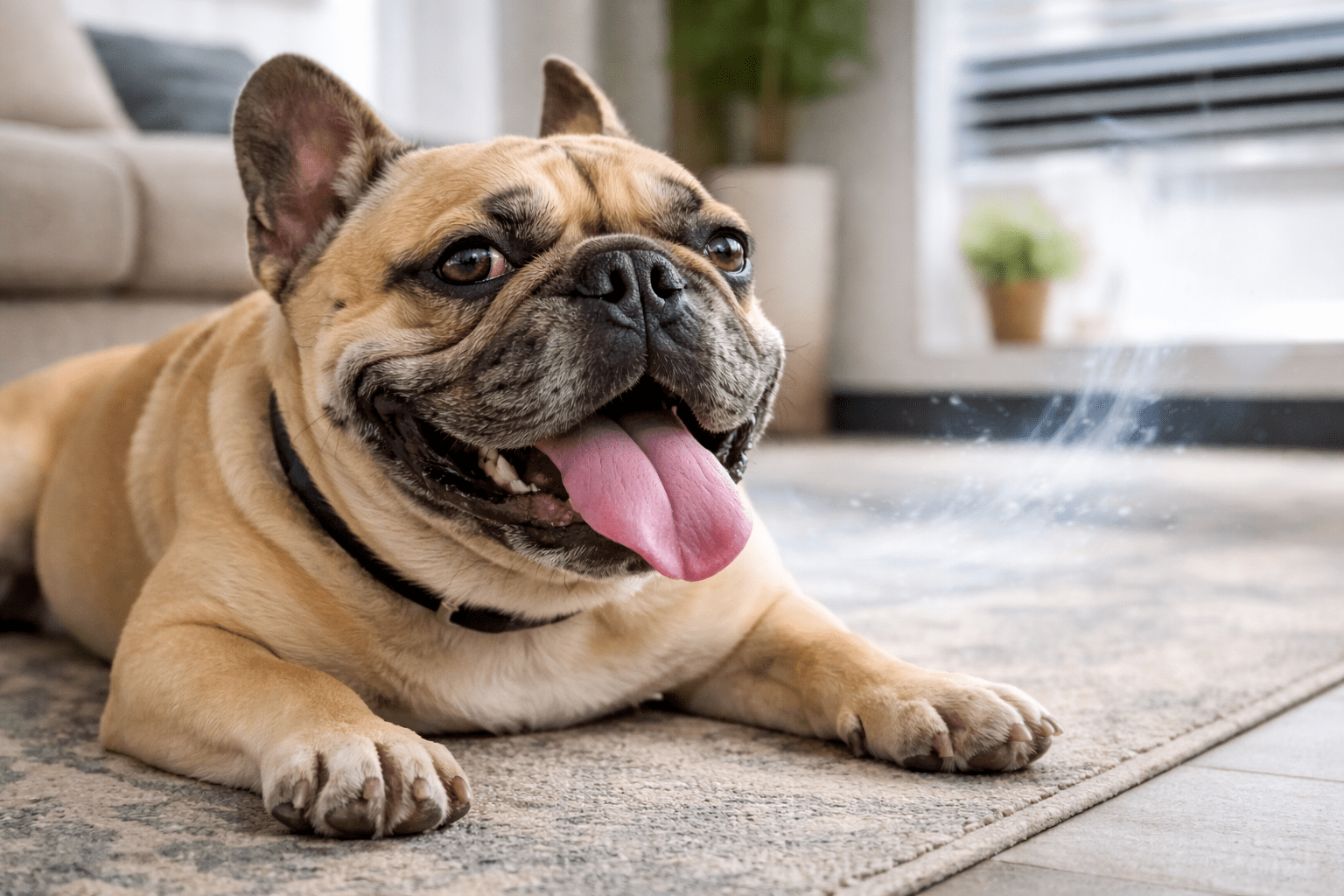
These dogs need extra vigilance in hot weather. Even moderate temperatures can cause distress. Limit exercise during the warmest parts of the day and always provide access to air conditioning.
Watch for signs of breathing distress like loud snoring sounds while awake, blue gums, or collapse. These breeds often need surgical intervention to widen their airways if breathing becomes too compromised.
Never use tight collars on brachycephalic breeds. A harness distributes pressure away from the throat and makes breathing easier.
Large and Giant Breeds
Big dogs like Great Danes, Mastiffs, and Saint Bernards often pant more simply because they have larger body mass to cool. They also tire more quickly than smaller breeds and may need more frequent rest breaks during activity.
These breeds are prone to bloat (gastric dilatation-volvulus), a life-threatening condition where the stomach fills with gas and twists. Excessive panting combined with a distended abdomen, retching without vomiting, and restlessness requires emergency veterinary care.
Large breed puppies grow rapidly and can experience growing pains that cause panting from discomfort. This usually resolves as they mature.
High-Energy and Working Breeds
Breeds like Border Collies, German Shepherds, and Belgian Malinois have tremendous energy and mental stimulation needs. When these aren’t met, anxiety builds up and can manifest as excessive panting.
These dogs benefit greatly from jobs to do, whether that’s obedience dog training , agility courses, or interactive puzzle toys. Mental exhaustion helps them settle more easily than physical exercise alone.
Under-stimulated working breeds often develop anxiety-related behaviors including panting, pacing, and destructive chewing.
Your Next Steps to a Calmer, Happier Dog
Learning how to calm a panting dog gives you the tools to help your furry friend feel safe and comfortable during stressful moments. From creating cool environments and removing stressors to building long-term calmness through training and routine, you now have a complete toolkit for managing panting episodes.
Remember that consistency is your greatest asset. Use these techniques regularly, not just during emergencies, to build your dog’s resilience and confidence. With patience and the right approach, most dogs learn to handle stress better over time.
If your dog’s panting persists despite your best efforts or you notice warning signs of medical issues, don’t hesitate to consult your veterinarian. Professional guidance ensures your dog gets the specific help they need.
At K9 Mania Dog Training, we specialize in helping dogs overcome anxiety, stress, and behavioral challenges through our proven board and train Long Island program. Whether your dog struggles with excessive panting, fear, or other behavioral issues, our expert trainers provide personalized solutions that create lasting change. Visit us at k9maniadogtraining.com to discover how we can help your dog become calmer, more confident, and happier.
You May Also Want to Read
- Dog Toys for Hyperactive Dogs: Best Options
- Overnight Dog Boarding Tips: Complete Guide
- Why Do Dogs Howl: Understanding Your Dog’s Vocal Behavior
- How to Stop Territorial Barking: Effective Training Methods That Work
Frequently Asked Questions
How do I calm my dog down when panting?
Start by moving your dog to a cool, quiet space away from stressors. Offer fresh water and use gentle, slow strokes along their body to promote relaxation. Speak in a calm, reassuring voice and allow your dog to settle in their preferred spot. If panting continues for more than 30 minutes without improvement, consider underlying anxiety or health issues.
How to calm a hyperventilating dog?
Remove your dog from the triggering situation immediately and take them to a quiet area. Encourage slower breathing by staying calm yourself, as dogs pick up on your energy. Gentle pressure on the chest or using an anxiety wrap can help. If hyperventilation continues beyond a few minutes or your dog seems disoriented, contact your veterinarian as this may indicate a serious problem.
Why won’t my dog settle down panting?
Persistent panting that doesn’t respond to standard calming techniques often signals either severe anxiety or an underlying medical condition. Pain, heart problems, respiratory issues, or hormonal imbalances can all cause non-stop panting. If your dog can’t settle after you’ve removed obvious stressors and provided a comfortable environment, a veterinary examination is necessary to rule out health problems.
How can I help my dog stop panting?
Address the root cause first. For heat-related panting, cool your dog gradually with room-temperature water and move them to air conditioning. For anxiety-based panting, use calming techniques like massage, pressure wraps, and creating a safe space. Long-term solutions include consistent training, adequate exercise, mental stimulation, and possibly natural calming supplements approved by your vet.
How to calm a stressed dog down?
Stressed dogs respond well to predictable routines and environments. Create a designated safe zone where your dog can retreat. Use positive reinforcement training to build confidence and teach relaxation commands. Regular exercise appropriate for your dog’s age and breed helps burn off excess energy that contributes to stress. Consider calming aids like pheromone diffusers or supplements, and avoid punishment-based training which increases anxiety.
What is a natural calming remedy for dogs?
Several natural options support calmness in dogs. CBD oil formulated for pets shows promise for reducing anxiety. L-theanine supplements promote relaxation without sedation. Adaptil pheromone products mimic the calming scent mother dogs produce. Herbal remedies like chamomile or valerian root have mild sedative properties. Always consult your veterinarian before starting any supplement to ensure it’s safe for your specific dog and won’t interact with existing medications.