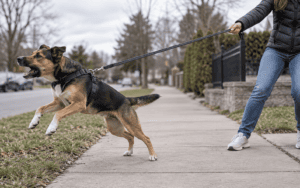
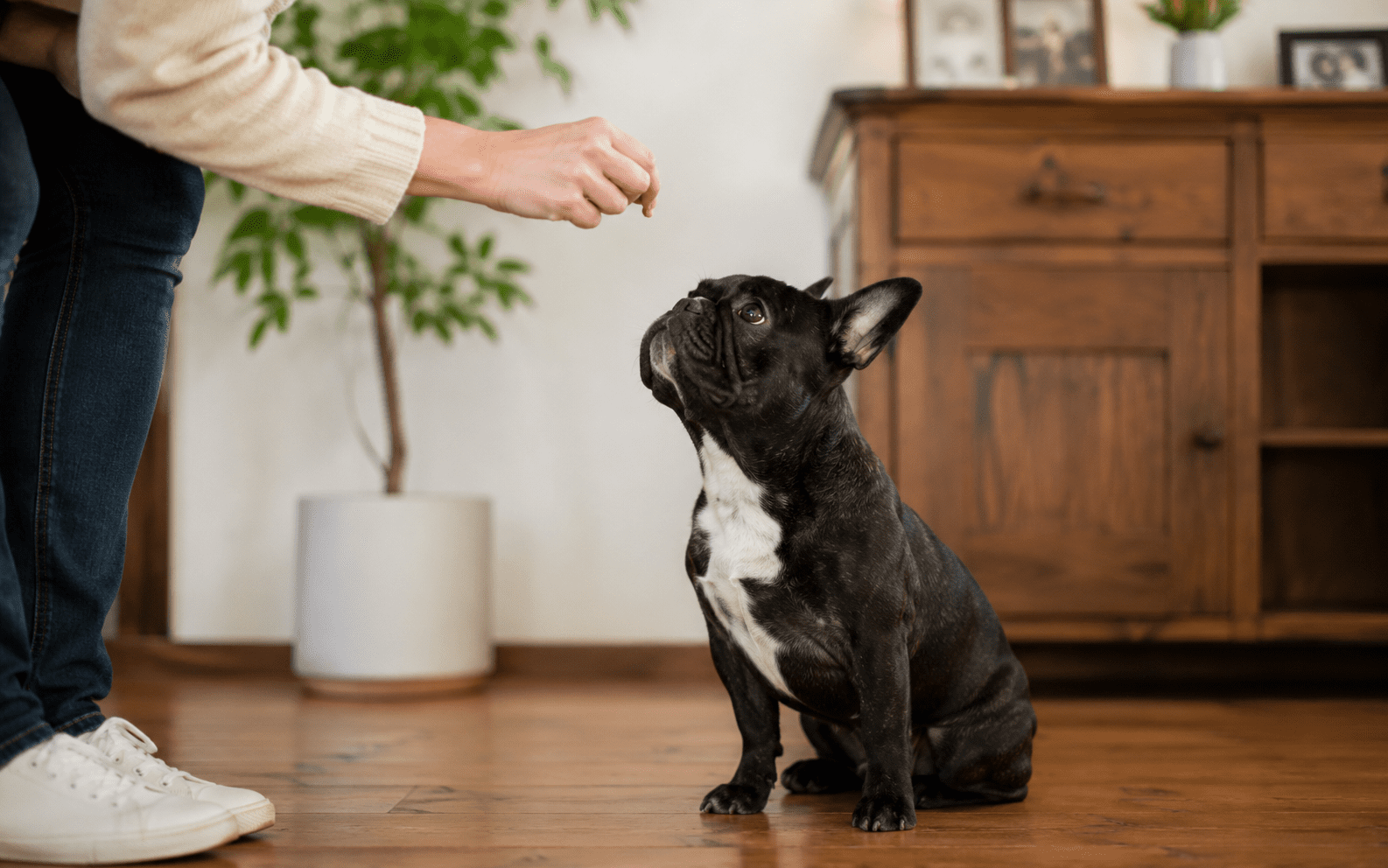
If you’ve been told your French Bulldog is “too stubborn” to train, here’s the truth: that’s not what’s actually happening. Frenchies learn fast and respond beautifully to the right approach — they just won’t tolerate boring repetition or harsh corrections the way some other breeds will. Training a French Bulldog successfully comes down to working with their personality, not against it, while respecting the real physical limits that come with their flat-faced build.
TL;DR — Key Takeaways
- French Bulldogs are intelligent and food-motivated, but they need short, high-value training sessions (5–10 minutes) because of both their attention span and their breathing limitations.
- Roughly half of all Frenchies show signs of Brachycephalic Obstructive Airway Syndrome (BOAS), so physical exertion during training has to be managed carefully.
- Positive reinforcement works far better than corrections — harsh scolding or physical punishment can damage their emotional well-being and make training harder, not easier.
- What looks like “stubbornness” is often selective attention: a Frenchie that ignores a cue outdoors isn’t confused, it’s distracted, and the fix is better motivation, not more pressure.
- Early socialization and consistent house training routines prevent most of the behavior problems Frenchie owners report, including separation anxiety and resource guarding.
What Is French Bulldog Training?
French Bulldog training refers to the process of teaching a Frenchie basic obedience, house manners, and social skills using methods adapted to the breed’s specific traits — short attention span, high food motivation, physical exercise limits, and a strong attachment to their owner. It’s not fundamentally different from training any other dog. The difference is in the execution: session length, environment, and reward strategy all need to account for the realities of a brachycephalic breed.
Most Frenchies can learn sit, stay, come, leash manners, and crate training using the exact same reward-based principles that work on any breed. What changes is the delivery — five-minute bursts instead of twenty-minute drills, climate-controlled spaces instead of midday park sessions, and food rewards that are genuinely worth the effort.
Why Frenchie Training Looks Different Right Now
French Bulldogs have spent the last several years as America’s most popular dog breed, having ended the Labrador Retriever’s 31-year run at the top in 2022. That popularity surge means a lot more first-time owners are encountering Frenchie-specific training challenges without much breed-specific guidance to go on.
At the same time, veterinary data on the breed’s health limitations has become much more visible. Owners are now far more aware that around 58% of French Bulldogs experience some degree of breathing difficulty, and that pushing a Frenchie too hard during a training session isn’t just unproductive — it can be genuinely dangerous. That awareness is changing how trainers approach the breed, with far more emphasis on short, structured sessions and far less on long bouts of physical drilling.
Understanding the French Bulldog Temperament
They’re Smart, Not Stubborn
The “stubborn Frenchie” label gets thrown around constantly, but it usually describes a dog that’s making a calculated decision, not one that’s failing to understand a command. A Frenchie that ignores a sit cue at the park isn’t broken — they performed the same cue perfectly in the kitchen that morning. What changed is the environment: the park is simply more interesting than the treat in your hand.
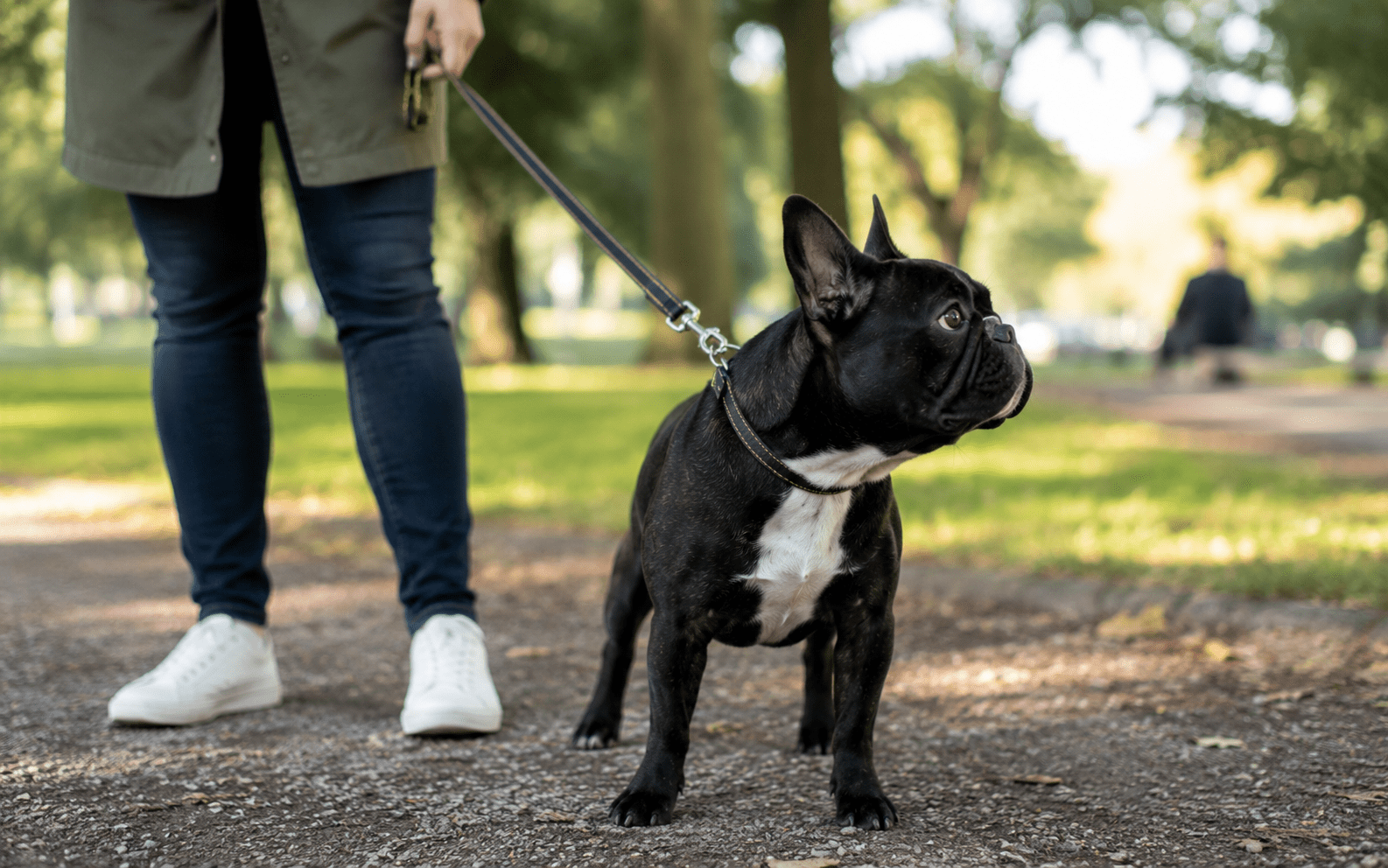
That distinction matters because it changes your fix. Louder commands or firmer corrections don’t solve a motivation problem. The actual solution is better rewards and more practice across different environments — what trainers call “proofing” a behavior — not more pressure on the dog.
They’re Wired for Connection
French Bulldogs are people-oriented to an unusual degree. They want to be wherever their owner is, doing whatever their owner is doing, and that loyalty is one of the breed’s defining traits. This same trait that makes them wonderful companions also makes them prone to separation anxiety. French Bulldogs are roughly 2.8 times more likely to be diagnosed with separation anxiety compared to mixed-breed dogs, and that risk has direct training implications: a Frenchie who panics when left alone needs gradual independence training built into the plan from day one. If your dog is showing early signs of distress when separated from you, our guide on signs your dog has separation anxiety walks through what to watch for before it becomes a bigger behavioral issue.
Building a Training Plan Around Their Physical Limits
Why Session Length Matters More Than Usual
Most breeds can handle 15–20 minute training sessions without issue. Frenchies generally can’t, and not because of attitude. Keeping sessions to roughly 5–10 minutes matches their attention span and respects the breathing limitations built into their anatomy.
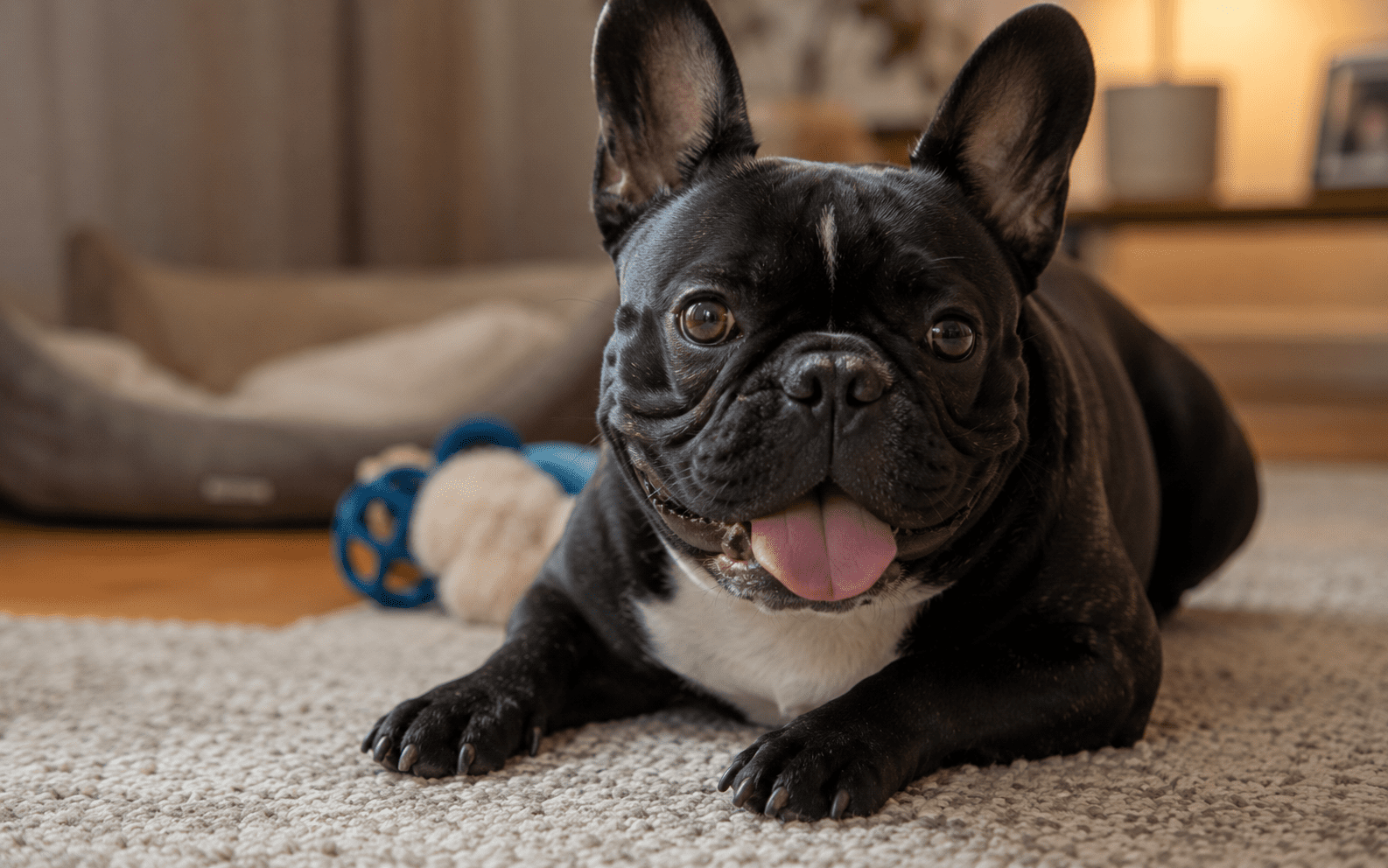
Watch for these signs that a session needs to end immediately:
- Heavy or labored panting that doesn’t settle after a short break
- Glazed or unfocused eyes
- A sudden drop into lying down mid-exercise
None of these are signs of laziness — they’re signs of genuine physical strain, and pushing through them puts the dog at real risk of overheating. This is one of the clearest ways Frenchie training diverges from training a Labrador or a Border Collie: the dog’s enthusiasm is not always a reliable signal that it’s safe to keep going.
Choosing the Right Rewards
Generic training treats often don’t cut it with this breed. Small pieces of cooked chicken or freeze-dried liver tend to outperform standard treats, largely because Frenchies are unusually food-motivated when the reward is actually worth their attention. If your dog is currently working through basic commands like sit, stay, or come, our breakdown of effective ways to train your dog covers reward timing and consistency principles that apply directly here.
Climate Control Isn’t Optional
Over-exercising a French Bulldog in hot or humid conditions can be genuinely dangerous given their respiratory limitations. Practically, that means:
- Train indoors during summer months whenever possible
- Avoid midday outdoor sessions between roughly 11 a.m. and 4 p.m. in warm weather
- Keep water available and watch for excessive drooling, which can signal overheating before panting does
Common Mistakes Frenchie Owners Make
Mistaking Anxiety for Bad Behavior
This is one of the most frequent and consequential mix-ups. Owners often misidentify genuine anxiety symptoms as stubbornness or defiance, which leads to correction-based responses that make the underlying anxiety worse rather than better. Destructive chewing, barking when left alone, and refusal to settle are frequently anxiety symptoms wearing a disobedience costume. Our article on destructive chewing digs into how to tell the difference between boredom chewing and anxiety chewing, since the fix for each is different.
Using Corrections Instead of Redirection
French Bulldogs are emotionally sensitive dogs that tend to respond poorly to harsh corrections, which can trigger shutdown or even increased resistance instead of compliance. A Frenchie that gets scolded repeatedly during training doesn’t usually become more obedient — it becomes more reluctant to engage at all.
Skipping Early Socialization
Frenchies that miss adequate socialization during puppyhood often develop exaggerated reactions to unfamiliar people, dogs, or environments later in life. This isn’t aggression in the conventional sense — it’s stress, and in a breed already prone to respiratory strain, chronic stress carries real welfare consequences on top of the behavioral ones.
Treating Grooming and Handling as Separate from Training
Frenchies’ stubborn streak tends to show up around grooming too, which is why introducing handling and grooming routines early and keeping them consistent matters just as much as obedience work. A dog that resists nail trims or ear cleaning isn’t a grooming problem in isolation — it’s a handling and trust problem that overlaps directly with general training.
Step-by-Step Framework for Training Your French Bulldog
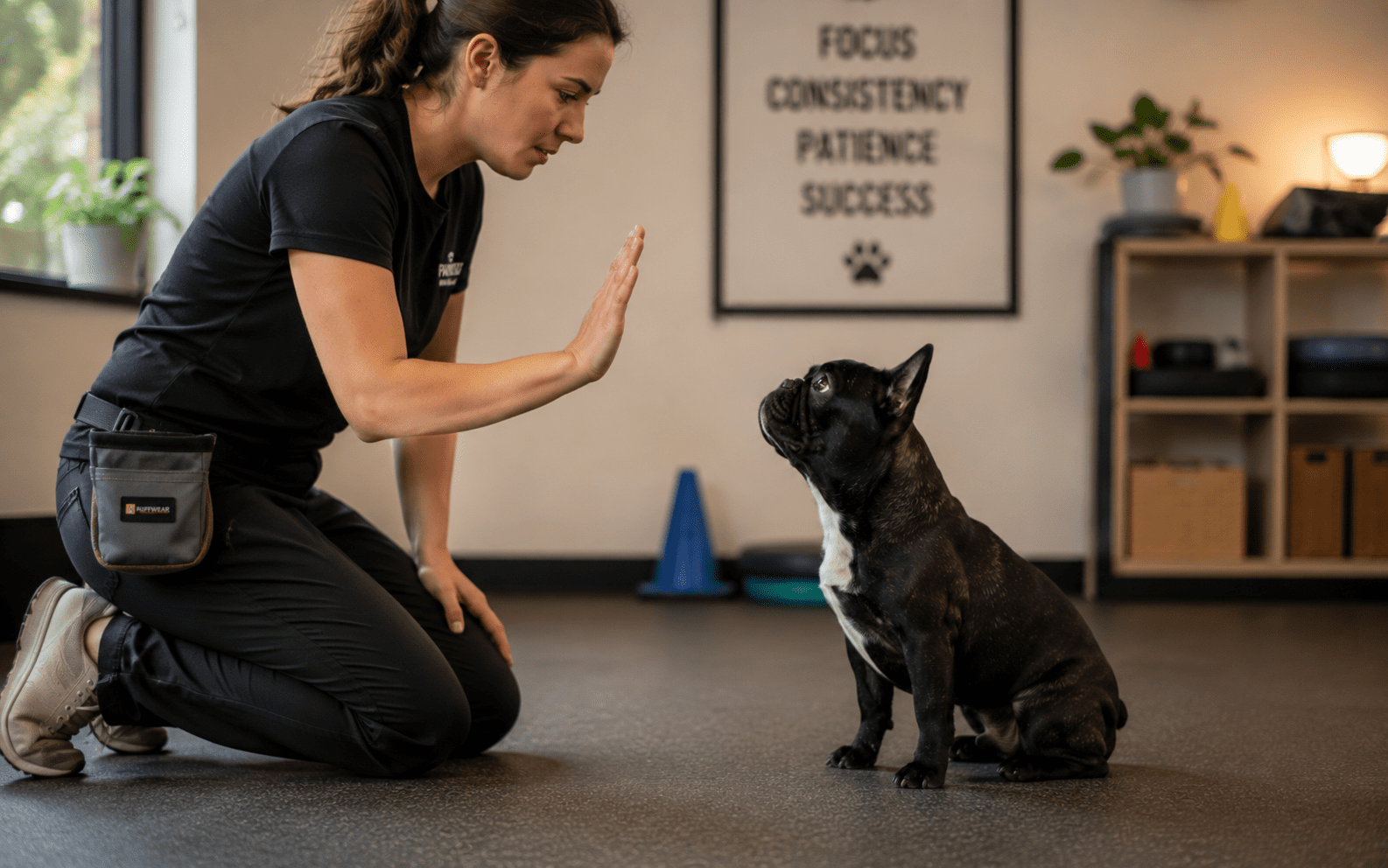
- Start with short, structured sessions. Five to ten minutes, once or twice a day, in a quiet indoor space free of distractions.
- Use high-value food rewards. Save the chicken or liver treats specifically for training — not for general snacking — so they retain their value as a reward.
- Introduce one cue at a time. Master sit before layering in stay, then come. Frenchies do better with depth on fewer commands than breadth across many at once.
- Proof each behavior in new environments gradually. Once a cue is solid in the kitchen, practice it in the backyard, then on a quiet sidewalk, then somewhere busier. This environmental proofing is what actually solves apparent “selective hearing,” not louder commands.
- Build independence gradually to prevent separation anxiety. Start with short absences — a few minutes in another room — and extend duration only as your dog stays calm.
- Pair handling exercises with training time. Touch paws, ears, and mouth briefly during sessions so grooming and vet visits don’t become separate battles.
- End every session on a win. Close with a cue your dog already knows well so the session ends with success and a reward, not frustration.
If you’re working through this process and hitting a wall, especially with anxiety-driven behaviors or reactivity, a structured in-home training program can address the issue in the exact environment where it’s happening, which tends to produce faster, more durable results than off-site sessions alone.
Frequently Asked Questions
Are French Bulldogs actually hard to train, or is that a myth?
It’s mostly a myth rooted in a real trait. Frenchies are smart enough to learn quickly but have a strong independent streak, which can create standoffs during training if you’re relying on repetition alone rather than strong motivation. With the right rewards and short sessions, most Frenchies train successfully.
How long should a training session be for a French Bulldog?
Five to ten minutes is the general ceiling, both because of their attention span and because longer sessions risk overexertion given their breathing limitations.
Why does my French Bulldog ignore commands outside but obey perfectly at home?
This is typically a motivation and environment issue, not a comprehension issue — your dog understood and performed the cue at home, but the outdoor environment is competing for attention. Higher-value rewards and gradual exposure to busier environments usually resolve it.
Is my French Bulldog’s clinginess a training problem?
Not inherently — it’s a breed trait. French Bulldogs are deeply people-oriented and want to be near their owners constantly. The training concern arises specifically when that attachment escalates into separation anxiety, which affects Frenchies at notably higher rates than mixed-breed dogs, requiring dedicated independence training.
When should I start training a French Bulldog puppy?
As early as possible — ideally from the moment the puppy comes home. Early socialization and basic handling exercises in particular have a long-term payoff that’s hard to recreate later.
Conclusion
Training a French Bulldog isn’t about overpowering a stubborn streak — it’s about understanding a smart, sensitive, deeply attached dog and adjusting your methods accordingly: short sessions, strong rewards, careful attention to physical limits, and patience with a breed that needs a reason to comply, not just a command. Get those fundamentals right and most of the “Frenchie is untrainable” stories turn out to be solvable training gaps, not personality flaws.
If you’re in the Long Island area and want hands-on guidance tailored to your French Bulldog’s specific personality and challenges, K9 Mania Dog Training is here to help. As Long Island’s leading provider of board and train programs, in-home training, and private one-on-one sessions, our team of experienced animal behaviorists specializes in working with breed-specific quirks like the ones French Bulldogs bring to the table. Whether you’re dealing with separation anxiety, leash reactivity, or just want a solid obedience foundation, our board and train program and private training sessions are built to get real results. Reach out today to schedule a consultation and give your Frenchie the structured, expert training they deserve.